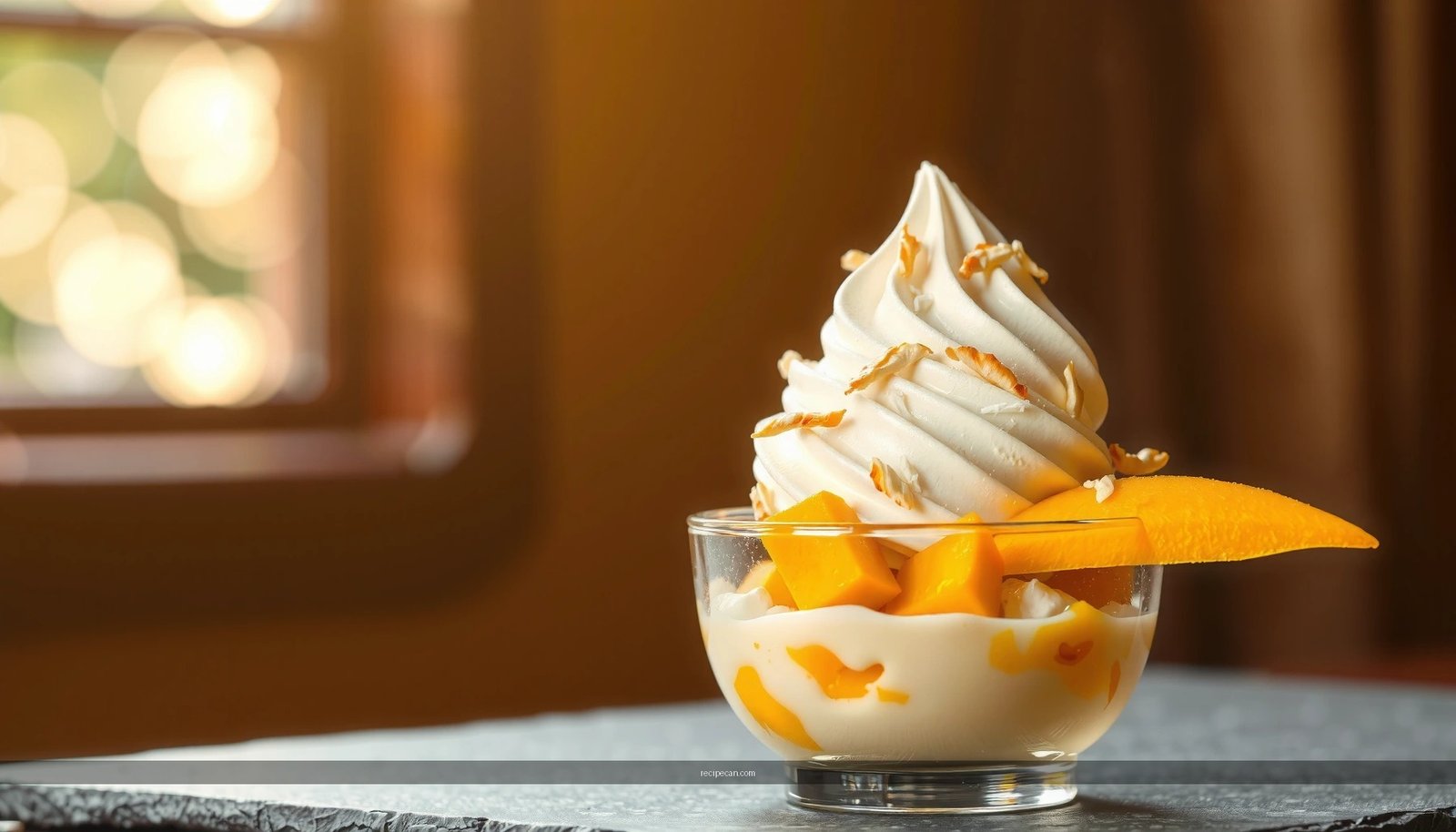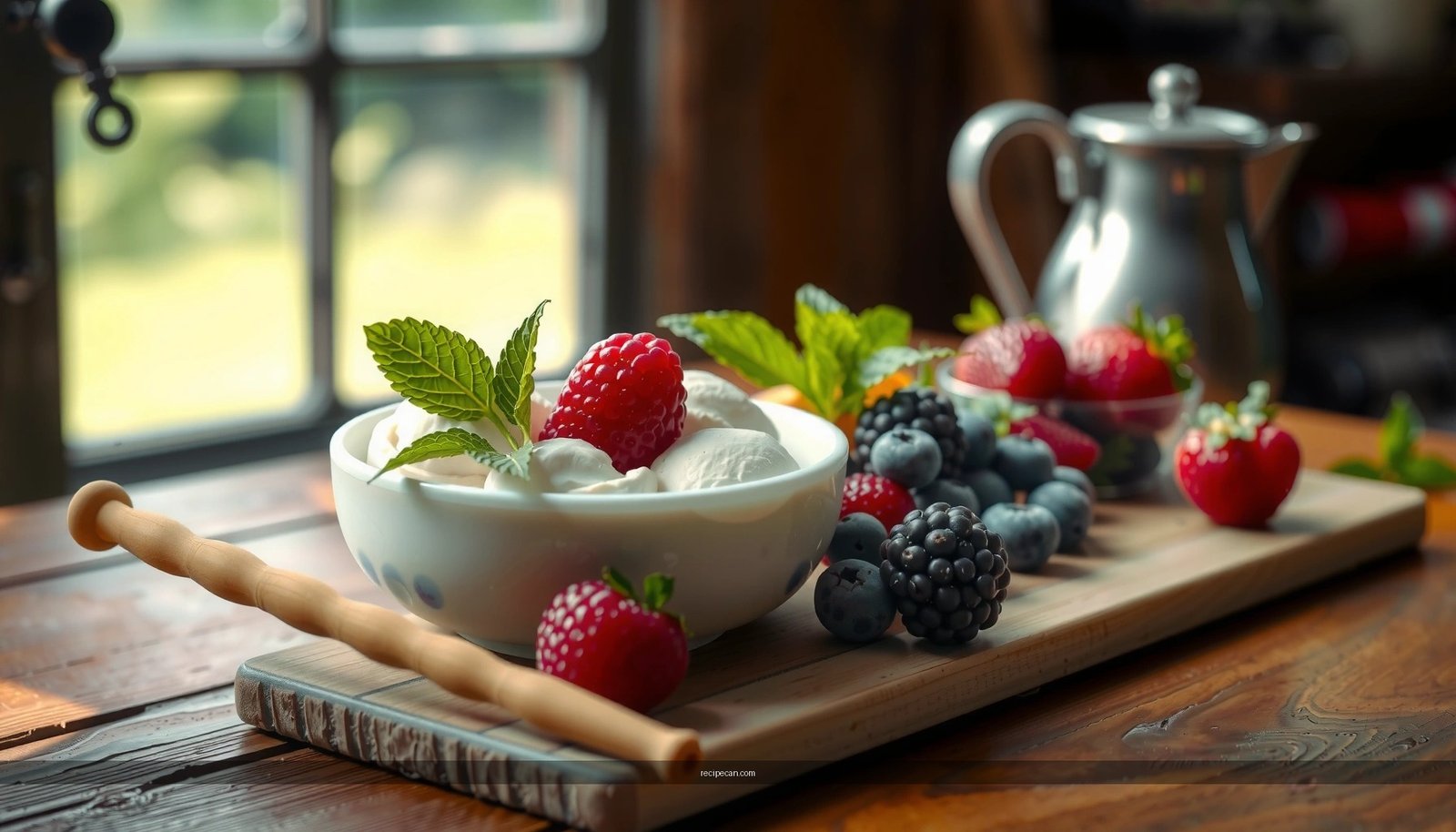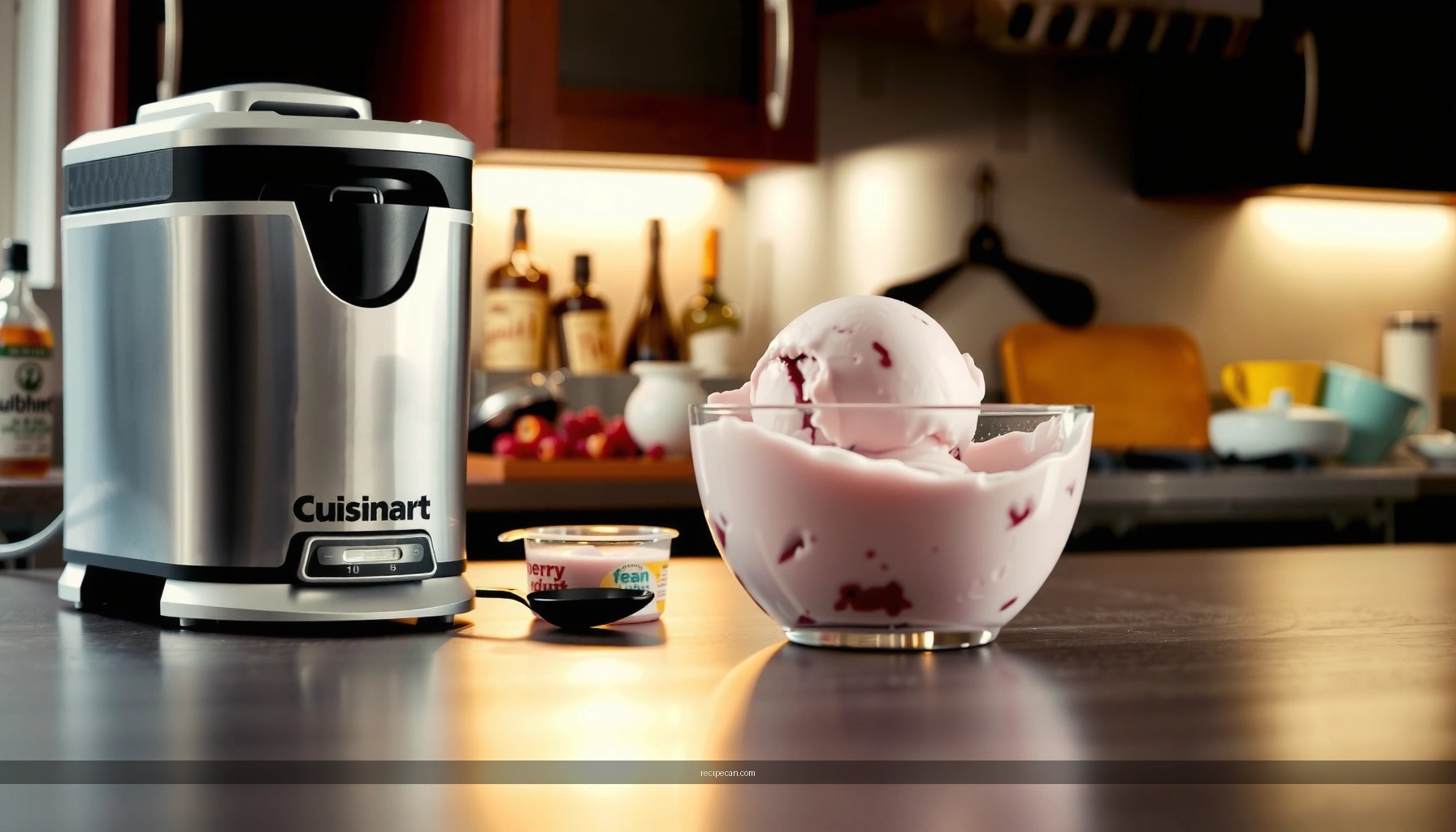
Want the best frozen yogurt recipe with a Cuisinart ice cream maker—one that churns smoothly and finishes creamy, not icy? This recipe is the clear winner for Cuisinart users who want consistent texture with minimal fuss: simple ingredients, precise churn timing, and a custard-style base that sets beautifully. You’ll get a reliable step-by-step method and flavor upgrades that hold up in the machine.
Make creamy frozen yogurt in your Cuisinart ice cream maker by using a thick Greek-yogurt base, chilling it thoroughly, and churning just until it reaches soft-serve consistency—then freeze briefly for scoopable results. This recipe balances tang and sweetness while showing you exactly when to add flavor and mix-ins so you get a smooth, not icy, texture every time.
Ingredients for Frozen Yogurt
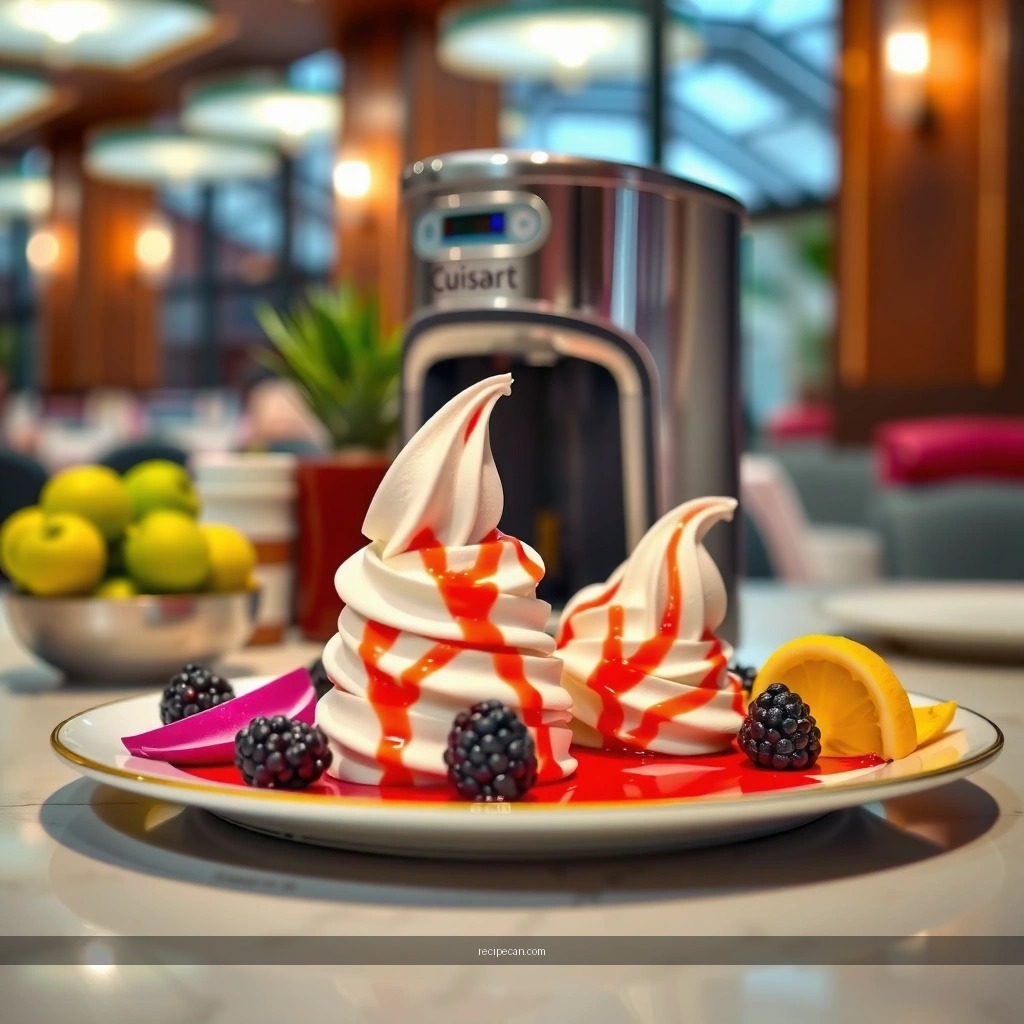
– Use Greek yogurt as the creamy base for a thick texture
Greek yogurt provides the fat-to-water balance that makes frozen yogurt feel rich and spoonable. Choose plain, unsweetened Greek yogurt for the cleanest flavor control. Higher-fat yogurt (e.g., 5% to whole-milk) typically churns smoother and tastes closer to classic “tangy frozen dessert,” while lower-fat options work too but may require slightly more sweetener or a small milk adjustment for body.
– Add sugar or honey to balance tang and aid freezing
Sweeteners do more than taste good in frozen desserts: they help control ice crystal formation. In practice, sugar dissolves more predictably than honey, while honey adds floral depth. Use either, and start with a moderate amount—frozen yogurt usually tastes less sweet once frozen, so you can calibrate to your preference.
– Include vanilla (or other flavorings) for a classic frozen yogurt taste
Vanilla rounds out the tang and makes the flavor read “classic.” If you want to go beyond vanilla, this is also where you can incorporate citrus zest, almond extract, or coffee flavoring (for later variations) without compromising the churn.
Core recipe (makes ~1–1.5 quarts depending on your Cuisinart model):
– 3 cups (about 24 oz / 680–700 g) plain Greek yogurt
– 1/2 to 3/4 cup sugar or 1/3 to 2/3 cup honey (to taste)
– 2 teaspoons vanilla extract
– 2 tablespoons lemon juice (optional but recommended for “real” frozen yogurt tang)
– 2–6 tablespoons milk (as needed for pourable consistency)
Frozen Yogurt Base Ratios That Churn Smoothly (Yield: ~1.0–1.3 qt)
| # | Frozen Yogurt Style | Greek Yogurt | Sweetener | Best Result |
|---|---|---|---|---|
| 1 | Classic Tang | 3 cups | 1/2 cup sugar | Very smooth scoop |
| 2 | Milder Tang | 3 cups | 2/3 cup sugar | Creamier mouthfeel |
| 3 | Honey Cream | 3 cups | 1/2 cup honey | Glossy, soft texture |
| 4 | Lighter Yogurt | 3 cups | 3/4 cup sugar | Less icy edge |
| 5 | Extra Creamy (Whole-Milk) | 3 cups | 1/2 cup sugar | Silkier freeze |
| 6 | Less Sweet (Diet-Friendly) | 3 cups | 1/3 cup honey | May firm harder |
| 7 | Dessert-Style | 3 cups | 3/4 cup sugar | Restaurant-like softness |
Prep Tips for Best Texture
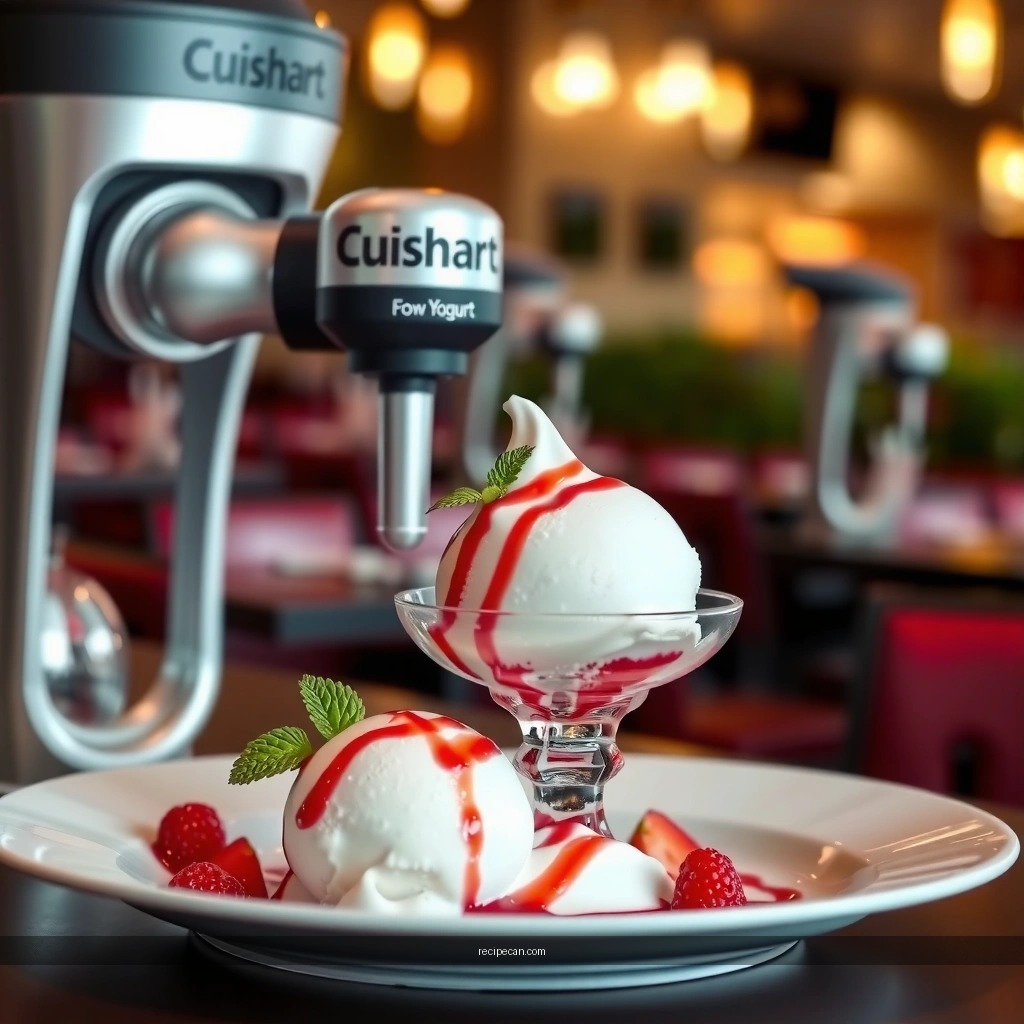
– Chill the yogurt mixture before churning for smoother consistency
For Cuisinart ice cream makers, temperature is a performance lever. A well-chilled base (ideally several hours in the fridge) helps the freezing process start immediately, which reduces the chance of large ice crystals and improves overall creaminess. If you’re short on time, chill at least 2 hours—overnight is best for predictable results.
– Add mix-ins only near the end to avoid over-chopping
Crunchy or delicate ingredients (cookie pieces, crushed fruit, candy chunks) should be added once the mixture thickens and the dasher is already moving through the product. Late addition preserves texture—small pieces don’t turn into paste, and fruit swirls stay defined.
– Adjust sweetness to taste, since flavors mellow as it freezes
Tangy flavors—especially lemon or probiotic-forward yogurt—can read sharper right after churning than after freezing. Taste the base before chilling and again after it’s fully cold (not frozen) to fine-tune sugar/honey. If you plan to freeze longer or store for several days, a slightly higher sweetener level often helps maintain “balanced” flavor.
Practical target: your finished churn should look like thick soft-serve—if it’s too runny, it may freeze icier later; if it’s too stiff, it can become crumbly and harder to portion.
How to Mix the Yogurt Base
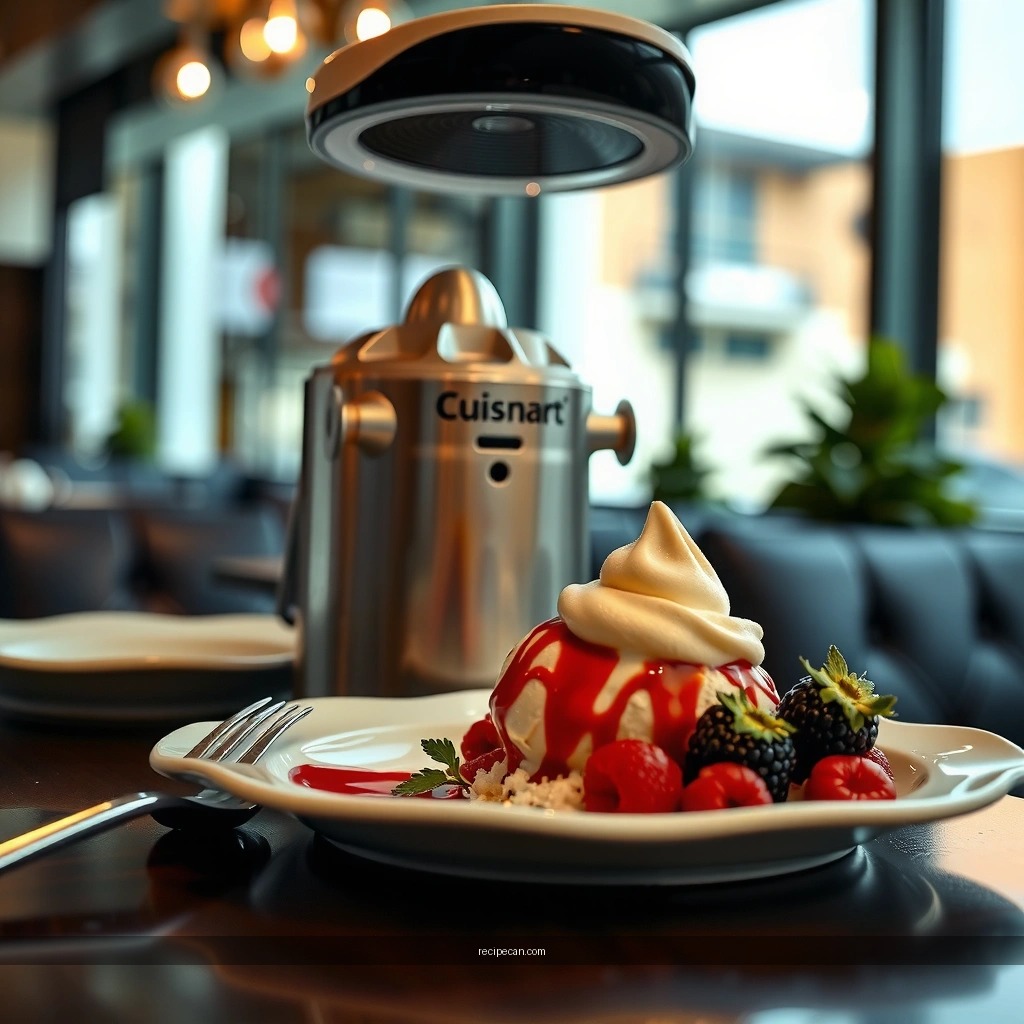
– Whisk yogurt, sweetener, and vanilla until fully combined
In a bowl, whisk Greek yogurt with your chosen sweetener until smooth and glossy. Break up any yogurt clumps, and whisk long enough to avoid grainy pockets of sugar. Vanilla should be fully incorporated so the flavor distributes evenly.
– If needed, stir in a splash of milk to reach pourable thickness
Most Greek yogurts are thick—great for creaminess—but the Cuisinart bowl/dasher needs a mixture that flows. Add milk 1 tablespoon at a time until the base pours smoothly yet still coats the spoon. This “pourable thickness” improves churning efficiency and helps achieve a consistent frozen texture.
– Optional: add lemon juice for a brighter, tangier flavor
Lemon juice lifts the yogurt’s tang and makes the flavor taste “fresher,” especially when pairing with berries. Start with 2 tablespoons for the base above, then adjust next time based on your preferred balance.
Step-by-step mixing workflow (fast and reliable):
1. Whisk yogurt + sugar/honey until homogenous.
2. Whisk in vanilla (and lemon juice if using).
3. Add milk slowly until pourable.
4. Cover and chill until very cold (minimum 2 hours, ideally overnight).
Using Your Cuisinart Ice Cream Maker
– Pre-chill the bowl (as required) before starting the machine
Most Cuisinart models require the freezing bowl to be in the freezer for a recommended minimum (often 8–24 hours depending on your freezer). Do not “partially freeze” the bowl—consistent readiness is what turns the base into a smooth churn rather than a slow, uneven set.
– Pour the mixture slowly while the Cuisinart is churning
Start the machine first (per your manual), then pour the base into the bowl gradually. Slow pouring helps avoid temperature shocks in the bowl and ensures the dasher immediately pulls the mixture into the active freezing zone.
– Churn until thick and “soft-serve” style, following your model’s timing
Churning time varies with model and room temperature, but frozen yogurt typically reaches soft-serve thickness within the manufacturer’s recommended window. You’re looking for a texture that holds shape briefly on a spoon. Over-churning can make the product too stiff during the churn—leading to grainier scoops after freezing.
Best practice: If your machine has a “check” point, use it—many users overrun time trying to chase thickness. Soft-serve readiness is the sweet spot before the brief freezer firming step.
Freezing & Serving for Smooth Results
– Transfer to a container and freeze briefly to firm up
Once churned, transfer to an airtight container and freeze for 1–2 hours. This sets the texture for scooping without letting the mixture develop large ice crystals.
– For easier scooping, let it sit at room temperature 5–10 minutes
Frozen yogurt straight from the freezer can be very firm, especially if your sweetener level is on the lower end. A short sit at room temperature softens it just enough for clean scoops.
– Serve with toppings like fresh fruit, granola, or drizzle sauces
Toppings add both flavor and contrast to tangy frozen yogurt. Fresh berries, macerated strawberries, or mango pair particularly well. For a business-friendly presentation (events, catered dessert stations), portion into small cups and top at the last moment to preserve crisp granola texture.
Storage note: For best texture, consume within about 3–5 days. Longer storage can cause subtle hardening even when churn and sugar levels were well calibrated.
Flavor Variations to Try
– Swap vanilla for strawberry, raspberry, or coffee flavoring
If using extracts, keep the base ratio consistent and taste as you mix. For strawberry/raspberry-style flavor, a small amount of concentrated flavoring can deliver strong fruit notes without adding extra moisture.
– Add cocoa and a pinch of salt for chocolate frozen yogurt
For a chocolate version, whisk in unsweetened cocoa (commonly 1/4 cup cocoa for this batch) plus a pinch of salt. Salt amplifies cocoa aroma and balances sweetness—an important factor for chocolate frozen yogurt that otherwise can taste flat.
– Fold in cookie pieces or swirl jam after churning
Add cookie pieces at the end of churning for even distribution and satisfying bites. Jam is best handled after churning: swirl in gentle ribbons so the product doesn’t fully turn marbled (unless you want a more uniform pattern).
Suggested variation map (simple and repeatable):
– “Berry-forward” = replace vanilla with berry extract; optionally add a small amount of lemon zest.
– “Mocha” = coffee flavoring + a teaspoon of cocoa for depth.
– “Chocolate” = cocoa + salt; skip lemon juice to avoid flavor conflict.
Frozen yogurt is quick to master with a well-chilled base and proper churning in your Cuisinart ice cream maker. Follow the ingredient steps, churn until soft-serve thickness, then freeze briefly for the perfect scoop—then try one flavor variation to make it your own.
A great frozen yogurt outcome is less about complicated ingredients and more about process control: use thick Greek yogurt, balance tang with the right sweetener amount, chill before churning, and stop at soft-serve consistency before a short freezer set. Once you nail those variables, your Cuisinart ice cream maker becomes a dependable platform for creamy classics and confident flavor swaps—delivering smooth, scoopable frozen yogurt reliably at home.
Frequently Asked Questions
What’s a reliable frozen yogurt recipe for a Cuisinart ice cream maker?
A good base uses plain Greek yogurt (or yogurt plus a little milk), sweetener like honey or sugar, vanilla extract, and a pinch of salt. For extra creaminess in a Cuisinart ice cream maker, keep the mixture well blended and consider adding a small amount of heavy cream or whole milk depending on your yogurt thickness. Churn the mixture until it reaches a soft-serve consistency, then freeze briefly if you want firmer frozen yogurt.
How do I make frozen yogurt without ice crystals in my Cuisinart machine?
Ice crystals usually form when the mixture is too cold-sliced or isn’t sweet enough to lower the freezing point. Use full-fat Greek yogurt, add a little sugar (or sweetener), and chill the base in the refrigerator for several hours before churning in your Cuisinart ice cream maker. After churning, store the frozen yogurt in an airtight container and press parchment or plastic wrap directly on the surface to minimize air exposure.
Why does my Cuisinart frozen yogurt turn out too icy or too soft?
If it turns out too icy, the base may be under-sweetened, too low in fat, or it wasn’t pre-chilled before churning. If it’s too soft, you may not have churned long enough or you may be serving immediately rather than freezing after churn. For best results, follow the churn timing for your specific Cuisinart model, then freeze 2–4 hours to improve texture.
Which yogurt should I use for the creamiest frozen yogurt in a Cuisinart ice cream maker?
Plain Greek yogurt is the most common choice because it’s thick, tangy, and helps create a smooth frozen texture. If you use regular yogurt, you may need to add a bit more cream or strain it first to avoid a watery base. Choose full-fat options when possible, since fat contributes to body and prevents overly icy frozen yogurt.
What’s the best method to flavor frozen yogurt (like strawberry or mango) when using a Cuisinart ice cream maker?
For fruit flavors, blend fresh or thawed frozen fruit with a little sugar (and sometimes a squeeze of lemon) to help sweetness balance the tang. If your fruit has seeds or fibrous pieces, strain it for a smoother result. Add the fruit flavor to the chilled base before churning, then taste and adjust sweetness after blending so your Cuisinart frozen yogurt comes out well-balanced.
References
- Google Scholar Google Scholar
https://scholar.google.com/scholar?q=frozen+yogurt+manufacturing+process+freezing+overrun - Google Scholar Google Scholar
https://scholar.google.com/scholar?q=probiotic+survival+in+frozen+yogurt+during+storage - Google Scholar Google Scholar
https://scholar.google.com/scholar?q=ice+cream+maker+freezing+rate+ice+crystal+size+texture - Frozen yogurt
https://en.wikipedia.org/wiki/Frozen_yogurt - Ice cream
https://en.wikipedia.org/wiki/Ice_cream - Ice cream maker
https://en.wikipedia.org/wiki/Ice_cream_maker - eCFR :: 21 CFR 135.110 — Ice cream and frozen custard.
https://www.ecfr.gov/current/title-21/chapter-I/subchapter-B/part-135/section-135.110 - https://pubmed.ncbi.nlm.nih.gov/?term=frozen+yogurt+manufacturing+process+freezing+overrun
https://pubmed.ncbi.nlm.nih.gov/?term=frozen+yogurt+manufacturing+process+freezing+overrun - https://pubmed.ncbi.nlm.nih.gov/?term=probiotic+survival+frozen+yogurt+storage
https://pubmed.ncbi.nlm.nih.gov/?term=probiotic+survival+frozen+yogurt+storage - https://pubmed.ncbi.nlm.nih.gov/?term=freezing+rate+ice+crystal+size+ice+cream+texture
https://pubmed.ncbi.nlm.nih.gov/?term=freezing+rate+ice+crystal+size+ice+cream+texture