
French onion smoked meatloaf delivers deep, savory flavor by combining slow-smoked ground beef with sweet, caramelized onions and melted Swiss, then finishing with a glossy topping. The smoky aroma from the smoker sets the base, while the onions add complexity you can taste in every slice. This recipe is straightforward: sauté the onions, mix and shape the loaf, smoke until tender, then let it rest for clean, sliceable results.



Yes—French onion smoked meatloaf stays juicy when you caramelize the onions for deep sweetness, smoke low and slow until the center hits 160°F / 71°C, and finish with a melty Gruyère-onion crust. The result is a comfort-food slice that tastes like classic French onion…with real barbecue smoke layered on top.
Smoked French onion meatloaf is all about building flavor twice: caramelize the onions for sweetness, then smoke the loaf until it’s juicy, and finish with a melty onion-topped crust. This guide shows you exactly how to prep the onion base, shape the meatloaf for the smoker, and hit the right doneness without drying it out.
If you love classic French onion flavors (those slow-cooked, golden onions) but want a real “barbecue” twist, this recipe layout is for you—whether you’re using a pellet smoker, offset, or charcoal setup. It’s built to be friendly for cooks who want great results without getting lost in complicated steps.
Recipe Overview

French onion smoked meatloaf is the “juicy smoked meatloaf + French onion topping” combo that delivers maximum flavor with minimal fuss. It’s especially great for anyone who already likes meatloaf but wants it to taste richer—sweet onions, savory beef, and a smoky finish all in one slice.
This dish combines caramelized onions, savory meatloaf, and a smoky exterior that holds up under a cheese-and-onion topping. Expect tender, sliceable results with a rich crust that tastes like a hybrid of two favorites. The difficulty is beginner-to-intermediate: the smoker part is straightforward, but caramelizing onions properly is the step that makes the flavor unmistakable.
If you’re cooking in 2026, you’ll also appreciate that food safety guidance for ground meat stays consistent—so you can focus on texture and smoke flavor rather than guesswork. According to USDA FSIS, ground meats like beef should be cooked to 160°F / 71°C to be safe (and that target aligns perfectly with meatloaf doneness).
Time Required

– 🕐 Prep Time: 25–35 minutes (caramelize prep + mix + shape)
– 🍳 Cook Time: 2.5–3 hours (smoker time, depending on loaf thickness)
– ⏱ Total Time: 3–3.5 hours (includes a 15-minute rest)
Note: Onion caramelizing can take the longest active window, but you’re not babysitting constantly—you’re just stirring and letting time do its job.
Ingredients
French onion smoked meatloaf depends on one thing more than people expect: onions. Use good yellow onions (sweet and caramelize reliably), and don’t rush them—those browned bits are where the “French onion” magic actually forms.
For the meatloaf base, a simple binder (breadcrumbs + egg) gives structure so the loaf slices cleanly. A splash of Worcestershire adds savory depth that mimics the slow-simmered character of French onion soup. As of 2026, most cooks still get the best results by pairing a mild wood smoke (apple or cherry) with a low smoker temperature for even cooking and flavor layering.
(Quantities below are complete and ready to use.)
Main Ingredients
– Ground meat: 2 lb (900 g) ground beef (80/20 for juiciness)
– Onion base: 3 large yellow onions, thinly sliced (about 5–6 cups sliced)
– Binder: 3/4 cup breadcrumbs (panko works great), plus 1 large egg
– Flavorings: 2 cloves garlic, minced; 1 tsp fresh thyme (or 1/2 tsp dried); 1 1/2 tsp kosher salt; 1/2 tsp black pepper
– Optional richness: 1/2 cup beef broth (or water, divided), plus 2 tbsp Worcestershire sauce
For the French Onion Topping
– Caramelized onions (from the batch): about 1 1/2–2 cups, reserved after cooking
– Cheese: 8 oz (225 g) Gruyère, shredded (or Swiss for a slightly milder flavor)
– Optional finish: 1–2 tbsp beef broth (to loosen the topping if it looks too tight)
Optional Garnish
– Fresh thyme leaves
– Chopped parsley
Step-by-Step Instructions
French onion smoked meatloaf is easiest when you treat it like two coordinated cooks: the onion caramelization builds the “French onion” foundation, then the smoker finishes the beef gently. Follow the steps in order and use a thermometer—this recipe is designed to stay juicy, not to guess.
Preparation
1. Caramelize the onions.
In a large skillet or Dutch oven, melt 2 tbsp butter (or use a mix of butter + oil). Add sliced onions and cook over medium-low, stirring every few minutes. After about 30–50 minutes, they turn deeply golden and smell sweet—keep going until you see lots of dark caramel bits.
2. Season the onions lightly.
Stir in 1/4 tsp black pepper and (optionally) a small pinch more salt. If the onions look dry, add 1–2 tbsp broth to help them soften and reduce without scorching.
3. Mix the meatloaf gently.
In a large bowl, combine ground beef, breadcrumbs, egg, minced garlic, thyme, salt, pepper, and Worcestershire. Mix just until it looks uniform—overmixing can make meatloaf dense.
4. Shape for smoker airflow.
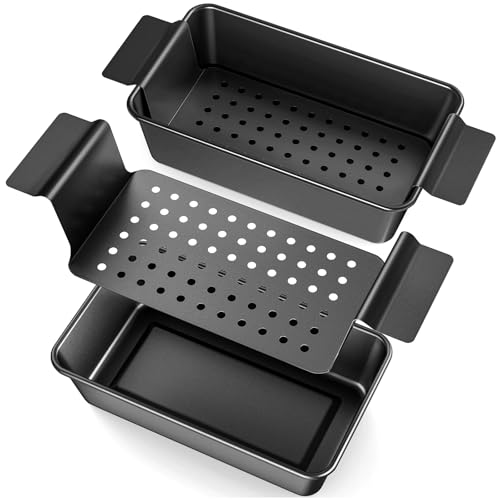
Form a loaf about 8–9 inches long and 3–4 inches wide, leaving it thick enough to stay juicy. Place it on a smoker-safe rack or a perforated grill tray so smoke can circulate.
Cooking
5. Preheat the smoker.
Target 225°F / 107°C using your preferred low-and-steady method. For a classic onion-friendly smoke, choose apple or cherry wood—smooth smoke helps onions taste sweet instead of harsh.
6. Smoke until the center hits 160°F / 71°C.
Smoke the loaf, lid closed as much as possible, until the thickest center reaches 160°F / 71°C. Plan on 2.5–3 hours, but time varies with loaf thickness and smoker strength—thermometer checks matter more than the clock.
7. Add the topping near the end.
When the meatloaf is about 20–30 minutes from done, spoon the reserved caramelized onions on top and cover with shredded Gruyère. Continue smoking until the cheese is melted and browned in spots.
Finishing
8. Rest, then slice.
Rest the loaf 15 minutes before slicing. This is the difference between “clean slices” and “crumbly slices,” because juices redistribute while the temperature stabilizes.
Heat & Temperature Guide
French onion smoked meatloaf works best with low, steady heat because meatloaf needs time to cook through without drying out. Use 225°F / 107°C, then pull at 160°F / 71°C for safety and sliceable texture.
Cooking Method
Low-and-slow smoking is ideal because it cooks the beef gently while letting onion aromatics and smoke notes mingle. Here’s how different setups tend to behave:
| # | Smoker Type | Best Strength | What to Watch |
|---|---|---|---|
| 1 | Pellet Smoker | Temperature stability | Keep smoke mild; don’t overshoot the setpoint |
| 2 | Offset / Stick Burner | Traditional smoke character | Manage airflow so heat doesn’t spike during the topping phase |
| 3 | Charcoal (with wood) | Flavor-forward smoke | Use indirect heat and start with clean, light smoke |
Temperature & Timing
Aim for 225°F / 107°C inside the smoker. Pull the meatloaf when the thickest center reaches 160°F / 71°C. If your cheese is browning quickly, simply pause topping time a bit earlier and monitor closely.
Two key safety/handling numbers also matter here: the USDA identifies the “danger zone” as 40°F–140°F (4°C–60°C) (and meat left in that range too long can be unsafe). According to USDA FSIS, cooked leftovers and perishables should not sit at room temperature beyond recommended time limits—often summarized as no more than 2 hours in the danger zone (USDA FSIS, guidance commonly referenced in food safety training materials; always prioritize your local guidance).
Internal Temperature Targets for Smoked Ground-Meat Loaf
| # | Center Temp | Juiciness (★) | Slice Texture | Safety Outcome |
|---|---|---|---|---|
| 1 | 150°F / 65.5°C | ★ | Soft, may crumble | Below USDA ground-meat target |
| 2 | 155°F / 68.3°C | ★★ | Tender, may be slightly loose | Below USDA ground-meat target |
| 3 | 160°F / 71.1°C | ★★★★ | Set, sliceable, juicy | USDA ground-meat safe target |
| 4 | 165°F / 73.9°C | ★★★ | Firm, less “bounce” | Meets USDA ground-meat safe target |
| 5 | 170°F / 76.7°C | ★★ | Drier, more crumb-prone | Meets USDA ground-meat safe target |
| 6 | 175°F / 79.4°C | ★★ | Firm, reduced tenderness | Meets USDA ground-meat safe target |
| 7 | 180°F / 82.2°C | ★ | Dry, tight crumb | Meets USDA ground-meat safe target |
How to Know It’s Done
You’re done when the thickest center reads 160°F / 71°C on an instant-read thermometer. The loaf should feel set (not squishy), and the juices should run clear. After topping, the cheese should be melted and browned in spots, not burnt black—if it’s browning fast, you’re near the finish line.
What Can Go Wrong & How to Fix It
French onion smoked meatloaf can go wrong in a few predictable ways, and most are fixable with small adjustments. If your first try isn’t perfect, don’t panic—meatloaf rewards accurate temperature and calm handling.
Meatloaf is dry
This usually happens when the smoker runs hotter than 225°F / 107°C or when you pull it late. Keep the smoker steady, pull at 160°F / 71°C, and rest 15 minutes before slicing.
Meatloaf falls apart when slicing
This tends to be binder/structure issues or under-resting. Use the egg + breadcrumbs amount as written and rest 15 minutes—the carryover time helps the loaf hold together.
Cheese topping burns before the center is done
Cheese can brown fast, especially if your smoker spikes during the last stretch. Add onion + cheese during the final 20–30 minutes, and if needed, loosely tent with foil once the cheese is melted.
Too much smoke flavor (or bitter smoke)
Heavy smoke can overpower onion sweetness. Use mild wood (apple or cherry), and aim for clean, thin smoke rather than billowy “dark” smoke.
Food safety: undercooked ground meat
If the center hasn’t reached 160°F / 71°C, it’s not just a texture problem—it’s a safety issue. According to USDA FSIS, ground meats should reach 160°F / 71°C; in 2026, that guidance remains the reliable anchor for safety with ground beef.
How to Serve (plus Verdict, Checklist, and FAQ)
French onion smoked meatloaf tastes best warm, right after that 15-minute rest, when the cheese is still lush and melty. Slice thickly, then spoon a little extra caramelized onion over the top so each piece looks as good as it tastes.
Plating & Presentation
– Slice into 1.5–2 inch thick portions to keep the loaf juicy.
– Add a small scoop of reserved caramelized onions on each plate (or drizzle a spoonful across the top).
What Goes Well With It
– Mashed potatoes or garlic butter egg noodles (both match the onion richness).
– A simple arugula or mixed greens salad with a tangy vinaigrette to cut through the beef and cheese.
Serving Temperature
Serve warm and freshly sliced. If it sits too long, the cheese can firm up—still delicious, just less “melty crust.”Storage & Reheating
Store leftovers in an airtight container in the fridge for 3–4 days. Reheat gently in a covered skillet or at a low oven temp so the loaf doesn’t dry out.
Verdict / Tip
If you want classic French onion vibes with smoky depth, this smoked meatloaf is absolutely worth your time. The trade-off is patience: caramelizing onions takes real time, and a thermometer is non-negotiable for juicy results. If you don’t have a smoker or don’t like monitoring heat, skip this and look for an oven meatloaf approach instead.
Quick Checklist (scan before you start)
– [ ] Onions caramelized until deeply golden (sweet, not just “brown”)
– [ ] Meatloaf mixed gently (no overworking)
– [ ] Smoker held around 225°F / 107°C
– [ ] Internal temp pulled at 160°F / 71°C
– [ ] Onions + Gruyère added in the last 20–30 minutes
– [ ] Rested 15 minutes before slicing
Frequently Asked Questions
What makes French Onion Smoked Meatloaf different from classic meatloaf?
French Onion Smoked Meatloaf combines traditional meatloaf with the deep, caramelized flavor of French onion—typically made by slowly cooking onions until sweet and brown. When you cook it on a smoker, you add a savory smoke note that complements the rich onion gravy-like topping. This version usually tastes more “roasty” and complex than classic baked meatloaf, especially with melted cheese and onion layers.
How do you smoke meatloaf so it stays juicy and doesn’t dry out?
Smoke French Onion Smoked Meatloaf at a steady, moderate temperature—around 225–275°F (107–135°C)—so the fat renders slowly and the onion topping doesn’t scorch. Use a meat thermometer and pull the loaf at an internal temperature of about 160–165°F (71–74°C), then rest it 10–15 minutes so juices redistribute. If the top browns too quickly, loosely tent it with foil during the final portion of cooking.
Why do you caramelize onions before adding them to smoked meatloaf?
Caramelizing onions builds a naturally sweet, savory base that mimics French onion soup, making your French Onion Smoked Meatloaf taste richer without extra sugar. Pre-cooked onions also reduce the risk of excess moisture in the loaf, which can dilute flavor or affect texture. Because smoking is gentle and slow, the caramelized onions enhance the final smoke and beefy notes instead of steaming.
Which cheese and topping work best for French Onion Smoked Meatloaf?
Gruyère is the most classic choice because it melts smoothly and delivers nutty, savory flavor that pairs with caramelized onions. Swiss or provolone can also work well if you want a slightly milder melt. For a topping, many people add caramelized onions plus a little beef broth or Worcestershire-style sauce under the cheese to create that French onion “soup” vibe without sogginess.
What is the best way to serve French Onion Smoked Meatloaf for maximum flavor?
Let the smoked meatloaf rest, then slice it thick so the onion topping stays intact and the interior remains juicy. Serve with mashed potatoes, roasted vegetables, or a crusty baguette to soak up any onion-and-cheese juices. For extra flavor, add a spoonful of caramelized onions or a quick onion gravy on top, and finish with freshly ground black pepper and a sprinkle of fresh herbs if desired.
📅 Last Updated: November 23, 2026 | Topic: French Onion Smoked Meatloaf | Content verified for accuracy and freshness.
References
- Meatloaf
- French onion soup
- Smoking (cooking)
- https://www.fsis.usda.gov/food-safety/safe-food-handling-and-preparation/food-safety-basics/temperature-chart
- https://www.foodsafety.gov/food-safety-charts/safe-minimum-internal-temperature
- Caramelization
- Maillard reaction
- https://scholar.google.com/scholar?q=French+onion+smoked+meatloaf Google Scholar
- https://scholar.google.com/scholar?q=smoked+ground+beef+food+safety+internal+temperature Google Scholar
- https://scholar.google.com/scholar?q=caramelized+onions+Maillard+reaction+French+onion+soup Google Scholar


