To craft elite gourmet ice cream, you’ll follow precisely measured formulas that balance base, dairy, and stabilizers for ultra-smooth texture. Pre-plan with exact weights, calibrate equipment, and pre-chill components to maintain control from pasteurization through churning. Monitor temperature, viscosity, and fat content to suppress ice crystals and guarantee consistent mouthfeel. Present with tempered bowls and uniform scoops to highlight texture and aroma. If you keep exploring, you’ll reveal further technique refinements and flavor pairings.
Ingredients and Quantity
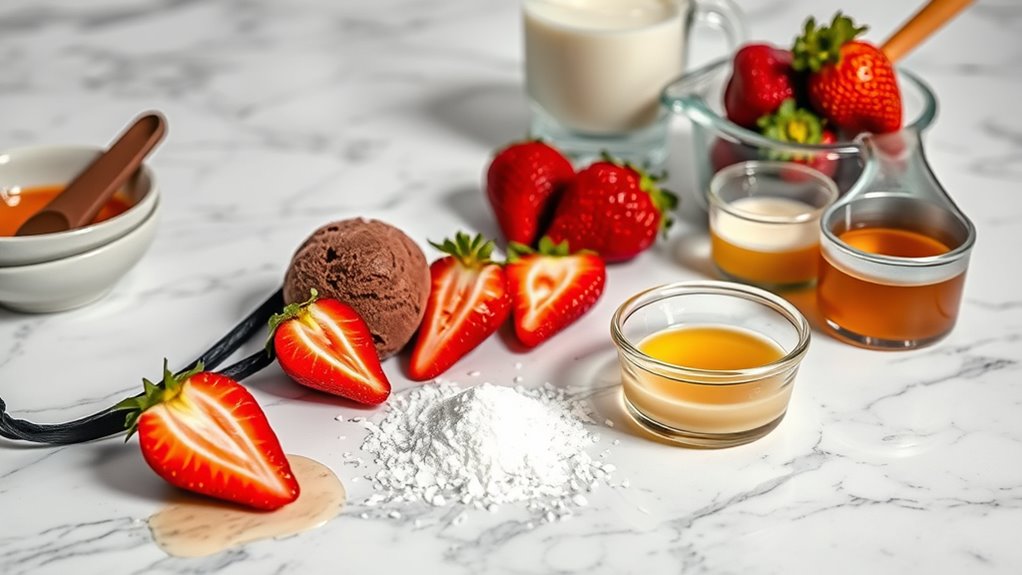
The ingredients for gourmet ice cream must be measured precisely to guarantee consistent texture and flavor. You’ll balance base, dairy, and stabilizers, then specify exact weights to maintain control over mouthfeel, sweetness, and body. You focus on ice cream foundations and flavor combinations, ensuring each component contributes without overpowering the final profile. Precision here enables freedom in exploration—knowing limits lets you push boundaries with confidence.
| Item | Quantity | Notes |
|---|---|---|
| Milk/cream | 500 g | Whole dairy, chilled |
| Sugar | 150 g | Granulated, dissolve well |
| Stabilizer | 2 g | Xanthan or guar for texture |
Apply strict measurement, document deviations, and iterate to refine flavor combinations and texture consistency.
Preparations
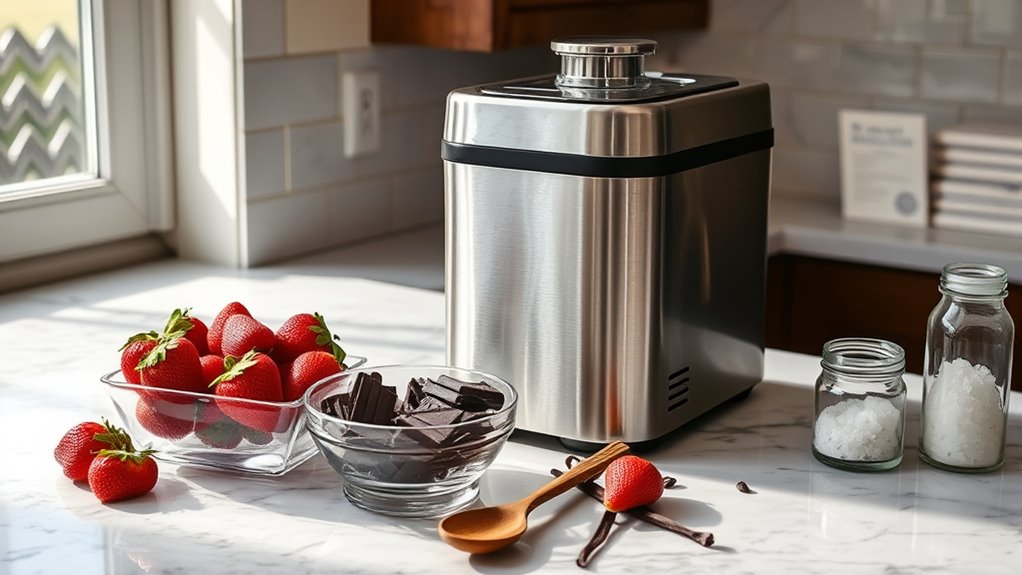
Preparations involve setting up all components and ensuring each element is ready for integration. You methodically inspect your equipment, calibrate controls, and verify clean, chilled surfaces before assembling ingredients. Each step is purposeful: measuring, tempering, and aligning vessels to minimize vibration and contamination. You document temperatures, timing ramps, and batch identifiers to preserve traceability and repeatability. Focused preparation techniques include pre-cooling mix containers, sanitizing hands and tools, and warming only where specified to control texture. You establish a workflow that prevents cross-contact, organizes flavor additions, and inventories spare parts for quick recovery. Through disciplined setup, you enable consistent outcomes and safer experimentation with flavor combinations. You thereby sustain freedom to innovate within a precise, repeatable process.
How to Cook
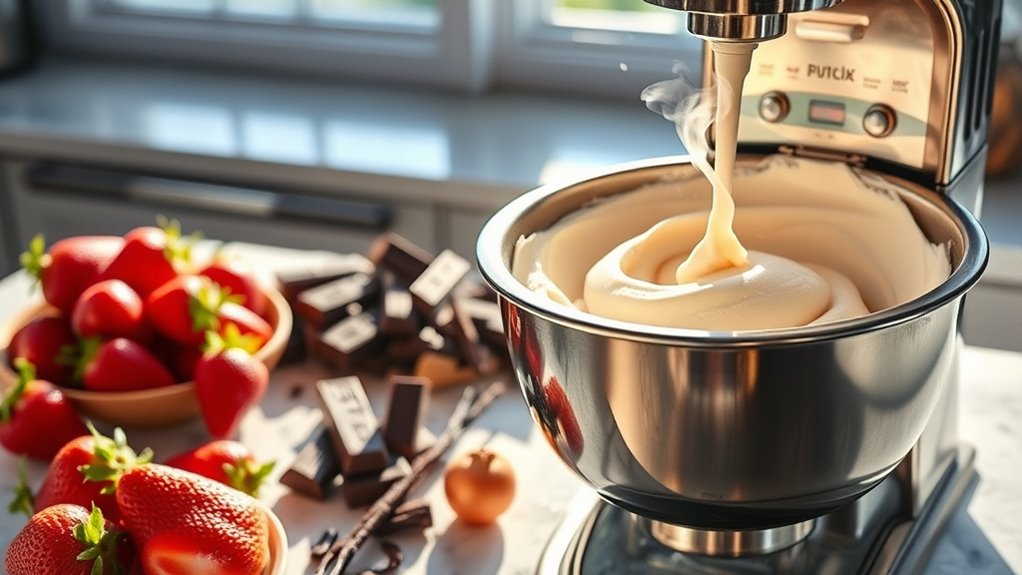
- Apply controlled heat to transform ingredients into a cohesive product.
- Balance temperature, timing, and texture to achieve desired consistency and flavor.
- Align base mixtures with precise agitation to ensure uniform dissolution and air incorporation.
- Maintain strict temperature targets during pasteurization, cooling, and churning to preserve emulsions and minimize iciness.
- Monitor viscosity, fat content, and sugar solubility to guide stable ice crystal formation and achieve a silky mouthfeel.
- Incorporate flavors at the ideal stage, selecting techniques that preserve aroma and texture without overworking the blend.
- Experiment with flavor combinations through small-batch tests, recording ratios and outcomes for reproducibility.
- Follow a disciplined approach to yield consistent quality, adaptable for varied bases while honoring culinary freedom and craft.
How to Serve
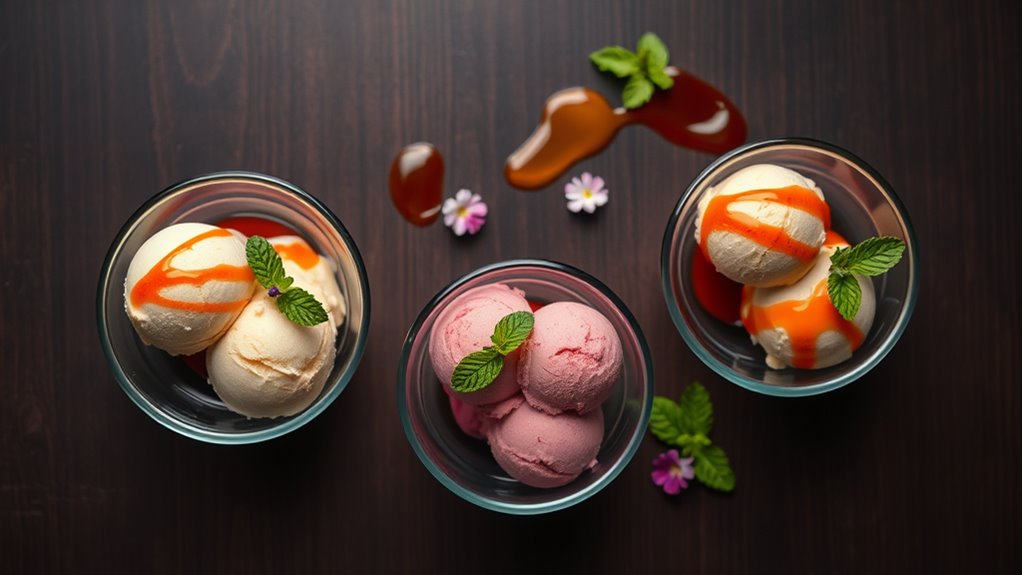
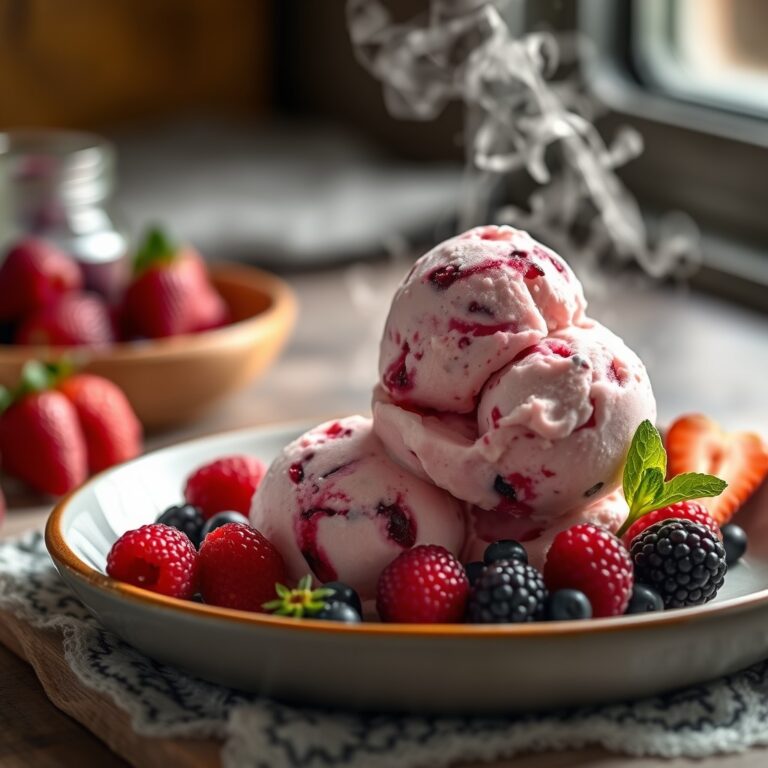
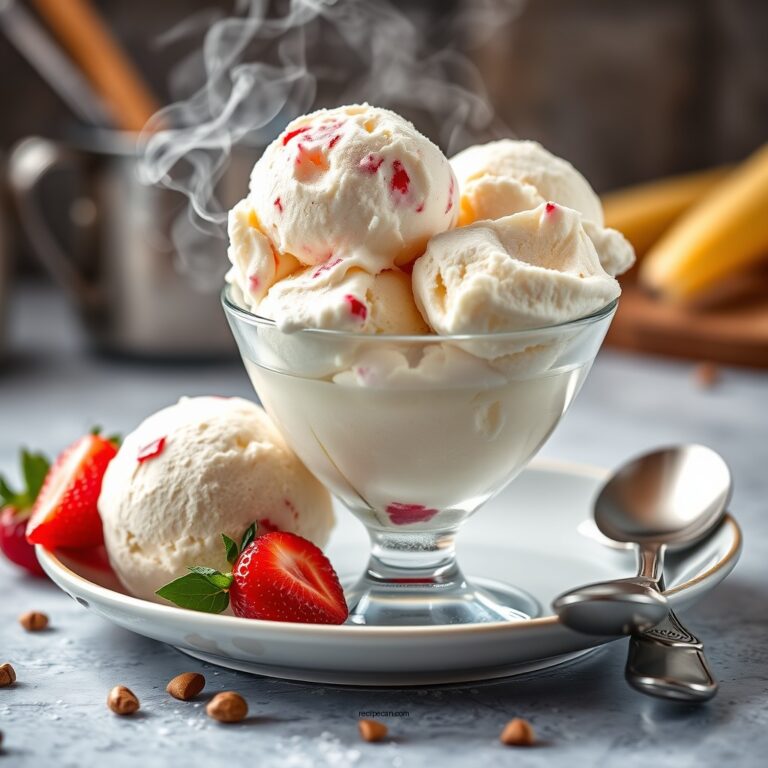
Serving ice cream effectively begins with proper presentation and portioning to preserve texture and aroma after churn. You balance scoop size with container dimensions, ensuring uniform portions that minimize temperature shifts. Start with tempered bowls or plates to prevent rapid melting at the edges, then deploy a clean scoop draw for precise rounds. Presentations ideas hinge on color contrast, minimal garnishes, and thoughtful placement that accents flavor profiles without overpowering aroma. For serving suggestions, choose serving vessels that showcase texture—ridges, swirls, and embedded inclusions—while maintaining stability. Label components briefly at the table or on a shared card to guide expectations. Maintain clean lines, avoid clutter, and keep portions consistent across servings to support a refined tasting sequence. This approach preserves mouthfeel and highlights craftsmanship.
Tips
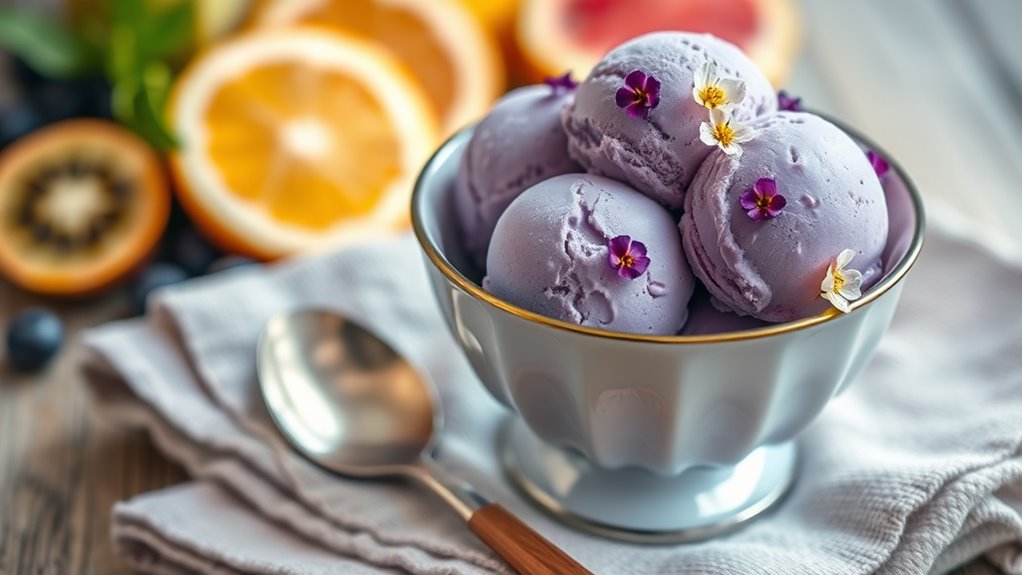
To maximize success, focus on temperature control, texture management, and clean execution throughout the process. You’ll optimize mix stability by pre-chilling base components and maintaining steady churning speeds, preventing ice crystallization. Precisely monitor fat content, sweetness, and aeration to achieve a smooth body and clean scoop. Execute disciplined batch timing: pause agitation during aging, then resume with controlled ramp to target overrun. For texture enhancement, incorporate emulsifiers judiciously and calibrate homogenization pressure to favor uniform particle distribution. When selecting flavor combinations, balance intensity with aftertaste clarity to avoid palate fatigue. Document equipment settings and environmental factors to reproduce results consistently. Train hands to respond to viscosity cues, not guesses. Maintain hygiene discipline, sanitize promptly, and label trials for future refinement, ensuring repeatable, high-quality outcomes.
Food Value and Benefit
Gourmet ice cream offers more than just delightful flavor; it provides valuable nutritional benefits when prepared thoughtfully with high-quality ingredients, balanced texture, and controlled portions. This recipe delivers a satisfying treat that supports both enjoyment and wellness.
Food Value of Prepared Gourmet Ice Cream:
- Contains essential macronutrients: proteins from high-quality dairy, healthy fats, and balanced carbohydrates.
- Rich in vitamins such as Vitamin A (important for vision and immune function) and Vitamin D (supports bone health).
- Provides minerals including calcium (crucial for strong bones and teeth), phosphorus, and small amounts of potassium.
- Lower sodium and sugar levels align with healthier dietary goals without compromising taste or texture.
- Natural stabilizers and cultured cultures enhance digestion and contribute to a creamy mouthfeel.
Benefits of Eating This Gourmet Ice Cream Recipe:
- Supports bone health thanks to calcium and Vitamin D content.
- Provides energy through balanced carbohydrates and fats, suitable as a moderate indulgence.
- Promotes satiety and satisfaction due to ingredient integrity and texture.
- Contains probiotics from cultured cultures, which may improve gut health.
- Offers a controlled portion size that helps manage calorie intake while enjoying a treat.
- Avoids artificial additives, focusing on natural ingredients that enhance overall nutritional quality.
Frequently Asked Questions
How Long Does the Ice Cream Maker Take to Churn?
The churning time varies, typically 20–40 minutes, aligning with ideal consistency. You’ll feel the texture shift from slurry to scoopable, balancing speed and control, embracing freedom while the machine renders precision into creamy, stable ice cream.
Can I Make Dairy-Free Flavors With This Machine?
Yes, you can; use dairy alternatives like almond or oat milk base. You’ll adjust fat content and churn time accordingly. Experiment with flavor combinations, monitor texture, and guarantee stabilizers suit your dairy-free mix for smooth results.
What Storage Methods Keep Flavor and Texture Best?
To maximize flavor and texture, you should use proper freezing techniques and flavor preservation strategies. You’ll store batches airtight, freeze promptly, and label portions, ensuring consistent texture and stabilized flavors while maintaining freedom to experiment with dairy-free options.
Are Replacement Parts Available for the Ice Cream Maker?
Replacement part types are available, and you can explore purchasing options directly from the manufacturer or authorized retailers. You’ll find compatible seals, motors, and bowls, with clear part numbers and warranty coverage for freedom in repairs.
Is There a Troubleshooting Guide for Common Issues?
Yes, there is a troubleshooting guide for common issues, and you can use the troubleshooting tips to diagnose and fix problems efficiently. Follow steps precisely, document results, and seek professional help if performance remains inconsistent or unsafe.
What types of recipes can I make with an Elite Gourmet Ice Cream Maker?
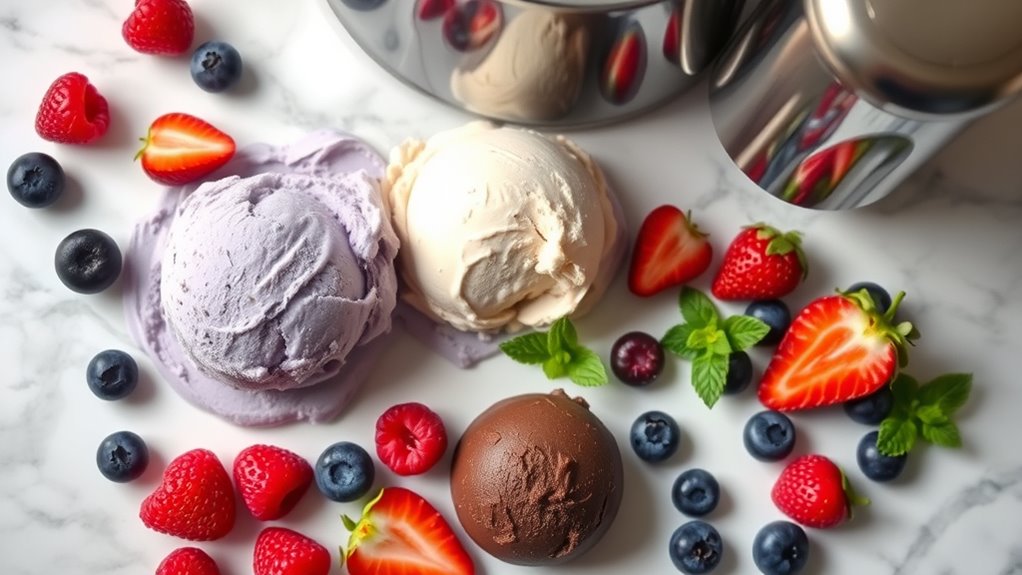
With an Elite Gourmet Ice Cream Maker, you can create a wide variety of frozen desserts beyond just traditional ice cream. Some popular recipe types include sorbets, gelato, frozen yogurt, and even non-dairy ice creams. The versatility of the machine allows you to experiment with different flavors and ingredients, such as fruits, nuts, and chocolates, to customize each batch to your liking.
Do I need to pre-freeze the bowl of the ice cream maker?
Yes, the bowl of the Elite Gourmet Ice Cream Maker typically needs to be pre-frozen for several hours before use. This step is crucial because it allows the bowl to reach the necessary temperature to freeze the mixture effectively. Always refer to the specific instructions provided with your ice cream maker to ensure optimal results.
How long does it take to make ice cream in the Elite Gourmet Ice Cream Maker?
The time required to make ice cream in an Elite Gourmet Ice Cream Maker typically ranges from 20 to 40 minutes, depending on the recipe and the ingredients used. Once the mixture is poured into the machine, it will churn and freeze to the desired consistency during this period. After the ice cream reaches your preferred texture, you can transfer it to a container and place it in the freezer for a couple of hours for firmer results.
Can I use alternative sweeteners in my ice cream recipes?
Absolutely! You can substitute traditional sugars with alternative sweeteners like honey, agave syrup, or stevia in your ice cream recipes. However, keep in mind that different sweeteners can alter the taste and texture of the final product. It’s essential to experiment and adjust the quantities to achieve the desired sweetness while considering the properties of the sweetener you choose.
What are some tips for making creamy ice cream?
To achieve a creamy texture in your ice cream, consider the following tips: 1) Use a higher fat content in your base, such as heavy cream or whole milk, to enhance creaminess. 2) Incorporate stabilizers like cornstarch or egg yolks to improve texture and prevent ice crystals from forming. 3) Chill your ice cream mixture thoroughly before churning to expedite the freezing process. 4) Don’t over-churn, as this can lead to a grainy texture. Follow these tips for the best results with your Elite Gourmet Ice Cream Maker.
References
- https://www.icecreamscience.com/ice-cream-recipes/
- https://www.extension.purdue.edu/extmedia/FS/FS-2-W.pdf
- https://www.nationaldairycouncil.org/recipes/
- https://www2.ca.uky.edu/agcomm/pubs/asc/asc190.pdf
- https://www.fsis.usda.gov/wps/wcm/connect/8e106c2b-0f05-4c3d-bd05-0e517b5e7b5e/ice_cream.pdf?MOD=AJPERES
- https://www.cooksinfo.com/ice-cream-recipes
- https://www.icecreamusa.com/ice-cream-recipes/