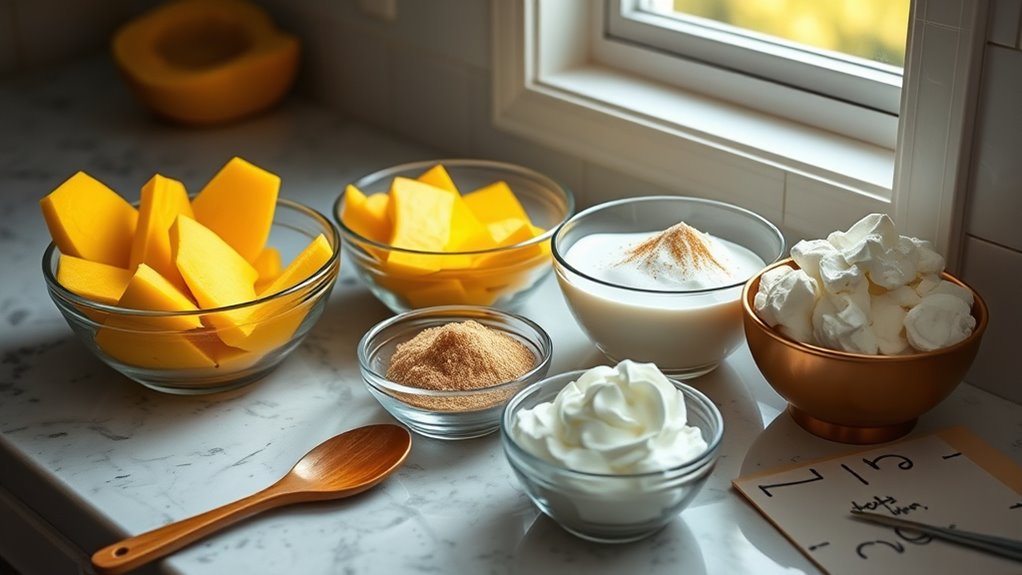
To make perfect pawpaw pudding, start with 2 cups smooth, seed-free pulp and 1/2 cup sugar. Beat in 3 eggs and 1 cup milk for richness. Cook gently over low heat, stirring constantly, adding cornstarch to thicken without lumps. Serve in clear bowls topped with whipped cream or nuts for a simple yet elegant touch. Taste as you go to adjust sweetness and spice. Stick with these steps, and you’ll reveal more tips to perfect this creamy dessert’s flavor and texture.
Ingredients and Quantity
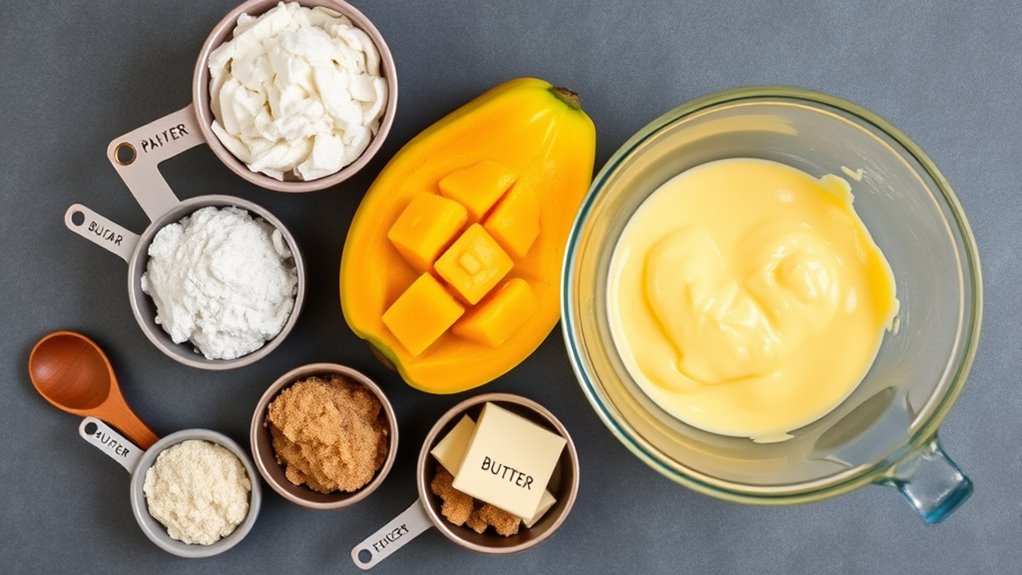
To make delicious pawpaw pudding, you’ll need a handful of key ingredients measured carefully to achieve the perfect balance of flavors and texture. Selecting the right pawpaw varieties is vital, as some yield creamier pulp enhancing pudding texture. Alongside ripe pawpaw, you’ll use ingredients that complement its sweetness without overpowering it.
| Ingredient | Quantity |
|---|---|
| Ripe Pawpaw Pulp | 2 cups |
| Sugar | 1/2 cup |
| Eggs | 3 large |
| Milk | 1 cup |
Each component contributes to freedom in texture—smooth yet firm, not too dense. This combination guarantees your pudding is rich and satisfying, capturing the unique essence of pawpaw varieties.
Preparations
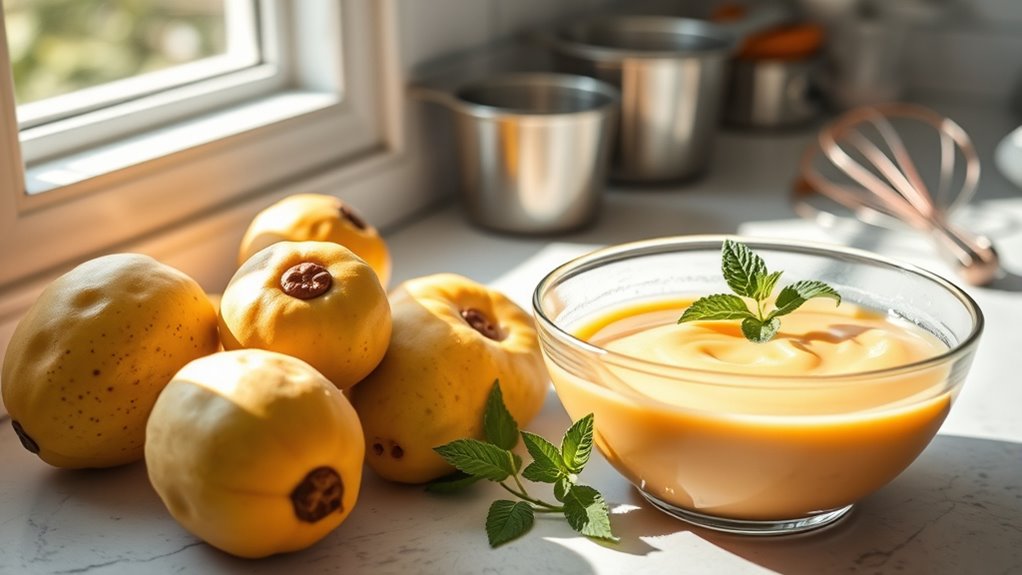
Before you start mixing, make sure your pawpaw pulp is smooth and free of seeds or fibrous bits, as this will guarantee a creamy texture in your pudding. Use a fine sieve or blender to achieve this consistency. Mastering preparation techniques like properly measuring ingredients and pre-sifting dry components streamlines your workflow. Organize your workspace and gather all necessary tools before you begin to save time and avoid interruptions. Efficient time management means you can enjoy the process without feeling rushed. Remember, prepping ingredients in advance and following a clear sequence prevents mistakes and guarantees your pudding turns out perfectly every time. By focusing on precision and order, you’ll create a pawpaw pudding that’s both delicious and satisfying, giving you freedom to savor each step.
How to Cook
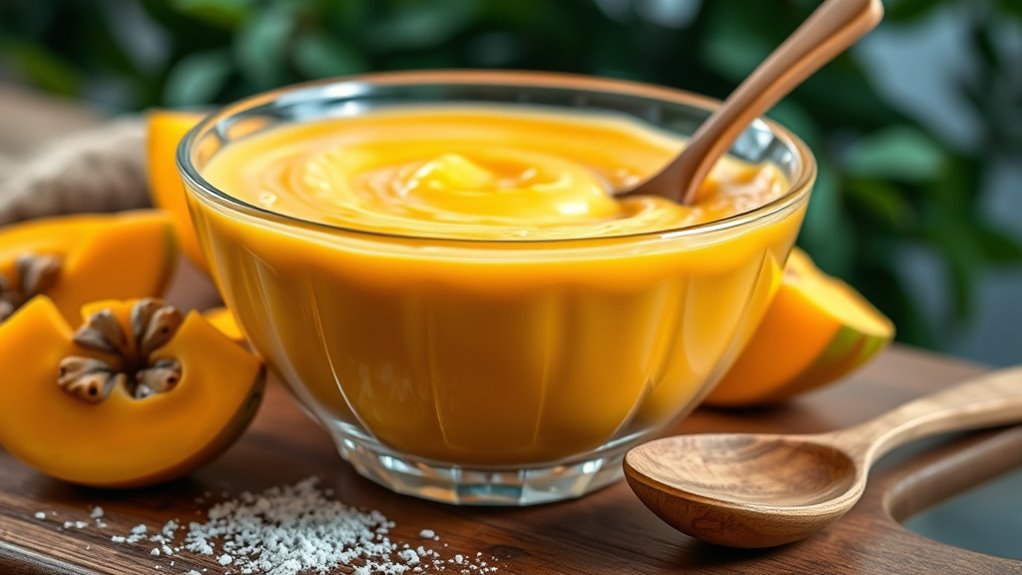
- Prepare your pawpaw pulp perfectly before cooking.
- Cook the pulp gently over low heat to preserve its delicate flavor and creamy texture.
- Simmer the pulp slowly, stirring constantly to avoid curdling or burning.
- Use canned pulp as a substitute if fresh pawpaw is unavailable, and adjust sugar levels accordingly since canned pulp may be sweeter.
- Gradually add cornstarch or arrowroot as a thickening agent, mixing thoroughly to prevent lumps.
How to Serve
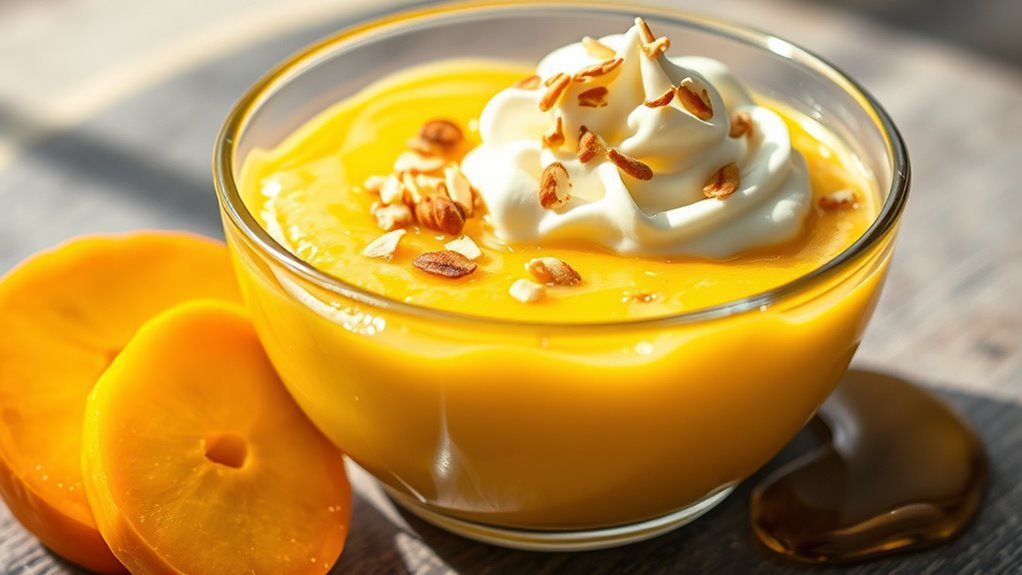
After you’ve cooked your pawpaw pudding to the perfect consistency, it’s time to think about how to serve it for the best experience. Presentation styles play a significant role in elevating this dish, so consider serving it in clear glass bowls or ramekins to showcase its creamy texture and rich color. For a fresh twist, top the pudding with a dollop of whipped cream or a sprinkle of crushed nuts. Serving suggestions include pairing it with a side of fresh fruit or a drizzle of honey to enhance its natural sweetness. Whether you prefer individual portions or a family-style bowl, focus on simplicity and elegance to let the pudding’s unique flavor shine through, giving you the freedom to enjoy it your way.
Tips
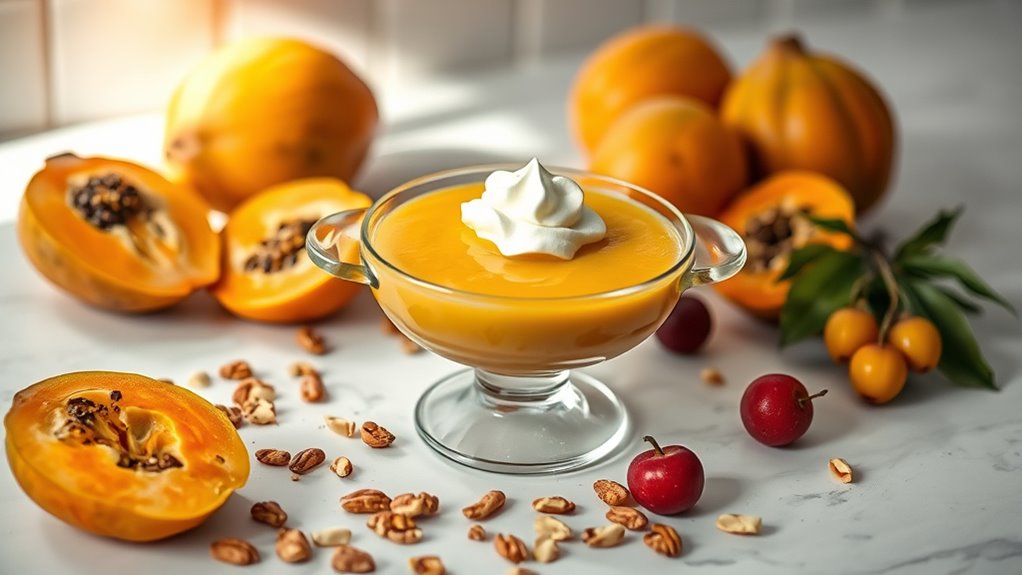
Although pawpaw pudding is straightforward to make, a few key tips can help you achieve the best texture and flavor every time. To enhance your experience, focus on these essentials:
- Tasting techniques: Sample your pudding at different stages to adjust sweetness and spice levels, ensuring the final product suits your palate perfectly.
- Flavor pairings: Experiment with complementary ingredients like vanilla, cinnamon, or nutmeg to elevate the natural richness of pawpaw without overpowering it.
- Texture control: Monitor cooking time closely; undercooking leaves it runny, while overcooking makes it dense. Aim for a smooth, custard-like consistency.
Food Value and Benefit
Pawpaw pudding is not only a delicious dessert but also a nutritious choice packed with essential vitamins and minerals. This prepared dish provides a variety of health benefits, making it a wholesome addition to your diet.
Food Value:
- Rich in vitamins A and C, which are vital for immune support and skin health.
- Contains essential minerals such as potassium and magnesium, important for heart health and muscle function.
- High in natural dietary fiber, aiding digestion and promoting satiety.
Benefits of Eating Pawpaw Pudding:
- Supports a healthy immune system
- Enhances skin vitality and repair
- Contributes to cardiovascular health
- Helps maintain muscle function and electrolyte balance
- Promotes digestive health and helps control appetite
- Offers a satisfying, nutrient-dense treat that complements a balanced diet
Enjoying pawpaw pudding allows you to indulge in a delicious dessert while gaining valuable nutrients that support overall well-being.
Frequently Asked Questions
What are the key ingredients for pawpaw pudding?
The key ingredients for pawpaw pudding typically include ripe pawpaw fruit, sugar, milk, eggs, flour, and baking powder. Some recipes may also incorporate spices like nutmeg or cinnamon to enhance the flavor. It’s important to use ripe pawpaw, as it has a creamy texture and sweet taste that is essential for the pudding’s success.
How do I prepare the pawpaw for the pudding?
To prepare the pawpaw for your pudding, start by selecting a ripe pawpaw—look for a fruit that is slightly soft to the touch and has a fragrant aroma. Cut the pawpaw in half, scoop out the seeds, and then scoop the flesh into a bowl. Mash the flesh with a fork or blend it until smooth. This puree will be the base of your pudding, providing both flavor and texture.
Can I make pawpaw pudding in advance?
Yes, you can make pawpaw pudding in advance! Once prepared, allow the pudding to cool completely before storing it in an airtight container in the refrigerator. It can typically be stored for up to 3 days. To serve, simply reheat it gently in the oven or microwave. However, it’s best to enjoy it fresh for optimal texture and flavor.
What are some variations of pawpaw pudding I can try?
There are several delicious variations of pawpaw pudding you can experiment with. For a tropical twist, consider adding coconut or pineapple. You can also incorporate nuts like walnuts or pecans for added crunch. If you prefer a richer flavor, try adding dark chocolate chips or a splash of vanilla extract. Each variation can give your pudding a unique taste while still celebrating the pawpaw’s natural sweetness.
Is pawpaw pudding gluten-free?
Traditional pawpaw pudding recipes often include flour, which contains gluten. However, you can easily make a gluten-free version by substituting all-purpose flour with gluten-free flour blends or almond flour. Always check the labels to ensure that your ingredients are certified gluten-free if you have a gluten intolerance or celiac disease. This allows everyone to enjoy the delightful taste of pawpaw pudding!
References
- https://en.wikipedia.org/wiki/Pawpaw_(Asimina_triloba
- https://www.ams.usda.gov/sites/default/files/media/Pawpaw%20Fact%20Sheet.pdf
- https://www.extension.purdue.edu/extmedia/fnr/fnr-454-w.pdf
- https://www.vegetablegardener.com/item/5093/pawpaw-pudding-recipe
- https://www.nationalparks.org/explore-parks/pawpaw-national-park
- https://www.usda.gov/media/blog/2015/09/14/pawpaw-fruit-america
- https://www.michigan.gov/documents/mdard/MDARD_Pawpaw_Factsheet_3_19_13_421676_7.pdf
