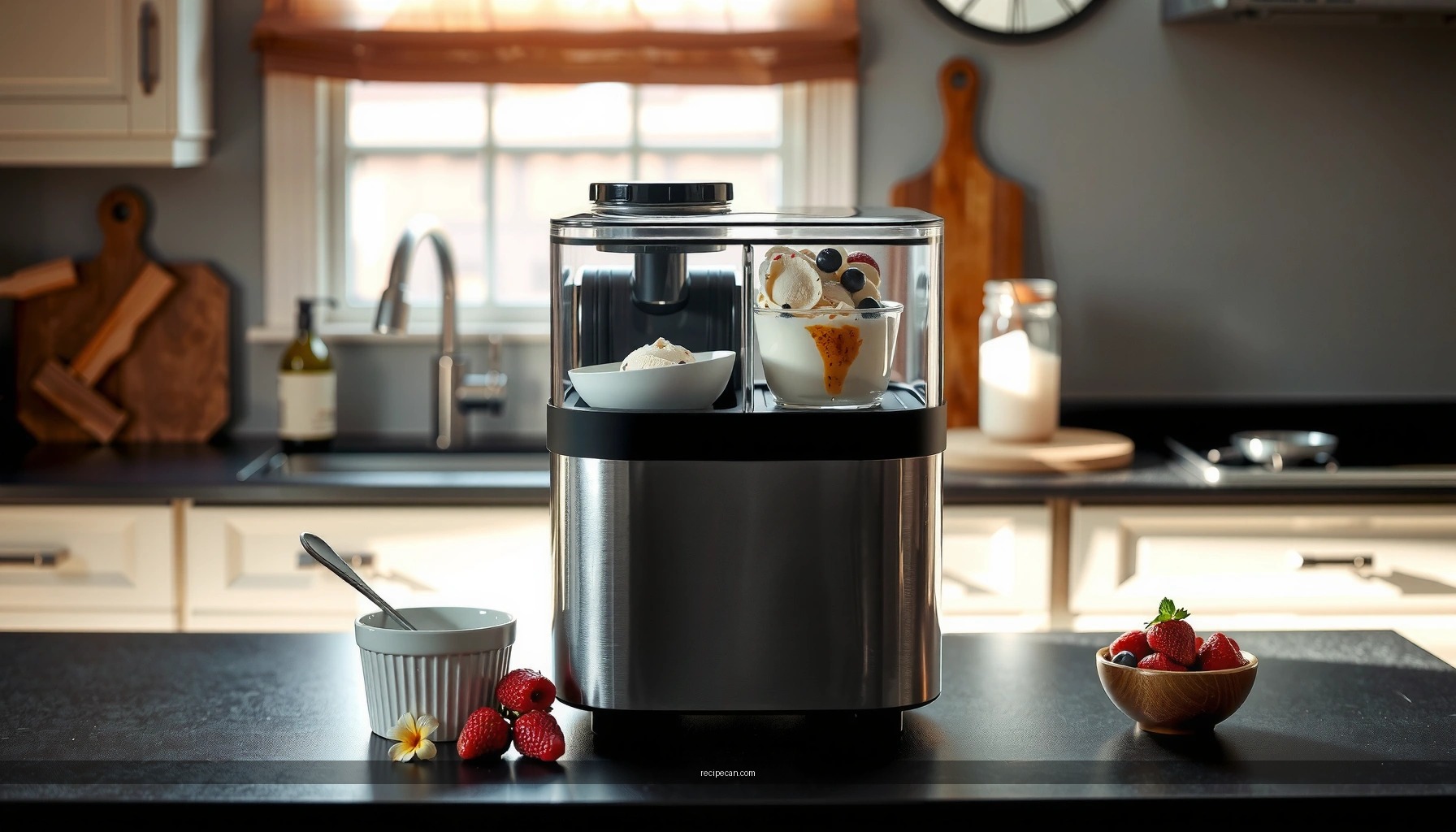
Dash My Pint ice cream maker recipes deliver the easiest path to creamy homemade pints without complicated churners—this guide picks the best go-to flavor formulas and the exact steps to nail them. If you want the fastest way to turn milk, cream, and mix-ins into scoopable results, you’ll get reliable recipes for classic and bold variations, plus the settings and mix timing that prevent icy texture. By the end, you’ll know which recipes work best for your freezer schedule and taste—so every batch comes out thick, smooth, and worth repeating.
Dash my pint ice cream maker recipes help you churn smooth, creamy ice cream quickly by focusing on two variables: a properly chilled base (with the right fat/sugar balance) and add-ins folded in at the right time. In this guide, you’ll get reliable base formulas (custard and quicker options), classic flavor workflows, mix-in rules that prevent iciness, and troubleshooting steps so your Dash pint consistently produces scoopable homemade results.
Best Base Recipes for Dash My Pint
A great Dash pint batch starts with the base. The goal is to build viscosity (so the ice cream resists becoming gritty) and balance fat, sugar, and water. Most “failure cases” in pint makers—iciness, graininess, or softness—trace back to base temperature, sugar not fully dissolving, or insufficient chilling.
1) Vanilla custard base (best for texture and scoopability)
Custard bases are favored because egg yolks emulsify fat and water and help create a stable structure. For a pint-sized batch, keep the base smooth and strain it if you’re cautious about tiny scrambled-egg bits.
– Warm: milk + cream + vanilla (and sugar).
– Whisk yolks in a bowl separately.
– Temper yolks slowly, then cook until lightly thickened (coating the back of a spoon).
– Chill thoroughly before churning (cold base = less ice crystal growth).
2) Simple milk-and-cream base (fast, no-custard approach)
If you want speed, use a base with dairy + sugar and consider adding a stabilizer mindset (even without eggs) through careful sugar dissolution and adequate chilling.
– Use heavy cream plus milk (cream supplies fat; milk adds volume).
– Heat only enough to dissolve sugar; avoid high heat that can dull flavors.
– Chill until very cold—ideally at least several hours.
3) Make chilling non-negotiable
Whether you choose custard or a quicker base, chilling drives most of the “smoothness per minute.” Aim for a base temperature well below room temp so the freezer time afterward doesn’t have to do all the work.
4) Adjust sweetness intentionally
If you’re planning sweet mix-ins (cookie dough, caramel swirls), you may want a slightly less-sweet base. If your add-ins are tart (berries), slightly increase sugar or add a touch of honey. The key is gradual adjustment and full dissolution.
What Base Type Delivers in Dash My Pint Ice Cream (1–2 Pint Batches)
| # | Base approach | Best texture | Chill time for smoothness | Flavor flexibility | Overall score |
|---|---|---|---|---|---|
| 1 | Vanilla custard (egg yolk) | ★ Very creamy scoop | 6–12 hours | High (spices/fruit/cocoa) | 9.6/10 |
| 2 | Chocolate custard (cocoa + yolks) | ★ Silky chocolate | 6–12 hours | High (mint, espresso) | 9.4/10 |
| 3 | Milk + heavy cream base (no eggs) | ★ Smooth, slightly lighter | 4–8 hours | Medium–High | 8.8/10 |
| 4 | Greek-yogurt blend (tangy base) | ★ Spoonable tang | 6–10 hours | Medium (berries, vanilla) | 8.5/10 |
| 5 | Half-and-half base (leaner) | ★ Creamy but softer | 8–12 hours | Medium | 7.6/10 |
| 6 | Very sweet base (for dense mix-ins) | ★ Can handle chunks | 6–10 hours | High (caramel/cookie) | 8.9/10 |
| 7 | Water-heavy base (avoid) | ☆ Icy risk | Long + careful | Low | 6.9/10 |
Classic Flavor Dash My Pint Ice Cream Recipes

Once your base is dialed in, classic flavors become repeatable systems instead of guesswork. A reliable pattern: choose your flavor source (fruit, chocolate, mint), build it into the base for even distribution, and only then add delicate pieces or swirls.
Strawberry (fruit-forward, smoother scoop)
– Use ripe strawberries and cook them briefly to concentrate flavor (optional but helpful).
– Puree and strain if you want a restaurant-style, seed-minimized texture.
– Cool the strawberry component before combining with the chilled base.
Chocolate (depth without graininess)
– Use quality cocoa or melted chocolate.
– For the smoothest result, fully dissolve sugar and avoid overheating milk/cream.
– If you’re using extracts (vanilla, espresso), add them after the base is off heat and fully mixed.
Mint (clean, not “toothy”)
– Mint works best when you use peppermint extract or fresh mint steeped in warm cream/milk, then strain.
– Avoid adding mint candy chunks early—high-sugar hard pieces can create icy pockets.
– Balance mint with chocolate (mint-chocolate) or vanilla for a smoother flavor curve.
Taste-before-freeze principle
Even with perfect technique, flavor can seem muted once frozen. Taste your base after it’s fully cooled and adjusted for sweetness and salt. A tiny pinch of salt often improves perceived flavor intensity.
Mix-Ins That Work Great in a Pint Maker
Mix-ins are where “homemade” becomes personal—but they’re also where texture can break. Your Dash pint churn will incorporate mix-ins best when the additions are the right size, the right hardness, and added at the right moment.
1) Fold in near the end
Most pint makers churn fast. Adding mix-ins near the end gives them time to distribute without fully freezing into hard, uneven lumps.
2) Keep pieces small
– Cookie crumbs and brownie bits work well because they create pockets of flavor rather than ice-structure disruption.
– Chopped nuts should be small and evenly chopped so they don’t create “ice bridges” (hard zones that freeze slower or melt unevenly).
3) Choose mix-ins that freeze consistently
Caramel pieces, butterscotch ribbons, and sauce-style swirls tend to behave better than rigid chocolate bars if your goal is a scoop that slices cleanly.
4) Avoid very hard chunks that can jam the dasher
– Rock-hard candies, large frozen fruit chunks, or brittle toffee can interfere with the paddle and lead to poor incorporation.
– If you want to use crunchy add-ins, briefly toast or soften and keep them finely chopped.
Practical mix-in timing
– Late-stage: cookie crumble, toasted nuts, brownie chunks, caramel bits.
– Earlier: chocolate chips (small) or syrup swirls if you know they won’t harden into large blocks.
– Never: large frozen chunks that require a heavy freeze to be edible.
No-Churn Options (If You Want Faster Results)
If you’re optimizing for speed, no-churn is a viable pathway—especially when you still care about smoothness. The main tradeoff is texture: no-churn can be slightly softer or icier unless you freeze in a way that limits big ice crystal growth.
1) Condensed milk + heavy cream
– Sweetened condensed milk provides body and sweetness while lowering freezing point.
– Heavy cream supplies fat and stability.
2) Add flavorings before chilling/serving
Vanilla, cocoa powder, espresso, or fruit purees mix in well. For berry flavors, reduce excess water via quick simmering or use strained puree.
3) Freeze in small batches
Smaller batches freeze more uniformly and reduce “icy edges.” If you’re making multiple flavors, freeze each portion separately in an airtight container.
4) Stir method for improved smoothness
If your refrigerator runs cold and you want a finer texture, plan to stir once or twice during the initial freeze window to break up larger ice crystals.
Troubleshooting Common Dash Pint Results
Even with good recipes, results vary based on freezer temperature, base temperature, and mix-in type. Use these targeted diagnostics so you don’t repeat the same mistake.
If it’s icy
Common causes:
– Base not chilled long enough.
– Base has too little fat or too much water.
– Over-freezing or letting the base warm too much before churning.
Fixes:
– Chill the mixture longer (cold base = fewer ice crystals).
– Increase fat slightly (more heavy cream, less milk).
– Don’t freeze longer than needed before churning; keep the workflow consistent.
If it’s too soft
Common causes:
– Under-churned mixture.
– Ice cream hasn’t had enough hard-freeze time after churning.
Fixes:
– Churn until the mixture reaches a thick, soft-serve consistency.
– Transfer and hard-freeze until set (many homemade recipes need a few hours).
If it’s grainy
Common causes:
– Sugar not fully dissolved.
– High heat or scorched dairy.
Fixes:
– Dissolve sugar fully by warming gently and stirring.
– Avoid boiling or overheating the base.
– Strain custard if necessary to prevent uneven thickening.
A workflow that reduces errors
1) Make base → 2) Chill fully → 3) Churn → 4) Hard-freeze → 5) Thaw briefly before serving (this last step matters more than people expect).
Storage, Serving, and Cleanup Tips
Proper storage isn’t just for hygiene—it directly affects texture over time.
Storage
– Store in an airtight container to limit freezer burn and moisture loss.
– Place parchment or plastic directly against the surface to reduce air exposure.
– Keep temperature consistent; frequent door openings create a wider freeze/thaw cycle that can worsen iciness.
Serving
– Let ice cream thaw 5–10 minutes before scooping. This softens the first bite and gives the flavors time to bloom.
– For clean scoops, warm the scoop tool slightly and work quickly.
Cleanup
– Rinse right after use (before residue hardens).
– Dry parts fully before storing to prevent odors and performance issues.
– Check the dasher/paddle for any stuck mix-in pieces so future batches churn evenly.
When you use Dash my pint ice cream maker recipes with a chilled base, smart add-ins, and proper freezing, you’ll get smooth, scoopable results quickly. Pick one classic flavor (vanilla custard, strawberry, chocolate, or mint), try one controlled mix-in next, and rely on the troubleshooting checklist if texture isn’t perfect—then iterate with small adjustments to make your next batch even better.
Frequently Asked Questions
What types of Dash My Pint ice cream maker recipes work best for beginners?
Start with simple churn-and-freeze recipes like vanilla bean, chocolate, and strawberry because they require fewer special ingredients and fewer steps. For Dash My Pint ice cream maker recipes, use a base of heavy cream, milk, sugar, and a flavoring (cocoa powder or fruit puree) for consistent results. Avoid very thick mix-ins at first, since they can slow churn and affect texture. Chill your base before churning for smoother ice cream.
How do I make a no-cook custard base for Dash My Pint ice cream maker recipes?
Use a no-cook method by whisking milk, sugar, and any cocoa or salt until fully dissolved, then stir in heavy cream and vanilla. If your recipe uses egg yolks, you’ll need a stove-top custard instead—so keep it no-cook with egg-free bases for the Dash My Pint. Once mixed, chill the batter in the refrigerator until cold, then pour into the pre-frozen bowl of the ice cream maker. This helps the churning process start quickly and improves the final creaminess.
Which mix-ins work best with the Dash My Pint ice cream maker for even distribution?
Mix-ins like chocolate chips, cookie crumbles, chopped nuts, and swirls (like caramel or fruit) work well when added at the right time. In most Dash My Pint ice cream maker recipes, you’ll add mix-ins during the last few minutes of churning to prevent them from sinking or over-chopping. For crunchy items, chop them small and avoid adding too many at once, since heavy mix-ins can interfere with proper freezing. If using brownies or cookie dough, make sure they’re fully cooled and not warm.
Why is my Dash My Pint ice cream too icy or not thick enough?
Ice crystals and thin texture often come from a base that wasn’t chilled long enough, incorrect ingredient ratios, or starting with a warm mix. For Dash My Pint ice cream maker recipes, use cold cream/milk and a properly dissolved sugar base, then pre-freeze the bowl fully according to the manufacturer’s instructions. Another common issue is overloading mix-ins or using water-heavy ingredients; pure fruit can be fine, but consider reducing it or using a thick puree. If it’s still soft after churning, let it firm up in the freezer 2–4 hours.
Best way to adjust recipes for Dash My Pint ice cream maker capacity and texture?
Keep your total liquid mixture within the recommended capacity (often around the pint-sized fill range) to avoid overflow and to ensure consistent churn. If a recipe yields more than your bowl can handle, scale it down proportionally—especially sugar and cream amounts—so the freezing point stays balanced. For smoother texture, aim for a richer ratio of cream to milk, and avoid swapping in low-fat substitutes without recalculating. Finally, freeze the finished ice cream until scoopable, because Dash My Pint ice cream makers typically churn soft-serve consistency first.
References
- Google Scholar Google Scholar
https://scholar.google.com/scholar?q=Dash+My+Pint+ice+cream+maker+recipes - Google Scholar Google Scholar
https://scholar.google.com/scholar?q=home+ice+cream+maker+recipe+churn+freeze+instructions - Google Scholar Google Scholar
https://scholar.google.com/scholar?q=ice+cream+emulsion+stabilizers+structure+research - Ice cream
https://en.wikipedia.org/wiki/Ice_cream - https://en.wikipedia.org/wiki/Ice_cream_base
https://en.wikipedia.org/wiki/Ice_cream_base - Emulsion
https://en.wikipedia.org/wiki/Emulsion - Projects – National Center for Home Food Preservation
https://nchfp.uga.edu/how/freeze/ice_cream.html - eCFR :: 21 CFR 135.110 — Ice cream and frozen custard.
https://www.ecfr.gov/current/title-21/chapter-I/subchapter-B/part-135/section-135.110 - https://pubmed.ncbi.nlm.nih.gov/?term=ice+cream+stabilizers+emulsion
https://pubmed.ncbi.nlm.nih.gov/?term=ice+cream+stabilizers+emulsion - Ice cream | Definition, History, & Production | Britannica
https://www.britannica.com/topic/ice-cream