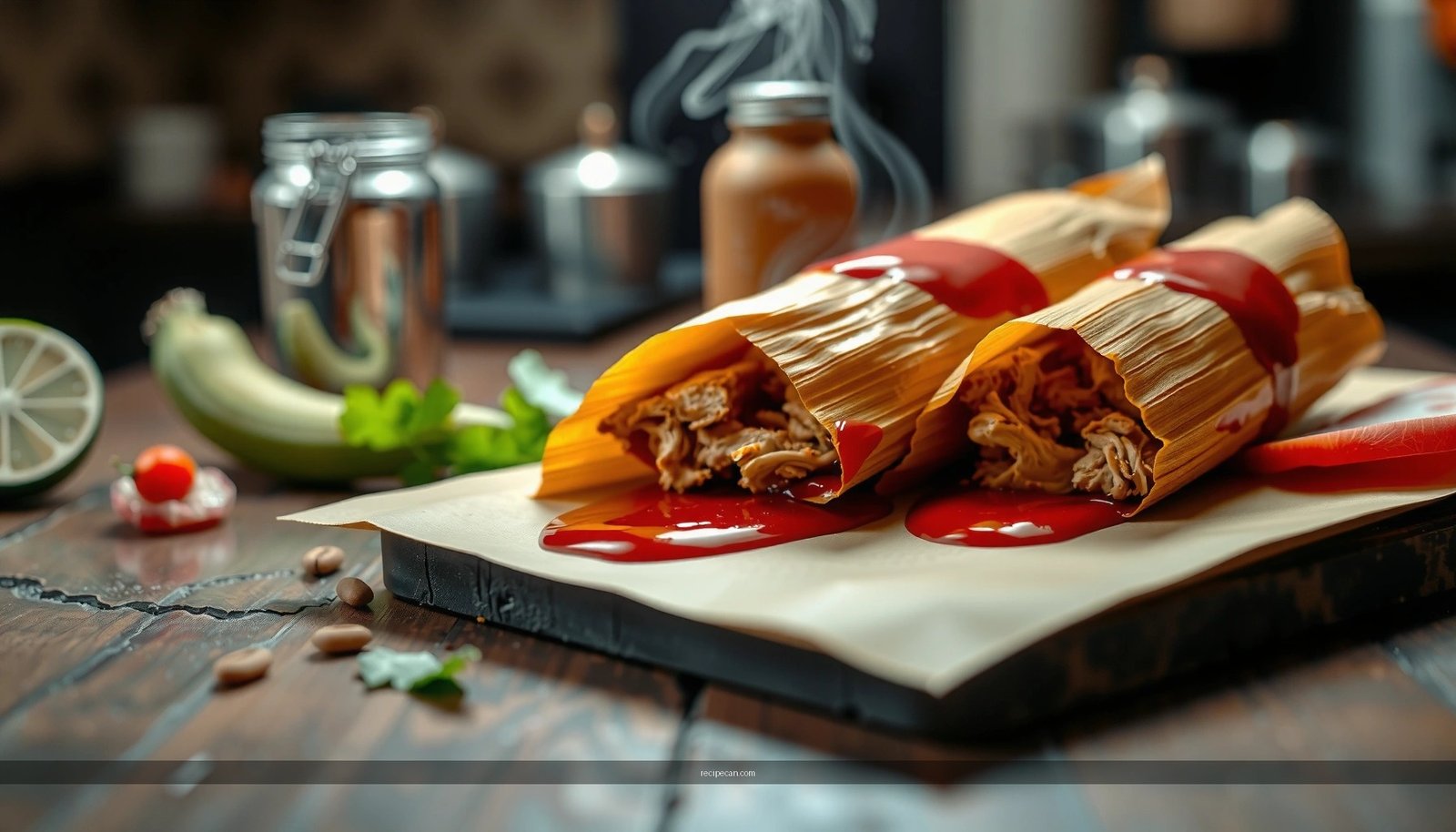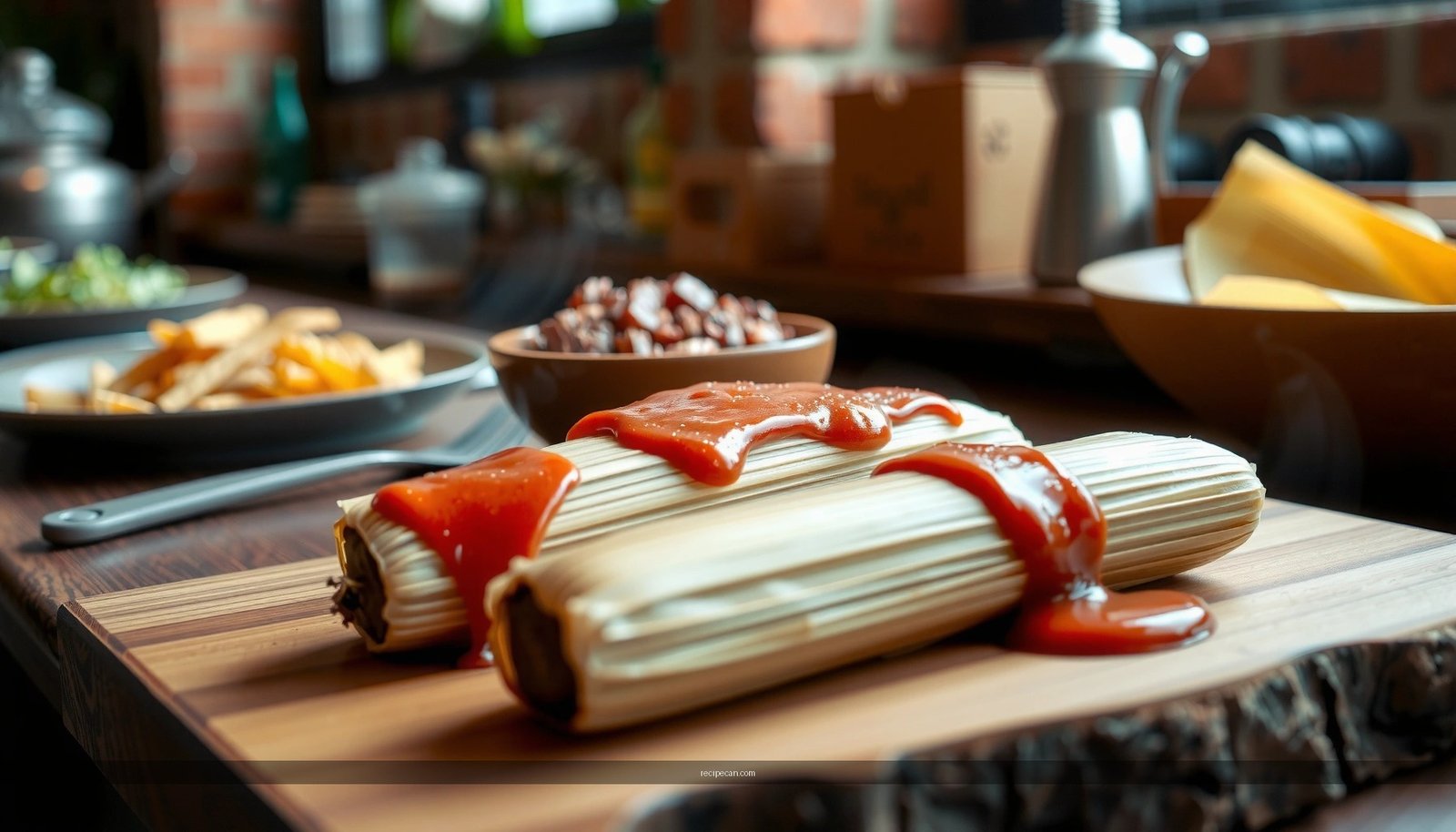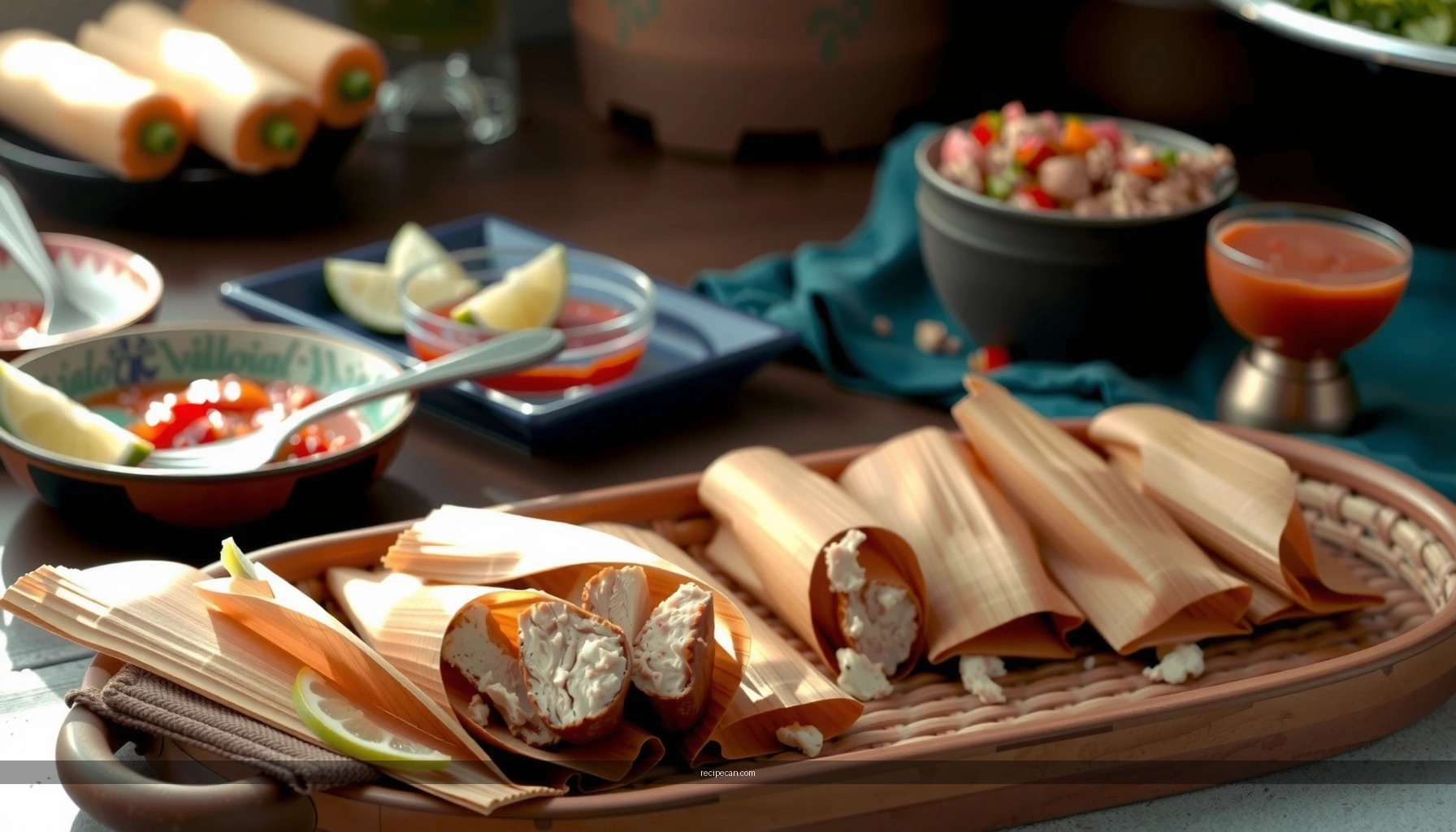
This chicken tamale recipe shows you exactly how to make flavorful tamales with tender chicken, rich masa, and the right steaming technique so they come out moist and ready to eat. You’ll learn the chicken seasoning, masa texture, and corn-husk folding steps that decide whether your tamales taste bold or bland. If you want consistently great tamales at home, follow this method and you’ll know you nailed it.
Make tender, flavorful chicken tamales by seasoning and simmering the filling, preparing masa with the right consistency, and steaming everything in soaked corn husks until the masa sets and releases easily. Follow the steps below and you’ll get tamales with a soft, sliceable texture and a filling that stays juicy instead of drying out.
Gather Ingredients and Equipment
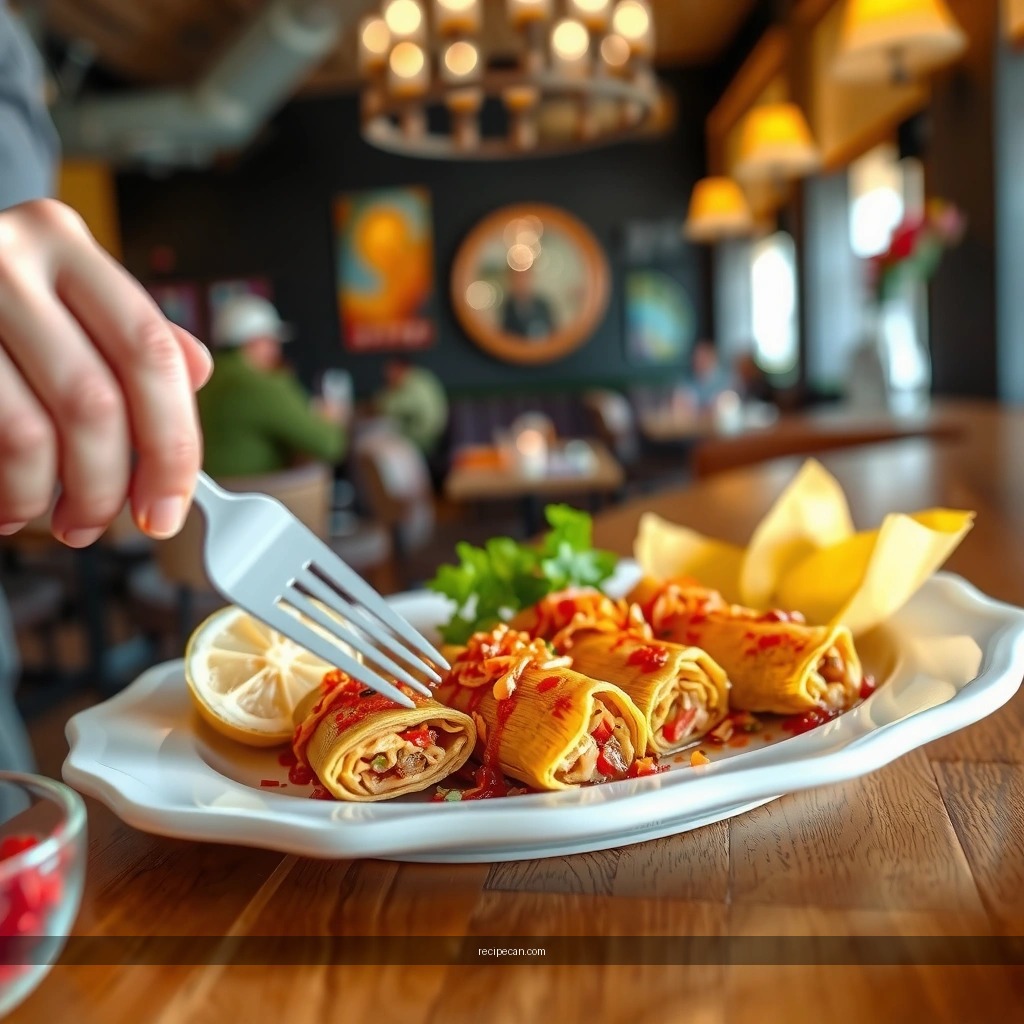
The quality of your chicken tamales starts with well-chosen masa ingredients, a properly cooked filling, and corn husks that steam evenly.
Masa essentials (the base)
– Masa harina (corn flour): The defining ingredient for traditional tamales.
– Broth or stock (chicken or vegetable): Adds flavor and helps you control hydration.
– Fat for richness (either lard or vegetable shortening): Improves aroma, tenderness, and “set” when steamed.
– Salt: Critical for balanced flavor; don’t skip it.
– Optional seasonings: Ground cumin, garlic powder, or a pinch of baking powder (for slightly lighter masa).
Filling essentials (the chicken)
– Chicken (breasts or thighs): Thighs typically stay juicier, but breasts work well if you avoid overcooking.
– Aromatic seasonings: Onion, garlic, and salt.
– Sauce base: Salsa roja or salsa verde (or a mix), depending on your preferred flavor profile.
– Chili flavor (optional): Dried chilies or chili powder to deepen heat.
Corn husks
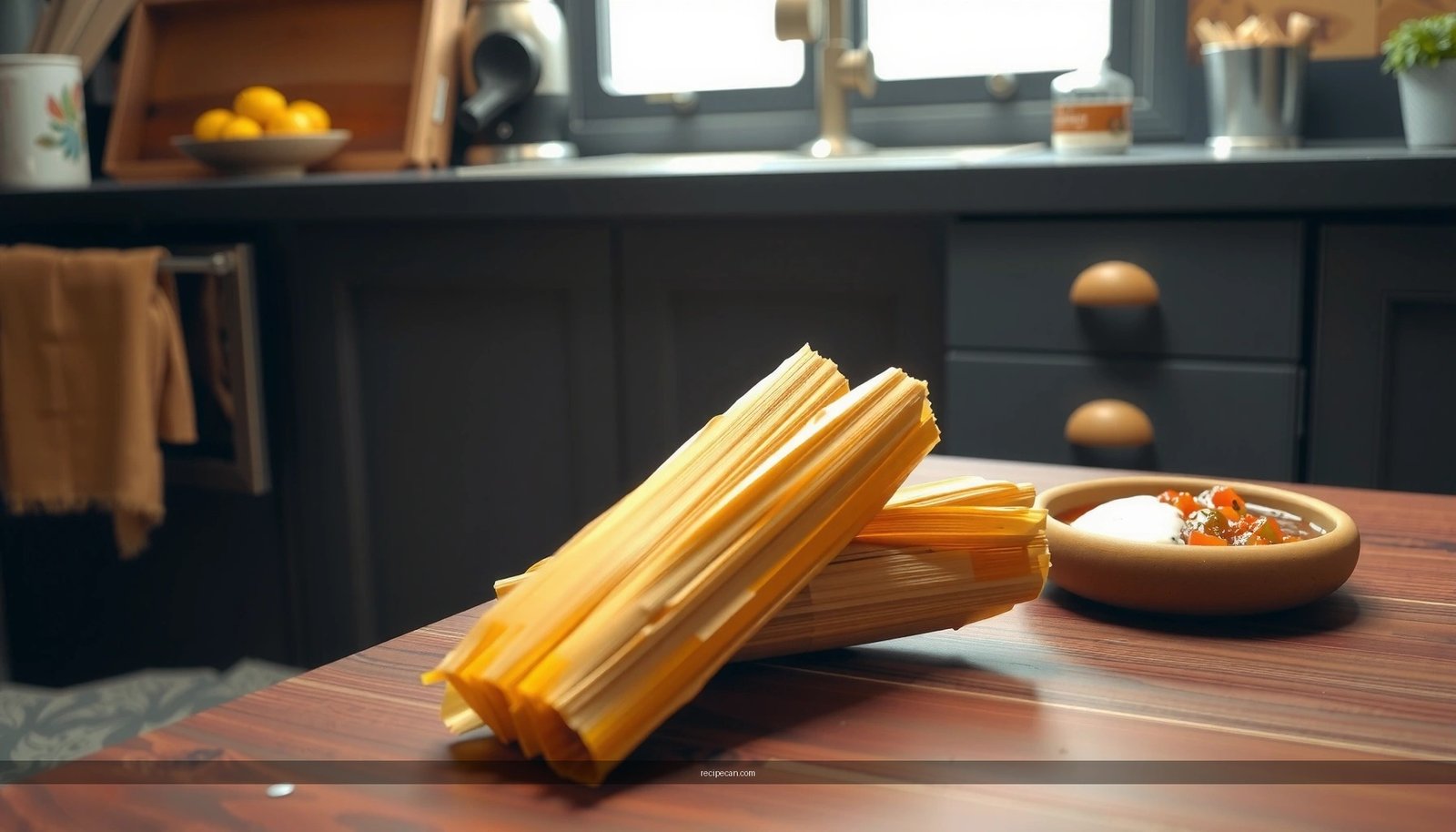
– Corn husks: You’ll need enough to wrap each tamale snugly. Fresh or dried both work; dried require soaking.
Tools you’ll want on hand
– Large steamer pot or multi-tier steamer
– Strips of corn husk or kitchen twine to tie folded tamales
– Mixing bowls (one for masa, one for filling)
– Sheet pan or tray for assembled tamales
– Measuring cups/spoons (masa consistency is the difference between “great” and “crumbly”)
Optional add-ins to customize
– Salsa verde for brightness (tomatillo-forward)
– Salsa roja for smoky depth (chile-forward)
– Cheese (cotija, queso fresco, or shredded Oaxaca) for a savory finish
– Chopped olives or roasted peppers if you enjoy a more complex bite
Recommended Tamale Build: Masa & Filling Targets
| # | Tamale Component | Practical Amount (per ~10 tamales) | Texture/Doneness Goal | Outcome Impact |
|---|---|---|---|---|
| 1 | Masa harina | 450 g | Soft, spreadable | Prevents dry/tough masa |
| 2 | Chicken broth (for masa) | 420–480 ml | Holds shape, not runny | Improves steam-set |
| 3 | Fat (lard/shortening) | 90–120 g | Creamed into masa | More tenderness & aroma |
| 4 | Chicken for filling | 700–900 g raw | Shreds easily | Juicy bite |
| 5 | Salsa (roja/verde) | 350–500 g | Thickened, clings to chicken | Deepens flavor |
| 6 | Steam time (typical) | 60–90 min | Masa pulls from husk | Proper set texture |
| 7 | Resting after steaming | 15–25 min | Firmer, easier to handle | Better slice/serve |
Prepare the Chicken Filling
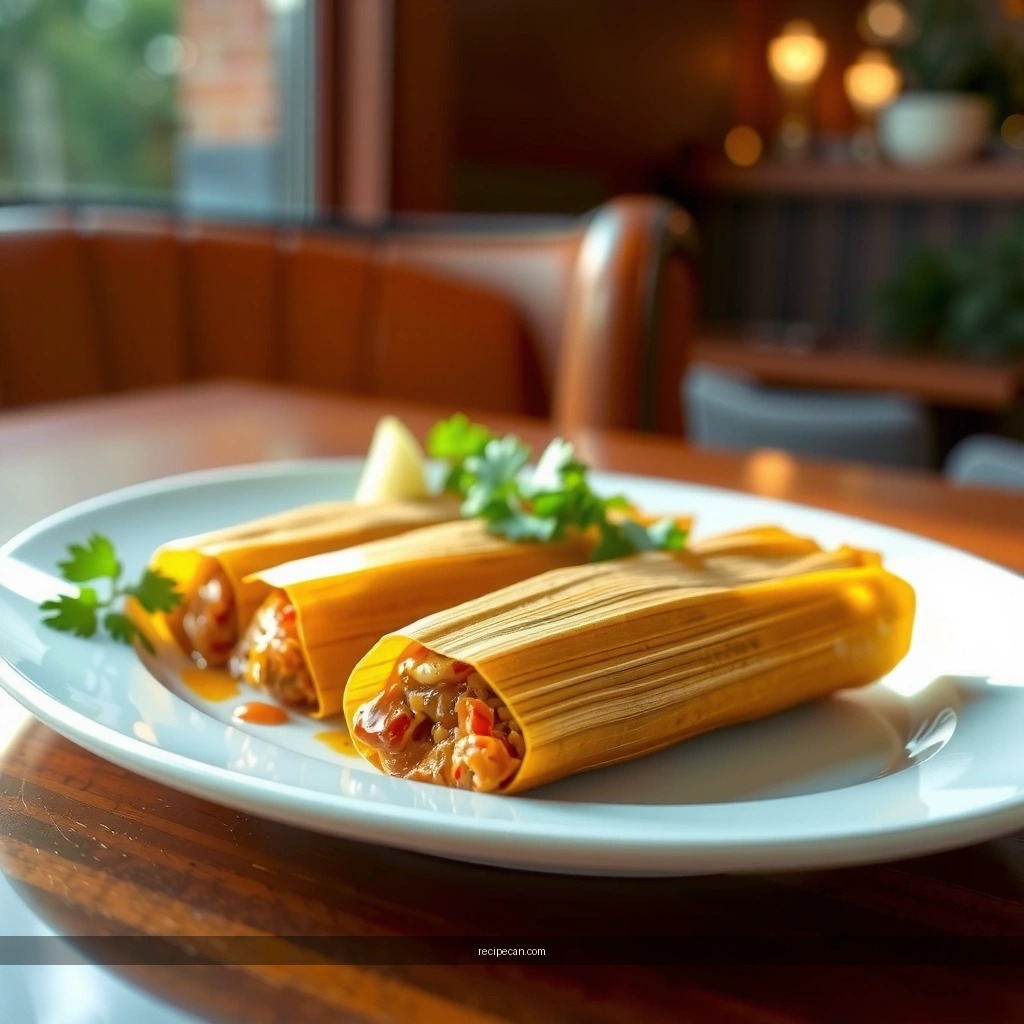
A great chicken tamale filling is about tender meat plus a sauce that clings—not a watery pool that compromises masa texture.
1) Cook chicken until tender
– Use bone-in or boneless chicken; bone-in adds depth, but either works.
– Simmer with onion, garlic, salt, and enough water or broth to cover.
– For breasts, start checking tenderness around 15–20 minutes; for thighs, 20–30 minutes is common. You’re aiming for “shred with a fork” tenderness.
2) Shred and simmer with sauce
– Shred chicken and return it to a pot with salsa roja or salsa verde.
– Simmer until the mixture thickens and becomes cohesive—typically 10–20 minutes.
– If your salsa is very thin, reduce it; if it’s too thick, loosen with a splash of broth.
3) Adjust salt and heat
– Salt perception changes after steaming, so taste the filling and bring it into alignment now.
– For heat control:
– Mild: use salsa verde with minimal chili or reduce chili powders
– Hot: add extra chili powder, ground chipotle, or a spoon of adobo
– If you want restaurant-style balance, add a tiny pinch of sugar to offset harsh acidity (especially with some verde sauces).
Make the Tamale Masa
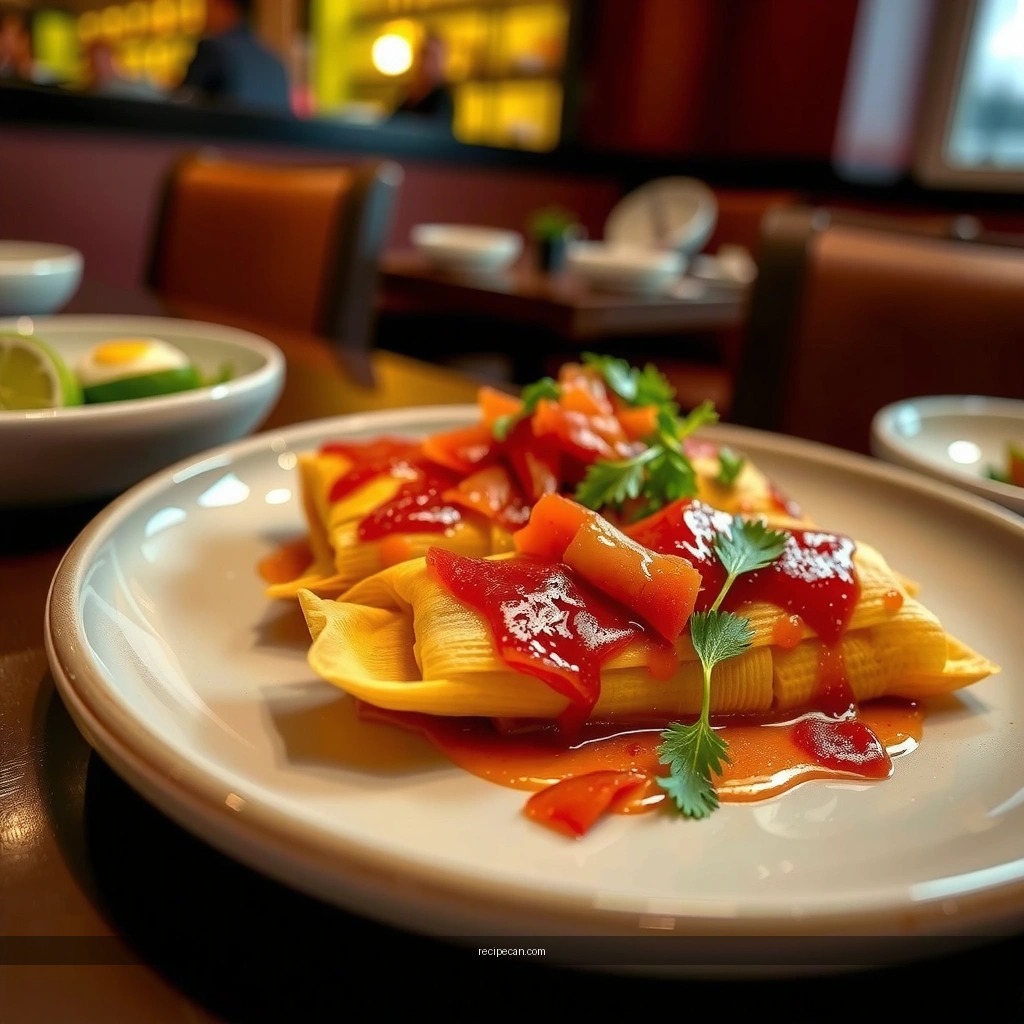
Masa is where most first-time tamale makers struggle. The goal isn’t “thick” or “thin”—it’s spreadable with structure so it steams properly inside the husk.
1) Mix masa harina with broth and seasonings
– Combine masa harina with salt and any spices you like (cumin and garlic powder are common).
– Add warm broth gradually, mixing to hydrate evenly.
– Cream in softened fat (lard/shortening) so it distributes—this improves softness and helps the masa set.
2) Get the right consistency
Use a practical texture test:
– The masa should spread like a thick frosting and hold its shape when you lift a spoon.
– If it looks runny or pools, mix in more masa harina (a tablespoon at a time).
– If it tears or won’t spread, add broth by the teaspoon until it loosens.
3) Optional: richer, softer bite
– Adding a bit more fat can increase tenderness (especially for a softer, “melting” tamale).
– Don’t overdo it—too much can make masa greasy and less stable.
Assemble the Tamales in Corn Husks
Assembly is the mechanical step that determines steaming performance: even masa thickness, sealed folds, and consistent filling distribution.
1) Soak husks
– Dried husks need soaking until pliable—typically 30–60 minutes in hot water.
– Then drain and keep them covered so they don’t dry out during wrapping.
2) Spread, fill, and roll tightly
– Lay a husk flat (shiny side down if that’s your preference) and spread masa in an even layer—usually about the thickness of a dime.
– Add a portion of chicken filling in the center. Avoid overfilling; excess filling can create gaps and uneven steaming.
– Fold and roll (or fold as a pouch, depending on your tradition). The key is tight contact between masa and husk.
3) Tie or fold securely
– Use strips of husk to tie bundles if needed, or fold firmly so the seams stay closed.
– Consistent closure helps steam circulate and prevents leakage.
Steam the Tamales to Perfection
Steaming is more science than guesswork. Your goal is steady steam, stable cook time, and correct doneness signals.
1) Steam in batches
– Don’t overload your steamer pot. If tamales are packed too tightly, steam flow drops and cooking becomes uneven.
– Batch cooking also prevents soggy husks caused by insufficient heat recovery.
2) Plan time and monitor water level
– Bring water to a gentle simmer before inserting tamales.
– Check water level periodically so steaming remains consistent. Add hot water as needed—cold water can interrupt steam and extend cook time.
3) Test doneness the tamale way
Doneness cues for chicken tamales:
– Masa should pull away easily from the husk.
– The tamale should feel set when lifted—no wet batter at the seams.
– If masa sticks firmly to the husk, steam longer in 10–15 minute increments.
Common Tamale Problems & Fixes
| # | Symptom | Likely Cause | Best Fix Next Batch | Confidence |
|---|---|---|---|---|
| 1 | Masa is gummy | Under-steamed | Steam 10–15 min more, check water | ★★★★★ |
| 2 | Masa pulls away too easily | Over-steamed or thin masa | Reduce steam time 5–10 min; spread evenly | ★★★★☆ |
| 3 | Tamales burst at seams | Overfilled/loose fold | Use less filling; tie seams tighter | ★★★★☆ |
| 4 | Masa is dry | Too little broth or too short steaming | Loosen masa slightly; steam until set | ★★★☆☆ |
| 5 | Husk sticks to masa | Under-steamed | Steam longer; check doneness rule | ★★★★☆ |
Serve and Store Your Chicken Tamales
Once steamed, tamales improve as they rest—this is the part many people rush, and it affects texture and handling.
1) Rest before serving
– Let tamales sit 15–25 minutes after steaming.
– During rest, the masa firms up and the flavors settle, so each bite tastes more cohesive.
2) Reheat with moisture control
– Best method (food quality): steam for 8–15 minutes.
– Microwave: wrap in a damp paper towel and heat in short intervals.
– Pan-heat: warm gently in a skillet with a splash of water and covered to steam the surface.
3) Store safely and freeze for meal prep
– Cool quickly to prevent condensation buildup.
– Refrigerator: typically 3–4 days in an airtight container.
– Freezer: up to about 2–3 months for best quality.
– Freeze tamales stacked with parchment between layers if possible to prevent sticking, then reheat by steaming from thawed or partially thawed state.
Conclusion
When you focus on the core mechanics—tender, well-seasoned chicken filling, masa with the right spreadable consistency, tight assembly in soaked corn husks, and steady steaming until masa releases cleanly—your chicken tamales come out tender, flavorful, and reliably textured. Make a first batch, adjust heat and sauce thickness to your taste, and then freeze extras for fast, satisfying dinners that still taste homemade.
Frequently Asked Questions
How do I make chicken tamales from scratch with masa and filling?
Start by preparing a seasoned chicken filling (typically shredded chicken cooked with onions, garlic, tomatoes or salsa, and chili spices). For the masa, use fresh or masa harina and mix with warm chicken broth/stock and fat (lard or a high-quality alternative) until spreadable. Assemble by spreading masa on soaked corn husks, add the chicken mixture and some sauce, then fold and steam until the masa firms and pulls cleanly from the husk. This is a classic chicken tamale recipe process that delivers tender, well-seasoned results.
What is the best way to steam chicken tamales so the masa cooks evenly?
Use a steamer large enough to keep tamales upright or in a stable stack, and keep water at a gentle simmer—not a hard boil. Line the pot with extra husks or a rack so tamales don’t sit directly on the bottom, which can cause uneven cooking. Steam consistently and replenish water as needed to avoid drying out, then cook until the masa passes the “pull test” (it separates from the husk easily). Proper steaming is key for fluffy masa and a fully cooked chicken tamales filling.
Why do my chicken tamales turn out dry or gummy, and how can I fix it?
Dry tamales usually come from under-steaming or masa that’s too stiff—add a little warm broth gradually next time and ensure adequate steaming time. Gummy tamales often result from masa harina that wasn’t hydrated correctly or from steaming too briefly, leaving the masa undercooked. If you’re using a chicken tamale recipe that relies on lard, make sure you mix the fat in thoroughly for a light texture. Adjusting masa hydration and giving the tamales enough time to steam through are the two biggest fixes.
Which chili sauces work best for a flavorful chicken tamales filling?
Many people use a blend of dried chilies such as guajillo, ancho, and pasilla for a balanced chicken tamales flavor that’s not overly hot. You can roast dried chilies lightly, rehydrate in hot water, then blend into a smooth sauce with garlic and onion before simmering with the chicken. This approach creates a rich, savory sauce that clings to the filling and enhances the masa. Choose dried chilies you can easily find and adjust heat by leaving in or removing seeds and stems.
What’s the easiest way to prevent corn husks from tearing when assembling chicken tamales?
Soak corn husks in warm water until pliable, usually 30–60 minutes depending on size and thickness, then drain and keep them covered so they stay moist. Pat off excess water so the husks don’t slip, and spread masa in an even layer with gentle pressure to avoid ripping. If husks tear, try longer soaking and assemble with the smoother side facing inward for better grip. Good husk prep is a simple step that makes any chicken tamale recipe much easier and improves the final fold.
References
- Google Scholar Google Scholar
https://scholar.google.com/scholar?q=tamale+recipe+chicken - Google Scholar Google Scholar
https://scholar.google.com/scholar?q=chicken+tamales+masa+filling+recipe - Google Scholar Google Scholar
https://scholar.google.com/scholar?q=nixtamalization+tamales+corn+masa - Tamale
https://en.wikipedia.org/wiki/Tamale - https://www.britannica.com/topic/tamale
https://www.britannica.com/topic/tamale - https://pubmed.ncbi.nlm.nih.gov/?term=tamales
https://pubmed.ncbi.nlm.nih.gov/?term=tamales - https://pubmed.ncbi.nlm.nih.gov/?term=nixtamalization
https://pubmed.ncbi.nlm.nih.gov/?term=nixtamalization - https://www.ncbi.nlm.nih.gov/pmc/?term=tamale
https://www.ncbi.nlm.nih.gov/pmc/?term=tamale - https://fdc.nal.usda.gov/search/?query=tamale
https://fdc.nal.usda.gov/search/?query=tamale - The Rockets That Inspired Francis Scott Key
https://www.smithsonianmag.com/arts-culture/tamales-the-story-behind-the-people-food-180952399/