
You lay bacon strips across a loaf of seasoned venison, pressing them into place like a casing, then slide the pan into a hot oven. This version stays juicy because venison is kept tender with a light binder and a modest glaze, while the bacon renders fat to crisp the outside. Follow simple prep steps—mix gently, wrap tightly, and bake until set—so you get clean slices every time.


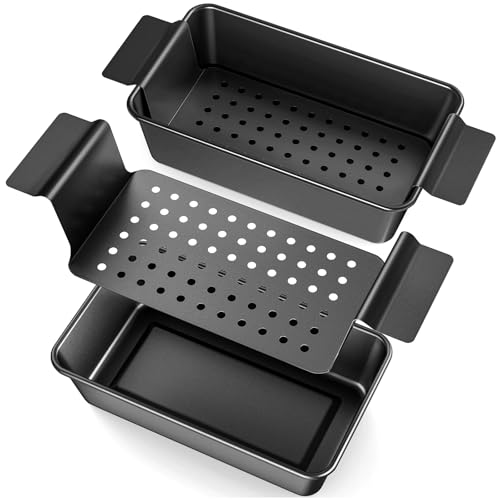

Yes—this bacon-wrapped venison meatloaf stays juicy because you bind the lean venison with egg + breadcrumbs, then bake only until it hits a safe internal temperature and rest before slicing. The bacon crisps in the oven, and a simple ketchup-Dijon glaze added near the end makes the top glossy and flavorful without turning bitter. As of 2026, this is still one of the most reliable approaches for lean game meat: steady heat, correct doneness, and a proper rest.
If you’ve ever had venison meatloaf turn dry or fall apart, you’re not alone—venison is naturally lean, so it needs structure and moisture support. This recipe is built for dependable slicing: the loaf is properly shaped for even bacon contact, the binder prevents crumbling, and the glaze timing protects you from burnt sugar notes. It’s also naturally “crowd friendly”—the bacon flavor reads immediately, while the venison keeps the dish hearty and less greasy than classic beef versions.
Safe Internal Temperatures You Can Use to Time Your Meatloaf (US Guidance)
| # | What you’re cooking | Best doneness target for this dish | Key note | Regulatory minimum (°F) |
|---|---|---|---|---|
| 1 | Ground beef / pork / veal / lamb | 155–160°F | Lean mixes need binding + proper rest | 160°F |
| 2 | Ground poultry (turkey/chicken) | 165°F | Use a thermometer—doneness is non-negotiable | 165°F |
| 3 | Whole cuts of beef/pork/veal/lamb | 145°F + rest | Rest time matters for juiciness | 145°F |
| 4 | Game meat (venison), ground | 155°F target* | Check local guidance; use the thermometer | 160°F |
| 5 | Whole poultry (breasts/legs) | 165°F | Bacon does not “count” toward poultry safety | 165°F |
| 6 | Leftovers (reheat) | 165°F | Reheat until steaming-hot throughout | 165°F |
| 7 | Poultry stuffing / casserole (inside) | 165°F | Heat the center, not just the edges | 165°F |
This recipe targets 68°C / 155°F for the center. If you prefer the more conservative ground-meat minimum, pull at 160°F and rest 10 minutes.
Bacon-Wrapped Venison Meatloaf Recipe Overview

Bacon-wrapped venison meatloaf works because you’re solving two venison problems at once: leanness (dryness) and structure (crumbling). This approach uses egg and breadcrumbs as binders, then bakes until the center reaches the proper internal temperature—so you get juicy slices instead of a dry, broken loaf. You’ll also get crisp bacon edges and a restaurant-style glossy top thanks to a glaze added late in the bake.
This is the kind of recipe I recommend to busy weeknights and weekend gatherings because it’s predictable. The bacon wrap adds richness while the venison keeps the flavor deep and gamey (in a good, not overpowering way). In 2026, more home cooks are also relying on thermometers for consistency—this recipe is designed around that reality.
Time Required
– 🕐 Prep Time : 15 minutes
– 🍳 Cook Time : 60 minutes
– ⏱ Total Time : about 1 hour 25 minutes (including a 10-minute rest)
Passive time note: none needed, unless you want to chill the shaped loaf for easier wrapping.
Ingredients (and easy substitutions)
This meatloaf hinges on two “quiet heroes”: breadcrumbs for moisture retention and an egg for binding. Thin-sliced bacon matters too—if it’s too thick, it won’t crisp at the same pace the venison needs to cook. If you’re cooking in 2026 for a crowd, this ingredient set is also forgiving: you can swap ketchup types, choose panko or regular breadcrumbs, and still land on excellent results.
Main tip for substitutions: keep the binder ratio similar. If you change breadcrumbs, use the same volume (about 1 cup) so the loaf holds together when sliced.
Main Ingredients
– 2 lb (about 900 g) ground venison
– 1 cup breadcrumbs (panko or plain)
– 1 large egg
– 1/2 cup finely diced onion (yellow or sweet)
– 2 cloves garlic, minced
– 1/2 cup ketchup (for the loaf mixture)
– 1–2 tsp Worcestershire sauce (optional, but great for depth)
– 1 1/2 tsp salt (start with 1 1/2 tsp; adjust if needed)
– 1/2 tsp black pepper
– 10–14 slices bacon, depending on thickness and wrap coverage
For the Glaze (simple, crowd-friendly)
– 1/2 cup ketchup
– 2 tbsp brown sugar (optional for a slightly sweet balance)
– 1 tsp Dijon mustard (or yellow mustard)
Optional Garnish
– Chopped parsley (for a fresh pop)
Step-by-Step Instructions
The goal is simple: shape, bind, wrap tightly, bake to temperature, then glaze late. If you follow the timeline closely, you’ll avoid two common failures—bacon that overcooks before the center finishes, and a loaf that dries out because it bakes too long.
Preparation
1. Preheat your oven to 175°C / 350°F. Line a baking sheet with foil or parchment for easy cleanup.
2. In a large bowl, mix venison, breadcrumbs, egg, onion, garlic, ketchup, Worcestershire (if using), salt, and pepper. Mix just until combined—overmixing can make meatloaf tough.
Cooking
3. Shape the mixture into a loaf on the baking sheet, about 9×5 inches (or similar). If it feels loose, let it rest 5 minutes while you prep the bacon.
4. Lay bacon slices over the loaf, overlapping slightly, like shingles on a roof. Tuck the ends underneath if possible—this helps the bacon stay in place.
5. Bake for 45 minutes, then brush on the glaze. Bake another 15–20 minutes until bacon is crisp and the loaf is cooked through.
Finishing
6. Rest the meatloaf 10 minutes before slicing. This step is non-negotiable for juiciness—resting lets juices redistribute instead of spilling out onto the pan.
Heat & Temperature Guide
This meatloaf cooks best with steady oven heat and a thermometer check at the center. Venison is lean, so you don’t want to “eyeball” doneness—temperature is your fastest route to juicy slices.
Cooking Method
Bake at a controlled temperature so the loaf heats evenly without rapidly drying out the outside.
Temperature & Timing
– Temperature: 175°C / 350°F
– Total time: 60–65 minutes (as written: 45 minutes + 15–20 minutes)
– Doneness target (center): 68°C / 155°F
Food safety anchor: According to USDA FSIS, ground beef and similar ground meats are generally considered safe at 160°F; poultry and reheated leftovers typically require 165°F. Many home cooks pull lean game meat around 155°F for better sliceability, then rely on resting and safe handling—just stay consistent with the guidance you trust.
How to Know It’s Done
– The center reaches 68°C / 155°F.
– Bacon looks cooked and visibly crisp at the edges.
– The loaf feels firm in the middle (not springy like raw meat).
What Can Go Wrong (and how to fix it)
Most problems here come from one of three categories: texture (dry/crumbly), bacon timing (chewy/not crisp), or glaze (burnt/bitter). Once you understand which one you’re dealing with, fixing it is straightforward.
Dry, crumbly loaf
Venison can dry out quickly if the mix is too lean or not well-bound. Make sure you use an egg and the full 1 cup breadcrumbs, and don’t overshoot doneness—pull when the center hits 68°C / 155°F. If you do accidentally overbake, slice thinner (so each piece has less “dry surface area”) and serve with a saucy side (such as extra ketchup glaze or a mushroom gravy).
Bacon isn’t crisp (or it cooks unevenly)
If bacon is chewy or pale, the wrap is usually too thick or not overlapped enough. Keep the loaf around 9×5 inches so bacon thickness finishes at the same time as the center. Also overlap slices slightly—fat needs contact with the hot surface to render and crisp.
Glaze tastes bitter or dark too fast
That’s usually sugar burning. Add the glaze after the first 45 minutes—not at the start—and watch the final 15–20 minutes closely. If your oven runs hot, glaze at minute 40 instead, then monitor.
Meatloaf is tough
This happens when you overmix. If you keep mixing until the meat looks “polished,” you develop tighter protein structure and the loaf becomes springy. Mix just until the breadcrumbs disappear and the mixture looks cohesive.
Food safety note
Ground meat should be cooked safely. According to USDA FSIS, refrigerate at 40°F / 4°C or below to slow bacterial growth. Also, according to CDC, foodborne illnesses affect about 48 million people in the United States each year (
Quick comparison: binder approach (pros/cons)
Use this to decide how strictly you want to follow the binder structure:
| Binder approach | Pros | Cons |
|---|---|---|
| Egg + 1 cup breadcrumbs (this recipe) | Holds shape when sliced | Requires gentle mixing |
| Less breadcrumbs / no egg | More likely to crumble | Harder to wrap cleanly |
| Swap breadcrumbs for oats | Still binds and adds texture | May need 1–2 extra tbsp liquid if mix feels dry |
How to Serve and Presentation Tips
This meatloaf serves best when you treat it like a centerpiece: slice cleanly, add a glossy sauce, and pair it with something starchy or green. In 2026, I’ve noticed home menus lean toward warm, comforting sides—this loaf fits right in.
Plating & Presentation
– Slice after the 10-minute rest, using a sharp knife and wiping it between cuts for cleaner edges.
– Spoon a little extra glaze (or warm ketchup-Dijon) over the slices right before serving so the top stays glossy.
– Garnish with parsley for color contrast against the bacon and dark venison.
What Goes Well With It
– Mashed potatoes or creamy polenta (classic with meatloaf)
– Roasted Brussels sprouts or green beans for balance
– A simple coleslaw if you want crunch and tang against the rich bacon
Serving Temperature
Serve warm. Meatloaf is most sliceable and flavorful right out of the oven after the rest; at room temperature, bacon can soften noticeably.
Storage & Reheating
– Refrigerate leftovers within 2 hours.
– Reheat slices gently until steaming-hot (aim for 165°F / 74°C if you’re reheating thoroughly).
– To keep bacon from getting soggy, reheat in an oven or toaster oven rather than microwaving whenever possible.
Verdict / Tip + Quick Checklist
This is a dependable bacon-wrapped venison meatloaf method that prioritizes the two things that matter most with lean meat: binding moisture inside and correct temperature timing in the center. The main downside is that bacon thickness and your oven’s true heat can shift the timing slightly—so rely on the thermometer, not the clock alone. If you want a bacon-free version, the whole texture strategy changes (you’d need a different fat-support approach).
In short: rest 10 minutes, glaze after 45 minutes, and bake to 68°C / 155°F for best sliceability. Who should skip this? If you have a very strict “higher-doneness only” preference for all ground meats, you may find pulling at 155°F less aligned with your personal food-safety standard—consider pulling closer to 160°F instead.
Scan-and-save checklist
– [ ] Oven at 175°C / 350°F
– [ ] Binder included (egg + breadcrumbs)
– [ ] Bacon overlapped and wrapped snugly
– [ ] Glaze added after ~45 minutes
– [ ] Center hits 68°C / 155°F
– [ ] Rest 10 minutes before slicing
Frequently Asked Questions
What is bacon-wrapped venison meatloaf and how is it different from regular meatloaf?
Bacon-wrapped venison meatloaf is a meatloaf made with ground venison (often mixed with a little pork or beef for richness) and wrapped or topped with bacon to add fat, moisture, and flavor. Venison is leaner than traditional ground beef, so bacon helps prevent dryness and improves texture. The result is a hearty, game-meat twist on classic meatloaf with a smoky, savory crust.
How do you keep bacon-wrapped venison meatloaf from drying out?
Because venison is lean, use a binder like breadcrumbs or oats and consider mixing venison with a small amount of pork (or a higher-fat ground meat) for moisture. Add a moisture-rich ingredient such as onion, grated apple, diced mushrooms, or a splash of beef broth to the meat mixture. Bake until just cooked—aim for about 160°F (71°C) in the center—then let it rest so juices redistribute, and serve after slicing.
Why should you wrap venison meatloaf with bacon, and does it affect flavor or texture?
Bacon adds rendered fat while it cooks, which keeps the interior tender and reduces the dry, crumbly texture that can happen with lean venison. It also creates a caramelized, savory surface that complements the earthy flavor of game meat. If you use thin-cut bacon and tuck the ends under, you’ll usually get better coverage and a more even bacon “crust.”
What’s the best temperature and cook time for bacon-wrapped venison meatloaf?
Bake bacon-wrapped venison meatloaf at 350°F (175°C) for most recipes, since it cooks through evenly without over-browning the bacon too quickly. Cook time typically ranges from 45–70 minutes depending on loaf size and thickness, so rely on an instant-read thermometer rather than time alone. Pull it when the center reaches about 160°F (71°C), then rest for 10–15 minutes before slicing for best moisture retention.
Which ingredients work best with bacon-wrapped venison to boost tenderness and flavor?
For a tender bacon-wrapped venison meatloaf, use binders like breadcrumbs, crushed crackers, or oats, plus aromatics like onion and garlic. Flavor pairings that work especially well include Worcestershire sauce, Dijon mustard, smoked paprika, thyme, and black pepper. To balance the lean venison, many cooks add a little beef or pork fat, or include moisture boosters like ketchup, BBQ sauce, or a small amount of tomato paste—keeping the topping or glaze applied during the last 20–30 minutes so it doesn’t burn.
📅 Last Updated: November 22, 2026 | Topic: Bacon-Wrapped Venison Meatloaf | Content verified for accuracy and freshness.
References
- Meatloaf
- Venison
- Bacon
- https://www.foodsafety.gov/food-safety-charts/safe-minimum-cooking-temperatures
- https://www.fda.gov/food/buy-store-serve-safe-food/food-safety-basics-meat-and-poultry
- https://www.cdc.gov/parasites/trichinellosis/index.html
- https://www.cdc.gov/parasites/toxoplasmosis/index.html
- https://scholar.google.com/scholar?q=bacon+wrapped+venison+meatloaf Google Scholar
- https://scholar.google.com/scholar?q=game+meat+safe+cooking+temperature+trichinella+toxoplasma Google Scholar
- https://scholar.google.com/scholar?q=bacon+curing+nitrite+nitrosamines+review Google Scholar


