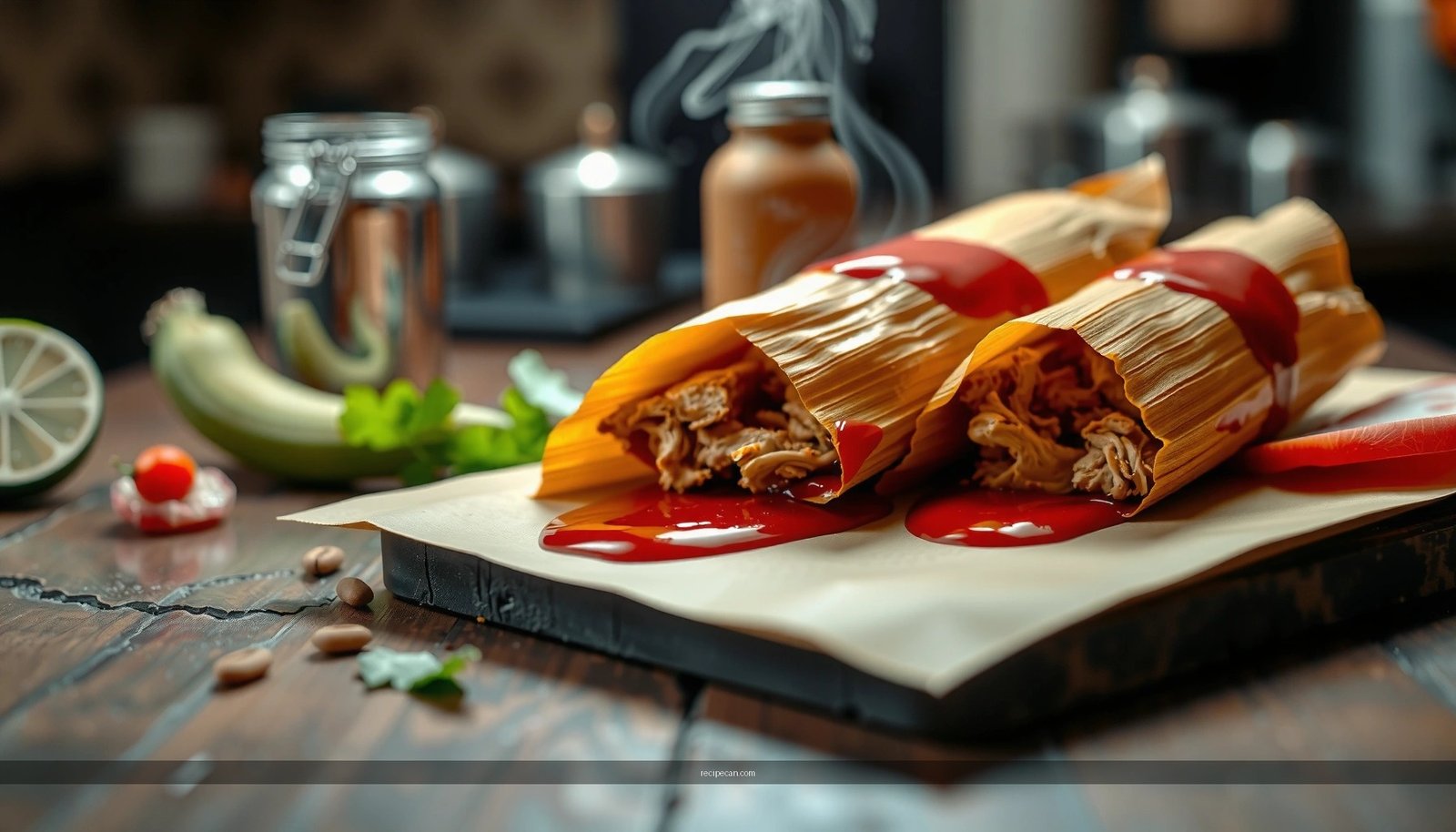
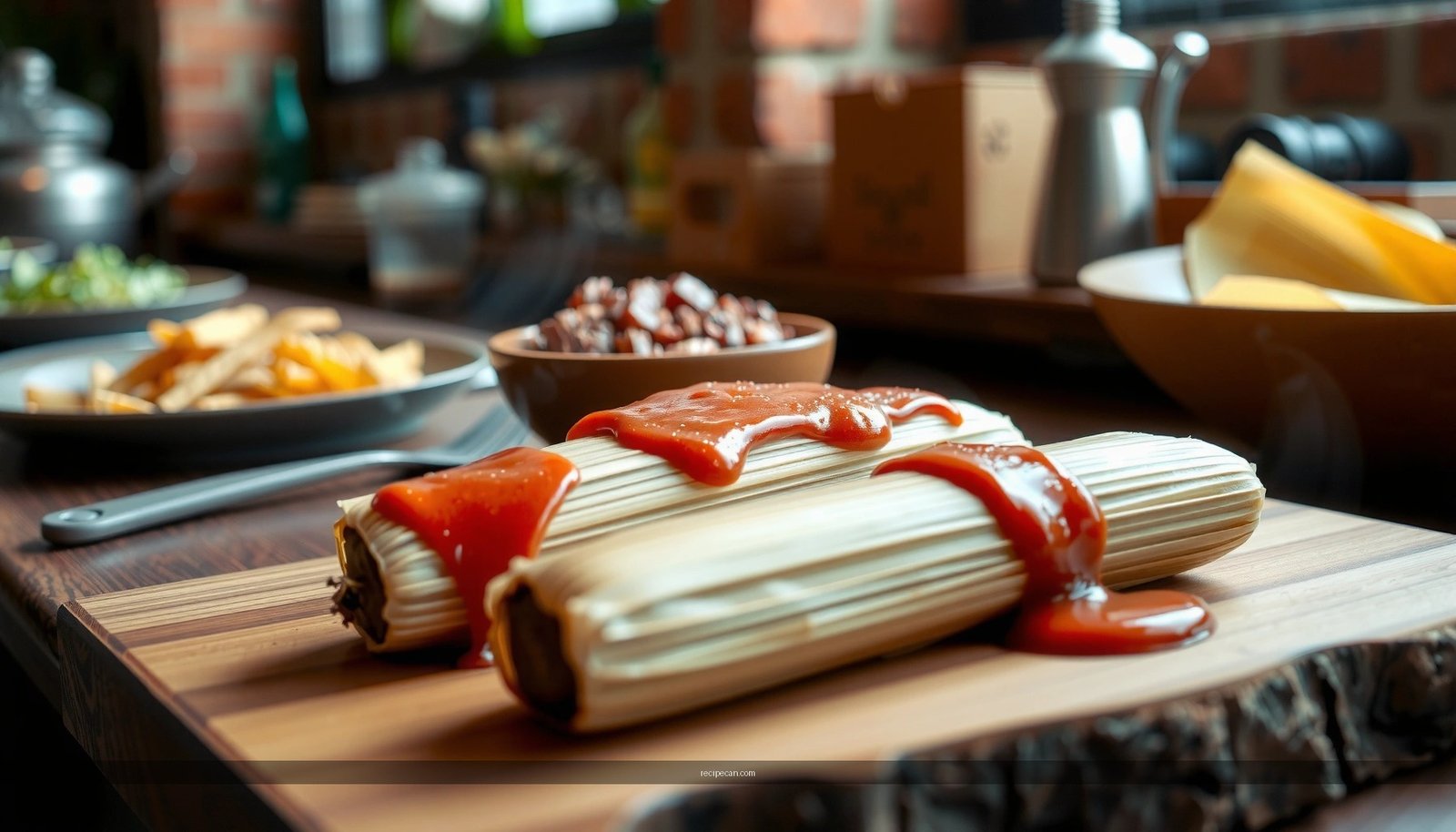
Get an authentic Mexican tamale recipe with step-by-step instructions you can follow immediately, including how to make true masa from scratch and assemble tamales that steam up tender, not dry. This guide gives you a clear winning method for classic filling and wrapping, so you know exactly what to do at every stage. By the end, you’ll have tamales with the right texture, rich flavor, and reliable results every time.
Make authentic Mexican tamales at home by nailing two things—tender, properly hydrated masa and a thick, flavorful filling—then steam them until the masa pulls cleanly from the husk. Use this step-by-step guide to learn traditional preparation, the right masa texture, and practical, repeatable techniques for clean folding and even cooking.
Gather the Ingredients (Masa + Filling)

Authentic tamales start with well-chosen basics. For the masa, masa harina (not cornmeal) is essential because it’s precooked and finely ground, which affects hydration and steam texture. For moisture and flavor, many traditional cooks hydrate masa with broth (chicken, pork, or vegetable) instead of water so the final tamale tastes seasoned from the first bite.
For the filling, choose a classic that matches your preference—red chile pork, chicken in green chile, or a cheese-forward option. Authentic results come from two principles: (1) the filling must be seasoned and aromatic, and (2) it must be thick enough to stay put inside the tamale rather than leak into the masa.
Core masa ingredients
– Masa harina: the foundation
– Warm broth (chicken or pork): hydrated liquid for flavor and correct texture
– Lard (traditional) or vegetable shortening/butter alternative: for richness and tender mouthfeel
– Salt: usually added during masa mixing, adjusted to your broth
Classic filling options
– Pork in red chile sauce: pork shoulder simmered in dried chile-based sauce
– Chicken (or turkey) in green chile: tomatillo/green chile aromatics
– Cheese-based (regional variations): queso fresco, Oaxaca-style cheese, or a blend
Key ingredient note: masa hydration
Masa harina absorbs liquid differently by brand and even by batch, so your goal is not a single “exact cup” of broth—it’s the correct texture (smooth, spreadable, and elastic). If your masa feels stiff, it needs more warm broth; if it looks runny, it needs additional masa harina (or brief rest and re-check).
Quick doneness target
You’ll know your filling and masa are aligned when the filling is thick (spoonable, not watery) and the masa spreads thinly without tearing—both are requirements for tamales that steam evenly and hold their structure.
Tamale Masa Consistency Check (Common Benchmarks)
| # | Masa cue | Desired range | Why it matters | Cook outcome |
|---|---|---|---|---|
| 1 | Spreads on husk | ~1/8–1/6 in (3–4 mm) | Even thickness steams consistently | ★ Better texture |
| 2 | Glossy, smooth surface | No visible lumps | Hydration has fully incorporated | ★ Uniform crumb |
| 3 | Spoon “holds a ridge” | Ridges settle slowly | Not too dry, not overly runny | ★ Clean steaming |
| 4 | Water-dilution check (fold test) | Sticks to fork without dripping | Prevents watery masa | ★ Holds shape |
| 5 | Upright “flop” on spoon | Flops slowly when tilted | Avoids dense, gummy tamales | ★ Light, tender bite |
| 6 | Spreadability after resting | Improves within 10–20 min | Starch hydrates evenly | ★ Less tearing |
| 7 | Husk release after steam | Pulls away easily | Masa is fully set | ✗ Under-steamed = sticky |
Make the Authentic Masa
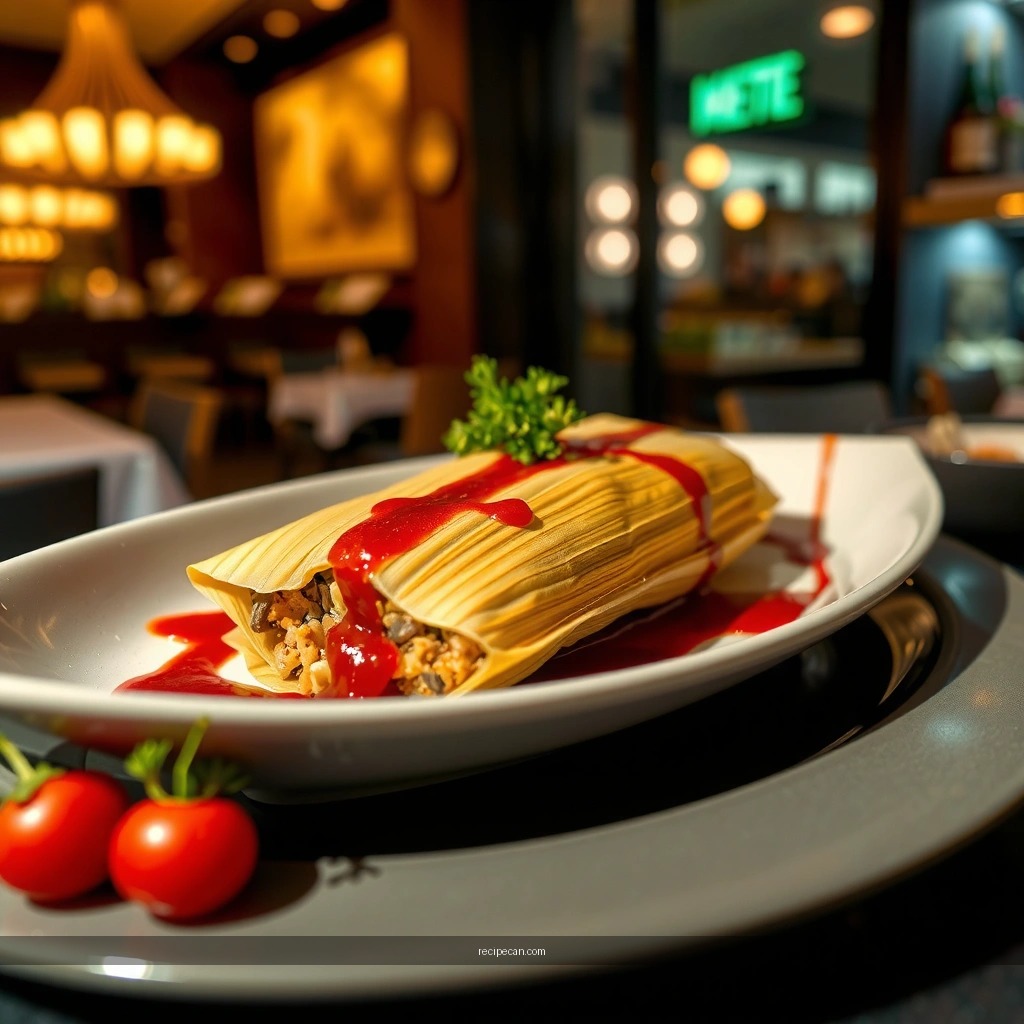
To make authentic Mexican tamales, focus on hydration, fat incorporation, and aeration. Start by combining masa harina with warm broth gradually, mixing until the dough is smooth and free of dry pockets. Then incorporate lard (or shortening) and beat the masa to lighten it—this step is a defining feature of tender, traditional tamales.
Traditional masa method (practical)
1. Hydrate masa harina: Use warm broth so it absorbs readily. Mix until you get a consistent, thick paste.
2. Add fat: Stir in lard/shortening until glossy and cohesive.
3. Whip for aeration: Beat the masa until lighter in color and noticeably fluffier.
4. Adjust seasoning and texture: Add a little broth if stiff; add masa harina if loose.
5. Rest briefly: Let it hydrate evenly so spreading becomes easier and more uniform.
What “right texture” means
– It should spread thinly without tearing the husk.
– It should feel elastic and smooth, not gritty or pasty.
– When you drag a spoon through it, the groove should briefly hold before slowly smoothing out.
Why whipping matters
Even if you hydrate correctly, masa can still turn out heavy if you skip aeration. Whipping creates a lighter crumb structure that helps tamales steam evenly and prevents a dense, paste-like bite.
Prepare the Savory Filling
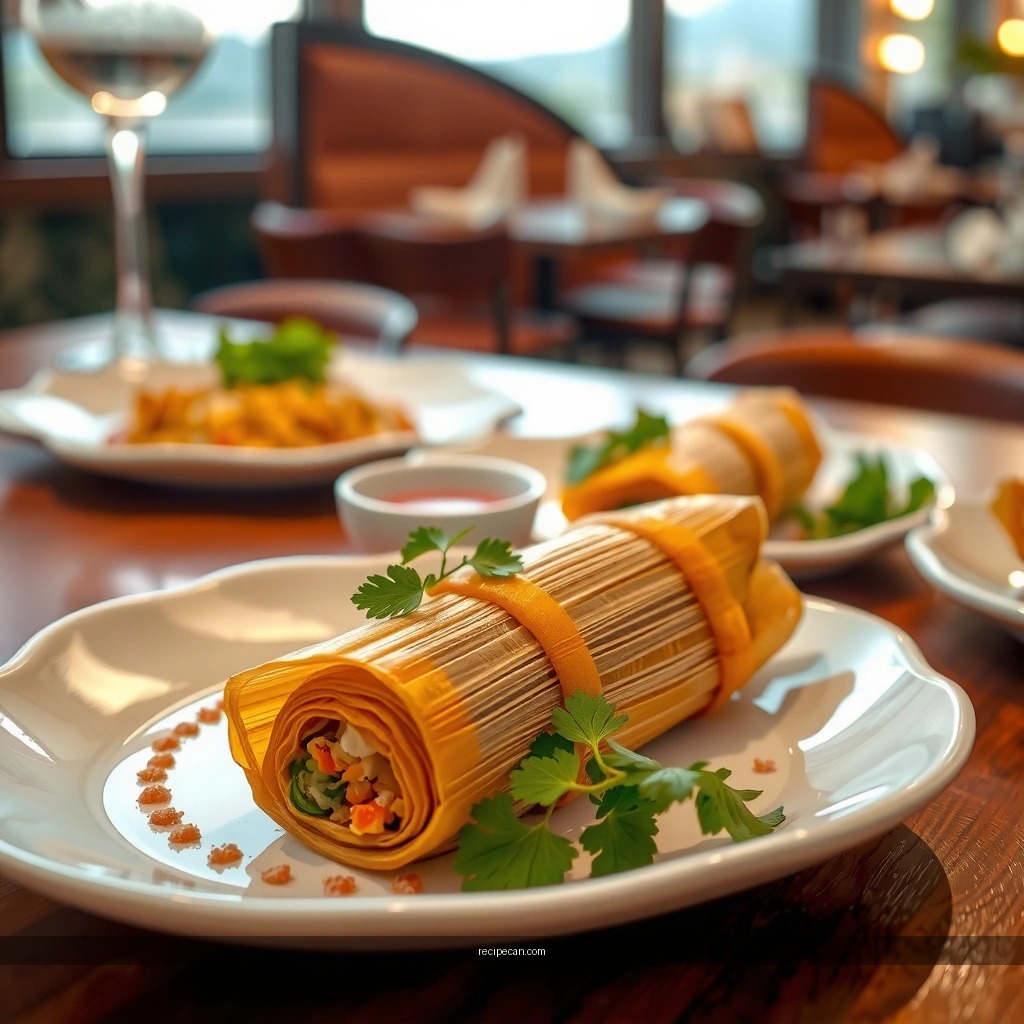
A flavorful tamale filling should taste like a complete dish on its own—because during steaming, the filling condenses and intensifies. For red chile pork, you’ll typically simmer pork shoulder in a spiced chile base with aromatics like garlic and onion. For green chile chicken, simmer chicken with tomatillos or green chile, then reduce until thick.
Pork in red chile: classic approach
1. Toast and rehydrate dried chiles (if using), then blend into a smooth sauce.
2. Simmer pork until tender, then add the chile sauce.
3. Reduce to thicken until it holds inside the tamale.
Chicken in green chile: bright and savory
1. Simmer chicken with onion and garlic until cooked through.
2. Blend/prepare green chile sauce (often tomatillos + chiles + aromatics).
3. Reduce so it’s thick, spoonable, and not watery.
The most common filling mistake
Watery filling leads to soggy masa and messy assembly. Your filling should be thick enough that it stays mounded on a spoon and doesn’t immediately seep outward when placed on masa.
Analytical test (easy and reliable)
– If the filling pools like soup at room temperature, reduce longer.
– If it forms a mound and holds for several seconds, it’s ready.
Assemble and Fold the Tamales
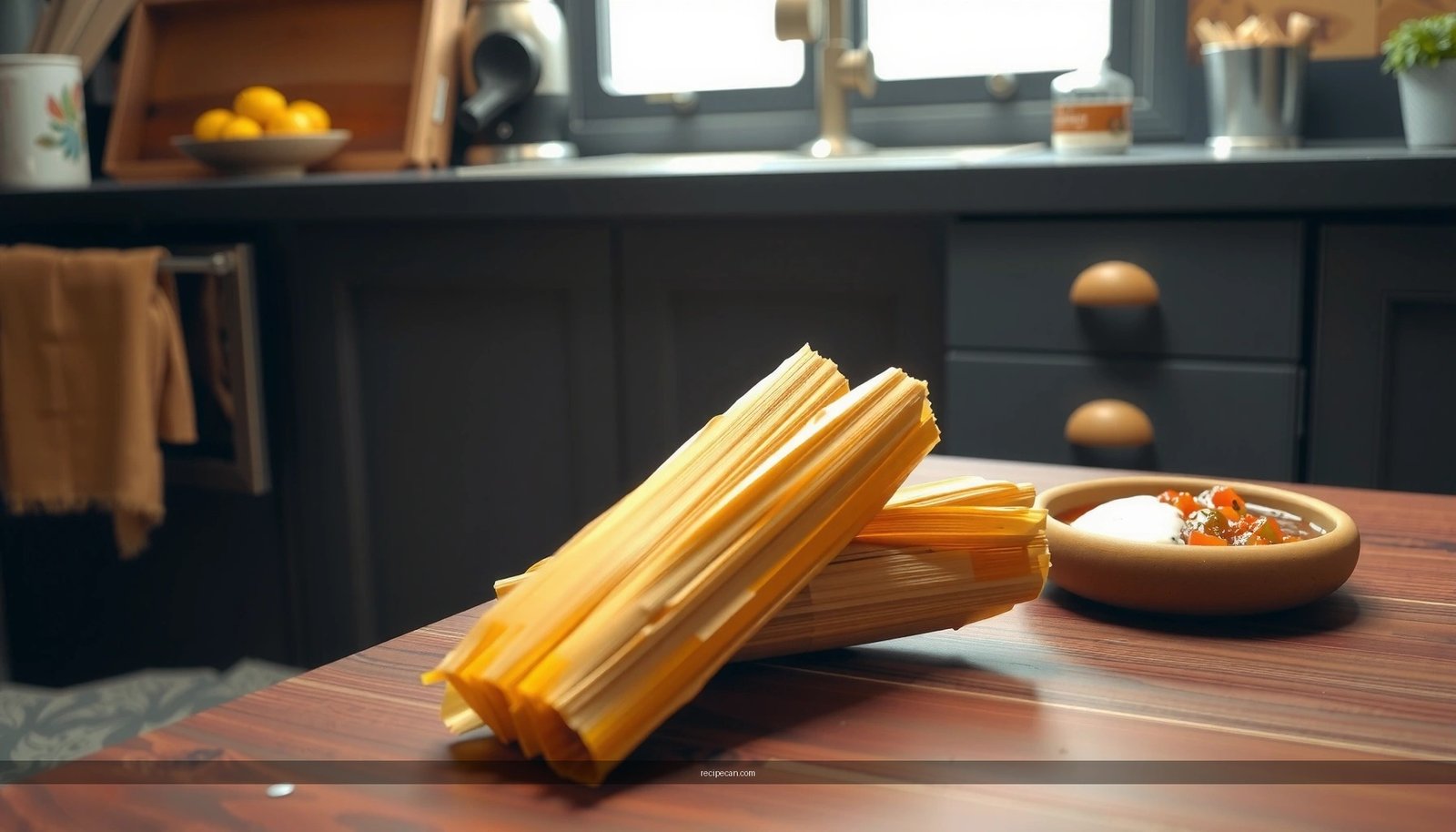
Assembly is where technique protects quality. Soak corn husks until pliable, then keep them damp while you work. Spread masa thinly and evenly so the steam can penetrate quickly and set the center.
Clean folding workflow
1. Lay the husk flat: Pat off excess water; you want flexible husks, not dripping ones.
2. Spread masa evenly: Use the back of a spoon to create a thin layer—aim for consistent thickness to prevent undercooked centers.
3. Add filling in the center: Use less than you think at first. Overfilling causes blowouts and uneven steaming.
4. Fold tightly: Bring edges together so the filling is contained.
5. Tie only if needed: Ties help when husk size varies or you’re transporting tamales.
Pro tip: standardized portions
If you portion filling consistently, you’ll get uniform cooking. A kitchen scale is ideal, but even a consistent spoon-size method works.
Folding consistency checkpoints
– Masa shouldn’t be so thick that it smothers the filling.
– Tamales should feel firm enough that they can be stacked without collapsing.
– During steaming, gaps can leak steam and dry out sections—tight folding prevents this.
Steam to Perfect Tenderness
Steaming is the final—and most forgiving—step when you apply steady moisture and correct arrangement. Use a steamer setup that holds water below the steaming basket while keeping tamales above boiling water level.
Steaming best practices
– Arrange seam-side down: This helps contain filling and keeps the tamales tidy.
– Use steady steam, not violent boiling: Too much turbulence can disturb structure.
– Maintain water level: Refill with hot water to avoid long steam interruptions.
– Cook until set: Your key indicator is when masa pulls away from the husk easily and tamales feel firm but tender.
Timing reality check
Exact timing depends on tamale size, thickness of masa, and steamer setup. Plan for a range and rely on the doneness cues:
– Under-steamed tamales feel sticky and cling to husks.
– Over-steamed tamales can dry and lose softness.
Doneness cue method (fast)
Open one tamale at the time you think they’re ready. If the masa easily detaches from the husk and the center looks fully set (no wet smears), the batch is done.
Serving, Storage, and Reheating Tips
Serve tamales hot and fresh for the best texture. Traditional pairings—salsa, crema, and garnishes like chopped onion and cilantro—help balance richness with bright acidity and freshness. Offer a variety of salsas if you’re serving a mixed filling batch.
Classic serving ideas
– Red chile tamales: salsa roja + crema + crumbled cotija or queso fresco
– Green chile tamales: tomatillo salsa verde + extra lime + cilantro
– Cheese tamales: mild salsa and pickled onions to cut richness
Storage (important for texture)
– Refrigerate: Cool fully, then store in an airtight container.
– Freeze: Freeze individual tamales for easy reheating and portion control.
Reheating for the best results
– Steaming (best): Reheat until hot throughout, keeping husks intact for moisture.
– Microwave (works): Reheat with a damp paper towel and a short rest to let heat distribute.
– Avoid drying: Overheating is the fastest path to tough, dry tamales.
Quality goal
Reheated tamales should feel soft and tender, not rubbery. If they’re drying out, increase moisture (cover with damp towel or steam) and reduce reheating time.
Enjoy your homemade authentic Mexican tamales by following the masa texture, proper assembly, and steady steaming cues above. Next, pick your favorite filling, make a batch, and share them—then save leftovers by freezing for an easy, delicious meal anytime.
By focusing on masa hydration, thick seasoned fillings, and consistent steam, you can reliably produce authentic Mexican tamales with tender texture and clean presentation. Use the texture benchmarks, assembly workflow, and doneness checks in this guide to turn tamale-making into a repeatable process—whether you’re cooking for a family gathering or preparing a freezer-friendly meal plan.
Frequently Asked Questions
What makes an authentic Mexican tamale recipe different from other tamales?
Authentic Mexican tamales typically use masa (nixtamalized corn dough) and are seasoned with regional staples like chili, garlic, and Mexican spices rather than generic spice mixes. The filling is often cooked down until rich and flavorful, and the tamales are steamed in corn husks until the masa lifts cleanly. Many traditional recipes also specify a particular style—like rojo (red) or verde (green)—to match Mexico’s regional preferences.
How do I make authentic Mexican tamales with masa that’s tender and not gummy?
Start with fresh masa harina and cook it properly; authentic results depend on mixing masa with the right amount of broth and salt to achieve a smooth, workable dough. For tender tamales, many cooks beat in fat (usually lard) until light, which helps the masa steam evenly instead of becoming dense. A good test is that the masa should spread easily and not feel sticky, and it should hold shape when you form a portion on the husk.
Which fillings work best for an authentic Mexican tamale recipe (red or green)?
Classic options include pork in red chile sauce (tamales rojos) or chicken in green chile sauce (tamales verdes), both of which are deeply flavored and crowd-pleasing. You can also make authentic versions with mole, beef and consommé, or rajas con queso depending on the region and your preference. Choose red or green based on what chiles you enjoy most—red chile tends to be smoky and deeper, while green chile is often brighter and more herby.
Why do my tamales come out dry or uneven after steaming?
Dry or uneven tamales usually come from under-steaming, inconsistent moisture, or masa that wasn’t mixed evenly. Make sure the steamer has enough water to maintain steady steam throughout the cooking time, and keep the pot covered so you don’t lose heat. It also helps to pack the tamales snugly but not overly tight, and to use the right portion sizes so each tamale cooks at the same rate.
What’s the best way to assemble and wrap tamales so they cook correctly?
Soften the corn husks, spread a consistent layer of masa, add the prepared filling, and fold tightly so the filling stays centered while steaming. Leave a little space at the ends so steam can circulate, and tie or fold using a method that keeps the seam side protected. For best results with an authentic Mexican tamale recipe, steam until the masa pulls away easily from the husk and the center is hot and set.
References
- Tamale
https://en.wikipedia.org/wiki/Tamale - https://www.britannica.com/topic/tamale
https://www.britannica.com/topic/tamale - Google Scholar Google Scholar
https://scholar.google.com/scholar?q=authentic+Mexican+tamales+recipe+masa+corn+steaming - Google Scholar Google Scholar
https://scholar.google.com/scholar?q=Mexican+tamale+preparation+process+traditional+techniques - Google Scholar Google Scholar
https://scholar.google.com/scholar?q=tamales+Oaxaca+Mexico+recipe+handmade+corn+masa+historical - https://www.bbc.com/travel/article/20170203-why-tamales-are-so-important-in-mexico
https://www.bbc.com/travel/article/20170203-why-tamales-are-so-important-in-mexico - https://www.nytimes.com/2020/12/16/dining/how-to-make-tamales.html
https://www.nytimes.com/2020/12/16/dining/how-to-make-tamales.html - https://www.theguardian.com/lifeandstyle/2015/dec/18/how-to-make-tamales
https://www.theguardian.com/lifeandstyle/2015/dec/18/how-to-make-tamales - https://www.cdc.gov/foodsafety/keeping-food-safe.html
https://www.cdc.gov/foodsafety/keeping-food-safe.html - https://www.fda.gov/food/foodborne-illness-contaminants/food-safety-basics
https://www.fda.gov/food/foodborne-illness-contaminants/food-safety-basics