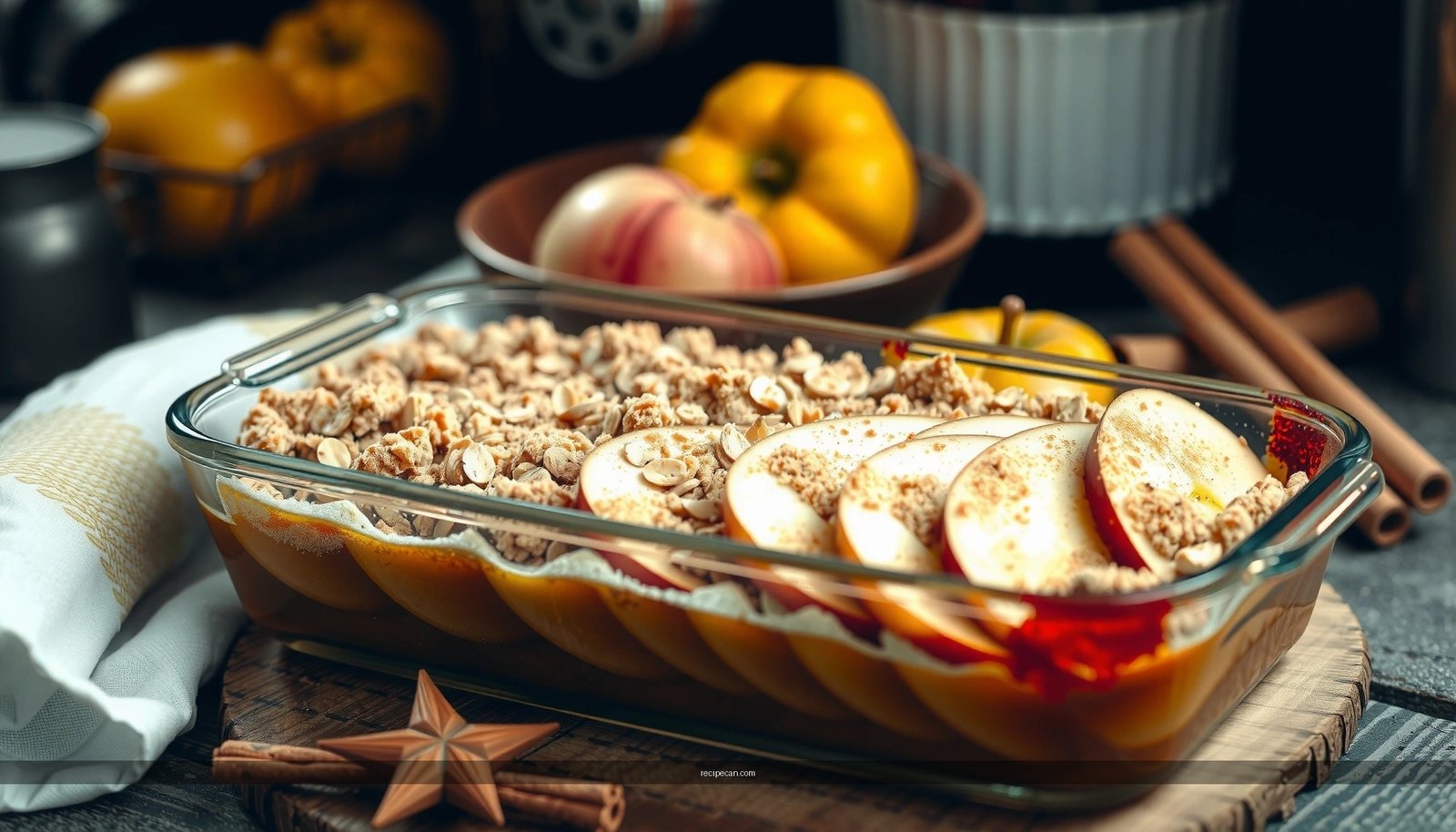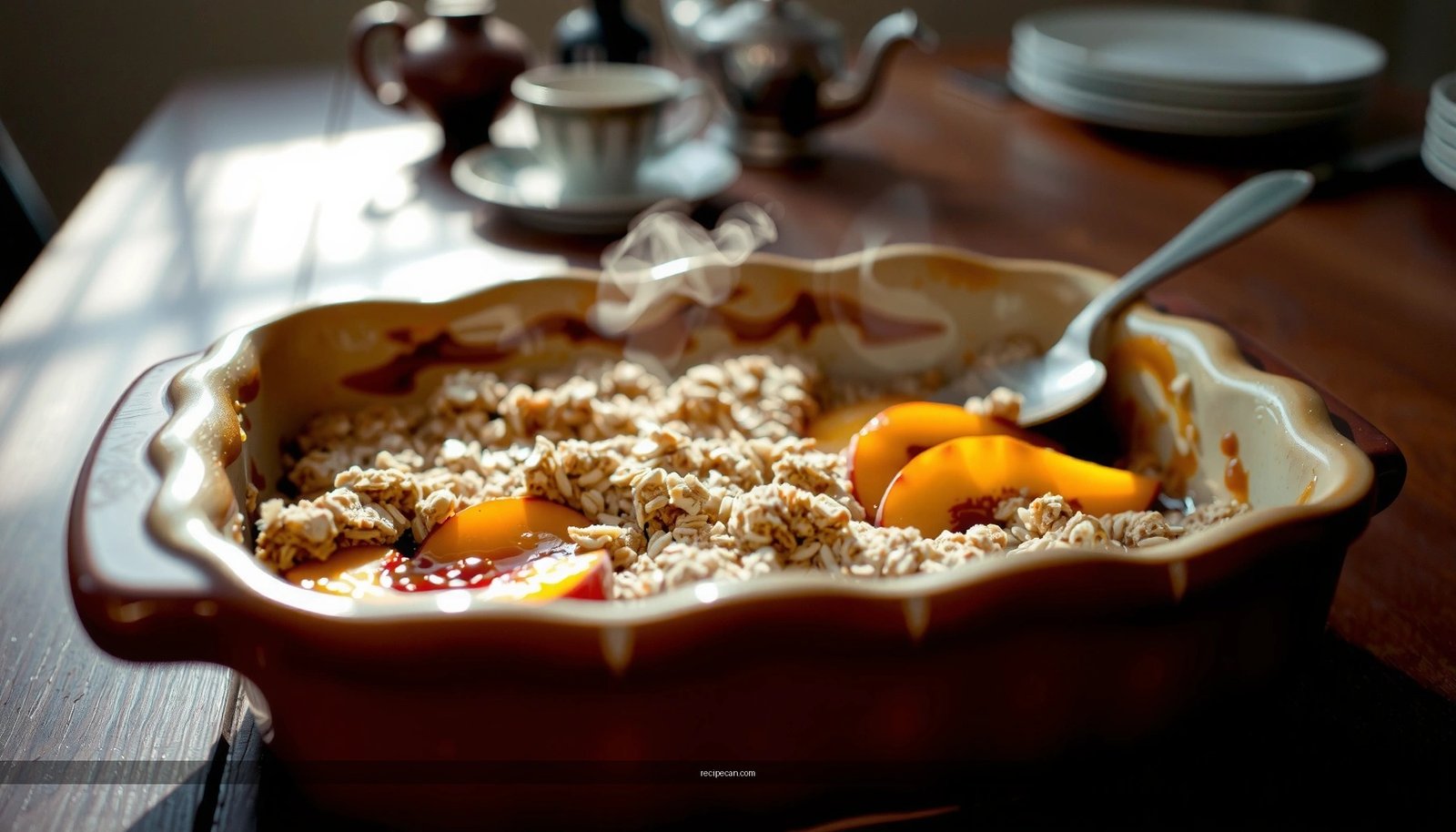
This fresh peach crumble recipe delivers the clear winner: sweet, juicy peaches under a crisp, buttery crumble in under an hour. You’ll get exact instructions for achieving tender fruit and a golden topping every time, no guesswork needed. Looking for the easiest way to turn ripe peaches into a show-stopping dessert? This is it.
This fresh peach crumble recipe delivers a juicy peach filling and a buttery, golden oat topping with minimal effort—so you get that classic “bubbly and golden” bake every time. With the right peaches, a simple thickener, and cold-butter crumble technique, you’ll reliably achieve a tender filling and crisp, spoonable topping.
This is the kind of dessert that performs like a crowd-pleaser in a practical, repeatable way: the peaches bring natural sweetness, while cinnamon and lemon add depth and brightness; the topping bakes into a lightly crisp layer that balances the fruit’s softness. It’s also forgiving—if your peaches are slightly underripe, you can compensate with a touch more sugar; if they’re very ripe, you can lean on proper thickening and baking time to avoid a watery center.
Peach Ripeness Guide for Best Crumble Results (Home Baking)
| # | Peach Stage | Texture When Squeezed | Flavor Profile | Adjustments for Crumble | Bake-Ready Rating |
|---|---|---|---|---|---|
| 1 | Fully Ripe (Best) | Gives slightly, not mushy | Sweet, fragrant | Use baseline sugar (about 1/3–1/2 cup per 6 cups) | ★★★★★ |
| 2 | Ripe but Slightly Firm | Firm with a gentle give | Sweet with mild tartness | Add 1–2 tbsp sugar + 1–2 tsp lemon zest | ★★★★☆ |
| 3 | Ripe with Minor Soft Spots | Soft in spots, okay overall | Very juicy, higher sweetness | Use slightly more thickener (add ~1 tbsp cornstarch) | ★★★★☆ |
| 4 | At-Risk (Almost Overripe) | Too soft; dents easily | Sweet but can taste flat | Increase lemon juice and thicken more for a stable filling | ★★★☆☆ |
| 5 | Underripe (Needs Time) | Hard with little give | Tart, less aromatic | Let sit 2–3 days; add a bit more sugar | ★★☆☆☆ |
| 6 | Mealy / Dry | Firm but not juicy | Low sweetness, less fragrance | Add 1–2 tbsp water or peach juice + extra thickener | ★★☆☆☆ |
| 7 | Overripe (Use Carefully) | Very soft, bruised | Very sweet but can ferment off-flavors | Trim bruises; increase lemon + thicken to prevent collapse | ★☆☆☆☆ |
Choose the Best Peaches
Start with peaches that are ripe, fragrant, and yielding to gentle pressure—because your crumble’s success depends on fruit flavor more than added sweetness. For a peach crumble that tastes like summer rather than sugar, look for peaches with a noticeable aroma near the stem and a golden-yellow base color with red blush.
When you slice, aim for relatively even thickness (for example, 1-inch wedges). Inconsistent cuts create an uneven bake: thin pieces can turn jammy or dry out, while thick pieces remain firm and watery. If you’re making this for a group, consistency in slice size is one of the simplest “quality controls” you can apply.
A practical technique is to toss your peaches with sugar and lemon before assembling. Sugar draws out juices while you prep, which helps you bake a syrupy filling instead of a thin, raw-tasting center. Lemon juice (and optionally zest) also does two jobs: it sharpens peach sweetness and helps prevent the fruit from tasting one-note. For underripe peaches, lemon still improves flavor, but you may want to slightly increase sugar.
Make the Peach Crumble Filling
The filling is where the crumble either becomes luscious or turns runny—so thickening matters. Peaches release liquid during baking, and that’s normal. The goal is to control it so you get bubbling fruit with a spoonable, slice-friendly texture.
To prevent a watery filling, use a thickener such as all-purpose flour or cornstarch. Flour provides structure and gives a classic baked “set,” while cornstarch thickens more aggressively and often yields a clearer, more glossy syrup. The best choice depends on your preference and the ripeness level of your peaches. If your fruit is very juicy (common with very ripe peaches), cornstarch tends to be the more reliable option.
Spices should complement, not dominate. Cinnamon is the standard for peach crumble because it harmonizes with the fruit’s warm, floral notes. A small amount goes a long way; also consider adding a pinch of salt to sharpen sweetness. Vanilla extract (if you use it) can add depth, but cinnamon is the backbone of the flavor profile.
Finally, let the fruit rest briefly after tossing with sugar, lemon, and thickener (even 10–15 minutes). This brief rest creates a more cohesive syrupy base before the oven ever begins. Without this step, the thickener may be slower to hydrate, and you may end up with uneven thickening—some peaches bubbling but others staying watery.
Create the Crumble Topping
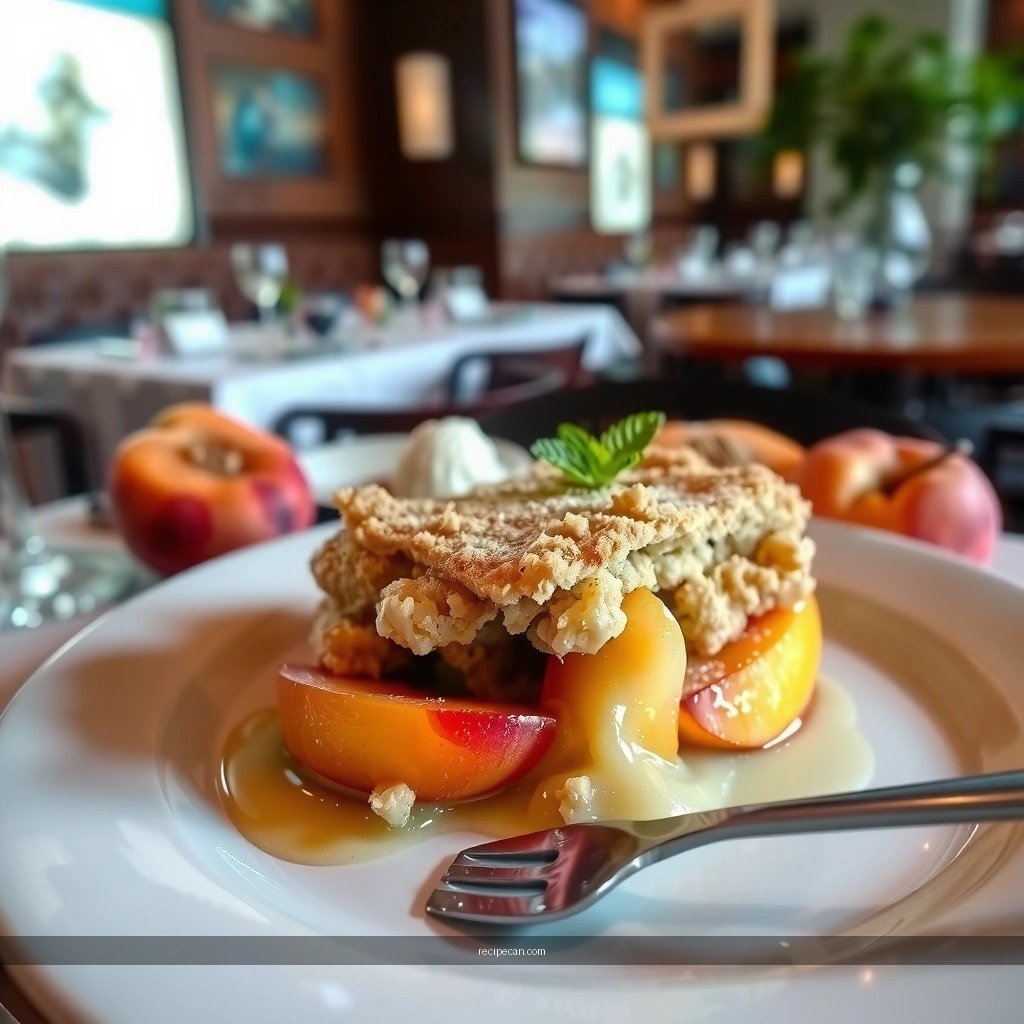
The crumble topping is the second half of the texture equation: it should be crisp, buttery, and golden, not pale and cakey. The core components—oats, flour, brown sugar, and butter—work together to form a crust. Oats provide chew and crunch; flour helps bind; brown sugar adds caramel notes that intensify as the topping browns; and butter supplies richness and the crisping effect.
A key professional technique: use cold butter and cut it into the dry ingredients until you get coarse crumbs. Cold butter melts gradually in the oven, creating layers of crisp. If your butter is too warm or fully melted before baking, the crumble can turn dense and lose that airy crumb structure.
Aim for an even distribution of topping over the fruit. This matters for both appearance and performance. A thin layer may not develop the golden top you want, and fruit can bubble through gaps. Conversely, a generous layer improves coverage and produces more crisp edges—especially helpful if your peaches are extra juicy.
If you prefer a topping with more crunch, increase oats slightly (within reason). For a more tender topping, keep the oat-to-flour balance near classic ratios. You can also adjust sugar: less sugar yields a nuttier, less sweet crumble, while more sugar creates deeper caramel browning.
Assemble and Bake to Golden Perfection
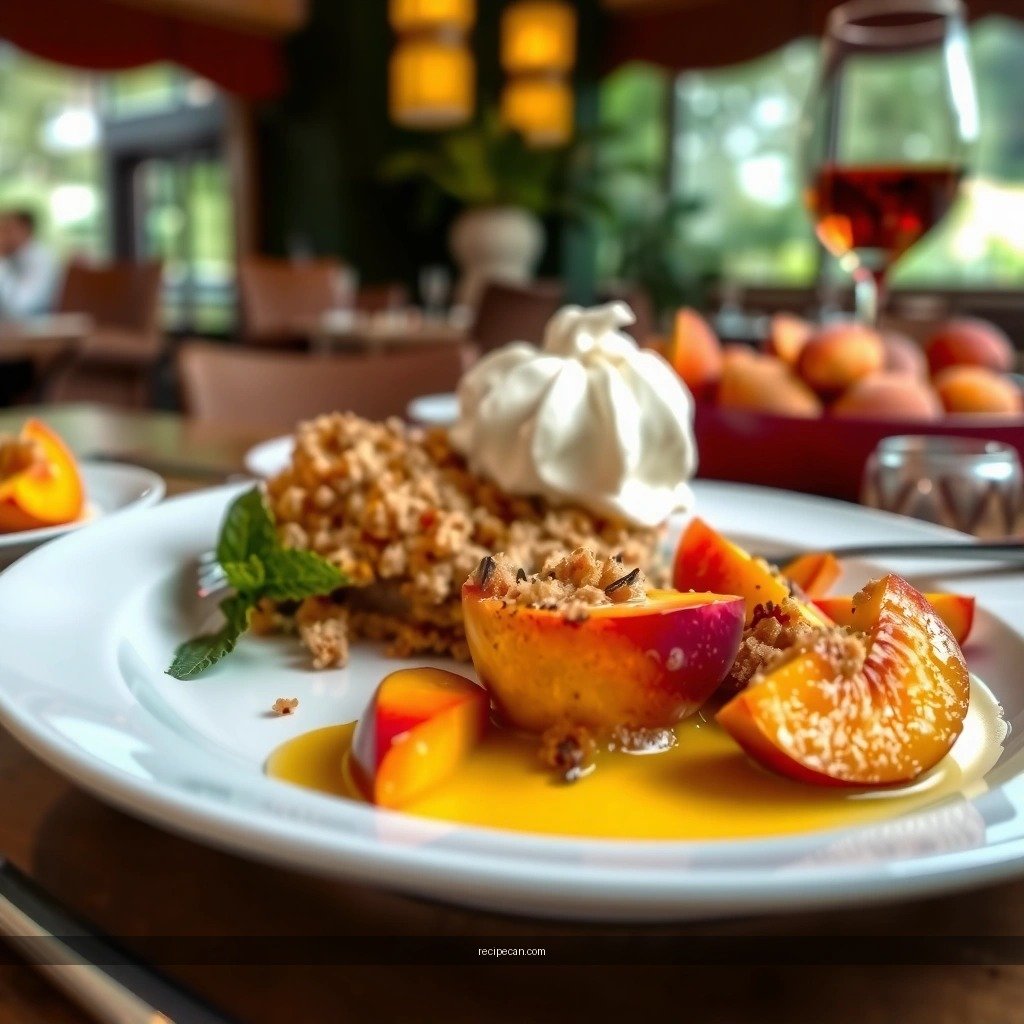
Assembling is straightforward, but even here, technique improves results. Spread the peach filling evenly in your baking dish so the heat penetrates consistently. Uneven thickness leads to inconsistent bubbling and, in turn, inconsistent texture—some areas set beautifully while others remain loose.
Sprinkle the crumble topping generously, ensuring it covers the fruit surface. For best results, slightly press the topping down just enough to help it adhere, but don’t compact it tightly; you still want the crumb to aerate and crisp in the oven.
Bake until you see two visual cues: bubbling throughout the filling and golden color across the topping. Bubbling indicates the fruit has released juices and the thickener has fully activated; golden color indicates butter has melted and sugars have caramelized. Let it cool briefly after baking. Cooling allows the juices to thicken and set, improving slice integrity. If you cut immediately, you’ll get a looser crumble and a more “scooped” texture—both are delicious, but they are different experiences.
Operationally, consider oven performance. If your oven runs hot, watch the topping and tent loosely with foil if browning accelerates. If your oven runs cool, continue baking until bubbling is clearly visible and the top reaches a deep golden hue.
Serving Ideas and Storage Tips
Serve your fresh peach crumble warm for the most contrast: hot fruit, crisp topping, and a fragrant aroma that signals “just baked.” Vanilla ice cream is the classic pairing because it cools the spice and amplifies peach sweetness. Whipped cream also works well, particularly if you want a lighter finish.
For cleaner slices, cool the crumble a bit longer before serving. If your goal is a soft crumble experience, scoop right away. This flexibility means you can tailor the same base recipe to different serving styles—slice for plates, scoop for bowls.
Storage is easy and helps you plan ahead. Cool completely, then cover and refrigerate. When reheating, aim for restoring crispness: rewarm in the oven rather than the microwave. The oven re-crispens the topping and re-heats the fruit evenly. Microwaving works in a pinch, but it tends to soften oats and reduce that signature crunch.
If you’re meal-prepping for a week, consider portioning individual servings before refrigerating. Smaller portions reheat more consistently and reduce time in the “warm but soggy” window.
Variations to Match Your Taste
This recipe is a flexible framework, and you can customize it without losing structure.
– Swap in bourbon or vanilla extract for deeper flavor. A small splash of bourbon adds caramel and oak-like warmth that plays exceptionally well with cinnamon. Vanilla extract enhances overall aroma without changing the bake process. Use modest amounts so you don’t overpower the peach character.
– Add berries (like raspberries) for a mixed-fruit crumble. Raspberries contribute brightness and color, but they release juice too. If you add berries, consider slightly increasing thickener (especially if using very juicy fruits) to keep the filling stable.
– Make it gluten-free by using a gluten-free flour blend and oats. Choose a gluten-free flour blend that thickens well in baking, and verify your oats are certified gluten-free if needed. The topping still needs the right binding and crumble texture—cold butter and coarse crumbs remain non-negotiable.
From a business-lunch perspective, variations also support consistency across batches. If you’re serving different groups or accommodating preferences, you can create a base peach crumble and customize topping mix-ins in small batches for predictable outcomes.
In the end, this fresh peach crumble recipe delivers exactly what people expect from a great crumble: juicy, well-seasoned fruit with a crisp, buttery oat topping—and it does so with a method you can repeat confidently. Choose ripe peaches, thicken the filling correctly, keep your butter cold for texture, and bake until the filling bubbles and the top turns golden. Then serve warm and adjust sweetness to match your fruit’s natural level of sweetness for the best flavor every time.
Frequently Asked Questions
What makes a fresh peach crumble recipe taste better than a basic peach cobbler?
A crumble relies on a buttery, crisp topping (often with oats or flour) that forms a golden, crunchy layer over juicy peach filling. Using fresh peaches gives you brighter flavor and better texture than canned or pie filling, especially when they’re slightly ripe. To maximize flavor, toss peaches with sugar, lemon juice, and a thickener like cornstarch so the filling stays luscious instead of watery.
How do I keep fresh peach crumble from getting runny?
Runiness usually comes from peaches releasing too much juice or from an insufficient thickener. Slice peaches evenly and toss them with cornstarch (or flour) before baking, using enough to bind the juices (often about 1–2 tablespoons per 4 cups peaches). Let the crumble rest 15–30 minutes after baking—this cooling time helps the peach filling set and become sliceable.
Why should I use lemon juice and spices in a fresh peach crumble recipe?
Lemon juice brightens the natural sweetness of peaches and helps balance the topping, preventing the dessert from tasting flat. Spices like cinnamon or nutmeg add warmth that complements fresh peach flavor and makes the crumble taste more “bakery style.” Even if your peaches are very sweet, a small amount of acid and spice improves overall balance and depth.
Which peaches are best for a fresh peach crumble—firm or ripe?
For a fresh peach crumble, choose peaches that are ripe but still slightly firm, so they hold their shape during baking. Very soft peaches can break down and turn the filling too loose, while under-ripe peaches may taste tart and won’t sweeten fully in the oven. Look for peaches with fragrant aroma and gentle give, then slice and bake promptly for the best results.
How can I make the crumble topping extra crispy and flavorful?
Use cold butter and cut it into the crumble mixture (flour, sugar, and optional oats) until you get pea-sized crumbs—this encourages a crisp, crumbly texture. Bake until the topping is deeply golden and the peach filling bubbles around the edges, which is the clearest sign it’s cooked through. For added crunch, sprinkle a little extra sugar or coarse topping (like turbinado sugar) over the crumble before baking.