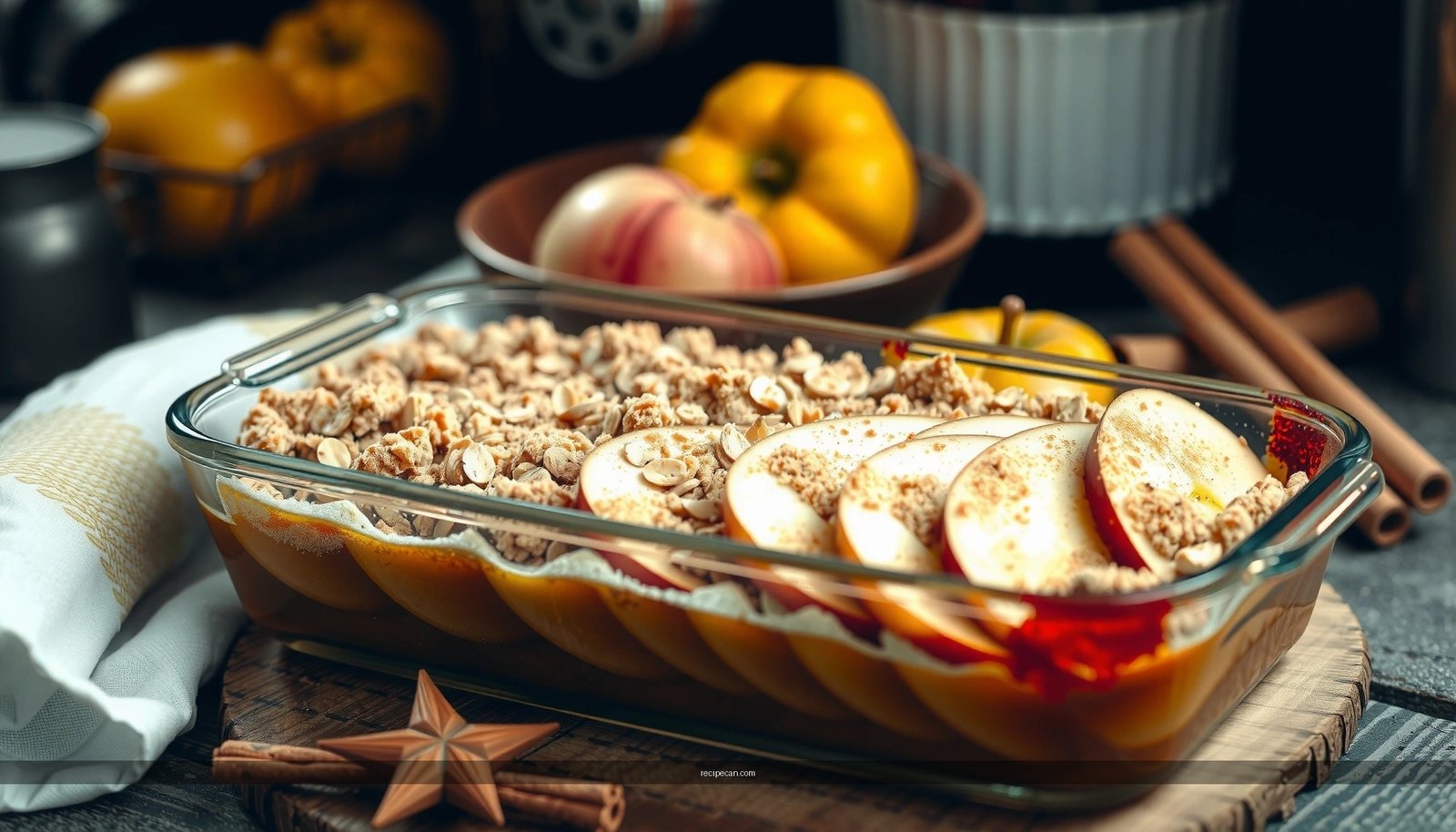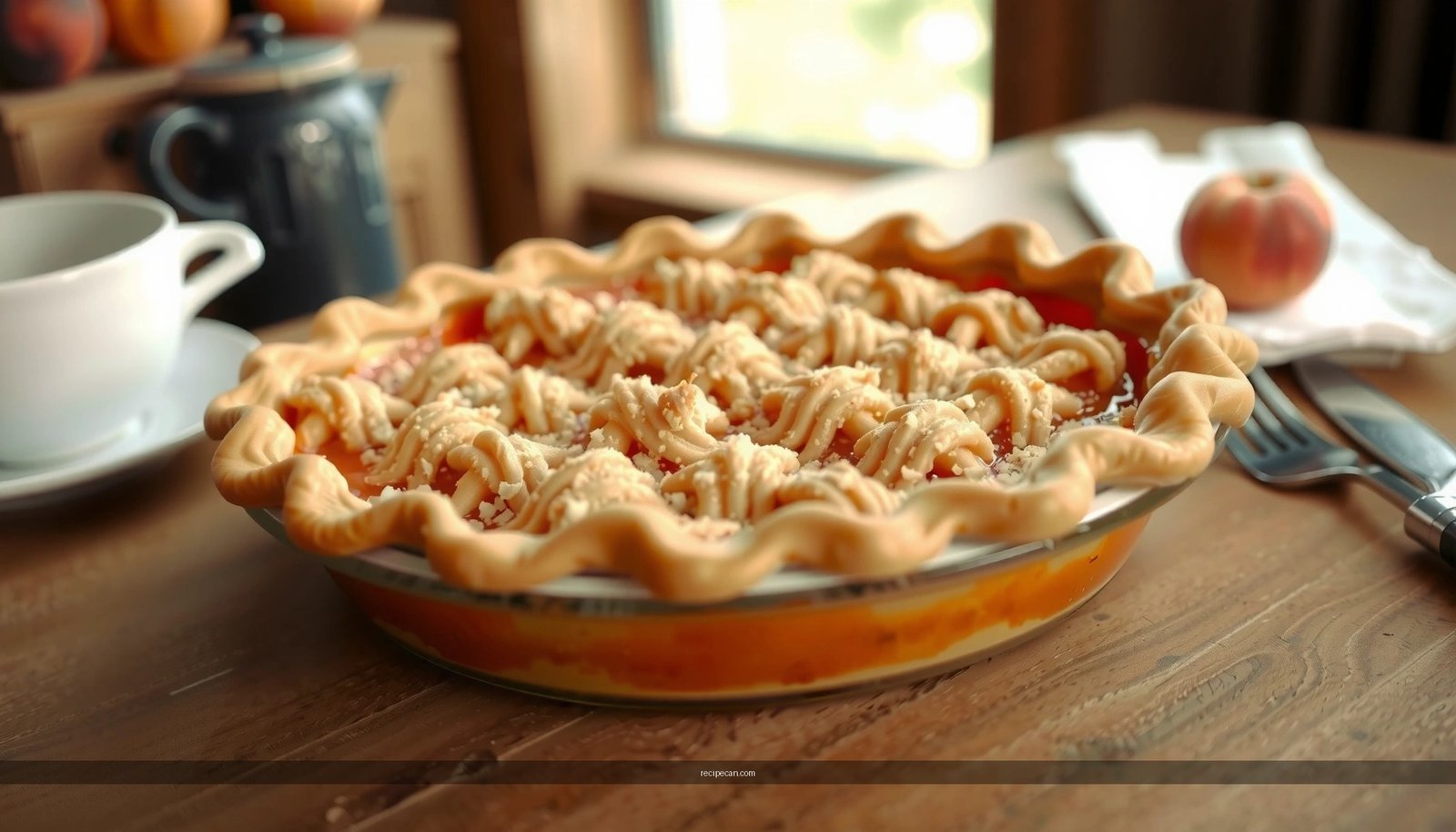
Get a crumble peach pie recipe that delivers unmistakably juicy peaches with a perfectly crispy, buttery crumble topping. This method is the clear winner when you want real peach flavor (not gummy filling) and a golden crust that holds up to every slice. Follow these steps for an easy bake that reliably turns out bakery-style crunch and sweet, bubbling fruit.
This crumble peach pie recipe delivers a reliably juicy peach filling under a buttery, crisp crumble—without complicated technique. You’ll prep peaches, build a thickened filling, and bake until the topping turns deep golden and the fruit bubbles, with a few timing and resting steps that make the difference.
If you’ve ever had a peach pie that’s either watery (filling didn’t set) or dry (too much heat or too little thickener), this version is designed to solve both. The secret is simple chemistry: peaches release water as they bake, so the filling needs enough thickener and enough bake time to drive off excess moisture. Meanwhile, the crumble stays crisp when you use cold butter (plus optional chilling) and keep the topping loose rather than packed.
—
Best Peaches to Use

Choosing the right peaches is the fastest path to the “easy, juicy, and perfectly crispy” result—because flavor and water content start in the fruit.
– Choose ripe, fragrant peaches for the sweetest flavor
Ripe peaches smell “peachy” near the stem end and yield slightly to gentle pressure. Very firm peaches can be under-seasoned and may bake unevenly; extremely soft peaches can break down into a jammy layer and blur the filling structure.– Use fresh or frozen peaches (thaw and drain if needed)
Frozen peaches are a great option year-round. Thaw them fully and drain well, because excess freezer moisture can dilute the filling and slow thickening. If you want extra insurance, reduce by a couple of minutes on the stovetop before mixing with the rest of the filling.
– Slice evenly so the filling bakes consistently
Aim for slices that are roughly the same thickness (commonly about 1/2-inch / 1.3 cm). Uneven pieces cause some fruit to go mushy while others stay slightly firm, which then affects how well your thickened filling sets.
Quick professional tip: If you’re sourcing peaches for pie, prioritize freestone varieties when possible. They release cleanly from the pit and tend to yield uniform slices with less waste.
—
Peach Filling Ingredients & Prep
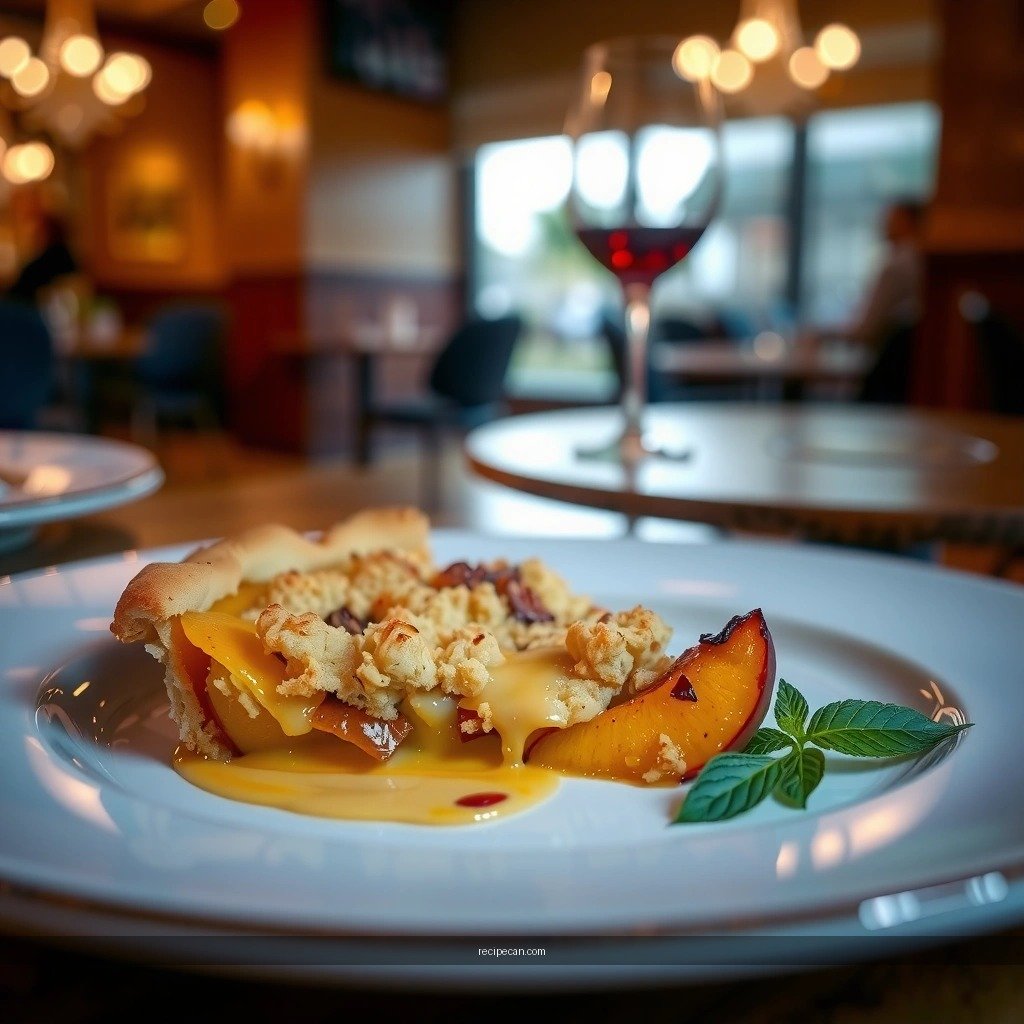
A great crumble peach pie filling is about balance: sweetness, acidity, and thickening that can handle real fruit moisture. Here’s how to prep it so it holds together after baking.
– Combine peaches with sugar and a thickener like cornstarch or flour
The thickener is what turns “juicy” into “juicy but set.”
– Cornstarch thickens smoothly and gives a glossy, pie-filling look. It also tends to keep the fruit texture brighter.
– All-purpose flour is more forgiving and slightly more “traditional.” It can be a touch less glossy but is very reliable.
Either works—just keep proportions consistent.
– Add lemon juice for brightness and balance
Lemon juice improves flavor clarity and helps the filling taste less flat. It also supports thickening by slightly adjusting the acidity environment. For most home recipes, a couple of tablespoons (depending on peach sweetness) is enough.
– Optional: a pinch of cinnamon or vanilla for extra warmth
Cinnamon adds a warm, bakery-style profile that pairs naturally with peaches. Vanilla rounds out flavor without overpowering the fruit. Use “pinch” amounts for cinnamon to avoid muting peach character.
Filling prep method that prevents watery pie:
Toss peaches with sugar and thickener first, then add lemon juice and any flavorings. Let the mixture sit for 10–15 minutes before assembling. This brief rest draws out some juices, and you’ll see how much liquid forms—useful for judging whether you need a slightly longer bake.
Key drivers of texture (why your filling behaves)
When peaches bake, their cellular structure breaks down and releases water. The thickener gelatinizes (cornstarch) or hydrates and thickens (flour). Your goal is to allow enough heat for thickening to occur and for excess moisture to evaporate—so you get bubbling around the edges and a filling that firms as it cools.
—
Crumble Topping: Buttery and Crisp
Crisp crumble is the “signature” of this pie, and it comes down to crumb texture and bake management. You don’t need special tools—just correct mixing and attention to butter temperature.
– Mix flour, sugar, and butter until you get coarse crumbs
Use cold butter cut into small pieces. As you mix, you want irregular crumb sizes, not a uniform dough. Coarse crumbs bake into crisp clusters with a light, sandy texture.
– Add oats for extra texture (optional but recommended)
Oats contribute chew and extra crunch and make the crumble more “streusel-like.” If you add oats, keep the ratio reasonable so the topping still crisps rather than turns bready.
– Chill the crumble briefly to help it stay crisp
A 10–20 minute chill helps the butter firm up, slowing melt during the first part of baking. That means better lift, browning, and crunch instead of a flatter, softer top.
Professional assembly note: Don’t compact the crumble. If you press it hard into the peaches, you create dense topping that may steam rather than crisp.
—
Pie Assembly Tips
Even with the right filling and crumble, pie assembly determines whether you get bubbling, crisp browning, and a clean slice.
– Fill the pie crust evenly without over-packing peaches
Distribute peaches in an even layer so thickening happens at a consistent rate. Over-packing can lead to an underbaked middle and overflow that never properly sets.
– Sprinkle crumble generously to cover the surface
You want near-total coverage. Bare fruit spots can lead to darker browning pockets or a “thinner set” area under the topping where juices escape faster.
– Leave a little room for bubbling—don’t press down the topping
As the filling heats, it will bubble. The crumble needs to sit loosely so steam can vent and the filling can thicken without turning into a sealed, watery pocket.
Simple visual cue: The crumble should look like a “blanket” over the pie—not a pressed crust. If you can see peaches peeking through in multiple spots, add a bit more crumble.
—
Baking Time, Temperature & Doneness
Bake control is where the recipe becomes consistently dependable. Peach pies need enough time to thicken and enough heat to brown the topping.
– Bake until the crumble is golden and the filling bubbles around the edges
This is your two-part doneness test:
1) Top: golden-brown crumble (not pale, not burnt)
2) Filling: bubbling at the edges and small bubbles breaking through near the center
– If the top browns too fast, tent with foil
Ovens vary. If the crumble is browning before the filling bubbles, loosely cover with foil to prevent over-browning while the fruit finishes setting underneath.
– Rest the pie before slicing so it sets properly
Resting is non-negotiable for a pie filling that slices cleanly. Let it cool for at least 2 hours (or until the filling is just warm and thick). Cutting too early releases steam and liquid before thickener fully stabilizes.
To make this measurable for a busy kitchen schedule, think of your bake as complete when the edges actively bubble for several minutes—then let it rest.
Troubleshooting by symptom
– Watery center: usually under-baked filling, too-thin thickener, or drained peaches not draining enough (especially frozen). Next time: bake longer and tent less aggressively.
– Runny filling only when warm: cooling wasn’t long enough. Next time: add a longer rest.
– Crumble is soft instead of crisp: butter may have warmed too early, crumble may have been packed, or oven heat may be low. Next time: chill crumble longer and keep topping loose.
—
Peach Ripeness vs Pie Performance Indicators (Home Baking)
| # | Ripeness Stage | Typical Fruit Firmness (Touch) | Expected Bake Release (Juice) | Best For | Reviewer Rating |
|---|---|---|---|---|---|
| 1 | Fully ripe (fragrant, slight give) | Soft—about 10–15% give | Moderate; bubbles set reliably | Classic juicy pie | ★★★★☆ |
| 2 | Slightly underripe (still firm, mild aroma) | Firm—about 3–7% give | Lower juice; needs longer bake | Sustained structure | ★★★☆☆ |
| 3 | Overripe (very soft, strong aroma) | Very soft—over 20% give | High juice; can thin filling | Jammy topping effect | ★★☆☆☆ |
| 4 | Cold-stored peaches (aroma muted) | Firm—about 7–12% give | Moderate; flavor may bake out | When paired with extra vanilla/cinnamon | ★★★☆☆ |
| 5 | Frozen peaches (thawed & drained) | Soft—variable after thaw | Moderate-high; drain well | Consistent year-round pie | ★★★★☆ |
| 6 | Canned peaches (drained) | Soft—already cooked texture | Lower structure; more sweet syrup | Quick dessert base | ★☆☆☆☆ |
| 7 | Farmstand peaches (best local ripeness) | Soft—10–15% give on average | Moderate; flavorful bubbling | “Bakery-style” results | ★★★★★ |
—
Serving & Storage
Serving is where you complete the experience—warm fruit, crisp topping, and a filling that slices cleanly. Storage is where many pies fail, so manage moisture and heat correctly.
– Serve warm with vanilla ice cream or whipped cream
Warm pie activates aroma compounds and softens the crumble slightly without losing crunch. Vanilla ice cream provides contrast in fat and sweetness, balancing peach acidity and spice.
– Store covered in the fridge and reheat for best texture
After cooling, cover and refrigerate. Reheat in the oven (rather than the microwave) at a moderate temperature until warmed through. This helps re-crisp the crumble surface.
– Keeps for a few days—freeze slices if you want ahead-of-time prep
This pie freezes well once fully cooled. Wrap slices tightly to prevent freezer moisture exposure, then thaw in the fridge and reheat in the oven for best texture.
Best practice for make-ahead events: Bake, cool, and slice only when the filling has fully set. For large gatherings, freeze pre-portioned slices so you can reheat quickly and serve consistently.
—
This crumble peach pie recipe works because it respects the two main realities of fruit pies: peaches naturally release juice, and crumble crispness depends on how the butter behaves during baking. By selecting ripe peaches (or well-drained frozen fruit), thickening with cornstarch or flour, balancing with lemon, and baking until you see golden crumbs and bubbling edges—then resting before cutting—you get a pie that’s juicy, cohesive, and reliably crisp. Bake one now, and if you’re feeding a crowd, make a second pie while the oven is hot—you’ll enjoy the same bakery-quality results all week.
Frequently Asked Questions
What’s the best crumble peach pie recipe for juicy peaches?
Choose ripe peaches that smell sweet and yield slightly when pressed, then slice them and toss with sugar, lemon juice, and a little cornstarch or flour to prevent excess peach juice from pooling. For the crumble topping, use a mix of flour, brown sugar, cinnamon, and cold butter so it bakes into a crisp, buttery texture. Bake until the filling is bubbling and the top is golden, usually around 40–55 minutes, depending on your oven and pie depth.
How do you prevent a soggy bottom in a peach crumble pie?
Start by thickening the peach filling with cornstarch (or swap in instant tapioca) so it gels as it bakes, which helps keep the bottom crust from getting watery. Chill the assembled pie for 15–30 minutes before baking, and consider pre-baking (blind baking) the crust for 8–10 minutes if your oven tends to run hot or your crust is very tender. Bake on a lower rack or even a preheated baking sheet to encourage faster set-up of the crust and filling.
Why does my peach pie filling turn out runny?
A runny peach filling is usually caused by peaches that release too much liquid or by using too little thickener. Make sure you use enough cornstarch and slice peaches evenly so the crumble peach pie recipe bakes consistently. Also, let the pie cool at least 2–3 hours before slicing—peach pie filling thickens as it sets, even if it looks a bit loose right when it comes out of the oven.
Which peaches are best for a crumble peach pie—fresh or frozen?
Fresh peaches are great for a bright, sweet flavor, but frozen peaches work well too if you thaw and drain them well to remove excess moisture. If using frozen peaches, slightly increase the thickener (about 1–2 extra tablespoons cornstarch per standard pie filling) since frozen fruit can release more liquid during baking. Either way, taste the peaches and adjust sugar so the filling isn’t under-seasoned.
How can I make the crumble topping extra crisp and buttery?
Use cold unsalted butter and cut it into the crumble mixture until you get uneven, sandy chunks—those larger bits create the crisp texture you want in a peach crumble pie. Don’t overmix; press the topping lightly rather than packing it tightly, and sprinkle a pinch of coarse sugar on top for extra crunch. If your top browns too fast, loosely tent the pie with foil while the filling continues to bake.