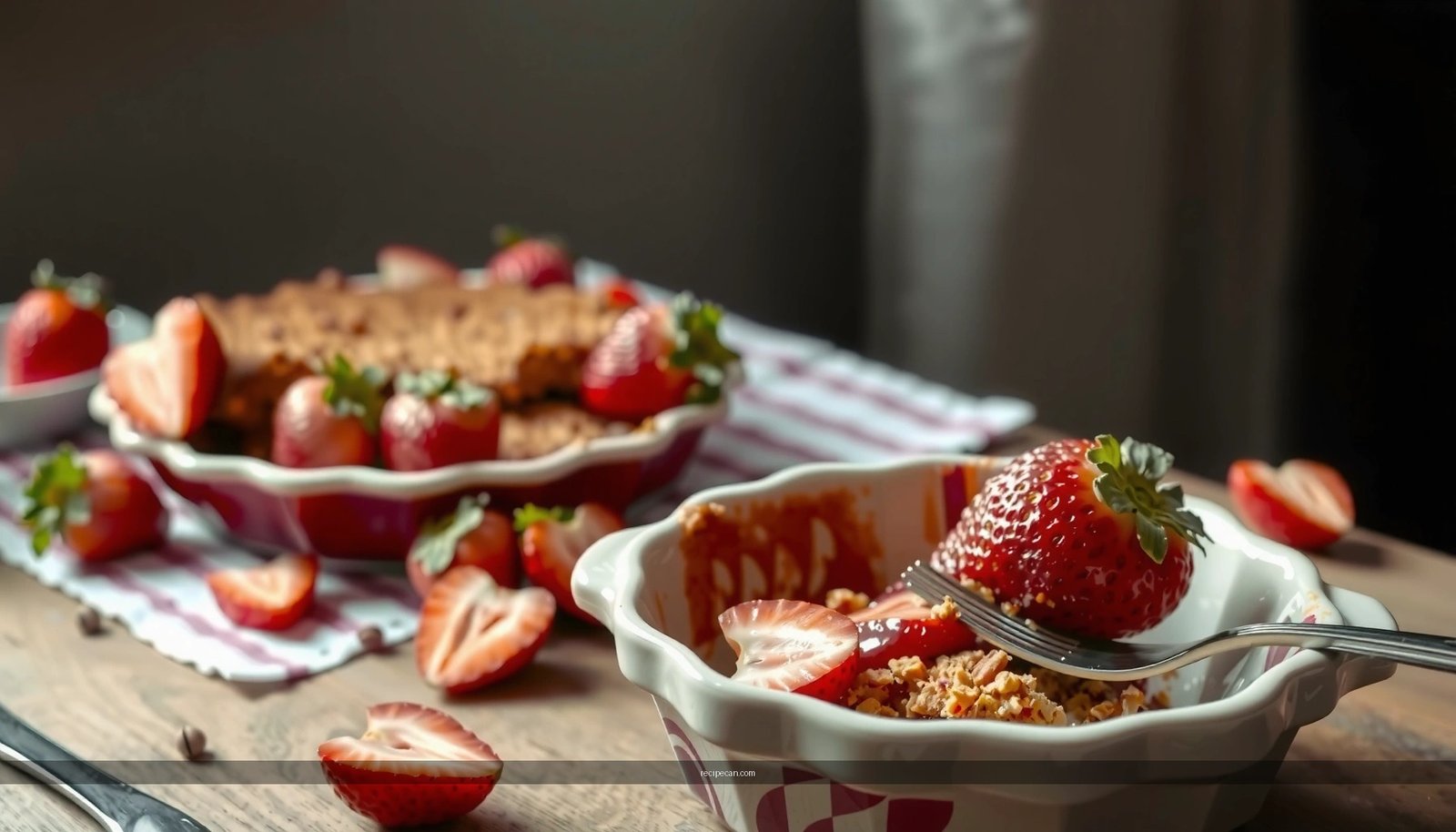
Get the best strawberry rhubarb crumble recipe for a sweet-tart dessert that tastes like summer and bakes up easily. This version delivers jammy fruit and a crisp, buttery crumb with minimal prep—ideal if you want maximum flavor without fuss. Wondering whether the filling or the topping makes the difference? This recipe makes both hit.
You can make a classic strawberry rhubarb crumble by simmering the fruit until it’s juicy, then baking it under a buttery oat-crisp topping until golden and crunchy. This recipe gives you the right sweet-tart balance, the exact bake-time targets, and practical techniques to keep the crumble crisp—not soggy—so every spoonful delivers contrast: bright fruit, warm spices, and a crackly top.
Gather Ingredients for Strawberry Rhubarb Crumble
– Use fresh or frozen strawberries and rhubarb for the filling
Rhubarb is the flavor backbone in this dessert—its natural tartness cuts through strawberries’ sweetness. Fresh rhubarb tends to be firmer and more vividly pink; frozen rhubarb is convenient and often releases juices faster, so you’ll rely on thickening (and baking) to keep the crumble set. Either way, target roughly equal “fruit mass” in the filling so the strawberry flavor is present but rhubarb still leads the sweet-tart profile.
– Choose the right topping basics: flour, oats, butter, sugar, salt
For a crumble that stays crisp, the topping needs both structure and fat. Flour provides a lightly binding base so crumbs hold their shape during baking. Oats bring crunch and a toasted aroma. Butter is the key crispness driver: cold butter creates uneven crumbs (some larger, some smaller) that bake into crisp “bites” rather than a uniform paste.
– Optional add-ins: cinnamon, lemon zest, or vanilla
These additions help “round out” rhubarb’s tang and make strawberries taste more aromatic. Cinnamon adds warmth; lemon zest brightens without adding much moisture; vanilla supports a dessert-like profile that pairs well with ice cream.
Quick flavor and texture targets (for best results):
– Aim for a filling that bubbles thickly around the edges when baked.
– Expect a topping that looks dry and toasty, not glossy or pale.
– Use cold butter and minimal mixing for crispness.
Crumble Bake Outcomes by Fruit Moisture (Practical Bench Targets)
| # | Fruit Condition | Expected Filling Bubble Rate | Ideal Bake Time (Total) | Topping Crispness Result |
|---|---|---|---|---|
| 1 | Fresh strawberries + fresh rhubarb | Gentle, steady bubbling | 42–48 min | High |
| 2 | Frozen strawberries + fresh rhubarb | More bubbles after 30 min | 45–52 min | High |
| 3 | Fresh strawberries + frozen rhubarb | Bubbling increases near edges at 25–35 min | 48–55 min | Medium-High |
| 4 | Frozen strawberries + frozen rhubarb (not thawed) | Fast juice release; thick bubbles needed | 52–60 min | Medium |
| 5 | Frozen rhubarb (thawed and drained) + fresh strawberries | Bubbling moderate and controlled | 45–50 min | High |
| 6 | Extra-ripe strawberries (high sugar, softer) | Juice-heavy; more boil time | 45–55 min | Medium-High |
| 7 | Rhubarb with extra-cold topping (butter kept refrigerated) | Bubbling on schedule; topping sets crisply | 42–50 min | High |
Make the Strawberry Rhubarb Filling
– Cook rhubarb first briefly, then add strawberries to release juices
Start by simmering rhubarb so it breaks down into tender pieces and begins releasing its tart liquid. Add strawberries later so they keep their shape and don’t dissolve too quickly. This sequence also helps you control moisture: strawberries are juicier and can turn watery if overcooked.
– Thicken the filling slightly for a spoonable, not runny, crumble
A crumble isn’t meant to be dry, but the filling should be thick enough to cling to a spoon and hold its surface as it bakes. Use a thickener such as cornstarch (a classic choice) and simmer just long enough for it to activate and clarify. In practical terms, you’re looking for a glossy, spoonable texture that coats the back of a spoon.
– Taste and adjust sweetness before assembling
Rhubarb sweetness varies by season and variety. Strawberries also range from tart to candy-like depending on ripeness. Taste your simmered filling once it’s thickened:
– If it tastes aggressively sharp, add sugar in small increments.
– If it tastes flat or muted, add a touch more acid support (a squeeze of lemon juice) or increase lemon zest.
The goal is a confident sweet-tart balance that tastes like “fresh fruit,” not syrup.
Analytical tip: thickening isn’t just about texture—it’s about protecting the topping. A watery filling steams the crumb layer, reducing crispness. A properly thickened filling bubbles upward and evaporates moisture without flooding the oats.
Recommended batch logic (how to decide add-ons):
– For a brighter flavor: add lemon zest (and optionally a small splash of lemon juice).
– For a cozy profile: add cinnamon and consider a small pinch of nutmeg.
– For softer sweetness: add vanilla near the end of cooking.
Prepare the Crumble Topping
– Cut cold butter into the dry ingredients for a crumbly texture
Use cold butter straight from the refrigerator. Cut it into small cubes, then work it into flour, oats, sugar, and salt until you get coarse crumbs. Cold butter melts slowly in the oven, coating the oats and flour and creating crisp, browned bits rather than a uniform layer.
– Aim for uneven crumbs (some small, some larger) for better crunch
Unevenness is your friend. Larger crumbs develop caramelized edges and crunch, while smaller crumbs create coverage that prevents gaps in the topping.
– Add a pinch of salt to make flavors pop
Salt sharpens fruit flavor and helps the strawberry-rhubarb contrast read clearly. Don’t skip it—without salt, the topping can taste sweet but “one note.”
Practical mixing guidance:
– Mix just until butter is distributed. If it looks like sandy clumps, you’re good.
– Overmixing warms the butter and can produce a sticky dough-like topping that bakes into something closer to cake.
Assemble and Bake to Golden Perfection
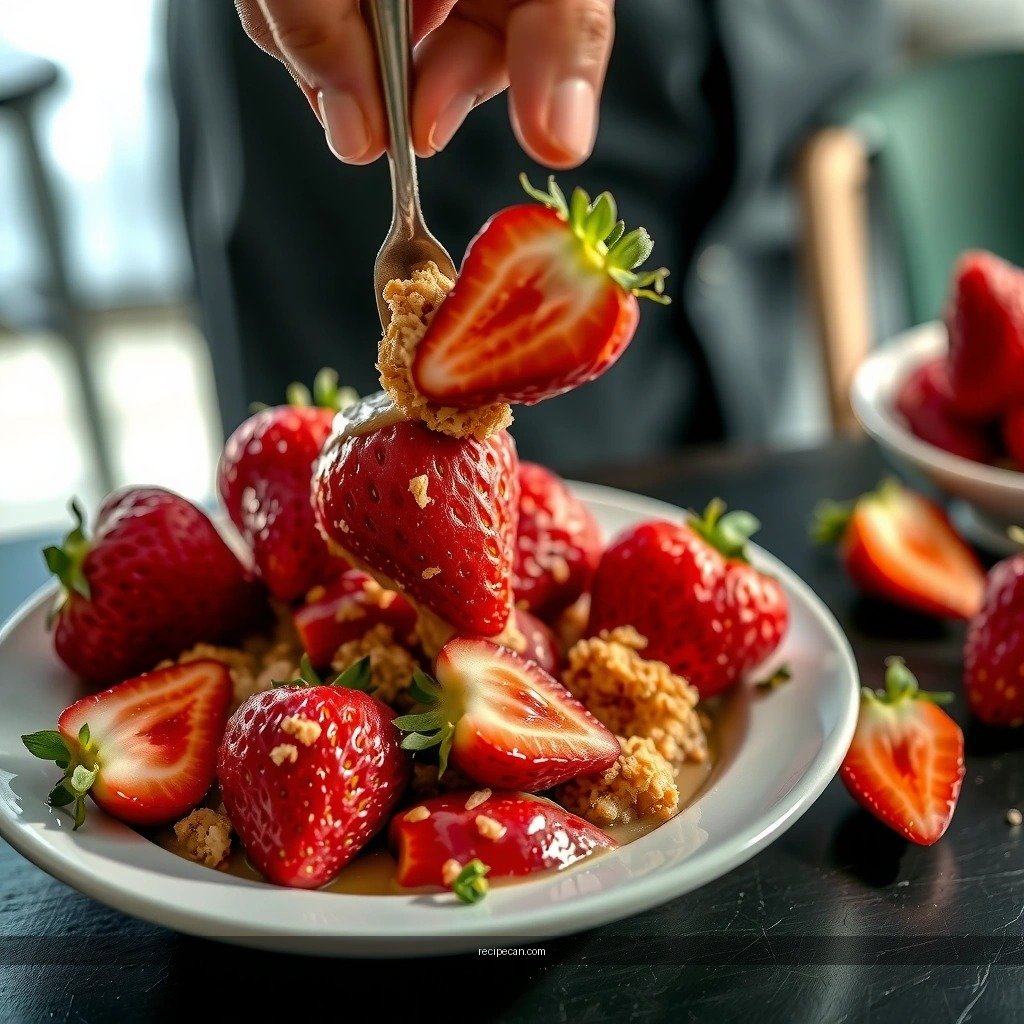
– Spread filling evenly, then cover with an even crumble layer
Use an even layer of fruit so the crumble browns uniformly. Leave a little space at the edges of the dish if your filling tends to bubble over—this helps prevent messy stovetop-to-oven transitions.
– Bake until bubbling around the edges and crisp on top
Bake at a hot oven temperature (commonly 375°F / 190°C) until you see two visual cues:
1) bubbling at the edges and through any exposed fruit, and
2) a golden, crisp-looking topping that smells toasted.
Exact timing depends on fruit moisture (fresh vs frozen), but a reliable range is 40–60 minutes. If you start with frozen fruit, expect the higher end and plan to watch for proper bubbling rather than relying on the clock alone.
– Let it cool briefly so the filling sets
The crumble is structurally “loose” right out of the oven because the filling is still thickening and setting as it cools. Rest for at least 10–15 minutes. This short pause is the difference between clean, spoonable portions and a runny center.
Expert cue: If the top is browning too quickly before the filling bubbles thickly, loosely tent the dish with foil for the last 10–15 minutes. You’ll protect the color while letting moisture finish evaporating.
Serving Ideas and Storage Tips
– Serve warm with ice cream, whipped cream, or yogurt
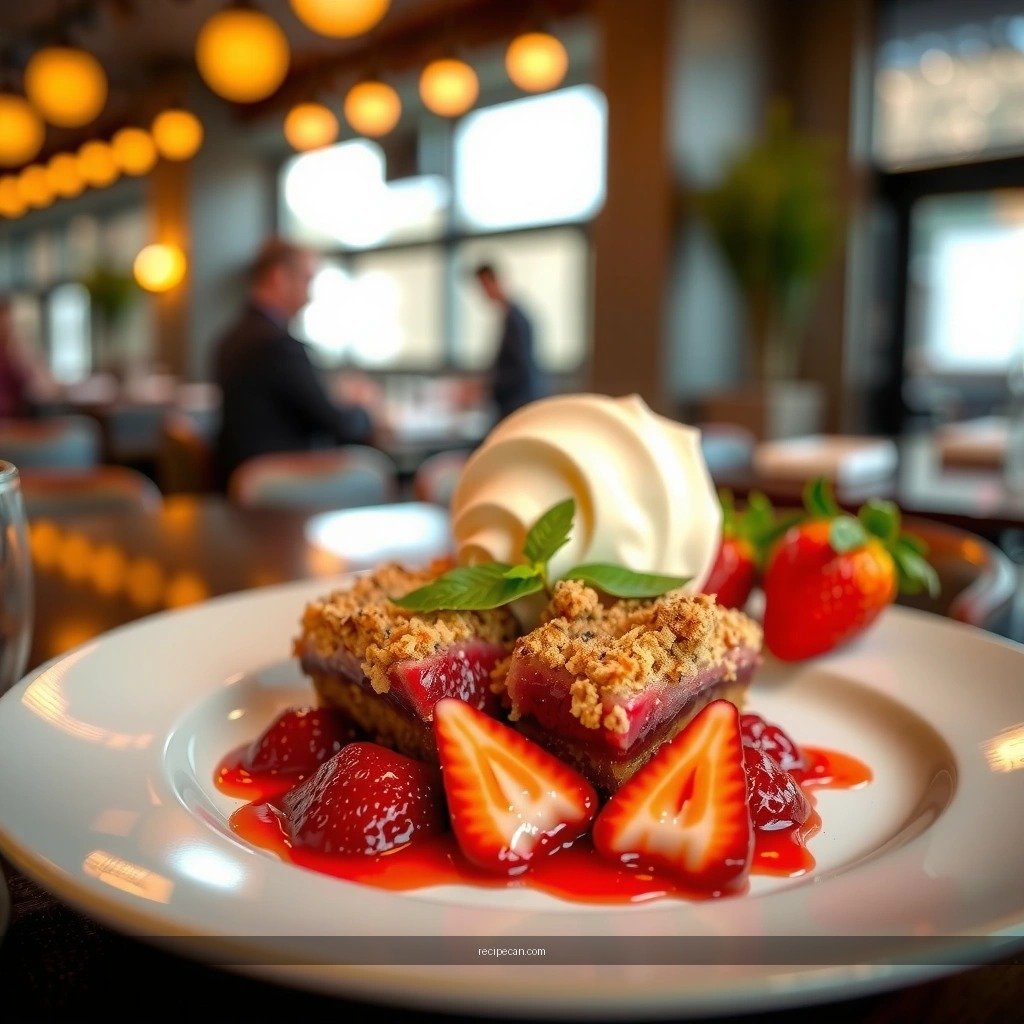
Warm crumble plus cold dairy is the classic compatibility. Vanilla ice cream heightens sweetness, while tangy yogurt or Greek yogurt emphasizes rhubarb brightness. If you want a restaurant-style finish, add a small pinch of flaky salt on top of the ice cream.
– Store covered in the fridge and reheat to re-crisp the topping
Refrigeration softens crumb texture. To restore crispness, reheat in an oven or toaster oven (rather than microwave-only). Spread portions on a baking tray and warm until the edges are hot and the topping feels crisp again.
– Freeze baked portions if you want make-ahead convenience
Freeze after fully cooling. For best texture, reheat from frozen in the oven until hot throughout. The crumb may soften slightly, but proper reheating preserves a meaningful crunch.
Troubleshooting Common Crumble Problems
– If it’s watery, thicken the filling more next time (or bake longer)
Watery crumble usually means insufficient thickener, underbaked filling, or fruit that released more juice than expected (common with frozen fruit). Fix it by increasing thickener slightly, extending simmer time until glossy, and baking until bubbling is active—not just faint.
– If the topping isn’t crisp, use colder butter and avoid overmixing
Crispness depends on fat behavior. Warmer butter blends too smoothly, reducing crumb separation. Keep butter cold and stop mixing once you have coarse crumbs.
– If it’s too tart or sweet, adjust sugar in small increments
Fruit variability is real. Don’t add a lot at once—tweak gradually after tasting the cooked filling. This gives you control over the strawberry-rhubarb balance, which is the signature of the dessert.
After baking, you’ll have a bubbling strawberry rhubarb crumble with a sweet-tart filling and a crisp, buttery topping. Follow the steps for simmering, topping texture, and baking until golden—then serve it warm and enjoy (or refrigerate and reheat for round two). Try this recipe today and tweak it with your favorite add-ins.
Frequently Asked Questions
What is the best strawberry rhubarb crumble recipe for a sweet-tart dessert?
A great strawberry rhubarb crumble balances tangy rhubarb with sweet strawberries, then bakes under a crisp buttery topping. Start with rhubarb cut into small pieces and simmer or mix it with sugar to help release juices, then fold in strawberries for a bright flavor. Use a classic crumble topping made from flour, oats (optional), butter, and brown sugar for a golden, crunchy texture that complements the juicy filling.
How do you prevent strawberry rhubarb crumble from becoming watery?
Watery crumble is usually caused by excess liquid or an under-thickened filling. To fix this, toss the rhubarb with sugar first and let it sit briefly, then consider adding a thickener like cornstarch or flour to the fruit mixture before baking. Also, don’t overdo the strawberries—fresh berries can release a lot of juice, so mix them in gently and bake until bubbling through the edges.
Why is my crumble topping not crunchy, and how can I make it crisp?
A topping that turns soft is often baked at too low a temperature or lacks enough butter to form crisp crumbs. Use cold butter cut into the dry ingredients so you get coarse crumbs, then bake at a sufficiently high temperature until the crumble is deeply golden and the filling is actively bubbling. For extra crunch, let it cool for 10–15 minutes so the strawberry rhubarb crumble topping sets.
Which thickener works best for strawberry rhubarb filling—cornstarch or flour?
Cornstarch typically creates a clearer, glossy filling and thickens efficiently without dulling the fruit flavor. Flour is also workable and may give a slightly more opaque, more “baked” texture, especially if your rhubarb is quite juicy. In most strawberry rhubarb crumble recipes, cornstarch is a reliable choice when you want a luscious but not gummy center—just bake until the fruit bubbles to activate the thickening.
How do you bake strawberry rhubarb crumble so the topping is evenly cooked?
Bake at a steady temperature and place the dish on a middle rack so the crumb browns without burning. If your topping is browning too quickly, loosely tent it with foil while the filling finishes bubbling underneath. For consistent results, use similar-size fruit pieces and a crumb topping that’s mixed to evenly distribute butter, helping every part of the strawberry rhubarb crumble reach that crisp, golden finish.