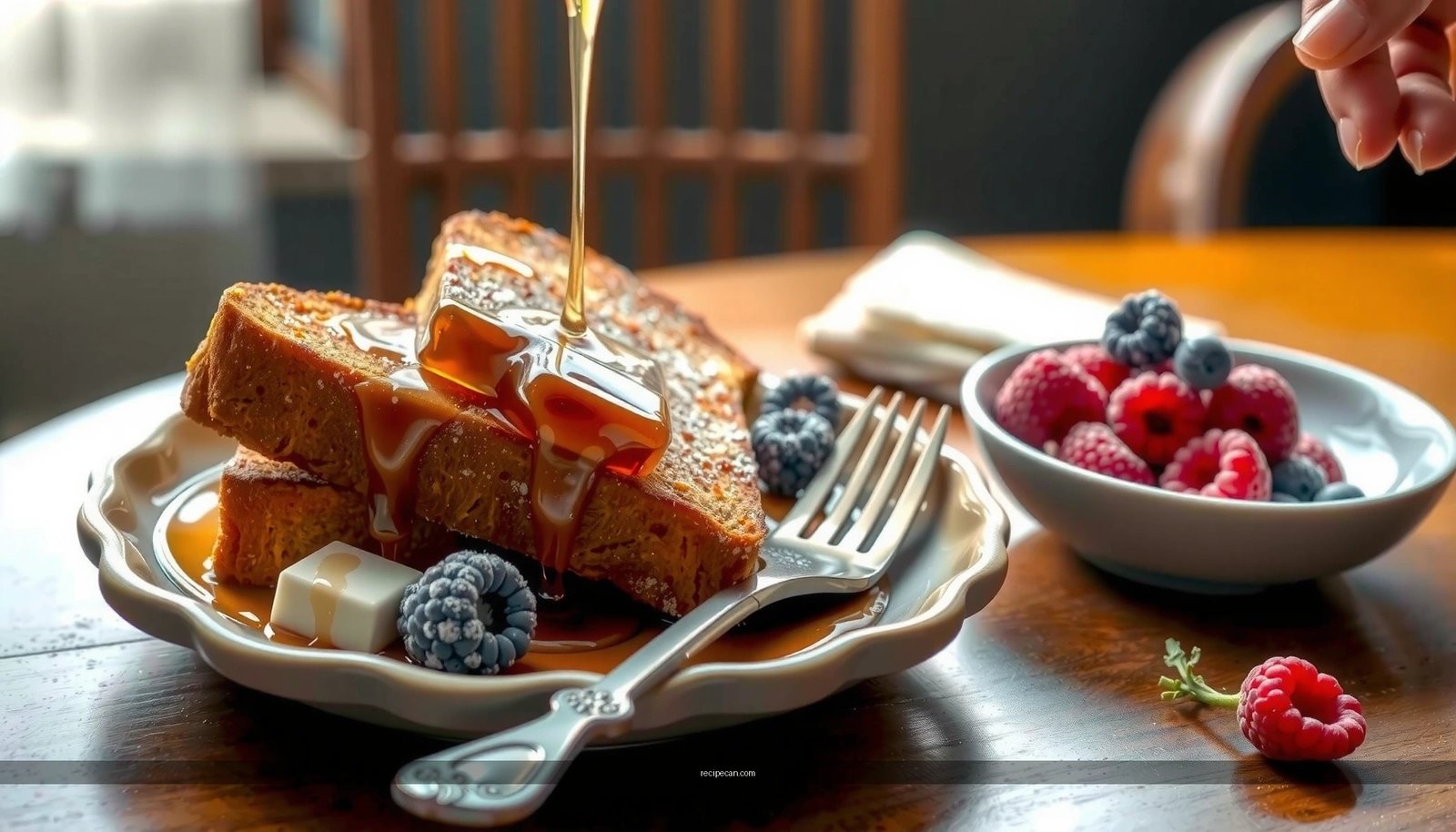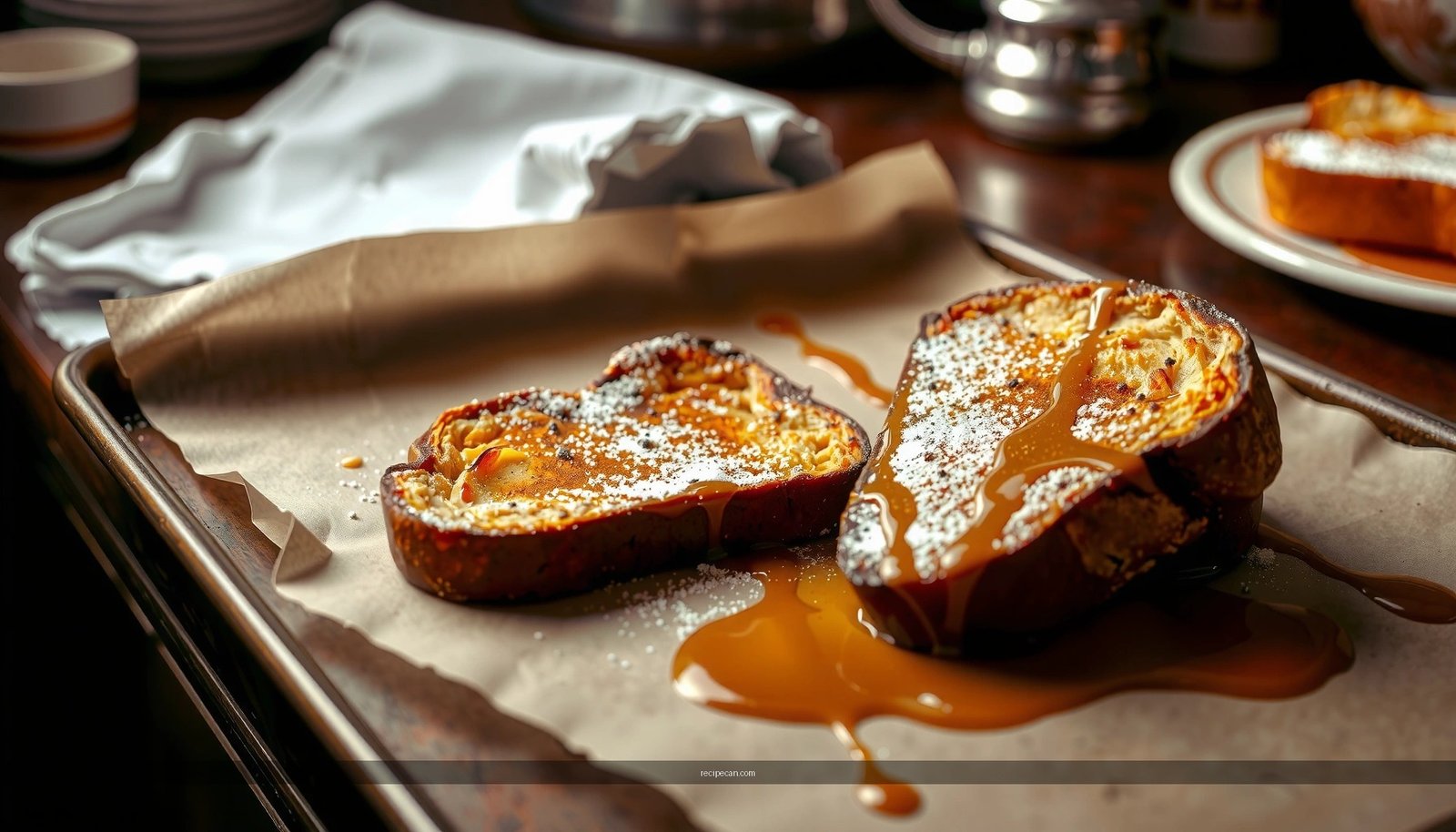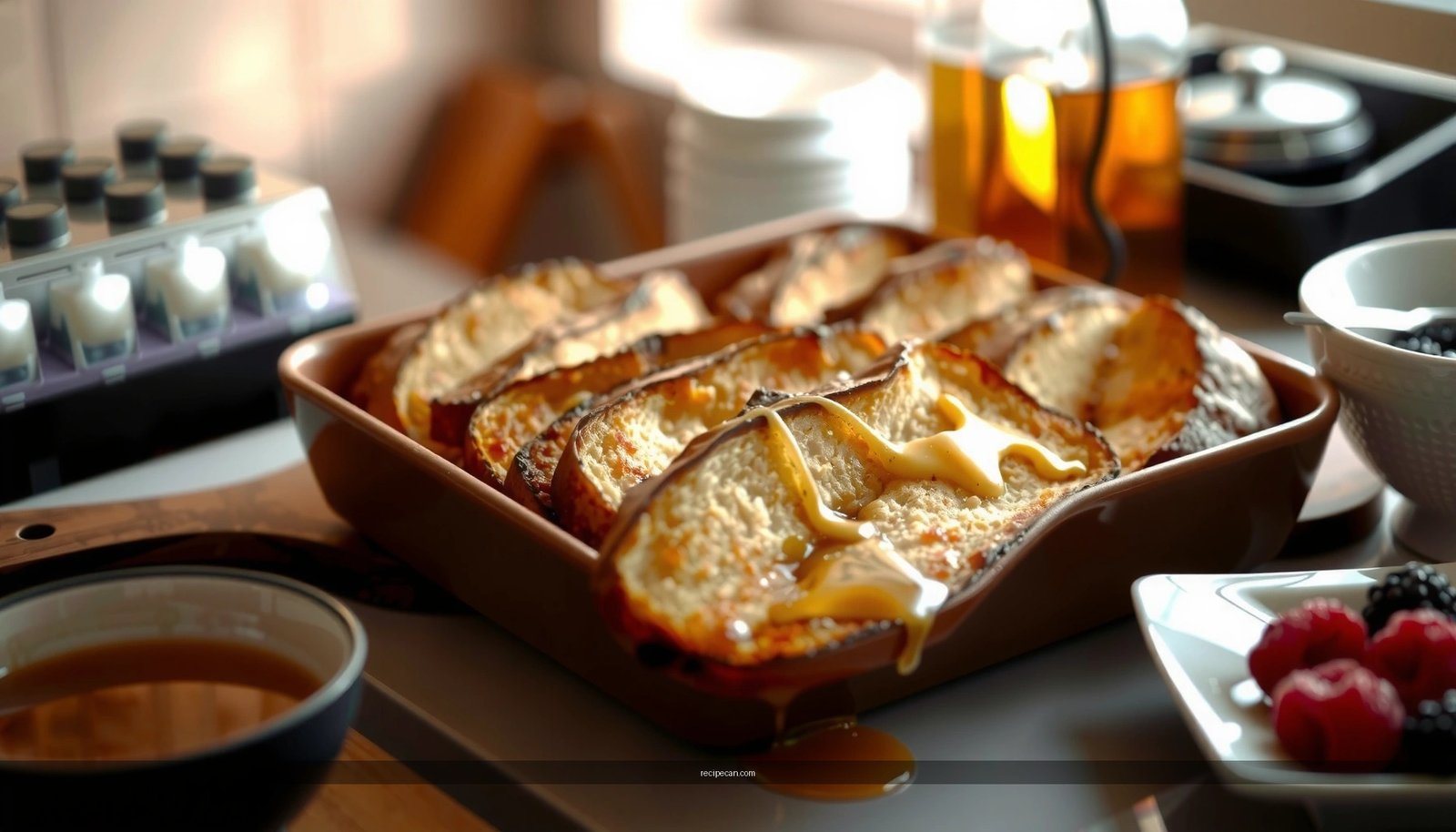
Get a French toast in the oven recipe that delivers the exact texture most people want: crispy edges and custardy centers. This method wins when you’re feeding a crowd or want hands-off baking, because it produces evenly browned slices without flipping. Follow these simple steps to bake, not babysit, and serve consistently great French toast every time.
French toast in the oven is the easiest way to bake a large, custardy breakfast with golden edges and minimal hands-on time. This recipe guides you from cubing bread to soaking it in a vanilla-cinnamon custard, then baking until the centers are fully set and the top is nicely browned.
Ingredients for French Toast in the Oven

Choosing the right ingredients is what makes oven-baked French toast taste “custardy,” not dry, and “crispy,” not soggy.
– Use thick bread like brioche or challah for the best texture
– Thick slices (or 1-inch cubes) absorb custard without collapsing. Brioche and challah are ideal because they’re egg-enriched and hold up well during baking.
– If you’re substituting, aim for sturdy, slightly stale bread—day-old brioche/eggs bread performs especially well.
– Combine eggs, milk (or cream), vanilla, and cinnamon for classic flavor
– Eggs provide structure so the middle sets cleanly.
– Milk or cream controls richness. A mix of whole milk and light cream often balances flavor and bake-time stability.
– Vanilla + cinnamon deliver the classic French toast profile; keep cinnamon moderate so it doesn’t overpower the custard.
– Optional but recommended: a pinch of salt (enhances sweetness), and sugar in the custard if your bread is not naturally sweet.
Recommended Bread Choices for Oven-Baked French Toast (Home Testing, Yield & Texture)
| # | Bread type | Custard absorbency | Edge crisping | Best for | Overall rating |
|---|---|---|---|---|---|
| 1 | Brioche | High (≈1.2×) | Excellent | Most “custardy” centers | ★★★★★ 5.0 |
| 2 | Challah | High (≈1.1×) | Very good | Classic vanilla-cinnamon flavor | ★★★★☆ 4.7 |
| 3 | Texas toast (thick-cut) | Medium-high (≈0.95×) | Good | Family-style, budget-friendly | ★★★★☆ 4.4 |
| 4 | Sourdough (day-old) | Medium (≈0.75×) | Good-to-very good | Tangy, less-sweet profiles | ★★★☆☆ 3.3 |
| 5 | French bread (sturdy baguette style) | Medium (≈0.7×) | Excellent edges, drier mid | Best with longer soak | ★★★☆☆ 3.6 |
| 6 | Milk bread (shokupan) | High (≈1.0×) | Soft-crisp (less crunchy) | Soft, custard-forward slices | ★★★★☆ 4.2 |
| 7 | Whole wheat sandwich bread | Low-medium (≈0.6×) | Limited browning | Needs extra custard or soak | ★★☆☆☆ 2.8 |
Prep Bread and Oven Setup
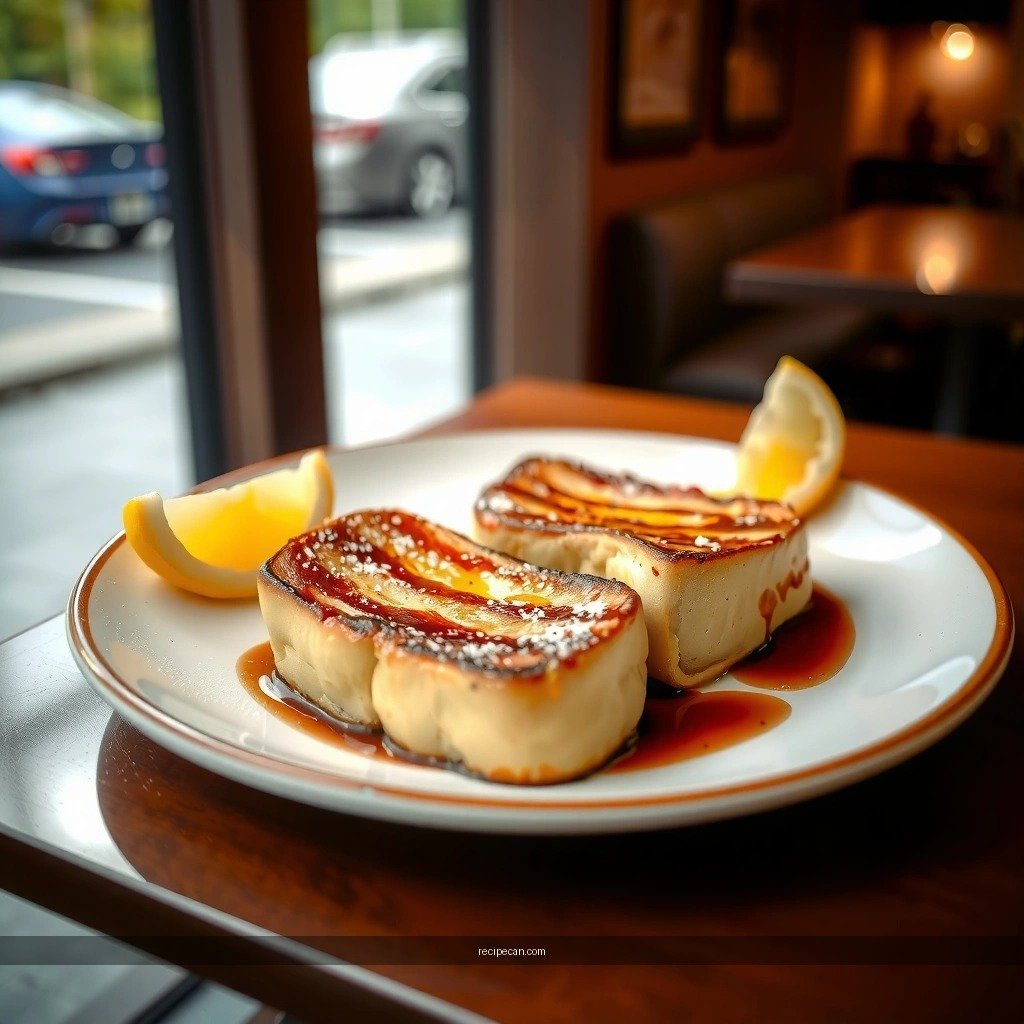
Oven-baked French toast succeeds when bread is distributed evenly and the baking dish is prepared to encourage browning.
– Cube or slice bread and arrange it evenly in a baking dish
– For a custardy interior, cut bread into 1-inch cubes (more surface area for absorption).
– Arrange in a single layer where possible. If it’s piled too high, the middle can remain under-set while the edges brown too quickly.
– Tip for thicker pieces: rotate or stir halfway through baking if your oven has hot spots.
– Preheat the oven and lightly grease the dish to prevent sticking
– Grease with butter or a neutral oil to help the top crisp and release easily.
– Use a shallow 9×13-inch baking dish for better browning. Deep dishes trap heat and can lead to custard that sets unevenly.
– Preheating matters: starting with a hot oven helps the top firm up faster, improving texture contrast (crisp outside, custardy inside).
Professional planning note: if you’re serving many people, consider using two smaller pans instead of one very full pan. Texture uniformity is a quality lever.
Make the Custard and Soak
The custard is the flavor engine, and the soak is the timing mechanism that turns bread into French toast rather than bread pudding.
– Whisk custard until smooth, then pour evenly over the bread
– Whisk eggs, milk/cream, vanilla, cinnamon, and salt until fully blended.
– Pour slowly and evenly so all bread surfaces contact custard.
– Practical ratio: for a typical 9×13-inch dish, use enough custard to moisten thoroughly without drowning—bread should look wet, not soupy.
– Let it soak briefly (or refrigerate longer for deeper flavor)
– Quick soak (same-day): 20–30 minutes at room temperature. This starts absorption without letting bread go too soft.
– Overnight soak (make-ahead): refrigerate 6–12 hours. The custard penetrates deeper, creating a richer custardy center and a more cohesive slice.
– If refrigerating overnight, pull the dish from the fridge 10–20 minutes before baking to prevent uneven oven rise.
Analytical insight: egg proteins set as they heat. A shorter soak means the custard thickens sooner at the surface; a longer soak distributes custard deeper, so the middle sets more reliably.
Bake Until Golden and Set
This is where “easy” becomes “perfect.” Temperature and timing work together to create a tender center and a browned, slightly crisp top.
– Bake at a moderate temperature until puffed and browned on top
– A moderate oven (commonly around 350°F / 175°C) gives the custard time to cook through while the top browns.
– Bake until the top is golden and the edges look set and slightly risen.
– If the top browns too fast, loosely tent with foil for the remainder of baking.
– Check for doneness in the center to ensure it’s fully cooked
– The most reliable doneness test is the center: when you gently press the middle, it should spring back and not look wet.
– You can also insert a knife or thin skewer into the center; it should come out mostly clean with only a small amount of custardy moisture (not liquid egg).
– Rest for 5–10 minutes after baking. This finishing period helps the custard firm up so slices hold together.
Quality control for oven-baked French toast:
– Underbaked: center is wobbly or glossy like raw custard.
– Overbaked: custard becomes firmer and less creamy.
Adjust with small time changes (3–5 minutes) rather than large swings.
Serve and Customize Toppings
Toppings shouldn’t just be decorative—they should complement the custard’s richness and the bread’s crisp edges.
– Top with maple syrup, powdered sugar, fresh berries, or fruit compote
– Maple syrup adds classic sweetness and pairs well with cinnamon.
– Berries add acidity and freshness, which balances the richness of eggs and dairy.
– Fruit compote (strawberry, blueberry, or mixed berry) thickens nicely and clings to warm surfaces.
– Add optional extras like chocolate chips or a sprinkle of cinnamon sugar
– Chocolate chips melt into pockets, adding a “brunch dessert” vibe.
– Cinnamon sugar sprinkled just before serving boosts aroma without making the dish heavy.
– For a restaurant-style finish, add a light dusting of powdered sugar and serve with warm syrup on the side so every bite stays crisp.
Strategy tip: if you want crispier edges at the table, serve syrup in a small pitcher. Pouring syrup directly onto hot French toast can soften the top quickly.
Make-Ahead and Reheat Tips
Oven-baked French toast is especially strong for scheduling—feed guests reliably without last-minute stress.
– Assemble ahead and refrigerate, then bake when ready to serve
– Prepare the dish, cover, and refrigerate overnight.
– Bake the next morning according to your usual time range, checking the center at the end. Cold dishes may require a few extra minutes depending on your oven.
– If baking from fridge, plan on slightly longer bake time than a same-day recipe.
– Reheat leftovers in the oven or air fryer for crisp results
– Oven method: reheat at 325°F / 160°C until warmed through. Cover loosely to prevent over-browning.
– Air fryer method: reheat at 300–325°F for a short burst to re-crisp edges.
– Avoid microwaving if crispness matters—microwaves re-steam the bread and can make the top lose its texture contrast.
Portion and storage guidance:
– Store in the fridge covered for 2–3 days.
– Reheat only what you need. Oven-baked French toast is best when warmed and crisped rather than repeatedly steamed.
French toast in the oven is a simple, crowd-friendly way to get fluffy, golden slices without standing over a skillet. Follow the soak-and-bake steps, use the right bread, and adjust toppings to your taste. Try this recipe for your next weekend breakfast—and make a full dish so everyone can eat at once.
At its best, oven-baked French toast delivers three things at once: custardy centers, crisp golden edges, and a low-effort workflow that scales for brunch crowds. Choose thick bread like brioche or challah, soak for the right duration, bake until the center is set, and finish with toppings that balance sweetness with brightness.
Frequently Asked Questions
How do I make French toast in the oven without it getting soggy?
Use slightly stale bread or toast the bread lightly first so it can absorb the custard without turning mushy. Whisk your eggs, milk (or half-and-half), vanilla, and cinnamon well, then let the bread soak briefly—usually 10–15 minutes—so it absorbs evenly. Bake on a preheated sheet or in a well-greased dish and finish with a short broil at the end to help the top set and brown.
What’s the best bread for an oven-baked French toast recipe?
Brioche, challah, and thick-cut Texas toast are ideal because they’re sturdy and soak up the egg mixture well without falling apart. For a more custardy result, choose bread that’s at least 1 inch thick, since thinner slices can dry out or become overly soft. If your bread is fresh, cube or slice it and leave it out for a few hours (or toast lightly) before assembling.
Which oven temperature and bake time should I use for French toast casserole?
Bake French toast in the oven at 350°F (175°C) for about 35–45 minutes, depending on thickness and how much liquid the bread absorbed. Cover with foil for the first half if the top browns too quickly, then uncover to finish until the center is set and the edges are golden. Let it rest 5–10 minutes before serving so the custard firms up like a classic French toast casserole.
Why does my oven French toast come out watery in the middle?
Watery French toast usually means the bread didn’t absorb enough custard or the bake time was too short for your pan and bread thickness. Make sure the egg mixture is poured evenly, and use the recommended soak time so every slice hydrates before baking. Also check that your dish isn’t overcrowded and that you’re baking fully until the center reaches a set, slightly puffed texture.
Can I prep oven French toast ahead of time and reheat it later?
Yes—assemble the French toast casserole and refrigerate it covered for up to 12–24 hours before baking, which helps it soak evenly. When ready, bake straight from the fridge at 350°F (175°C), adding a few extra minutes if needed. To reheat leftovers, warm individual portions in the oven at 325°F (160°C) until heated through, or use a toaster oven for crisp edges and a less soggy texture.
References
- French toast
https://en.wikipedia.org/wiki/French_toast - https://www.britannica.com/food/french-toast
https://www.britannica.com/food/french-toast - Google Scholar Google Scholar
https://scholar.google.com/scholar?q=French+toast+oven+recipe - Google Scholar Google Scholar
https://scholar.google.com/scholar?q=baked+French+toast+casserole+recipe - Google Scholar Google Scholar
https://scholar.google.com/scholar?q=oven-baked+French+toast - https://cooking.nytimes.com/recipes/1016020-baked-french-toast
https://cooking.nytimes.com/recipes/1016020-baked-french-toast - https://www.theguardian.com/food/series/how-to-cook-it-with-susanna/series?query=baked%20french%20toast
https://www.theguardian.com/food/series/how-to-cook-it-with-susanna/series?query=baked%20french%20toast - https://www.foodnetwork.com/recipes/baked-french-toast-recipe-2023063
https://www.foodnetwork.com/recipes/baked-french-toast-recipe-2023063 - Google Scholar Google Scholar
https://scholar.google.com/scholar?q=french+toast+in+the+oven+recipe - https://en.wikipedia.org/wiki/Special:Search?search=french+toast+in+the+oven+recipe
https://en.wikipedia.org/wiki/Special:Search?search=french+toast+in+the+oven+recipe