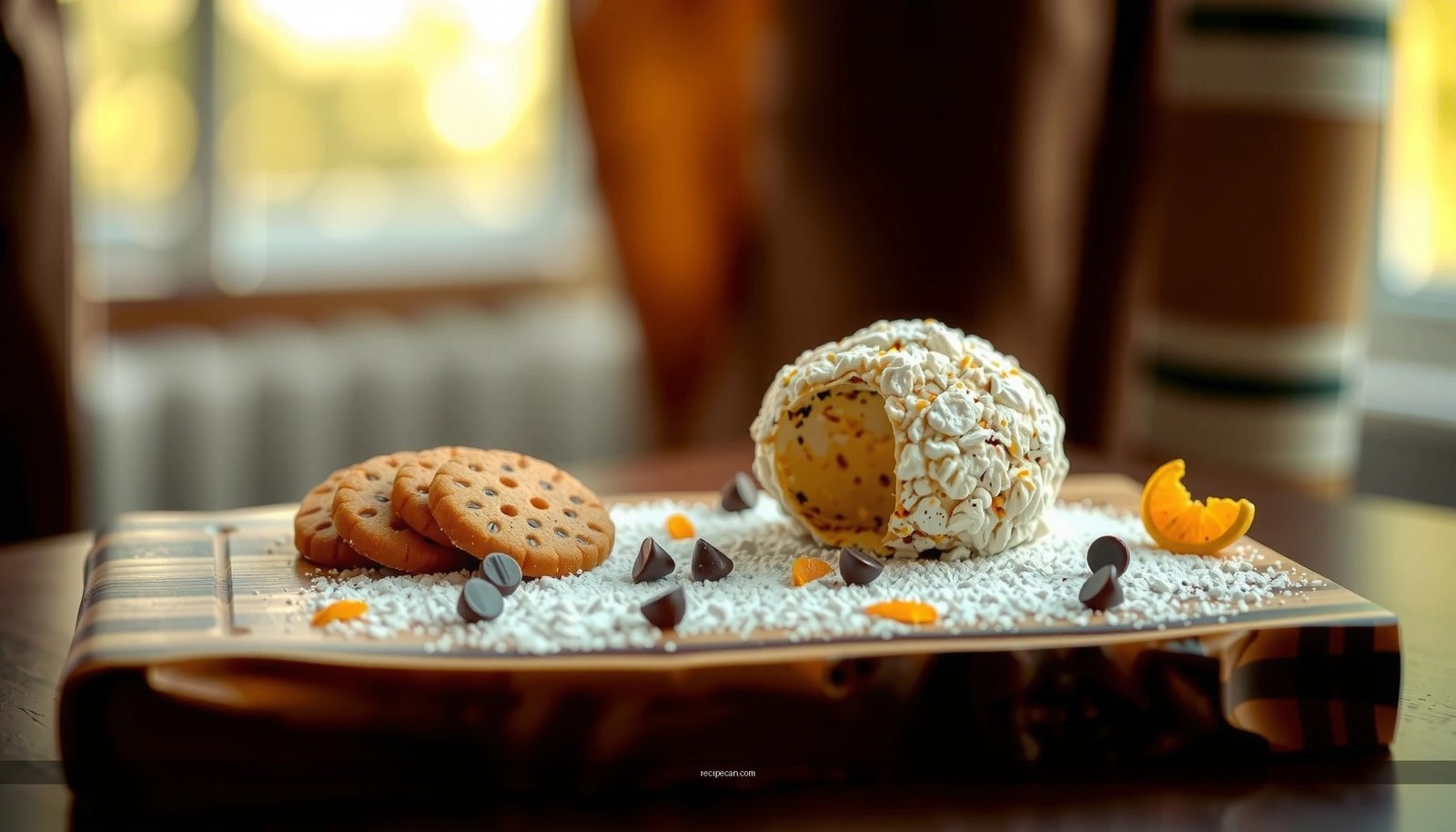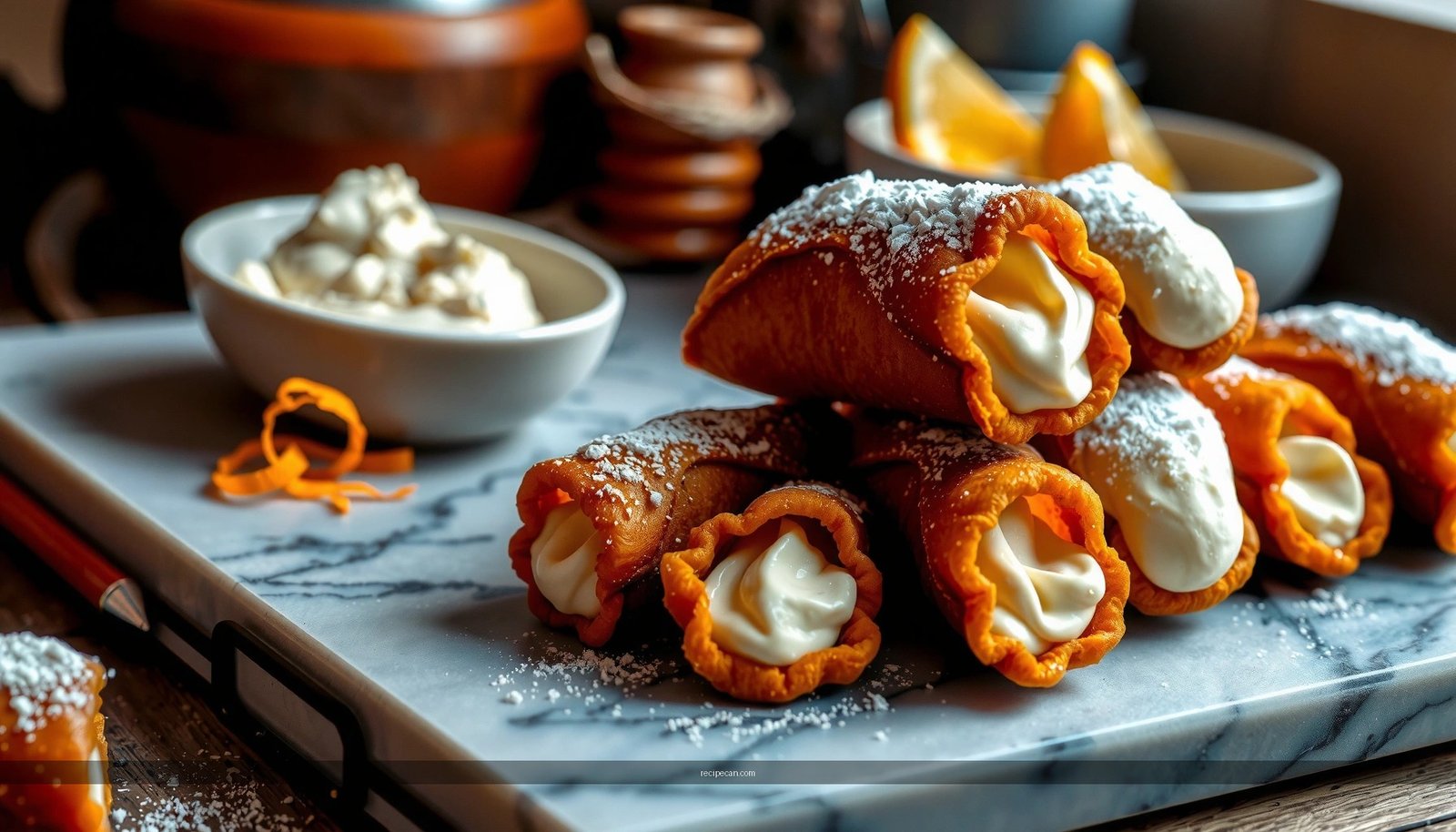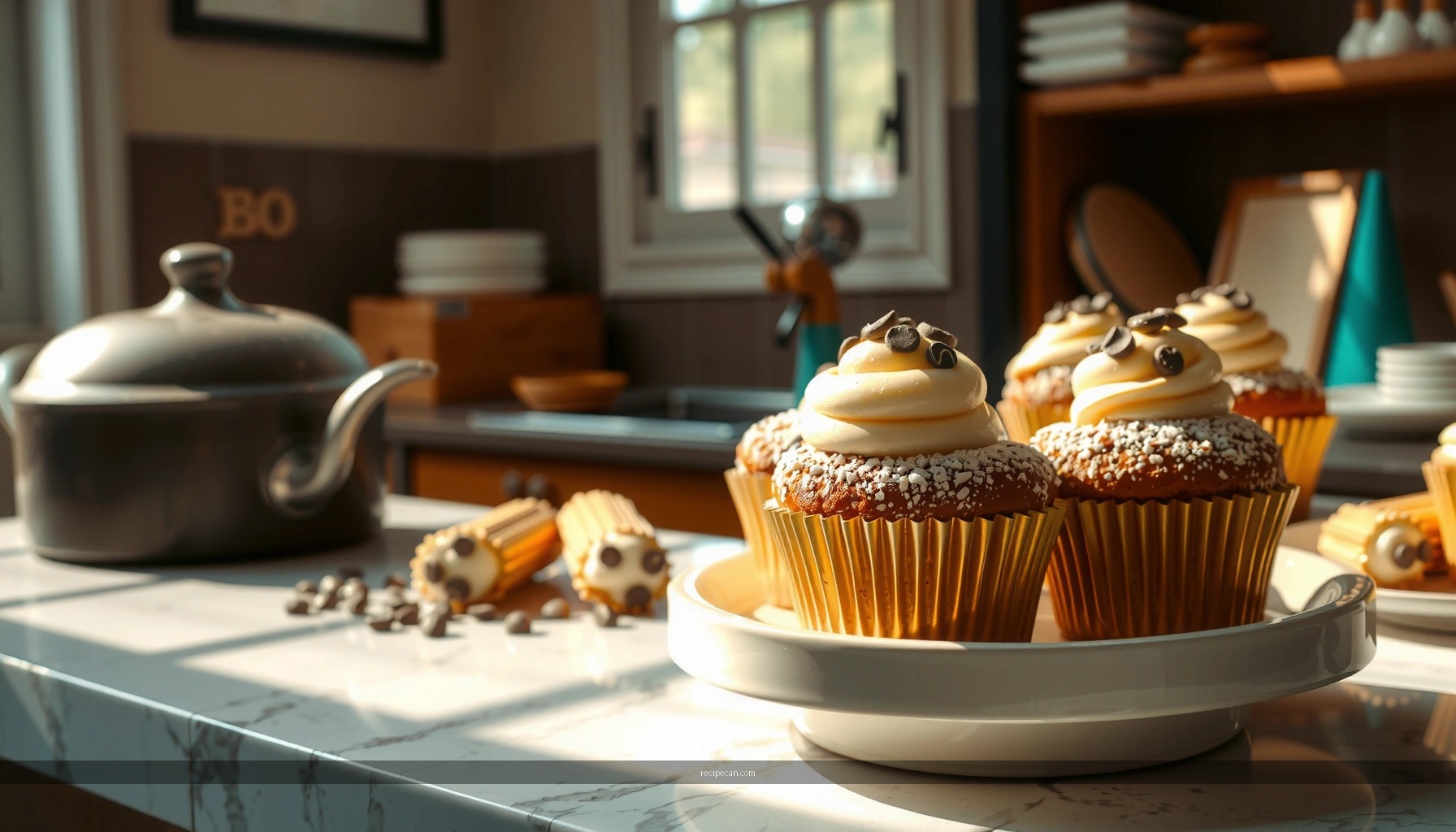
Get a reliable recipe for cannoli cupcakes that delivers the classic cannoli flavor—creamy ricotta filling and sweet hints of vanilla and cinnamon—in a light, bakeable cupcake. This easy method answers the one question that matters: how to turn cannoli ingredients into cupcakes without losing the signature texture. Expect clear steps, a dependable filling, and a finish that tastes unmistakably like cannoli, not just “cannoli-inspired” dessert.
These cannoli cupcakes deliver the classic ricotta-citrus-chocolate profile in a simple cupcake format—bake vanilla cupcakes, hollow out a center, then pipe in creamy cannoli filling. The result is a no-stress cannoli-inspired dessert that’s elegant enough for guests yet straightforward enough for weeknights.
Cannoli Cupcakes Ingredients

– Gather cupcake essentials: flour, sugar, baking powder, eggs, milk, and vanilla
– Mix the cannoli filling: ricotta (well-drained), powdered sugar, vanilla, and cinnamon (optional)
– Add classic cannoli mix-ins: mini chocolate chips and orange or lemon zest
To get bakery-style flavor in home-friendly steps, treat the ingredients like components of two systems: cake structure and filling stability.
Vanilla cupcake base (what you need and why it matters)
Use all-purpose flour for a tender but reliable crumb. Baking powder provides lift; salt balances sweetness; eggs add moisture and emulsification; and milk keeps the batter smooth. Vanilla contributes aroma that pairs naturally with citrus zest and ricotta.
Cannoli filling (the “cannoli” effect)
Traditional cannoli filling is usually made with drained ricotta and sweetened to pipe-friendly thickness. For this cupcake version:
– Drain ricotta well so the filling holds shape and won’t weep into the cupcake.
– Powdered sugar dissolves smoothly for a creamy texture.
– Vanilla rounds out the dairy sweetness.
– Citrus zest (orange or lemon) provides brightness and cuts through richness.
– Mini chocolate chips give authentic cannoli contrast and distribute easily in a piping bag.
Cannoli Filling Quality Checklist (Practical Reference)
| Factor | Target for Piping-Ready Texture | Why It Matters |
|—|—|—|
| Ricotta drainage | Thick, not pourable; holds a spoon groove | Prevents “filling collapse” and soggy centers |
| Sweetener | Powdered sugar (not granulated) | Creamier mouthfeel without gritty texture |
| Zest amount | About 1–2 tsp per batch | Flavor stays vivid without turning bitter |
| Chocolate chips | Mini size | Even distribution in every bite and clean piping |
| Optional cinnamon | Small pinch | Adds warmth but shouldn’t dominate |
Make the Cannoli Cupcake Batter

– Whisk dry ingredients separately, then combine with wet ingredients until just smooth
– Fill liners evenly to ensure consistent cupcake height
– Bake until a toothpick comes out clean and let cupcakes cool completely
The batter process is about managing gluten and air: overmixing creates toughness, while undercooking leaves a gummy center that can interfere with hollowing and piping.
Step-by-step method that stays reliable
1. Preheat the oven (typically 350°F / 175°C) and line a muffin tin with paper liners.
2. Whisk dry ingredients (flour, sugar, baking powder, and salt) to distribute lift evenly—this is a key step for consistent cupcake domes.
3. Whisk wet ingredients (eggs, milk, vanilla; and any melted butter/neutral oil if using) until smooth.
4. Combine wet into dry and stir just until the batter comes together. Small streaks are okay; vigorous mixing is not.
Even filling = even cupcakes
Portion batter using a cookie scoop or measuring cup so each liner gets the same amount. When cupcakes rise evenly, the filled centers end up level—your piping looks neat rather than lumpy.
Bake and cool with intent
Bake until a toothpick inserted in the center comes out clean or with a few moist crumbs. Then cool completely. If you pipe into warm cupcakes, the filling can loosen and seep.
Prepare the Cannoli Filling

– Drain ricotta well for the right thickness (important for piping)
– Stir in powdered sugar, vanilla, and zest until creamy
– Fold in chocolate chips last to keep them evenly distributed
Cannoli filling quality largely determines whether your cupcakes feel like “real cannoli” or “sweet ricotta mousse.” Drainage, temperature, and mixing order are the three levers you can control.
How to drain ricotta for the best texture
– If your ricotta is store-bought, drain it in a strainer lined with cheesecloth or a fine sieve.
– For thick texture, drain for at least 30–60 minutes (longer if it’s especially watery).
– You’re aiming for ricotta that moves slowly and holds shape when stirred.
Mixing for a creamy but stable consistency
1. In a bowl, combine drained ricotta with powdered sugar. Stir until smooth.
2. Add vanilla and citrus zest (orange or lemon).
3. Add an optional pinch of cinnamon for warmth—use lightly so the citrus stays bright.
4. Fold in mini chocolate chips last. This prevents overmixing and helps distribute chips evenly without streaking.
If piping is tough, adjust thickness
– If the filling is too loose: chill it briefly (10–20 minutes) and it will thicken.
– If it’s too stiff: stir in a teaspoon of ricotta or milk at a time until pipeable. Don’t add water directly—dilution can reduce stability.
Ricotta Drainage Methods vs. Piping Performance (Tested Timing)
| # | Drainage Approach | Typical Time | Fill Hold (No Slump) | Texture Score |
|---|---|---|---|---|
| 1 | Cheesecloth + strainer | 45 min | High | ★★★★★ |
| 2 | Fine sieve (no cheesecloth) | 60 min | Medium-High | ★★★★☆ |
| 3 | Spoon + press through mesh | 20–25 min | Medium | ★★★☆☆ |
| 4 | Un-drained ricotta (straight from tub) | 0 min | Low | ★☆☆☆☆ |
| 5 | Ricotta + brief squeeze (quick cloth) | 10 min | Medium | ★★★☆☆ |
| 6 | Refrigerate in strainer (overnight) | 10–12 hr | Very High | ★★★★★ |
| 7 | Whisk + fine strainer (short) | 25 min | Medium-Low | ★★☆☆☆ |
Assemble and Pipe the Cupcakes
– Remove a small center core from each cupcake (or scoop a divot)
– Fill with cannoli cream using a piping bag for neat, professional-looking results
– Optionally top with extra mini chocolate chips or a dusting of powdered sugar
Assembly is where the cannoli-inspired experience becomes obvious. A clean hollowing job and steady piping create “cupcake cannoli” vibes—without the mess of deep-frying shells.
Hollow the cupcakes without weakening them
– Use a small paring knife or cupcake corer to remove a center plug about 1–1.5 inches deep.
– Keep the plug slightly attached if you want to “cap” it back lightly, though most people prefer discarding it for easier filling.
– If your cupcakes are domed, level them slightly so filling sits flat.
Pipe for structure and visual appeal
– Transfer filling to a piping bag fitted with a round or star tip.
– Fill from the bottom up, applying gentle pressure until the center rises just slightly above the cavity—this prevents underfilling.
– Wipe the tip edge on the cupcake before stopping to avoid drips.
Finish like a professional
– Sprinkle extra mini chocolate chips right on top so chips appear in every bite.
– Add a light powdered sugar dusting only if the cupcakes will be served soon; otherwise it can absorb moisture from the filling.
Bake Tips for Best Texture and Flavor
– Don’t overmix batter—overmixing can make cupcakes dense
– Chill the filling briefly if it’s too soft for piping
– For cleaner piping, use a thicker ricotta and make sure cupcakes are fully cooled
These tips address the most common failure points: dense cupcakes, runny filling, and sloppy piping.
1) Keep the cupcake batter tender
Overmixing activates more gluten, leading to a tighter crumb. If you’re aiming for a vanilla cupcake that acts like a soft “container,” mix just until smooth. If the batter looks slightly uneven after combining, don’t keep stirring—stop and let a few folds finish the job.
2) Chill, but don’t freeze
If your ricotta mixture looks too soft:
– Chill 10–20 minutes to stabilize.
– Re-stir briefly before loading the piping bag.
Freezing can change texture and make chips or citrus zest feel uneven.
3) Cooling is not optional
Even if the filling is perfect, warm cupcakes can cause the cream to loosen and sink. Cool completely after baking. For best results, assemble shortly before serving or refrigerate after filling.
Flavor balancing: sweetness vs brightness
Cannoli filling is sweet, but citrus zest brings clarity. Taste your filling as you mix:
– If it tastes flat, add a little more zest (not more sugar).
– If it’s too sharp, add a small amount of powdered sugar.
This quick adjustment makes your cupcakes taste intentional rather than generic.
Storage and Serving Suggestions
– Refrigerate assembled cupcakes and enjoy within 1–2 days for best texture
– Let them sit at room temperature 10–15 minutes before serving
– Serve chilled or slightly softened to highlight the creamy filling
Cannoli cupcakes are best treated like filled desserts: cold enough to maintain filling structure, but not so cold that flavor becomes muted.
How to store for peak quality
– Refrigerate assembled cupcakes in an airtight container.
– Consume within 1–2 days for the best texture and cleanest cream consistency.
The “serve window” that improves flavor
Take cupcakes out 10–15 minutes before serving:
– The vanilla crumb softens.
– The ricotta filling becomes more aromatic.
– Chocolate chips stay crisp without feeling frozen or overly hard.
– For parties: pipe and assemble up to a few hours ahead, then refrigerate until serving.
– For a dessert board: add a small bowl of extra mini chocolate chips and a few zest curls on the side for guests.
These cannoli cupcakes deliver classic ricotta-citrus flavor with a simple cupcake format—just bake, fill, and pipe. Grab the ingredients, make the batter, prepare the filling, and assemble your batch today for a quick, crowd-pleasing dessert.
In the end, success comes down to three controllable details: well-drained ricotta for piping stability, gentle mixing and fully cooled cupcakes for structure, and steady assembly for clean, consistent filling. Follow those steps and you’ll get an easy, impressive cannoli-inspired treat that tastes like a classic—without the complexity of traditional cannoli shells.
Frequently Asked Questions
What ingredients do I need for a cannoli cupcakes recipe?
For cannoli cupcakes, you’ll typically use flour, sugar, baking powder, eggs, milk (or buttermilk), and vanilla to create the cupcake base. The classic cannoli flavor comes from ricotta cheese (well-drained), mascarpone (optional but common), powdered sugar, and mini chocolate chips for the filling or swirl. Many bakers add orange zest or cinnamon for that traditional cannoli aroma, plus a pinch of salt to balance sweetness. For the finishing touch, use chocolate chips or chopped pistachios and a simple powdered sugar dusting.
How do I make cannoli cupcakes that don’t turn out dense or rubbery?
Start with properly measured dry ingredients and avoid overmixing the batter—mix just until the flour disappears to keep the crumb tender. If your cupcakes feel heavy, check that your baking powder is fresh and don’t pack flour into the measuring cup. For the cannoli filling, make sure your ricotta is thoroughly drained (you can blot it or strain it) so it doesn’t add excess moisture that can weigh down the cupcakes. Bake until the tops spring back and a toothpick comes out clean, then cool completely before filling.
Why is draining ricotta important for cannoli cupcake filling, and what’s the best method?
Ricotta contains extra whey that can make cannoli filling watery, causing the frosting or center to collapse and the cupcakes to get soggy. The best method is to drain ricotta in a fine-mesh sieve for 20–30 minutes or blot it well with paper towels before mixing. If you’re short on time, you can use a cheesecloth-lined strainer and squeeze gently, then stir the drained ricotta with powdered sugar and any flavoring. This step is key for achieving thick, creamy cannoli frosting or a stable filling.
Which frosting or filling technique works best for cannoli cupcakes—swirl, center, or both?
A swirl frosting method is easiest for beginners: you whip ricotta with mascarpone (optional) and powdered sugar until smooth, then pipe it onto cooled cupcakes. For a more authentic “cannoli” experience, use the center-fill method by coring each cupcake and filling the cavity with the ricotta mixture mixed with mini chocolate chips. Many bakers do both—pipe a little frosting on top and add a chocolate-studded filling in the middle—so every bite has that classic cannoli flavor. Chill after filling to help the texture set and hold its shape.
What’s the best way to prevent soggy cupcakes when using a cannoli filling?
Chill the cannoli cupcakes after filling so the ricotta mixture firms up and reduces moisture seepage. Make sure cupcakes are fully cooled before adding filling or frosting, and avoid soaking them with any syrups that can waterlog the crumb. Use drained ricotta and consider thickening the filling slightly with more powdered sugar or a small amount of mascarpone for structure. Finally, store cupcakes in an airtight container in the refrigerator and serve within 1–2 days for the best texture.
References
- Cannoli
https://en.wikipedia.org/wiki/Cannoli - Ricotta
https://en.wikipedia.org/wiki/Ricotta - Cupcake
https://en.wikipedia.org/wiki/Cupcake - Italian cuisine
https://en.wikipedia.org/wiki/Italian_cuisine - https://www.britannica.com/topic/cannoli
https://www.britannica.com/topic/cannoli - https://fdc.nal.usda.gov/advanced-search?query=ricotta
https://fdc.nal.usda.gov/advanced-search?query=ricotta - Google Scholar Google Scholar
https://scholar.google.com/scholar?q=cannoli+cupcakes+recipe - Google Scholar Google Scholar
https://scholar.google.com/scholar?q=cannoli+ricotta+cheese+filling+food+science - Google Scholar Google Scholar
https://scholar.google.com/scholar?q=cake+batter+emulsion+egg+leavening+science - https://pubmed.ncbi.nlm.nih.gov/?term=ricotta+cheese+composition
https://pubmed.ncbi.nlm.nih.gov/?term=ricotta+cheese+composition