Get the classic cannoli stuffing recipe: a creamy ricotta filling that tastes like the best Italian bakeries. This guide gives you the exact method and proportions to get a smooth, pipeable ricotta mixture with the right sweetness and texture. If you want cannoli shells filled today—not a guessing game—follow these steps for a filling that holds up from first bite to the last.
Make cannoli stuffing by combining well-drained ricotta with sugar, vanilla, and mini chocolate chips—then add a small amount of citrus zest and chill the mixture until it turns thick, creamy, and pipeable. If you follow the steps below (especially drainage and refrigeration), you’ll get a classic ricotta filling that holds its shape inside crunchy cannoli shells.
Ricotta Basics for the Best Cannoli Stuffing

The foundation of authentic cannoli stuffing is ricotta that’s concentrated enough to support a structured filling. In a professional kitchen, “ricotta performance” comes down to two variables: moisture content and texture uniformity. If you start with watery ricotta, no amount of mixing will truly fix the problem—your filling will weep and soften the shell.
Use drained, high-quality ricotta to avoid a runny filling.
Look for ricotta labeled as fresh or whole-milk (higher fat typically tastes better and feels smoother). Even with a good brand, water content varies. If your ricotta looks loose or holds puddles in the container, drain it:
– Spoon ricotta into a fine-mesh strainer lined with cheesecloth.
– Chill while draining for 30–60 minutes (or longer if needed).
– Press gently—avoid crushing the curds too aggressively, which can make the texture grainy.
Chill the ricotta before mixing for a thicker texture.
Cold ingredients thicken more effectively and slow down fat separation. For best results:
– Refrigerate ricotta until it’s cold and firm to the touch.
– Keep the bowl and tools cool if your kitchen runs warm.
– Mix just until smooth; prolonged mixing can make the filling feel looser as the heat from friction warms the mixture.
Sweetening and Flavor Add-Ins

Traditional cannoli filling isn’t “dessert-sweet” in an abstract way—it’s sweet in a measured, balanced manner that supports the shell’s crispness and the chocolate’s bitterness. The goal is a clean ricotta flavor with bright aromatics.
Combine ricotta with sugar for a balanced sweetness.
Sugar dissolves into the ricotta to create that characteristic silky mouthfeel. Granulated sugar works well, but for the smoothest result, consider:
– Powdered sugar for a finer, instantly dissolving texture, or
– Regular sugar if you don’t mind stirring until fully incorporated.
A practical approach is to mix and then taste; if you feel any “crystal grit,” give it another short rest and mix again.
Add vanilla and orange or lemon zest for bright flavor.
Vanilla provides warmth; citrus zest provides lift without watering down the filling (juicing would add moisture). Use orange zest for a more classic, gently floral profile, or lemon zest for a sharper, more modern brightness.
– Zest only the colored outer layer—avoid the bitter white pith.
– Add zest after the main ricotta-sugar mixing so the aromatics distribute evenly.
To make this more repeatable, treat your zest like an ingredient with range: a little goes far, especially in a filling that already contains chocolate. Start conservatively and adjust next batch.
Cannoli Filling Consistency: Typical Ricotta Moisture Targets (Cook’s Guide)
| # | Ricotta Profile | Drain & Rest Time | Expected Texture | Filling Stability |
|---|---|---|---|---|
| 1 | Well-drained whole-milk ricotta | 30–45 min | Creamy, holds peaks | ★★★★☆ |
| 2 | Moderately drained ricotta | 45–60 min | Silky but softer | ★★★☆☆ |
| 3 | Fresh ricotta that’s slightly watery | 60–90 min | May loosen without chilling | ★★☆☆☆ |
| 4 | Ricotta with visible liquid separation | 90–120 min | Needs longer rest or remix | ★☆☆☆☆ |
| 5 | Ricotta blended too warm | Chill 2–3 hrs | May look smooth but feel loose | ★★☆☆☆ |
| 6 | Ricotta held cold, mixed briefly | 0–15 min mix time | Stable, pipeable | ★★★★☆ |
| 7 | Overmixed or warmed during mixing | Chill 4–6 hrs | Texture breaks, weeps later | ★☆☆☆☆ |
Chocolate Chips and Optional Add-Ins

Mini chocolate chips are the most recognizable cannoli stuffing add-in because they provide:
1) controlled sweetness,
2) small pockets of cocoa intensity, and
3) a consistent bite across the filling.
Fold in mini chocolate chips for classic cannoli style.
Fold gently so the chips distribute evenly without turning the filling loose. If you stir aggressively, you can change the mixture’s structure and create streaking.
Optional: mix in chopped candied fruit or a pinch of salt for depth.
Many classic cannoli variations include candied citrus or dried fruit for contrast. Use these thoughtfully:
– Candied fruit: chop finely so pieces don’t puncture the shell and to avoid large chewy bites.
– Pinch of salt: enhances perceived sweetness and rounds out the ricotta’s dairy flavor.
A professional technique is to add optional ingredients after the base is fully mixed and chilled briefly. That ensures flavors stay integrated without overworking the ricotta.
How to Achieve Creamy, Pipeable Texture
A “classic ricotta filling” should be creamy but not runny—ideally thick enough to pipe with a pastry bag, yet smooth enough that it doesn’t feel gritty.
Stir until smooth, then mix briefly with a hand mixer if needed.
Start with manual stirring to break up ricotta lumps. If you detect graininess:
– Mix briefly with a hand mixer on low.
– Stop as soon as the texture looks uniform.
Overmixing can warm the mixture and affect stability, especially if your kitchen is warm.
Rest the filling in the fridge so it thickens and sets.
Chilling is not optional—it’s the step that transforms “mixed” into “pipeable.” For best results:
– Refrigerate the finished filling for at least 1 hour, ideally 2–4 hours.
– Cover the surface directly with plastic wrap (or parchment) to reduce moisture exposure and prevent a skin from forming.
If you’re piping for events, test consistency before you commit. The best sign is the filling’s ability to hold ridges after piping onto a spoon or plate.
Stuffing and Serving Tips
Cannoli shells and fillings have different moisture needs. The shell is crisp; the filling is creamy and can soften it over time. Therefore, the timing matters.
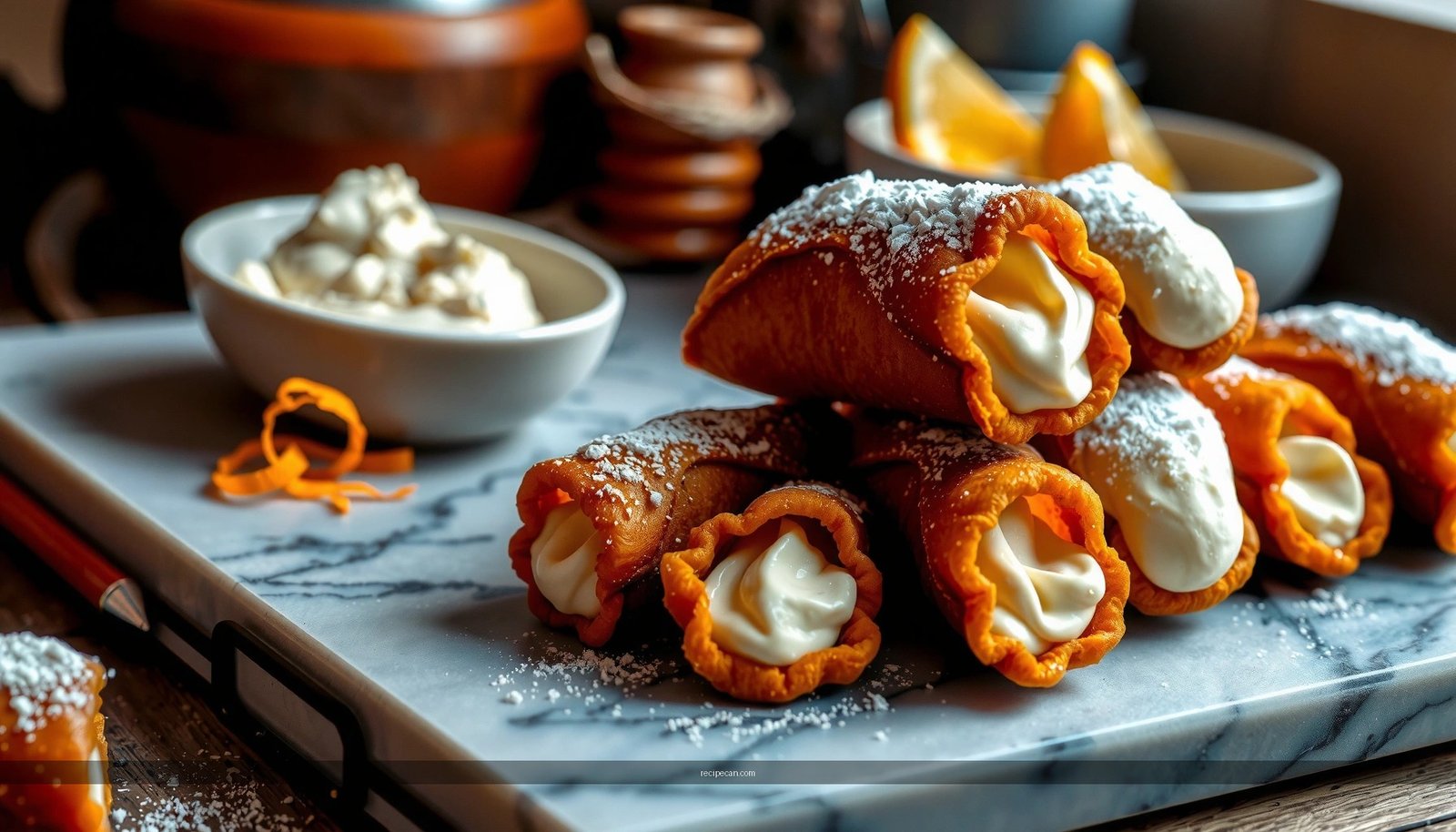
Pipe or spoon filling into cooled cannoli shells right before serving.
– Ensure shells are fully cooled if you made them from scratch. Warm shells can draw moisture into the filling and accelerate softening.
– Use a piping bag for uniform presentation, or a spoon for a more rustic style.
– Fill generously but avoid overfilling—excess filling can leak and make the shell base soggy.
Keep filled cannoli refrigerated and eat within a day for best crunch.
Once filled, cannoli should be stored cold to prevent flavor drift and to maintain texture. Still, the shell will gradually soften. For the best experience:
– Refrigerate in a single layer in an airtight container.
– Plan to serve within 12–24 hours for optimal crunch and classic structure.
Common Mistakes to Avoid
Even experienced bakers run into the same issues, usually tied to moisture and mixing behavior. Avoiding these pitfalls is what separates “tastes good” from “works like cannoli.”
Skipping drainage leads to watery cannoli stuffing.
If your ricotta wasn’t drained and chilled, the filling may look creamy initially but will loosen later—especially after it contacts the shell. Drain and rest are the core stability steps.
Overmixing or warming the filling can make it lose structure.
Overmixing can break down the filling’s structure. Warming has a similar effect by affecting fat and curd behavior. If you use a mixer, keep it short and on low. If the mixture feels warm, refrigerate before stuffing.
Cannoli Stuffing Recipe: Classic Ricotta Filling for Cannoli (Practical Method)
To help you apply the concepts above immediately, here’s a straightforward workflow for a classic ricotta filling that’s designed to be piped:
1. Drain ricotta: Chill ricotta, then drain in a fine-mesh strainer (30–60 minutes typical, longer if very loose).
2. Mix base flavors: Stir ricotta with sugar until smooth. Add vanilla and citrus zest.
3. Add chocolate chips: Fold in mini chocolate chips gently. Add chopped candied fruit and/or a pinch of salt if using.
4. Chill for structure: Refrigerate 1–4 hours until thick and pipeable.
5. Fill shells: Pipe or spoon into cooled cannoli shells right before serving. Refrigerate and serve within a day.
Use this method as your baseline, then adjust sweetness to preference—professionals often keep a “control batch” and tune sugar up or down slightly depending on brand and moisture of ricotta.
Cannoli stuffing comes together with properly drained ricotta, measured sweetening, and a quick rest in the fridge so it becomes creamy and pipeable. Follow the steps above, chill your filling before stuffing, and serve soon for the best crunch—then make a batch and perfect it to your preferred sweetness.
Frequently Asked Questions
What’s the best cannoli stuffing recipe for a creamy filling?
A classic cannoli stuffing recipe uses ricotta cheese, powdered sugar, and small amounts of citrus zest for brightness. For the creamiest results, use well-drained ricotta (or “basket” ricotta) and mix until smooth, then fold in mini chocolate chips and candied fruit. Let the filling chill before piping so it thickens and tastes fully blended.
How do you prevent cannoli filling from becoming watery?
Watery cannoli stuffing is usually caused by ricotta that wasn’t properly drained or was over-mixed. To fix this, strain ricotta in a fine-mesh sieve or cheesecloth for several hours (or overnight) before making the filling. Mix just until combined, then refrigerate; if needed, fold in a bit more powdered sugar or a spoonful of mascarpone to help stabilize the texture.
Why do some cannoli fillings taste grainy or gritty?
Graininess in a cannoli stuffing recipe often comes from ricotta that’s not smooth enough or sugar that wasn’t fully dissolved. Choose smooth, high-quality ricotta and press or strain it before mixing; you can also blend briefly for a smoother ricotta base. Use powdered sugar rather than granulated for a finer, creamy cannoli filling with no gritty texture.
Which chocolate chips and mix-ins work best in cannoli stuffing?
Mini chocolate chips are ideal because they distribute evenly without overpowering the cannoli filling. Traditional add-ins include candied orange or citron, chopped pistachios, and a touch of vanilla extract for depth. Fold mix-ins in gently so the cannoli stuffing stays light and doesn’t become dense.
How long can you make cannoli stuffing in advance, and how should you store it?
You can prepare cannoli stuffing up to 24 hours in advance for best flavor, keeping it covered in the refrigerator to protect freshness. For piping, stir or re-mix lightly before filling shells to restore consistency. Store any prepared cannoli shells separately, because filling added too early can soften the shells and reduce crunch.
References
- Cannoli
https://en.wikipedia.org/wiki/Cannoli - Ricotta
https://en.wikipedia.org/wiki/Ricotta - https://www.britannica.com/topic/cannoli
https://www.britannica.com/topic/cannoli - https://www.bbcgoodfood.com/recipes/cannoli
https://www.bbcgoodfood.com/recipes/cannoli - https://pubmed.ncbi.nlm.nih.gov/?term=ricotta+cheese+manufacture
https://pubmed.ncbi.nlm.nih.gov/?term=ricotta+cheese+manufacture - https://pubmed.ncbi.nlm.nih.gov/?term=whey+cheese+ricotta+fermentation
https://pubmed.ncbi.nlm.nih.gov/?term=whey+cheese+ricotta+fermentation - https://www.sciencedirect.com/search?qs=ricotta%20cheese%20composition
https://www.sciencedirect.com/search?qs=ricotta%20cheese%20composition - https://scholar.google.com/scholar?q=cannoli+filling+ricotta+recipe Google Scholar
https://scholar.google.com/scholar?q=cannoli+filling+ricotta+recipe - Google Scholar Google Scholar
https://scholar.google.com/scholar?q=cannoli+stuffing+sweet+ricotta+sugar+chocolate+chips - Google Scholar Google Scholar
https://scholar.google.com/scholar?q=ricotta+cheese+manufacture+for+desserts