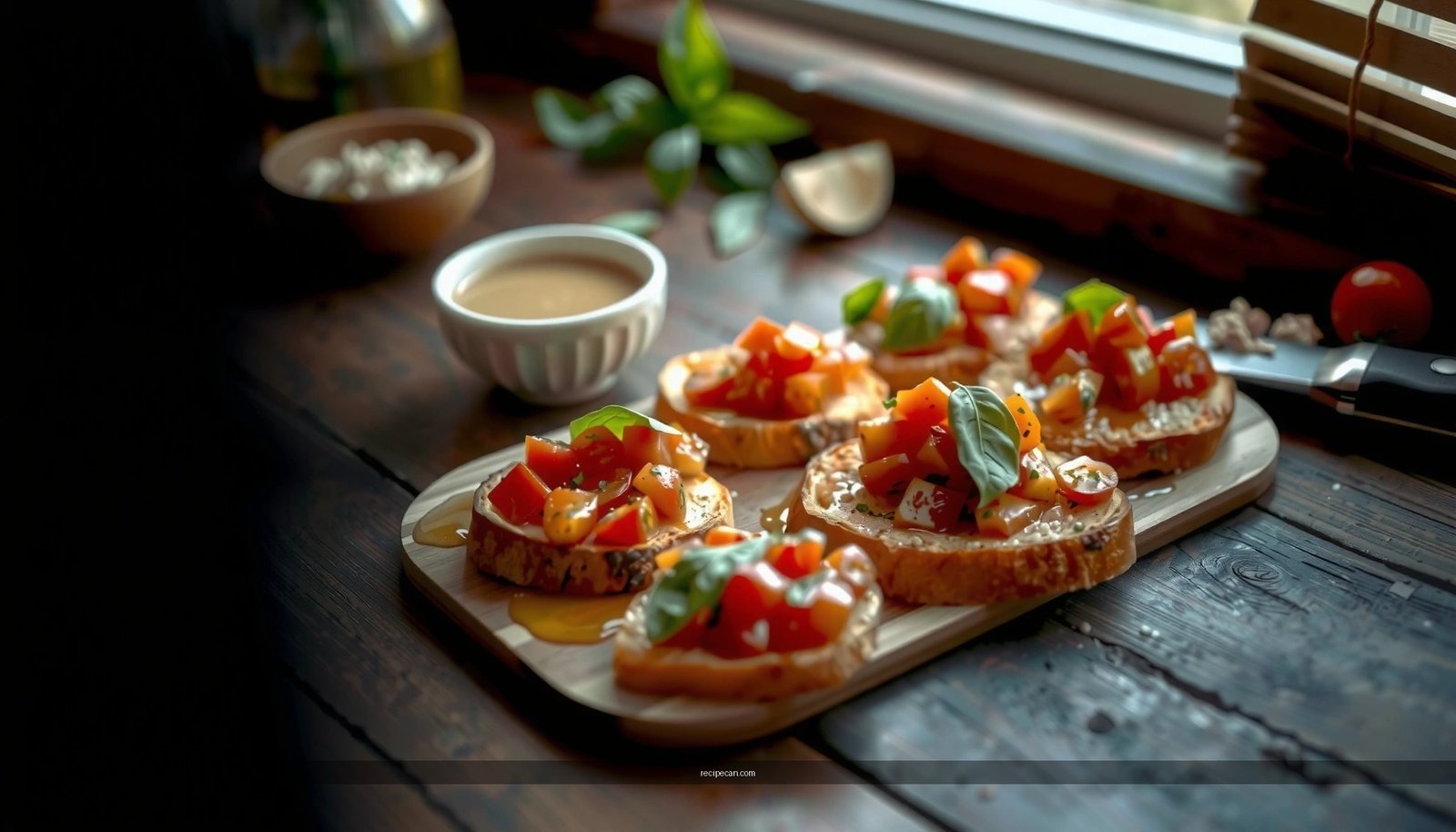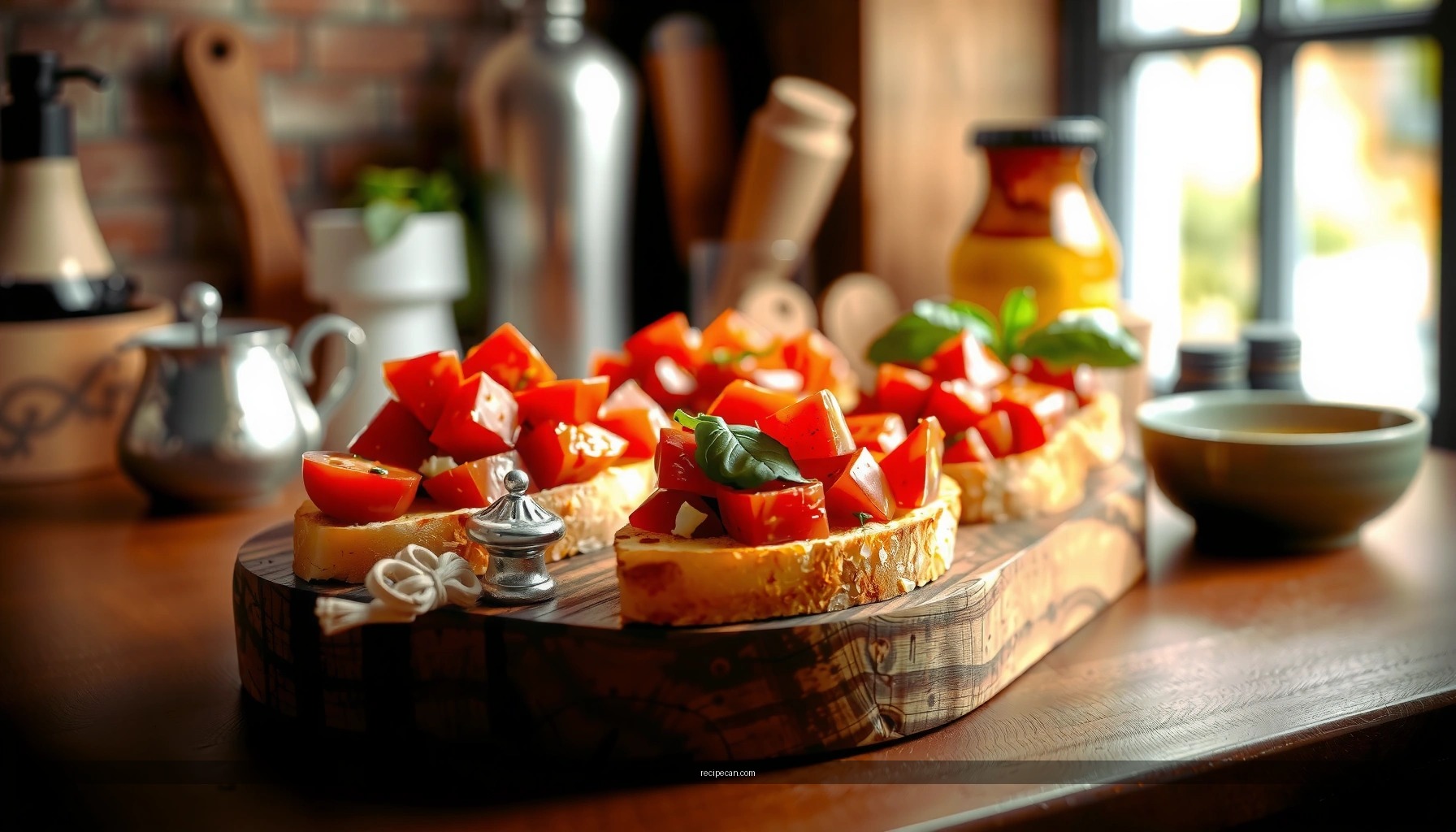
This bruschetta recipe with tomatoes delivers the best balance of juicy flavor and crisp crunch in under 20 minutes—perfect when you want a fresh, simple appetizer without cooking the topping. You’ll get a clear method for preparing the tomato mixture (garlic, olive oil, and herbs), topping toasted bread, and seasoning for maximum taste. If you’re asking which tomatoes-to-toast ratio and timing actually makes bruschetta taste restaurant-level, this answers it.
Make bruschetta with tomatoes by toasting crusty bread, topping it with a quick, well-seasoned tomato mixture, and finishing with olive oil and fresh basil—so every bite is crisp, juicy, and balanced. This method keeps the process straightforward while giving you control over key variables like tomato ripeness, seasoning, and moisture so the bread stays pleasantly crunchy instead of soggy.
Gather Ingredients for Bruschetta with Tomatoes

A classic bruschetta recipe with tomatoes is built on quality basics. If your ingredients are fresh and your seasoning is intentional, the “complexity” comes from balance rather than extra steps.
Core ingredients (and why they matter):
– Ripe tomatoes for the best flavor and juiciness
– Choose tomatoes that smell sweet and fragrant and yield slightly to gentle pressure. Heirloom tomatoes and Roma tomatoes both work, but their moisture levels differ—more on that in prep.
– Crusty bread (baguette or ciabatta) for a sturdy bite
– You want a loaf that toasts well and holds up under juicy toppings. Slices should be thick enough to maintain texture.
– Olive oil, garlic, basil (or parsley), salt, and pepper
– Olive oil carries aroma and helps bind flavors to the bread.
– Garlic adds the signature “bruschetta” scent. Use fresh garlic for the best punch.
– Basil (or parsley) provides freshness and a clean herbal finish.
Optional upgrades (use what fits your kitchen and audience):
– Balsamic vinegar (a small splash) for a subtle sweet tang that complements tomatoes
– Lemon juice for brightness, especially if tomatoes taste less sweet
– Red pepper flakes for heat and depth
– Fresh mozzarella or burrata for a richer appetizer plate
Practical quantities for a typical batch:
For 10–12 slices, plan around 2 to 3 medium tomatoes, 1 small baguette, 1–2 tablespoons olive oil, 1 garlic clove, and a small handful of basil. This yields a generous topping without overwhelming the toast.
Tomato Moisture Management for Bruschetta (Practical Guidelines)
| # | Tomato Type | Typical Moisture | Drain Needed? | Moisture Impact on Bread | Recommended Handling |
|---|---|---|---|---|---|
| 1 | Roma / Plum | Low–Medium | Often No | Low | Dice finely; season and use promptly |
| 2 | Heirloom (Farm-stand varieties) | Medium | Sometimes | Moderate | Salt briefly; drain only excess juices |
| 3 | Beefsteak | High | Yes | High | Remove seeds; drain after dicing |
| 4 | Cherry / Grape | Low–Medium | Usually No | Low–Moderate | Halve; season; top immediately |
| 5 | Hot-house / Glasshouse | Medium–High | Sometimes | Moderate–High | Use salt + short drain; avoid long standing |
| 6 | Roma + Seed-Removal Mix | Low | No | Low | Best for “no-soggy” timing |
| 7 | Frozen/Thawed Tomatoes (Canned alternative) | Very High | Yes (Always) | Very High | Simmer to reduce; cool before topping |
Prep the Tomatoes for Maximum Flavor
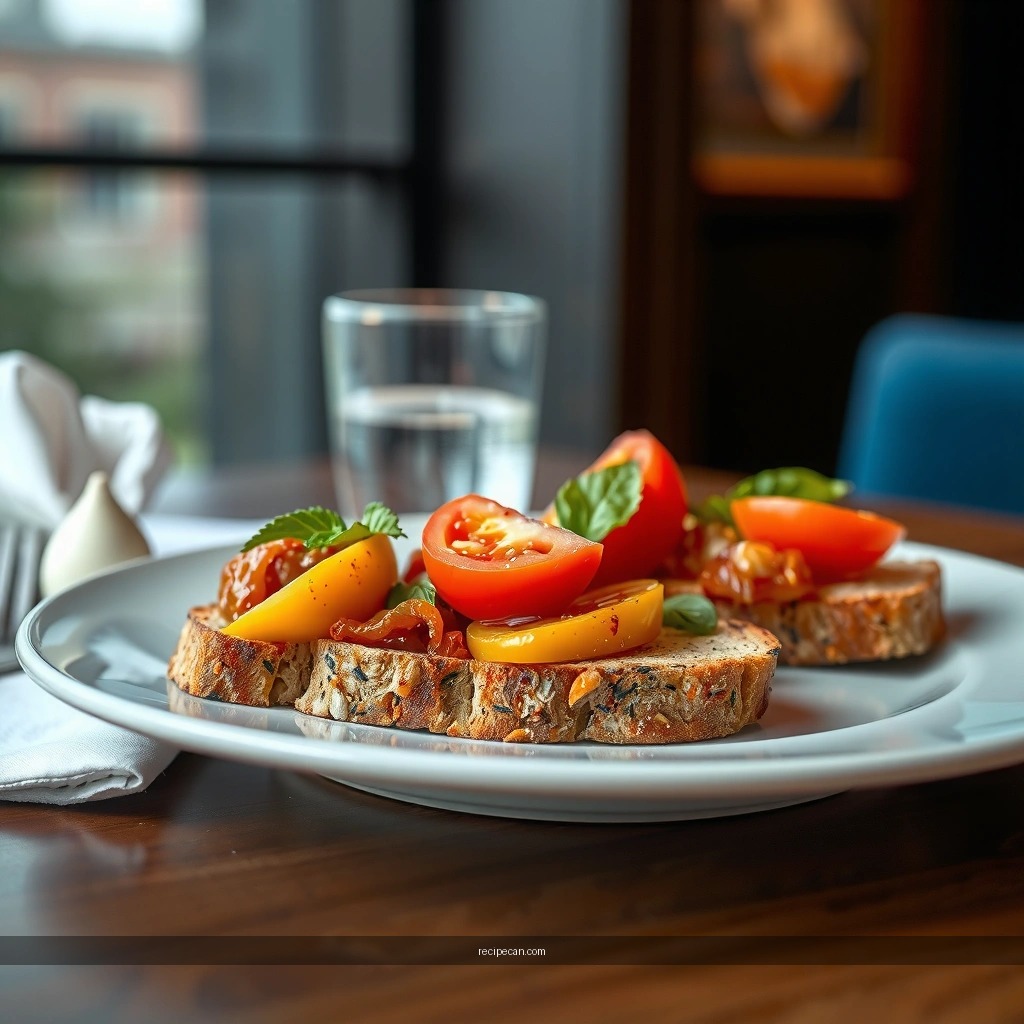
Tomatoes are the main driver of quality in a bruschetta recipe with tomatoes. The goal is to preserve fresh tomato taste while controlling excess liquid so you keep the bread crisp.
1) Dice tomatoes with intent
– Cut into small, even pieces so seasoning spreads consistently.
– If using very seedy or watery tomatoes (like beefsteak), scoop out seeds and jelly before dicing.
2) Drain excess liquid when needed
– If the tomatoes pool liquid quickly after dicing, drain lightly in a fine-mesh sieve for 5–10 minutes.
– For more watery fruit, you can also gently press with the back of a spoon (don’t mash completely).
3) Season to pull flavor together
A reliable tomato bruschetta seasoning blend:
– Salt (start with a moderate amount; taste after resting)
– Black pepper
– Olive oil (for mouthfeel and flavor carry)
– Optional: a small splash of balsamic vinegar or lemon juice
– Balsamic adds sweetness and depth.
– Lemon adds brightness, especially if tomatoes taste a bit flat.
4) Let it sit briefly
– Rest the tomato mixture for 10–20 minutes at room temperature.
– This short wait allows salt to draw out juices (which is why draining matters) and helps flavors meld without turning the mixture into a watery topping.
Quality check (quick and decisive):
Taste the tomato mixture before you assemble. If it feels “one-note” or bland, add salt in small increments. If it tastes too sharp, add a touch more olive oil. If it tastes dull, add a few drops of lemon or balsamic.
Toast and Rub the Bread with Garlic
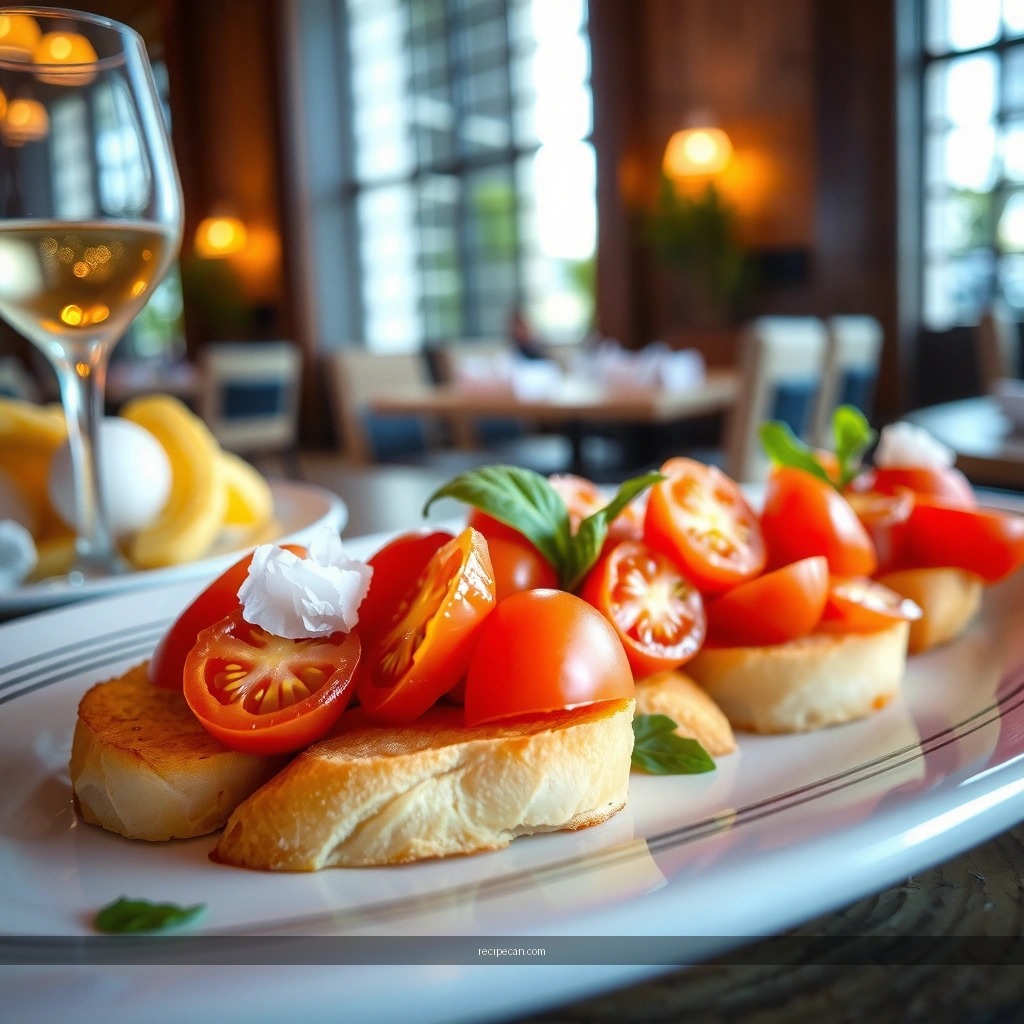
Toasting is where bruschetta becomes truly satisfying—crisp edges, warm centers, and a stable surface for toppings.
1) Toast for texture, not just color
– Toast until golden on the edges and firm enough to hold tomato juices for the few minutes between topping and eating.
– Pan-toasting works well: heat a skillet over medium-high, toast cut sides down, and flip briefly.
2) Rub warm toast with garlic
– Cut the garlic clove in half and rub the toasted bread while it’s still warm.
– This releases aromatic oils without overpowering the dish the way minced garlic can.
3) Optional: a thin olive oil drizzle
– If your bread seems very dry, drizzle a small amount of olive oil right after toasting.
– Avoid saturating—your tomato topping should be the juiciness, not the bread.
Operational tip for events:
If you’re making bruschetta for a group, toast in batches and keep bread warm but not sealed in plastic. Trapped steam reduces crispness.
Assemble Your Bruschetta
Assembly is fast, but it’s also the point where technique prevents common issues like soggy bread or uneven bites.
1) Spoon tomato mixture generously—but thoughtfully
– Use a spoon to add topping in a way that distributes both tomato pieces and a little of the seasoned juices.
– If you drained your tomatoes, ensure the topping still has enough moisture to feel “juicy,” just not watery.
2) Add basil (or parsley) right before serving
– Fresh herbs lose brightness if they sit too long on warm toast.
– Tear basil by hand for better aroma release and visual appeal.
3) Finish with olive oil and a final seasoning
– A final drizzle of olive oil adds sheen and amplifies tomato and basil flavors.
– If needed, add a tiny pinch of salt to brighten everything right before serving.
Common pitfalls to avoid:
– Over-resting assembled bruschetta: Even well-toasted bread softens as tomato juice accumulates.
– Under-seasoning tomatoes: Bread and basil can’t compensate for bland filling.
– Adding garlic after topping: Garlic aroma should hit your palate first—rub it into the toast.
Best Bread & Tomato Pairings for Crisp Results
| # | Bread | Tomato Style | Texture Expectation | Overall Score |
|---|---|---|---|---|
| 1 | Ciabatta | Heirloom (drained) | Crisp edges, juicy center | ★★★★☆ |
| 2 | Baguette | Roma (low moisture) | Snappy bite, minimal sogginess | ★★★★★ |
| 3 | Sourdough | Cherry (no drain) | Tangy crust, bright tomato bursts | ★★★★☆ |
Serve and Pairing Ideas
Serving is simple, but thoughtful pairing elevates a basic bruschetta recipe with tomatoes into a full, well-rounded plate.
Best serving practice
– Serve immediately after assembling for the crispiest bread and freshest topping.
– If you’re hosting, keep a “bread station” and a “topping station” so you can assemble quickly just before guests eat.
Pairing ideas that work in real menus
– With mozzarella (or burrata): Add creaminess to balance acidity and salt.
– With a simple salad: A lemony arugula salad or mixed greens provides a crisp contrast.
– With antipasti: Olives, marinated vegetables, or roasted peppers echo the Mediterranean profile.
If you’re thinking professionally (events or catering):
– Bruschetta is best as a short-duration offering (made close to service).
– It travels better when you keep the bread and topping separate until the last possible moment.
Make It Ahead (and Keep It Fresh)
You can prep efficiently without sacrificing the texture that makes bruschetta special.
Tomato mixture timing
– Prep tomatoes up to a few hours ahead.
– Store covered in the fridge, then bring close to room temperature before assembling so aromas don’t dull.
Bread timing
– Toast bread right before service.
– Keep it separate from tomato topping to prevent sogginess—steam and juices are the enemy of crispness.
If you need earlier prep
– If bread has cooled, re-toast quickly (30–90 seconds) to restore crispness.
– Assemble only when you’re ready to serve, especially for gatherings where throughput matters.
Food safety note (practical and conservative):
– If the tomato mixture sits at room temperature for long periods, store it promptly in the fridge and keep total time within safe holding practices for your setting.
Bruschetta recipe with tomatoes is all about ripe tomatoes, well-seasoned topping, and crisp toasted bread—assembled right before serving. If you follow the core technique—dice and season tomatoes properly, toast until golden, rub with garlic, and finish with olive oil and basil—you’ll consistently get that classic bite with a bright, fresh profile. Next time, experiment with small variations like a splash of balsamic, lemon for extra lift, or add-ons like mozzarella or burrata to tailor the flavors to your palate and your menu.
Frequently Asked Questions
What are the best tomatoes to use for a bruschetta recipe with tomatoes?
Use ripe, juicy tomatoes like Roma (plum) or vine-ripened varieties for a bruschetta recipe with tomatoes because they have less excess water and hold their texture. If your tomatoes are very watery, remove some seeds or lightly drain the chopped tomato mixture before topping the bread. Seasoning with salt and a touch of olive oil also helps concentrate flavor.
How do you make tomato bruschetta topping without watery results?
Chop tomatoes finely and then salt them lightly, letting them sit for 10–15 minutes to release juices. After resting, blot or gently drain excess liquid, then mix the tomato pieces with minced garlic, olive oil, basil (or parsley), and a splash of vinegar or lemon juice. This step keeps your toasted bread crisp while still making the topping flavorful.
How do you toast bread for classic bruschetta so it stays crisp?
Cut bread into thick slices and toast until deeply golden, using an oven at about 425°F (220°C) or grilling for a few minutes per side. Rub the hot bread with a halved garlic clove and drizzle with extra virgin olive oil right after toasting. Serve immediately so the bruschetta doesn’t soften from the tomato topping.
Why do you add garlic and olive oil to bruschetta with tomatoes?
Garlic and olive oil provide a savory base that balances the acidity and sweetness of tomatoes. Rubbing garlic onto the hot toasted bread gives a mellow, aromatic flavor that doesn’t overpower the topping. Olive oil also helps the seasoning cling to the tomato mixture and enhances the “classic” bruschetta taste.
Which herbs and seasonings work best with a fresh tomato bruschetta recipe?
Fresh basil is the most classic choice for a tomato bruschetta recipe, but parsley also works well if you prefer a lighter flavor. Add black pepper, a pinch of salt, and either balsamic vinegar or lemon juice to brighten the tomatoes. For extra depth, some people include a small amount of red pepper flakes or a drizzle of high-quality extra virgin olive oil.
References
- Google Scholar Google Scholar
https://scholar.google.com/scholar?q=bruschetta+recipe+with+tomatoes - Google Scholar Google Scholar
https://scholar.google.com/scholar?q=tomato+bruschetta+crostini+recipe - Google Scholar Google Scholar
https://scholar.google.com/scholar?q=italian+bruschetta+tomatoes+bread+garlic+olive+oil - Bruschetta
https://en.wikipedia.org/wiki/Bruschetta - Crostini
https://en.wikipedia.org/wiki/Crostini - Tomato
https://en.wikipedia.org/wiki/Tomato - Garlic
https://en.wikipedia.org/wiki/Garlic - Olive oil
https://en.wikipedia.org/wiki/Olive_oil - Basil
https://en.wikipedia.org/wiki/Basil - https://www.britannica.com/topic/bruschetta
https://www.britannica.com/topic/bruschetta