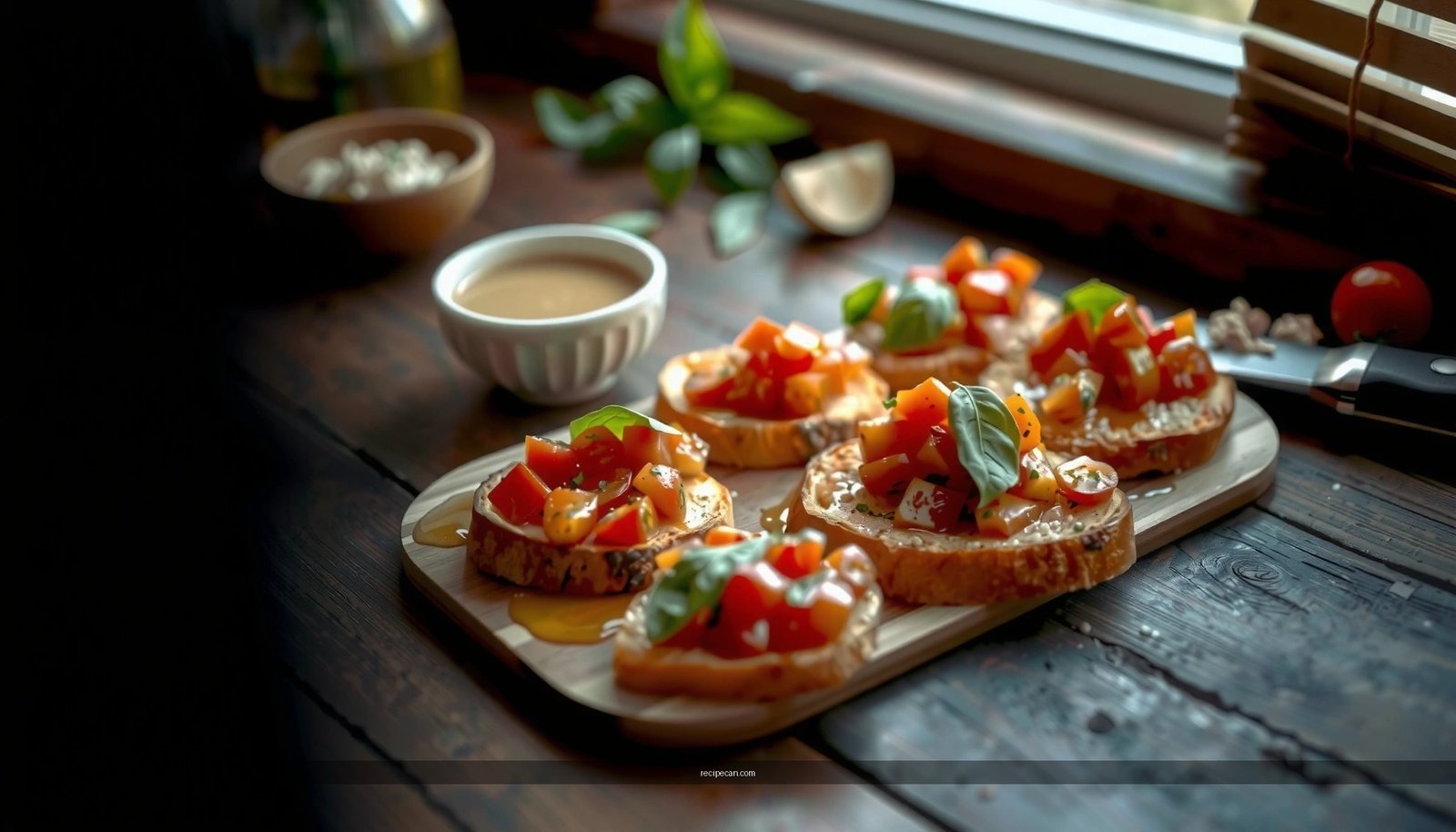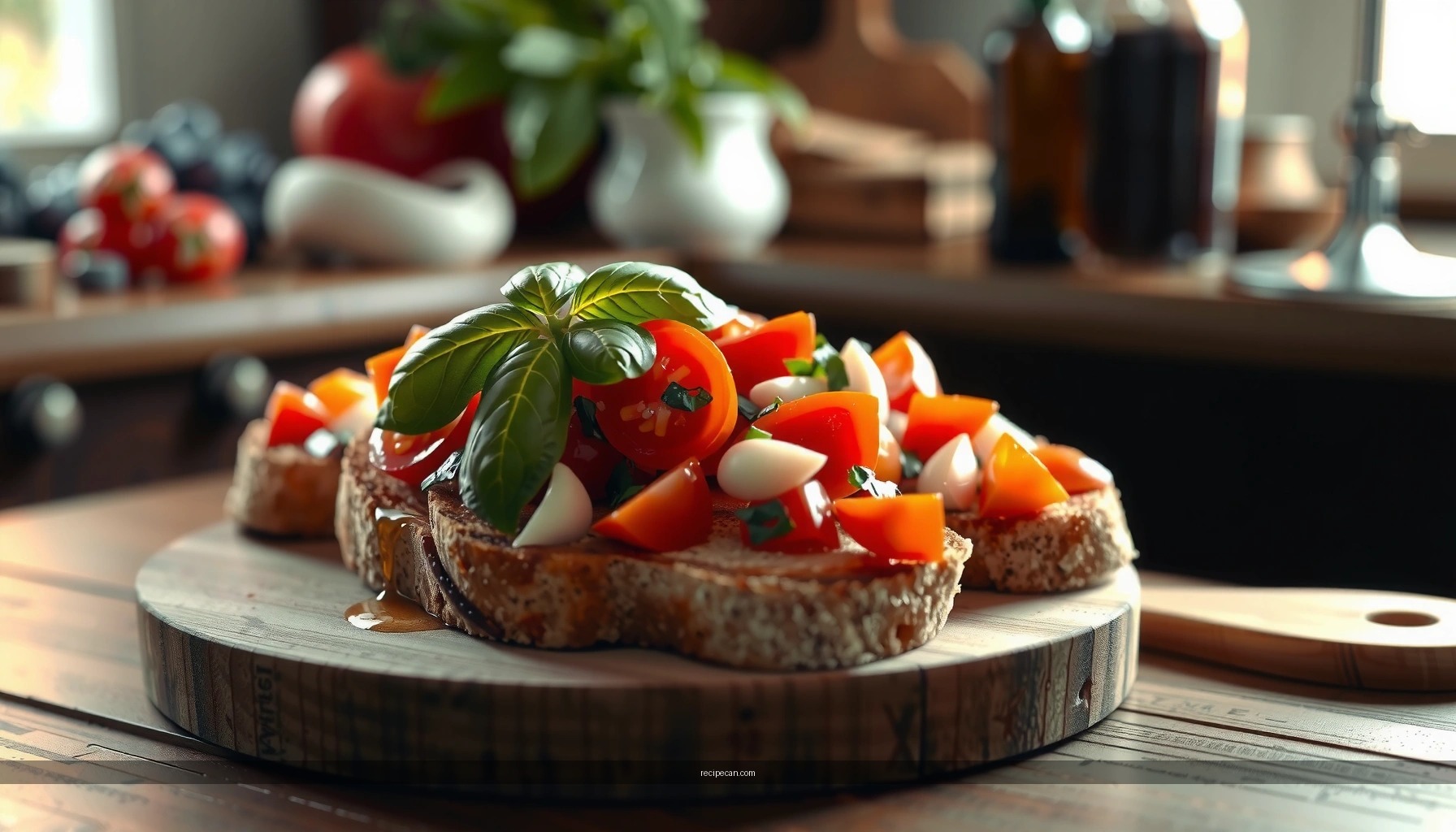
The best recipe for bruschetta is the classic tomato basil and garlic version—bold, bright, and reliably crowd-pleasing when you want maximum flavor in minimal time. You’ll get the exact ratios and step-by-step method to dress ripe tomatoes, perfume them with garlic, and build a topping that clings without turning soggy. If your goal is the perfect balance of juicy, herby, and toasted crunch, this is the winner.
The best bruschetta recipe is a crisp toast base topped with a bright tomato basil and garlic mixture seasoned correctly and added right before serving—so it tastes vibrant, not soggy. In this guide, you’ll get the exact ingredients, timing, and assembly approach for classic, restaurant-style bruschetta every time.
Choose the Right Bread
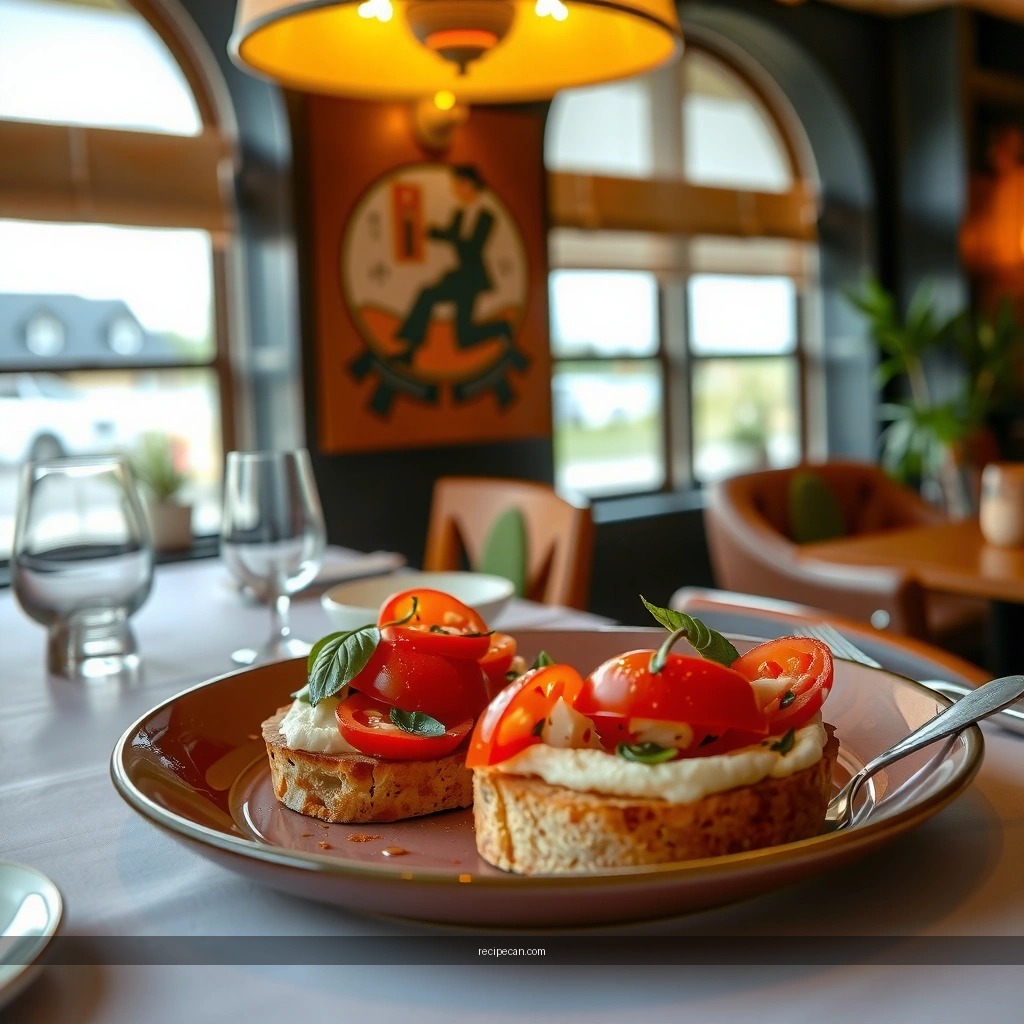
Bruschetta succeeds or fails on bread. You want a sturdy, thick slice that can absorb flavor from olive oil and tomato juices without collapsing. The ideal bread is ciabatta, sourdough, or a baguette-style loaf cut thick (about 1–1.5 inches / 2.5–4 cm). Thin bread will either burn quickly or turn leathery; overly soft bread turns mushy once it meets the topping.
What to look for
– Crust texture: A thick, well-developed crust resists sogginess.
– Interior structure: The crumb should be elastic and able to hold a topping mound.
– Slice thickness: Thicker slices give you a crisp exterior with a tender center.
Toasting targets
– Color: golden brown edges
– Aroma: toasted bread smell with a gentle “nutty” note
– Feel: crisp on the outside, still capable of holding a spoonful of topping
For busy hosts and food-service-style results, toast the bread in batches so every piece goes from oven to table at peak texture.
Make the Tomato Basil Topping
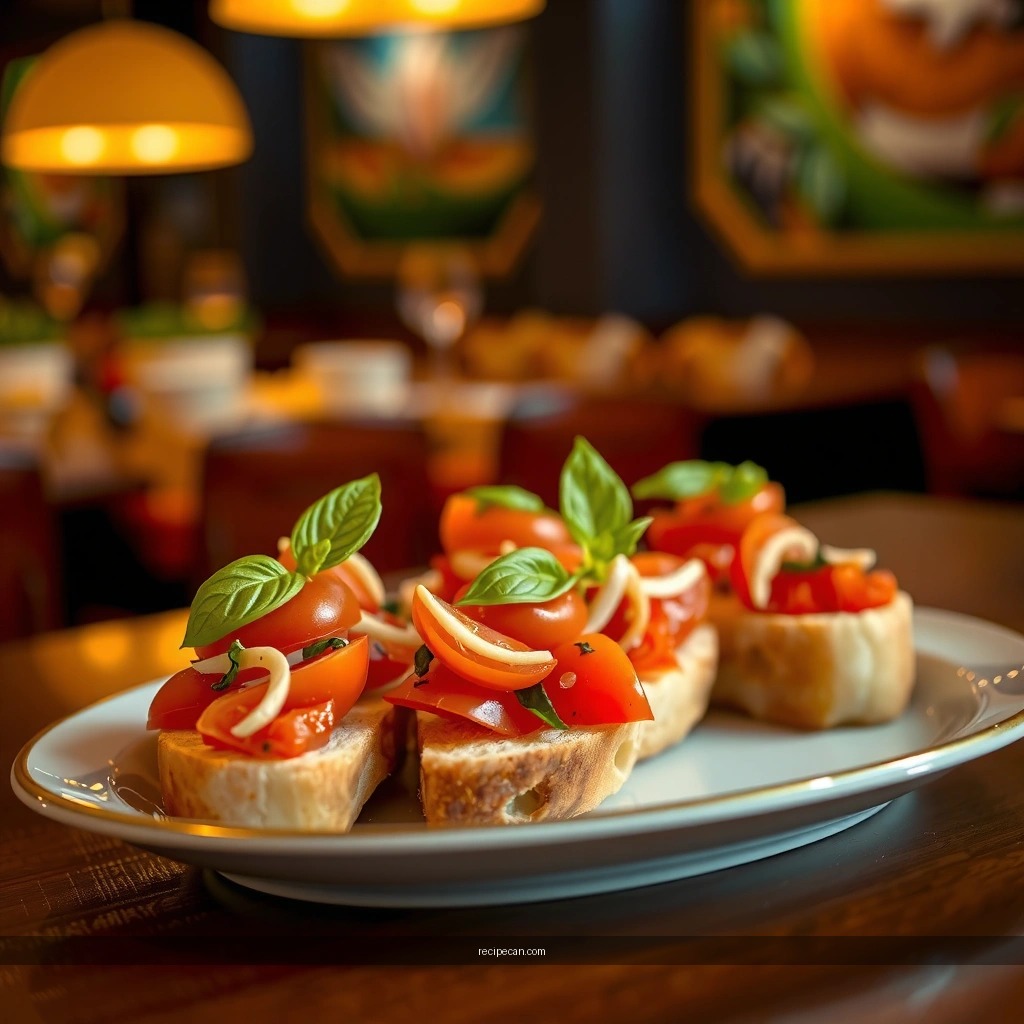
The topping is where classic bruschetta earns its reputation—fresh tomatoes, fragrant basil, and garlic balanced by olive oil and acid. Start with ripe tomatoes, then chop for the right texture. If you prefer a more controlled, restaurant-style consistency, choose tomatoes with fewer seeds and less excess juice (heirloom can be great, but some varieties are wetter than others).
Recommended tomato approach
– Use plum tomatoes or Roma-type tomatoes for lower water content.
– Chop into small, even pieces so every bite has tomato, garlic, and basil—not just juice.
– If your tomatoes are exceptionally watery, gently drain them for 5–10 minutes in a colander, then return to your bowl.
Classic flavor building
– Garlic: mince finely so it distributes evenly (avoid large chunks that can turn sharp).
– Basil: chiffonade or chop by hand; add most basil to the mix and reserve a small amount for finishing.
– Olive oil: use extra-virgin olive oil for a peppery, aromatic backbone.
– Acid choice (vinegar or lemon): a small splash brightens the whole dish and makes the tomato taste “alive.”
Practical acid guidance
– If using red wine vinegar, start with about 1–2 teaspoons per 1.5 cups (about 250–300g) chopped tomatoes.
– If using lemon juice, start with about 1 tablespoon per 1.5 cups chopped tomatoes.
Adjust to taste rather than trying to “set” the flavor early—tomatoes vary by sweetness and ripeness.
Season for Maximum Flavor
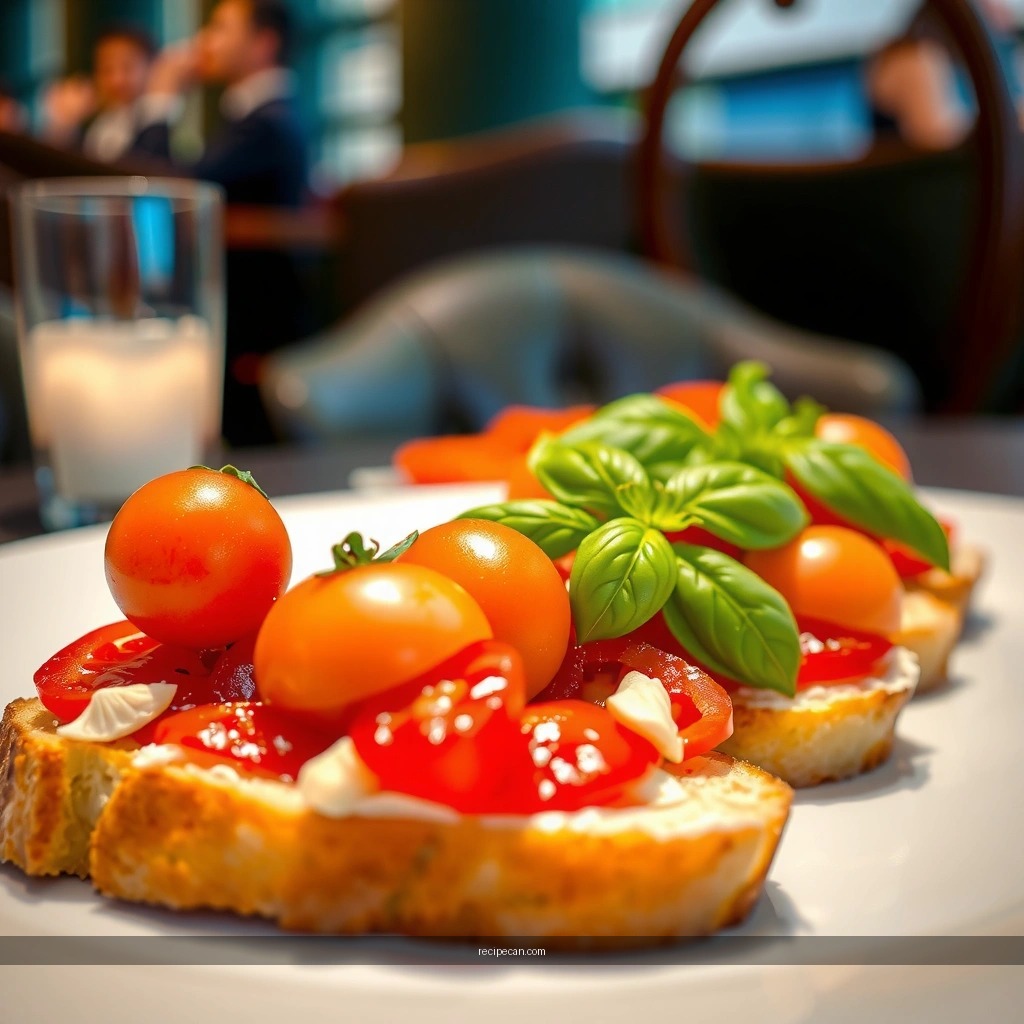
Seasoning is the difference between “good” and “restaurant-level.” For classic tomato basil bruschetta, you need salt for flavor extraction, pepper for lift, and—depending on tomato acidity—a small corrective sweetness.
Salt and pepper
– Add kosher salt or fine sea salt early so it can season throughout.
– Use black pepper generously, but not aggressively; bruschetta should taste balanced, not harsh.
Resting matters
Let the mixture rest for 3–8 minutes before tasting again. This brief pause helps salt dissolve and redistributes garlic and basil aromas.
When tomatoes taste too acidic
Some tomatoes are bright but unpleasantly sharp. A quick professional fix is a pinch of sugar (think: “micro-dosing,” not dessert). Add:
– 1/8 teaspoon at a time
– Stir, rest 1–2 minutes, then taste again
This method keeps the dish savory while smoothing the edge.
Bruschetta Balance Ratios (for ~6–8 Servings)
| # | Component | Typical Amount | Role in Flavor | Flavor Impact Score |
|---|---|---|---|---|
| 1 | Ripe chopped tomatoes | 1.5 cups (250–300g) | Main sweetness + acidity | ★★★★☆ |
| 2 | Extra-virgin olive oil | 2–3 tbsp | Aroma + mouthfeel | ★★★★☆ |
| 3 | Garlic (minced) | 1–2 cloves | Savory depth | ★★★☆☆ |
| 4 | Fresh basil (chopped) | 1/4 cup loosely packed | Herb brightness | ★★★★☆ |
| 5 | Salt | 1/2 tsp (to taste) | Flavor extraction | ★★★★☆ |
| 6 | Black pepper | 1/8–1/4 tsp | Spice lift | ★★★☆☆ |
| 7 | Acid (vinegar or lemon) | 1–2 tsp vinegar OR 1 tbsp lemon | Brightness + balance | ★★★☆☆ |
Toast and Rub with Garlic
Toasting is not just heat—it’s structure. For the best texture, toast the bread until crisp and aromatic, then (optionally) rub it with garlic while it’s still warm.
How to toast for bruschetta
– Oven or grill works best; aim for even browning.
– Toast until golden and fragrant; the bread should not feel soft.
Garlic rub technique
– Use a cut clove and rub over the warm toast surface.
– This creates a delicate garlic aroma without overpowering the tomato topping.
– If you’re sensitive to garlic, do light rubbing rather than “covering” the entire slice.
This technique is a hallmark of classic Italian bruschetta because it layers flavor without making the topping too sharp.
Assemble for the Best Texture
Assembling at the right time is the core operational step. If you pile the topping onto bread too early, the tomato juices start to soak into the crust and you lose the contrast between crispy toast and juicy topping.
Best-practice assembly workflow
1. Toast bread first.
2. Make the tomato basil topping and keep it mixed but ready.
3. Spoon topping onto bread right before serving.
4. Finish with a drizzle of olive oil and fresh basil.
Finishing touches
– A small extra drizzle of high-quality olive oil elevates aroma.
– Optional flaky salt adds a subtle crunch and “top note” brightness.
– A few basil leaves on top make the dish look intentional and fresh.
For events, hold bread separately and portion topping close to service time. This mirrors restaurant timing discipline and delivers consistently better results.
Quick Serving Tips
Small timing tweaks can make a visible difference in flavor depth and texture.
Let it meld (briefly)
– After mixing the tomatoes with oil and acid, let it sit 5–10 minutes.
– This helps the flavors integrate while avoiding the “watery pool” effect.
Simple pairing options
– Mozzarella (burrata or fresh mozzarella): creamy contrast to tomato acidity.
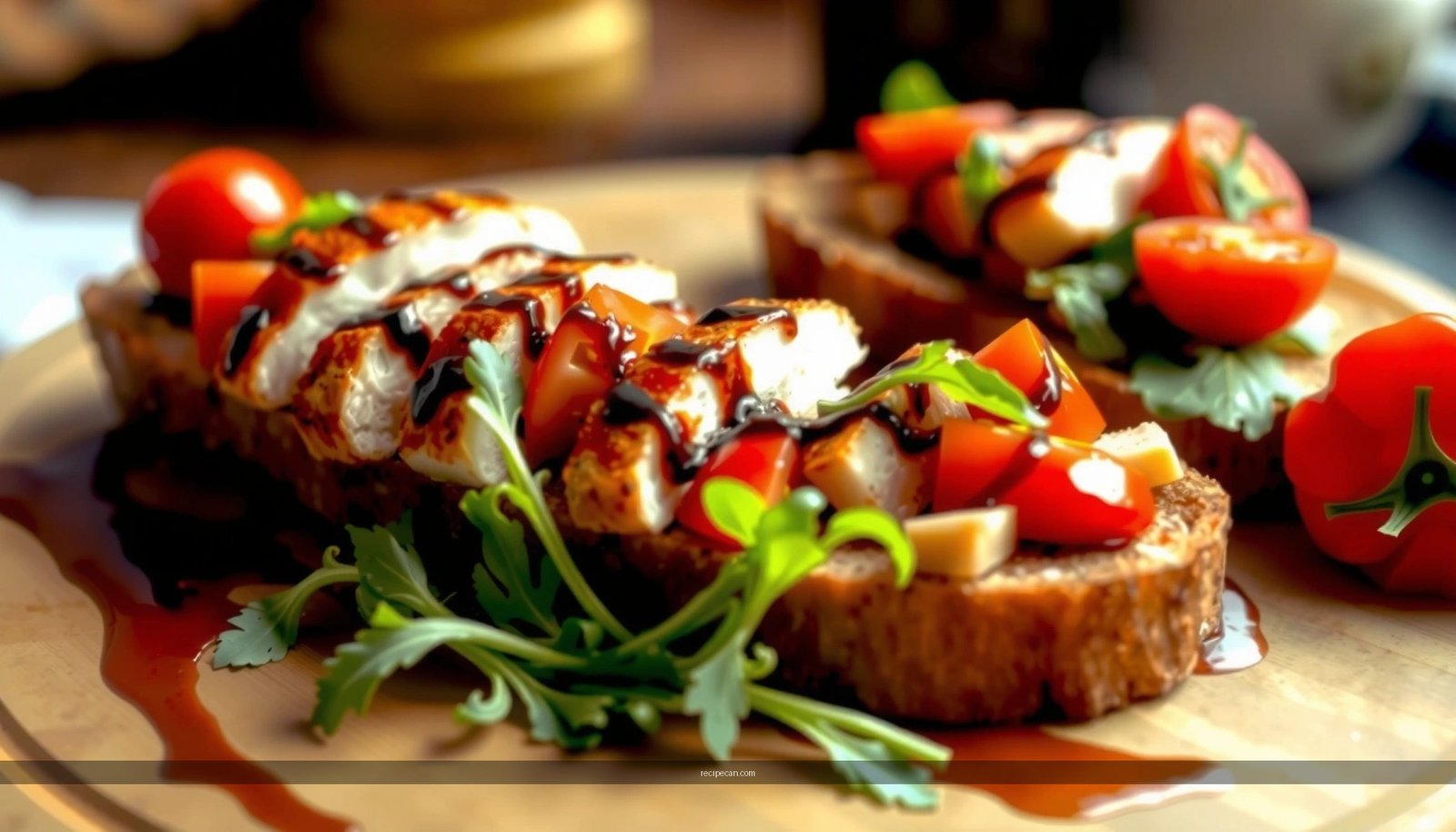
– Balsamic glaze: sweet-tart finish that complements basil.
– Classic tomato-basil only: best when tomatoes are very ripe and fragrant.
If you’re serving multiple dietary needs, you can keep the base classic and add variations to individual plates (mozzarella, extra basil, or balsamic drizzle) without changing the core recipe.
– Overchopping basil too fine (it can turn dark and bitter).
– Using watery tomatoes without draining or adjusting.
– Assembling too early and letting the toast steam.
– Adding too much garlic at once (one to two cloves total is usually enough for 1.5 cups tomatoes).
The best recipe for bruschetta is crisp toast and a fresh, well-seasoned tomato basil and garlic topping—created with the right proportions and assembled at the right moment. Use thick, crusty bread; season the tomato mixture confidently; toast until golden; and spoon the topping on right before serving to preserve maximum texture. Make it tonight, then adjust garlic, basil, and acidity to match your palate for a reliably “restaurant-style” result.
Frequently Asked Questions
What is the best recipe for bruschetta with fresh tomatoes?
Start with ripe Roma tomatoes, finely diced, then mix them with minced garlic, extra-virgin olive oil, chopped fresh basil, salt, and black pepper. Let the mixture sit for 10–20 minutes so the juices develop, which makes the topping extra flavorful. Toast crusty bread or sourdough slices until golden, then rub lightly with garlic and spoon the tomato mixture on top. Finish with a drizzle of olive oil and, if you like, a sprinkle of flaky salt or grated Parmesan.
How do I make bruschetta that doesn’t get soggy?
Use toasted bread as your base and add the tomato topping right before serving to avoid moisture soaking in. Choose firmer tomatoes (like Roma) and drain any excess liquid from the diced tomatoes if the batch looks watery. You can also keep the tomato mixture and bread separate until guests are ready, then assemble quickly for the best crunch. For a little extra insurance, brush the bread with olive oil before toasting.
Why do you salt tomatoes for bruschetta and how long should you wait?
Salting tomatoes helps draw out excess water and enhances their natural sweetness, which improves the texture and taste of your bruschetta topping. After mixing diced tomatoes with salt, let them sit for about 10–15 minutes, then stir in the remaining ingredients like garlic and basil. If there’s a lot of liquid pooling, spoon off some of it so your topping stays thick and spreadable. This approach makes your bruschetta fresher and less watery.
Which bread is best for bruschetta—baguette, ciabatta, or sourdough?
The best bruschetta bread is one with a sturdy crust and a chewy interior, so it toasts well without collapsing. Baguette and sourdough are classic choices because they crisp nicely and hold the tomato topping, while ciabatta also works well for a more airy bite. Slice bread fairly thick, toast until firm and golden, and serve promptly for maximum contrast. For the most traditional result, go with a rustic loaf like sourdough or a French baguette.
Best way to flavor bruschetta: garlic rub, garlic in the topping, or both?
For maximum flavor, use both: rub the toasted bread with garlic for an even, mellow aroma, and include minced garlic in the tomato mixture for deeper taste. Lightly rubbing the bread prevents overpowering, especially when using fresh garlic. Mix your tomato topping with garlic and olive oil, then add it to the bread right before serving so the flavors stay vibrant. If you want it milder, reduce the garlic in the topping and rely more on the garlic rub.
References
- Bruschetta
https://en.wikipedia.org/wiki/Bruschetta - https://www.britannica.com/topic/bruschetta
https://www.britannica.com/topic/bruschetta - Google Scholar Google Scholar
https://scholar.google.com/scholar?q=best+bruschetta+recipe - Google Scholar Google Scholar
https://scholar.google.com/scholar?q=classic+bruschetta+tomato+garlic+olive+oil+recipe - Google Scholar Google Scholar
https://scholar.google.com/scholar?q=bruschetta+history+and+culinary+origins - https://www.theguardian.com/food/2020/jul/03/how-to-make-bruschetta-recipe
https://www.theguardian.com/food/2020/jul/03/how-to-make-bruschetta-recipe - https://cooking.nytimes.com/recipes/1016677-bruschetta
https://cooking.nytimes.com/recipes/1016677-bruschetta - https://www.bbc.com/food/recipes/bruschetta_73418
https://www.bbc.com/food/recipes/bruschetta_73418 - https://www.theguardian.com/food/2013/aug/01/bruschetta-recipe
https://www.theguardian.com/food/2013/aug/01/bruschetta-recipe - Google Scholar Google Scholar
https://scholar.google.com/scholar?q=best+recipe+for+bruschetta