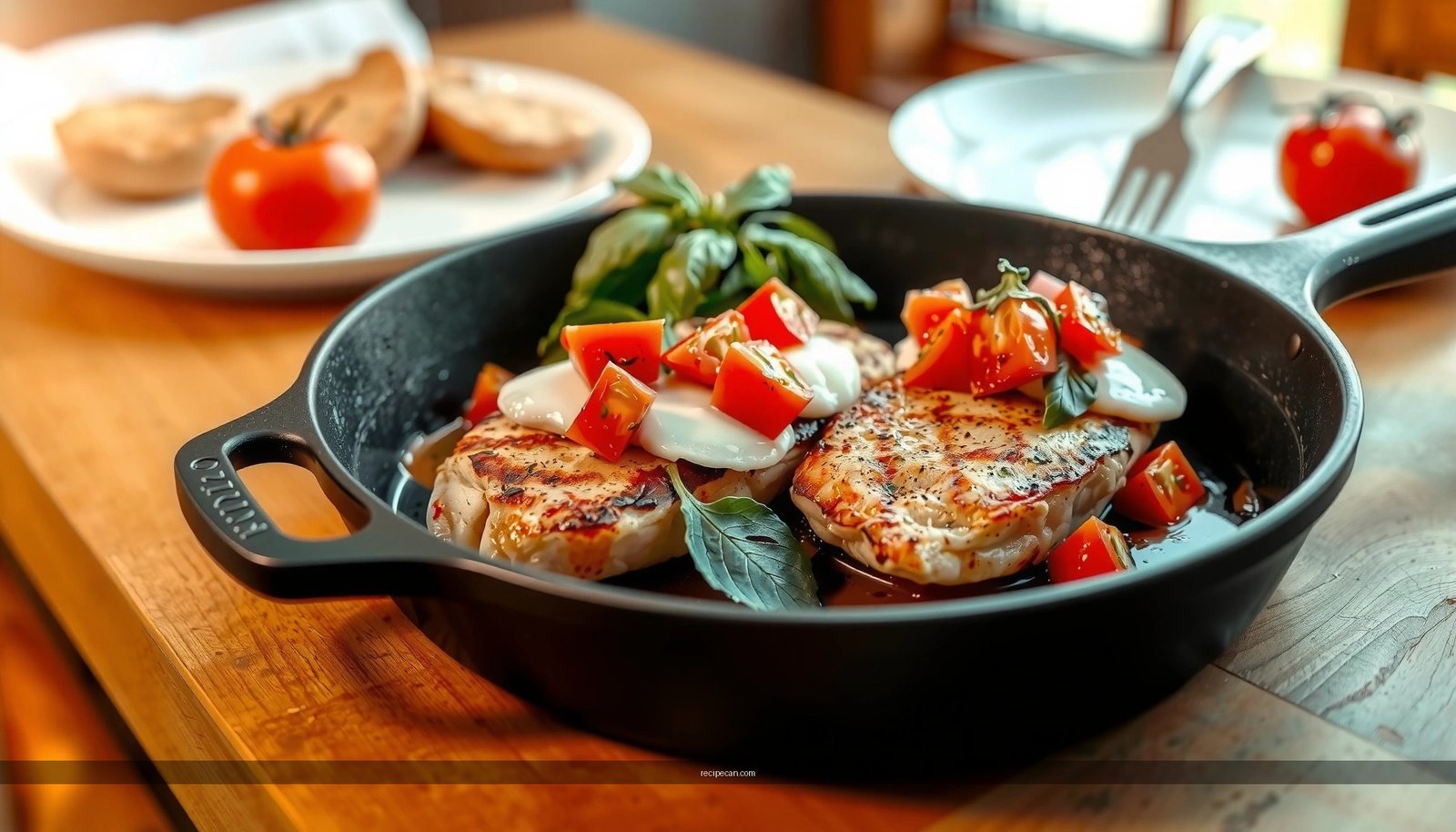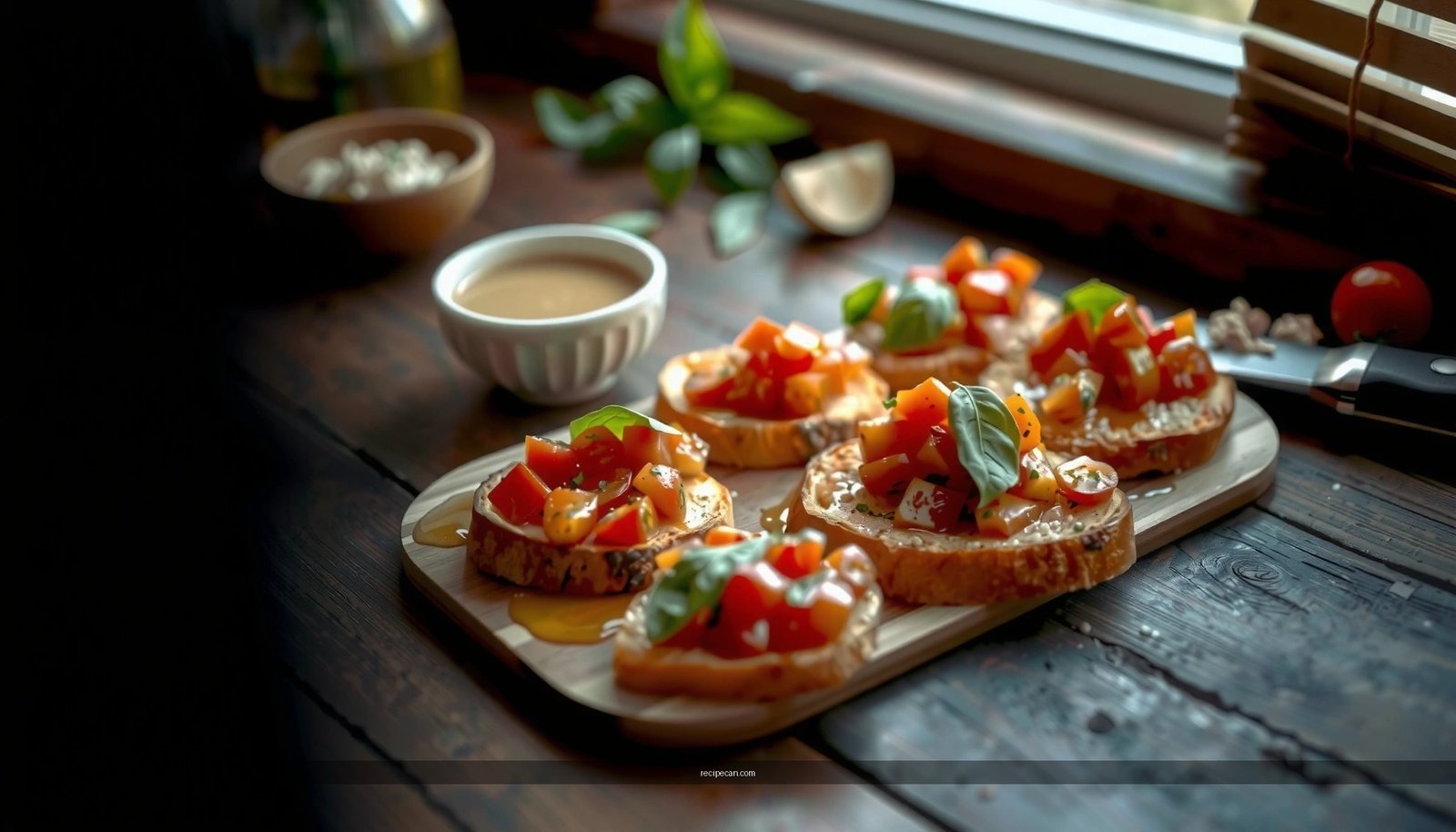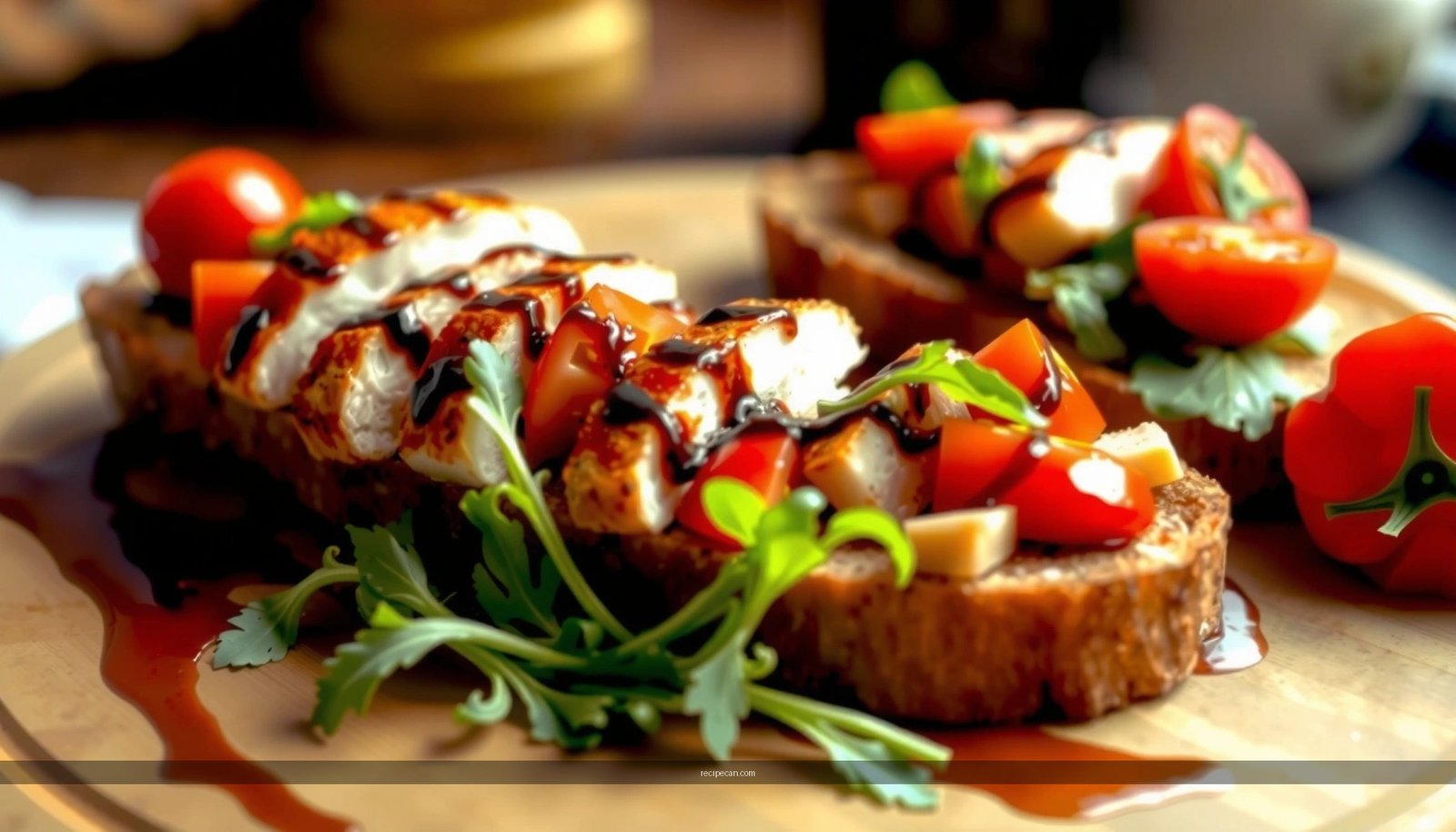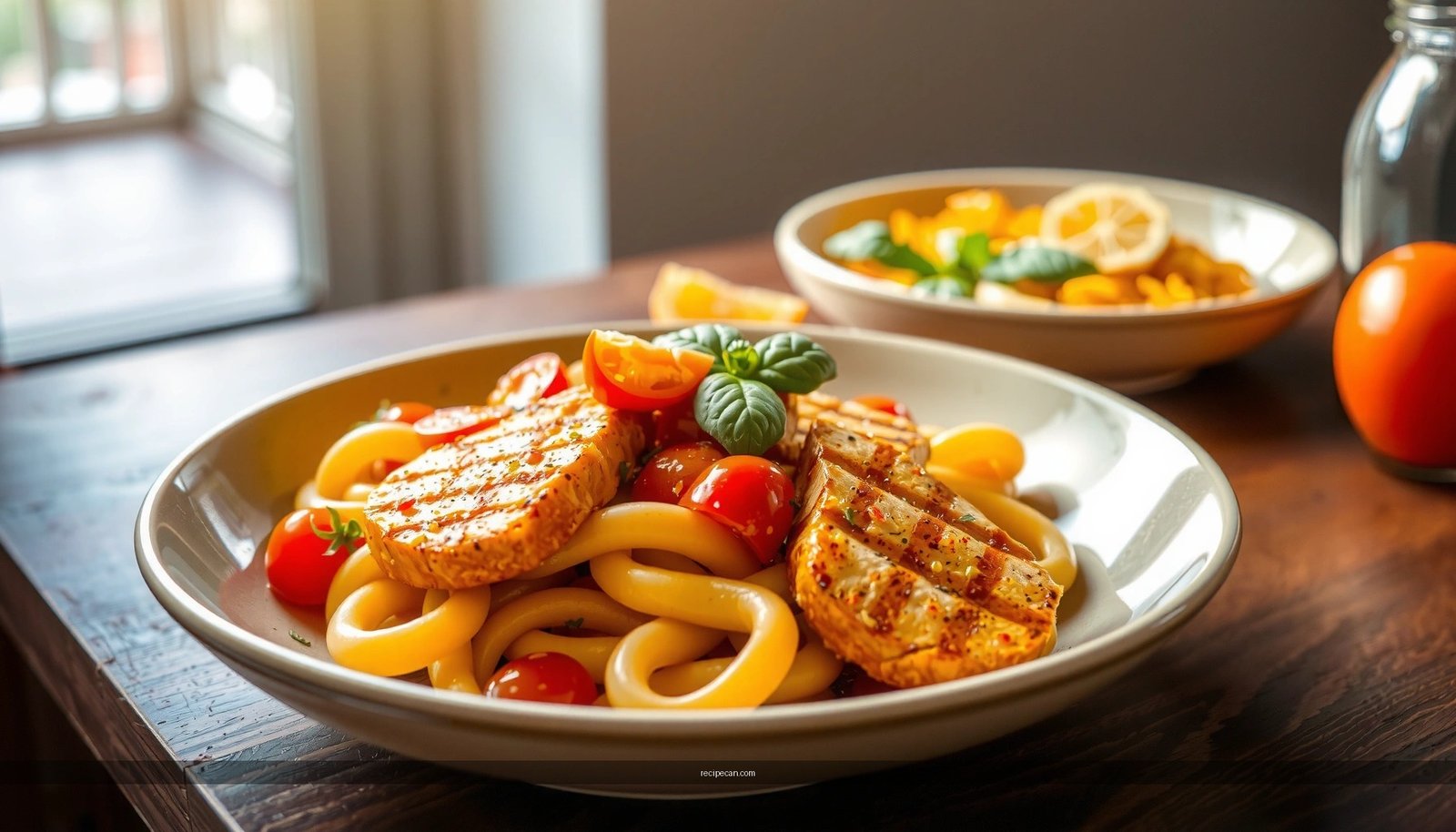
If you’re searching for a bruschetta chicken pasta recipe that delivers bold, tangy flavor without slowing you down, this easy weeknight dinner wins. You’ll learn exactly how to cook juicy chicken and toss it with pasta in a bruschetta-style tomato topping that tastes like it came from a restaurant. Want a fast meal with minimal effort and maximum crowd-pleasing flavor?
This bruschetta chicken pasta recipe delivers an Italian-inspired, tomato-garlic topping with juicy seared chicken—ready as a quick weeknight dinner because it uses a streamlined, one-pan-style approach. You’ll cook the chicken and pasta efficiently, simmer a fast tomato sauce, then finish with a fresh bruschetta-style topping so every bite balances tangy tomatoes, aromatic basil, and garlicky pasta juices.
Ingredients for Bruschetta Chicken Pasta
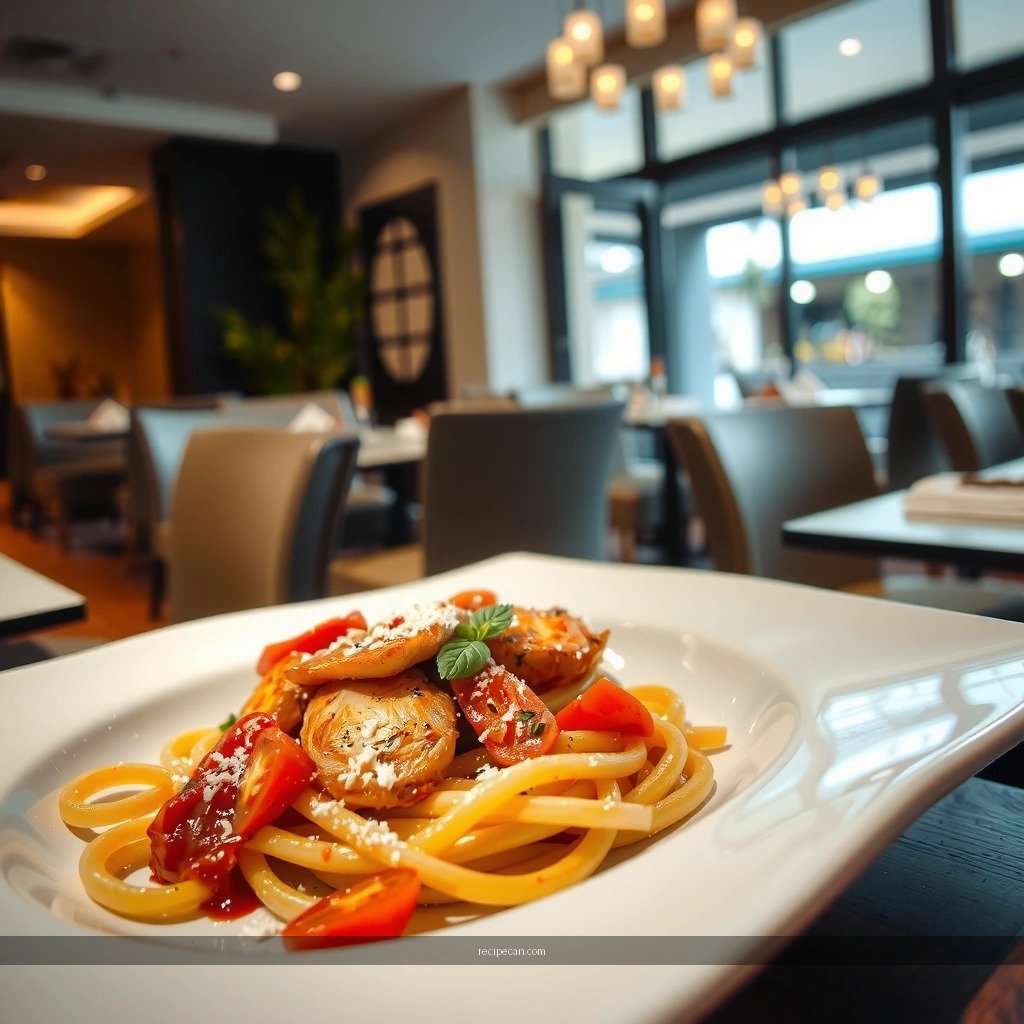
A successful bruschetta chicken pasta recipe starts with ingredients that deliver two things fast: depth (from garlic, olive oil, and seasoning) and freshness (from ripe tomatoes and basil). While there are many variations, the core formula is consistent: protein + pasta + tomato topping + a little acidity to “lift” the flavors.
Core ingredients (recommended):
– Chicken: boneless, skinless chicken breasts or thighs (breasts for a leaner result; thighs for extra juiciness).
– Pasta: linguine, spaghetti, penne, or rigatoni—any shape that holds sauce and pasta water.
– Tomatoes: Roma/plum tomatoes for less water and better texture, or vine-ripened if in season.
– Garlic: fresh garlic cloves for bold aroma.
– Basil: fresh basil for that classic bruschetta profile.
– Mozzarella (optional): adds creamy richness similar to many bruschetta-with-cheese versions.
Pan and seasoning essentials:
– Olive oil (for sautéing and flavor base)
– Balsamic vinegar (for the bruschetta-style tang)
– Salt and black pepper
– Red pepper flakes (optional, for gentle heat)
– Optional “quality of life” add-ins depending on your pantry:
– Parmesan for finishing
– Lemon zest (a small touch brightens tomatoes)
– Chicken broth splash if your sauce needs loosening
Best Pasta Shapes for Bruschetta-Style Chicken Pasta (By Sauce-Latching)
| # | Pasta shape | Sauce adhesion score (out of 5) | Typical cook time (minutes) | Workweek rating |
|---|---|---|---|---|
| 1 | Rigatoni | 4.9 ★ | 10–12 | Excellent |
| 2 | Penne | 4.7 ★ | 10–12 | Excellent |
| 3 | Spaghetti | 4.4 ★ | 8–11 | Very good |
| 4 | Linguine | 4.3 ★ | 9–12 | Very good |
| 5 | Fusilli | 4.5 ★ | 9–12 | Very good |
| 6 | Cavatappi | 4.6 ★ | 9–11 | Very good |
| 7 | Angel hair | 3.6 ★ | 4–6 | Needs careful mixing |
Cook the Chicken
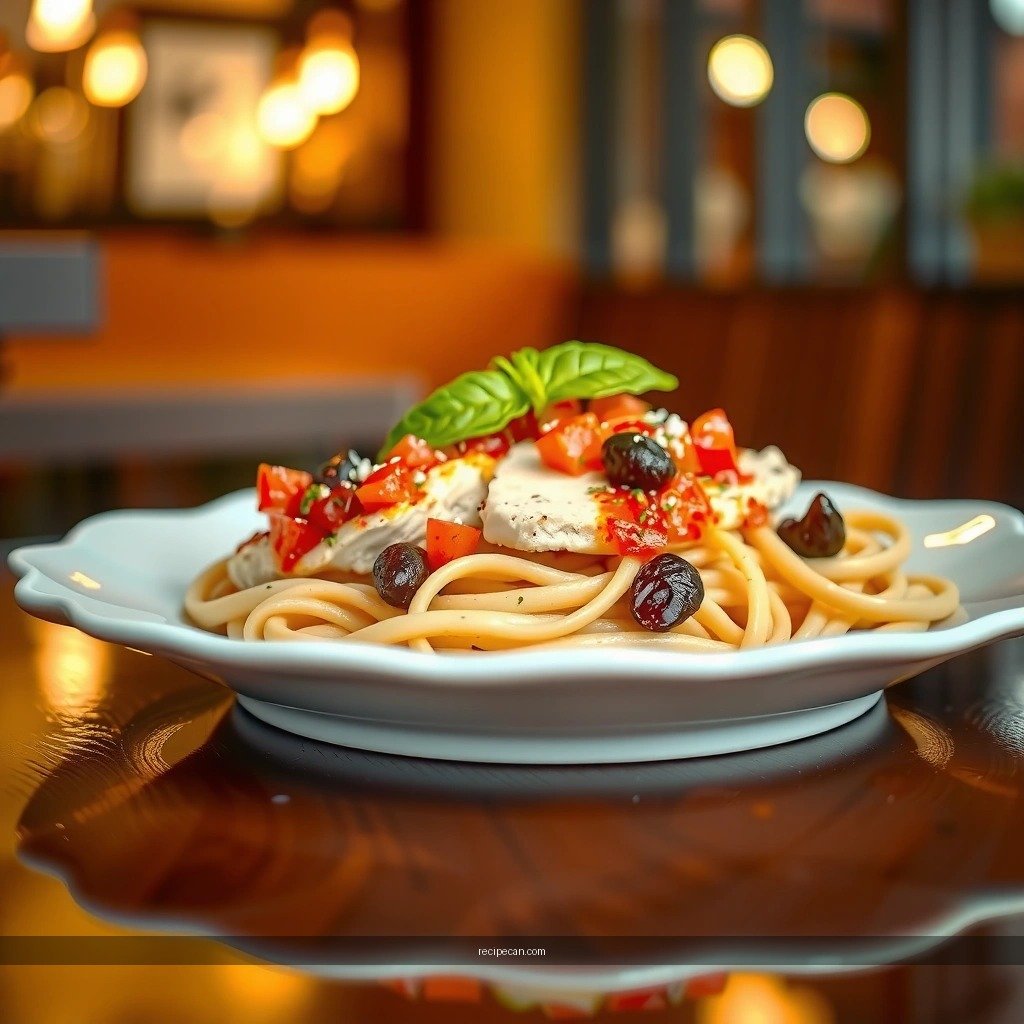
The chicken is the “anchor” flavor in your bruschetta chicken pasta recipe. For the best result, focus on two variables: browning (flavor) and timing (juiciness). Overcooked chicken loses the tender bite that makes this dish feel restaurant-quality.
How to cook for maximum flavor:
– Pat the chicken dry with paper towels before seasoning. This improves browning.
– Season generously on both sides with salt, black pepper, and a little red pepper flakes if you like heat.
– Sear in olive oil over medium-high heat until you develop a golden crust. You’re not trying to cook it all the way through at first—just build flavor.
– Finish until just cooked through. Chicken breasts typically need a few minutes per side depending on thickness; use a thermometer if you have one (165°F / 74°C for safety).
– Rest briefly before slicing so juices redistribute. Even 3–5 minutes makes a noticeable difference.
Analytical perspective (why this works): Searing creates browned compounds on the surface that later mingle with the tomato simmer. That means your sauce tastes fuller without extra ingredients. Meanwhile, pulling the chicken at the right moment prevents the “dry, stringy” texture that often happens when recipes treat breasts like they can be cooked until “firm.”
Practical tip: If your chicken is thick, flatten it slightly (pound to even thickness). More even cooking time = fewer dry edges and a better slice presentation.
Cook the Pasta and Prep the Sauce
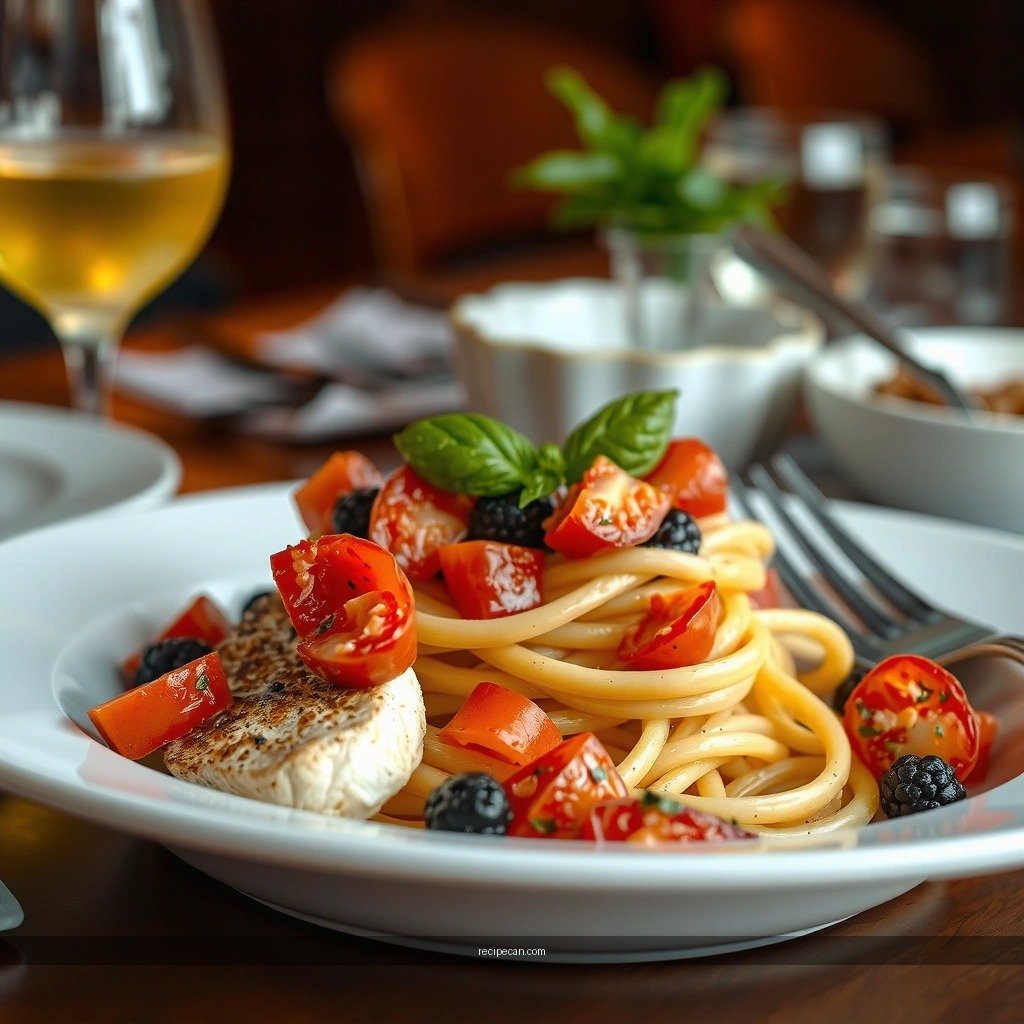
This step is where you control the final texture of your bruschetta chicken pasta. The goal is al dente pasta plus a light, fast tomato simmer—not a long-cooked stew.
Pasta technique:
– Boil pasta in salted water until al dente (follow the package time but taste 1–2 minutes early).
– Reserve a splash of pasta water before draining. This starchy water is what helps tomato juices emulsify into a glossy coating.
Sauce technique (fast but flavorful):
– In the same pan (or adjacent pan if needed), warm olive oil and sauté garlic just until fragrant.
– Add tomatoes and simmer briefly—enough to soften and combine flavors, but not so long that the tomatoes become mush.
– Season with salt, black pepper, and a measured amount of balsamic vinegar for tang. If you’re using red pepper flakes, add them here so the heat blooms in the oil.
Why reserved pasta water matters: Pasta water contains starch, which acts like a natural thickener and emulsifier. When you toss pasta with your tomato mixture, the sauce clings better and tastes more “integrated,” even though the recipe stays quick.
Operational shortcut: If you’re pressed for time, choose pasta that cooks in under 12 minutes and use chopped tomatoes that don’t require long simmering.
Make the Bruschetta-Style Topping
The bruschetta-style topping is the signature freshness component. It’s not meant to fully cook into the sauce; it’s meant to land on top—bright, aromatic, and texturally distinct.
How to build it:
– Dice tomatoes (small dice works best so you get an even bite).
– Combine diced tomatoes with:
– minced garlic (or grated, for a more even distribution)
– finely chopped or torn basil
– olive oil
– salt and pepper
– balsamic vinegar
– Optional: add small chunks of mozzarella for a creamy “bruschetta with cheese” effect.
Balancing flavors (what to watch):
– Tomatoes vary dramatically in sweetness and acidity. If your topping tastes flat, add:
– a little more salt (most common fix)
– or a touch more balsamic if it needs lift
– If it tastes overly sharp or acidic, balance with:
– a drizzle more olive oil
– or a pinch of sugar (optional, but effective when tomatoes are very tart)
Professional finishing note: Let the topping sit for a few minutes while the pasta and chicken finish. This short rest allows garlic and balsamic to partially infuse the tomato juices, improving overall cohesion.
Combine and Serve
Combining is where the dish goes from “components” to a unified meal. Keep it simple: toss, coat, then top.
How to combine:
– Toss the drained, al dente pasta with the tomato mixture in the pan.
– Add reserved pasta water gradually—start with a small splash, toss, and adjust until the sauce looks glossy and coats the noodles.
– Slice the cooked chicken and add it back (or layer it) depending on your presentation preference.
– Spoon the bruschetta-style topping over the top just before serving so it stays fresh and vibrant.
Serving strategy (makes it feel intentional):
– Use a large spoon to create a shallow “nest” of pasta.
– Slice chicken neatly and place it on top.
– Finish with basil-forward bruschetta topping and, if desired, a light dusting of parmesan.
Texture expectation: You want pasta coated, tomatoes softened, and the topping still juicy with visible basil and tomato pieces. If everything looks fully cooked, you likely simmered the topping too long—use the topping as a finishing step next time.
Storage and Reheating Tips
While this bruschetta chicken pasta recipe is best fresh, leftovers can still taste excellent with the right reheating approach. The main risk is over-softening the chicken and thickening the sauce too much.
Storage:
– Cool promptly and store in an airtight container for up to 3–4 days.
– If you anticipate reheating later, consider storing topping separately if you want extra “bruschetta freshness” on day two.
Reheating:
– Reheat gently in the microwave or on the stovetop.
– Add a splash of water or chicken broth to loosen the sauce and restore a glossy texture.
– Stir during reheating to ensure even warmth.
Quality preservation tip: Reheat to “hot and steamy,” not aggressively—high heat for too long can dry chicken breasts. Thigh meat usually reheats more forgivingly, so it’s a helpful choice if you expect frequent leftovers.
This bruschetta chicken pasta recipe delivers restaurant-style flavor with simple steps: cook the chicken, simmer the tomatoes, and finish with fresh bruschetta topping. Make it tonight—save the ingredient list, follow the order of steps, and taste as you season so it’s perfectly balanced for your family.
In conclusion, the key to a great bruschetta chicken pasta recipe is disciplined timing: sear the chicken for flavor without drying it out, keep the tomato sauce fast and bright, and preserve the bruschetta-style topping’s freshness until the final minute. If you follow the tossing technique with reserved pasta water and adjust seasoning to match your tomatoes, you’ll consistently get a flavorful, weeknight-friendly meal that tastes far more complex than it is.
Frequently Asked Questions
What is a bruschetta chicken pasta recipe and what makes it different from regular chicken pasta?
A bruschetta chicken pasta recipe combines tender chicken with pasta tossed in a tomato-garlic sauce and topped with bruschetta-style flavors like basil and often balsamic. The “bruschetta” element is what sets it apart—fresh tomato, garlic, and herbs create a bright, tangy taste compared to creamier or plain tomato sauces. This makes it a go-to weeknight option when you want bold flavor without complicated steps.
How do I make bruschetta chicken pasta taste like restaurant-style without heavy cream?
Start by seasoning and searing the chicken well, then use a simple tomato-garlic sauce with lots of aromatics (garlic, herbs, and a splash of balsamic or Italian seasoning). Toss the pasta in the sauce so it absorbs flavor, and finish with fresh basil just before serving for a bright, fresh finish. If you want extra richness without heavy cream, add a little olive oil and a generous sprinkle of Parmesan to help the sauce cling.
Why does my bruschetta chicken pasta come out watery, and how can I prevent it?
Watery pasta usually happens when the tomatoes release too much liquid or the sauce isn’t thickened enough. Use chopped fresh tomatoes with minimal watery cores, or drain any excess liquid from prepared bruschetta toppings; simmer the sauce briefly to reduce. Also, save a splash of pasta water to loosen the sauce, but add it gradually so your bruschetta chicken pasta stays thick and cohesive.
What’s the best pasta shape for a bruschetta chicken pasta recipe?
The best pasta shapes are ones that hold onto chunky tomato and herb sauce, like penne, rigatoni, or rotini. These shapes trap bits of bruschetta chicken mixture and help every bite taste flavorful. For a lighter feel, spaghetti or linguine works too, but make sure the sauce is well reduced so it coats instead of sliding off.
Which cheese and herbs work best in bruschetta chicken pasta?
Use Parmesan (or Pecorino Romano) for a salty, savory finish, and consider adding mozzarella only if you want a melty, more comforting style. Fresh basil is the classic herb choice for bruschetta chicken pasta, and you can also add oregano or parsley for depth. For the most authentic bruschetta flavor, finish with fresh basil rather than relying only on dried herbs.
References
- Bruschetta
https://en.wikipedia.org/wiki/Bruschetta - Pasta
https://en.wikipedia.org/wiki/Pasta - https://en.wikipedia.org/wiki/Chicken_(food
https://en.wikipedia.org/wiki/Chicken_(food - Tomato sauce
https://en.wikipedia.org/wiki/Tomato_sauce - Food safety
https://en.wikipedia.org/wiki/Food_safety - https://www.fsis.usda.gov/food-safety/safe-food-handling-and-preparation/food-safety-basics/cooking-meat-and-poultry
https://www.fsis.usda.gov/food-safety/safe-food-handling-and-preparation/food-safety-basics/cooking-meat-and-poultry - Food safety
https://www.who.int/news-room/fact-sheets/detail/food-safety - Google Scholar Google Scholar
https://scholar.google.com/scholar?q=bruschetta+chicken+pasta+recipe - Google Scholar Google Scholar
https://scholar.google.com/scholar?q=bruschetta+chicken+pasta - Google Scholar Google Scholar
https://scholar.google.com/scholar?q=food+safety+chicken+cooking+temperature+pasta