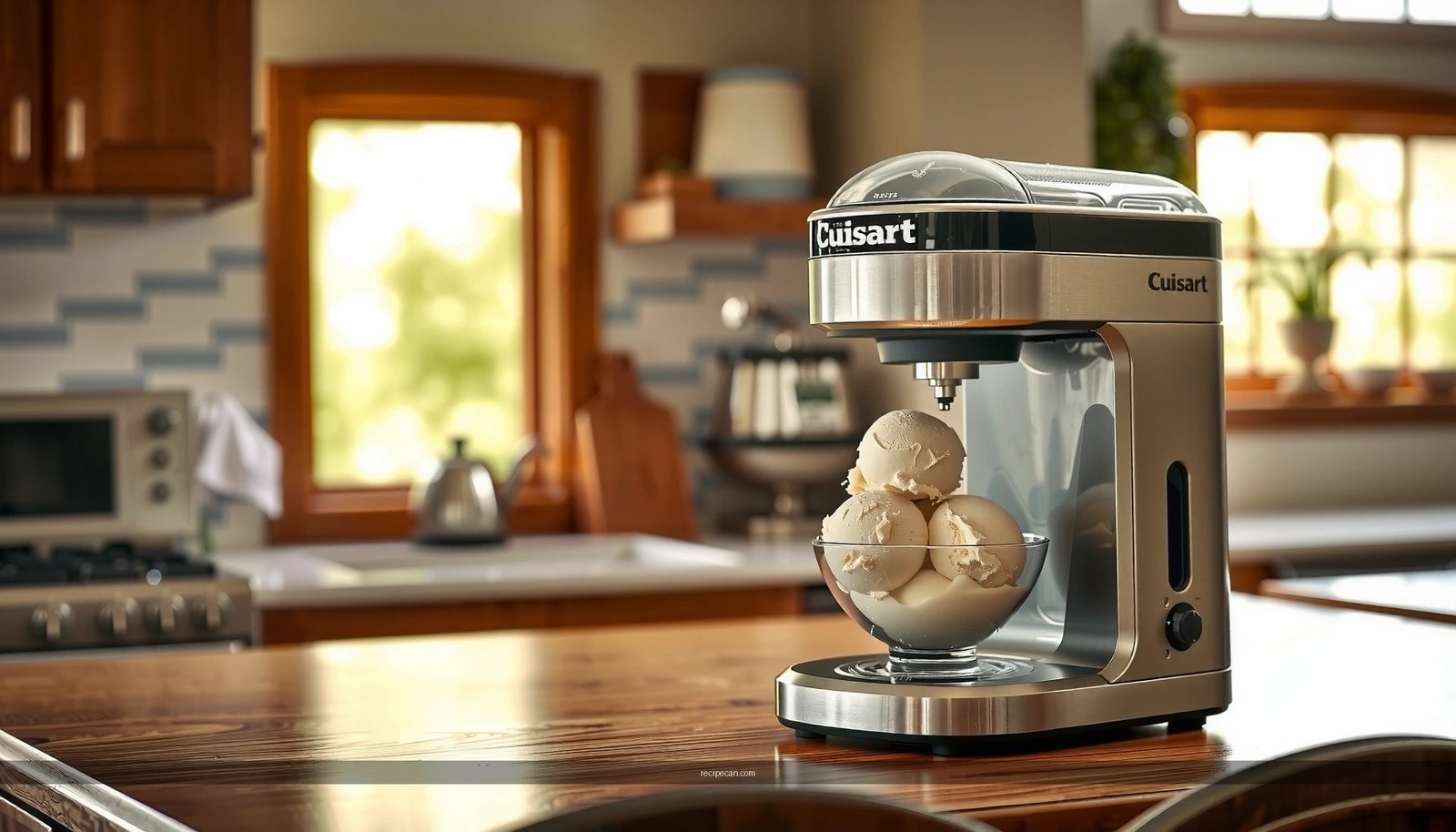
Looking for a Cuisinart ice cream recipe that actually turns out smooth, scoopable frozen dessert every time? This easy homemade method walks you through the exact steps and ingredient ratios to get creamy results in your Cuisinart ice cream maker without the guesswork. If you want the fastest path to true “real ice cream” texture—rather than icy soft serve—this is the recipe to follow.
Make Cuisinart ice cream at home by churning a custard-style base (or a quick no-cook base) until it reaches thick, soft-serve consistency, then freezing it to set. With cold ingredients, correct churn time, and a brief final freeze, you’ll get a creamy texture with fewer icY crystals—turning your Cuisinart ice cream maker into a reliable, repeatable dessert routine.
Choose Your Cuisinart Ice Cream Base

Selecting the right base is the fastest path to great texture, because the base determines how much ice forms during churning and freezing. For most Cuisinart models, the machine performs best when you start with a well-balanced mixture that’s cold, properly sweetened, and sufficiently thick (at least custard-style thickness).
Custard-style base (richer, more “ice cream”):
– Use egg yolks (or yolk-heavy formulas) to create a custard that thickens as it cools.
– Custards naturally emulsify fat and water, which reduces large ice crystals and supports a smoother mouthfeel.
– This approach is ideal if you want a classic, premium texture—especially for vanilla, chocolate, and caramel-style flavors.
Simple no-cook base (faster, very consistent):
– Use a combination of cream, milk, sugar, and flavoring.
– You won’t get custard’s extra silkiness, but you still can achieve excellent results—particularly when you chill the base thoroughly and churn to the right point.
– Best for fruit swirls, lighter flavors, and “weeknight dessert” convenience.
Practical guidance that improves results either way:
1. Use cold ingredients. Start with chilled cream and milk, and chill the finished base before pouring it into the Cuisinart bowl.
2. Balance sugar carefully. Sugar lowers the freezing point, helping prevent an overly firm scoop and supporting smoother texture.
3. Mind the fat ratio. More cream generally produces a softer, richer ice cream, while leaner bases churn but can freeze firmer.
To operationalize this choice, here’s a quick reference of how different base types influence final performance in a Cuisinart ice cream maker.
How Base Type Impacts Texture & Ease in a Cuisinart Ice Cream Maker
| # | Base Type | Best For | Churn Speed* | Texture Potential | Effort |
|---|---|---|---|---|---|
| 1 | Custard with yolks | Vanilla & premium classics | Steady | ★★★★★ | Medium |
| 2 | No-cook dairy + sugar | Weeknight desserts | Fast | ★★★★☆ | Low |
| 3 | Reduced-sugar custard | When you want less sweetness | Slightly slower | ★★★★☆ | Medium |
| 4 | Fruit-forward base (strc./strained) | Strawberry, mango, mixed berries | Variable | ★★★☆☆ | Low–Med |
| 5 | Chocolate base (custard-inspired) | Deep cocoa flavor | Steady | ★★★★☆ | Medium |
| 6 | Higher-fat “richer” base | Extra creamy texture | Steady | ★★★★★ | Medium |
| 7 | Light base (lower fat) | Lighter mouthfeel | Fast | ★★★☆☆ | Low–Med |
Ingredients and Equipment Checklist

A dependable Cuisinart ice cream recipe starts before the machine ever turns on. The goal is consistent measurements and the right equipment state—especially the freezing bowl.
Core ingredients (custard-style)
– Heavy cream: Provides body and creaminess.
– Milk: Lightens the base while keeping it churnable.
– Sugar: Enhances sweetness and improves texture by lowering freezing point.
– Egg yolks: Emulsify and thicken for a smooth, scoopable finish.
– Vanilla extract (or paste): A stable flavor foundation.
– Optional pinch of salt: Strengthens flavor perception.
Simple no-cook ingredients
– Heavy cream and milk (or all cream for extra richness)
– Sugar
– Vanilla or other flavoring
– Optional stabilizer (if you prefer): Some bakers use a small amount of cornstarch or a custard-thickening method even without yolks, but it’s not required for success if you chill well.
Equipment checklist
– Cuisinart ice cream maker freezer bowl
– Medium saucepan (custard method)
– Heatproof bowl (custard cooling)
– Whisk and measuring cups
– Fine mesh sieve (recommended for custard)
– Spatula and freezer-safe container
Bowl readiness (non-negotiable)
– Confirm the freezer bowl is fully frozen—commonly 12–24 hours depending on your freezer. A partially frozen bowl is one of the most common reasons people end up with grainy or overly soft results.
Tip: Place the bowl in the coldest part of your freezer and avoid removing it until you’re ready to churn. Temperature stability directly affects churn rate and final texture.
Step-by-Step Churning Instructions
This is the operational heart of a Cuisinart ice cream recipe: properly dissolve, chill, churn to the right consistency, then freeze to finish set.
Step 1: Make the base (custard-style for best results)
1. Warm dairy: Heat cream and milk until steaming (not boiling).
2. Whisk yolks + sugar: In a separate bowl, whisk egg yolks and sugar until combined and slightly lighter.
3. Temper: Slowly pour a small amount of hot dairy into the yolks while whisking to prevent scrambled eggs.
4. Cook to custard thickness: Return the mixture to the saucepan and cook over medium-low, stirring constantly, until it coats the back of a spoon (about 170–175°F / 77–79°C).
5. Strain and flavor: Strain for a silky texture, then stir in vanilla (and salt if using).
6. Chill thoroughly: Refrigerate until cold (at least 4 hours, ideally overnight).
Step 2: Churn in your Cuisinart machine
1. Start with a cold bowl and cold base.
2. Pour base into the frozen bowl and turn on the machine.
3. Churn until soft-serve consistency: This typically takes 20–40 minutes, depending on model and ambient temperature.
– The goal is a thick, mousse-like texture—not fully hard ice cream.
4. Timing cue: When the mixture visibly thickens and resembles soft-serve (or thick yogurt), it’s ready to transfer.
Step 3: Avoid common churn errors
– Don’t over-churn. Past the thick soft-serve stage, the mix can start to lose smoothness and incorporate too much air.
– Don’t under-churn. If you stop too early, the final freezer texture may become icy because the base hasn’t formed a refined ice crystal structure yet.
– Use an accurate thermometer if you’re new. Custard temperature and chilled base temp are easier to control than guesswork.
Chill, Freeze, and Set the Texture
Churning creates structure; freezing creates scoopable stability. This step is where “great fresh churn” becomes “great ice cream later.”
Step 1: Transfer correctly
– Move the churned ice cream into a freezer-safe container.
– Use a spatula to press the surface lightly to reduce air pockets.
Step 2: Freeze to firm up
– Freeze for 2–4 hours for a reliable scoop.
– If you want firmer, plan overnight—but expect slightly more stiffness, especially if your base was on the lighter side.
Step 3: Prevent ice crystals
– Cover tightly with a lid or an additional layer of parchment pressed directly onto the surface before closing with the lid.
– Ice crystals form when the ice cream is exposed to repeated temperature changes; keeping it sealed helps maintain a creamy texture.
Quality checks after freezing
– At first scoop: You should see smooth, dense texture rather than sharp crystals.
– After 5 minutes at room temperature: Scoop should become creamy again without turning watery.
Flavor Variations for Your Cuisinart Ice Cream Recipe
Once you master the base and churn timing, flavors become straightforward. The key is knowing when to add ingredients: mix-ins go near the end of churning to preserve texture, while liquids should be incorporated into the base for consistent distribution.
Mix-in ideas (add near the end of churning)
– Cookie pieces: Add for chunk retention; crush to 1–2 cm bits for even coverage.
– Chocolate chips or chunks: Choose smaller chips for balanced sweetness.
– Toasted nuts: Toast first to intensify aroma and avoid “raw” bitterness.
– Swirls: For caramel or fudge ribbons, drizzle slowly and churn briefly to avoid fully mixing.
Actionable guideline: Add mix-ins when the base reaches soft-serve consistency (last 3–5 minutes) so they don’t sink or break down.
Fruit flavors (blend, strain, and control water)
For the smoothest results:
1. Blend fruit until smooth.
2. Strain if seeds or pulp would be gritty (especially berries).
3. Add fruit to the base before chilling—then churn.
Why this matters: fruit adds water, which can increase icY formation if you don’t chill well or if your fruit puree is very watery. Straining improves mouthfeel and reduces gritty ice crystal perception.
If you want a quick decision framework for “which flavor path to use,” this comparison table helps align goals (texture vs. speed vs. sweetness).
| Flavor Goal | Recommended Base | Add-Ins Timing | Expected Creaminess |
|---|---|---|---|
| Classic Vanilla | Custard with yolks | No mix-ins (or optional chips end) | ★★★★★ |
| Chocolate Fudge | Custard-style chocolate | Chocolate near the end | ★★★★★ |
| Strawberry Swirl | Custard or thick no-cook + strained puree | Swirl before finishing churn | ★★★★☆ |
| Cookie Dough | Custard vanilla base | Cookie + caramel bits last 3–5 min | ★★★★☆ |
| Mint Chocolate Chip | No-cook mint + cream + sugar (chilled well) | Chocolate chips at end | ★★★★☆ |
| Peanut Butter | Custard with extra fat for body | Peanut butter blended in, optional bits end | ★★★★★ |
| Lighter “Ice Cream Shop” | Thicker no-cook with extra cream | Minimal mix-ins | ★★★☆☆ |
Troubleshooting Common Results
Even with a solid Cuisinart ice cream recipe, real kitchens have variables: fridge temperature, freezer performance, ingredient freshness, and room humidity. The good news: most problems have straightforward fixes.
If it’s too soft
Common causes:
– The base wasn’t chilled enough before churning.
– You under-churned (not reaching soft-serve thickness).
– Your freezer runs warm, or your container is shallow and warms quickly.
Fixes:
– Churn longer in small increments (5 minutes at a time) until the soft-serve stage.
– Chill overnight next time for best results.
– Use a deeper container and press plastic wrap directly on the surface before sealing.
If it’s icy or crunchy
Common causes:
– Too little sugar (or sugar not fully dissolved before churning).
– Warm ingredients poured into a cold bowl too slowly.
– Base not thick enough to create finer ice crystals.
– Fruit puree too watery or added late without enough chilling.
Fixes:
– Ensure sugar dissolves fully. Whisk thoroughly, and heat gently only if needed to dissolve (then chill completely).
– Extend chilling time: aim for a base temperature well below 40°F / 4°C.
– Adjust the sweetness ratio slightly upward if you consistently see icy texture.
– For fruit: strain puree and avoid adding large chunks of watery fruit.
If it separates or looks grainy
Common causes:
– Custard wasn’t cooked to the right thickness (custard-style base).
– Overheating eggs or under-tempering caused inconsistent structure.
– Over-churning or repeatedly opening the freezer door during set time.
Fixes:
– If using custard: cook until it coats the spoon consistently, then strain.
– For consistency: stop churning at soft-serve thickness and freeze promptly.
To help you diagnose quickly, here’s a practical “symptom vs. likely cause” guide.
| Symptom | Likely Issue | Fast Fix | Verdict |
|---|---|---|---|
| Too soft after 4 hours | Under-churned or warm base | Churn to thick soft-serve next batch | Improve |
| Melts fast at room temp | Insufficient fat or low sugar | Use a richer cream ratio | Adjust |
| Icy crystals throughout | Warm base or watery fruit | Chill longer; strain fruit puree | Fix Needed |
| Grainy texture | Sugar not fully dissolved | Whisk and gently dissolve before chilling | Correct |
| Bubbles too large / airy | Over-churned | Stop at soft-serve thickness | Reduce |
| Curdled custard pieces | Overcooked eggs or insufficient tempering | Temper properly; strain before chilling | Rebuild Base |
| Slow churn / never thickens | Bowl not frozen hard enough | Freeze bowl longer; verify freezer performance | Check Bowl |
| Strong cooked flavor | Custard over-heated | Target 170–175°F / 77–79°C | Tweak Heat |
| Chocolate or fruit sinks | Added too early or too liquid-heavy | Add mix-ins near end of churn | Correct Timing |
| Watery texture after overnight | Base too light or sugar too low | Increase cream ratio or sugar slightly | Rebalance |
Cuisinart ice cream is easiest when you start with a well-mixed, cold base and churn until thick, then freeze to set. Follow the steps above, try one flavor variation, and make your next batch even better—start churning today.
Frequently Asked Questions
What are the best Cuisinart ice cream recipes for beginners?
A great starting point is a classic vanilla ice cream recipe, because it uses simple ingredients like milk, cream, sugar, and egg yolks (or a no-churn variation). Many Cuisinart ice cream recipes also work well with add-ins like vanilla bean, chocolate chips, or berries to keep the flavor flexible. Choose a recipe with an egg custard base if you want a richer texture, but opt for a churn-and-eat custard or gelato-style method if you want fewer steps. Always chill the base thoroughly before churning for the smoothest results in your Cuisinart ice cream maker.
How do I make a Cuisinart ice cream base that churns smoothly?
For most Cuisinart ice cream recipes, the key is making sure the mixture is fully dissolved and properly chilled—typically at least 4 hours, or overnight. If your recipe uses eggs, temper the yolks carefully to avoid scrambled eggs, then strain the base for extra smoothness. Keep an eye on consistency: the base should feel like light cream, not thin milk, so adjust with cream if needed. Churn until thickened, then freeze to firm up so your Cuisinart ice cream sets properly.
Why is my homemade Cuisinart ice cream too icy or not creamy?
Icy Cuisinart ice cream usually comes from base temperature issues, insufficient sugar, or not freezing long enough after churning. Make sure your ice cream base is very cold before it goes into the freezer bowl, and follow the recipe’s sugar-to-fat ratio so the mix holds onto moisture. Also avoid repeatedly opening the machine during churning, since temperature swings can affect texture. After churning, transfer to an airtight container and freeze until scoopable for the best creamy texture.
Which Cuisinart ice cream recipe works best for dairy-free or lower-lactose options?
Look for dairy-free Cuisinart ice cream recipes that use coconut milk, almond milk, or a lactose-free dairy blend while keeping fat high enough for creaminess. Many people improve texture by adding a small amount of thickener like cornstarch (for custard-style recipes) or a commercial non-dairy stabilizer to reduce iciness. If you’re using lactose-free milk, pairing it with cream (or lactose-free half-and-half) often yields a smoother result than using only low-fat substitutions. Chill the base thoroughly and churn as directed to keep the dairy-free ice cream tasting rich.
What’s the best way to store and serve Cuisinart ice cream for perfect texture?
After churning, store your homemade Cuisinart ice cream in an airtight container and press plastic wrap directly onto the surface to limit ice crystals. For best scoopability, freeze long enough to firm (usually 2–4 hours) and then let it sit at room temperature for 5–10 minutes before serving. Avoid refreezing after it’s been left out too long, since repeated temperature changes can make the ice cream icy. Proper storage helps your Cuisinart ice cream recipes stay creamy and flavorful over time.
References
- https://scholar.google.com/scholar?q=cuisinart+ice+cream+maker+recipe Google Scholar
https://scholar.google.com/scholar?q=cuisinart+ice+cream+maker+recipe - Google Scholar Google Scholar
https://scholar.google.com/scholar?q=ice+cream+freezing+churning+mechanisms - Google Scholar Google Scholar
https://scholar.google.com/scholar?q=ice+cream+mix+stabilizers+emulsion+formulation - Ice cream
https://en.wikipedia.org/wiki/Ice_cream - Custard
https://en.wikipedia.org/wiki/Custard - https://en.wikipedia.org/wiki/Emulsion_(food
https://en.wikipedia.org/wiki/Emulsion_(food - https://www.britannica.com/food/ice-cream
https://www.britannica.com/food/ice-cream - https://pubmed.ncbi.nlm.nih.gov/?term=ice+cream+churning
https://pubmed.ncbi.nlm.nih.gov/?term=ice+cream+churning - https://pubmed.ncbi.nlm.nih.gov/?term=ice+cream+formulation+stabilizers+emulsion
https://pubmed.ncbi.nlm.nih.gov/?term=ice+cream+formulation+stabilizers+emulsion - Projects – National Center for Home Food Preservation
https://nchfp.uga.edu/how/freeze/ice_cream_sherbet.html