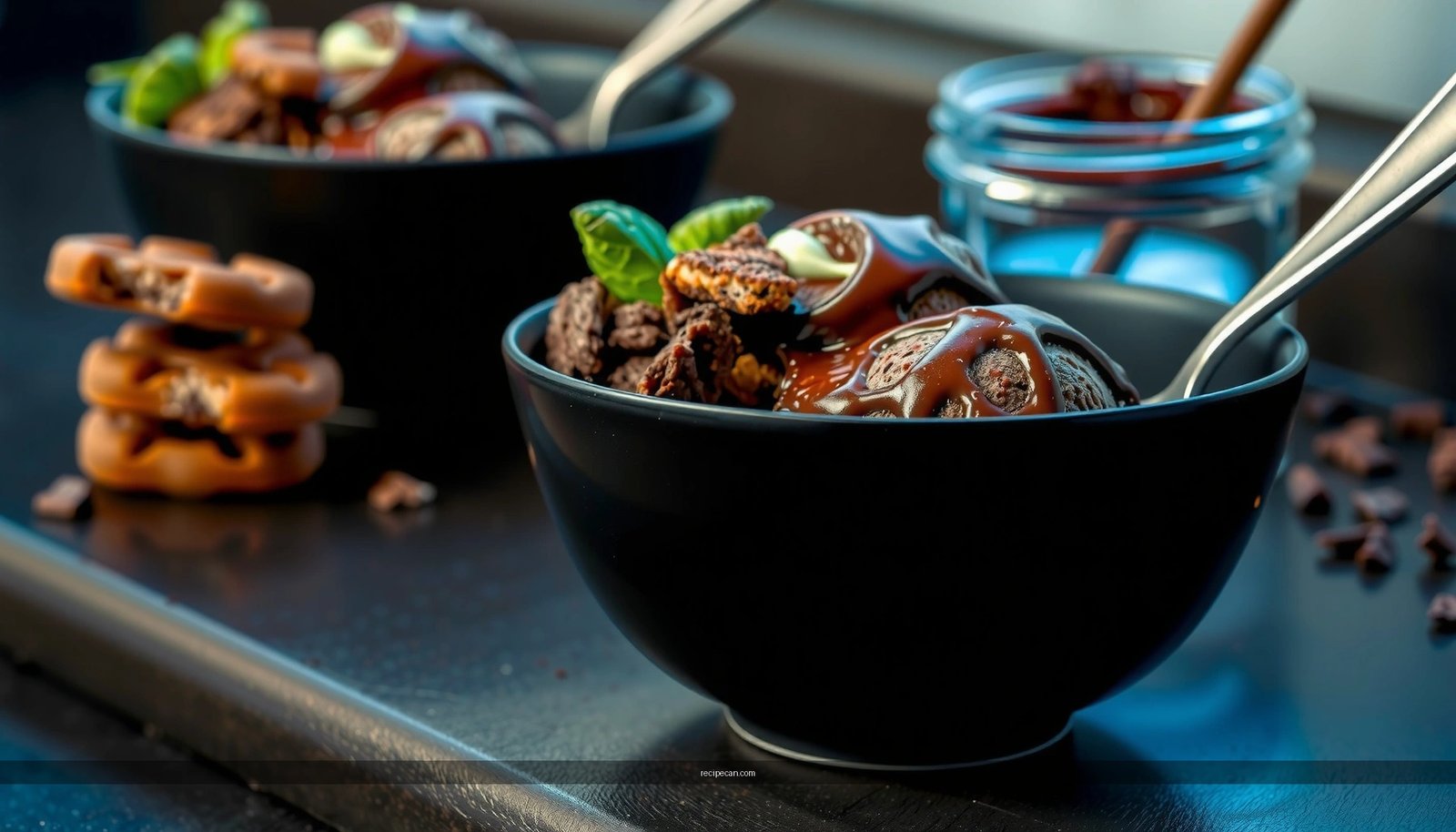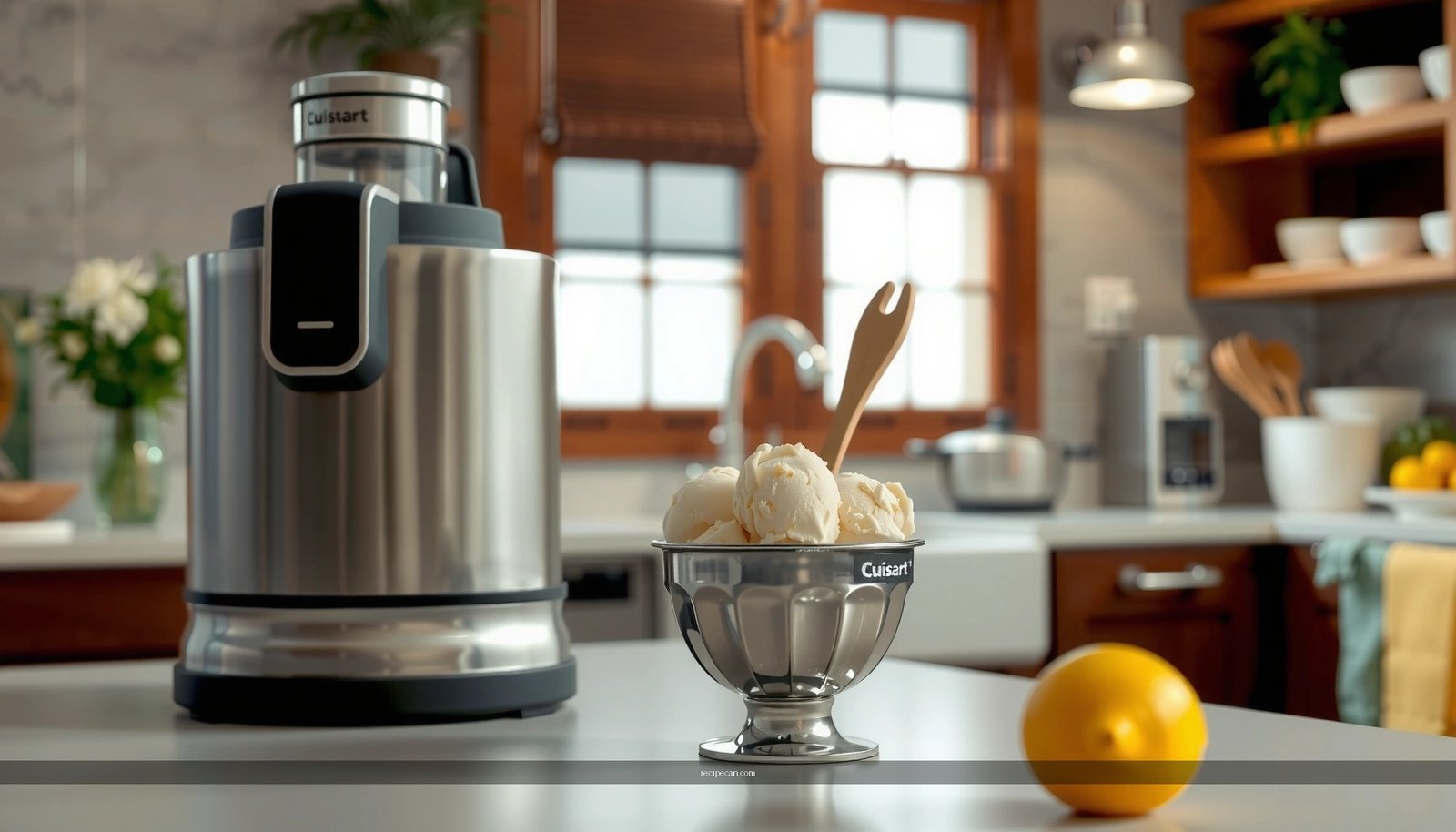
Want a cookies and cream ice cream recipe made for your Cuisinart that turns out creamy, scoopable, and packed with real cookie crunch? This guide gives you the exact Cuisinart method, from mixing the base to timing the churning so the cookies stay crisp instead of soggy. If you want the quickest path to a true “cookies-and-cream” finish in your machine, this is the one to follow.
Make smooth, scoopable cookies and cream ice cream in your Cuisinart by chilling the base first, then churning to a soft-serve stage, and finally folding in crushed cookies at the right time so they stay suspended and don’t turn gummy. This guide walks through the exact timing and settings approach that consistently yields a creamy texture with evenly distributed cookie pieces—plus storage and troubleshooting tips you can apply to any Cuisinart ice cream model.
Cuisinart-Ready Ingredients

A great cookies and cream ice cream starts with a base that churns efficiently and a cookie mix that behaves the way you want in frozen dairy. Think of the ingredients in two buckets: (1) the custard-like base (or “ice cream base”) and (2) the cookie component.
For the classic Cuisinart base (creamy, stable, and churn-friendly):
– Heavy cream: Provides body and slows iciness during freezing.
– Milk: Lightens the mixture while still supporting a smooth mouthfeel.
– Sugar: Sweetens and helps lower the freezing point so the final product stays soft rather than brittle.
– Vanilla (optional): Rounds out dairy flavors and complements chocolate-cookie notes.
For the cookies (the signature feature):
– Cookies: Use Oreos or a similar chocolate sandwich cookie.
– Crushed size control: Your cookie size determines whether pieces stay crisp and distinct or melt into a uniform chocolate “marble.”
– Smaller crumbs distribute more evenly but can soften faster.
– Chunkier pieces create a more “bakery-style” bite, but you must fold at the right time to prevent sinking.
Cookies & Cream Cookie Size: Expected Behavior in Cuisinart Ice Cream
| # | Cookie Preparation | Typical Piece Size | Chill Time Impact | Final Texture | Best For |
|---|---|---|---|---|---|
| 1 | Ultra-crumb (pulse briefly) | ~1–2 mm | Minimal | Slightly softer | ★ ★ ★ ★ ☆ |
| 2 | Fine crumb (short pulse) | ~3–4 mm | Low | Creamy “marbling” | ★ ★ ★ ★ ★ |
| 3 | Chopped bits (crush by hand) | ~5–8 mm | Moderate | Distinct bites | ★ ★ ★ ★ ★ |
| 4 | Chunky pieces (reserve chunks) | ~9–15 mm | Higher | Great crunch, risk of sinking if late | ★ ★ ★ ★ ☆ |
| 5 | Chocolate filling removed (optional) | ~5–10 mm shell | Lower | Cleaner cookie bite | ★ ★ ★ ★ ☆ |
| 6 | Cookie crumbs + reserved topping | ~3–8 mm + <1 mm dust | Low | Consistent distribution + visual contrast | ★ ★ ★ ★ ★ |
| 7 | Crumbs added too early (common error) | Any size | High | Sinking + softer texture | ★ ★ ☆ ☆ ☆ |
Mix and Chill the Ice Cream Base

Your Cuisinart cookies and cream outcome is heavily determined before churning. The base should be fully dissolved, then thoroughly chilled, because the machine performs best when the mixture starts cold.
Step-by-step mixing approach
1. Combine dairy and sugar: Mix cream + milk + sugar in a saucepan or heat-safe bowl.
2. Dissolve sugar completely: Warm gently just enough to help sugar dissolve—then keep stirring until no graininess remains.
3. Add vanilla (optional): Once the sugar is dissolved, stir in vanilla and remove from heat.
Why dissolution matters
– Undissolved sugar can form icy, grainy crystals.
– A smooth base churns more uniformly, which translates into a creamier finished texture.
Chilling: the non-negotiable step
– Transfer the base to a covered container.
– Chill at least 4 hours, ideally overnight in the refrigerator.
– The goal is to start the churn with a noticeably cold mixture so the refrigerant system in your Cuisinart reaches target consistency efficiently.
Practical benchmark: If the base is still lukewarm when you pour it into the Cuisinart, expect slower thickening and a higher risk of icy texture.
Churn in Your Cuisinart
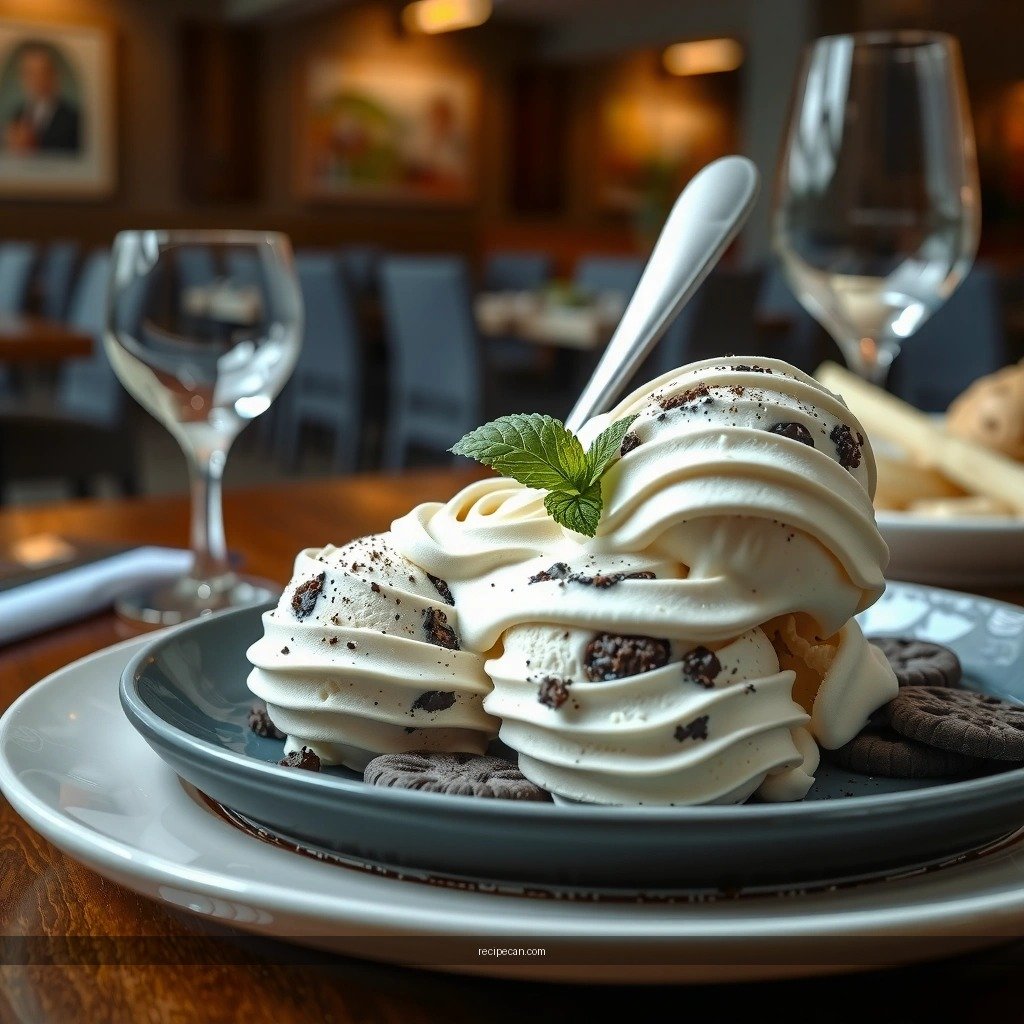
Once the base is chilled, you’re ready to churn. The technical principle here is timing: you want the base to thicken enough to trap air and begin forming a creamy emulsion, but not so long that your cookie fold-in stage becomes difficult.
Churning method
1. Pour chilled base into the Cuisinart ice cream canister.
2. Churn according to your machine’s cycle while monitoring consistency rather than relying only on minutes.
3. Stop at soft-serve consistency—thick, spoonable, and smooth, but not fully frozen.
How soft-serve should look/feel
– The mixture should hold lines for a few seconds on a spoon.
– It should not be stiff or crumbly.
– At this point, the emulsion is stable enough that cookie pieces can suspend evenly once folded.
Why not churn to hard-frozen
If you take it too far, the remaining warmth needed for smooth folding disappears, and cookie pieces are more likely to sink or clump. Stopping at soft-serve creates the best “carrier” texture for cookie distribution.
Fold in Cookies at the Right Time
This is the defining step for premium cookies and cream. If you add cookies too early, they can absorb moisture and soften excessively—or sink into the densest part of the base.
When to fold
– Fold in near the end of the churning process, typically when the ice cream is at soft-serve stage.
– If your Cuisinart model allows intermittent stops, pause briefly, add cookies, and resume for only a short time—just enough to distribute.
How to fold without breaking the texture
– Add crushed cookies in two portions:
1. Most of the crumbs/bits for even distribution.
2. A reserved portion for topping or quick re-fold if needed.
Then gently mix (or use a low-speed fold) until the cookies are incorporated, avoiding overmixing that can break the delicate emulsion.
Cookie sinking prevention
– Cookie pieces are heavier than the dairy phase. Soft-serve thickness gives them enough “suspension” so they stay spread rather than pooling at the bottom.
– Your earlier choice of cookie size (fine crumbs vs. chunks) determines whether you should reserve more topping.
Achieve the Best Texture
After churning, cookies and cream ice cream can go in two directions: creamy and scoopable, or frozen-icy and slightly harsh. The difference is controlled freezing and minimal handling.
Recommended finishing approach
– Transfer to an airtight container.
– Freeze briefly—often 1 to 2 hours—to firm up without completely hardening.
– For best spoonability, serve after a short rest at freezer temperature where it becomes scoop-friendly.
Staying away from ice crystals
– Press parchment or plastic wrap directly onto the surface before sealing airtight (optional but effective).
– Keep the freezer temperature stable (avoid frequent door opening for the first few hours).
Adjusting consistency
– If your batch firms too much, let it sit at room temperature for 5–10 minutes, then stir.
– If it seems too soft (undercarbonated or under-chilled base), you can re-freeze for another hour and re-check.
Professional-quality signal: When you scoop, the surface should look matte and creamy, not translucent with sharp ice flecks.
Storage and Serving Tips
Cookies and cream is best the day it’s made—but with proper storage, you can keep quality for days. Storage also affects cookie crunch: over time, cookie pieces naturally absorb moisture.
Storage best practices
– Use an airtight container to reduce freezer air exposure (which speeds ice crystal formation).
– Keep toppings separate if you want maximum crunch—reserve a portion of cookie crumbs for serving day.
Serving guidance
– For the creamiest experience, let the ice cream soften slightly before scooping.
– Serve with an extra sprinkle of cookie crumbs for visual contrast and a fresh crunch hit.
Quality window
– Expect best texture in the first 3–5 days for most home batches.
– After that, cookie integrity may decline, though flavor remains strong.
Conclusion
Chill the base thoroughly, churn your Cuisinart to a **soft-serve** consistency, and **fold in crushed cookies at the right time** to keep pieces suspended and maintain a creamy, even texture. Control cookie size, use airtight storage to minimize ice crystals, and serve slightly softened for the creamiest cookies and cream result. If you want to dial it in further, make a small batch first, adjust cookie size (crumbs vs. chunks), and then scale up with confidence.Frequently Asked Questions
What are the best ingredients for a cookies and cream ice cream recipe using a Cuisinart ice cream maker?
Use a full-fat dairy base—heavy cream plus whole milk—for a rich cookies and cream texture, and add sweetened condensed milk or sugar to balance the flavor. For the cookies, choose Oreo-style cookies (regular, not double-stuffed) so the cookies and cream ice cream recipe has a classic crunch-to-cream ratio. Add vanilla extract and a pinch of salt to enhance the chocolate-and-vanilla profile. If your Cuisinart model has a large bowl, keep ingredients well-chilled so the churn starts fast and stays consistent.
How do I make a cookies and cream ice cream recipe in a Cuisinart with no ice crystals?
Chill your custard base thoroughly before pouring into the Cuisinart—ideally overnight—because starting cold improves freezing and reduces ice crystal formation. Avoid overmixing after adding cookies, and fold cookie pieces in during the final minutes of churning so they don’t get too powdery. Using finely chopped cookies and a balanced sweetness level also helps keep the texture smooth. Finally, freeze the finished ice cream in an airtight container and press parchment directly onto the surface to limit air exposure.
Which Cuisinart ice cream maker settings or steps work best for cookies and cream ice cream?
Most Cuisinart ice cream makers run by time (often around 20–30 minutes), and the key is to stop when the mixture reaches a soft-serve consistency. Pre-freeze the Cuisinart bowl completely according to your model’s instructions, then churn the base until thickened before adding cookies and cream components. Add cookie bits only after the base has thickened so they distribute evenly without turning the mixture into chocolate milk. If your machine has a “freeze” or “process” stage, follow it exactly and don’t pause mid-churn for long periods.
Why does my cookies and cream ice cream taste icy or too soft after freezing in a Cuisinart?
Icy or overly soft results usually come from a base that wasn’t chilled long enough, not churning to the correct thickness, or not freezing quickly after churning. Too much cookie liquid (or adding cookies too early) can interfere with proper set, so fold cookie pieces in at the end for better structure. Make sure you’re using enough fat from heavy cream and not substituting low-fat dairy, since fat helps the ice cream hold a creamy texture. Let the ice cream harden for several hours before serving for the best scoopable consistency.
What’s the best way to add Oreos or cookie chunks to a Cuisinart cookies and cream ice cream recipe?
Crush some cookies into small pieces and keep a portion as larger chunks so you get both creamy speckling and satisfying bites in your cookies and cream ice cream recipe. For even distribution, fold cookie pieces in during the last 2–5 minutes of churning, when the base is thick enough to suspend them. If you want a more intense cookies-and-cream flavor, you can blend a small amount of cookies into the base before churning, but be cautious not to add too much cookie dust. Using a mix of textures helps create that classic “cookies in every spoon” experience from a Cuisinart ice cream maker.
References
- Google Scholar Google Scholar
https://scholar.google.com/scholar?q=cookies+and+cream+ice+cream+recipe - Google Scholar Google Scholar
https://scholar.google.com/scholar?q=cuisinart+ice+cream+maker+recipe+cookies+and+cream - Google Scholar Google Scholar
https://scholar.google.com/scholar?q=ice+cream+emulsion+stabilizers+review - Cookies and cream
https://en.wikipedia.org/wiki/Cookies_and_cream - Ice cream
https://en.wikipedia.org/wiki/Ice_cream - Cookie
https://en.wikipedia.org/wiki/Cookie - Ice cream | Definition, History, & Production | Britannica
https://www.britannica.com/topic/ice-cream - https://www.fda.gov/food/buy-store-serve-safe-food/what-you-need-know-about-safe-handling-eggs
https://www.fda.gov/food/buy-store-serve-safe-food/what-you-need-know-about-safe-handling-eggs - https://pubmed.ncbi.nlm.nih.gov/?term=ice+cream+stabilizers+emulsion
https://pubmed.ncbi.nlm.nih.gov/?term=ice+cream+stabilizers+emulsion - https://www.sciencedirect.com/search?qs=ice+cream+stabilizers+emulsion
https://www.sciencedirect.com/search?qs=ice+cream+stabilizers+emulsion