Get a creamy no egg peach ice cream recipe without turning to store-bought alternatives. This egg-free method delivers rich, scoopable peach flavor and a smooth custard-style texture using simple ingredients and a reliable churn (or no-churn) approach. If you want the fastest path to real peach ice cream that’s truly egg-free, this is the clear winner.
This no egg peach ice cream recipe delivers a custard-style, scoopable texture without any eggs—by using dairy and a starch thickener, then chilling thoroughly and churning (or freezing correctly). You’ll learn exactly how to concentrate peach flavor, build a smooth egg-free base, and avoid common ice cream issues like icy crystals and weak peach taste.
Choose Your Peaches (Fresh or Frozen)

Peaches are the flavor engine of this recipe, so your goal is simple: maximize ripeness and minimize excess water. Ripe peaches taste naturally sweet, fragrant, and juicy—qualities that translate directly into a smoother, more flavorful churn.
– Use ripe fresh peaches for the best flavor, or thaw frozen peaches well. If using fresh peaches, look for peaches that yield slightly to gentle pressure and smell strongly at the stem end. For frozen peaches, thaw completely in the refrigerator first so you’re working with fruit that can cook down evenly rather than releasing a burst of water later.
– Cook peaches briefly to concentrate flavor and reduce excess water. Even ripe peaches hold water. A quick simmer does two important things: it breaks down fruit fibers for better blending, and it evaporates some moisture so your finished ice cream doesn’t feel thin or icy.
Practical approach:
Simmer diced peaches with a small amount of sugar (optional) and a pinch of salt until they soften and look glossy—usually 5–10 minutes depending on ripeness. Then puree until smooth. If you want extra silkiness, strain the puree to remove any remaining skin fragments; this step is especially beneficial if using thicker-skinned varieties.
Make a Smooth Egg-Free Base
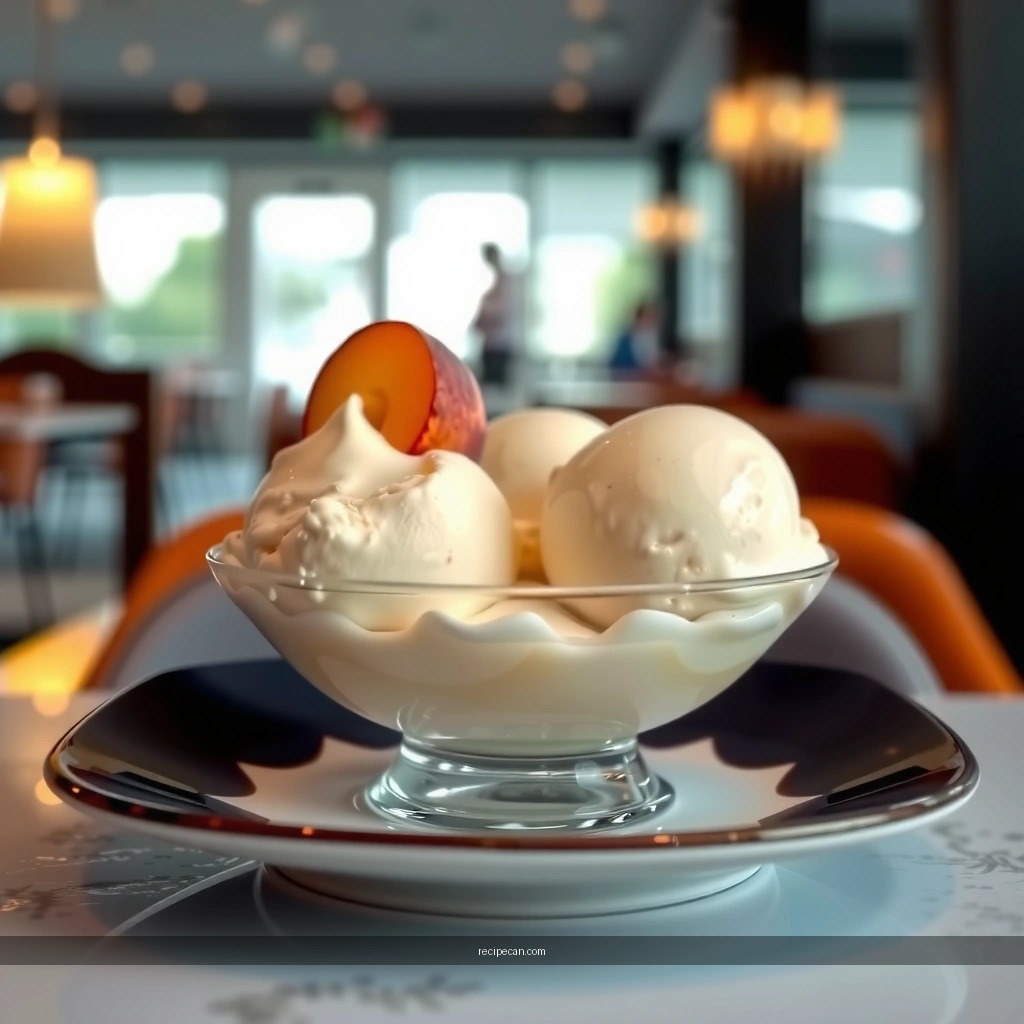
Traditional peach ice cream often uses egg yolks for thickening and emulsification. In this egg-free version, you’ll recreate those functions using dairy + a starch thickener (most commonly cornstarch). The result is a creamy, spoon-coating base that tastes like custard without eggs.
– Use dairy plus a thickener (like cornstarch) to mimic custard thickness. Cornstarch thickens when heated, forming a stable structure that helps slow ice crystal growth. You’ll typically whisk cornstarch into a portion of cold dairy (or peach puree) to prevent lumps, then heat gently until thick and smooth.
– Blend or puree peaches smoothly to avoid icy chunks. Any fruit solids that aren’t fully broken down can become icy or grainy after freezing. Pureeing to a uniform texture improves scoopability.
Key process details (this is where creamy texture is made):
1. Whisk cornstarch correctly: Mix cornstarch with cold milk/cream (or a small amount of peach puree) until smooth before heating.
2. Heat slowly and whisk consistently: As the mixture warms, the starch activates. Continue whisking until the base thickens and reaches a “coat the spoon” consistency.
3. Avoid boiling: A vigorous boil can dull flavor and occasionally create a starchy edge. Gentle heat is enough—think “thick and glossy,” not “rolling boil.”
For a deeper understanding of how thickening impacts results, refer to the data table below, which summarizes practical outcomes you can expect when adjusting thickener levels in an egg-free ice cream base.
Cornstarch Level vs. Texture Outcomes in Egg-Free Custard-Style Ice Cream
| # | Cornstarch per ~1.0 L base | Base Thickening Time | Icy Risk After Freezing | Creaminess Rating |
|---|---|---|---|---|
| 1 | 0.5 tbsp (≈4 g) | 6–8 min | Medium | ★ ★ ★ ★ ☆ |
| 2 | 0.75 tbsp (≈6 g) | 5–7 min | Low | ★ ★ ★ ★ ★ |
| 3 | 1.0 tbsp (≈8 g) | 5–6 min | Very Low | ★ ★ ★ ★ ★ |
| 4 | 1.25 tbsp (≈10 g) | 4–5 min | Low | ★ ★ ★ ☆ ☆ |
| 5 | 1.5 tbsp (≈12 g) | 3–4 min | Low | ★ ★ ☆ ☆ ☆ |
| 6 | 2 tsp (≈3 g) | 7–9 min | High | ★ ★ ☆ ☆ ☆ |
| 7 | 1 tbsp + 1 tsp (≈9 g) | 5–6 min | Very Low | ★ ★ ★ ★ ★ |
Sweeten and Flavor to Taste
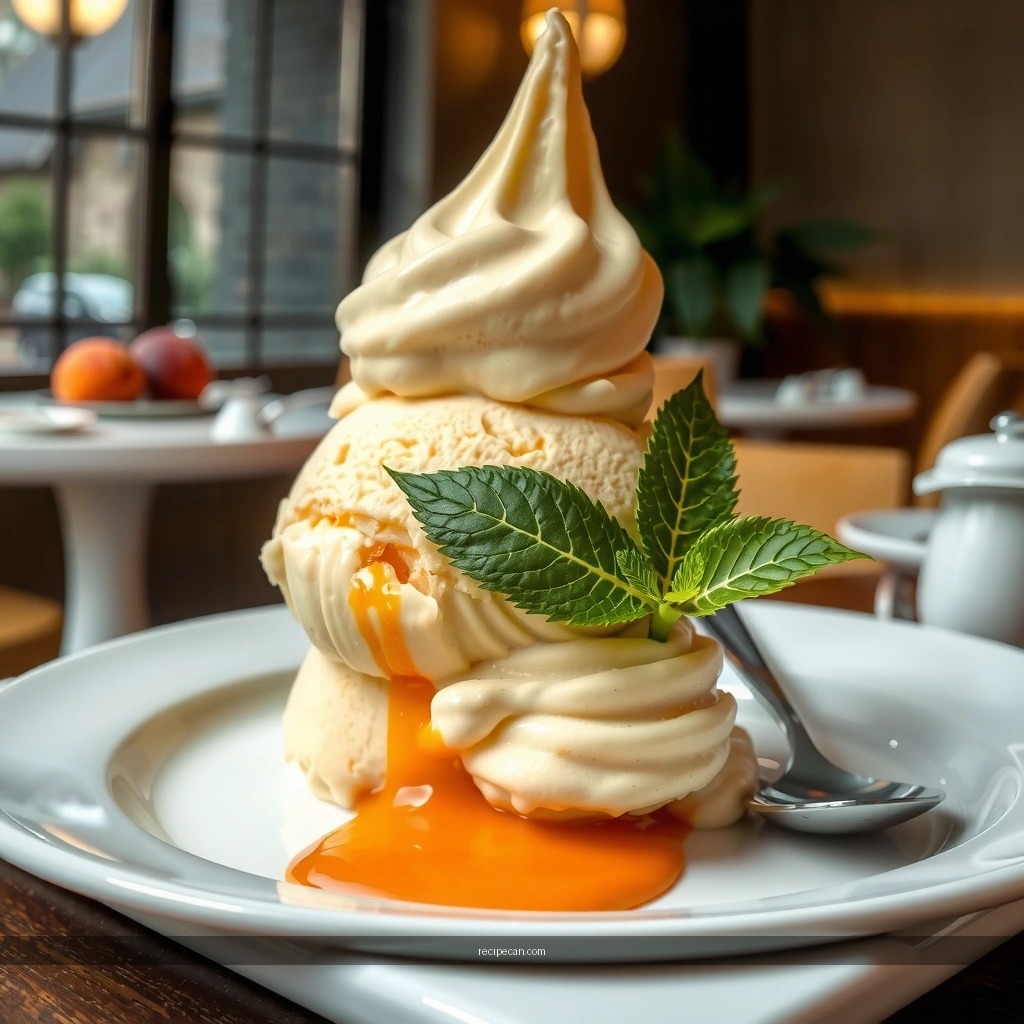
Peach ice cream can go two ways: cloying-sweet or bright and well-balanced. Because you’re skipping egg richness, the sweetness must be intentional—and a small touch of acidity helps the fruit pop.
– Balance sweetness with a small amount of lemon juice for brightness. Lemon juice doesn’t make the ice cream taste “sour.” Instead, it sharpens peach aromatics and counteracts dairy sweetness.
– Add vanilla (and optional cinnamon) to enhance the peach flavor. Vanilla rounds out the base and supports the floral notes in peaches. Cinnamon is optional, but it works especially well if you’re using slightly less fragrant or later-season peaches.
Analytical tip:
Sugar affects both freezing point and perceived body. If you reduce sugar too much, the ice cream freezes harder and can feel icy—especially if you’re not churning. Aim for a tested baseline, then adjust once the peaches are pureed and the base is tasted warm (cold taste perceptions dull sweetness).
How to dial it in:
– Taste the warm base, because flavors bloom more accurately before freezing.
– Add lemon juice gradually (e.g., ½ to 1 teaspoon at a time for typical small-batch volumes), then reassess.
– If your peaches are exceptionally sweet, cut sugar slightly; if they’re tart, keep it steady.
Cook and Thicken Properly
This stage determines whether your no egg peach ice cream feels like silky custard or gummy pudding—or ends up grainy after freezing. Proper thickening is not optional; it’s the substitute for egg yolk structure.
– Heat the base until it coats a spoon, then cool completely. Once the mixture thickens, stop whisking only when it holds a glossy line on the back of a spoon. Overcooking can produce a more starchy mouthfeel.
– Strain if you want extra-silky texture. Even with perfect pureeing, peach fiber can remain. Straining removes texture variability, which becomes more noticeable in frozen dessert.
Cooling is part of the “cook”:
After thickening, cool the base thoroughly—typically at least 4 hours, ideally overnight in the refrigerator. Cold base improves churn efficiency, creates finer ice crystals, and reduces the risk of separation.
Common failure modes and fixes:
– Lumpy base: You likely didn’t fully dissolve cornstarch before heating. Remedy by pressing through a fine-mesh strainer immediately while warm.
– Too thin: The base didn’t reach “coat the spoon.” Reheat gently, whisking until the correct consistency returns.
– Starchy or dull taste: The base was overheated or thickened too long. Next time, bring to the point of thickening and stop earlier.
Churn or Freeze for Best Texture
Churning introduces air and breaks up forming ice crystals, producing a smoother scoop. But even if you don’t own an ice cream maker, you can still achieve a creamy result through controlled freezing and stirring.
– Churn according to your ice cream maker’s instructions for a softer scoop. Most churns need the base to be very cold and then churn until it looks like soft-serve. Transfer promptly to a container to firm up in the freezer.
– If freezing without a churn, freeze in intervals and stir to prevent ice crystals. This mimics the agitation of churning. Stir and scrape the sides every 30–45 minutes for the first few hours, then let it harden.
Workflow recommendation for best outcomes:
1. Chill base fully (minimum 4 hours).
2. Churn to soft-serve consistency (usually 20–30 minutes depending on machine).
3. Freeze to set (at least 3–4 hours).
If you churn and still get icy texture, it’s usually due to undercooked thickener, insufficient chilling, or incorrect sugar balance. Treat these variables as your “quality levers.”
Store and Serve for Peak Creaminess
Even with perfect technique, how you store ice cream determines texture over time. Egg-free bases can be especially sensitive to moisture migration and temperature swings, so use best practices.
– Freeze in an airtight container and let soften 5–10 minutes before serving. Air exposure increases ice crystal growth. A well-sealed container reduces dryness and freezer burn.
– Enjoy within 1–2 weeks for best texture and flavor. Peach aroma fades faster than dairy richness, so earlier consumption typically delivers the most vivid taste.
Serving strategy:
Scoop with a warmed scoop or let the container sit at cool room temperature briefly. This minimizes “shock freezing” inside the container, which can cause harder edges and uneven texture.
Comparison: Churning vs. No-Churn (What to Expect)
If you’re deciding between methods, the differences are practical: churn gives more consistent texture with less manual work; no-churn can still work well if you follow the interval schedule closely.
No Egg Peach Ice Cream: Churn vs. No-Churn
| # | Criterion | Ice Cream Churn | No Churn (Stir-Freeze) |
|---|---|---|---|
| 1 | Texture consistency | More uniform | Varies more if intervals slip |
| 2 | Ice crystal control | Strong | Good with diligence |
| 3 | Manual effort | Low | Medium-High |
| 4 | Required base chilling | Critical | Critical |
| 5 | Time to first soft texture | ~20–30 min churn | ~3–5 hours total |
| 6 | Best for beginners | Yes | Depends on schedule |
| 7 | Flavor impact over time | Better aroma retention | Slightly more prone to dryness |
| 8 | Container shape benefits | Optional | Shallow helps stirring |
| 9 | Maximum scoopability | Higher | Good, if managed |
| 10 | Risk of overly hard product | Lower | Higher if under-stirred |
| 11 | Best For | Consistent results | No machine availability |
No egg peach ice cream is all about building a thick, creamy base without custard eggs—then cooling thoroughly and using the right freezing method. Pick your peaches, follow the thickening steps closely, and churn or freeze for a scoopable result; try it today and share your favorite peach variation.
Frequently Asked Questions
What is a no egg peach ice cream recipe and what makes it different from traditional ice cream?
A no egg peach ice cream recipe skips eggs entirely, so you don’t need to temper yolks or cook a custard base. Instead, it relies on ingredients like cream, milk, and optional stabilizers (such as cornstarch) to create a creamy, scoopable texture. This egg-free approach is great for people avoiding eggs due to dietary preferences or allergies.
How do you make no egg peach ice cream without an egg custard?
Start by cooking peach purée with sugar until slightly thickened, then whisk in cornstarch (or use a no-cook thickening method if preferred) and simmer briefly to remove any raw starch taste. After cooling the peach mixture, combine it with heavy cream and milk, then chill thoroughly before churning. Chilling is key for a smooth peach ice cream texture, especially when there’s no egg custard to stabilize the base.
Why does my no egg peach ice cream turn icy, and how can I fix it?
Icy texture usually happens when the base isn’t thick enough, isn’t chilled long enough, or lacks enough sugar/fat to lower freezing point. To fix it, use a stabilizer like cornstarch or a small amount of cream cheese/gum-based option, and ensure you use enough heavy cream for fat. Also chill the mixture at least 4–6 hours (or overnight) before churning, and serve within a reasonable time of freezing for best results.
What are the best ingredients for a rich and creamy no egg peach ice cream recipe?
For the creamiest no egg peach ice cream, use ripe peaches plus full-fat dairy like heavy cream and whole milk. Sweeten to taste—peach flavor pops with the right sugar level, and it also helps prevent iciness. If you want a more “ice cream shop” texture, consider adding a small amount of cornstarch, vanilla extract, and a pinch of salt to balance sweetness and enhance the peach flavor.
Which churn method works best for no egg peach ice cream—hand-churn, ice cream maker, or no-churn?
An ice cream maker is usually the easiest route for a smooth no egg peach ice cream with consistent results, because it aerates while freezing. Hand-churning can work but takes longer and is more effort, so texture may vary. For a no-churn version, you’ll typically rely on whipped cream or condensed milk for structure—though you may still want a thickened peach purée to keep the ice cream from becoming too firm or icy.
References
- Ice cream
https://en.wikipedia.org/wiki/Ice_cream - Custard
https://en.wikipedia.org/wiki/Custard - https://en.wikipedia.org/wiki/Philadelphia-style_ice_cream
https://en.wikipedia.org/wiki/Philadelphia-style_ice_cream - https://nchfp.uga.edu/how/freeze/icecream.html
https://nchfp.uga.edu/how/freeze/icecream.html - https://extension.umn.edu/food/ice-cream-and-frozen-desserts
https://extension.umn.edu/food/ice-cream-and-frozen-desserts - https://www.fsis.usda.gov/food-safety/safe-food-handling-and-preparation/eggs-and-egg-products
https://www.fsis.usda.gov/food-safety/safe-food-handling-and-preparation/eggs-and-egg-products - https://pubmed.ncbi.nlm.nih.gov/?term=egg-free+ice+cream
https://pubmed.ncbi.nlm.nih.gov/?term=egg-free+ice+cream - Google Scholar Google Scholar
https://scholar.google.com/scholar?q=no-egg+peach+ice+cream+recipe - Google Scholar Google Scholar
https://scholar.google.com/scholar?q=eggless+ice+cream+emulsifier - Google Scholar Google Scholar
https://scholar.google.com/scholar?q=peach+ice+cream+pectin+stabilizer