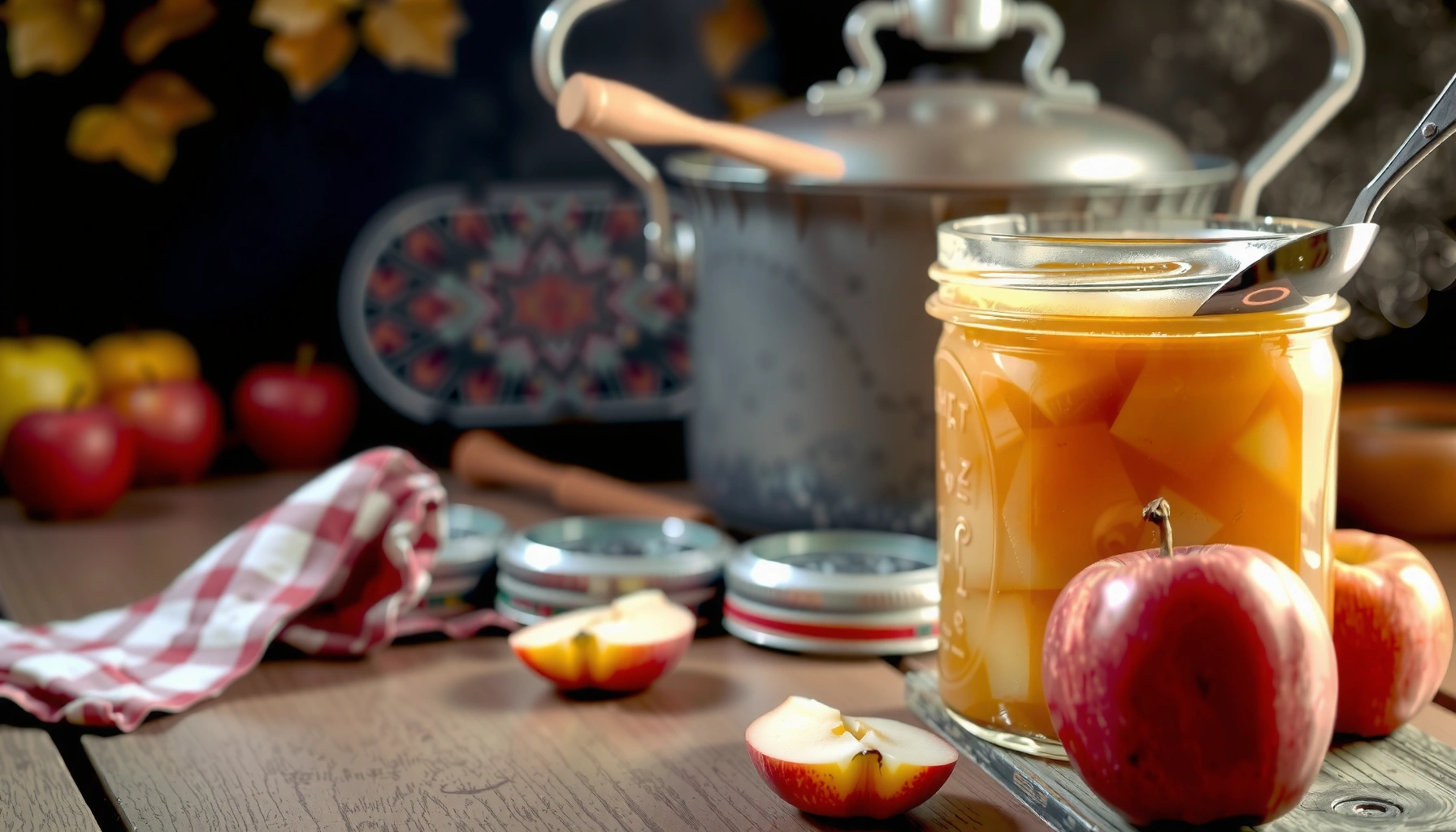
Find an applesauce recipe for canning Ball that you can trust to process safely, step by step. This guide walks you through making the right consistency, filling Ball jars correctly, and using safe canning times so your applesauce is shelf-stable. If your goal is reliable results with Ball jars, this is the clear, correct method to follow.
Yes—you can make safe, shelf-stable applesauce in Ball jars by cooking and blending your apples, then hot-packing and processing using the correct method and time for your jar size and equipment. This applesauce recipe for Canning Ball jars walks you through prep, jar handling, pack quality, and processing steps so you can confidently store homemade applesauce for months while maintaining flavor and texture.
Choose Apples and Prep for Smooth Applesauce
The foundation of great canned applesauce is selecting the right apples and preparing them consistently. For a smoother result (and better canning texture), choose firm apples with a sweet-tart balance—those tend to break down evenly during simmering, without turning mealy.
Recommended apple types (common, widely available choices):
– Honeycrisp: Sweet-tart, holds shape early, then softens well for a thicker sauce.
– Gala or Fuji: Sweet and aromatic; blend with a touch of lemon juice to keep flavor bright.
– Granny Smith: High acidity; ideal if you prefer a tangier applesauce or if your apples are very sweet.
– Jonagold or Braeburn: Balanced flavor that performs well for canning.
Prep matters more than many cooks realize. Even chopping helps the fruit cook uniformly so you don’t end up with a mixture of overcooked puree and under-soft chunks.
Practical prep workflow
1. Wash thoroughly under cool running water to remove wax/residue.
2. Peel (optional but common for canning): Peeling improves texture. If you keep skins on, strain after cooking if you want “classic” smooth applesauce.
3. Core and chop into pieces roughly 1/2-inch to 3/4-inch. Consistent sizing reduces cook time variability.
4. Prevent browning: If you’re prepping in batches, keep cut apples in a bowl with water plus a squeeze of lemon (drain before cooking).
At this stage, decide your target texture: rustic (chunky) versus smooth. Both work for canning; texture simply changes how long you blend and whether you leave some pieces intact.
Cook, Simmer, and Flavor Your Applesauce
Cooking is where safety and quality align. Heat drives down fruit to a soft, mashable state—then the puree becomes stable during processing.
How to cook for canning applesauce
1. Place chopped apples in a large, heavy-bottom stockpot.
2. Add a small amount of liquid to help the initial simmer:
– Use water or apple juice—typically 1/4 cup per 4 pounds of apples is enough to start.
3. Bring to a gentle boil, then reduce to a steady simmer.
4. Cook until tender, stirring every few minutes to prevent sticking at the bottom. For most apple varieties, this takes about 15–25 minutes, depending on chop size and apple firmness.
Flavor balancing (optional, but common)
– Sugar: Many home canners add sugar for consistent flavor. If you’re pressure canning or water-bathing, follow a recipe’s tested guidance for proportions. A typical approach is:
– 1/2 to 3/4 cup sugar per 4 pounds of apples, adjusting to taste and apple sweetness.
– Cinnamon: Add about 1–2 teaspoons per 4 pounds for a gentle warm profile.
– Lemon juice: Use 1–2 tablespoons per batch to brighten flavor and stabilize color.
Blend method
– For smooth applesauce: Blend with an immersion blender directly in the pot.
– For fine-smooth: Use a food mill or press after simmering (great if you want minimal fiber).
– For chunky: Mash with a potato masher and leave small pieces.
Quality check before jar filling
– The apples should look uniformly soft.
– The sauce should coat a spoon and move slowly, not stay watery.
– If it seems thin, simmer a few extra minutes uncovered and stir frequently.
Typical Apple Variety Flavor Targets for Canned Applesauce
| # | Apple variety | Flavor profile | Best for | Sweetness adjustment |
|---|---|---|---|---|
| 1 | Honeycrisp | Sweet–tart | Balanced classic sauce | Use less sugar |
| 2 | Gala | Mildly sweet | Kid-friendly mild applesauce | Consider reducing sugar |
| 3 | Fuji | Very sweet | Dessert-style flavor | Often skip or lower sugar |
| 4 | Granny Smith | Tart, crisp | Tangy applesauce | Sugar helps balance acidity |
| 5 | Jonagold | Sweet with subtle tang | Smooth, aromatic sauce | Moderate sugar works well |
| 6 | Braeburn | Bold, spiced-ready | Cinnamon-forward applesauce | Use sugar lightly if desired |
| 7 | Mixed orchard blend | Complex, variable | Farmstand flavor & variety | Adjust sugar after taste |
Jar Prep for Canning Ball Jars
Safe canning depends as much on jar preparation as it does on the applesauce itself. Improper jars, lids, or handling can cause failed seals—leading to spoilage risk.
Inspect and handle with intention
– Inspect jars: Look for chips, cracks, or hairline defects, especially around the rim where the lid must seat evenly.
– Check lids/seals: Use new lids for each canning cycle. Reused lids may not seal reliably.
– Wash jars in hot, soapy water (or run through a dishwasher cycle if you prefer), then keep them ready for filling.
Keep jars warm
Temperature shock can cause jars to crack when filled with hot applesauce. Keep jars:
– Warm in simmering water (not boiling hard), or
– In a warm oven (around 200°F / 93°C) until ready to fill.
Set up your station
– Use a clean towel for wiping rims.
– Arrange a ladle, jar funnel, headspace measuring tool (optional but helpful), and a non-metallic bubble tool or spatula.
Headspace matters
Most tested applesauce canning approaches call for consistent headspace (commonly around 1/2 inch for many fruit products in standard Ball jar processes). Use the headspace specified by the recipe you’re following and stick to it—headspace affects both sealing and heat penetration.
Fill and Hot-Pack Applesauce Correctly
Hot packing reduces the amount of time jars sit with cool contents, improving process consistency and pack quality.
Hot-pack steps
1. Once applesauce is cooked and blended, keep it hot—a gentle simmer or at least steaming hot—while filling.
2. Fill jars using a jar funnel to minimize rim mess.
3. Leave the required headspace (commonly 1/2 inch for many canning recipes; confirm based on your jar size and your processing instructions).
4. Remove air bubbles: Run a thin utensil along the inside edge of the jar to release trapped bubbles.
5. Re-check headspace after bubbles rise and adjust if needed.
6. Wipe rims with a clean, damp cloth to remove residue that could prevent sealing.
7. Center the lid on the jar and apply the band snugly (not overtightened).
Why hot-pack is important
Even if you process on time, cold spots can interfere with heat penetration. Hot-pack helps ensure the center of the jar reaches target temperatures in the allotted processing window.
Batch efficiency tip
Work in a steady rhythm:
– Fill 4–6 jars, then bubble-check and cap,
– Keep the remaining applesauce hot on the stove,
– Process as soon as jars are sealed.
Process Applesauce in a Water Bath or Pressure Canner
This section is where readers most often get confused. Applesauce is a low-acid food unless tested acidification and recipe instructions are followed. That’s why safe canning depends on using a tested method and correct timing.
Choose the correct canning method
– Use tested water-bath vs. pressure canning guidance based on your exact applesauce recipe (including any added acid such as lemon juice) and your jar size.
– Always follow current Ball / USDA-style tested directions. Methods and times can vary by altitude and jar type.
Best practice for consistency
– If your recipe is tested for water-bath canning with specific lemon juice/sugar amounts, follow it exactly.
– If your recipe requires pressure canning, don’t substitute water-bath processing for “similar” foods.
Processing time and steps
Regardless of method, the core principles stay the same:
– Start counting time when the process reaches the proper rolling boil (water bath) or full pressure (pressure canner).
– Use the recommended venting/wait steps for pressure canning models.
– After processing, allow jars to cool undisturbed:
– Do not force-cool by running cold water over jars.
– For pressure canners, follow safe cooldown steps before opening.
Altitude adjustments
Processing times increase at higher elevations because temperatures drop. If you live above sea level thresholds, check the processing guidance and adjust times accordingly.
Hot-Packed Applesauce Handling Checklist
| ✓ | Step | What to verify | Common issue |
|---|---|---|---|
| 1 | Keep sauce hot | Steam/hot-filled jars | Lukewarm filling |
| 2 | Correct headspace | Matches recipe (often 1/2 inch) | Sealing failures |
| 3 | Bubble removal | No trapped voids | Uneven headspace |
| 4 | Rim cleanliness | Wipe free of residue | Food on rim |
| 5 | Tighten bands snug | Not overtightened | Sealing/venting issues |
Cool, Check Seals, and Store Safely
Processing is only half the work; cooling and storage determine long-term quality and safety.
Cooling protocol
– Remove jars carefully using a jar lifter.
– Place them on a towel or cooling rack, spaced apart.
– Let cool undisturbed for 12–24 hours.
– You should hear the lids “pop” as they seal (but don’t evaluate seal status until fully cooled).
Seal verification
After cooling:
– Press the center of each lid. It should be firm and not flex.
– If a jar didn’t seal properly, refrigerate it and use within a few days—or reprocess using new lids if your process allows and your jars are in good condition.
Label and organize
– Label jars with date, applesauce batch (optional variety blend), and any flavor notes (e.g., “cinnamon + lemon”).
– Store in a cool, dark place such as a pantry or cupboard away from heat sources.
Quality time frame
For best flavor and texture, many home canners aim to use canned applesauce within 12–18 months, though properly processed jars can often remain safe longer when stored correctly. Quality typically declines over time first.
At this point, your canned applesauce is ready to become a dependable staple—whether you’re spooning it into oatmeal, serving it as a side with roast pork, or using it in baking.
Conclusion
A reliable applesauce recipe for Canning Ball jars comes down to three controllable factors: consistent cooking and blending, careful jar and headspace handling, and processing with the correct tested method and timing. Choose quality apples, hot-pack clean-filled jars, follow safe processing guidance for your equipment and altitude, then cool properly, verify seals, and store in a cool, dark location—so your homemade applesauce stays flavorful, sealed, and ready for use throughout the season.
References
- | National Center for Home Food Preservation
https://nchfp.uga.edu/how/can_02/applesauce.html - | National Center for Home Food Preservation
https://nchfp.uga.edu/how/general/water_bath_canning.html - | National Center for Home Food Preservation
https://nchfp.uga.edu/how/can_ning/index.html - https://nchfp.uga.edu/publications/publications_usda.html
https://nchfp.uga.edu/publications/publications_usda.html - https://extension.umn.edu/preserving-and-preparing/canning-fruit
https://extension.umn.edu/preserving-and-preparing/canning-fruit - https://extension.umn.edu/preserving-and-preparing/canning-apples-and-apple-products
https://extension.umn.edu/preserving-and-preparing/canning-apples-and-apple-products - https://fda.gov/food/food-safety-modernization-act-fsma/food-preservation-and-food-safety
https://fda.gov/food/food-safety-modernization-act-fsma/food-preservation-and-food-safety - Google Scholar Google Scholar
https://scholar.google.com/scholar?q=home+canning+applesauce+processing+time - Google Scholar Google Scholar
https://scholar.google.com/scholar?q=applesauce+canning+acidification+guidelines - Google Scholar Google Scholar
https://scholar.google.com/scholar?q=thermal+processing+applesauce+water+bath+canning