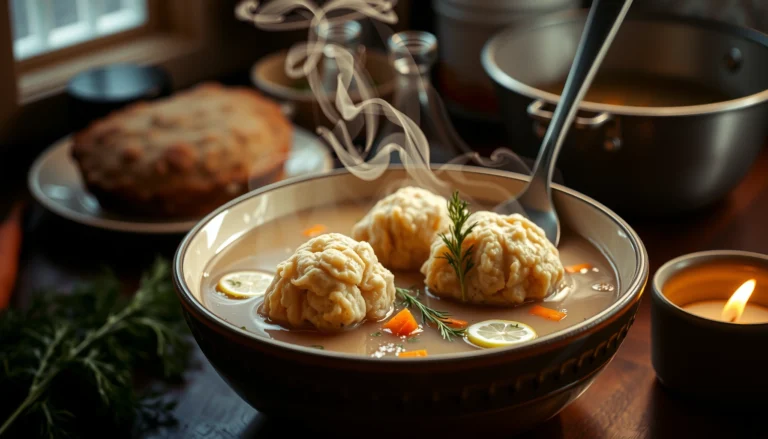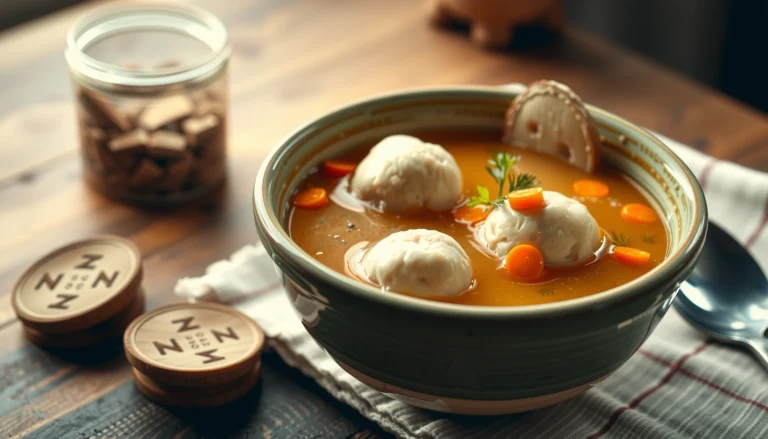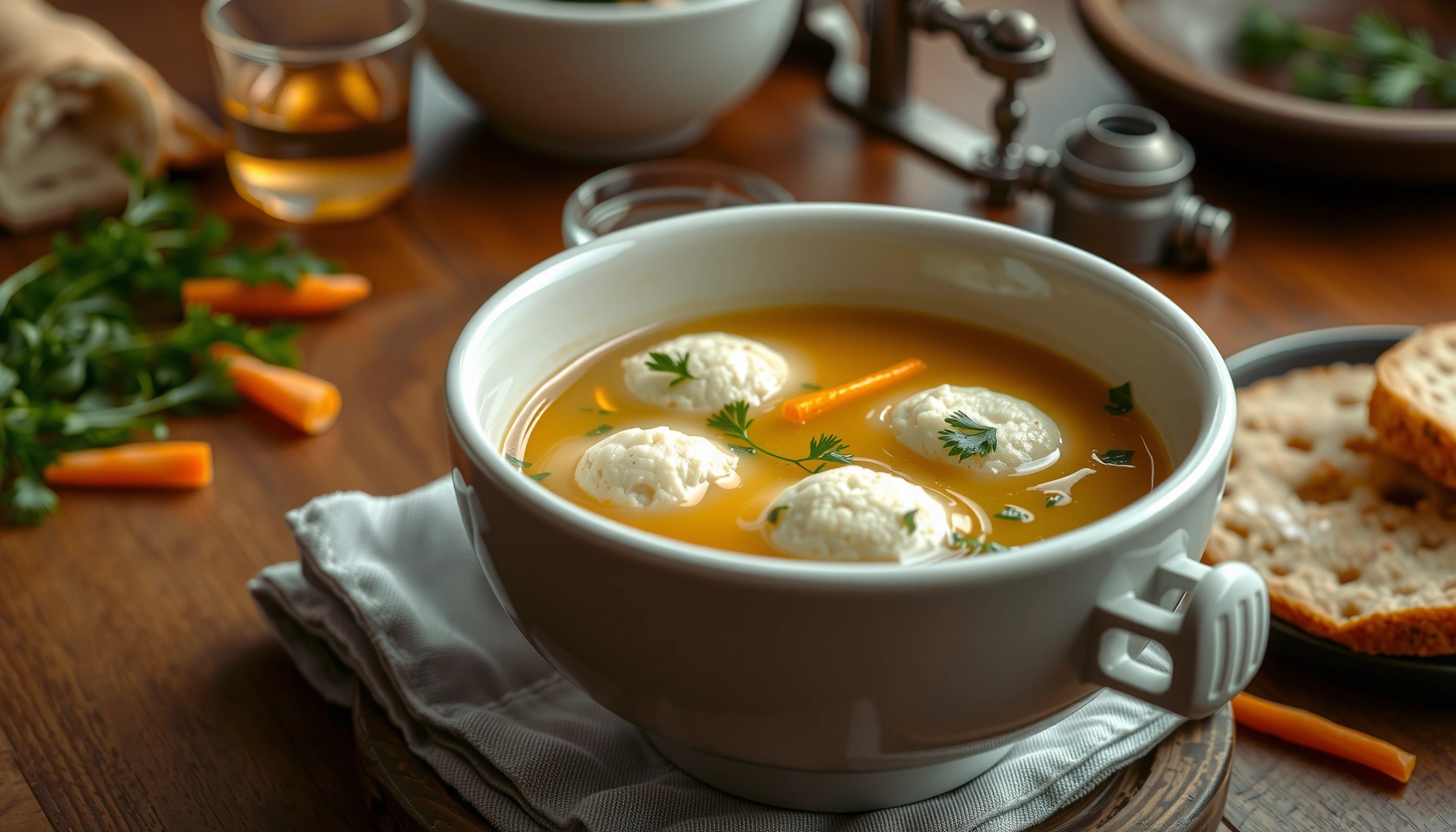
Get a matzah ball soup recipe that delivers fluffy, tender balls and a deeply comforting broth—without guesswork. This winner-style version answers the key question: how to make matzah balls that float up light and stay soft instead of turning dense. You’ll get straightforward steps, the right mix, and simmer timing so every bowl tastes like classic comfort.
This matzah ball soup recipe delivers tender, fluffy matzah balls and a deeply seasoned, comforting broth—using straightforward mixing, brief chilling, and gentle simmering for reliable results. If you follow the batter ratio, resist aggressive boiling, and season the broth in layers, you’ll get a classic bowl fast without the “dense or tough” matzah ball problem.
Ingredients for Matzah Ball Soup
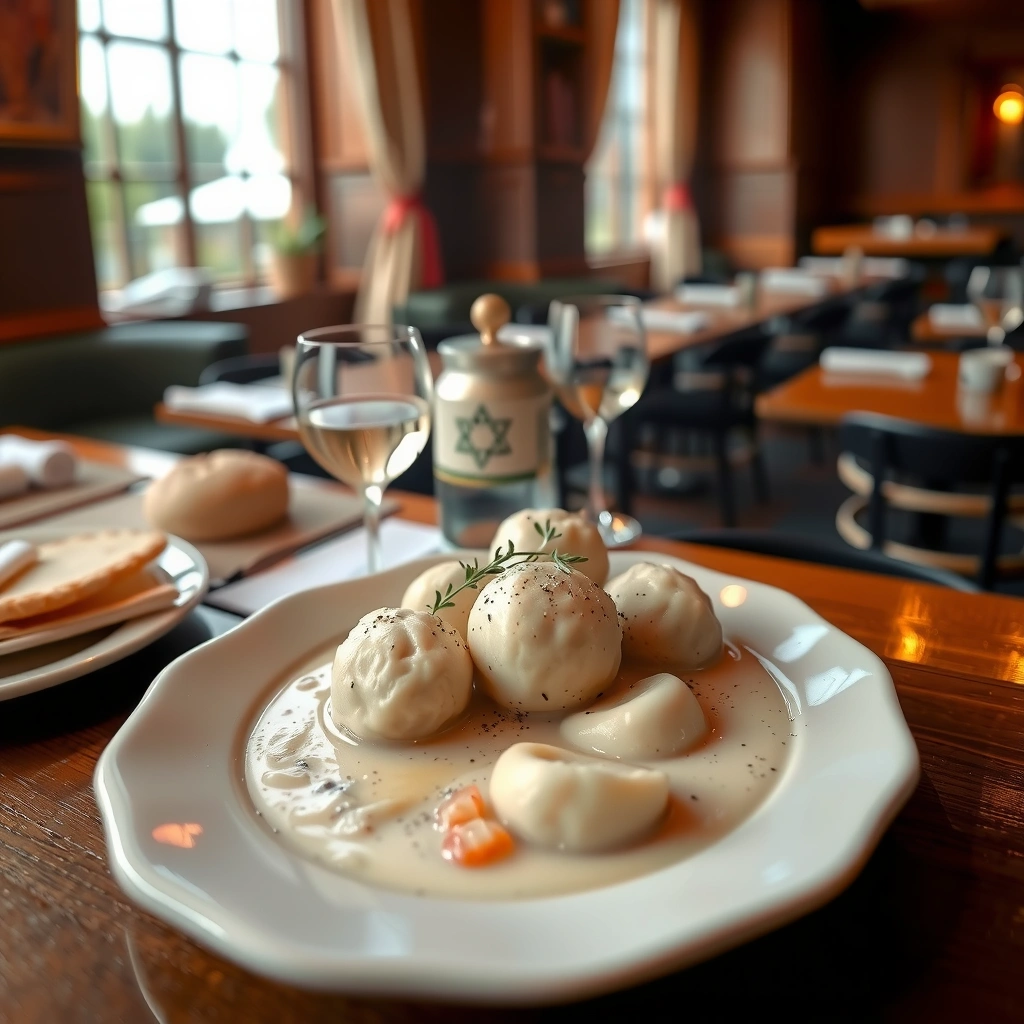
– Gather matzah meal, eggs, chicken broth, and seasonings for the base
– Use fresh herbs (like dill) and quality broth for maximum flavor
To make dependable matzah ball soup, think of the process in two components: the matzah ball batter and the broth. The batter needs enough structure to hold shape, while the broth needs enough seasoning to carry flavor through the cook time.
Core ingredients (matzah balls):
– Matzah meal (fine or standard): forms the bulk of the balls; fine matzah meal typically yields a slightly smoother texture.
– Eggs: the main binder; also contributes to tenderness.
– Fat (commonly chicken schmaltz, or substitute melted chicken fat or neutral oil): improves mouthfeel and helps the balls stay light.
– Kosher salt and black pepper: for internal seasoning.
– Optional but recommended: chopped fresh dill (or dill + parsley), and/or a pinch of garlic powder.
Broth ingredients:
– Chicken broth (low-sodium preferred if you want control): the backbone of the soup.
– Aromatics (optional): diced onion, celery, or carrot can be added to simmer lightly for extra depth.
– Vegetables (optional): carrots and celery are the most common for a comforting, balanced bowl.
– Fresh herbs for finishing: dill or parsley for brightness.
Practical sourcing tip: If you use packaged broth, choose one you’d enjoy drinking warm. Matzah ball soup tastes like your broth—this is not a dish where heavy seasoning can fully “fix” a bland base.
—
How to Make the Matzah Ball Mixture
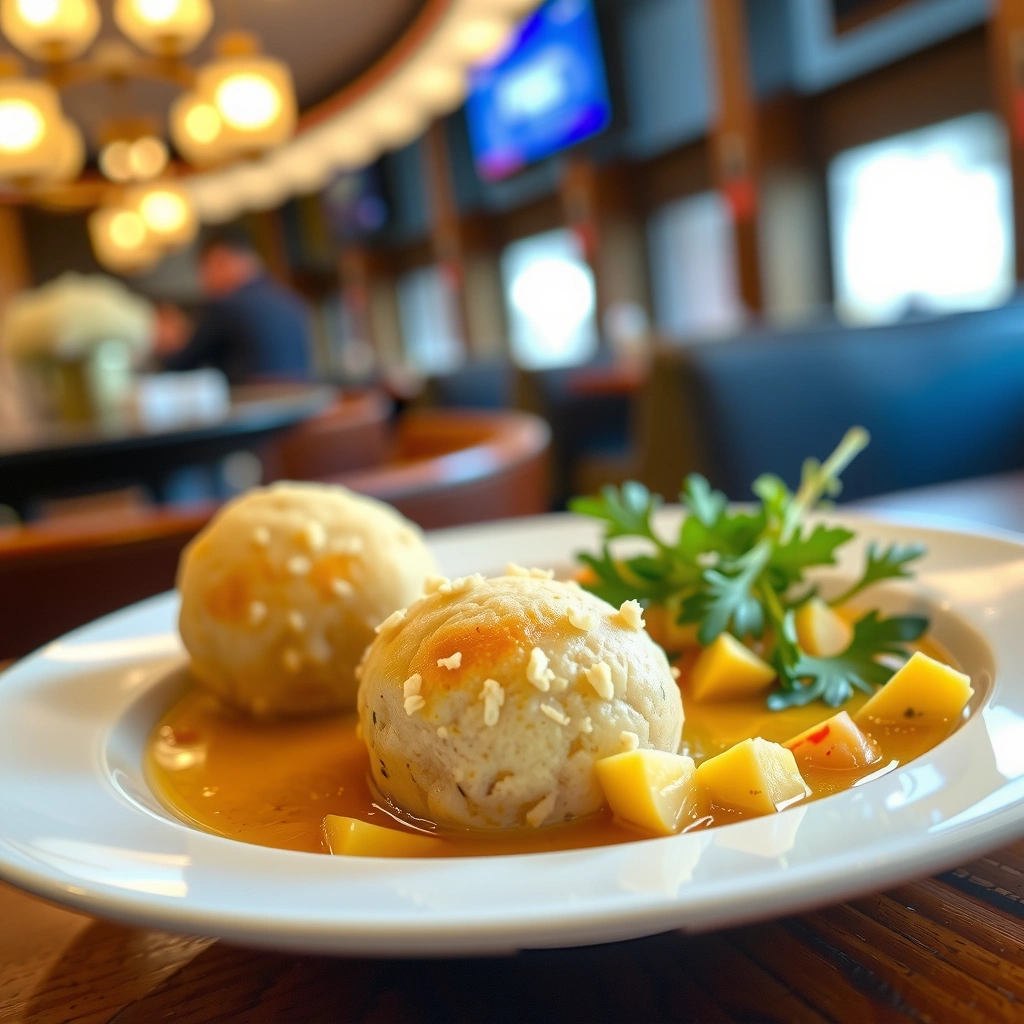
– Mix eggs and fat, then fold in matzah meal and seasonings gently
– Chill the mixture briefly to help the balls hold together
The matzah ball mixture is where many cooks either overwork or under-season. Your goal is uniform hydration and gentle incorporation, not vigorous mixing.
1. Whisk eggs and fat
In a bowl, whisk eggs with melted fat (schmaltz or substitute) until smooth. This creates an emulsion-like mixture that distributes richness evenly.
2. Fold in matzah meal and seasonings
Sprinkle in matzah meal and seasonings (salt, pepper, and optional herbs). Fold gently with a spoon or spatula until no dry pockets remain.
– Overmixing can make balls denser.
– Under-mixing can cause crumbly texture.
3. Chill briefly (recommended)
Cover and refrigerate the batter for 20–60 minutes. Chilling hydrates the matzah meal more evenly and improves cohesion when shaping.
– If you’re short on time, 20 minutes still helps.
– If you want maximum fluffiness, give it closer to an hour.
Practical batter consistency checks
You should be able to scoop the batter and have it hold together, but it should not be so stiff that it feels like raw dough. If it seems dry (matzah meal is absorbing too much liquid), stir in a teaspoon of broth or water—a small adjustment prevents dense results.
—
Matzah Ball Texture Outcomes by Key Variable
| # | Variable | Test Change | Expected Effect | Likelihood (★) |
|---|---|---|---|---|
| 1 | Chilling time | +30 minutes | More cohesive balls | ★★★★☆ |
| 2 | Fat amount | +1 tbsp | Softer mouthfeel | ★★★☆☆ |
| 3 | Matzah meal fineness | Fine grind | Smoother, slightly denser crumb | ★★☆☆☆ |
| 4 | Mixing intensity | Vigorous stirring | Tougher texture | ★★★☆☆ |
| 5 | Broth boil level | Aggressive boil | Breakage + uneven density | ★★★★☆ |
| 6 | Ball size | Larger balls | Longer cook needed | ★★★☆☆ |
| 7 | Herbs inside batter | Add dill | More aromatic every bite | ★★★☆☆ |
—
Cooking the Matzah Balls
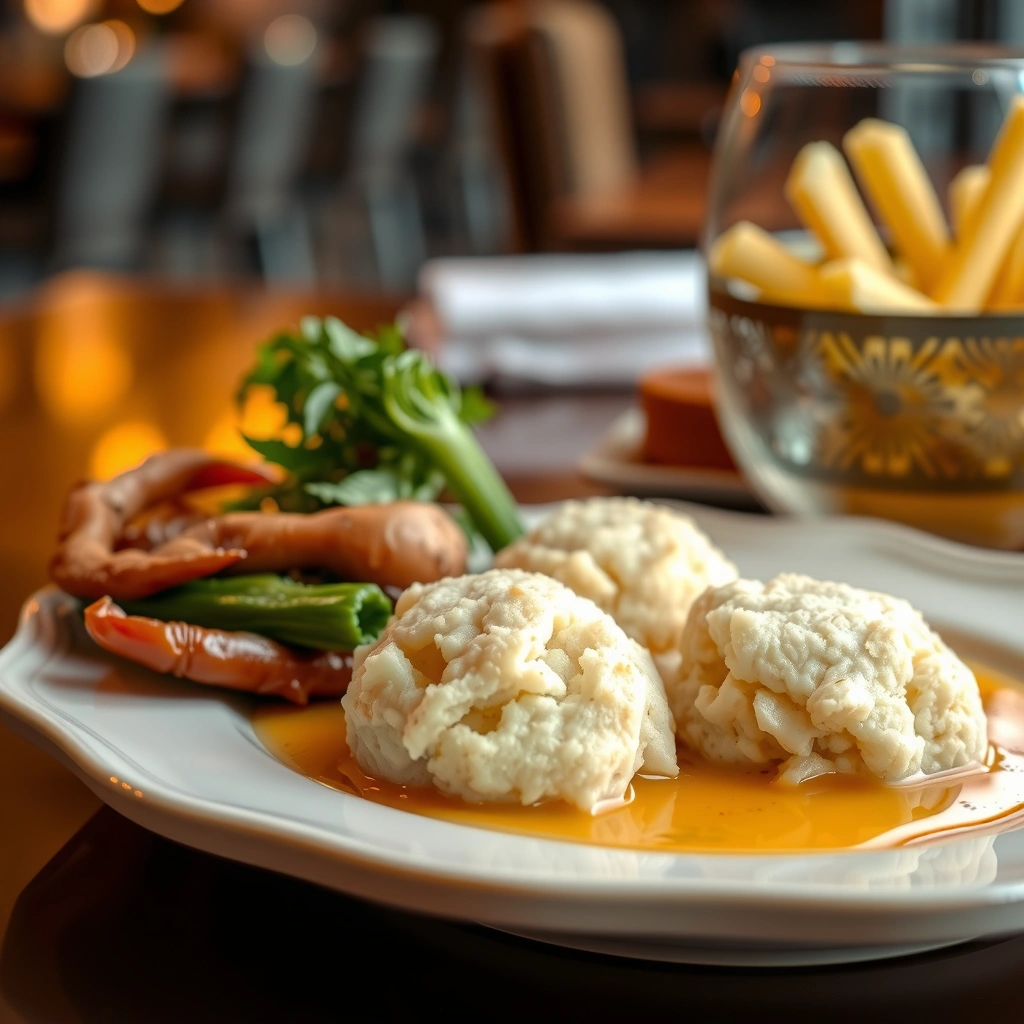
– Scoop and shape balls, then drop them into gently simmering broth
– Cover and cook until tender and light, without aggressive boiling
This is where the “fluffy” part happens. Matzah balls rise and soften when cooked low and steady, with minimal agitation.
1. Start with gently simmering broth
Bring your broth to a simmer, then reduce to a gentle bubbling level. A rolling boil tends to fracture balls and drive uneven cooking.
2. Shape the balls
Using a spoon, scoop batter and gently roll into balls. If the batter sticks, lightly wet your hands or spoon.
– For classic results, aim for about 1-inch balls—smaller balls cook faster and are easier to keep light.
– Consistency matters more than exact measurements.
3. Drop and cover
Carefully place balls into broth. Cover the pot and cook at a gentle simmer until tender.
– Typical timing: 20–30 minutes depending on size and broth heat level.
– If you’re unsure, start checking at 20 minutes; overcooking can make them heavier.
4. Avoid lifting the lid too often
Heat retention affects texture. Frequent lid lifting cools the pot and disrupts the cooking environment.
Quality control cue: When done, matzah balls should feel tender and light, not dense or gummy. If they’re too firm, simmer a few minutes longer—incremental adjustments are safer than aggressive cooking.
—
Building the Broth and Final Flavor
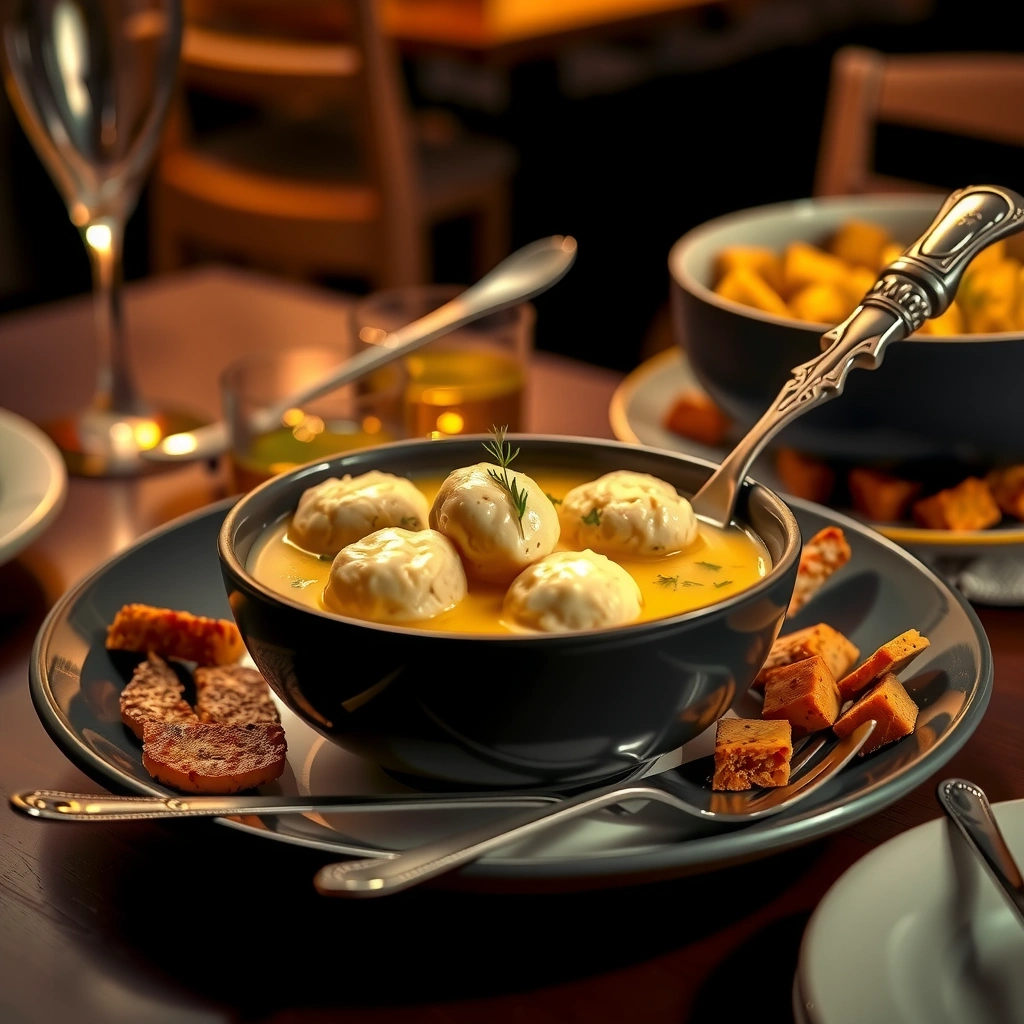
– Season the broth with salt, pepper, and herbs to taste
– Add vegetables (like carrots or celery) for a fuller, comforting soup
A great matzah ball soup is not just “broth + balls.” It’s a balanced bowl where seasoning, aromatics, and vegetables support each other.
Layer your seasoning
– Start with a sensible base of salt (especially if your broth is low-sodium).
– Add black pepper during simmering or near the end for fresher notes.
– Consider adding herbs late in the process so their aroma isn’t muted by long heat.
Add vegetables thoughtfully
– Carrots and celery are classic because they soften well while staying pleasantly distinct.
– Add diced vegetables early enough to become tender—often 15–25 minutes before serving—depending on cut size.
– If using delicate greens (like spinach or chopped scallions), add at the end for color and freshness.
Broth flavor refinements (optional but high-impact)
– A small squeeze of lemon at serving time brightens the whole bowl.
– If the soup tastes flat, it’s usually either salt level or missing acidity—check both before adding more pepper.
Dill vs. parsley strategy
– Dill leans traditional and aromatic.
– Parsley adds a cleaner, greener flavor.
Many cooks use both: dill for depth and parsley for freshness.
—
Serving and Storage Tips
– Serve hot with garnish (fresh dill or parsley) and a squeeze of lemon
– Store leftovers refrigerated and reheat gently to keep balls soft
Serving and storage are where results can drift—especially with matzah balls that can dry out if reheated harshly.
Serving
– Ladle soup into bowls and garnish with fresh dill or parsley.
– Add a squeeze of lemon right before eating. This quick finishing step makes the broth taste more vibrant and “clean,” not heavy.
– If desired, serve with warm bread or a simple side salad for a complete, satisfying meal.
Storage
– Refrigerate leftovers promptly in an airtight container.
– Keep soup and matzah balls together if you prefer a more cohesive texture; however, if you expect to reheat multiple times, consider storing balls separately and reheating gently in broth to prevent over-softening.
Reheating without texture loss
– Reheat on the stovetop over low heat or in short microwave bursts.
– Avoid boiling. A gentle warm-up helps balls stay tender rather than tough.
Next-day improvement
Many people find matzah ball soup tastes even better the next day because the broth continues to absorb subtle flavor compounds from the herbs and matzah balls. The key is warming gently and tasting for salt again.
—
Matzah ball soup is all about fluffy matzah balls and a well-seasoned broth, and this recipe delivers both with easy, repeatable steps. Make it this week, follow the simmering times closely, and adjust the seasoning to your taste—then save the leftovers for an even better next-day meal.
References
- Matzah ball
https://en.wikipedia.org/wiki/Matzo_ball_soup - Matzo
https://en.wikipedia.org/wiki/Matzo - Passover
https://en.wikipedia.org/wiki/Passover - Jewish cuisine
https://en.wikipedia.org/wiki/Jewish_cuisine - Soup
https://en.wikipedia.org/wiki/Soup - Google Scholar Google Scholar
https://scholar.google.com/scholar?q=matzah+ball+soup+recipe - Google Scholar Google Scholar
https://scholar.google.com/scholar?q=matzo+ball+soup+recipe - Google Scholar Google Scholar
https://scholar.google.com/scholar?q=passover+matzah+ball+soup+recipe - matzah ball soup recipe – Search results
https://en.wikipedia.org/wiki/Special:Search?search=matzah+ball+soup+recipe - https://www.ncbi.nlm.nih.gov/search/research-articles/?term=matzah+ball+soup+recipe
https://www.ncbi.nlm.nih.gov/search/research-articles/?term=matzah+ball+soup+recipe