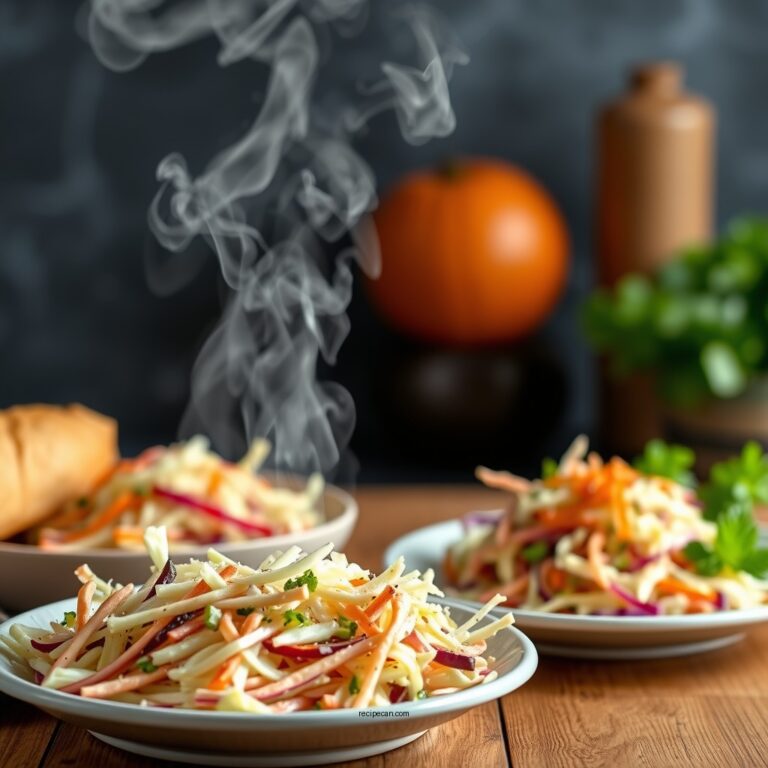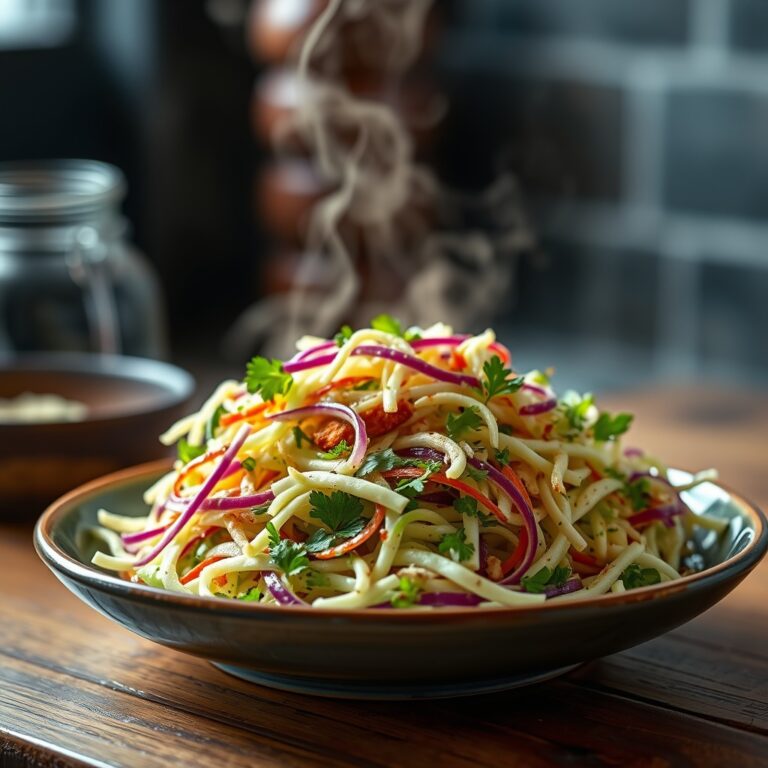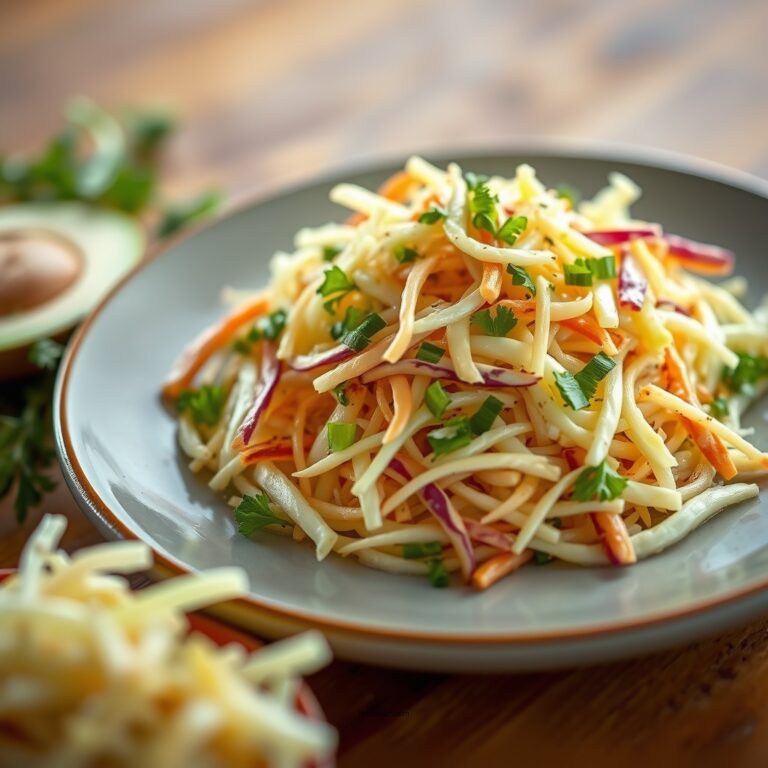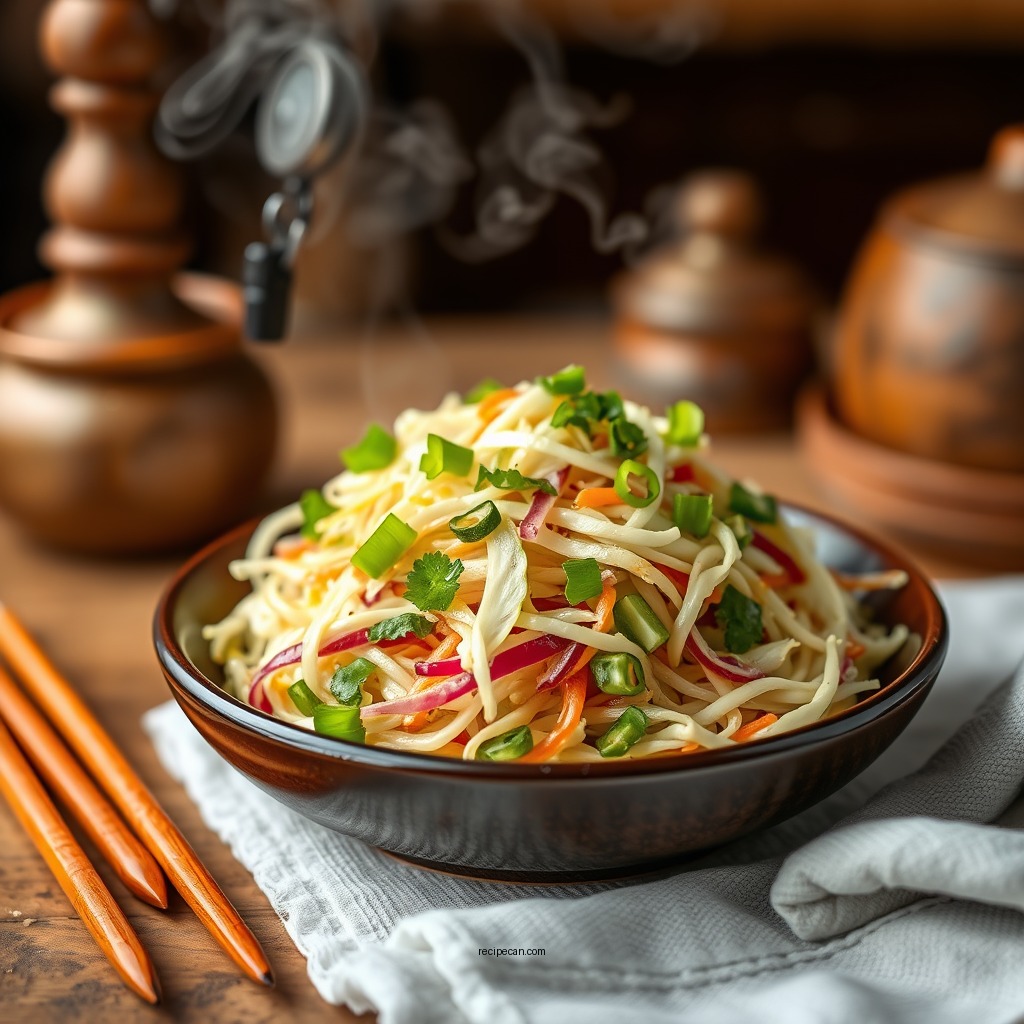
Chinese coleslaw is a vibrant and crunchy salad that combines fresh vegetables with a tangy sesame dressing, making it the perfect side dish for any meal. In this article, you will learn how to create a delightful Chinese coleslaw that’s easy to prepare and packed with flavor. This dish not only offers a refreshing taste but also provides a colorful addition to your dining table, ensuring that it appeals to both the palate and the eyes.
Key Ingredients for Chinese Coleslaw
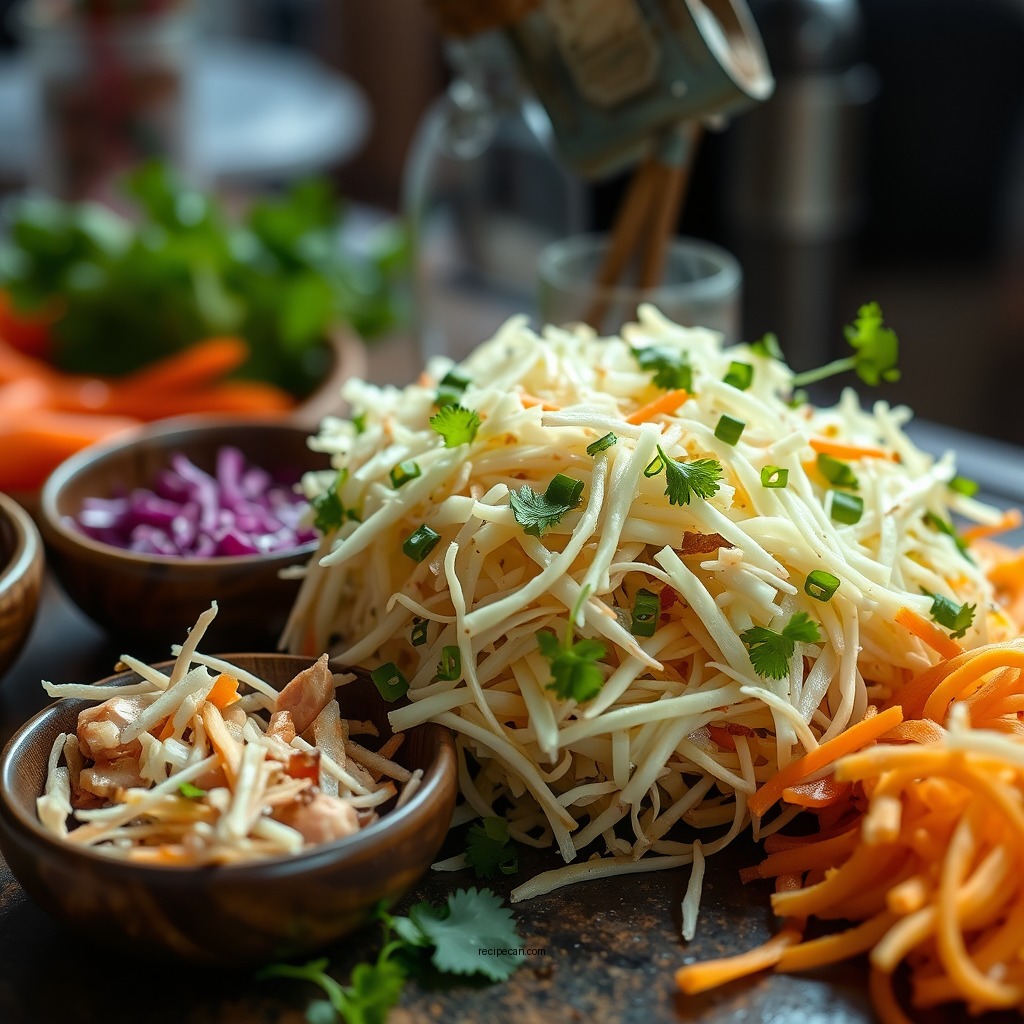
Creating a delicious Chinese coleslaw begins with selecting the right ingredients. The key components include:
– Shredded cabbage: A mix of green and purple cabbage not only adds a visual appeal but also enhances crunch and texture. Green cabbage has a mild flavor, while purple cabbage brings a slightly sweet taste and a pop of color.
– Fresh vegetables: Incorporating carrots, bell peppers, and green onions adds layers of flavor and texture. Carrots provide a natural sweetness and a bright orange hue, while bell peppers contribute a crisp texture and a slight tang. Green onions offer a mild onion flavor that complements the other ingredients beautifully.
– Dressing components: The dressing is a vital part of the coleslaw, made with soy sauce, rice vinegar, and sesame oil. Soy sauce adds umami depth, rice vinegar introduces acidity, and sesame oil imparts a rich, nutty flavor that ties the salad together.
By carefully selecting these ingredients, you set the foundation for a coleslaw that is not only tasty but also visually appealing.
Preparing the Vegetables
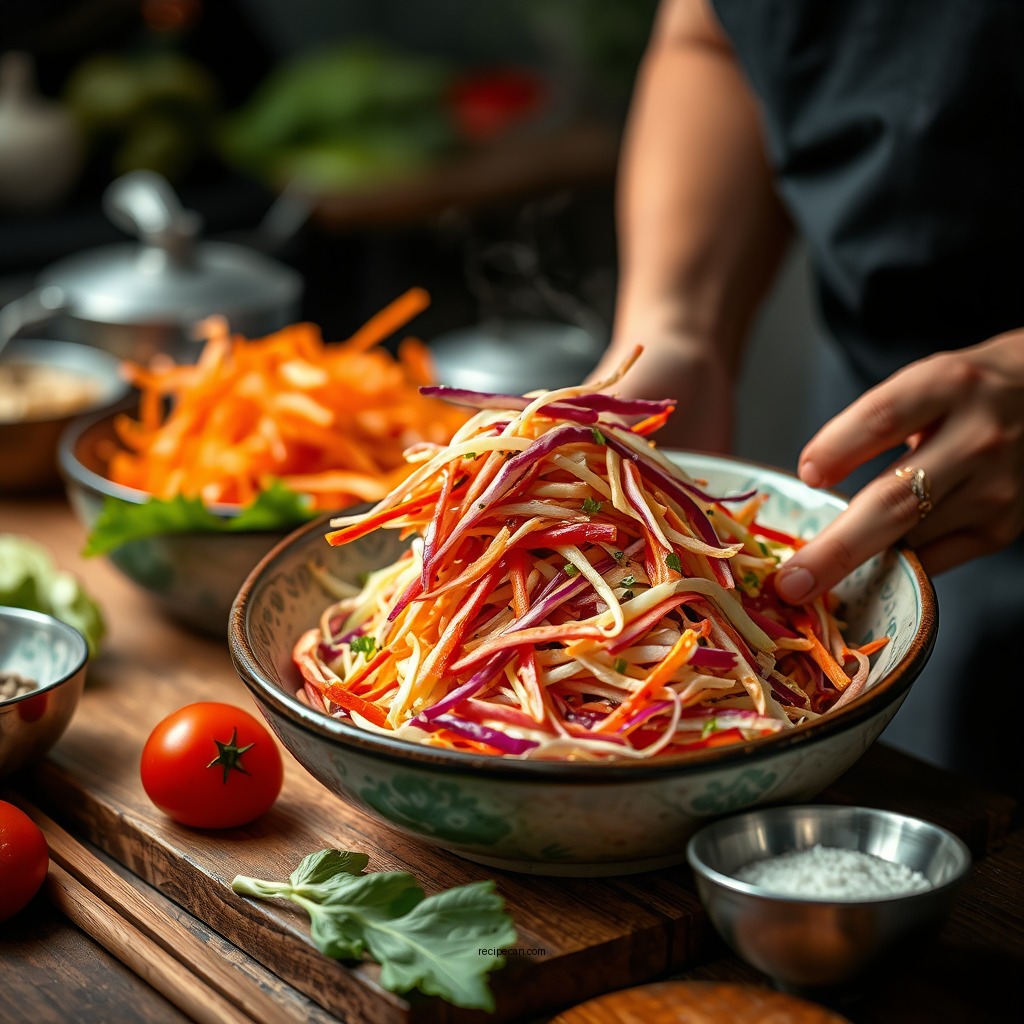
The preparation of the vegetables is crucial for achieving the desired crunch and flavor in your coleslaw. Here’s how to do it effectively:
– Shredding: Use a sharp knife or a mandoline slicer to create thin strips of cabbage and vegetables. Thin strips not only look elegant but also ensure that each bite has a balanced mix of flavors and textures.
– Mixing: Place all the shredded vegetables in a large mixing bowl. This allows for even distribution, ensuring that every serving has a good mix of the various ingredients.
– Resting: Allow the mixed vegetables to sit for a few minutes to enhance flavor absorption. This resting period lets the vegetables soften slightly while maintaining their crispness, making the coleslaw even more enjoyable.
Making the Dressing
The dressing is what elevates your Chinese coleslaw from good to exceptional. Follow these steps to create a flavorful dressing:
– Base ingredients: In a separate bowl, combine soy sauce, rice vinegar, and sesame oil. This combination will serve as the foundation of your dressing.
– Sweetness: To balance the acidity of the vinegar, add a touch of honey or sugar. This sweetness rounds out the flavor profile and prevents the dressing from being overly tangy.
– Emulsifying: Whisk the ingredients together until they are well combined. The goal is to achieve a smooth, cohesive dressing that will coat the vegetables evenly.
Combining Salad and Dressing
Once the vegetables are prepared and the dressing is made, it’s time to bring everything together:
– Pour the dressing: Drizzle the freshly made dressing over the prepared vegetables in the mixing bowl.
– Toss gently: Using tongs, mix the salad gently to ensure that the dressing coats all the vegetables without bruising them. This step is crucial for maintaining the integrity of the vegetables while ensuring every bite is flavorful.
– Adjust flavors: After tossing, taste the coleslaw and adjust the seasoning if necessary. You may want to add more soy sauce for saltiness or a bit more honey for sweetness, depending on your preference.
Nutritional Comparison of Key Ingredients in Chinese Coleslaw (per 100g)
| # | Ingredient | Calories | Protein (g) | Carbohydrates (g) | Fats (g) |
|---|---|---|---|---|---|
| 1 | Green Cabbage | 25 | 1.3 | 5.8 | 0.1 |
| 2 | Purple Cabbage | 31 | 1.4 | 7.0 | 0.2 |
| 3 | Carrots | 41 | 0.9 | 9.6 | 0.2 |
| 4 | Bell Peppers | 20 | 0.9 | 4.7 | 0.2 |
| 5 | Green Onions | 32 | 1.8 | 7.3 | 0.1 |
| 6 | Soy Sauce | 53 | 8.9 | 2.7 | 0.1 |
| 7 | Sesame Oil | 884 | 0.0 | 0.0 | 100.0 |
Serving Suggestions
Once your Chinese coleslaw is prepared, consider the following serving suggestions to enhance your dining experience:
– Ideal pairings: This coleslaw serves as an excellent side dish for grilled meats, Asian-inspired meals, or even as a refreshing component to a light lunch. The tangy dressing complements rich flavors beautifully, making it a versatile addition to any meal.
– Garnishing: Elevate the presentation by topping your coleslaw with sesame seeds or chopped peanuts. These toppings not only add visual appeal but also enhance the crunchiness of the dish, providing an appealing contrast to the tender vegetables.
– Storing: If you have leftovers, store them in an airtight container in the refrigerator. The coleslaw can last up to two days, but for the best texture and flavor, consume it within one day. The vegetables may lose their crispness over time, so it’s best enjoyed fresh.
Variations to Try
To keep your Chinese coleslaw exciting, consider experimenting with various variations:
– Add protein: For a more filling meal, incorporate shredded chicken, shrimp, or tofu. These additions can transform your coleslaw into a complete dish, perfect for lunch or dinner.
– Spice it up: If you enjoy a bit of heat, include sliced jalapeños or sprinkle some chili flakes into your coleslaw. This will add a kick and enhance the overall flavor profile.
– Seasonal ingredients: Don’t hesitate to experiment with seasonal fruits such as mandarin oranges, apples, or even pomegranate seeds. These fruits can add a sweet and juicy dimension to your coleslaw, making it even more delightful.
Incorporating this delicious Chinese coleslaw recipe into your meal planning will elevate your dining experience with its fresh flavors and crunchy texture. Try it out today and impress your family or guests with this easy-to-make dish! By following these steps and variations, you can create a coleslaw that fits your taste preferences while providing a refreshing twist to your meals.
Frequently Asked Questions
What ingredients are essential for a traditional Chinese coleslaw recipe?
A traditional Chinese coleslaw recipe typically includes finely shredded cabbage, carrots, and green onions. For added flavor, you can incorporate ingredients like sesame seeds, cilantro, and bell peppers. The dressing usually features rice vinegar, soy sauce, sesame oil, and a touch of sugar for balance.
How can I make a Chinese coleslaw recipe healthier?
To make a Chinese coleslaw recipe healthier, consider using a low-sodium soy sauce or tamari to reduce sodium content. You can also substitute sugar with honey or agave syrup and increase the vegetable content by adding ingredients like bell peppers or snap peas. Using a yogurt-based dressing instead of oil can also enhance creaminess while cutting calories.
Why is my Chinese coleslaw watery after dressing it?
A common reason for watery Chinese coleslaw is that the salt in the dressing draws moisture from the vegetables. To prevent this, dress the coleslaw just before serving and let it sit for a shorter period. Alternatively, you can salt the cabbage first, allow it to sit briefly, and then rinse and dry it before mixing in the dressing.
What is the best way to store leftover Chinese coleslaw?
The best way to store leftover Chinese coleslaw is to keep the dressing separate from the vegetables. Place the coleslaw in an airtight container in the refrigerator, and add the dressing just before serving to maintain its crunchiness. Properly stored, it can last for about 2-3 days without losing quality.
Which types of cabbage work best for a Chinese coleslaw recipe?
Napa cabbage and green cabbage are the best types of cabbage to use in a Chinese coleslaw recipe. Napa cabbage offers a milder flavor and a tender texture, while green cabbage adds crunch and a more robust taste. You can also mix both for a more complex flavor and texture profile.
References
- Coleslaw
https://en.wikipedia.org/wiki/Coleslaw - https://www.ncbi.nlm.nih.gov/pmc/articles/PMC7455830/
https://www.ncbi.nlm.nih.gov/pmc/articles/PMC7455830/ - https://www.sciencedirect.com/science/article/pii/S2351978921000305
https://www.sciencedirect.com/science/article/pii/S2351978921000305 - Coleslaw | Description, Food, Barbecue, History, Ingredients, & Facts | Britannica
https://www.britannica.com/topic/coleslaw - https://www.healthline.com/nutrition/coleslaw-recipe
https://www.healthline.com/nutrition/coleslaw-recipe - Google Scholar Google Scholar
https://scholar.google.com/scholar?q=chinese+coleslaw+recipe - Google Scholar Google Scholar
https://scholar.google.com/scholar?q=coleslaw+nutritional+benefits - Google Scholar Google Scholar
https://scholar.google.com/scholar?q=asian+coleslaw+ingredients - https://www.cdc.gov/nutrition/index.html
https://www.cdc.gov/nutrition/index.html - Healthy diet
https://www.who.int/news-room/fact-sheets/detail/healthy-diet