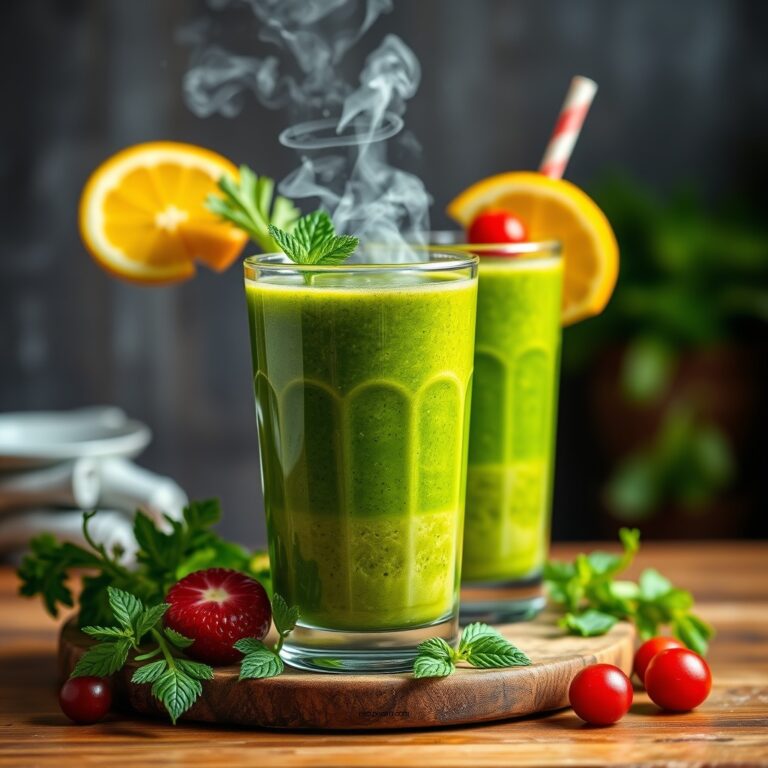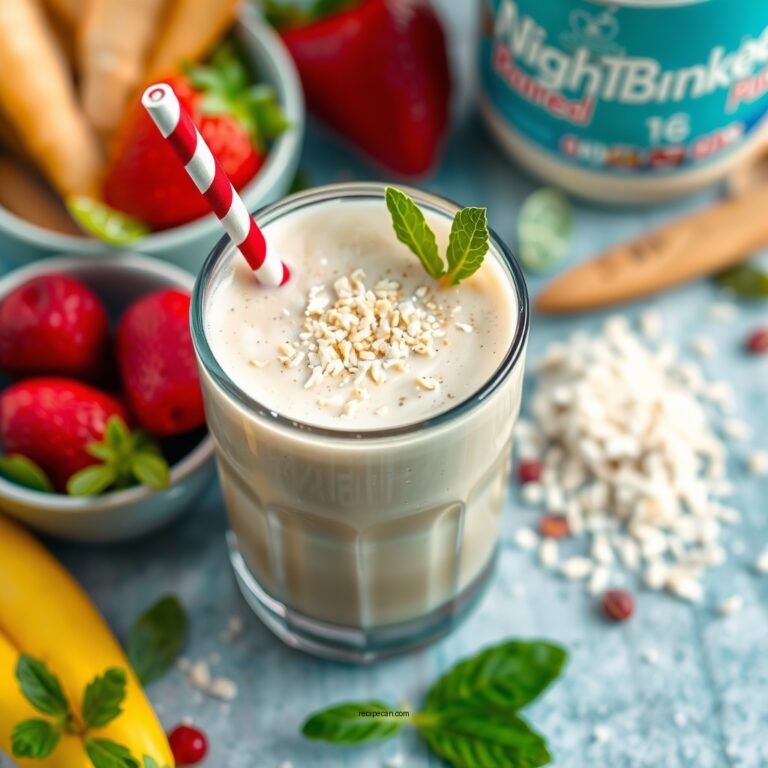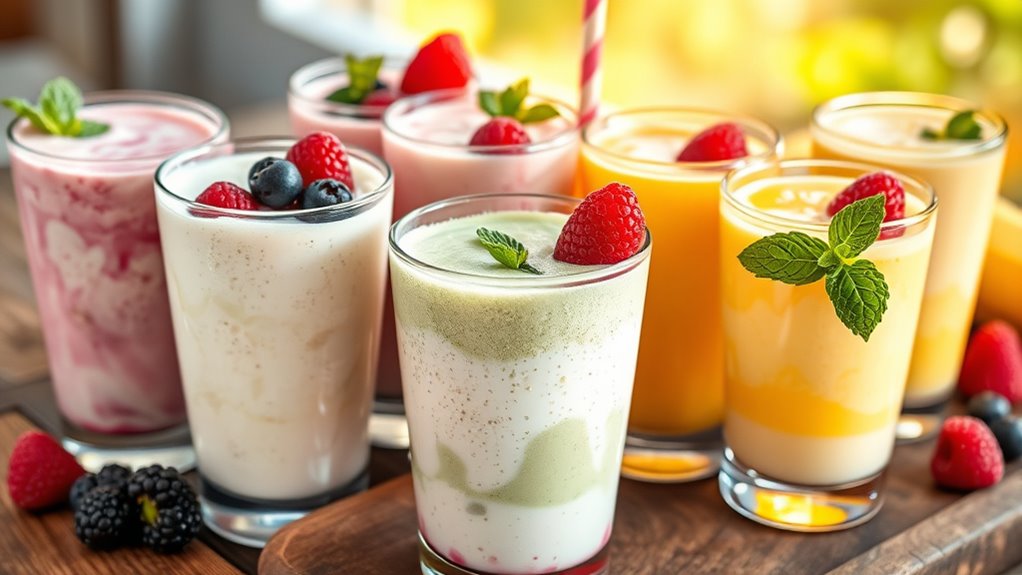
You can make a tasty yogurt smoothie by blending 150 ml of yogurt with about 100 g of mixed berries and a medium banana for natural sweetness. Add a tablespoon of honey if you like it sweeter, plus 100 ml of milk or milk alternative to adjust thickness. Use frozen fruit for a thicker texture and blend liquids first for smoothness. This basic method lets you customize flavors and textures for a perfect nutritious boost—there’s more to explore on preparation and serving tips.
Ingredients and Quantity
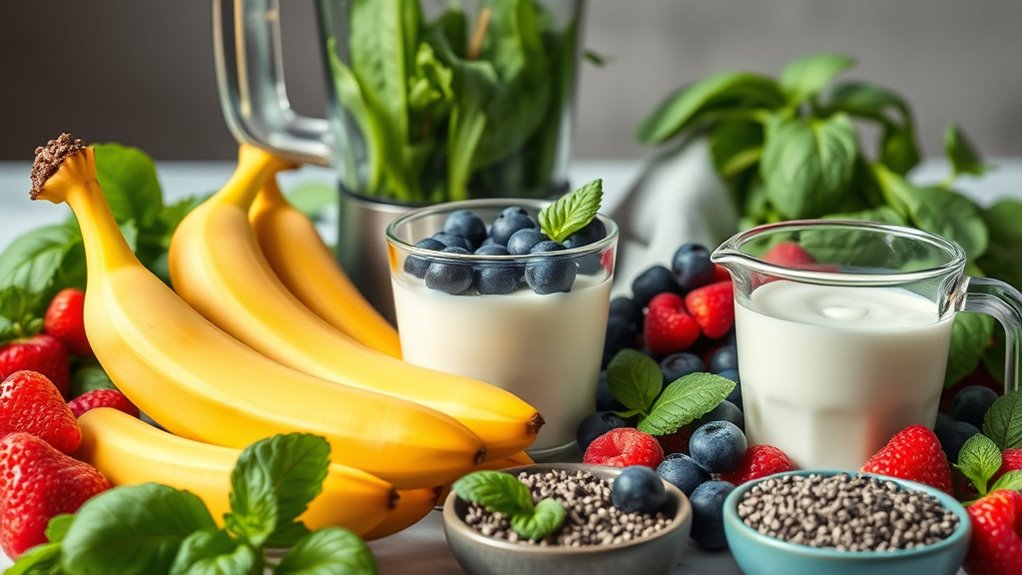
When preparing yogurt smoothies, it’s important to measure your ingredients accurately to achieve the desired taste and texture. Choosing the right fruit combinations and yogurt alternatives can influence both flavor and nutritional value. Precise quantities guarantee consistency and allow you to experiment freely without compromising quality. Here’s a guideline for common ingredients:
| Ingredient | Quantity (per serving) | Notes |
|---|---|---|
| Plain Yogurt | 150 ml | Can substitute with Greek or plant-based yogurt alternatives |
| Mixed Berries | 100 g | Fresh or frozen |
| Banana | 1 medium | Adds natural sweetness |
| Honey | 1 tbsp | Optional, adjust to taste |
| Milk or Milk Alternative | 100 ml | Almond, soy, or oat milk work well |
Following these measurements helps you maintain balance while exploring freedom in your smoothie creations.
Preparations
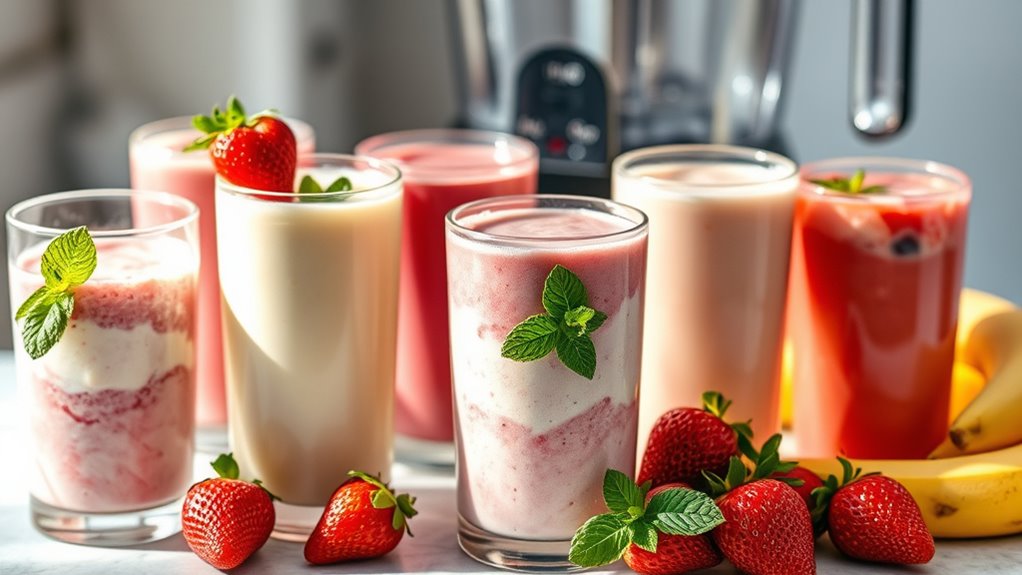
Accurately measuring your ingredients sets a solid foundation for making yogurt smoothies, but proper preparation techniques assure the best results. Before blending, consider how different yogurt types—Greek, regular, or plant-based—impact texture and flavor. Chilling your yogurt and fresh ingredients enhances smoothie consistency and taste. When creating smoothie variations, prep fruits and vegetables by washing, peeling, and cutting them into uniform pieces to guarantee even blending. Freezing certain fruits can add thickness without extra ice, preserving nutrient density. If you’re incorporating add-ins like nuts or seeds, lightly toasting them can intensify flavor. Properly preparing your ingredients not only optimizes texture and taste but also allows you to experiment confidently with a range of smoothie variations tailored to your personal preferences and dietary needs.
How to Prepare
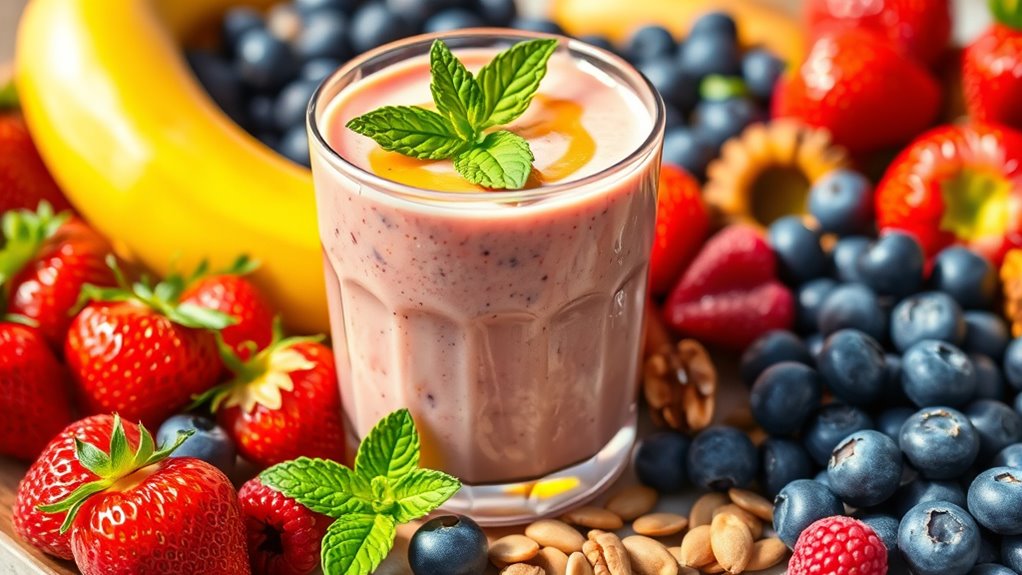
- Select high-quality ingredients that suit your taste and nutritional goals.
- Choose fresh or frozen fruits, plain or flavored yogurt, and optional add-ins like nuts or seeds for a nutrient-dense base.
- Start blending by adding liquids first.
- Add softer ingredients next.
- Finish by adding frozen or dense items to optimize blade movement and achieve a smooth texture.
- Experiment with flavor combinations by pairing complementary tastes, such as berries with citrus or banana with spinach.
- Use these methods to consistently create well-balanced, creamy smoothies.
- Master these preparation steps to customize recipes that align with your preferences and lifestyle efficiently and effectively.
How to Serve
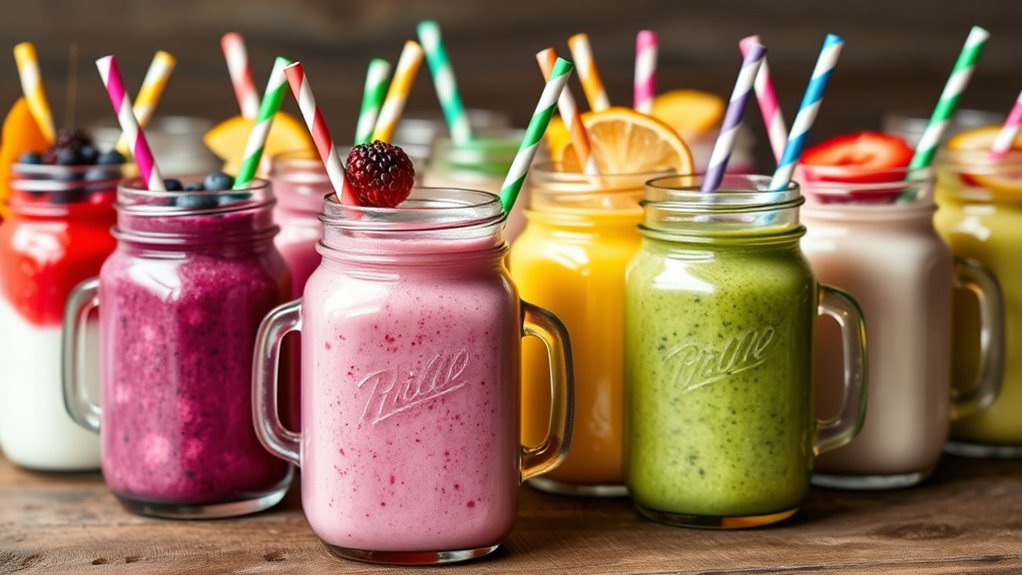
Three key factors can improve how you serve your yogurt smoothie: presentation, temperature, and portion size. For presentation styles, consider clear glasses or mason jars to showcase the smoothie’s vibrant colors, adding a straw or garnish like fresh fruit or mint to elevate visual appeal. Serving suggestions recommend keeping the smoothie chilled between 35-45°F to maintain ideal taste and texture. Portion size matters too; a standard 8-12 ounce serving balances satisfaction without overwhelming. This approach supports both enjoyment and dietary mindfulness, giving you freedom to tailor servings based on your needs. By focusing on these elements, you create a satisfying experience that’s visually inviting and invigorating. These evidence-based choices guarantee your yogurt smoothie is as pleasing to the eye as it is to the palate.
Tips
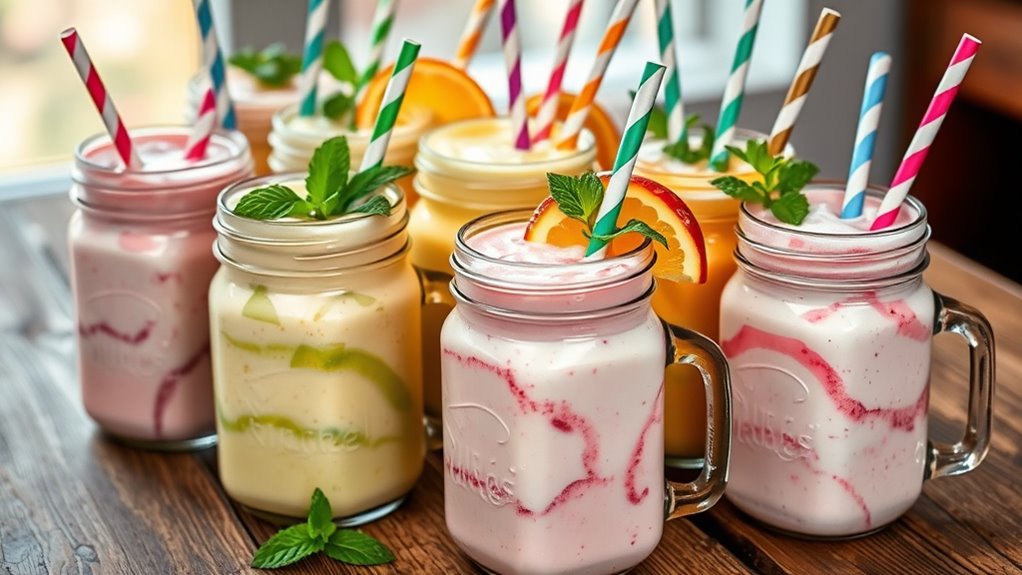
While making yogurt smoothies might seem straightforward, applying a few key tips can greatly enhance both flavor and texture. First, choose your yogurt types thoughtfully—Greek yogurt adds creaminess and protein, while regular yogurt offers a lighter consistency. Experiment with non-dairy yogurts if you prefer plant-based options. Furthermore, balance sweetness and acidity by combining fruits with different flavor profiles; this creates appealing smoothie variations that avoid monotony. Also, control thickness by adjusting liquid amounts—using juice or milk can thin your smoothie, while frozen fruits thicken it. Finally, blend ingredients in stages to guarantee even texture and avoid over-blending, which can cause separation. These practical tips help you craft yogurt smoothies tailored to your taste and lifestyle, giving you freedom to enjoy nutritious, delicious blends every time.
Food Value and Benefit
Yogurt smoothies are a nutritious and delicious option that provide a range of essential nutrients and health benefits.
Food Value:
- High in protein, supporting muscle repair and growth
- Rich source of calcium, essential for strong bones and teeth
- Contains probiotics (live cultures) that promote a healthy digestive system
- Provides vitamins such as vitamin B12 and riboflavin (B2)
- Contains minerals including potassium, magnesium, and phosphorus
Benefits of Eating Yogurt Smoothies:
- Supports bone health by providing calcium and vitamin D
- Enhances muscle recovery and maintenance due to high protein content
- Improves digestive health by balancing gut bacteria with probiotics
- Aids nutrient absorption and supports a healthy immune system
- Helps regulate bowel movements and reduce gastrointestinal discomfort
- Convenient and refreshing way to nourish the body with natural ingredients and minimal added sugars
Including yogurt smoothies in your diet is an excellent way to enjoy a tasty, nutrient-rich meal or snack that promotes overall wellness and digestive health.
Frequently Asked Questions about Yogurt Smoothie Recipes
1. What are some basic ingredients for yogurt smoothies?
The basic ingredients for yogurt smoothies typically include yogurt (preferably Greek for its creaminess and protein), fruits (such as bananas, berries, or mangoes), a liquid base (like milk, almond milk, or juice), and optional sweeteners (such as honey or agave syrup). You can also add extras like spinach for a nutrient boost, oats for fiber, or protein powder for additional protein.
2. Can I make yogurt smoothies in advance?
Yes, you can make yogurt smoothies in advance! To ensure the best taste and texture, prepare your smoothie and store it in an airtight container in the refrigerator for up to 24 hours. If you need to store it longer, consider freezing the smoothie in a freezer-safe container. Just remember to thaw it in the fridge overnight before consuming and give it a good shake or stir to mix the ingredients that may have separated.
3. What types of yogurt work best for smoothies?
Greek yogurt is often the preferred choice for smoothies due to its thick, creamy texture and high protein content. However, regular yogurt, plant-based yogurts (like almond or coconut yogurt), and even non-dairy options can be used depending on your dietary preferences. When selecting yogurt, look for options with live active cultures for added probiotics and consider low-sugar or unsweetened varieties to control the sweetness of your smoothie.
4. How can I make my yogurt smoothie thicker?
To make your yogurt smoothie thicker, you can try several methods: use less liquid when blending, add more yogurt, include frozen fruits instead of fresh ones, or incorporate ingredients like oats, chia seeds, or nut butter. These additions not only thicken the smoothie but also enhance its nutritional profile. For a creamier texture, consider adding avocado or a frozen banana as well.
5. Are yogurt smoothies healthy?
Yogurt smoothies can be a healthy option, depending on the ingredients used. They provide a good source of protein, calcium, vitamins, and minerals from yogurt and fruits. To keep your smoothie healthy, opt for natural ingredients, avoid added sugars, and incorporate a variety of fruits and vegetables. You can also customize your smoothies to meet your dietary needs, whether you’re looking for a post-workout recovery drink or a nutritious breakfast option.
References
- https://www.health.harvard.edu/staying-healthy/the-health-benefits-of-yogurt
- https://www.ncbi.nlm.nih.gov/pmc/articles/PMC6068350/
- https://www.eatright.org/health/wellness/preventing-illness/yogurt-health-benefits
- https://www.cdc.gov/nutrition/resources-publications/healthier-yogurt.html
- https://www.journalofnutrition.org/content/early/2017/05/24/jn.117.251393
- https://www.bbcgoodfood.com/recipes/collection/smoothie-recipes
- https://www.verywellfit.com/yogurt-smoothie-recipe-5183045
- https://www.mayoclinic.org/healthy-lifestyle/nutrition-and-healthy-eating/in-depth/yogurt/art-20045318