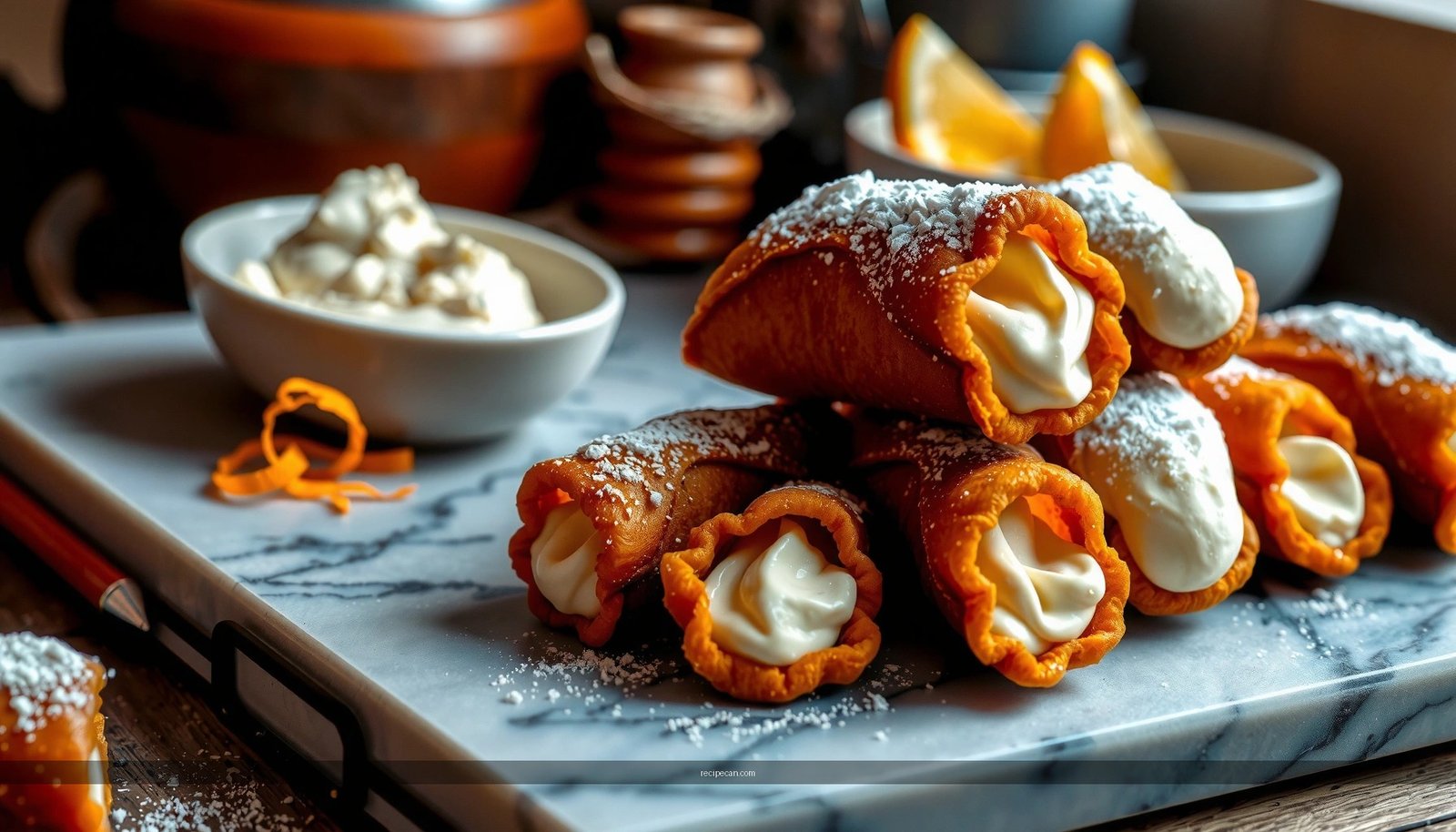
Get the traditional Italian cannoli recipe you came for: crisp Sicilian shells and a silky ricotta filling, built for maximum crunch-to-cream contrast. This method delivers the best classic cannoli result when you follow the dough frying steps closely and use well-drained ricotta for a thick, sweet filling that holds its shape. You’ll learn the exact shell texture targets and filling ratio that make restaurant-style cannoli at home.
Make authentic traditional Italian cannoli at home by frying crisp shells and filling them with a drained, creamy ricotta mixture right before serving—this is the secret to keeping crunch, freshness, and flavor balanced. Below, you’ll learn a practical workflow for making classic Sicilian cannoli dough, achieving the right shell crispness, preparing the traditional ricotta filling, and assembling with timing so the shells don’t soften prematurely.
Traditional Cannoli Ingredients
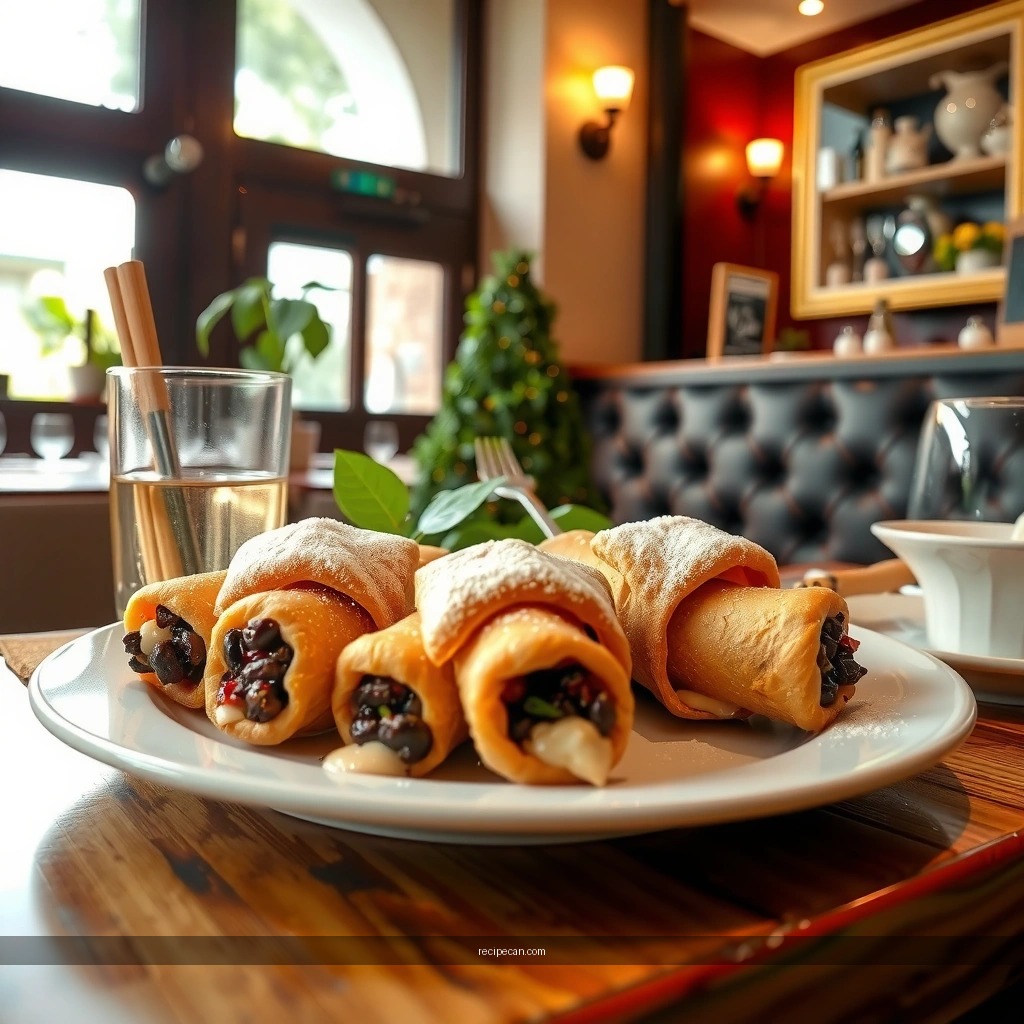
– Gather key ingredients for the shells (flour, sugar, wine, lard/butter, egg) and the classic filling (ricotta, sugar, chocolate chips, vanilla/cinnamon).
– Use ricotta that’s drained well to avoid a watery filling.
A truly traditional cannoli is not just “shell + filling”—it’s a controlled texture system. The shell’s crispness depends on dough hydration, fat type, and frying temperature; the filling’s structure depends on moisture management of the ricotta. When those two variables are tuned, the classic contrast—crackly shell and creamy interior—becomes reliably achievable at home.
Shells (typical traditional approach)
– All-purpose flour: provides structure for thin rolling.
– Granulated sugar: adds light sweetness and helps browning.
– Marsala wine (or dry wine): contributes aroma and tenderizing, improving elasticity for rolling.
– Egg: adds richness and binding.
– Lard (traditional) or butter (common adaptation): lard tends to create an especially crisp, flaky shell.
– Pinch of salt: balances sweetness and enhances flavor.
Filling (classic Sicilian direction)
– Whole milk ricotta: flavor-forward, but must be well-drained.
– Sugar: sweetens and softens the mouthfeel.
– Vanilla and/or cinnamon: traditional aromatic notes (choose one or use both lightly).
– Mini chocolate chips (or chopped candied chocolate): provides bitter-sweet pops.
– Optional additions used in some families include finely grated citrus zest, but for “classic” cannoli, chocolate + vanilla/cinnamon is usually the anchor.
Quick ingredient control: yield and texture targets
| Component | What you’re optimizing | Best practical target | What happens if you miss |
|—|—|—:|—|
| Ricotta drainage | Cream stability | 1–2 hours drained (or overnight in fridge) | Filling weeps/splits |
| Shell thickness | Crispness + fry time | 1.5–2.0 mm when rolled thin | Too thick = chewy; too thin = brittle/broken |
| Oil temperature | Shell blistering & browning | 175–185°C (350–365°F) | Too cool = greasy; too hot = dark before crisp |
| Assembly timing | Shell crunch retention | Fill within 5–30 minutes of serving | Shells soften quickly |
| Filling temperature | Piping consistency | Chilled before filling (about 4°C/39°F) | Loose filling & mess during piping |
Preparing the Cannoli Shell Dough
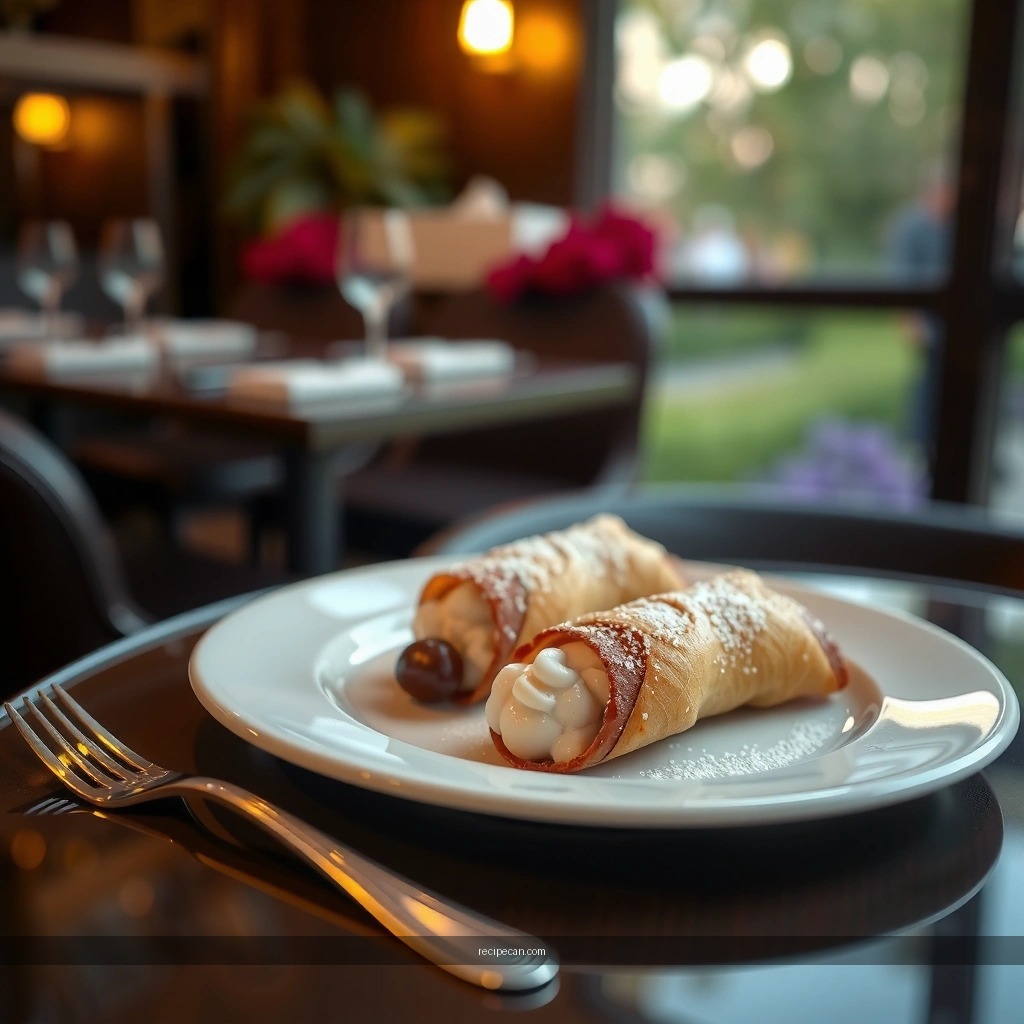
– Mix and knead until smooth, then rest the dough so it’s easy to roll thin.
– Roll the dough, cut circles, and wrap them around cannoli forms neatly.
Cannoli dough is deceptively simple, but it performs only when gluten development and resting are handled correctly. The goal is a dough that is elastic enough to roll thin without tearing, yet firm enough to fry into blistered, crisp shells.
Step-by-step dough process
1. Combine dry ingredients: flour, sugar, salt.
2. Add wet ingredients: egg and wine (plus melted lard/butter, depending on your choice).
3. Knead until smooth: aim for a consistent, supple dough. If it feels sticky, add a small dusting of flour—avoid over-flouring, which can make shells tough.
4. Rest the dough: wrap and rest at least 30 minutes, ideally 45–60 minutes. Resting relaxes the dough, making thin rolling far easier and improving shell texture.
Rolling and shaping
– Roll to thinness—think “nearly translucent at the edges,” but not see-through.
– Cut circles with a cutter (commonly 8–10 cm / 3–4 in circles for standard forms).
– Wrap circles around cannoli forms with a slight overlap; seal the seam with water or egg wash so it holds during frying.
Professional tip: keep the uncut dough covered (dry surface increases shrinkage and tears). Work in batches if your kitchen is warm—dough temperature impacts handling and final crispness.
Frying Cannoli Shells to the Right Crispness

– Fry at a steady oil temperature until shells are golden and bubbles indicate crisp texture.
– Cool fully before filling to prevent sogginess.
Crispness is the primary success metric for cannoli shells. It’s controlled mainly by oil temperature, frying time, and cooling. Even if the shell dough is perfect, uneven frying produces soft interiors that collapse once filled.
How to fry for classic results
1. Heat oil (neutral frying oil or a blend) to 175–185°C (350–365°F).
2. Fry shells in small batches so the oil temperature doesn’t drop.
3. Fry until shells are golden and you see active blistering around the surface.
4. Lift out and drain on paper, then cool completely on a rack.
Why full cooling matters
If you fill even slightly warm shells, steam trapped inside and residual oil moisture can soften the shell wall. For a professional-style finish, cool shells until room temperature and only then assemble.
Crispness benchmark: what “right” looks like
– Color: light-to-medium golden, not dark brown.
– Surface: blistered and dry-looking, not pale or greasy.
– Feel: light, crisp, and resistant to bending.
Safety note: cannoli forms can get very hot. Use tongs and allow forms to cool between batches if needed.
Making the Classic Ricotta Cannoli Filling
– Drain ricotta thoroughly, then mix with sugar and flavorings until creamy.
– Fold in chocolate chips and keep the filling chilled until assembly.
The classic cannoli filling is all about ricotta consistency. The most common reason for “failed cannoli” at home isn’t the recipe—it’s watery ricotta. Traditional cannoli filling is rich, thick, and pipeable.
Drain ricotta correctly
– For best results, drain ricotta in a fine-mesh sieve in the refrigerator.
– Press gently with a spoon, then let it drain at least 1–2 hours, or overnight for very wet ricotta.
– If you want a quick check: the ricotta should look creamy and dense, not pooled with liquid.
Build the filling
1. In a bowl, beat/drain-check ricotta until smooth (lightly break up grains).
2. Add sugar gradually and mix until creamy and uniform.
3. Add vanilla and/or cinnamon. Go light—aroma should support, not overpower.
4. Fold in chocolate chips last to keep them distributed without overmixing.
Chill before piping
– Keep filling cold until assembly. Cold filling holds shape better and pipes cleanly.
Visual guide: ricotta moisture vs. filling behavior
– Properly drained ricotta: holds ridges from a spoon, feels thick.
– Under-drained ricotta: slowly relaxes, leaving a watery sheen.
– If you notice looseness, it’s usually easier to drain longer than to “fix” with extra sugar (which can further loosen via moisture pull).
Assembling and Serving Cannoli
– Fill shells just before serving for maximum crunch.
– Pipe filling into both ends and finish with optional powdered sugar and extra chocolate.
Assembly is where you protect the cannoli’s defining texture. Think of cannoli as a “built-to-order dessert”: shells are crisp and stable only briefly after filling.
Best assembly workflow
1. Fill at the last minute: ideally within 5–30 minutes of serving.
2. Use a pastry bag with a piping tip to fill both ends.
3. Pipe slowly so filling doesn’t split the shell seam.
4. Finish as desired:
– Dust lightly with powdered sugar
– Add extra chocolate chips on the visible ends
– Optional: very light sprinkle of cinnamon for classic warmth
Serving strategy
– If serving a crowd, plate shells and set filling chilled near you, then assemble in waves.
– Avoid stacking assembled cannoli; gravity and contact can soften the shells faster.
Timing advantage: why “right before serving” matters
| Assembly timing | Expected shell texture | Best use case |
|—|—|—|
| 0–10 minutes | Crisp, crackly | Immediate serving |
| 10–30 minutes | Mostly crisp | Dinner parties with staged plating |
| 30–60 minutes | Noticeably softer | Less strict crunch preference |
| 1+ hour | Softened | If you’re prioritizing flavor over texture |
Troubleshooting Common Cannoli Issues
– If shells go soft quickly, cool them completely and fill closer to serving time.
– If filling seems loose, drain ricotta longer or reduce added moisture.
Even experienced cooks occasionally struggle with cannoli—especially with shell crispness and ricotta moisture. Use these targeted fixes rather than restarting.
Problem: Shells go soft quickly
– Cause: warm filling, under-cooled shells, or too-early assembly.
– Fixes:
– Cool shells completely on a rack before filling.
– Chill filling so there’s less steam interaction.
– Assemble closer to serving—work in batches.
Problem: Shells taste greasy
– Cause: oil temperature too low or overcrowding the pan.
– Fixes:
– Maintain 175–185°C (350–365°F).
– Fry in smaller batches to keep temperature stable.
– Drain on a rack when possible (paper absorbs oil but a rack helps air circulation).
Problem: Shells crack or split
– Cause: dough too thin in spots, insufficient sealing on the seam, or brittle frying.
– Fixes:
– Seal seam firmly with water/egg wash.
– Roll evenly to the target thinness.
– Avoid frying at too high a temperature (dark edges before crisp interior encourages brittleness).
Problem: Filling is loose
– Cause: ricotta not drained enough or too-wet flavor add-ins.
– Fixes:
– Drain ricotta longer, refrigerated.
– If using citrus zest, ensure it’s dry and not watery.
– Keep filling chilled; piping straight from cold often improves thickness.
Problem: Filling separates or looks grainy
– Cause: ricotta not mixed smooth enough, or overmixing after adding sugar.
– Fixes:
– Mix until creamy but avoid whipping aggressively once sugar is fully added.
– If grains persist, pass ricotta through a sieve before mixing.
Conclusion
With the right workflow—thin, rested dough; controlled-temperature frying; thoroughly drained ricotta; and filling assembled just before serving—you can produce traditional Italian cannoli that deliver authentic shell crunch and classic ricotta cream. Follow the sections step-by-step, and consider making a small test batch first to fine-tune your oil temperature and shell thickness—then your next cannoli will be reliably crisp, beautifully filled, and unmistakably Sicilian in flavor.
Frequently Asked Questions
What is the traditional Italian cannoli recipe and what are the main ingredients?
A traditional Italian cannoli typically includes crisp fried dough shells made from flour, sugar, butter, lard or shortening, Marsala wine, and a pinch of salt. The classic filling is ricotta (often drained or strained), powdered sugar, vanilla, and optional chocolate chips or candied fruit depending on regional style. Many home cooks also use cinnamon or orange zest for a more traditional cannoli flavor. Using high-quality ricotta is key because it determines the texture and authenticity of the cannoli filling.
How do you make authentic cannoli shells that stay crisp?
For authentic cannoli shells, keep the dough chilled and roll it thin so it fries quickly and evenly without becoming oily. Fry the cannoli shells in properly heated oil (around 350°F / 175°C) until they’re deep golden and blistered, then cool them completely before filling. Don’t fill them too far in advance—cannoli shells soften as they absorb moisture from the ricotta filling. If you want crispness longer, fill right before serving and use well-drained ricotta.
Why does my ricotta filling turn watery, and how can I fix it?
Watery cannoli filling usually happens when the ricotta hasn’t been drained well enough or is too fresh and liquid. To fix it, strain ricotta in a fine-mesh sieve or cheesecloth for several hours (or overnight) so excess whey is removed. Also mix the filling gently and add sugar gradually—overmixing can break down the texture. For a more traditional cannoli filling, aim for a thick, creamy consistency that holds a line when spooned.
Which ricotta is best for a traditional Italian cannoli filling—fresh or whole milk?
The best ricotta for traditional Italian cannoli is typically whole-milk ricotta that’s firm and creamy, such as “ricotta salata” isn’t used for the sweet filling. Fresh ricotta can work well if it’s properly drained to prevent seepage, while lower-fat ricotta may taste less authentic and can be looser. Look for ricotta labeled as whole milk and preferably made without added gums, then strain it for the right thickness. Choosing the right ricotta makes a noticeable difference in flavor and texture.
Best way to pipe and assemble cannoli so they taste like an Italian bakery?
To assemble bakery-style cannoli, use a piping bag with a wide tip and fill the shells at the last moment to preserve crunch. Smooth the ends and let any excess filling be wiped clean for a neat, traditional cannoli presentation. If you’re using chocolate chips or candied fruit, coat the filling lightly so it’s evenly distributed in every bite. For peak flavor, chill the filled cannoli briefly (not too long), then serve for the best balance of crisp shell and creamy ricotta filling.
References
- Cannoli
https://en.wikipedia.org/wiki/Cannoli - https://www.britannica.com/topic/cannoli
https://www.britannica.com/topic/cannoli - Google Scholar Google Scholar
https://scholar.google.com/scholar?q=traditional+Italian+cannoli+recipe - Google Scholar Google Scholar
https://scholar.google.com/scholar?q=cannoli+siciliani+ricetta+tradizionale - https://scholar.google.com/scholar?q=cannoli+shell+recipe+ricotta+filling+history Google Scholar
https://scholar.google.com/scholar?q=cannoli+shell+recipe+ricotta+filling+history - Cannoli recipe | Good Food
https://www.bbcgoodfood.com/recipes/cannoli - https://www.theguardian.com/food/2011/mar/26/cannoli-recipe
https://www.theguardian.com/food/2011/mar/26/cannoli-recipe - https://cooking.nytimes.com/recipes/1020137-cannoli
https://cooking.nytimes.com/recipes/1020137-cannoli - Google Scholar Google Scholar
https://scholar.google.com/scholar?q=traditional+italian+cannoli+recipe - traditional italian cannoli recipe – Search results
https://en.wikipedia.org/wiki/Special:Search?search=traditional+italian+cannoli+recipe