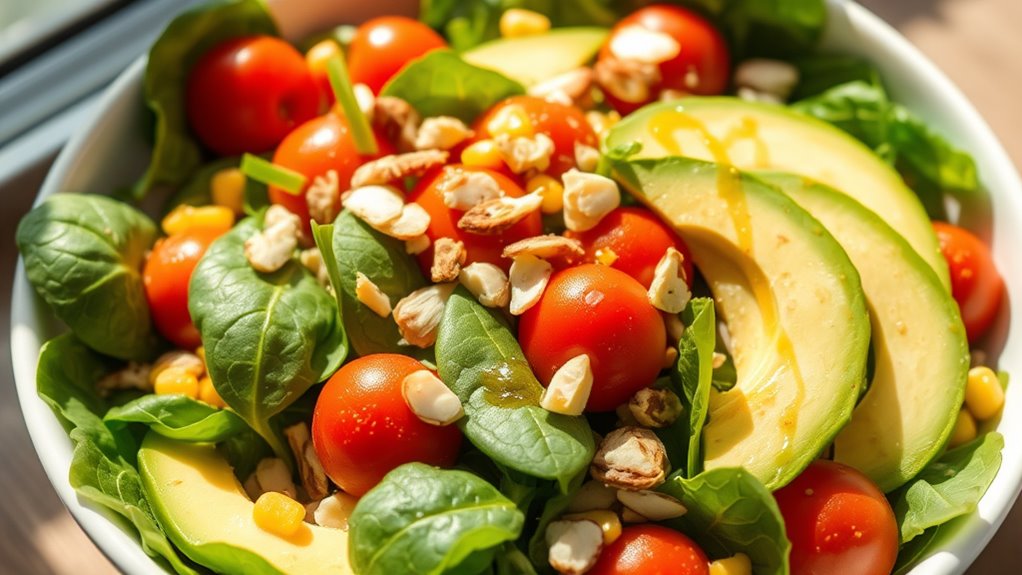
Crave-worthy Trader Joe’s–style salad starts with crisp greens as your base, then layer in shredded carrots, halved cherry tomatoes, and cucumber for bright contrast. Toss in olives or feta if you love a salty punch, and finish with a zingy lemon-vinaigrette that livens every bite. Use a mandoline for even slices, and keep greens dry to stay crunchy. Dress last to preserve color, and savor the textures. If you keep going, you’ll uncover more tasty tricks.
Ingredients and Quantity
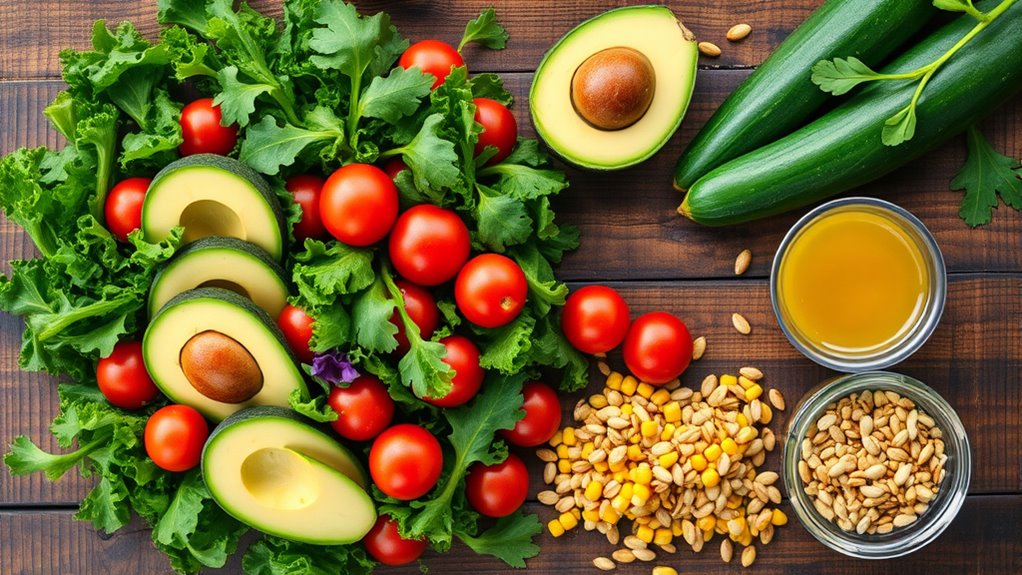
Start with the basics, then layer in flavor: you’ll need a crisp mix of greens, about 4 cups worth, plus a handful of shredded carrots, a cup of cherry tomatoes, and half a cup of cucumber slices. You want fresh ingredients that stay vibrant, so pick firm produce and rinse well. This foundation fuels bold salad varieties, from peppery arugula to sweet butter lettuce. Build color and texture with optional toppings: olives, feta, or sunflower seeds. Dress lightly to keep crunch and brightness intact, and taste as you go.
| Item | Quantity | Notes |
|---|---|---|
| Greens | 4 cups | Any salad variety |
| Carrots | Handful | Shredded |
| Tomatoes | 1 cup | Cherry, halved |
Preparations
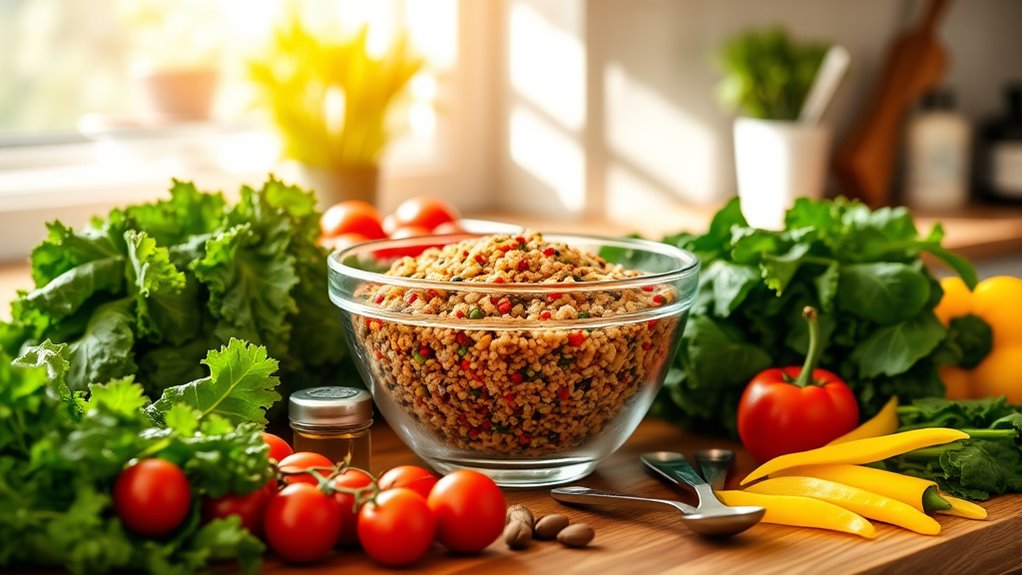
Now that you’ve got the greens prepped, it’s time to set the stage with practical preparations that keep every bite crisp and bright. You’ll rinse, spin, and pat thoroughly, then fold in dry greens to prevent sogginess. Toss in chill components last to preserve texture and color. For dressings, whisk together a quick vinaigrette: olive oil, lemon, a splash of vinegar, and a pinch of salt—bright, balanced, and ready to emulsify. Keep your mix tight by layering components in order: base greens, crunchy elements, then herbs. If something doesn’t sing, try ingredient substitutions like almonds for croutons or goat cheese for feta. Store components separately until serving, and dress right before eating so flavors stay lively and your salad stays crisp.
Kitchen tools or Kitchenware Required
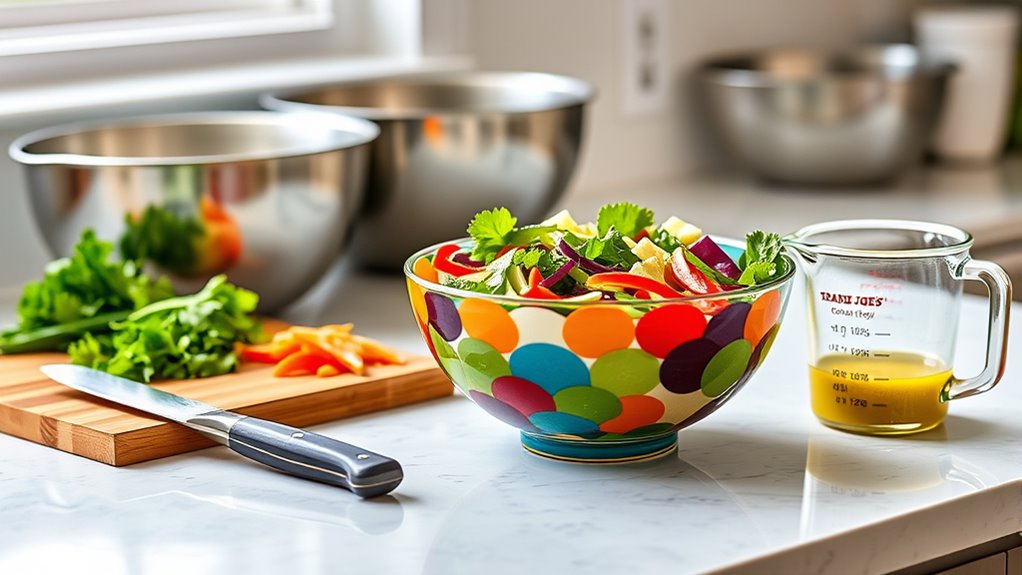
A clean, reliable salad toolkit makes every bite pop, so you don’t overthink the prep. You choose wisely, because the right tools set you free to focus on flavor. Your core gear: sturdy salad bowls for tossing, a sharp knife on a dependable cutting board, and a spacious chopping board for greens. A good mandoline helps slice evenly without fatigue, while a simple whisk or tongs keeps textures intact. Don’t overlook a non-slip mat and a resealable jar for quick dressings.
| Tool | Benefit | Tip |
|---|---|---|
| Salad bowls | Contained mixing, presentation | Use bowls with wide rims |
| Cutting boards | Safe prep station | One for produce, one for protein |
| Knife | Precision cuts | Sharp edge daily upkeep |
How to Cook

- Begin by rinsing your greens and letting them dry thoroughly to keep them crisp.
- Lightly sauté or blister vegetables to create contrast in texture and flavor.
- Fold the warm sautéed vegetables into the greens to release instant aroma.
- Use patient, steady heat to draw out sweetness from onions, peppers, or mushrooms.
- Avoid rushing the browning process to develop caramel notes and savory depth.
- Balance the dish with sharp acidity from a splash of lemon juice or vinegar.
- Add a pinch of salt and a drizzle of olive oil for seasoning and richness.
- Employ cooking techniques that respect the ingredients: quick searing, gentle simmering, and strategic resting.
- Experiment with vibrant flavor combinations, such as tangy citrus with roasted corn or smoky paprika with almonds, to enhance every bite.
How to Serve
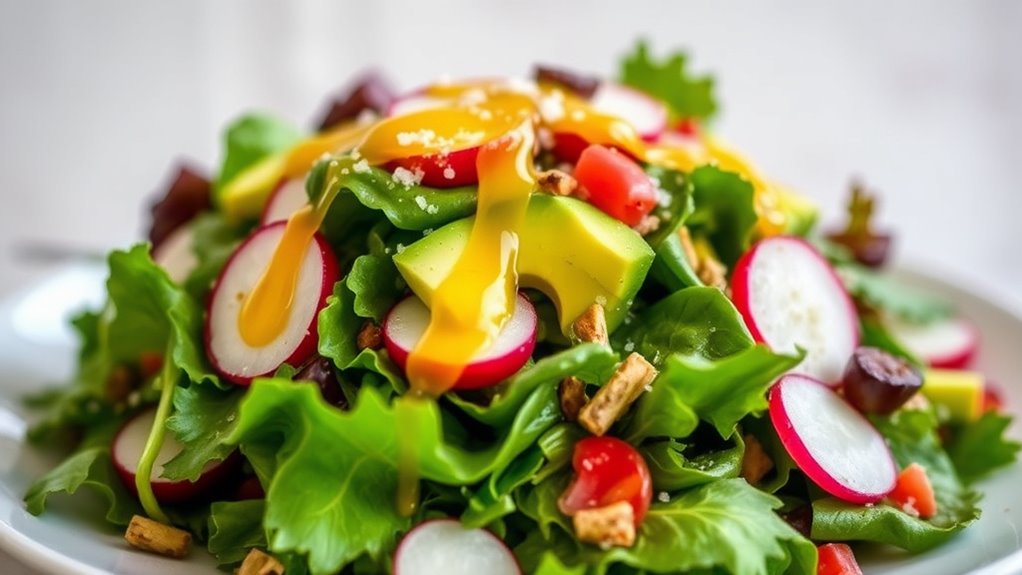
For serving, plate the greens with a confident angle, letting the vibrant leaves shine beneath a light drizzle of olive oil and a quick squeeze of lemon to wake the flavors. You’ll want to balance textures—crisp, peppery, and tender—so the first bite feels lively. Add protein or grains if you crave heft, but keep portions tidy to honor the salad’s integrity. Arrange toppings in a deliberate pattern, with color contrasts that pop on the plate. Serve with a pinch of flaky salt and a cracked pepper kiss to finish. For serving suggestions, keep utensils nearby for easy scooping, and offer extra lemon wedges for brightness. Presentation ideas: use varied height, simple bowls, and minimal clutter to elevate the experience.
Tips
Stir in confidence: start with a clean, dry bowl and let greens shine by washing, spinning, and patting them thoroughly so moisture doesn’t dull the flavors. You’ll save time with prepped fixes: chop in bulk, store crisp bottoms away from moisture, and dry thoroughly for a crisper bite. For dressings, whisk bright olive oil with tangy vinegar, a whisper of mustard, and a pinch of salt; adjust acidity to your taste while keeping it light enough to drizzle. When a classic isn’t available, try ingredient substitution: yogurt instead of mayo for creaminess, lemon juice instead of vinegar, or honey with dijon for a sweeter kick. Elevate texture with crunchy toppings and bold herbs, keeping flavors balanced and fearless.
Food Value and Benefit
This salad is a nutrient-dense dish that offers a variety of vitamins, minerals, and health benefits with every serving. Packed with fresh greens, fruits, vegetables, protein-rich toppings, and healthy fats, it provides balanced nourishment that supports overall well-being.
This nutrient-dense salad delivers a spectrum of vitamins, minerals, and nourishing fats for balanced well-being.
Food Value of the Salad:
- Rich in dietary fiber from kale, arugula, and other greens, promoting healthy digestion.
- High-quality protein from chickpeas or grilled chicken, aiding muscle repair and sustained energy.
- Contains healthy fats from nuts, seeds, and olive oil, which support heart health and enhance nutrient absorption.
- Abundant in vitamins such as Vitamin A, Vitamin C, Vitamin K, and folate.
- Supplies essential minerals including potassium, magnesium, and iron from vegetables and toppings.
Benefits of Eating This Salad:
- Helps maintain steady energy levels due to a balanced mix of carbohydrates, protein, and fats.
- Supports digestive health through high fiber content.
- Enhances immune function and skin health thanks to antioxidants and vitamins A and C.
- Promotes cardiovascular health by providing heart-friendly fats and potassium.
- Supports cognitive function and mood regulation with vitamins and minerals that sharpen focus.
- Provides a feeling of fullness without heaviness, aiding in weight management.
This versatile salad can be customized by adding quinoa for extra protein, swapping greens like arugula for a peppery flavor, or using balsamic vinegar instead of citrus for a subtle tang, making it a practical and satisfying meal choice.
Frequently Asked Questions
Can I Prep This Salad a Day Ahead Without Sogginess?
Yes, you can prep ahead, but avoid sogginess with smart prep: layer greens on bottom, dry toppings separately, seal tight, and dress at serving. This keeps salad storage crisp, preserving ingredient freshness and bold, liberating flavors.
Which Dressing Pairs Best for This Mix?
Silence shivers like a kite’s string in wind, pairing best with Balsamic Vinaigrette or Lemon Tahini. You’ll crave balance, so drizzle sparingly, taste as you go, and keep greens crisp for fearless, free-spirited savor.
Can I Substitute Ingredients for a Vegetarian Version?
Yes, you can substitute ingredients for a vegetarian version, embracing vegetarian protein and ingredient swaps. You’ll savor hearty textures, crisp veggies, and bold flavors, while you improvise freely, mixing legumes, seeds, and tofu with savory, practical, everyday tweaks.
How Long Will Leftovers Stay Fresh in the Fridge?
Leftovers stay fresh about 3 to 4 days in the fridge. You’ll savor the suspense as you check for sour smells or slimy edges, practicing left over storage and food safety with crisp lids, clean containers, and reheating thoroughly.
Is There a Gluten-Free Option for This Recipe?
Yes, you can make it gluten-free. Use gluten free grains like quinoa or millet, and try alternative dressings such as tahini-lemon or olive-garlic vinaigrette for bold flavor and freedom from gluten constraints.
References
- https://en.wikipedia.org/wiki/Trader_Joe%27s
- https://www.npr.org/sections/thesalt/2020/03/03/811568119/trader-joes-is-an-accidental-food-empire
- https://www.foodnetwork.com/how-to/packages/food-network-essentials/trader-joes-ingredients-to-know
- https://www.thekitchn.com/trader-joes-salad-recipes-229092
- https://www.seriouseats.com/trader-joes-salad-ideas-5110243
- https://www.washingtonpost.com/food/2021/08/11/trader-joes-salad-options/
- https://www.bonappetit.com/story/trader-joes-salad-recipes
- https://www.fda.gov/food/food-labeling-nutrition/food-labeling-guide
- https://www.eatright.org/food/nutrition/dietary-guidelines-and-myplate/what-is-a-healthy-diet
