The Complete Step-by-Step Protocol for Making Pomegranate Jam Safely provides essential guidance for home canners who want to create delicious, safe preserves. This expert procedural guide outlines the necessary steps and safety measures to ensure your pomegranate jam is both flavorful and free from harmful bacteria. By adhering to this precise protocol, you can confidently enjoy the rich taste of homemade jam while safeguarding your health.
What This Guide Covers (And What It Doesn’t)

This guide provides a detailed, step-by-step protocol for making pomegranate jam, featuring specific ingredients, measurements, and cooking techniques that will help you achieve optimal flavor and texture. You will learn how to extract juice, combine ingredients, cook to the right consistency, and properly jar your jam for safety and longevity. However, this guide does not address alternative fruit jam recipes, preserving methods for other fruits, or general canning techniques unrelated to pomegranates. It is specifically tailored for home cooks seeking precise instructions to make pomegranate jam safely and effectively, assuming a basic understanding of kitchen equipment and cooking processes.
Who Should Read This

This article is designed for home cooks eager to explore the unique taste of pomegranate jam. If you’re familiar with the fundamentals of jam-making, such as boiling and sterilization, you’ll find this guide particularly beneficial. It caters to individuals who have previously made fruit preserves but may lack specific experience with pomegranates, especially regarding their unique acidity and sugar content. Additionally, those with dietary restrictions or preferences related to sugar intake should note that this guide focuses on traditional methods that may not incorporate sugar alternatives or low-sugar variations.
The Step-by-Step Protocol
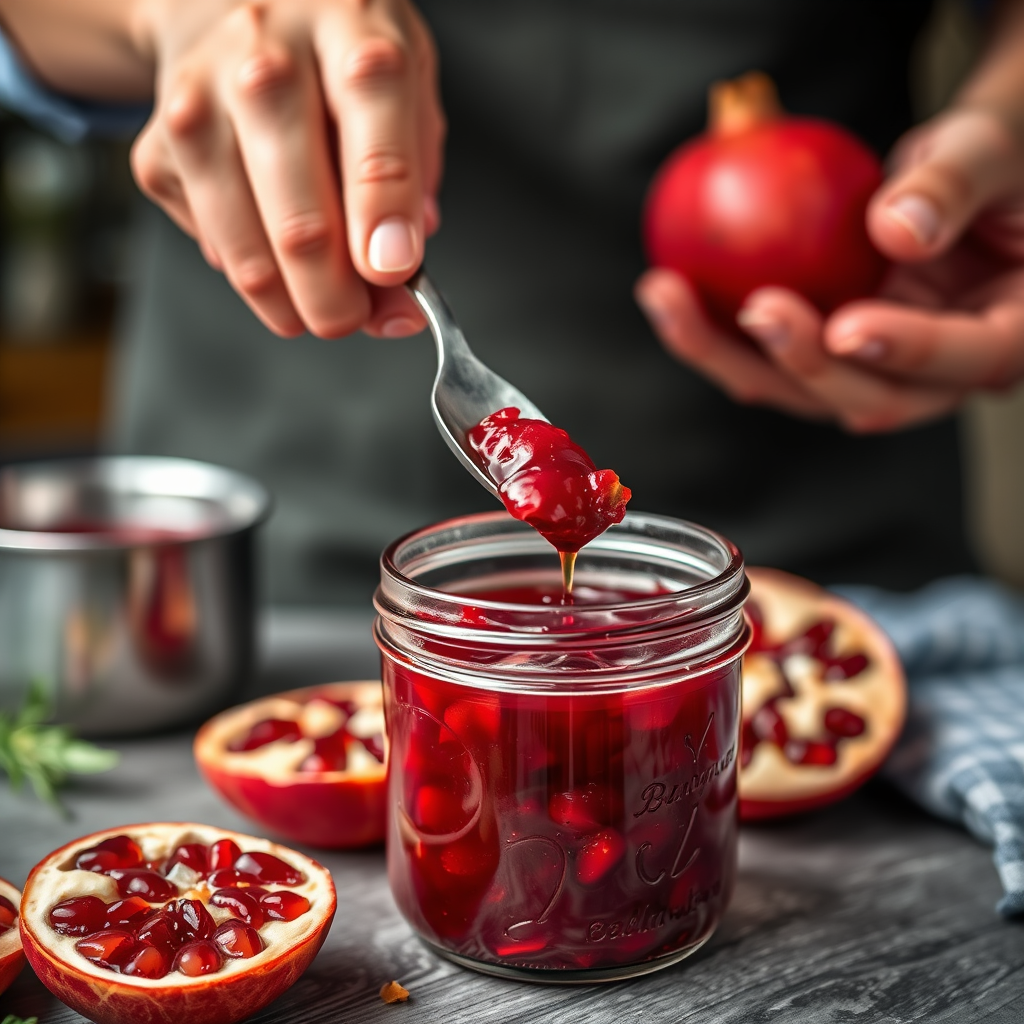
1. Gather Ingredients: Start with 4 cups of fresh pomegranate juice, 1.5 cups of granulated sugar, and the juice of 1 lemon. The lemon juice is essential, as it balances the acidity and enhances the flavor of the jam.
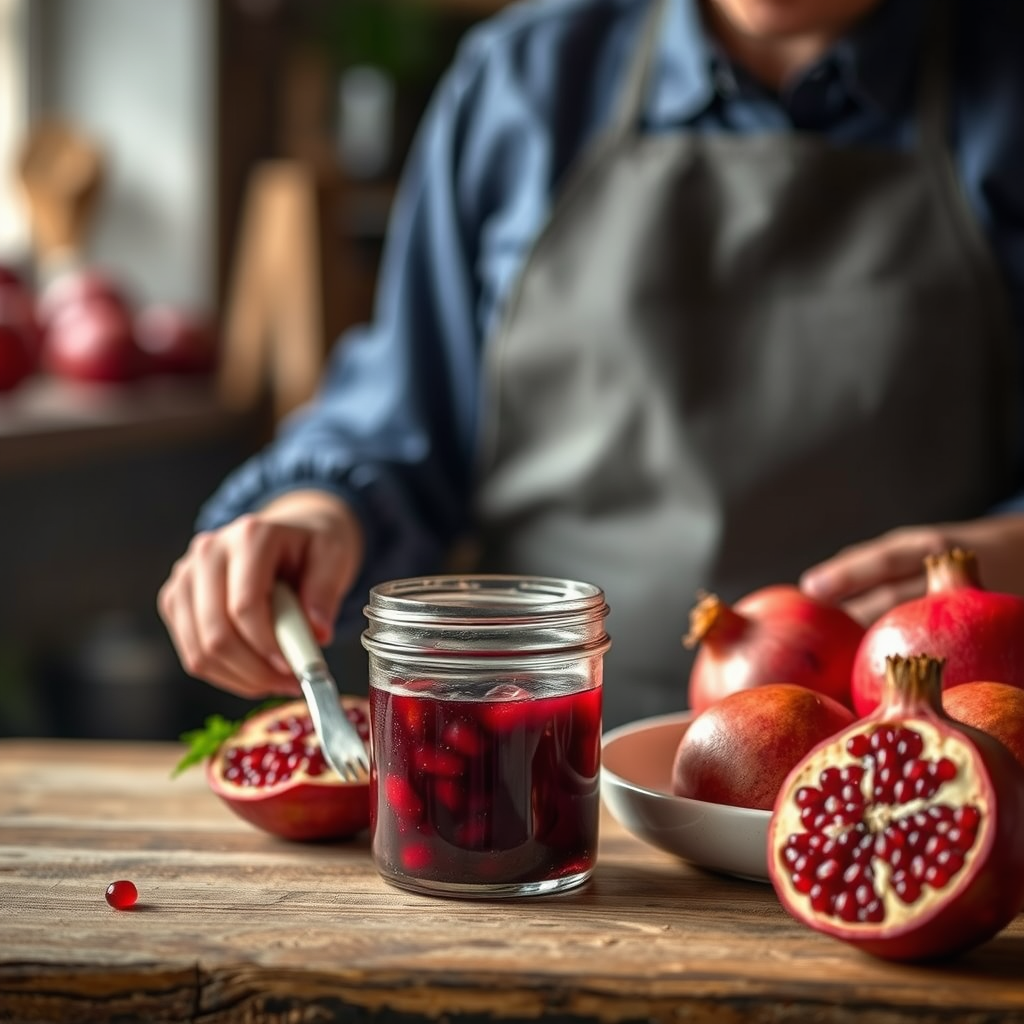
2. Prepare Pomegranate Juice: Extract juice from approximately 12 ripe pomegranates. You can use a juicer or do it by hand. If using the latter method, cut the pomegranates in half and use a wooden spoon to tap out the seeds into a bowl; then press down to extract the juice. Be sure to remove any seeds and pulp, as these can negatively affect the texture of the finished jam.
3. Combine Ingredients: In a large, heavy-bottomed pot (with at least a 4-quart capacity), mix the fresh pomegranate juice, sugar, and lemon juice. Stir thoroughly to dissolve the sugar completely before applying heat. This step is crucial for preventing crystallization.
4. Cook the Mixture: Place the pot over medium-high heat and bring the mixture to a rolling boil. Stir frequently to prevent scorching. Maintain a steady boil for 20 to 25 minutes until it reaches the gel stage, which is 220°F (104°C) on a candy thermometer. Achieving this temperature is key to ensuring the proper consistency.
5. Test for Doneness: To check for the gel stage, conduct a gel test by placing a spoonful of jam on a chilled plate and allowing it to cool for a minute. Run your finger through the jam; if it holds its shape and does not run back together, it is ready to be jarred.
6. Jar and Seal: Sterilize your jars and lids by boiling them in water for at least 10 minutes. Once the jam is ready, pour it into the hot sterilized jars, leaving about 1/4 inch of headspace. Wipe the rims of the jars with a clean, damp cloth to remove any residue and ensure a good seal. Seal with the lids immediately.
7. Cool and Store: Let the jars cool at room temperature for 12 to 24 hours. After they have cooled, check the seals by pressing down on the center of each lid; if it does not pop back, the jar has sealed properly. Store the sealed jars in a cool, dark place, or refrigerate them for a longer shelf life.
Warning Signs: When Not to Follow This
– Do not attempt this recipe if you notice that your pomegranates are spoiled, moldy, or overly soft, as this can compromise the flavor and safety of the jam.
– If you have a known allergy to pomegranates or any of the other ingredients listed, do not proceed with this recipe.
– Avoid this guide if you lack the necessary kitchen equipment, such as a thermometer or sterilization tools, as these are crucial for ensuring the jam is safe for consumption.
The Most Common Mistakes (And Their Consequences)
– One common mistake is inaccurately measuring pomegranate juice. If the juice is too diluted, the jam may not set properly, resulting in a runny texture. Conversely, too much juice can lead to overly sweet jam.
– Overcooking the mixture can cause the jam to become too thick or caramelized, resulting in a burnt flavor, which is undesirable.
– Failing to properly sterilize jars and lids can introduce bacteria, leading to spoilage and potential foodborne illnesses. Always prioritize cleanliness throughout the process.
Special Cases That Need a Different Approach
– If using frozen pomegranate juice, ensure it is fully thawed before measuring. Use the same measurements as fresh juice; however, adjust the cooking time, as it may take longer to reach the gel stage due to higher water content.
– For those wanting to reduce sugar, consider using a low-sugar pectin that allows for less sugar while still achieving a proper gel. Be mindful that this may slightly alter the flavor profile.
– Individuals who prefer a chunkier consistency can include pomegranate seeds in the jam, but they should be added in the last few minutes of cooking to prevent them from becoming too soft.
When You Need a Professional
– If you experience any adverse reactions after consuming pomegranate jam, such as allergic symptoms or gastrointestinal distress, seek medical attention immediately.
– Consult a food safety expert if you plan to sell your jam, as there are specific regulations and safety standards that need to be followed for commercial production.
– If you’re uncertain about proper canning techniques or wish to experiment with significantly altering the recipe (like omitting sugar entirely), it’s advisable to consult a professional food preservationist.
Sources and Further Reading
– “Ball Complete Book of Home Preserving” – A comprehensive guide on canning and preserving techniques.
– USDA Guidelines on Home Canning – Provides essential safety standards for fruit preserves and jams.
– Local extension services or agricultural universities often offer workshops and resources on safe canning practices specific to your region.
By following this guide, you will be well-equipped to create delicious and safe pomegranate jam that captures the unique flavor of this vibrant fruit. Enjoy the rewarding process and the delightful taste of your homemade creation.
Frequently Asked Questions
What ingredients do I need for a basic pomegranate jam recipe?
To make a basic pomegranate jam, you will need fresh pomegranates, sugar, lemon juice, and water. Start with about 4 cups of pomegranate juice extracted from the seeds, 2 cups of sugar, and the juice of one lemon to enhance flavor and help with preservation.
How do I extract juice from pomegranates for jam?
To extract juice from pomegranates, cut the fruit in half and use a citrus juicer or a manual press to squeeze out the juice. You can also place the seeds in a blender, pulse gently, and strain the mixture through a fine sieve to separate the juice from the pulp and seeds.
Why is lemon juice important in a pomegranate jam recipe?
Lemon juice is crucial in a pomegranate jam recipe as it enhances the flavor, adds acidity, and helps with the gelling process. The natural pectin in the pomegranate combined with lemon juice helps achieve the desired consistency while balancing the sweetness of the sugar.
What is the best way to store homemade pomegranate jam?
The best way to store homemade pomegranate jam is in sterilized glass jars with airtight lids. Once cooled, you can keep the jam in the refrigerator for up to a month, or process the jars in a water bath for long-term storage, ensuring they are sealed properly to avoid spoilage.
Which spices can I add to enhance the flavor of pomegranate jam?
To enhance the flavor of pomegranate jam, consider adding spices like cinnamon, cardamom, or ginger. A pinch of these spices can give your jam a unique twist and complement the tartness of the pomegranates, making it a delightful addition to various dishes and desserts.
References
- Pomegranate
https://en.wikipedia.org/wiki/Pomegranate - https://www.ncbi.nlm.nih.gov/pmc/articles/PMC4006484/
https://www.ncbi.nlm.nih.gov/pmc/articles/PMC4006484/ - https://www.ncbi.nlm.nih.gov/pmc/articles/PMC6264581/
https://www.ncbi.nlm.nih.gov/pmc/articles/PMC6264581/ - https://www.sciencedirect.com/science/article/pii/S2351978917300184
https://www.sciencedirect.com/science/article/pii/S2351978917300184 - https://www.healthline.com/nutrition/pomegranate
https://www.healthline.com/nutrition/pomegranate - Google Scholar Google Scholar
https://scholar.google.com/scholar?q=pomegranate+jam+recipe - Google Scholar Google Scholar
https://scholar.google.com/scholar?q=pomegranate+jam - Google Scholar Google Scholar
https://scholar.google.com/scholar?q=pomegranate+preservation+methods - https://www.verywellfit.com/pomegranate-nutrition-facts-4171466
https://www.verywellfit.com/pomegranate-nutrition-facts-4171466 - pomegranate jam recipe – Search results
https://en.wikipedia.org/wiki/Special:Search?search=pomegranate+jam+recipe