The complete protocol for safely making strawberry rhubarb jam is essential for both novice and experienced preservers seeking to master this classic recipe. This guide details each step, from selecting the freshest ingredients to ensuring proper canning techniques, to achieve a delicious and safe product. Following these expert methods not only enhances flavor but also guarantees food safety, making your homemade jam a delightful treat.
What This Guide Covers (And What It Doesn’t)
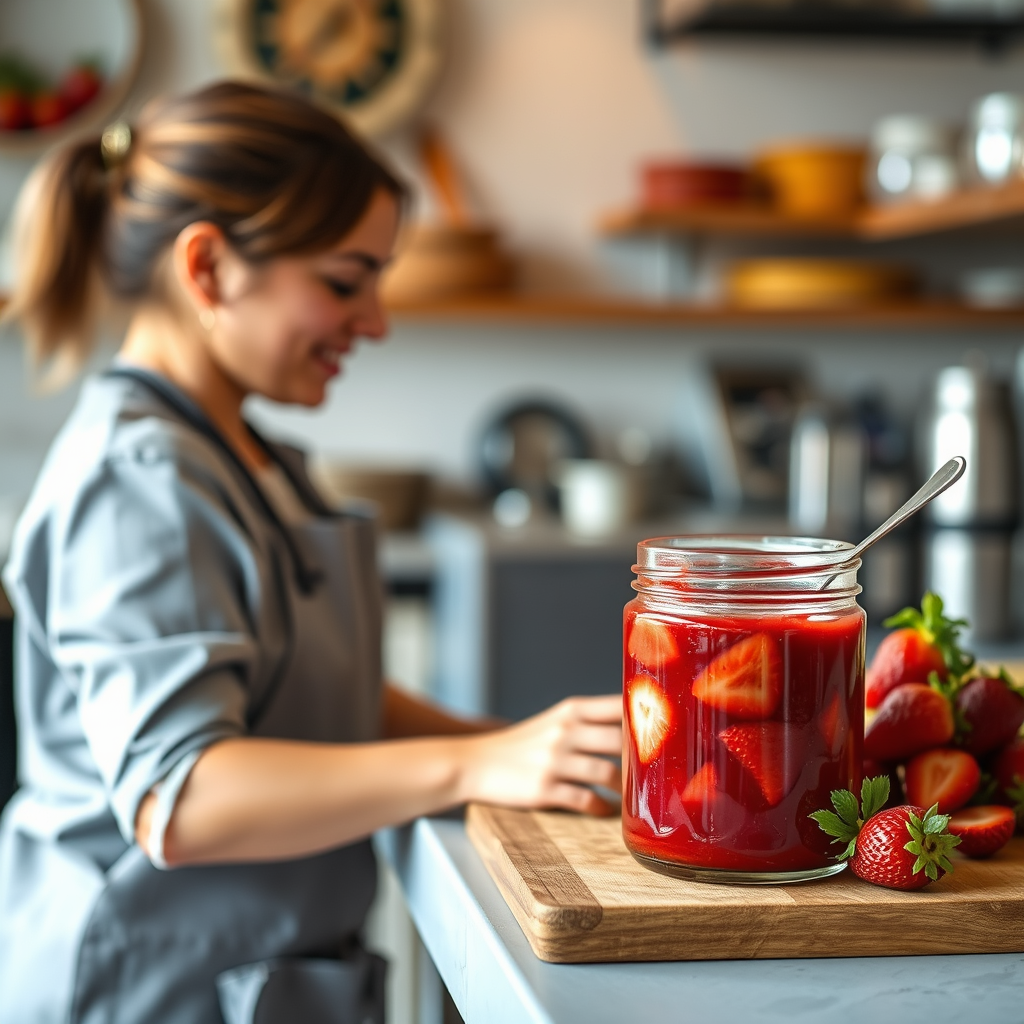
This guide presents a comprehensive, step-by-step protocol for safely making strawberry rhubarb jam. It includes precise ingredient measurements, necessary equipment, and effective preservation techniques. By focusing on the harmonious balance of flavors between strawberries and rhubarb, this guide ensures a sweet yet tart jam perfect for long-term canning. However, it does not address alternative jam recipes or methods outside of the strawberry rhubarb combination, nor does it explore other forms of food preservation beyond canning.
Who Should Read This
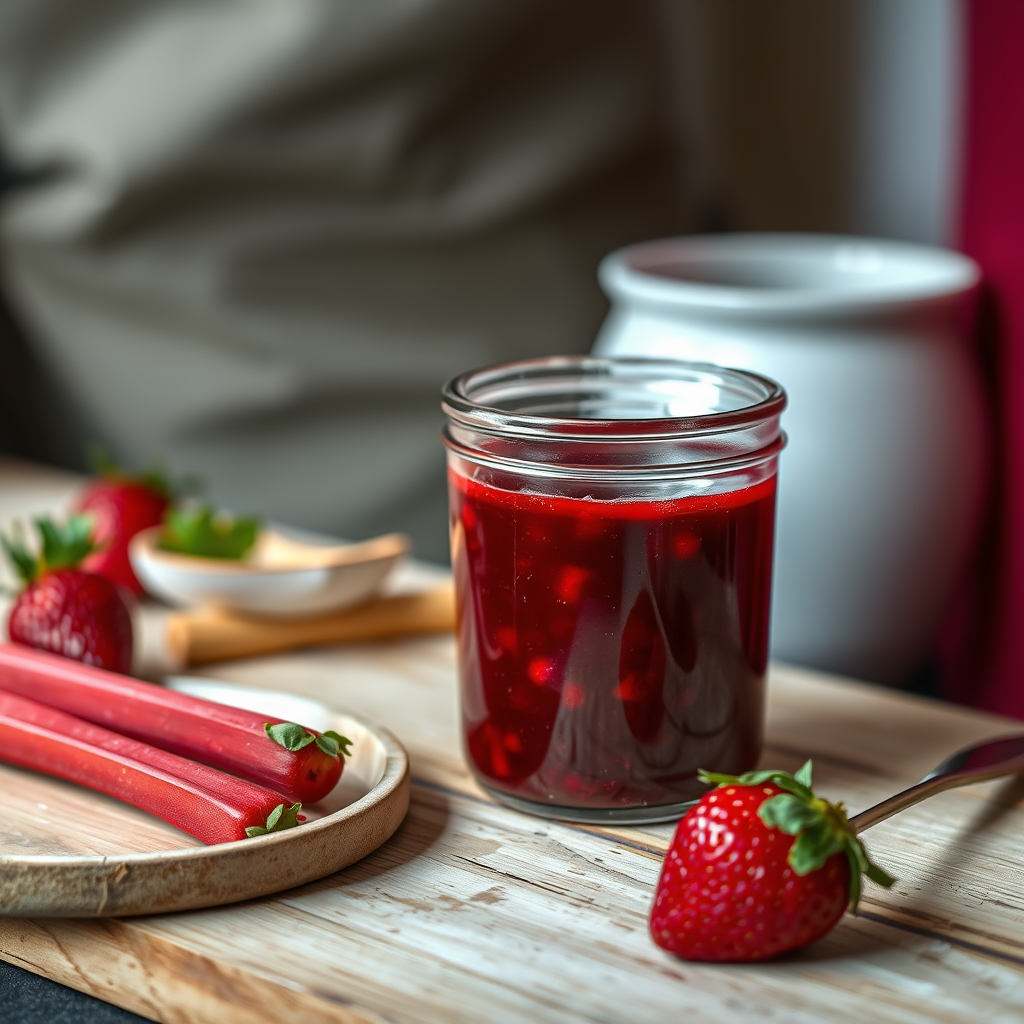
This guide is designed for home cooks with a basic understanding of canning and food preservation techniques who wish to enhance their skills in making fruit jams. Readers should already be familiar with kitchen safety practices, including proper sanitation of equipment and the fundamentals of boiling water canning. While beginners may find value in this guide, it is essential they have access to reliable resources or experienced individuals for support throughout the process.
The Step-by-Step Protocol
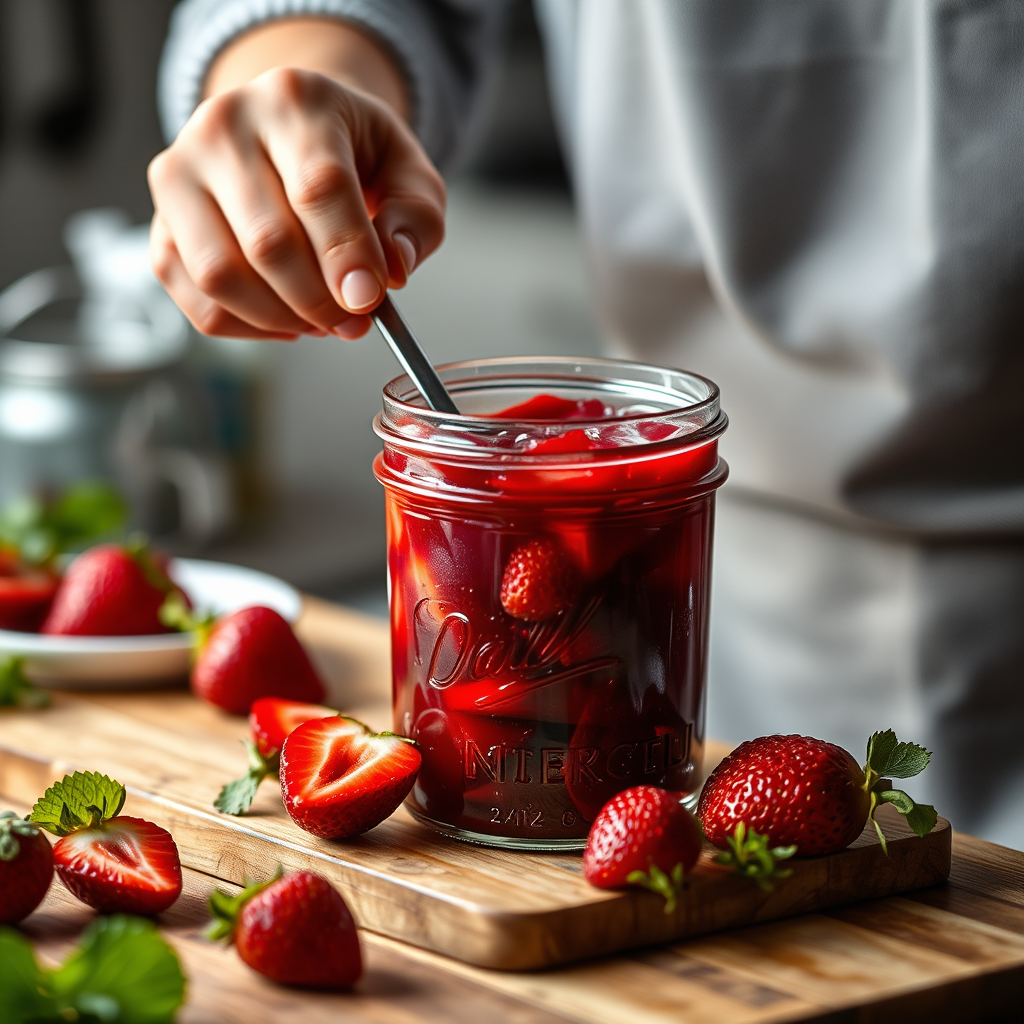
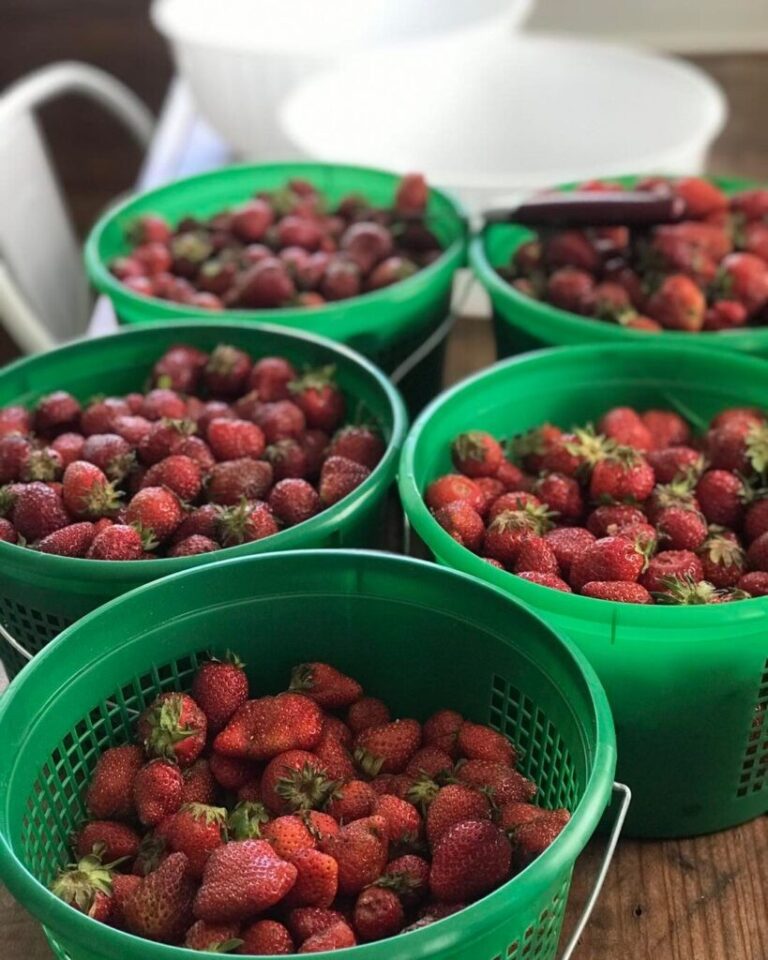
1. Gather Ingredients: Collect 2 cups of fresh strawberries, hulled and quartered, and 2 cups of fresh rhubarb, chopped into 1-inch pieces. Ensure that all ingredients are organic and free from blemishes.
2. Prepare Equipment: Sterilize 4 half-pint mason jars and lids in boiling water for 10 minutes. Have a water bath canner ready with enough water to cover the jars by at least one inch.
3. Cook the Mixture: In a large, heavy-bottomed pot, combine the strawberries, rhubarb, 4 cups of granulated sugar, and 1/4 cup of lemon juice. Stir over medium heat until the sugar dissolves and the mixture begins to boil.
4. Check for Doneness: Use a candy thermometer to ensure the jam reaches 220°F (104°C), the ideal temperature for proper gel formation. Stir frequently to prevent scorching.
5. Jar the Jam: Once the mixture has reached the correct temperature, ladle the hot jam into the prepared jars, leaving a 1/4-inch headspace. Wipe the rims with a clean, damp cloth to remove any residue.
6. Seal and Process: Apply the sterilized lids and screw on the metal bands until they are fingertip-tight. Process the jars in the boiling water canner for 10 minutes, adjusting for altitude if necessary.
7. Cool and Store: After processing, carefully remove the jars and let them cool at room temperature for 12-24 hours. Ensure that each lid has sealed properly by pressing the center; it should not pop back.
Nutritional Comparison of Strawberry Rhubarb Jam Ingredients
| # | Ingredient | Calories per 100g | Sugar (g) | Fiber (g) |
|---|---|---|---|---|
| 1 | Strawberries | 32 | 6.2 | 2.0 |
| 2 | Rhubarb | 21 | 1.1 | 1.8 |
| 3 | Granulated Sugar | 387 | 100.0 | 0.0 |
| 4 | Lemon Juice | 22 | 1.0 | 0.0 |
Warning Signs: When Not to Follow This
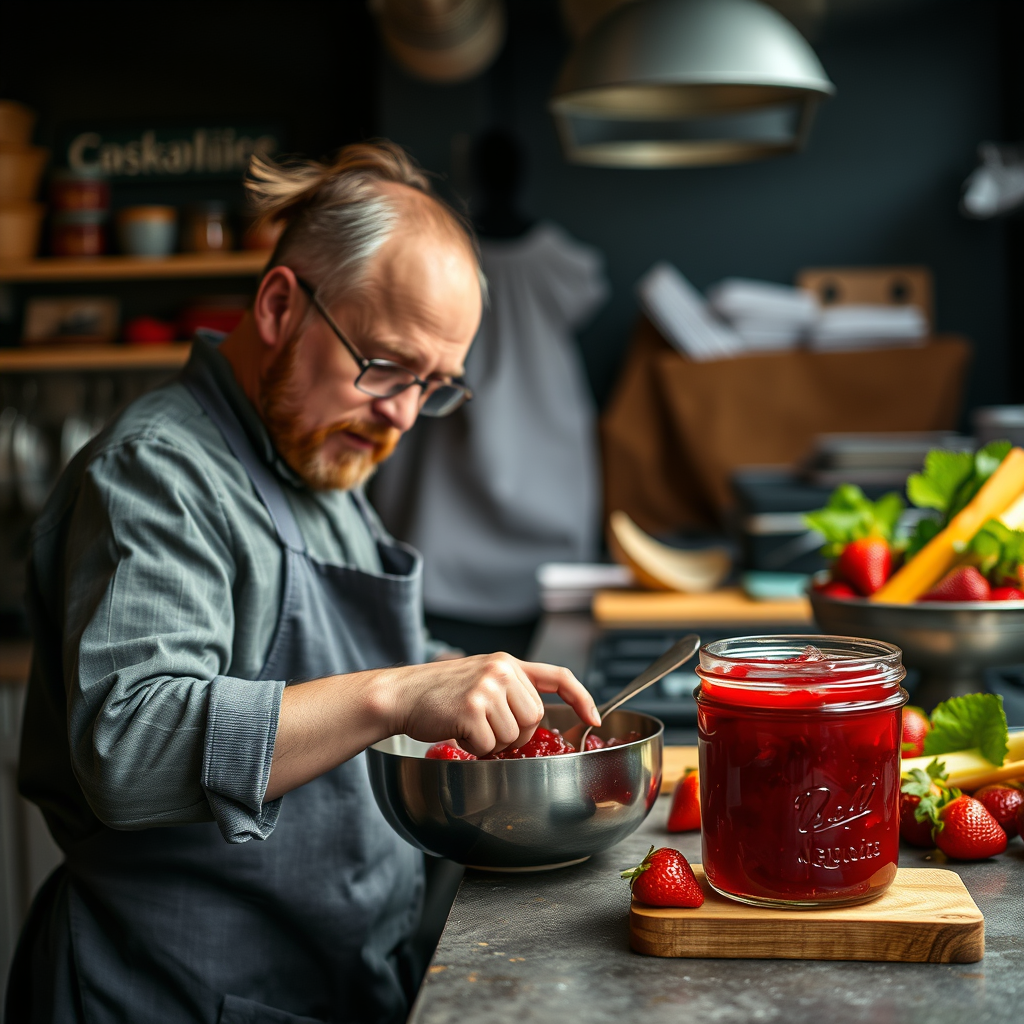
– Do not attempt this recipe if you have allergies to strawberries or rhubarb, as consuming the jam could lead to severe allergic reactions.
– Avoid making this jam if you notice any signs of spoilage in your fruit, such as mold or unusual odors, as these can compromise the safety and quality of the jam.
– If you lack proper canning equipment or are unable to maintain the necessary temperature during processing, this protocol should not be followed.
The Most Common Mistakes (And Their Consequences)
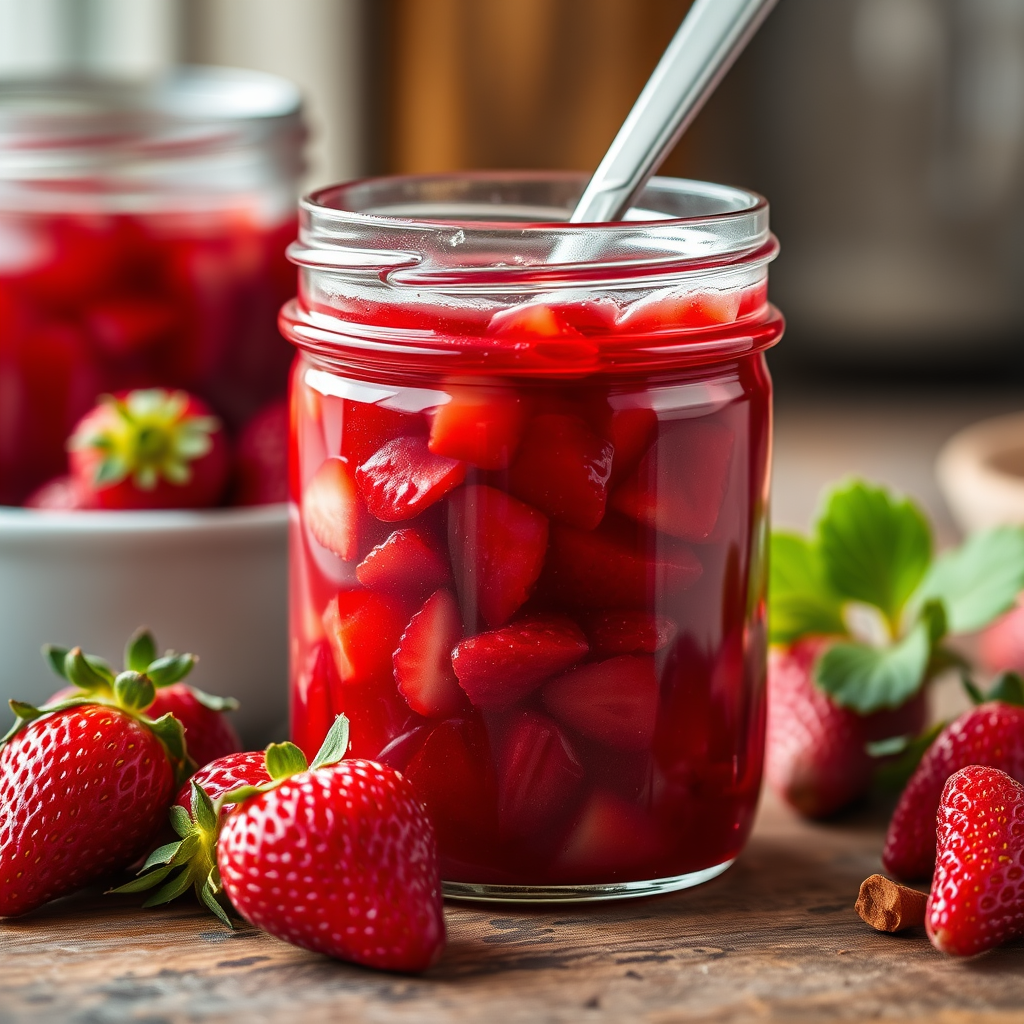
– One prevalent mistake is inaccurate sugar measurement, which can result in improper gelling and a jam that is either too runny or overly sweet. An under-gelled jam is also more susceptible to spoilage.
– Failing to adequately sterilize jars and lids can introduce bacteria, leading to spoilage or, worse, botulism. Always ensure jars are boiled for the appropriate duration.
– Neglecting to adjust processing times for high altitudes can result in under-processed jars, posing spoilage and food safety risks. For elevations above 1,000 feet, increase processing time by 1 minute for each additional 1,000 feet.
Special Cases That Need a Different Approach
– If using frozen strawberries or rhubarb, reduce the sugar by 1/2 cup due to the higher water content in thawed fruit, which can alter the jam’s consistency.
– For those who prefer a lower-sugar version, consider using a low-sugar pectin that allows for reduced sugar content while still achieving a safe gel.
– When preparing a larger batch, ensure that you process the jam in multiple rounds to maintain consistent temperature and pressure across all jars.
When You Need a Professional
– If you notice any signs of spoilage in your jam after canning, such as bulging lids or off smells, discard the jars immediately and consult a food safety expert.
– Seek professional guidance if you are uncertain about preservation techniques or have questions about food safety standards specific to your region, especially regarding altitude adjustments.
– If you plan to distribute or sell your jam commercially, it’s crucial to engage with a licensed food preservation expert to comply with local health regulations.
Sources and Further Reading
– The USDA Complete Guide to Home Canning, which outlines safe canning practices and recommended processing times for various types of jams and preserves.
– The National Center for Home Food Preservation, providing research-based guidelines on food preservation and safe canning methods.
– Ball Blue Book Guide to Preserving, a comprehensive resource for home canning enthusiasts with a focus on fruit preserves, including strawberry rhubarb jam recipes.
Frequently Asked Questions
What ingredients do I need for a basic strawberry rhubarb jam recipe?
To make a basic strawberry rhubarb jam, you will need fresh strawberries, rhubarb, granulated sugar, and pectin. It’s important to use ripe strawberries for sweetness and tart rhubarb to balance the flavors. Optionally, you can add lemon juice for acidity and enhance the taste.
How do I properly prepare strawberries and rhubarb for making jam?
Start by washing the strawberries and rhubarb thoroughly. Remove the stems from the strawberries and chop them into small pieces, while rhubarb should be cut into 1/2-inch slices. This preparation ensures even cooking and helps achieve the desired jam consistency.
Why is pectin important in a strawberry rhubarb jam recipe?
Pectin is a natural thickening agent that helps the jam to set properly, giving it a spreadable consistency. In strawberry rhubarb jam, pectin helps to gel the mixture, allowing the flavors to meld beautifully while preventing it from being too runny. Without adequate pectin, your jam may not achieve the right texture.
What is the best method for canning strawberry rhubarb jam for long-term storage?
The best method for canning strawberry rhubarb jam involves using a water bath canner. After cooking your jam, fill sterilized jars, leaving about 1/4 inch of headspace, and seal with lids. Process the jars in boiling water for 5-10 minutes to ensure they are sealed properly, extending the shelf life for up to a year.
Which spices can enhance the flavor of my strawberry rhubarb jam?
Adding spices like ginger, cinnamon, or vanilla can enhance the flavor profile of your strawberry rhubarb jam. A pinch of ground ginger adds warmth, while cinnamon contributes a hint of sweetness. For a more aromatic touch, consider adding vanilla extract during the cooking process for a delightful twist.
References
- Rhubarb
https://en.wikipedia.org/wiki/Rhubarb - https://www.uga.edu/extension/food-safety/recipes/strawberry-rhubarb-jam.html
https://www.uga.edu/extension/food-safety/recipes/strawberry-rhubarb-jam.html - https://extension.umn.edu/preserving-and-storing-food/strawberry-rhubarb-jam
https://extension.umn.edu/preserving-and-storing-food/strawberry-rhubarb-jam - https://www.nal.usda.gov/legacy/legacy/food-safety-preservation-preserving-strawberry-rhubarb-jam
https://www.nal.usda.gov/legacy/legacy/food-safety-preservation-preserving-strawberry-rhubarb-jam - https://www.fs.usda.gov/wildflowers/ethnobotany/food/strawberry_rhubarb.shtml
https://www.fs.usda.gov/wildflowers/ethnobotany/food/strawberry_rhubarb.shtml - https://www.ncbi.nlm.nih.gov/pmc/articles/PMC6572185/
https://www.ncbi.nlm.nih.gov/pmc/articles/PMC6572185/ - https://www.cdc.gov/nutrition/food-safety.html
https://www.cdc.gov/nutrition/food-safety.html - Google Scholar Google Scholar
https://scholar.google.com/scholar?q=recipe+for+strawberry+rhubarb+jam - Google Scholar Google Scholar
https://scholar.google.com/scholar?q=straberry+rhubarb+preservation - Google Scholar Google Scholar
https://scholar.google.com/scholar?q=jam+making+process+strawberry+rhubarb