Master the art of making apple jam at home with this complete expert guide, designed for both novice and seasoned cooks. This comprehensive resource covers everything from selecting the best apples to essential safety protocols for canning. Following the right procedures not only enhances flavor but also ensures your jam is safe for consumption, allowing you to enjoy this classic treat with confidence.
What This Guide Covers (And What It Doesn’t)

This guide offers a thorough, step-by-step protocol for crafting traditional apple jam, detailing the essential ingredients, equipment, and techniques for safe home canning. You’ll discover how to select the best apples, prepare your kitchen, and execute the canning process to ensure your apple jam is both delicious and safe for long-term storage.
However, it does not delve into alternative fruit preserves, jams made without pectin, or advanced canning methods that may require specialized equipment such as pressure canners. This guide is specifically designed for home cooks interested in preserving seasonal fruits, particularly apples, and aims to help you create your own jam with an emphasis on safety and flavor. Readers looking for commercial jam production methods or non-canning recipes will find this guide less relevant.
Who Should Read This

This guide is tailored for home cooks with basic kitchen skills, including chopping, measuring, and cooking, who are eager to learn more about fruit preservation. It is suitable for novices as well as those with some experience seeking to refine their technique or enhance their understanding of safety precautions in canning.
To succeed, readers should have access to the necessary equipment, such as jars, a canner, and utensils, and be prepared to follow precise instructions for optimal results. Those with specific dietary restrictions or seeking alternative sweeteners should consult specialized resources, as this guide focuses on traditional apple jam recipes using granulated sugar.
The Step-by-Step Protocol
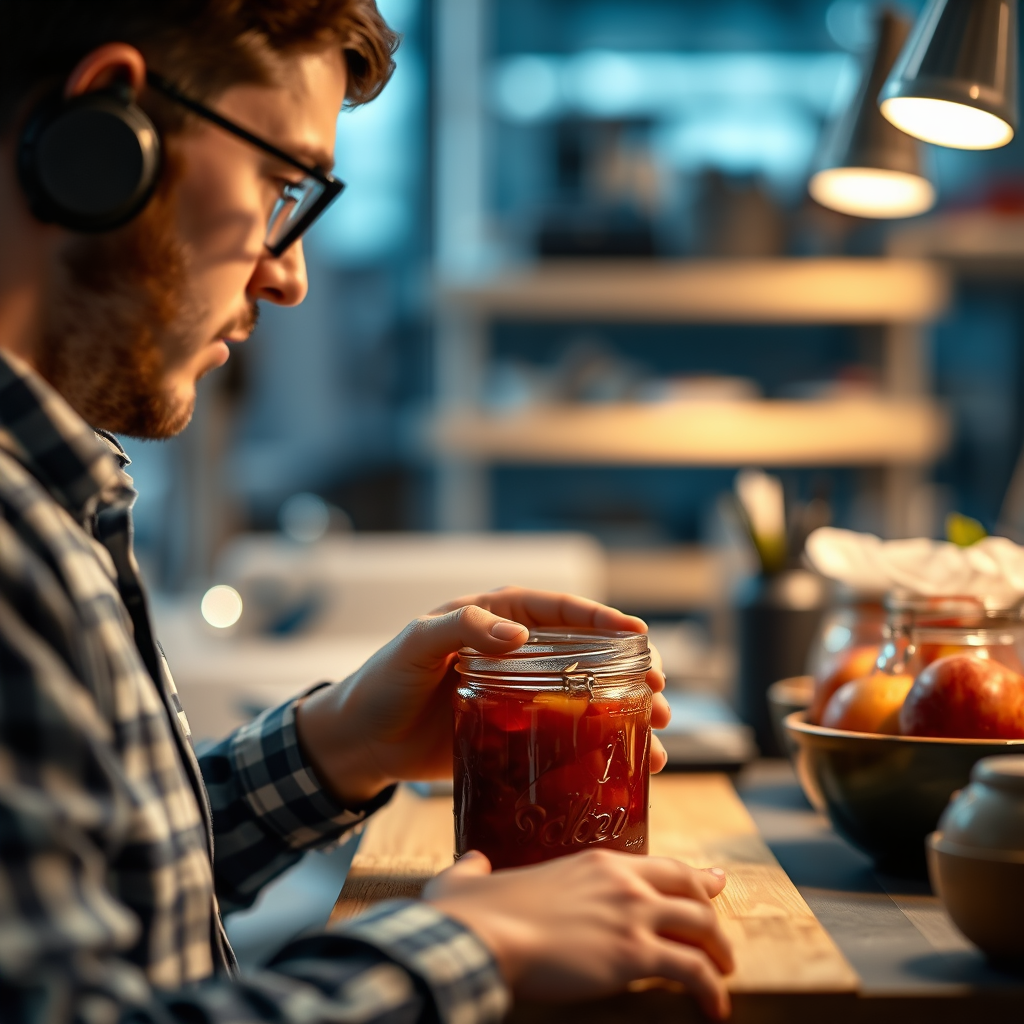
1. Gather Ingredients and Equipment: You will need 4 cups of peeled and chopped apples (approximately 6 medium apples), 1 cup of granulated sugar, 1/4 cup of lemon juice, and optional spices like cinnamon or nutmeg. Ensure you have the following equipment on hand: a large pot, wooden spoon, measuring cups, a ladle, canning jars (preferably half-pint), a canning pot with a rack, and a jar lifter.
2. Prepare Your Jars: Clean and sterilize 4 half-pint jars by boiling them in water for 10 minutes. This process eliminates any bacteria that could spoil your jam. Keep the jars warm until you are ready to fill them to prevent cracking from thermal shock.
3. Cook the Apples: In a large pot, combine the chopped apples, lemon juice, and sugar. Cook over medium heat, stirring frequently to prevent sticking. Continue cooking until the mixture bubbles and the apples soften, typically around 10-15 minutes. If you are adding spices, incorporate them during this step to enhance the flavor.
4. Test for Doneness: To check if the jam is ready for canning, perform the spoon test: place a spoonful of the mixture on a cold plate and run your finger through it. If the mixture holds its shape and does not flow back together, it is ready for canning. If it does flow back, continue cooking and retest every 5 minutes until the desired consistency is achieved.
5. Fill the Jars: Once your jam has reached the correct consistency, remove it from heat. Using a ladle, fill the warm sterilized jars, leaving about 1/4 inch of headspace at the top. This headspace is essential for proper sealing.
6. Seal the Jars: Wipe the rims of the jars with a clean, damp cloth to remove any residue. Place the sterilized lids on top and screw on the metal bands until they are fingertip-tight, ensuring a secure seal without over-tightening.
7. Process the Jars: Place the filled jars into your canning pot, ensuring they are covered by at least an inch of water. Bring the water to a boil. Process the jars in a boiling water bath for 5-10 minutes, depending on your altitude. Use the following guide: at sea level, process for 5 minutes; for elevations between 1,001 and 3,000 feet, process for 6 minutes; for elevations between 3,001 and 6,000 feet, process for 7 minutes; and for elevations above 6,000 feet, process for 8-10 minutes.
8. Cool and Store: After processing, carefully remove the jars using a jar lifter and place them on a clean towel or cooling rack. Allow them to cool completely for 12-24 hours. Once cooled, check that the lids have sealed properly by pressing down in the center; if it pops back, the jar has not sealed and should be refrigerated for immediate use.
Warning Signs: When Not to Follow This

Do not attempt this recipe if you notice any spoilage on your apples, such as mold or soft spots, as this could lead to foodborne illness. If you lack the proper canning equipment, such as a water bath canner or pressure cooker, do not proceed; insufficient equipment can compromise the safety of your jam.
Avoid making apple jam in high humidity conditions, as this can affect the gelling process and lead to spoilage. If you or someone consuming the jam has a severe allergy to apples or any other ingredients, consult with a healthcare provider before proceeding.
The Most Common Mistakes (And Their Consequences)
– Improperly Sterilized Jars: Failing to properly sterilize jars can lead to bacterial growth, resulting in spoilage of the jam.
– Inaccurate Measurements: Not measuring the sugar or lemon juice accurately can adversely affect the setting of the jam; too little sugar leads to a runny consistency, while too much can create an overly sweet product.
– Skipping the Doneness Test: Neglecting to test for doneness can result in undercooked jam, which may spoil, or overcooked jam that becomes too thick and loses flavor.
– Incorrect Processing Time: Failing to process jars in a boiling water bath for the correct amount of time, typically 5-10 minutes depending on altitude, can lead to unsafe conditions and spoilage.
Special Cases That Need a Different Approach
– If you are using heirloom apple varieties, adjust sugar levels based on their natural sweetness, as some apples are sweeter than others and may require less sugar.
– For those living at high altitudes (above 1,000 feet), increase the water bath processing time by 1 minute for each additional 1,000 feet of elevation to ensure proper sealing.
– If you wish to use less sugar or a sugar substitute, refer to specific pectin brands that accommodate low-sugar recipes, as traditional recipes rely heavily on sugar for preservation.
– Individuals with dietary restrictions may consider making apple jam without sugar, using fruit juice concentrates or sugar substitutes, but follow specific recipes designed for those ingredients.
When You Need a Professional
Contact a food safety expert or local extension office if you are unsure about the safety of your ingredients or your canning process, especially if you are attempting this for the first time. If you experience repeated failures in setting your jam or issues with spoilage, consult a professional canner or preservationist for tailored advice. For those with health concerns, such as compromised immune systems, seeking professional guidance is essential before consuming home-canned goods.
If you have questions about canning regulations in your area or specific preservation methods, reach out to a local agricultural extension service for accurate information.
Sources and Further Reading
– National Center for Home Food Preservation: Guidelines for safe canning practices and preservation techniques, including apple jam recipes.
– Ball Canning’s Complete Book of Home Preserving: A comprehensive resource on preserving methods, including tested apple jam recipes.
– USDA Complete Guide to Home Canning: Official guidelines on safe canning procedures and recipes, including fruit preserves.
– Local agricultural extension services: Provides region-specific advice on home canning and preservation methods tailored to local produce.
By following this comprehensive guide, you will be well-equipped to safely produce and enjoy homemade apple jam, capturing the essence of fall in every jar. Happy canning!
Frequently Asked Questions
What ingredients do I need for a basic apple jam recipe?
To make a basic apple jam, you’ll need fresh apples, sugar, lemon juice, and pectin. The apples should be peeled and chopped, and the amount of sugar may vary depending on the sweetness of the apples. Pectin is essential for achieving the right consistency, so ensure to follow the package instructions for the best results.
How long does it take to make apple jam from scratch?
Making apple jam from scratch typically takes about 30 to 45 minutes, depending on the recipe and the volume of apples you are using. After preparing the apples and mixing in sugar and pectin, it usually takes around 10 to 15 minutes of boiling until the mixture reaches the desired thickness. Allow extra time for cooling and canning if you plan to preserve it.
Why is my apple jam not setting properly?
If your apple jam is not setting, it could be due to insufficient pectin or not cooking the mixture long enough. Make sure to use the correct type of apples that contain enough natural pectin, and check the cooking time to ensure it reaches the right temperature for gelling. Adding more pectin and re-boiling the jam may also help achieve the desired consistency.
What is the best type of apples to use for making jam?
The best types of apples for making jam are those that are high in pectin and have a good balance of sweetness and tartness. Varieties like Granny Smith, Honeycrisp, and Fuji are excellent choices for apple jam due to their flavor and texture. Combining different apple types can also enhance the taste and complexity of your jam.
Which kitchen tools do I need to make apple jam effectively?
To make apple jam effectively, you will need a large pot for cooking, a wooden spoon for stirring, and a canning jar for storage. A food processor can be helpful for chopping the apples quickly, while a candy thermometer ensures the mixture reaches the correct temperature for setting. Additionally, having a funnel can make filling jars easier and less messy.
References
- Fruit preserves
https://en.wikipedia.org/wiki/Jam - https://www.bhg.com/recipes/how-to/bake/how-to-make-jam/
https://www.bhg.com/recipes/how-to/bake/how-to-make-jam/ - https://www.foodsafety.gov/food-safety-charts/jam-jelly-safety
https://www.foodsafety.gov/food-safety-charts/jam-jelly-safety - https://www.extension.purdue.edu/extmedia/FNR/FNR-502-W.pdf
https://www.extension.purdue.edu/extmedia/FNR/FNR-502-W.pdf - https://www.extension.iastate.edu/foodsafety/faq/jam-jelly.html
https://www.extension.iastate.edu/foodsafety/faq/jam-jelly.html - Google Scholar Google Scholar
https://scholar.google.com/scholar?q=apple+jam+recipe - Google Scholar Google Scholar
https://scholar.google.com/scholar?q=making+fruit+jams+and+jellies - https://pubmed.ncbi.nlm.nih.gov/?term=apple+jam+recipe
https://pubmed.ncbi.nlm.nih.gov/?term=apple+jam+recipe - https://www.nal.usda.gov/legacy/fnic/food-safety-apple-jam
https://www.nal.usda.gov/legacy/fnic/food-safety-apple-jam - https://www.sciencedirect.com/topics/agricultural-and-biological-sciences/jam
https://www.sciencedirect.com/topics/agricultural-and-biological-sciences/jam