Master the art of safely canning pepper jam with our complete expert guide, designed for home canners seeking reliable recipes and techniques. This guide covers essential steps, from ingredient selection to proper preservation methods, ensuring your pepper jam is both delicious and safe for long-term storage. Following the correct protocols is crucial to prevent spoilage and ensure food safety, making this guide an indispensable resource for any canning enthusiast.
What This Guide Covers (And What It Doesn’t)
This guide provides a comprehensive, step-by-step procedure for safely canning pepper jam, detailing specific ingredient measurements, processing times, and essential equipment recommendations. By focusing on traditional water bath canning methods, it prioritizes both food safety and quality. However, it does not encompass other types of jams or preserves, nor does it offer recipes for fresh pepper uses outside of canning. Aimed at home canners with a basic understanding of food preservation, this guide assumes no prior experience with pepper jam specifically. If you’re interested in alternative preservation methods, such as freezing or making pepper jelly, you won’t find that information here.
Who Should Read This

This guide is perfect for home canners who have experience with canning fruits or vegetables and wish to enhance their skills with a particular focus on pepper jam. It’s also tailored for those interested in creating homemade gifts or utilizing surplus peppers from their garden or local farmer’s market. Readers should have a foundational understanding of food safety principles, including the significance of acidity levels and proper canning techniques. If you’re a beginner or unfamiliar with food safety guidelines, it’s advisable to explore introductory resources before diving into this recipe.
The Step-by-Step Protocol
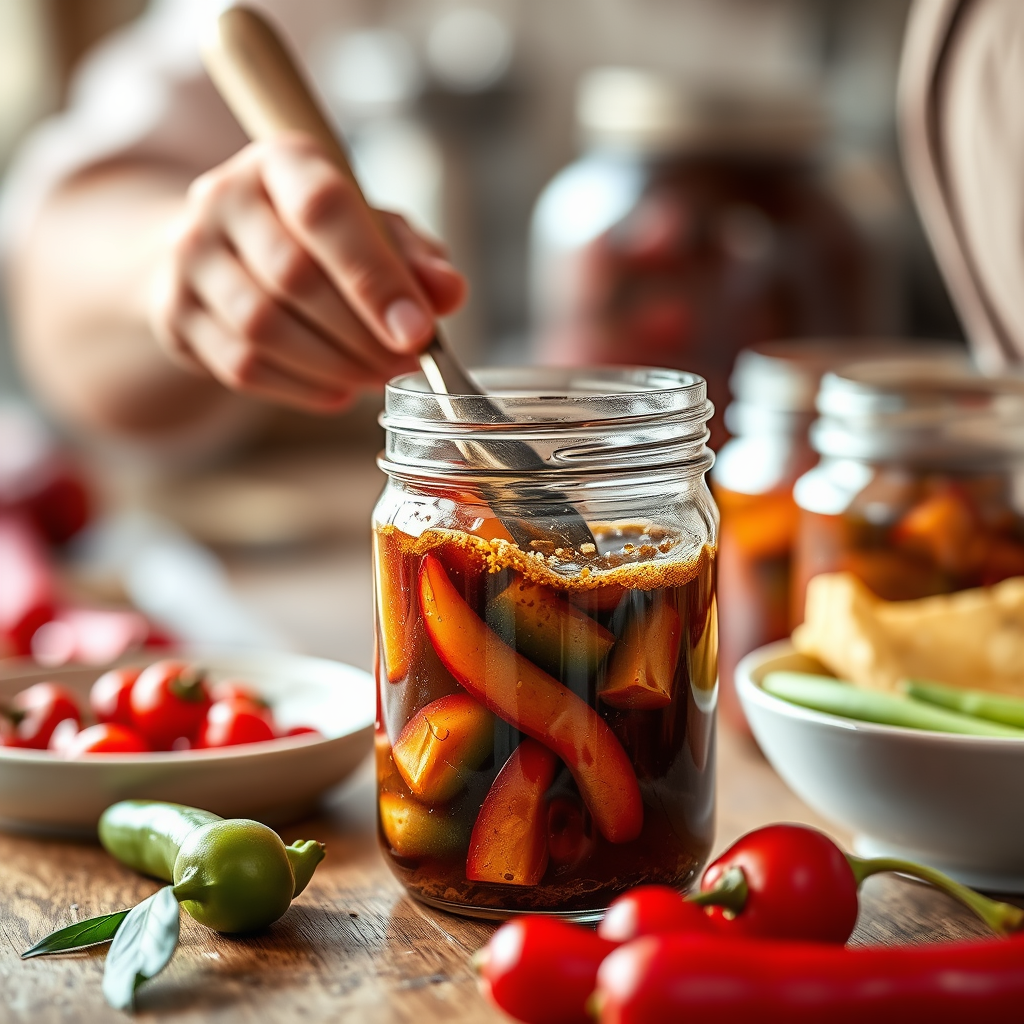
1. Gather Ingredients: Collect 2 cups of finely chopped peppers, combining sweet varieties like bell peppers with hot ones such as jalapeños or habaneros for a well-rounded flavor. You will also need 1 cup of granulated sugar, 1 cup of apple cider vinegar, and 1 box (1.75 oz) of high-quality pectin.
2. Prepare Jars and Lids: Sterilize 4 half-pint canning jars and their lids by boiling them in water for 10 minutes. Keep them warm in the pot or on a towel until you’re ready to use them, which helps prevent thermal shock.
3. Cook the Jam: In a large, heavy-bottomed pot, combine the chopped peppers, vinegar, and sugar. Bring the mixture to a rapid boil over medium heat, stirring frequently to dissolve the sugar. Once boiling, add the pectin and keep boiling for an additional 1-2 minutes, stirring constantly, until the mixture thickens slightly and coats the back of a spoon.
4. Fill Jars: Using a ladle, carefully fill the sterilized jars with the hot pepper jam, leaving 1/4 inch of headspace at the top. Wipe the rims of the jars with a clean, damp cloth to eliminate any residue that might hinder proper sealing. Place the sterilized lids on top and screw on the metal bands until fingertip-tight.
5. Process the Jars: Place the filled jars in a boiling water bath canner, ensuring they are covered by at least 1 inch of water. Bring the water to a boil and process the jars for 10 minutes. If you are at an altitude of 1,000 feet or higher, refer to altitude adjustment guidelines, typically adding an extra minute for each additional 1,000 feet.
6. Cool and Store: After processing, carefully remove the jars from the canner using jar tongs. Place them on a clean kitchen towel or cooling rack, allowing them to cool completely for 12-24 hours. Once cool, check the seals by pressing down in the center of each lid; it should not flex up or down. Store any unsealed jars in the refrigerator and use them within 2 weeks.
7. Label and Store: After the jars have sealed and cooled, label them with the date and contents. Store the sealed jars in a cool, dark place. Properly canned pepper jam can last for up to one year when stored correctly.
Key Ingredients for Pepper Jam
| # | Ingredient | Quantity | Purpose |
|---|---|---|---|
| 1 | Chopped Peppers | 2 cups | Flavor and texture |
| 2 | Granulated Sugar | 1 cup | Sweetness and preservation |
| 3 | Apple Cider Vinegar | 1 cup | Acidity for preservation |
| 4 | Pectin | 1 box (1.75 oz) | Thickening agent |
Warning Signs: When Not to Follow This
– If your peppers exhibit signs of mold, spoilage, or excessive softness, do not use them for canning. These conditions can compromise the safety and quality of the jam.
– Avoid canning if you lack access to a water bath canner, as this recipe requires proper processing to ensure food safety.
– If your kitchen environment is not clean or you lack the requisite sterilization equipment, refrain from attempting this recipe to prevent contamination.
– Do not follow this protocol if you have not confirmed the acidity levels of your peppers; low-acid peppers may not be safe for canning without additional acid.
The Most Common Mistakes (And Their Consequences)
– Miscalculating the amounts of sugar or vinegar can lead to a jam that is either too sweet or lacks the necessary acidity, resulting in spoilage or safety concerns.
– Failing to sterilize jars properly can introduce bacteria, increasing the risk of spoilage and foodborne illness, making the jam unsafe to consume.
– Not processing the jars in a boiling water bath for the recommended time can lead to improper sealing, which may result in a loss of vacuum and potential spoilage.
– Skipping the headspace measurement can cause the jam to overflow during processing, leading to jar breakage and a mess in the canner.
Special Cases That Need a Different Approach
– If using extremely hot pepper varieties (e.g., ghost peppers), consider reducing the quantity or diluting them with sweet peppers to achieve a balanced flavor and manageable heat level.
– For individuals with specific dietary needs, such as low-sugar diets, alternative sweeteners can be employed, but the type of pectin and processing times may need adjustment.
– Those canning in high-altitude locations should modify their processing times according to altitude guidelines, typically adding an extra minute for each 1,000 feet above sea level.
– If you’re canning large batches (more than 4 jars at a time), consider doing it in multiple rounds to maintain proper temperature and processing times.
When You Need a Professional
– If you’re uncertain about the safety of your ingredients or the canning process, consult a licensed extension agent or food preservation expert before proceeding.
– Seek professional advice if you have health concerns related to food allergies or intolerances that may affect the ingredients or preservation methods used.
– In cases where equipment functionality is questionable, such as with an old canner or pressure gauge, it is crucial to have it evaluated by a professional to ensure safety standards are met.
– If you notice any unexpected changes in your canned pepper jam, such as a bulging lid or leakage, discard the jars and consult a food safety expert before consuming any of the product.
Sources and Further Reading
– National Center for Home Food Preservation: Guidelines for Safe Canning and Preserving Practices.
– Ball Complete Book of Home Preserving: A comprehensive resource on home canning recipes and safety tips.
– USDA Complete Guide to Home Canning: Detailed protocols for various canning methods, including jam and jelly recipes.
– University Extension Services: Local resources and workshops focused on safe canning practices and food preservation techniques.
Frequently Asked Questions
What ingredients are essential for a basic pepper jam canning recipe?
A basic pepper jam canning recipe typically requires fresh peppers, sugar, vinegar, pectin, and water. For a more flavorful jam, you can also include additional ingredients such as garlic, onions, or spices. This combination not only enhances the taste but also ensures proper preservation during the canning process.
How can I ensure my pepper jam sets properly during canning?
To ensure your pepper jam sets properly, it’s crucial to use the correct amount of pectin as indicated in your recipe. Additionally, make sure to bring the mixture to a full rolling boil before adding the pectin and then boil it for the specified time. Testing the consistency on a cold plate can also help you determine if it has set to your desired thickness.
Why is vinegar important in a pepper jam canning recipe?
Vinegar is important in a pepper jam canning recipe because it helps to balance the sweetness of the sugar and enhances the overall flavor profile. More importantly, vinegar contributes to the acidity of the jam, which is essential for safe preservation and preventing the growth of harmful bacteria during the canning process.
What is the best way to store homemade pepper jam after canning?
The best way to store homemade pepper jam after canning is to keep it in a cool, dark place, such as a pantry or cupboard. Make sure the jars are sealed properly and check for any signs of spoilage before use. Once opened, store the jam in the refrigerator, where it can last for several weeks.
Which types of peppers work best for making pepper jam?
The best types of peppers for making pepper jam include sweet bell peppers, jalapeños, and habaneros, depending on your desired level of heat. Sweet bell peppers provide a mild base, while jalapeños and habaneros add a spicy kick. Mixing different types can create a unique flavor profile and heat balance suitable for your taste.
References
- Fruit preserves
https://en.wikipedia.org/wiki/Jam - https://www.extension.purdue.edu/extmedia/FS/FS-77-W.pdf
https://www.extension.purdue.edu/extmedia/FS/FS-77-W.pdf - https://www.uga.edu/extension/publications/food-preservation/
https://www.uga.edu/extension/publications/food-preservation/ - https://www.foodsafety.gov/keep/food/preservation/canning.html
https://www.foodsafety.gov/keep/food/preservation/canning.html - ABS49: Splitting COPD and asthma: Validation of the differential diagnosis questionnaire (DDQ) in…
https://www.ncbi.nlm.nih.gov/pmc/articles/PMC6730760/ - https://pubmed.ncbi.nlm.nih.gov/24070322/
https://pubmed.ncbi.nlm.nih.gov/24070322/ - Google Scholar Google Scholar
https://scholar.google.com/scholar?q=pepper+jam+canning+recipe - Google Scholar Google Scholar
https://scholar.google.com/scholar?q=home+canning+preservation - Google Scholar Google Scholar
https://scholar.google.com/scholar?q=pepper+jam+recipe - ODA : Welcome Page : State of Oregon
https://www.oregon.gov/oda/shared/Documents/Publications/FoodSafety/CanningJamsJellies.pdf