Master the art of making blackberry jam without pectin with this comprehensive expert guide, designed for home canners seeking a safe and delicious outcome. This step-by-step process covers everything from ingredient selection to proper sterilization techniques, ensuring your jam is both flavorful and safe for long-term storage. Following these protocols is crucial for preventing spoilage and achieving that perfect, spreadable consistency.
What This Guide Covers (And What It Doesn’t)

This guide provides a comprehensive, step-by-step recipe for making blackberry jam without pectin, emphasizing the right ingredient proportions and cooking techniques that ensure both safety and flavor. You’ll find essential tips for selecting ripe blackberries, the necessary kitchen tools, and optimal storage practices to maximize the shelf life of your homemade jam. However, it’s important to note that this guide does not include recipes that utilize pectin or alternative jam varieties; it is specifically tailored for those interested in crafting a natural fruit jam free from additional gelling agents.
Who Should Read This
This guide is intended for home cooks with a basic understanding of canning and preserving, who wish to enhance their skills by making jam from scratch without pectin. It is especially valuable for individuals with access to fresh blackberries seeking a natural, preservative-free alternative to store-bought options. Those with dietary restrictions or a preference for homemade products will find this guide particularly beneficial, as it highlights the use of natural ingredients and the absence of additives.
The Step-by-Step Protocol
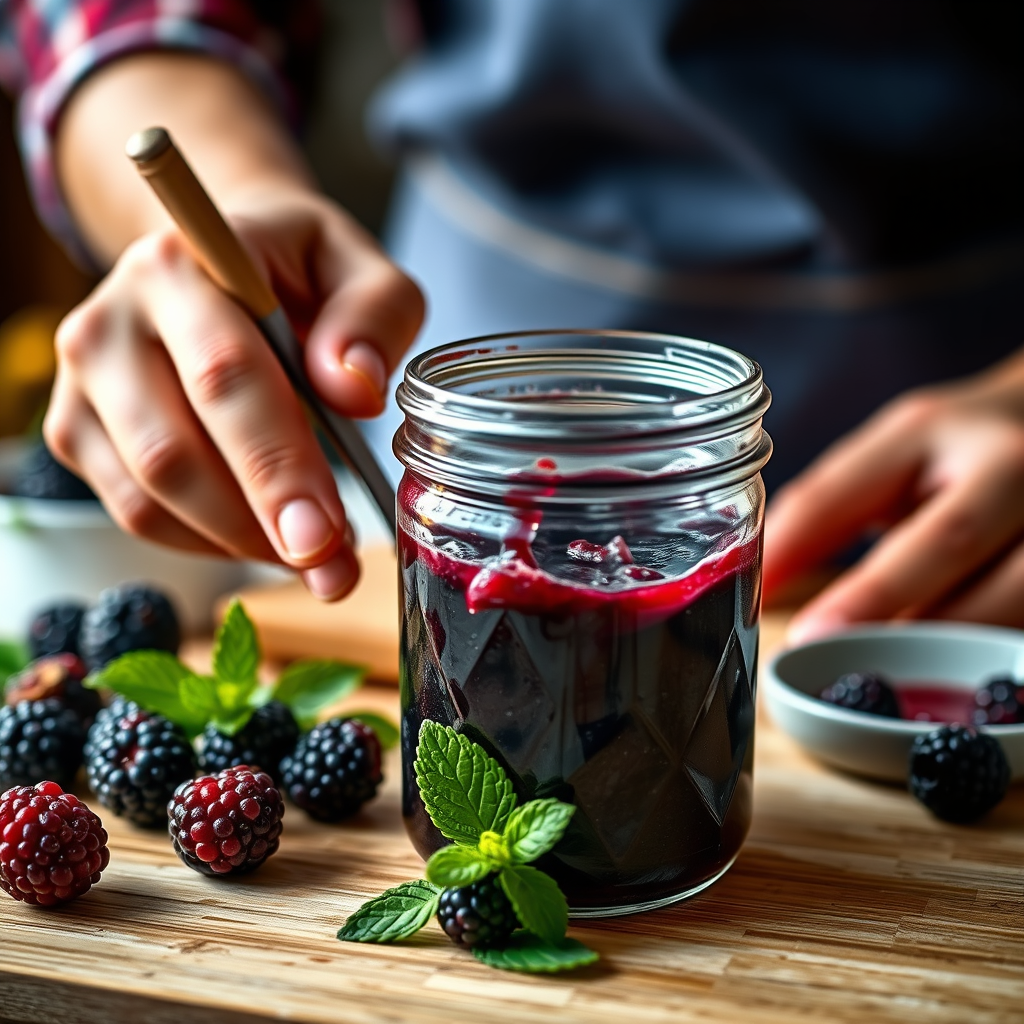
1. Gather Ingredients: You will need 4 cups of fresh blackberries, 2 cups of granulated sugar, and 1/4 cup of lemon juice for acidity. Accurate measurements are crucial for achieving the desired consistency and flavor.
2. Prepare Blackberries: Rinse the blackberries thoroughly under cold water. Remove any stems, leaves, or debris, ensuring that only ripe, undamaged fruit is used. This step is vital, as any spoiled fruit can compromise the quality and safety of your jam.
3. Cook the Mixture: In a large, heavy-bottomed pot, combine the blackberries, sugar, and lemon juice. Heat over medium-high, stirring frequently until the sugar is fully dissolved and the mixture begins to bubble. This initial heating is essential for extracting the natural pectin from the fruit, which is key to achieving the right consistency without commercial pectin.
4. Simmer for Consistency: Allow the mixture to simmer for 20-25 minutes, stirring occasionally to prevent sticking. Use a candy thermometer to monitor the temperature, ensuring it reaches 220°F (104°C). This temperature indicates that the jam is ready to set. If you lack a candy thermometer, you can use the “spoon test” method: drop a small amount of the mixture onto a cold plate and let it cool slightly. Run your finger through it—if it holds its shape, it’s done.
5. Jar the Jam: Once the jam reaches the proper temperature, remove it from the heat. Carefully ladle the hot jam into sterilized jars, leaving about 1/4 inch of headspace at the top. Wipe the rims of the jars with a clean, damp cloth to ensure a proper seal.
6. Seal and Process: Place the sterilized lids on the jars and screw on the metal bands until they are fingertip-tight. Process the jars in a boiling water bath for 10 minutes to ensure they are sealed properly. This step is essential for food safety and for preserving the jam for long-term storage.
7. Cool and Store: After processing, remove the jars from the water bath and allow them to cool completely on a clean towel or cooling rack. Once cooled, check the seals by pressing down in the center of each lid—if it does not pop back, the jar is sealed correctly. Store the sealed jars in a cool, dark place. Unsealed jars should be refrigerated and used promptly.
Warning Signs: When Not to Follow This
– Do not use blackberries that appear moldy, fermented, or overly soft. Such fruit can lead to spoilage and pose food safety risks.
– Avoid this recipe if you haven’t properly sterilized your jars and lids. Contamination can result in spoilage and potential foodborne illness, which is a serious concern.
– If you are unsure about maintaining the correct cooking temperature (220°F), do not attempt this recipe without additional guidance. Under-cooked jam may not set properly, resulting in a disappointing texture and compromised safety.
The Most Common Mistakes (And Their Consequences)
– A common mistake is inaccurately measuring the sugar. Insufficient sugar can produce a runny jam that does not preserve well, leading to spoilage.
– Some cooks might skip the lemon juice, which is vital for acidity. Omitting it can create an unsafe pH level, risking spoilage and foodborne illness.
– Failing to monitor the cooking temperature closely can result in overcooked jam, yielding a burnt flavor or a jelly-like consistency instead of a spreadable texture. Ensure you have a reliable thermometer and check the temperature regularly.
Special Cases That Need a Different Approach
– If using frozen blackberries, increase the cooking time by an additional 5-10 minutes to allow the mixture to reach the proper consistency. Frozen fruit contains extra moisture, which may require longer cooking.
– For those in high-altitude areas, adjustments to cooking time and temperature may be necessary; consult local canning guidelines for specific adaptations to ensure safety and quality.
– When making larger batches (more than 8 cups of fruit), process the jam in smaller quantities to ensure proper cooking and setting. Overloading the pot can lead to uneven cooking and affect the final product.
When You Need a Professional
– If you have concerns about food safety, such as a history of food allergies or previous issues with home canning, consult a food safety expert before proceeding with this recipe. They can provide tailored advice to meet your needs.
– In cases with a history of botulism or if you are unsure about preservation methods, seek guidance from a local extension office or certified canning expert. This is crucial for maintaining safety standards in home canning.
– If the jam develops an unusual odor, color, or mold after being canned, do not taste it. Dispose of it safely and consult a food safety professional for further advice. This precaution is vital to ensure the health and safety of all who may consume the jam.
Sources and Further Reading
For additional guidance on safe canning practices, refer to the USDA’s Complete Guide to Home Canning, which offers detailed instructions and safety tips. The National Center for Home Food Preservation provides resources specifically related to fruit preserves, including recipes and safety guidelines. Further insights can be found in The Ball Blue Book of Preserving, a comprehensive resource for home canning enthusiasts seeking reliable recipes and techniques.
By following this expert guide, you can craft delicious, homemade blackberry jam without pectin that captures the essence of summer in every jar, all while ensuring safety and quality throughout your canning process.
Frequently Asked Questions
What ingredients do I need for a blackberry jam recipe without pectin?
To make blackberry jam without pectin, you will need fresh blackberries, granulated sugar, and lemon juice. The natural pectin in the blackberries, combined with the acidity of the lemon juice, helps to achieve the desired thickness without the need for commercial pectin.
How do I ensure my blackberry jam sets properly without pectin?
To ensure your blackberry jam sets properly without pectin, it’s important to cook the mixture until it reaches a temperature of at least 220°F (104°C). You can also test the jam’s consistency by placing a spoonful on a cold plate; if it holds its shape after cooling, it’s ready for canning.
Why should I consider making blackberry jam without pectin?
Making blackberry jam without pectin allows you to control the ingredients and avoid added preservatives, resulting in a more natural and flavorful product. Additionally, using just fruit and sugar can enhance the blackberry’s natural sweetness and flavor, providing a more authentic jam experience.
What is the best method for storing blackberry jam made without pectin?
The best method for storing blackberry jam made without pectin is to use sterilized jars and process them in a water bath for 10-15 minutes to ensure a proper seal. Once sealed, store the jars in a cool, dark place, and refrigerate any opened jars to maintain freshness for up to two weeks.
Which tools do I need to make blackberry jam without pectin?
To make blackberry jam without pectin, you will need a heavy-bottomed pot for cooking the fruit, a potato masher or fork for mashing the blackberries, and a thermometer to check the jam’s temperature. Additionally, having jars, lids, and a canning funnel will help streamline the canning process and ensure a clean transfer.
References
- Fruit preserves
https://en.wikipedia.org/wiki/Jam - https://www.nutrition.gov/topics/food-safety/food-preservation/jam-and-jelly
https://www.nutrition.gov/topics/food-safety/food-preservation/jam-and-jelly - UGA
https://www.uga.edu/ - Purdue Extension Health and Human Sciences
https://www.purdue.edu/hhs/extension/ - https://pubmed.ncbi.nlm.nih.gov/
https://pubmed.ncbi.nlm.nih.gov/ - https://www.sciencedirect.com/topics/agricultural-and-biological-sciences/jam
https://www.sciencedirect.com/topics/agricultural-and-biological-sciences/jam - Google Scholar Google Scholar
https://scholar.google.com/scholar?q=blackberry+jam+recipe+without+pectin - Google Scholar Google Scholar
https://scholar.google.com/scholar?q=homemade+blackberry+jam - Google Scholar Google Scholar
https://scholar.google.com/scholar?q=blackberry+preservation+methods - https://www.nationalhomegardeningclub.com/blackberry-jam-recipe-without-pectin/
https://www.nationalhomegardeningclub.com/blackberry-jam-recipe-without-pectin/