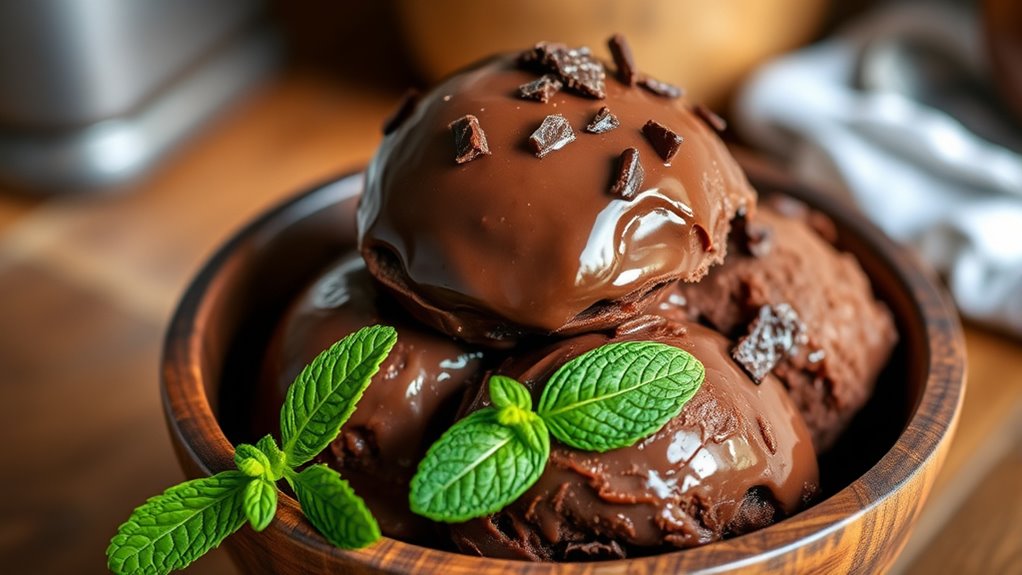
This sugar-free chocolate ice cream uses a dairy custard base with heavy cream, almond milk, and a sugar substitute to keep carbs low while delivering rich flavor. You whisk egg yolks with a sugar substitute, slowly add warmed dairy, then heat gently until it coats a spoon. Cool, chill, and churn to create a creamy texture with cocoa depth. For best results, follow cooling and churning steps closely; more tips await if you keep exploring.
Ingredients and Quantity

The Ingredients and Quantity for this sugar-free chocolate ice cream are straightforward: you’ll need 2 cups of heavy cream, 1 cup of unsweetened almond milk, 1/2 cup of powdered erythritol or another preferred sugar substitute, 1/2 cup of cacao powder, 4 large egg yolks, and a pinch of salt.
| Item | Amount |
|---|---|
| Heavy cream | 2 cups |
| Unsweetened almond milk | 1 cup |
| Sugar substitute | 1/2 cup |
| Cacao powder | 1/2 cup |
| Egg yolks | 4 |
| Salt | Pinch |
This base supports sweeteners alternatives and flexible chocolate types, enabling clear, evidence-based decisions for flavor and texture. You’ll feel freedom in choosing additives that align with your goals.
Preparations

Now that you have the ingredients and quantities ready, you’ll start the preparations by tempering and combining them into a smooth custard base. You’ll whisk yolks and sugar (or sugar substitute) until pale, then slowly stream warmed dairy and cream, avoiding curdling. Return the mixture to the stove and heat gently, stirring until it coats the back of a spoon. Remove from heat, add cocoa for chocolate depth, and cool to room temperature before chilling. Chilled custard softens during freezing, so maintain steady temperatures and minimal air incorporation. Proceed with Ice cream techniques that minimize ice crystal formation, then churn until creamy. Flavor variations emerge from optional additions, while the base remains dairy-forward and clean.
How to Cook
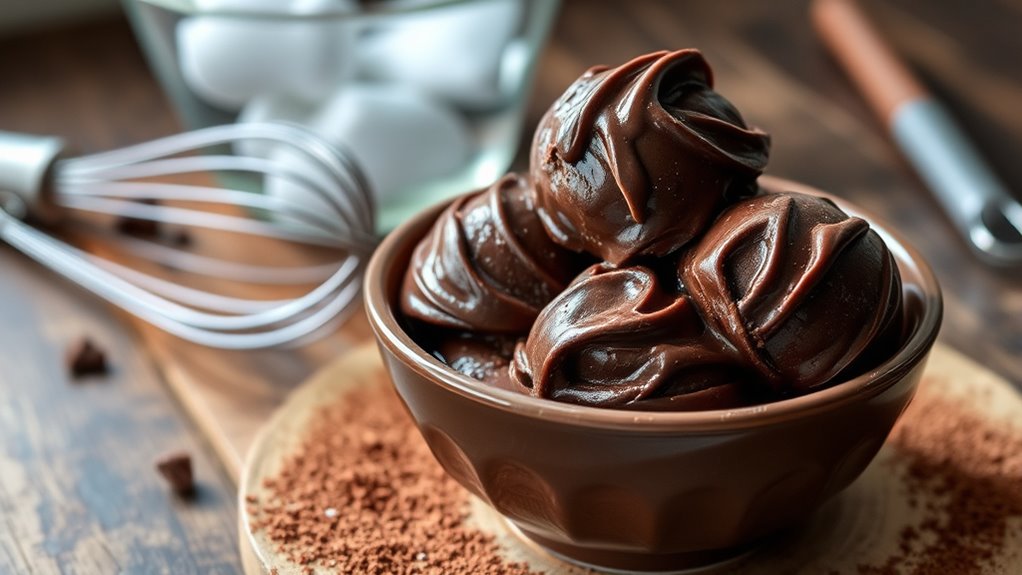
- Start with a smooth custard base as your foundation.
- Slowly heat the custard to a light simmer, stirring constantly to prevent curdling.
- Temper the mixture carefully by gradually adjusting temperatures during cooking.
- Quickly cool the custard in an ice bath to stop cooking and reduce texture faults.
- Chill the custard thoroughly in the refrigerator to ensure a uniform mix.
- When ready, churn the custard at a steady speed to incorporate air and minimize ice crystals.
- Avoid over-churning to prevent forming large ice crystals and maintain creaminess.
- Consider adjusting dairy or fat content thoughtfully for ice cream alternatives.
- Finish by allowing the ice cream to rest briefly to mellow flavors and improve scoopability.
- This method preserves flavor without added sugars, supporting health benefits.
How to Serve

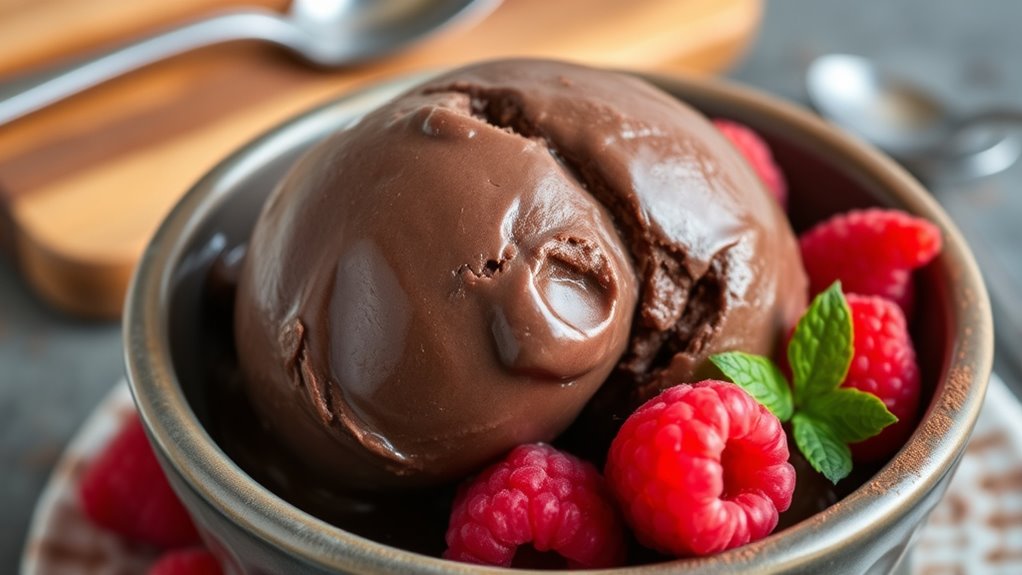
To serve, scoop the sugar-free chocolate ice cream into chilled bowls or cones to minimize melting and maintain texture. You’ll maximize enjoyment by timing servings to your guests’ preferences and dietary needs, avoiding over-softening. Start with simple presentations: a single scoop in a sturdy vessel, or a tidy trio for variety. For serving suggestions, pair with fresh berries, a dusting of cocoa, or a small swirl of sugar-free caramel if tolerated; keep portions consistent for fairness. Presentation ideas include arranging bowls on a platter with spoons angled for easy access, or lining cones with parchment for a clean look. Texture remains key: offer optional toppings that don’t add excessive sugar. This approach supports a confident, flavorful experience aligned with freedom-loving dining choices.
Tips
Here are practical tips to optimize your sugar-free chocolate ice cream: use high-fat dairy or a dairy-free base to boost creaminess and prevent iciness, and chill your mixture thoroughly before churning. You’ll get smoother results by throttling air during freezing and avoiding over-churning. When choosing sugar substitutes, test a blend (erythritol, allulose, monk fruit) to balance sweetness without aftertaste; adjust to your preferred level gradually. For flavor variations, consider espresso, cacao nibs, or a pinch of salt to enhance depth. If your texture seems icy, add a small amount of fat or a stabilizer like guar or xanthan gum, then rest the mixture briefly. Track your experiments, so you can reproduce your best outcomes with consistent sugar substitutes and flavor variations.
Food Value and Benefit
Sugar-free chocolate ice cream offers a delicious treat that supports your health goals by providing a nutritious alternative to traditional ice cream. This dessert is typically lower in added sugars and calories, making it a better option for those mindful of their sugar intake and calorie consumption.
Benefits of eating sugar-free chocolate ice cream include:
Benefits of eating sugar-free chocolate ice cream include:
- Lower sugar content helps maintain stable blood sugar levels.
- Reduced calorie count supports weight management.
- Often contains added protein and fiber from ingredients like milk or plant-based alternatives, which promote satiety and sustained energy.
- Provides essential nutrients such as calcium and vitamin D, important for bone health and metabolic function.
- Minimal additives and artificial sweeteners reduce the risk of triggering sugar cravings.
Vitamins and minerals commonly found in this recipe:
- Calcium: Supports strong bones and teeth.
- Vitamin D: Aids in calcium absorption and bone metabolism.
- Protein: Contributes to muscle maintenance and repair.
- Fiber (if plant-based ingredients are included): Supports digestive health and prolongs fullness.
Enjoying sugar-free chocolate ice cream allows you to indulge in a tasty dessert while nourishing your body and staying aligned with your health objectives.
Frequently Asked Questions
Can I Use Dairy-Free Milk Instead of Dairy Milk?
Yes—dairy-free milk works fine. You can swap in dairy-free options like almond, soy, or oat milk; these milk alternatives usually perform well in texture and flavor. Adjust sweetness and thickeners as needed for best results.
What Substitutes for Sugar-Free Sweeteners Work Best?
Yes—Stevia alternatives and Erythritol benefits work well. You’ll likely notice fewer aftertastes with erythritol, and stevia alternatives can lighten sweetness in stages. You deserve options with proven outcomes, so test small batches and adjust to preference.
How Long Can Leftovers Be Stored in the Freezer?
Leftover storage in the freezer typically lasts 2–3 months with freezer quality maintained, you’ll notice flavor or texture changes after that. You can, however, extend safety by airtight wrapping and labeling, ensuring you don’t exceed recommended storage.
Can I Make This Without an Ice Cream Maker?
Yes, you can, but expect texture issues; use non dairy options like almond milk and coconut cream, chill mixtures thoroughly, whip during freezing, and you’ll improve fluffiness even without an ice cream maker.
Is There a Vegan Version With Cocoa Substitution?
Yes, you can; use diary-free cocoa and plant-based milk with cocoa alternatives like cacao nibs, plus vegan sweeteners. You’ll need chill-and- churn methods or an ice-free setup, ensuring texture by occasional whisking for smooth, evidence-backed results.
References
- https://www.ncbi.nlm.nih.gov/pmc/articles/PMC6520869/
- https://www.eatright.org/food/planning-and-prep/cooking-tips/ice-cream-and-frozen-dessert-basics
- https://www.health.harvard.edu/staying-healthy/sugar-alternatives-what-to-know
- https://www.cdc.gov/healthyweight/healthy_eating/sugar_sweetened_beverages.html
- https://www.verywellfit.com/what-is-sugar-free-ice-cream-5180591
