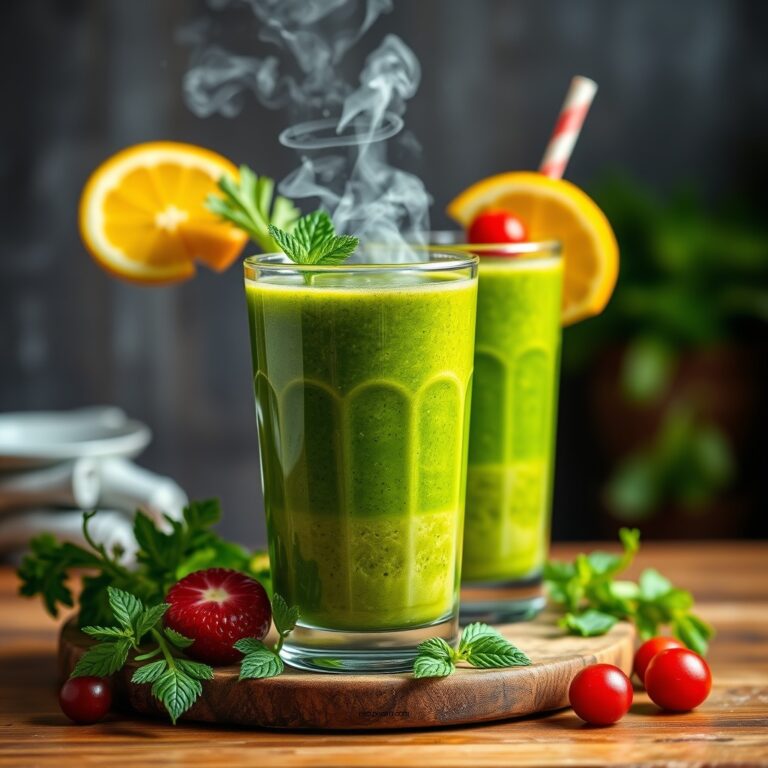
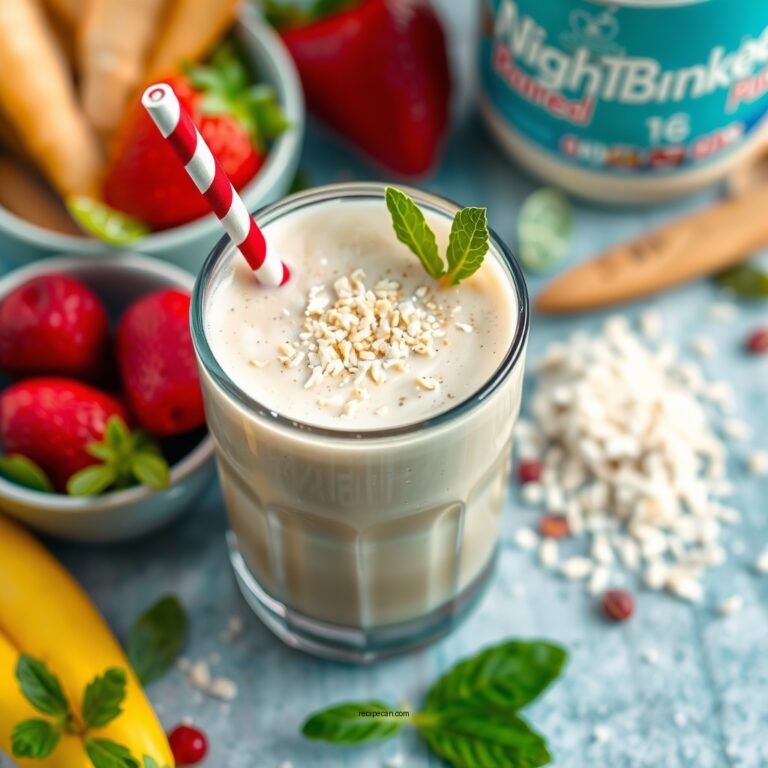
You can make great smoothies by blending 1 to 1.5 cups of frozen fruit with about 1 cup of your preferred liquid like milk or juice to get the right texture. Adding ¼ cup of yogurt boosts protein, and a handful of spinach adds vitamins without overpowering flavor. Start blending with liquid first to avoid jams, then pulse frozen fruit for smoothness. Want to discover how prepping and serving tricks can elevate your smoothie game?
Ingredients and Quantity
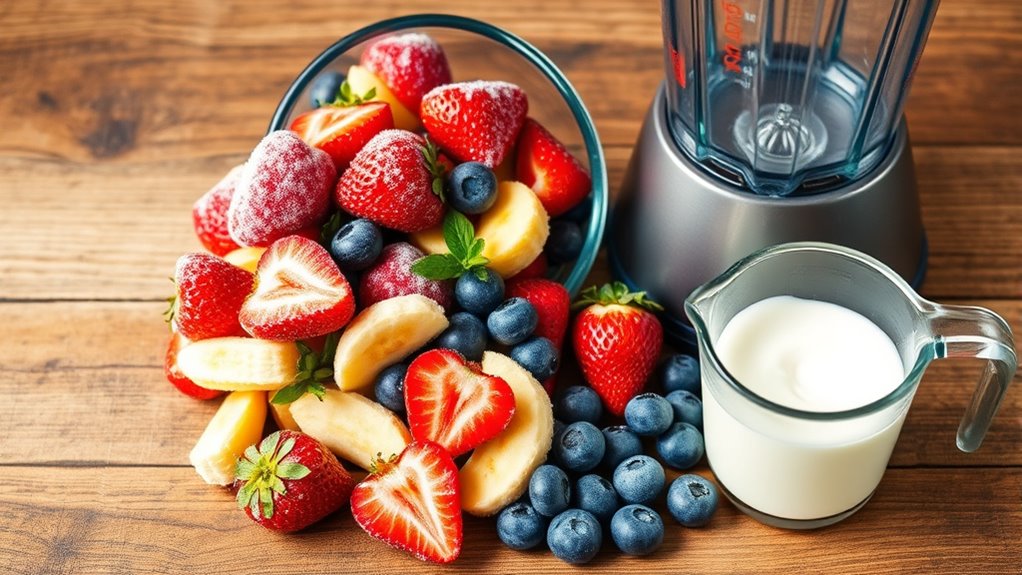
When making smoothies, you’ll typically use between three to five key ingredients to achieve the right balance of flavor and texture. Frozen fruit is essential, as it provides natural sweetness and a creamy consistency without needing ice. To explore smoothie variations, you can mix fruits, liquids, and add-ons like protein or greens. Quantities matter to maintain a smooth blend and enjoyable taste.
| Ingredient | Typical Quantity | |
|---|---|---|
| Frozen Fruit | 1 to 1.5 cups | |
| Liquid Base | 1 cup (milk, juice, water) | |
| Protein (optional) | ¼: center”>Greens (optional) | ½ cup (spinach, kale) |
| Sweetener (optional) | 1 tbsp (honey, maple) |
This framework gives you freedom to create balanced smoothies easily.
Preparations
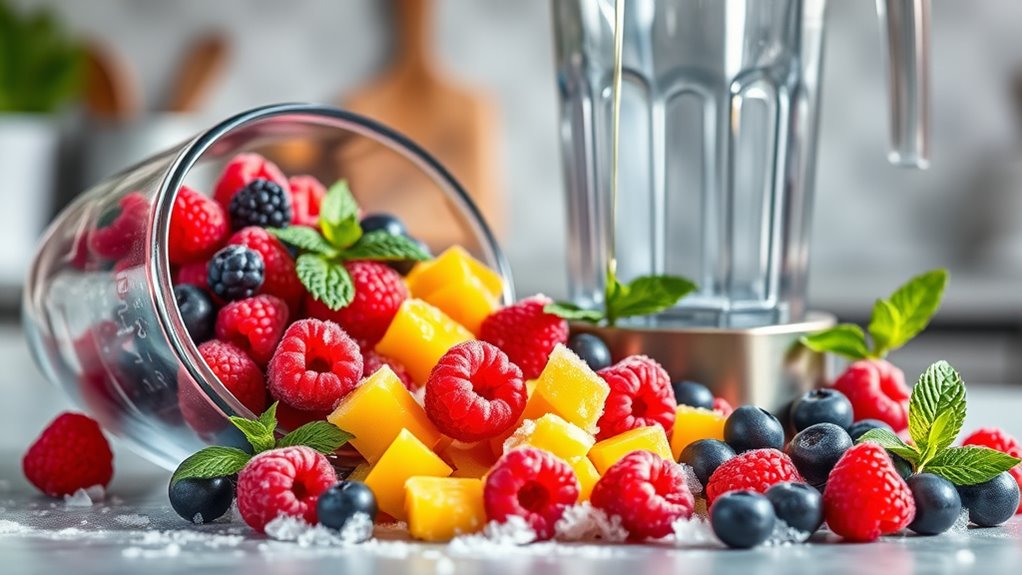
Before blending, you’ll want to prepare your ingredients properly to guarantee a smooth and flavorful result. Start by measuring your frozen fruit accurately to maintain balance in taste and texture. Understanding blending techniques is key; pulse first to break down chunks, then blend continuously for a creamy consistency. Using a high-powered blender can help minimize ice crystals and achieve a velvety finish. Additionally, consider storage methods for your frozen fruit: keep them in airtight containers to prevent freezer burn and preserve nutrients. Thawing slightly before blending can ease the process but avoid fully defrosting to retain thickness. By mastering these preparations, you’ll enjoy smoothies that are both invigorating and rich, giving you the freedom to customize flavors without sacrificing quality or texture.
How to Prepare
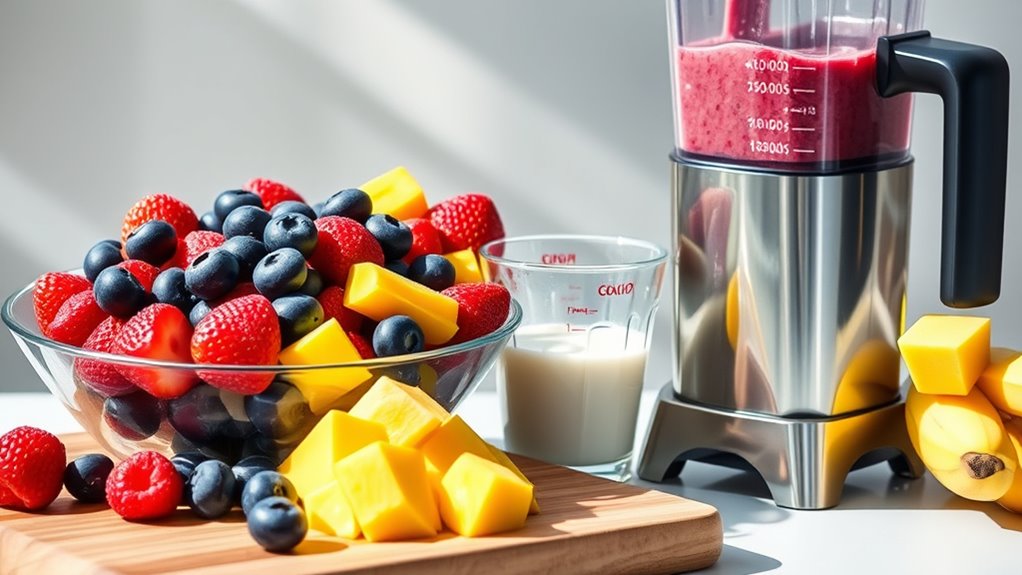
- Master the preparations to set the stage for a smooth blending process.
- Know how to prepare each ingredient properly to elevate your smoothie.
- Thaw frozen fruit slightly by letting it sit at room temperature for 5–10 minutes to ease blending without losing chill.
- Wash and peel fresh ingredients, like bananas or greens, to avoid bitterness and improve blend consistency.
- Measure your liquids first—water, milk, or juice—to control thickness and prevent overloading the blender.
How to Serve
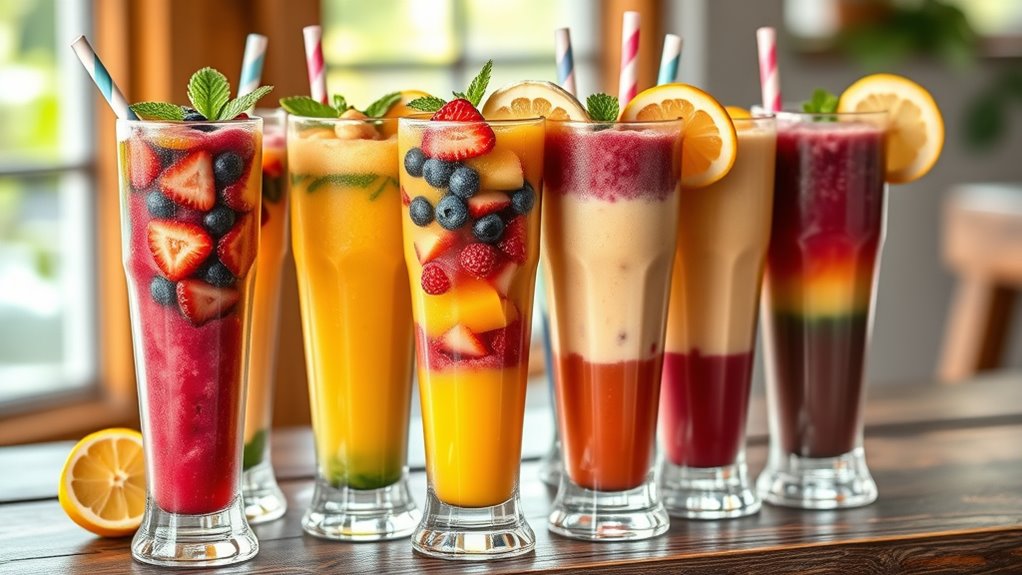
One key step to serving your smoothie well is choosing the right glassware, which can enhance both the presentation and drinking experience. Opt for clear, tall glasses to showcase the vibrant colors of your frozen fruit smoothie. Presentation ideas like adding a garnish—such as a slice of fresh fruit or a sprig of mint—can elevate the visual appeal. For serving suggestions, consider chilled glasses to keep your smoothie cold longer. You might also serve with eco-friendly reusable straws to align with a sustainable lifestyle. If sharing, use matching glasses to create a cohesive look. By focusing on these simple yet effective presentation ideas, you’ll not only enjoy your smoothie more but also inspire others to appreciate the freedom of creating and serving healthy, delicious drinks.
Tips
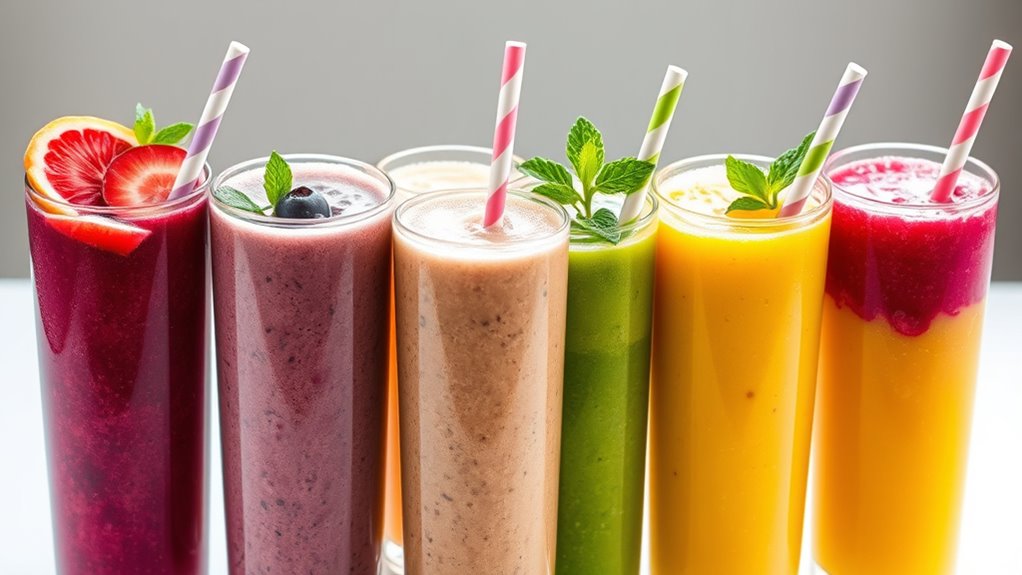
Although making a great smoothie might seem straightforward, applying a few key tips can greatly improve the texture, flavor balance, and nutritional value. Using frozen fruit offers distinct frozen advantages, such as maintaining freshness and providing a naturally chilled base without dilution. Mastering blending techniques guarantees a smooth, creamy consistency without overworking your blender.
To elevate your smoothie game, keep these tips in mind:
- Start with liquid first, then add frozen fruit to prevent blades from jamming.
- Use a pulse setting initially to break down dense frozen chunks before blending smoothly.
- Balance flavors by combining sweet frozen fruit with a touch of acidity, like citrus juice, to enhance taste.
Following these evidence-based tips allows you to enjoy freedom in customizing delicious, nutritious smoothies every time.
Food Value and Benefit
Prepared smoothies made with frozen fruit provide a nutritious boost packed with essential vitamins, minerals, fiber, and antioxidants.
Food Value:
- Rich in vitamins C and A, which are vital for immune support and skin health
- Contains dietary fiber that aids digestion and promotes satiety
- Provides minerals such as potassium and magnesium important for heart and muscle function
- Loaded with antioxidants that help reduce oxidative stress in the body
Benefits of Eating This Recipe:
- Supports a healthy immune system through vitamin C and antioxidant intake
- Helps reduce inflammation and lowers the risk of chronic diseases
- Promotes digestive health due to high fiber content
- Enhances overall energy levels and well-being
- Offers a convenient and delicious way to consume multiple servings of fruit daily
Incorporating a variety of frozen fruits in your smoothies ensures a wide range of nutrients, making this recipe a simple, effective addition to a balanced diet.
Frequently Asked Questions
1. What are the benefits of using frozen fruit in smoothies?
Using frozen fruit in smoothies offers several advantages. Firstly, it provides a thick and creamy texture without the need for ice, which can dilute flavors. Additionally, frozen fruits are often picked at peak ripeness and quickly frozen, preserving their nutrients and flavor. This makes them a convenient and nutritious option, allowing you to enjoy smoothies year-round without worrying about seasonal availability.
2. Can I use fresh fruit instead of frozen fruit in my smoothie recipes?
Yes, you can use fresh fruit in your smoothies, but the texture and temperature will differ. Fresh fruit will result in a thinner consistency, so you might need to add ice to achieve a similar thickness. Moreover, if the fruit is not in season, it may not be as sweet or flavorful compared to frozen fruit. If you opt for fresh fruit, consider adding a handful of ice or refrigerating your smoothie after blending to chill it before serving.
3. How do I make a smoothie with frozen fruit?
To make a smoothie with frozen fruit, start by selecting your favorite frozen fruits, such as berries, bananas, or mangoes. Add about 1 to 2 cups of frozen fruit to a blender. Then, pour in a liquid base like milk, yogurt, or fruit juice, starting with about 1 cup. Blend until smooth, adjusting the liquid as needed to reach your desired consistency. Feel free to add extras like spinach, protein powder, or nut butter for added nutrition. Serve immediately for the best taste and texture!
4. How long can I store smoothies made with frozen fruit?
Smoothies made with frozen fruit can be stored in the refrigerator for up to 24 hours. However, for optimal taste and texture, it’s best to consume them right after blending. If you want to store them for longer, consider freezing the smoothie in an airtight container. When you’re ready to drink it, thaw in the refrigerator or blend again with a splash of liquid to regain a smooth consistency.
5. Are there any specific types of frozen fruit that work best in smoothies?
Most frozen fruits work well in smoothies, but some popular options include strawberries, blueberries, bananas, and mangoes. Berries add vibrant color and antioxidants, while bananas contribute creaminess and natural sweetness. Tropical fruits like mango and pineapple can provide a refreshing taste. Experiment with different combinations to find your preferred flavors, and don’t hesitate to mix in greens like spinach or kale for an extra health boost!
References
- https://www.healthline.com/nutrition/smoothie-recipes
- https://www.eatright.org/health/wellness/preventing-illness/smoothie-recipes
- https://www.jhsph.edu/research/centers-and-institutes/johns-hopkins-center-for-nutrition-and-health/recipes/smoothies.html
- https://www.ncbi.nlm.nih.gov/pmc/articles/PMC6070311/
- https://www.cdc.gov/healthyweight/healthy_eating/fruits.html
- https://www.hsph.harvard.edu/nutritionsource/healthy-drinks/smoothies/