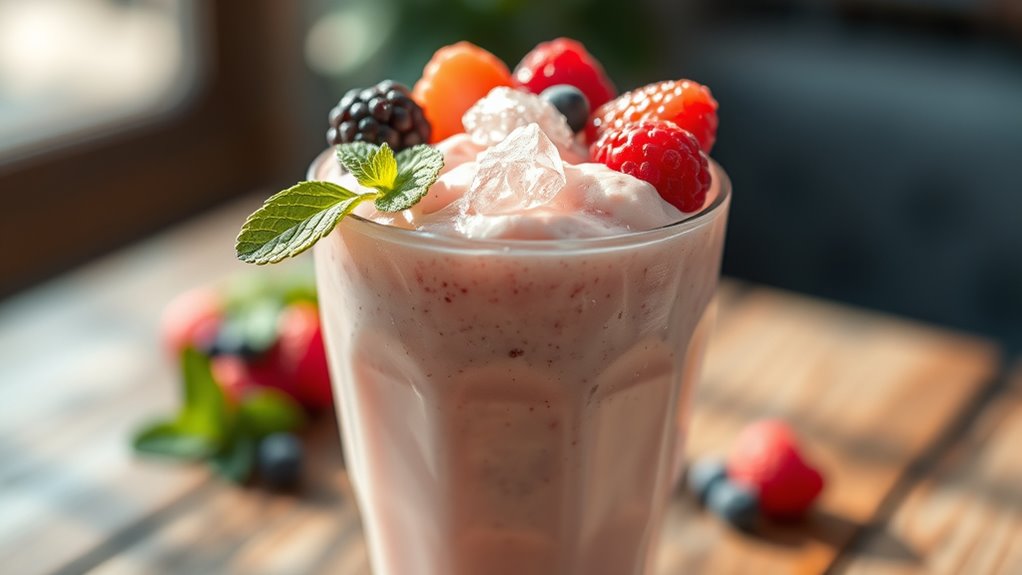
You can make a tasty smoothie using 1 cup of frozen berries, half a banana, ½ cup Greek yogurt, ¾ cup almond milk, and a tablespoon of honey. Start by layering liquids, then softer items, and top with frozen fruit for smoother blending. Pulse first, then blend continuously to keep texture. Serve fresh with a garnish like mint or chia seeds. Stick around for tips on perfecting thickness and enhancing flavor with simple tweaks.
Ingredients and Quantity
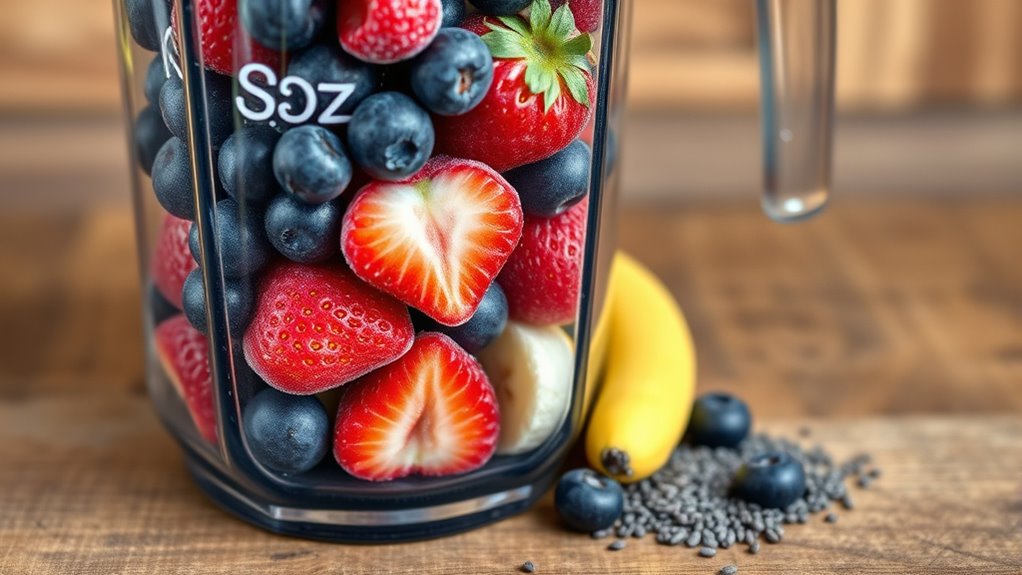
To make a delicious smoothie with frozen fruit, you’ll need a few key ingredients in specific quantities. Using frozen berries and banana slices guarantees your smoothie is both flavorful and invigorating. Precision in measurement helps maintain the perfect balance between taste and texture. Here’s a clear guide to what you’ll need:
| Ingredient | Quantity |
|---|---|
| Frozen berries | 1 cup (150g) |
| Banana slices | 1/2 cup (75g) |
| Greek yogurt | 1/2 cup (120ml) |
| Almond milk | 3/4 cup (180ml) |
| Honey | 1 tablespoon |
These ingredients combine to create a nutrient-rich smoothie, supporting your desire for freedom with simple, wholesome choices.
Preparations
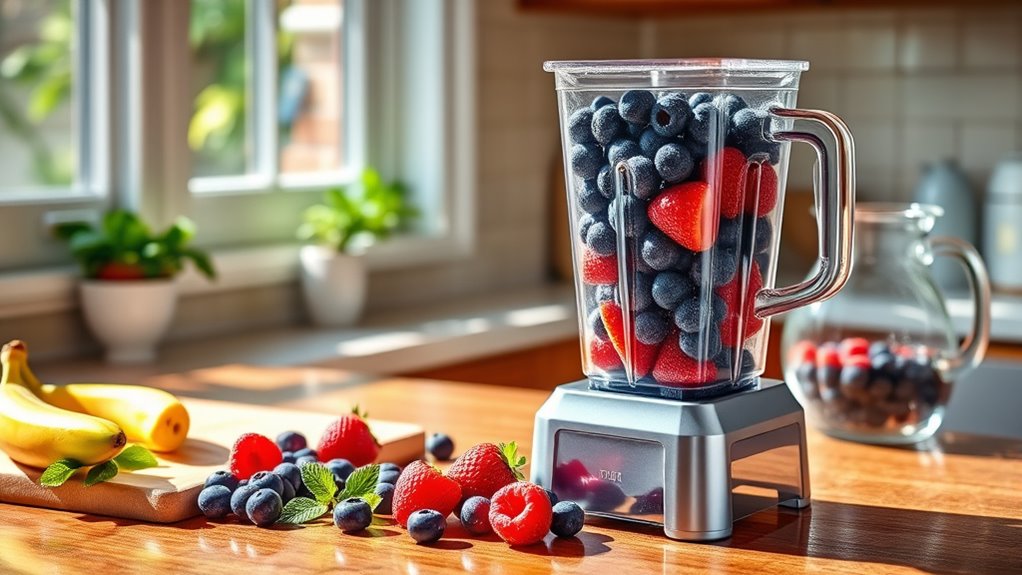
Now that you’ve gathered the exact ingredients in the right amounts, preparing them properly will guarantee your smoothie blends smoothly and tastes balanced. Start by organizing your frozen fruit, ensuring it’s evenly portioned to avoid uneven blending. Thawing frozen fruit slightly can ease the process but keep it mostly frozen to maintain texture and chill. When it comes to blending techniques, layer ingredients thoughtfully: liquids first, then softer items, followed by frozen fruit. This sequence prevents motor strain and promotes a consistent blend. Use short pulses initially to break down chunks, then blend continuously for a creamy texture. Proper preparation and blending techniques not only preserve nutrients but also let you enjoy a perfectly smooth, invigorating smoothie every time, giving you freedom in your daily nutrition.
How to Prepare
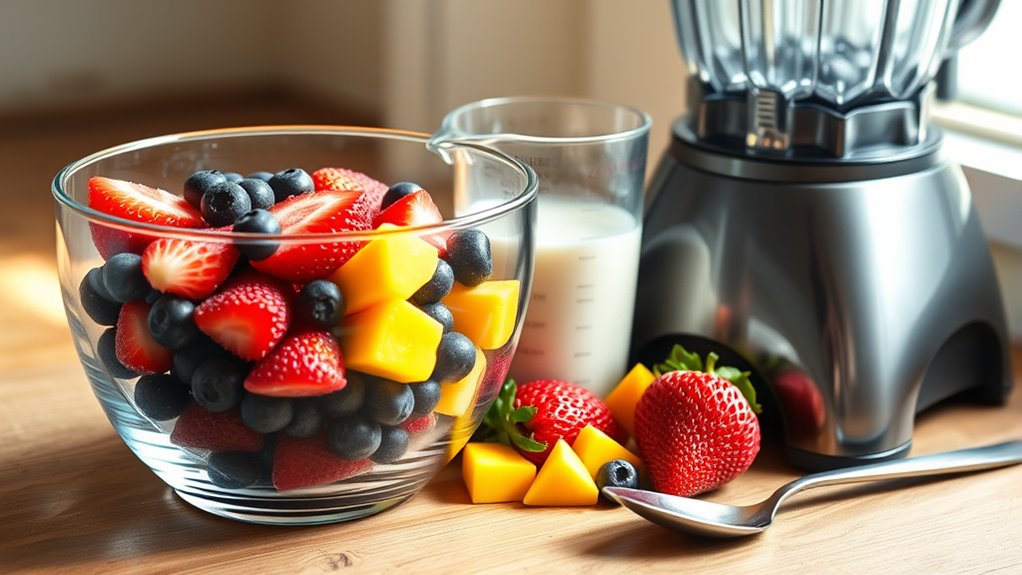
- Select your frozen fruit and any additional ingredients based on your preferred smoothie variations.
- Layer the ingredients properly: pour liquids first, add softer items next, and place frozen fruit on top.
- Use a high-powered blender for best results.
- Start blending by pulsing to break down large chunks.
- Gradually increase blending speed to achieve a smooth consistency.
- Avoid over-blending to prevent warming the mixture and affecting texture.
- Adjust thickness by adding more liquid if too thick or more frozen fruit if too thin.
- Master these steps to ensure your smoothie is creamy, well-blended, and tailored to your taste and nutritional preferences.
How to Serve
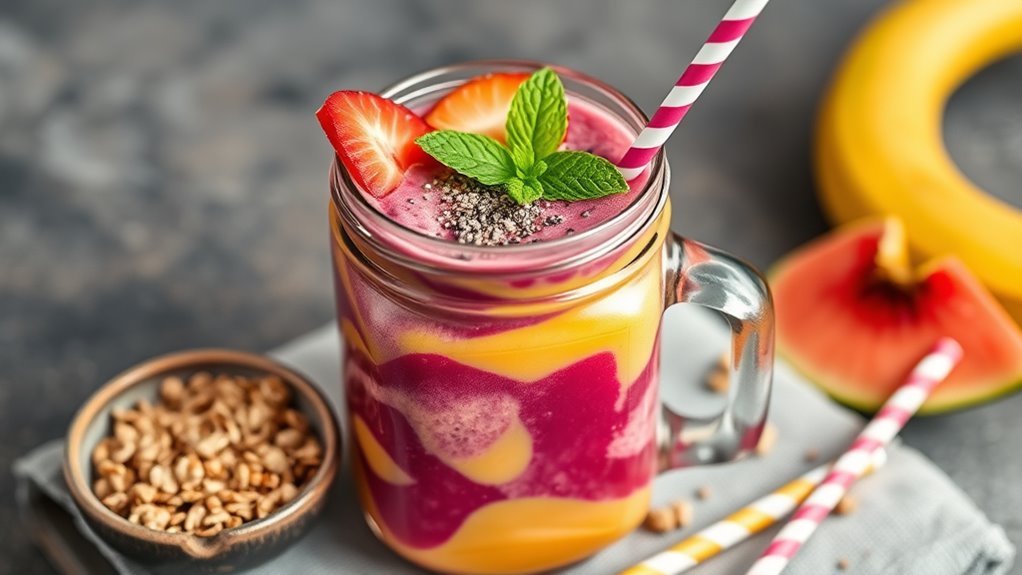
Once your smoothie reaches the perfect consistency, serving it promptly guarantees the best taste and texture. To elevate your smoothie presentation, choose clear glasses or mason jars that showcase the vibrant colors of the frozen fruit blend. You can garnish with fresh fruit slices, a sprinkle of chia seeds, or a mint leaf for visual appeal and added nutrients. For serving suggestions, consider pairing your smoothie with a light snack like granola or nuts to balance the meal. Use straws or reusable utensils based on preference, ensuring convenience and minimal waste. Remember, serving your smoothie immediately preserves its creamy texture and nutritional value, making each sip rejuvenating and satisfying. This approach aligns with your desire for freedom and simplicity in enjoying healthy treats.
Tips
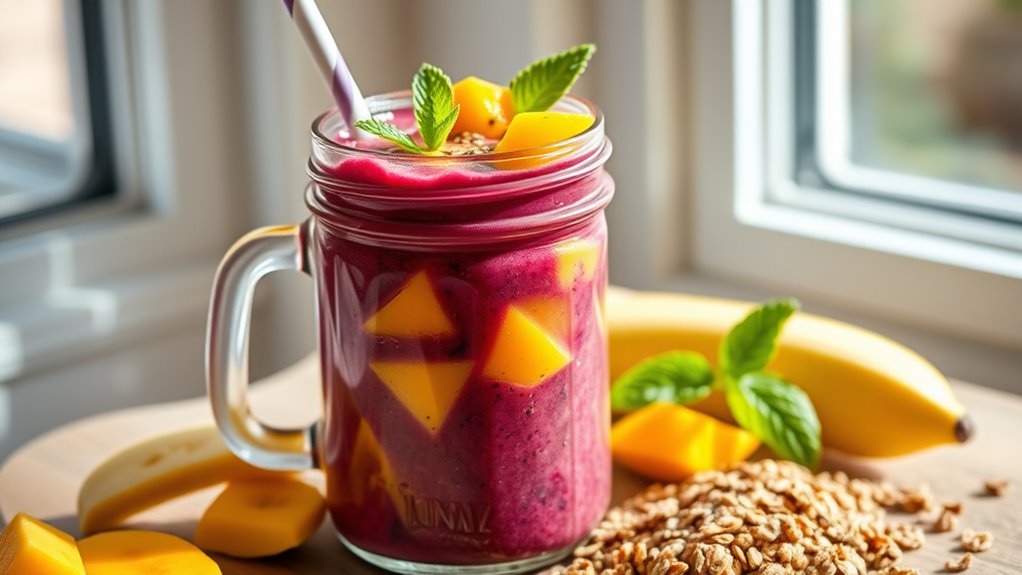
While blending your smoothie, you’ll want to start with the right ratio of frozen fruit to liquid to guarantee a smooth texture without watering it down. Aim for about 1 cup of frozen fruit to ½ cup of liquid as a baseline. Here are three tips to enhance your smoothie variations:
- Layer ingredients strategically: Place frozen fruit at the bottom to help the blades blend efficiently.
- Experiment with liquids: Use almond milk, coconut water, or yogurt to adjust creaminess and nutritional profile.
- Add texture last: Incorporate nuts or seeds after blending for a satisfying crunch.
Using frozen fruit not only locks in nutrients but also frees you from seasonal limits, letting you enjoy diverse smoothie variations year-round.
Food Value and Benefit
A smoothie made with frozen fruit is a nutrient-dense prepared dish that offers numerous health benefits. It is rich in essential vitamins and minerals including:
- Vitamin C: Supports immune function and skin health
- Vitamin A: Promotes good vision and skin integrity
- Potassium: Helps maintain healthy blood pressure and muscle function
- Fiber: Aids digestion and promotes gut health
- Antioxidants (such as flavonoids and anthocyanins): Protect cells from oxidative damage
Benefits of eating this frozen fruit smoothie recipe include:
- Boosts the immune system
- Enhances skin health and appearance
- Improves digestion and supports gut health
- Reduces inflammation through antioxidant action
- Provides sustained energy and nutrient intake
- Convenient and easy way to maintain a nutrient-rich diet
Frequently Asked Questions
Can I use any type of frozen fruit for my smoothie?
Yes, you can use a variety of frozen fruits for your smoothie. Common options include strawberries, blueberries, bananas, mangoes, and mixed berry blends. Using frozen fruit not only adds a refreshing chill to your smoothie but also helps to thicken the texture without the need for ice. Just ensure that the fruits are unsweetened and free from added sugars for a healthier option.
What can I add to my smoothie besides frozen fruit?
In addition to frozen fruit, you can enhance your smoothie with various ingredients such as yogurt, almond milk, or coconut water for added creaminess. Leafy greens like spinach or kale can boost the nutrition profile without altering the flavor significantly. You can also add protein powders, chia seeds, flaxseeds, or nut butter to increase the protein and healthy fat content.
How can I ensure my smoothie has the right consistency?
To achieve the desired consistency in your smoothie, start with a good balance of frozen fruit and liquid. A general guideline is to use one part liquid (like juice or milk) to two parts frozen fruit. If your smoothie is too thick, gradually add more liquid until you reach the desired texture. Conversely, if it’s too thin, consider adding more frozen fruit or ice cubes to thicken it up.
How long can I store a smoothie made with frozen fruit?
Smoothies made with frozen fruit are best enjoyed immediately for maximum freshness and flavor. However, if you need to store it, you can refrigerate your smoothie in an airtight container for up to 24 hours. Keep in mind that the texture may change slightly, and separation may occur, so be sure to stir or shake it well before consuming. For longer storage, consider freezing the smoothie in individual portions and blending again when ready to drink.
Are smoothies with frozen fruit healthy?
Yes, smoothies made with frozen fruit can be a healthy addition to your diet. They provide essential vitamins, minerals, and antioxidants found in fruits, which are beneficial for overall health. When made with wholesome ingredients like yogurt, greens, and healthy fats, they can serve as a nutritious meal replacement or snack. Just be mindful of added sugars and caloric content, especially if you include sweetened ingredients or high-calorie additives.
References
- https://www.ncbi.nlm.nih.gov/pmc/articles/PMC6520889/
- https://www.healthline.com/nutrition/smoothies
- https://www.cdc.gov/nutrition/about-nutrition/fruits.html
- https://www.eatright.org/health/wellness/preventing-illness/smoothies-and-juices
- https://www.verywellfit.com/how-to-make-a-smoothie-5188994
- https://www.choosemyplate.gov/eathealthy/fruits
- https://www.vegetablepatch.com/smoothie-recipes-for-kids/
