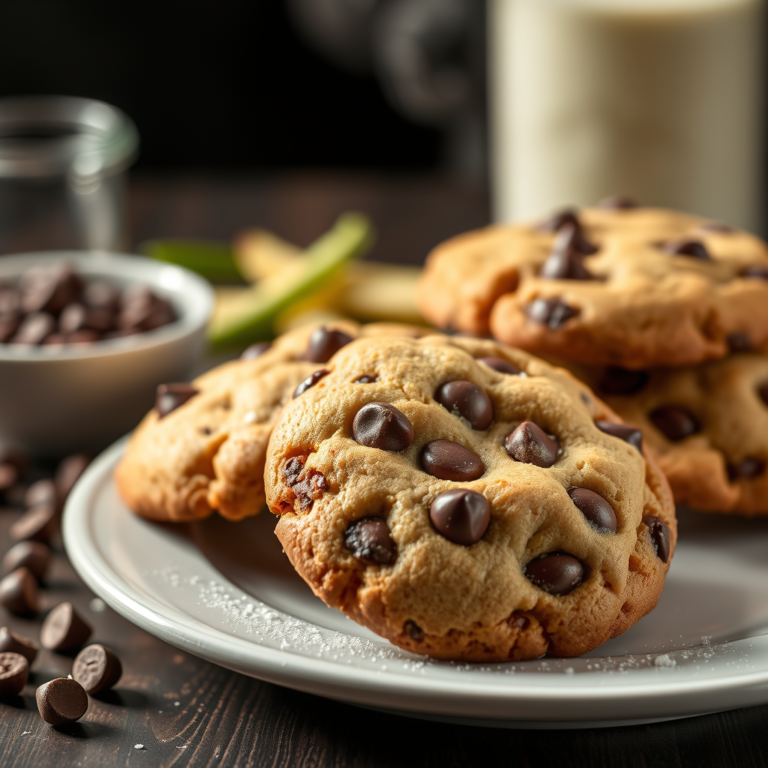
You’ll use 2¼ cups of all-purpose flour with 1 cup of softened unsalted butter for a balanced texture and richness. Cream butter and sugars until fluffy, then add eggs one at a time. Sift in dry ingredients gradually, fold in 1½ cups of chocolate chips, and chill dough to control spread. Bake on parchment-lined sheets at the right temperature for ideal chewiness. Keep these steps precise, and if you want to perfect your technique further, there’s more to explore.
Ingredients and Quantity
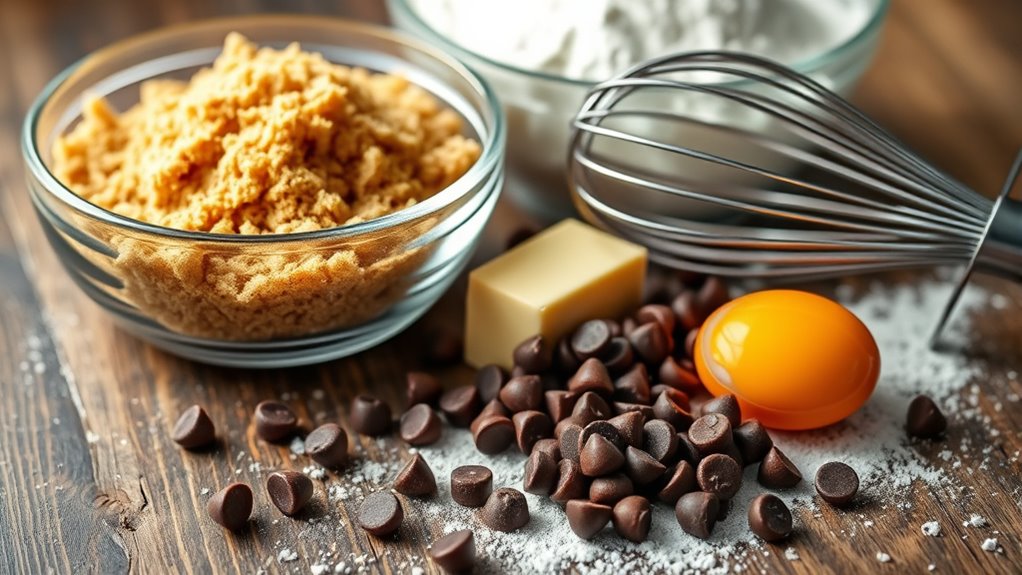
Anyone following this chocolate chip cookie recipe will need specific ingredients in exact amounts to secure consistent results. Precise measurements guarantee your cookie variations maintain texture and flavor balance, regardless of chocolate types used. Here’s a clear breakdown:
| Ingredient | Quantity | Purpose |
|---|---|---|
| All-purpose flour | 2 1/4 cups | Structure and chew |
| Unsalted butter | 1 cup | Moisture and richness |
| Semi-sweet chocolate chips | 1 1/2 cups | Flavor and sweetness |
Different chocolate types, such as dark or milk chocolate, can be swapped without altering quantities, maintaining dough consistency. Adjusting sugar or flour slightly allows you to explore cookie variations like chewy or crispy, giving you freedom to customize without losing precision or quality.
Preparations
Before mixing the dough, guarantee all ingredients are at room temperature to promote even blending and perfect texture. This allows fats to emulsify properly, ensuring your cookie dough achieves a consistent structure. Measure ingredients accurately using a digital scale to maintain precise ratios essential for ideal baking techniques. Prepare your workspace by lining baking sheets with parchment paper or silicone mats to prevent sticking and promote uniform heat distribution. Preheat your oven fully to the specified temperature; a stable oven environment is critical for proper cookie spread and rise. Sift dry ingredients to avoid clumping and promote aeration, contributing to a tender crumb. Finally, have your mixing tools and containers ready—this organized approach streamlines the process, giving you freedom to focus on dough consistency and final cookie quality.
How to Prepare
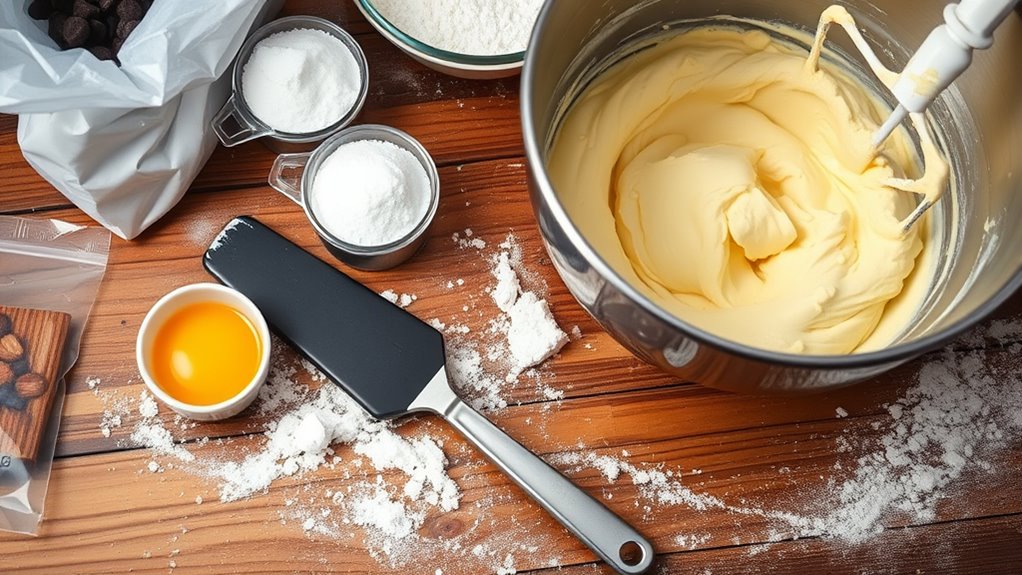
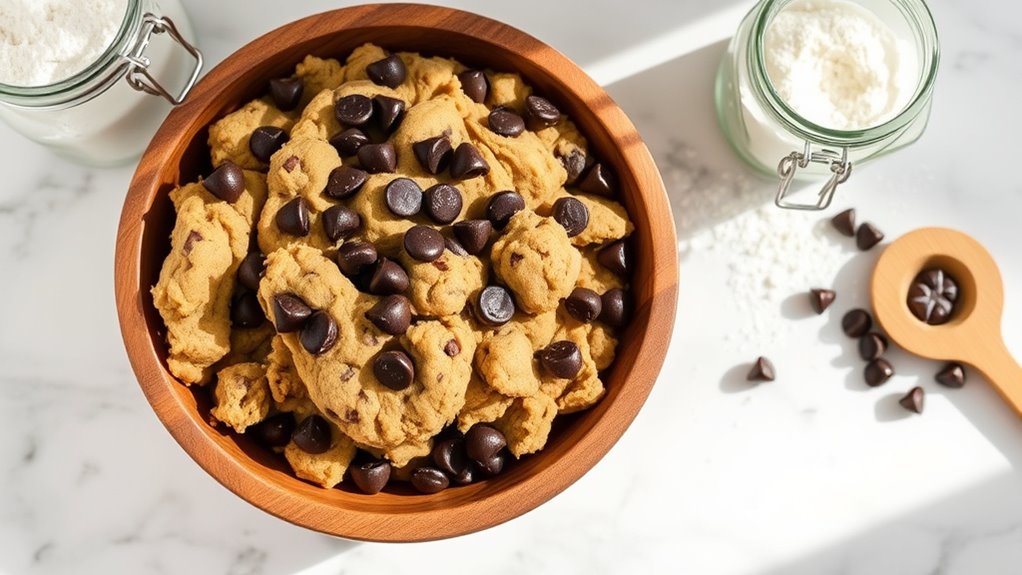
- Begin by creaming the softened butter and sugars together until the mixture achieves a light, fluffy texture; this step incorporates air, essential for cookie lift and tenderness.
- Add eggs one at a time, ensuring each is fully emulsified before adding the next.
- Gradually sift in dry ingredients—flour, baking soda, and salt—to maintain uniform distribution and prevent clumping.
- Fold in chocolate chips evenly for consistent flavor in every bite.
- Chill the dough to help control spread and texture during baking.
- Experiment with cookie variations by substituting nuts, oats, or different types of chocolate, adapting the base recipe to your preference.
- Master these preparation steps to optimize dough consistency and final cookie structure, giving you confidence to tailor your cookies technically.
How to Serve
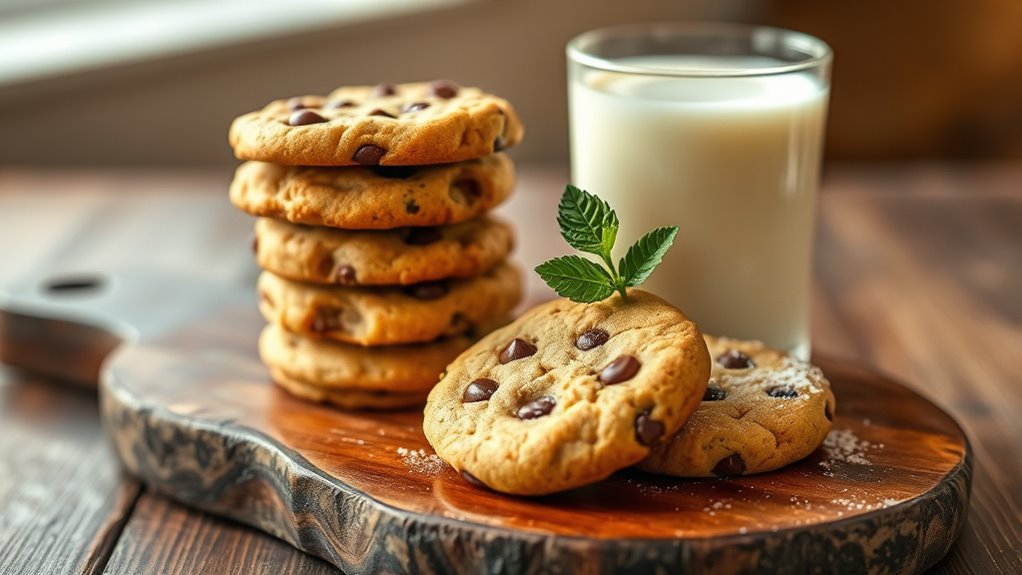
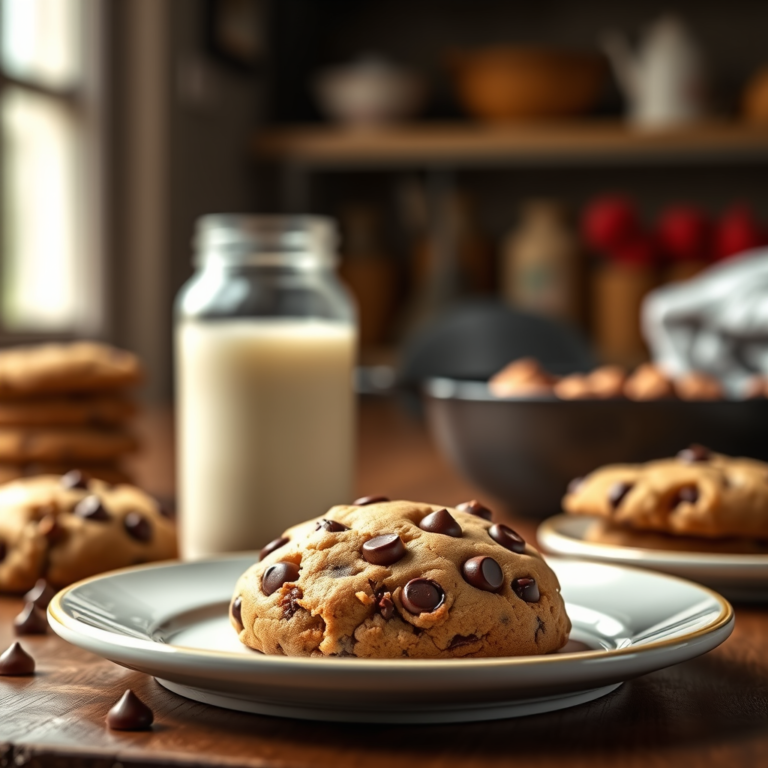
Presentation plays an essential role in enhancing the enjoyment of your chocolate chip cookies. To optimize cookie presentation, arrange them on a clean, flat surface like a wooden board or a matte ceramic plate, ensuring even spacing to avoid crowding. Serving suggestions include pairing cookies with complementary items such as a glass of cold milk, a cup of black coffee, or herbal tea to balance sweetness and texture. For a refined touch, consider adding a small garnish—like a sprig of mint or a dusting of powdered sugar—to each cookie. When serving, maintain cookie temperature: slightly warm for softness or fully cooled for a firmer bite. By focusing on these precise details, you’re free to present your cookies in a way that highlights their quality and maximizes enjoyment.
Tips
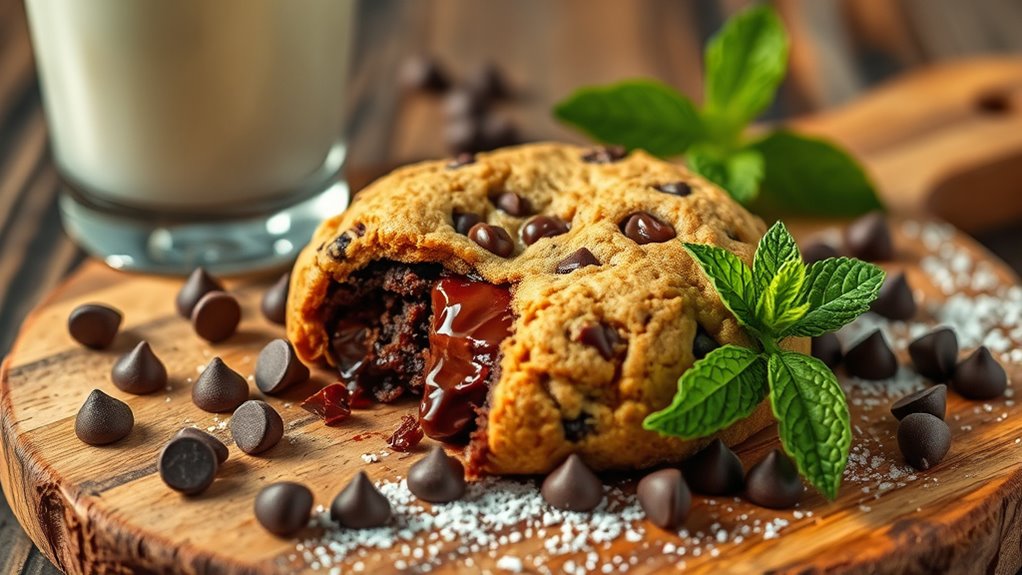
Mastering the serving technique sets the stage for perfecting your baking process. When you’re ready to bake, precise measurements and controlled mixing are essential baking tips to guarantee consistent texture and flavor. Don’t hesitate to use ingredient substitutions to accommodate dietary preferences or ingredient availability; for example, swapping butter with coconut oil alters moisture and richness without compromising structure. Keep your dough chilled—it controls spread and maintains cookie shape. Also, use parchment paper or silicone mats to prevent sticking and promote even baking. Adjust baking time slightly based on your oven’s heat distribution, and always cool cookies on wire racks to prevent sogginess. By applying these targeted adjustments, you gain freedom to customize your cookies while maintaining ideal results every time.
Food Value and Benefit
Prepared chocolate chip cookies provide a concentrated source of carbohydrates, fats, and sugars, making them a quick energy source. Each cookie contains essential vitamins and minerals derived from its ingredients, including small amounts of vitamin A, calcium, iron, and magnesium.
Benefits of eating chocolate chip cookies include:
- Provides a rapid energy boost, useful during physical or mental exertion
- Contains antioxidants from chocolate chips, which may help reduce oxidative stress
- Supplies fats from butter, which are essential for energy and cell function
- Offers a satisfying treat that can improve mood and provide comfort when enjoyed in moderation
While chocolate chip cookies offer these benefits, they are calorie-dense and should be consumed in moderation to maintain balanced nutrition and overall health.
Frequently Asked Questions
What ingredients do I need for a simple chocolate chip cookie recipe?
To make simple chocolate chip cookies, you will need the following ingredients:
1 cup of unsalted butter (softened), 1 cup of granulated sugar, 1 cup of brown sugar (packed),
2 large eggs, 2 teaspoons of vanilla extract, 3 cups of all-purpose flour,
1 teaspoon of baking soda, 1 teaspoon of salt, and 2 cups of semi-sweet chocolate chips.
How do I ensure my chocolate chip cookies are chewy?
To achieve chewy chocolate chip cookies, consider the following tips:
Use more brown sugar than white sugar, as brown sugar adds moisture.
Avoid overmixing the dough once you add the flour, as this can lead to a tougher texture.
Additionally, taking the cookies out of the oven when they are slightly underbaked will help them stay chewy as they cool.
Can I substitute ingredients in the chocolate chip cookie recipe?
Yes, you can substitute several ingredients in your chocolate chip cookie recipe.
For example, if you don’t have brown sugar, you can use granulated sugar only, but you may lose some moisture.
If you need a dairy-free option, substitute the butter with coconut oil or a dairy-free margarine.
You can also use gluten-free flour blends in place of all-purpose flour for a gluten-free version.
How should I store my chocolate chip cookies?
To store your chocolate chip cookies, place them in an airtight container at room temperature.
They will generally stay fresh for about a week. For longer-term storage, you can freeze the cookies by placing them in a freezer-safe bag or container.
When ready to eat, just let them thaw at room temperature or warm them briefly in the microwave.
Can I make the cookie dough ahead of time?
Absolutely! You can make the cookie dough ahead of time and refrigerate it for up to 3 days.
Just wrap the dough tightly in plastic wrap or place it in an airtight container.
Alternatively, you can freeze the dough for up to 3 months; just scoop the dough into balls and freeze on a baking sheet before transferring to a freezer bag.
When ready to bake, simply bake the frozen dough straight from the freezer, adding a couple of extra minutes to the baking time.
References
- https://en.wikipedia.org/wiki/Chocolate_chip_cookie
- https://www.jamesbeard.org/recipes/classic-chocolate-chip-cookies
- https://www.foodsafety.gov/food-safety-charts/safe-minimum-cooking-temperatures
- https://www.ncbi.nlm.nih.gov/pmc/articles/PMC6763403/
- https://www.extension.iastate.edu/foodsafety/recipes/chocolatechipcookies.pdf
- https://www.seriouseats.com/the-best-chocolate-chip-cookie-recipe-5196547