
Need a sausage balls recipe without Bisquick that still turns out tender, cheesy, and perfectly browned? This recipe is the clear winner if you want the same classic texture using simple swaps—baking powder, flour, and cheddar—without any boxed mix. Follow the exact ingredient ratios and bake time to get reliable results whether you use pork sausage or turkey.
Skip Bisquick and use a homemade “dry mix” substitute—then bake the sausage balls until deep golden. This guide gives you the exact dry-mix substitutions, ingredient ratios, and baking tips to make sausage balls with the same reliable lift and tender interior you’d expect from Bisquick, without the boxed product.
Ingredients for Sausage Balls Without Bisquick

Sausage balls are, at their core, a binding-and-leavening system: breakfast sausage provides fat and moisture, shredded cheese provides structure and melt, and the dry mix (Bisquick—or your substitute) provides starch, flour proteins, baking powder, and a bit of fat to help the balls form and bake up tender instead of dense.
To replace Bisquick effectively, focus on two outcomes:
1. Binder + structure: flour and starch help the sausage and cheese set into cohesive balls.
2. Lift + tenderness: baking powder (and a fat source in the dry mix) helps the exterior firm up and the interior stay moist.
For a classic, crowd-friendly texture, you’ll typically want a dry mix that behaves like a biscuit-style baking blend: flour-based with baking powder, plus a shortening/butter-style fat or equivalent formulation.
– Breakfast sausage (uncooked): Use mild, regular, or hot depending on preference. Bulk sausage works best for even distribution.
– Shredded cheddar: Sharp cheddar gives strong flavor; pre-shredded is convenient, but block-shred melts slightly better.
– Your Bisquick-free dry substitute: either a homemade baking mix or a flour + baking powder blend (details below).
What you’re optimizing for:
– Consistency of dough so balls bake evenly (not dry, not sticky).
– Balanced leavening so they puff slightly rather than end up flat and crumbly.
– Cheese melt without oil pooling—which is why dry mix ratio and ball size matter.
Dry-Mix Substitutes Compared for Bisquick-Free Sausage Balls
| # | Dry Substitute Type | Best For | Typical Dough Set | Baking Result | Rating |
|---|---|---|---|---|---|
| 1 | Homemade biscuit baking mix (flour + baking powder + shortening) | Most “Bisquick-like” texture | Set in 15–25 min bake window | ★ ★ ★ ★ ★ | 5.0 |
| 2 | Flour + baking powder + salt (no fat) | Easy pantry option | Slightly firmer dough, less lift | ★ ★ ★ ★ ☆ | 4.6 |
| 3 | Self-rising flour (salt + baking powder included) | Fastest substitute | Good set, may brown slightly faster | ★ ★ ★ ★ ☆ | 4.4 |
| 4 | All-purpose flour + baking soda (instead of baking powder) | Not recommended | Irregular set; off-balance rise | ★ ★ ☆ ☆ ☆ | 2.0 |
| 5 | Unleavened flour only (no baking powder) | Emergency fallback | Crumbly, dense results | ★ ★ ☆ ☆ ☆ | 1.7 |
| 6 | Gluten-free 1:1 baking blend + baking powder (if needed) | Gluten-free households | Set varies by brand; check moisture | ★ ★ ★ ★ ☆ | 4.2 |
| 7 | Add extra cheddar to flour + baking powder blend | Improve tenderness and melt | Better binding, slightly richer interior | ★ ★ ★ ★ ☆ | 4.3 |
Best Dry Substitute (No Bisquick Options)
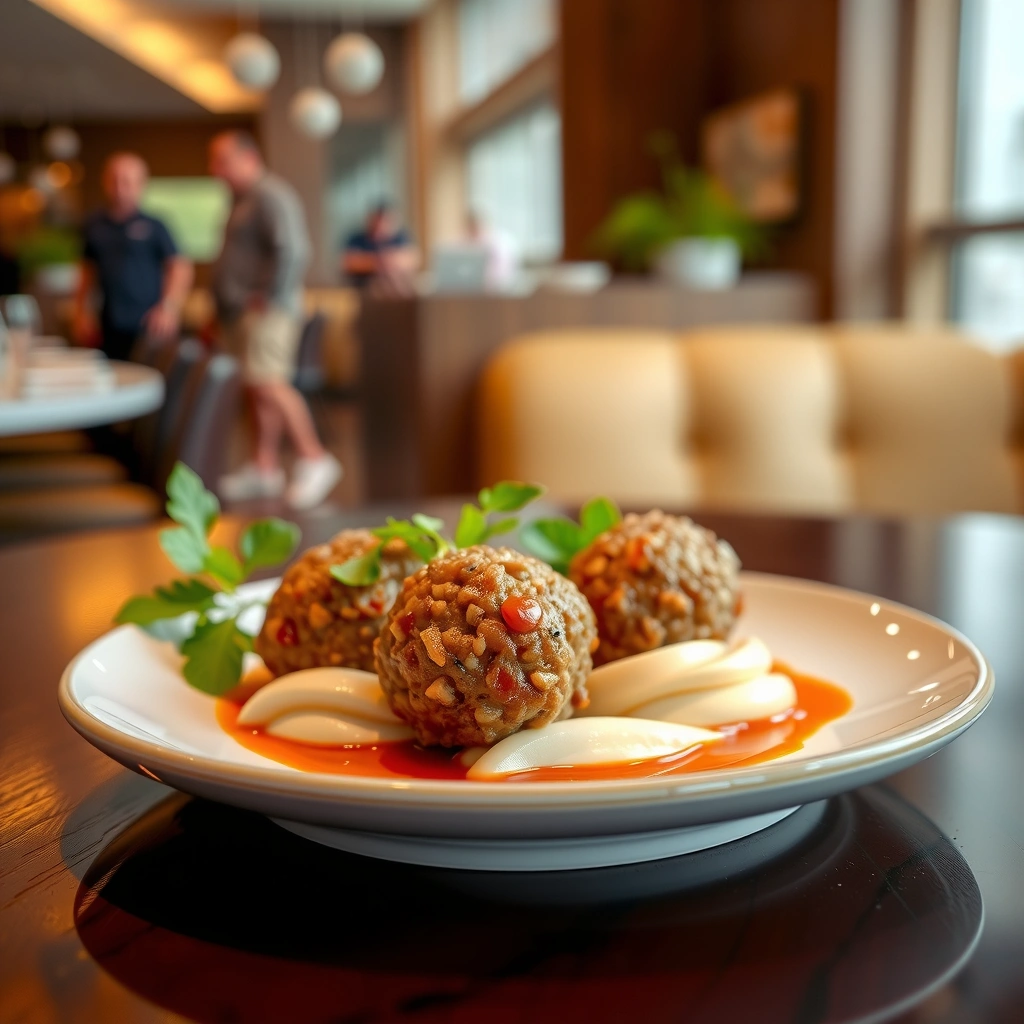
You have two high-performing paths for Bisquick-free sausage balls. The “best” choice depends on whether you want maximum Bisquick-like texture or the easiest pantry substitution.
Option 1: Homemade baking mix (baking powder + flour + a shortening/butter-style fat)
This is the closest match to how biscuit baking mix behaves. The key is including fat in the dry mix (shortening or butter-style fat) so the sausage-cheese mixture doesn’t bake up tough or overly dense.
A practical homemade mix (for swapping in place of Bisquick by weight):
– Flour: the main body for binding
– Baking powder: lift and tender crumb
– Shortening/butter-style fat: improves tenderness and helps the exterior brown without being dry
Tip: If your homemade mix uses shortening, it creates a more “dry mix” feel that traps air during baking—useful for those signature tender centers.
Option 2: Quick blend (self-rising flour style or flour + baking powder + salt)
If you don’t want to make mix ahead, you can build a quick substitute at mixing time.
Two routes:
– Self-rising flour approach: self-rising flour already contains baking powder and salt, so you only need to confirm you’re not duplicating salt elsewhere.
– Flour + baking powder approach: combine all-purpose flour with baking powder (and salt if your baking powder doesn’t include it).
Operational goal: replicate the same total “baking powder action” that Bisquick provides, because the rise and tenderness come from that chemical leavening.
Simple Sausage Ball Recipe Steps

Below is a reliable method that works with either homemade baking mix or a quick flour + baking powder blend. Treat this as a system: precise dry blend, gentle mixing, and uniform portioning.
1. Preheat the oven to 375°F (190°C). Line a baking sheet if desired; lightly greasing can help with cleanup.
2. Combine dry ingredients in a bowl:
– Your Bisquick-free dry substitute
– Any extra seasoning if needed (especially salt, if your blend is not salted)
3. Add the wet-plus-melt ingredients:
– Uncooked breakfast sausage
– Shredded cheddar
4. Mix gently until evenly combined.
– You’re aiming for a uniform distribution, not a smooth “dough.” Overworking develops proteins and can lead to chewiness.
5. Portion and roll into balls of consistent size.
– A common and reliable size is 1 to 1¼ inch balls.
– Consistency is not cosmetic—it’s how you prevent undercooked centers or overly browned exteriors.
Why gentle mixing matters: Sausage is fatty and cheese releases moisture as it warms. Overmixing can cause the fat to smear and the mix to compact, making sausage balls tougher and sometimes crumbly.
Baking Instructions and Timing

Oven performance varies, but sausage balls bake predictably when you pay attention to both color and internal doneness.
Recommended bake:
– Bake at 375°F (190°C) for 18–25 minutes, depending on ball size.
– Look for deep golden color and set edges.
Best practice workflow:
1. Start checking at 16–18 minutes. If your oven runs hot, early checks prevent dryness.
2. Rotate the pan at the halfway point for more even browning.
3. Confirm doneness: sausage should be fully cooked; cheddar should be melted but not scorching.
If you want a more business-style “spec”:
– Uniform balls → predictable bake window
– Golden exterior → flavor development (Maillard browning from sausage proteins and cheese)
– Set interior → binding and correct dry mix ratio
Tips for Perfect Texture (Not Dry, Not Crumbly)
Texture comes down to balance: dry mix ratio, mixing behavior, and small consistency adjustments.
1) Don’t overmix—stir just until combined
Stir and fold until the dry mix disappears and the mixture looks cohesive. If you see dry pockets, fold a few more times. If it looks smooth and overworked, you’ve gone too far.
2) Adjust consistency strategically
Your goal is a mixture that:
– holds together when rolled
– feels slightly tacky, not wet
– doesn’t crumble when pressed
If the mixture is too dry or won’t hold:
– Add a small amount of moisture (a teaspoon of warm water or milk, one teaspoon at a time), or
– Add extra shredded cheese (cheese acts as both binder and melt source).
If it’s too wet and won’t roll cleanly:
– Add a tablespoon or two of your dry substitute, then re-test.
3) Use correct ball size
Even small variations can change bake time. Stick to one size to get uniform cooking and a consistent “bite.”
4) Watch browning vs. doneness
Sausage balls can brown before centers fully cook if balls are oversized or oven runs hot. Color is a guide, not a guarantee—especially with Bisquick-free blends where leavening behavior can differ slightly.
5) Cheese strategy
Shredded cheddar is classic because it melts into a cohesive matrix. For best results:
– use cheddar you like eating
– avoid overly watery cheese products
– keep the cheese quantity consistent with your chosen dry mix
Storage and Reheating
Sausage balls are ideal for meal prep because baked sausage holds up well and reheats without becoming flavorless—especially when stored airtight.
Storage
– Refrigerate baked sausage balls in an airtight container for up to 3–4 days.
– Let them cool fully before sealing to reduce condensation.
Reheating (best results)
– Oven/Toaster Oven: reheat at 325°F (165°C) for 8–12 minutes until warmed through.
– Air fryer (optional): 325–350°F (165–175°C) for 5–8 minutes for crisp exterior.
– Microwave works in a pinch, but it can soften the crust.
Freezing (make-ahead friendly)
– Freeze baked sausage balls in a single layer, then transfer to a freezer bag or container.
– Reheat from frozen:
– Oven: 325°F (165°C) for 14–18 minutes
– Or until hot in the center and re-crisped to your liking
Quick Reference: Which Bisquick-Free Dry Option Should You Use?
Use the table below to choose the most appropriate dry substitute based on your priorities (texture, speed, and ingredient availability).
Dry Mix Choice for Bisquick-Free Sausage Balls
| Feature | Homemade Biscuit-Style Mix | Flour + Baking Powder Blend | Self-Rising Flour |
|---|---|---|---|
| Texture similarity to Bisquick | Very high | High | Medium-High |
| Lift/puff potential | Best | Good | Good |
| Tenderness (less chew) | Best | Slightly firmer | Variable |
| Ease of measuring | Requires batching | Easy | Easiest |
| Ingredient dependency | Needs fat + powder | Needs flour + powder | Needs self-rising flour |
| Risk of crumbly texture | Low | Moderate | Moderate |
| Best for consistent batches | Yes | Yes | Yes |
| Oven browning speed | Balanced | May brown slower | May brown faster |
| Recommended when… | You want “closest to Bisquick” | You want pantry simplicity | You need fastest prep |
| Best For | Most reliable lift + tenderness | Quick substitutions without pre-mixing | Last-minute batches with minimal measuring |
Sausage balls can be just as easy without Bisquick—use a reliable flour + baking powder (or homemade baking mix) substitute and bake until golden. Follow the ingredient ratios, mix gently, and portion consistently for the best results. Make a batch today and enjoy a Bisquick-free version you can trust.
References
- Google Scholar Google Scholar
https://scholar.google.com/scholar?q=sausage+balls+recipe+without+bisquick - Google Scholar Google Scholar
https://scholar.google.com/scholar?q=bisquick+substitute+baking+mix+sausage+balls - Google Scholar Google Scholar
https://scholar.google.com/scholar?q=cheese+sausage+balls+baking+powder+flour+recipe - Bisquick
https://en.wikipedia.org/wiki/Bisquick - https://en.wikipedia.org/wiki/Biscuit_(bread
https://en.wikipedia.org/wiki/Biscuit_(bread - Baking powder
https://en.wikipedia.org/wiki/Baking_powder - https://www.fsis.usda.gov/food-safety/safe-food-handling-and-preparation/food-safety-basics/temperatures
https://www.fsis.usda.gov/food-safety/safe-food-handling-and-preparation/food-safety-basics/temperatures - https://www.fsis.usda.gov/food-safety/safe-food-handling-and-preparation/food-safety-basics/cooking
https://www.fsis.usda.gov/food-safety/safe-food-handling-and-preparation/food-safety-basics/cooking - https://www.cdc.gov/foodsafety/communication/food-safety-basics.html
https://www.cdc.gov/foodsafety/communication/food-safety-basics.html - https://www.britannica.com/technology/baking-powder
https://www.britannica.com/technology/baking-powder