
You can create a protein smoothie by blending 20-30 grams of protein sources like whey or Greek yogurt with one cup of fruits such as berries or banana and 1 to 1.5 cups of liquids like almond milk. Prep by chopping fruits uniformly and layering liquids first for smooth blending. Serve chilled with fresh toppings to enhance taste. Choosing high-quality, balanced ingredients helps maximize nutrition and flavor. Explore more for tips on perfecting your smoothie routine and variety.
Ingredients and Quantity
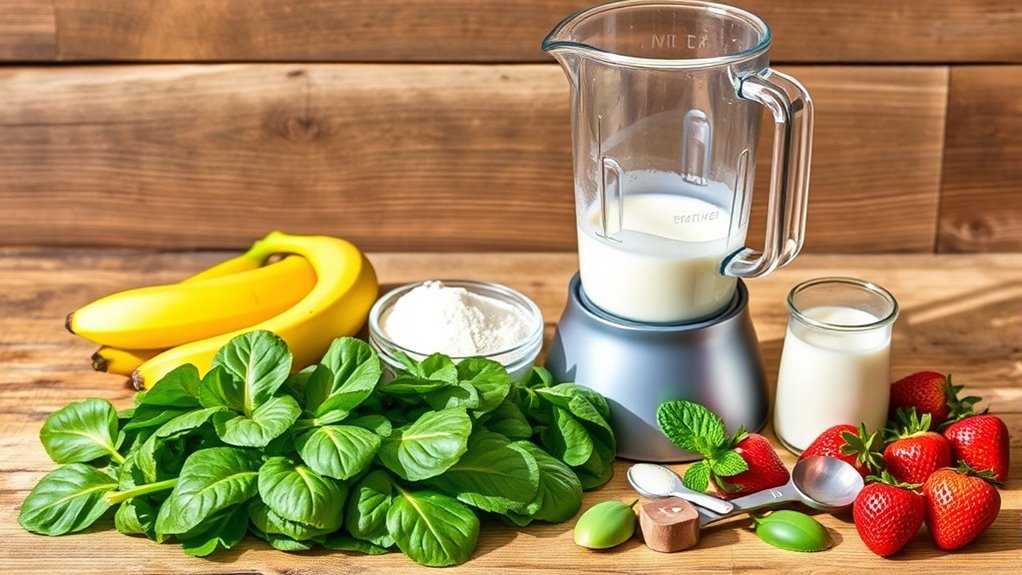
Before you start blending, it’s important to know the right ingredients and their quantities to confirm your protein smoothie is both nutritious and delicious. The foundation lies in selecting quality protein sources and balancing them with complementary flavor combinations. Here’s a concise guide:
| Ingredient Type | Common Choices | Quantity per Serving |
|---|---|---|
| Protein Sources | Whey, Pea, Greek Yogurt | 20-30 grams |
| Fruits | Berries, Banana, Mango | 1 cup |
| Liquids | Almond Milk, Water, Juice | 1 to 1.5 cups |
Choosing the right amount confirms you get enough protein for muscle repair while maintaining enjoyable taste. Mixing fruit with protein sources enhances flavor without overpowering. This balance empowers your freedom to create smoothies tailored to your nutritional needs and palate preferences.
Preparations
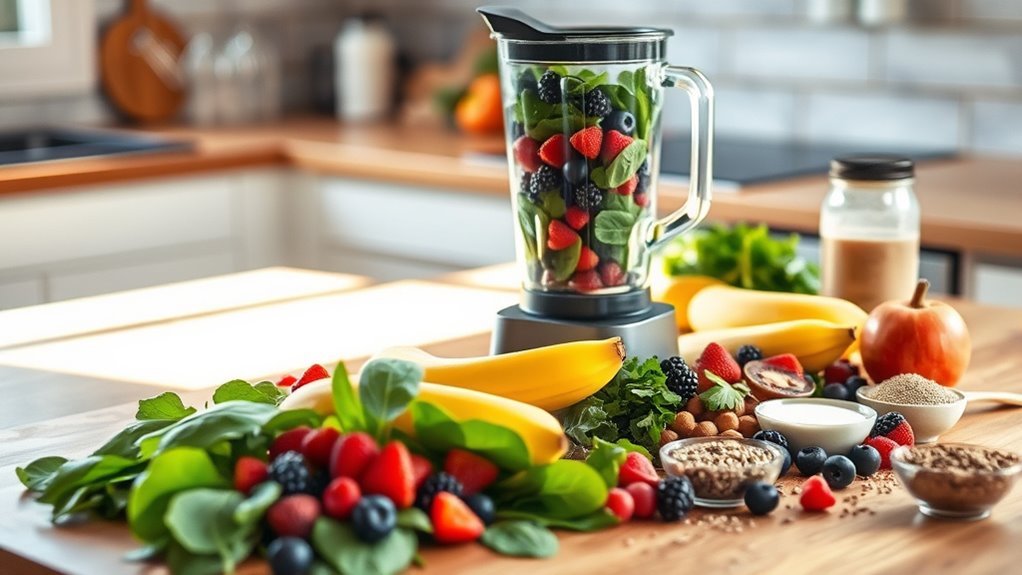
A few simple steps can secure your protein smoothie blends smoothly and tastes great. Start by choosing your ingredients based on preferred smoothie variations—this lets you tailor nutrients and flavors to your liking. Use preparation techniques like chopping fruits and vegetables into uniform pieces, which promotes even blending and a consistent texture. For frozen components, thaw slightly to prevent a grainy finish. Measuring ingredients accurately secures balanced taste and nutrition. Layering matters too: liquids first, then powders, followed by denser items like nuts or frozen fruit, helping the blender work efficiently. These evidence-based techniques optimize texture and flavor, giving you freedom to customize without sacrificing quality. Mastering these preparation steps lays a solid foundation for delicious, nutritious protein smoothies every time.
How to Prepare
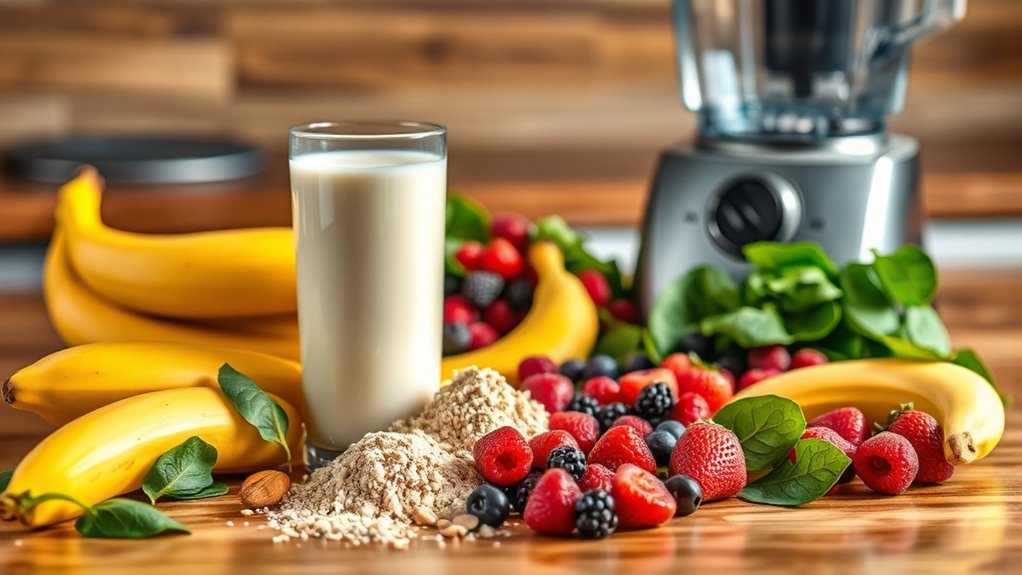
- Select your base liquid: water, milk, or plant-based alternatives.
- Add your protein source: protein powder, yogurt, or nuts.
- Incorporate fruits and vegetables, choosing varieties that enhance taste and nutrition.
- Use effective blending techniques:
- Add liquids first to ease blade movement.
- Add softer ingredients next.
- Add frozen or tougher items last.
- Blend on high speed until smooth, pausing to stir if needed for uniform consistency.
- Adjust thickness by varying the amount of liquid.
- Follow this methodical approach to create a nutrient-rich, flavorful smoothie tailored to your preferences and lifestyle, allowing you to experiment confidently.
How to Serve
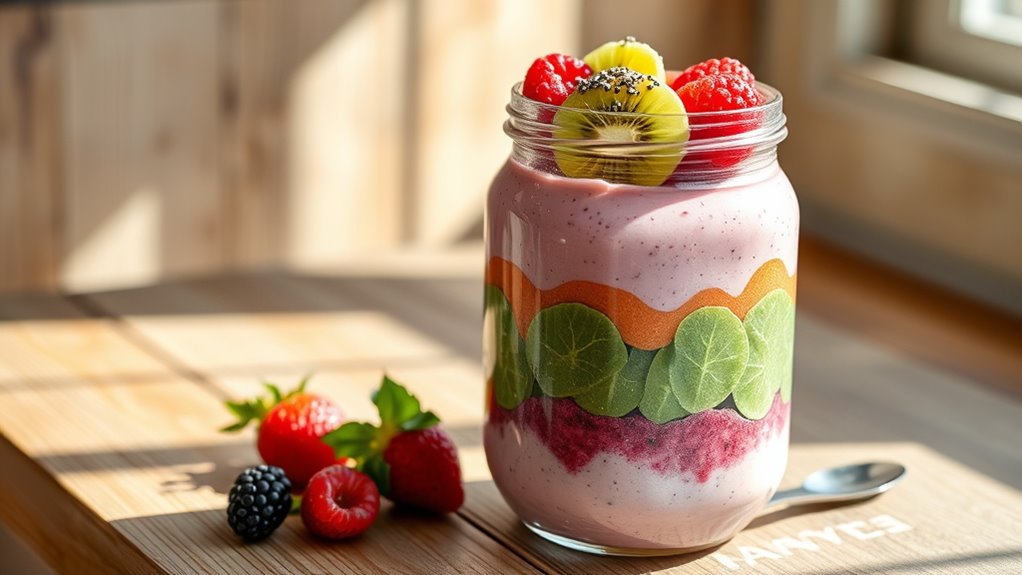
Although protein smoothies are often enjoyed quickly, serving them thoughtfully can enhance both their flavor and nutritional impact. You can experiment with presentation styles like using clear glass jars or bowls to showcase vibrant colors and textures, making your smoothie visually appealing. Serving suggestions include topping your smoothie with fresh fruit slices, nuts, or seeds to add crunch and extra nutrients. Consider layering ingredients or using a swirl pattern to create an attractive visual contrast. Keeping smoothies chilled before serving preserves their texture and freshness. By paying attention to how you serve your protein smoothie, you not only elevate your eating experience but also encourage mindful consumption. Adopting these simple presentation styles and serving suggestions can make your protein smoothie both enjoyable and nourishing.
Tips
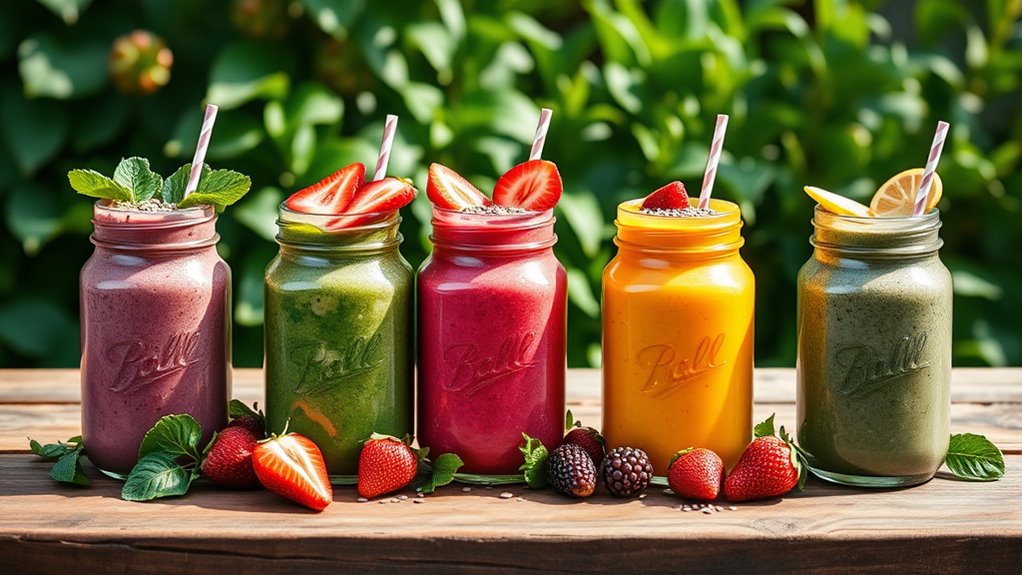
When crafting your protein smoothie, choosing high-quality ingredients and balancing macronutrients can greatly improve both taste and nutritional value. Start by selecting diverse protein sources—whey, plant-based, or Greek yogurt—to match your dietary needs and preferences. Experiment with smoothie variations by incorporating different fruits, vegetables, and healthy fats like avocado or nuts to create unique flavors while maintaining nutritional balance. Avoid excess sugars or artificial additives to keep your smoothie clean and effective. Use frozen fruits to achieve a thicker texture without diluting the protein content. Finally, prep ingredients in advance to save time and maintain consistency in your routine. These evidence-based tips empower you to enjoy protein smoothies that fuel your body while honoring your freedom to customize according to your lifestyle.
Food Value and Benefit
The prepared protein smoothie is a nutrient-dense dish that combines high-quality protein, essential vitamins, minerals, antioxidants, fiber, and healthy fats. This balanced combination supports various aspects of health and wellness.
A nutrient-rich protein smoothie packed with protein, vitamins, minerals, antioxidants, fiber, and healthy fats for optimal wellness.
Food Value of the Protein Smoothie:
- Rich in complete proteins (from whey or plant-based sources) for muscle repair and growth
- Contains dietary fiber from fruits and vegetables aiding digestion
- Provides essential vitamins such as Vitamin C, Vitamin A, and B-complex vitamins
- Supplies important minerals including potassium, magnesium, and iron
- Includes antioxidants and phytonutrients that enhance immune function
- Contains healthy fats from ingredients like avocado or nuts for improved nutrient absorption and satiety
Benefits of Eating This Protein Smoothie:
- Promotes muscle recovery and strength building
- Supports immune health with vitamins and antioxidants
- Enhances energy metabolism through B vitamins
- Aids digestion and gut health with dietary fiber
- Helps maintain healthy blood pressure and muscle function via potassium and magnesium
- Contributes to weight management by promoting fullness and reducing cravings
- Supports overall wellness by providing a balanced mix of macro- and micronutrients
Frequently Asked Questions about Protein Smoothie Recipes
1. What are the best protein sources to use in smoothies?
Some of the best protein sources for smoothies include protein powders (whey, casein, pea, soy, or hemp), Greek yogurt, cottage cheese, nut butters (like almond or peanut butter), and seeds (like chia or flaxseeds). These ingredients not only provide protein but also add creaminess and flavor to your smoothies.
2. Can I make a protein smoothie without protein powder?
Absolutely! You can create protein smoothies using whole food sources. Ingredients like Greek yogurt, cottage cheese, silken tofu, or nut butters can provide ample protein without the need for protein powder. Additionally, adding seeds like chia or hemp can also boost the protein content significantly.
3. What fruits work best in protein smoothies?
Fruits such as bananas, berries (strawberries, blueberries, raspberries), mangoes, and pineapples are excellent choices for protein smoothies. They add natural sweetness, flavor, and essential vitamins. Bananas, in particular, provide creaminess and can help mask any protein powder taste.
4. How can I make my protein smoothie thicker?
To achieve a thicker texture in your smoothies, consider adding frozen fruits instead of fresh ones, using less liquid, or incorporating ingredients like Greek yogurt, avocado, or oats. Additionally, chia seeds or flaxseeds can absorb liquid and help thicken the smoothie while also adding nutritional benefits.
5. How can I customize my protein smoothie for different dietary needs?
Customizing your protein smoothie is easy! For a vegan option, use plant-based protein powders, almond or soy milk, and fruits. If you’re low-carb, focus on leafy greens, berries, and unsweetened nut milk. For higher calorie needs, add healthy fats like avocado or nut butter. Always consider your dietary restrictions and preferences when selecting ingredients.
References
- https://www.ncbi.nlm.nih.gov/pmc/articles/PMC7503115/
- https://www.health.harvard.edu/staying-healthy/the-nutrition-source-protein
- https://www.eatright.org/health/wellness/healthy-aging/protein-smoothies
- https://www.verywellfit.com/protein-smoothie-recipes-5116562
- https://www.cdc.gov/nutrition/micronutrients/index.html
- https://www.mayoclinic.org/healthy-lifestyle/nutrition-and-healthy-eating/expert-answers/protein-smoothies/faq-20058157
- https://www.journals.elsevier.com/nutrition-research
- https://www.sciencedirect.com/science/article/pii/S2212267215000711
