You can make a delicious pineapple smoothie using 1 cup chopped fresh pineapple, 1 banana, ½ cup Greek yogurt, and ¾ cup almond milk. Peel and chop fruit evenly, then blend liquids first, pulsing before blending continuously for smoothness. Serve chilled with a pineapple slice garnish. Using ripe pineapple enhances natural sweetness without added sugar. Variations include swapping almond milk for coconut water or adding leafy greens. Keep exploring to discover tips on perfecting texture and flavor balance.
Ingredients and Quantity
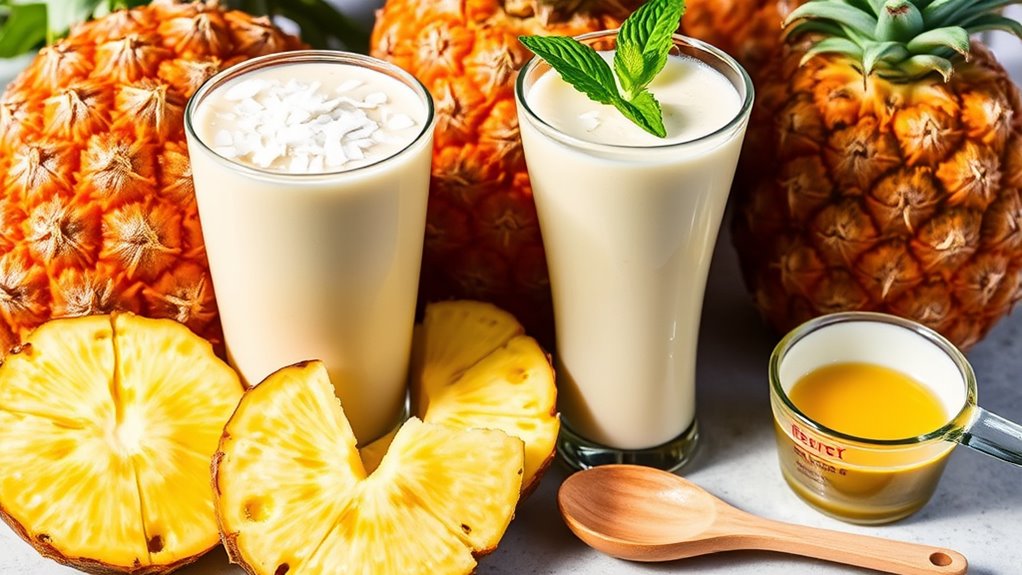
To create a delicious pineapple smoothie, you’ll need a precise combination of ingredients. Using fresh fruits guarantees peak flavor and nutrition. You can explore various smoothie variations by adjusting quantities or adding complementary fruits. Here’s a foundational ingredient list with standard quantities for a single serving:
| Ingredient | Quantity |
|---|---|
| Fresh pineapple | 1 cup, chopped |
| Banana | 1 medium |
| Greek yogurt | ½ cup |
| Almond milk | ¾ cup |
This balance provides a creamy texture and natural sweetness without overpowering the pineapple. Feel free to customize by substituting almond milk for coconut water or adding leafy greens. Each variation lets you enjoy freedom in flavor while maintaining nutritional integrity.
Preparations
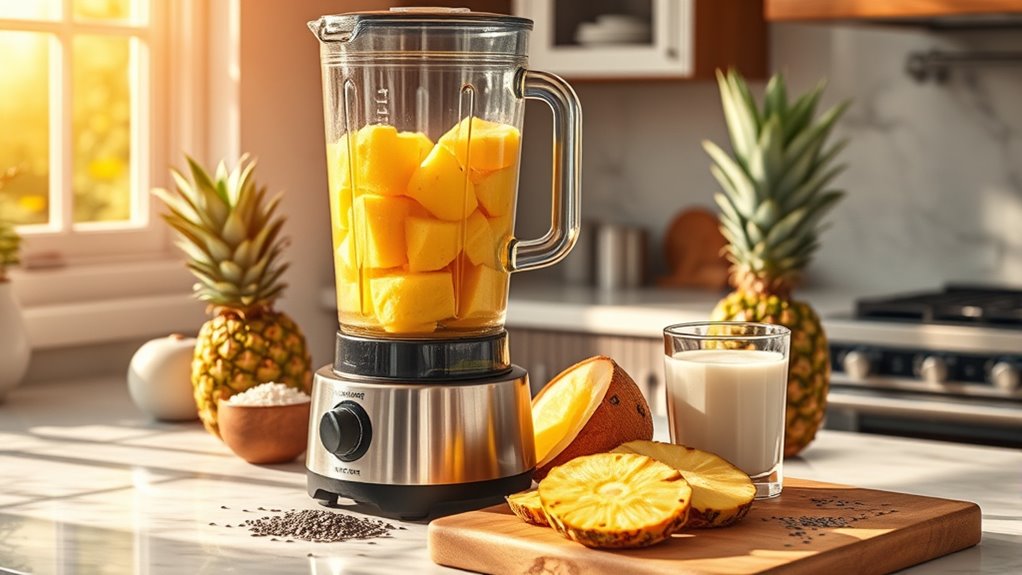
Before blending your pineapple smoothie, make sure all ingredients are properly prepared to guarantee a smooth, consistent texture. Peel, core, and chop fresh pineapple into uniform pieces to facilitate even blending. If using frozen pineapple, thaw slightly to prevent overworking your blender. Measure liquids accurately to balance thickness without sacrificing flavor. Wash and dry any fresh herbs or leafy greens to avoid unwanted grit. Proper preparation allows you to explore smoothie variations confidently, combining pineapple with complementary flavors like coconut, mango, or ginger. Consider the texture and sweetness each ingredient adds; for example, creamy yogurt softens tart pineapple, while citrus enhances brightness. Thoughtful preparation guarantees each flavor combination achieves harmony, freeing you to customize your smoothie effortlessly while maintaining a revitalizing, enjoyable result.
How to Prepare
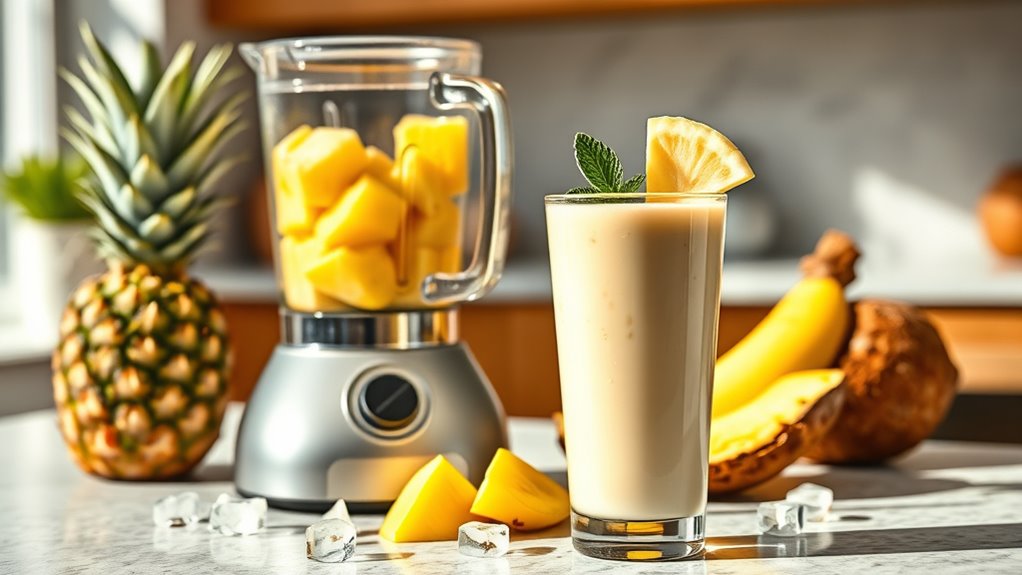
- Select ripe pineapple for natural sweetness.
- Balance the pineapple with complementary ingredients such as banana or coconut milk for different smoothie variations.
- Use fresh or frozen fruit to control smoothie thickness and chill.
- Add liquids to the blender first to protect the blades and help achieve a smooth consistency.
- Start blending with pulse mode to break down fruit chunks.
- Switch to continuous blending for a creamy texture.
- Avoid over-blending to prevent separation or a watery texture.
- Taste the smoothie mid-blend to adjust sweetness and acidity.
- Master these blending techniques to control texture and flavor, allowing customization and consistent, delicious results every time.
How to Serve
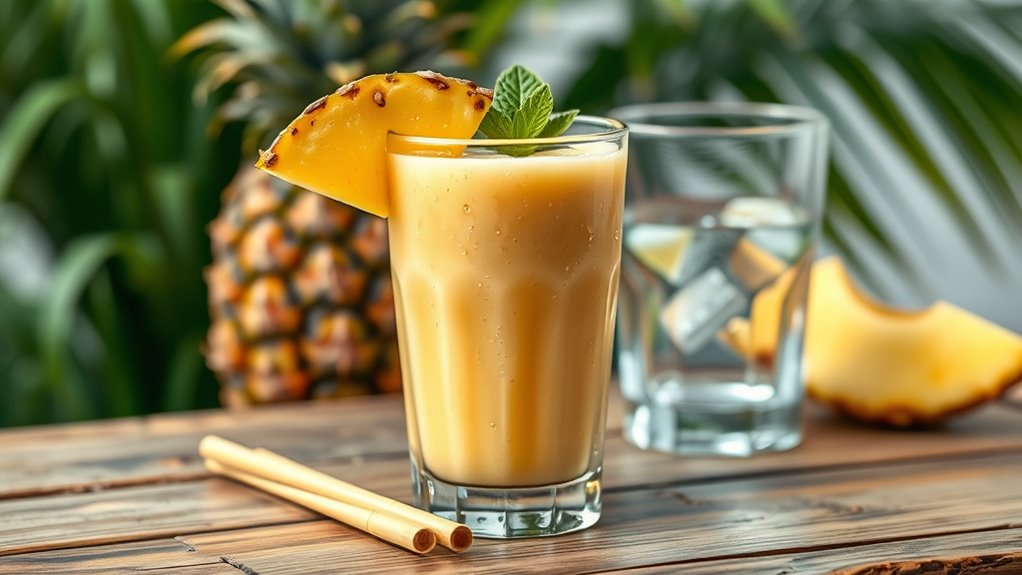
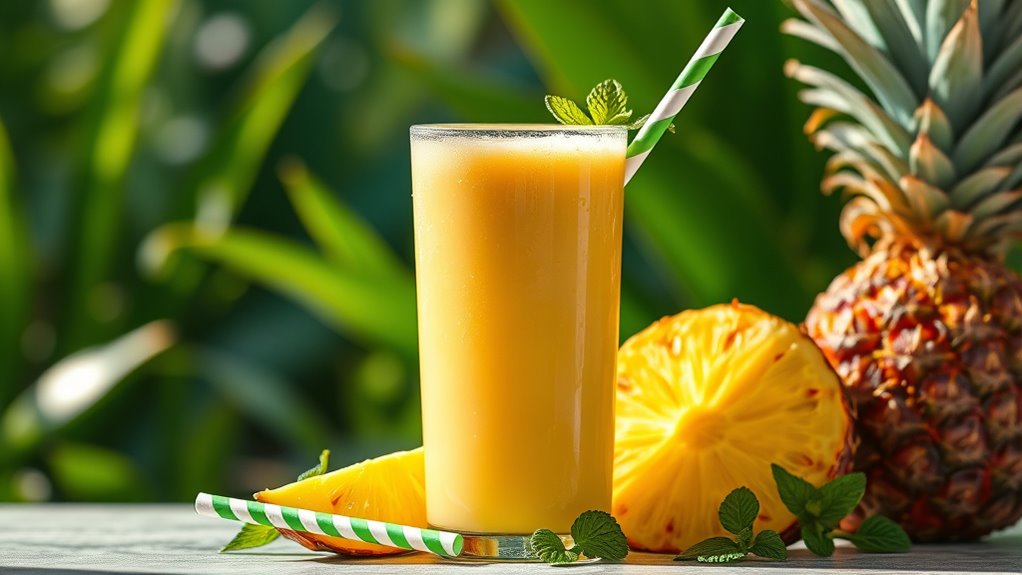
Presentation plays an essential role in enhancing the enjoyment of your pineapple smoothie. To elevate your experience, consider varied presentation styles that complement the vibrant flavor and texture. Serving your smoothie in clear glasses highlights its tropical hue, while garnishing with fresh pineapple slices or a sprig of mint adds visual appeal and a revitalizing aroma. For a natural touch, use eco-friendly straws or bamboo stirrers, aligning with sustainable choices. Serving suggestions also include chilled glassware to maintain ideal temperature, ensuring each sip is as invigorating as the first. Additionally, layering your smoothie with complementary fruits creates an inviting contrast. By focusing on these presentation styles and serving suggestions, you not only improve taste perception but also embrace freedom in personalizing your pineapple smoothie experience.
Tips
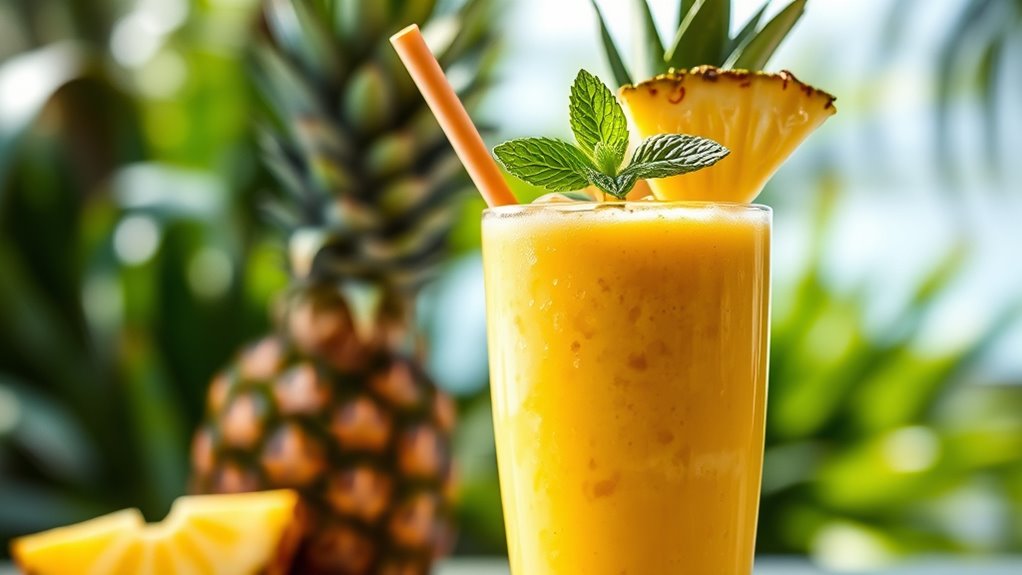
When crafting the perfect pineapple smoothie, you’ll want to balance sweetness and acidity to enhance its natural flavors without overpowering them. Using ripe pineapple guarantees natural sweetness, reducing the need for added sugars. Incorporate other tropical fruits like mango or passion fruit to introduce complex, invigorating notes and create exciting smoothie variations. For a smoother texture, freeze your fruits beforehand or add a small amount of coconut water rather than ice, which can dilute flavor. If you prefer creaminess, a splash of Greek yogurt or plant-based milk works well without masking pineapple’s brightness. Finally, blend just until smooth to preserve some fruit texture, giving your smoothie a satisfying mouthfeel. These tips let you enjoy a vibrant, customizable drink that fits your taste and lifestyle.
Food Value and Benefit
Pineapple smoothies are not only delicious but also packed with valuable nutrients that contribute to overall health and wellness.
Food Value of Pineapple Smoothie:
- Rich in vitamin C, which supports immune function and skin health
- Contains bromelain, an enzyme with anti-inflammatory and digestive benefits
- Provides dietary fiber to aid digestion
- Includes antioxidants that help combat oxidative stress
- Supplies essential minerals such as manganese and potassium
Benefits of Eating Pineapple Smoothies:
- Boosts immune system strength
- Promotes healthy, glowing skin
- Aids in digestion and reduces inflammation
- Enhances natural energy levels
- Supports weight management and overall wellness
- Helps reduce oxidative damage in the body
Enjoying a pineapple smoothie is a tasty way to nourish your body with essential vitamins, minerals, enzymes, and fiber, supporting your health goals without compromising on flavor.
Frequently Asked Questions about Pineapple Smoothie Recipes
1. What are the basic ingredients for a pineapple smoothie?
A basic pineapple smoothie typically includes fresh or frozen pineapple, a liquid base (such as coconut water, juice, or yogurt), and a sweetener (like honey or agave syrup, if desired). You can also add ice for a thicker consistency and other fruits or greens for added nutrition.
2. Can I make a pineapple smoothie without dairy?
Absolutely! You can make a delicious pineapple smoothie without any dairy by using non-dairy alternatives. Options include almond milk, coconut milk, or oat milk as your liquid base. Additionally, you can use dairy-free yogurt for creaminess if you wish.
3. How can I make my pineapple smoothie healthier?
To make your pineapple smoothie healthier, consider adding fresh greens like spinach or kale, which provide extra vitamins and minerals without altering the taste significantly. You can also include chia seeds or flaxseeds for added fiber and omega-3 fatty acids. Opt for natural sweeteners like honey or dates instead of refined sugars, and use water or unsweetened almond milk as your base.
4. What are some tasty variations of pineapple smoothies?
There are many delicious variations of pineapple smoothies! You can try a tropical twist by adding mango and coconut milk, or a berry blend with strawberries and blueberries. For a refreshing zing, add mint or ginger. You can also make a protein-packed version by including protein powder or nut butter. Experimenting with different combinations will help you find your favorite!
5. How long can I store a pineapple smoothie?
Pineapple smoothies are best enjoyed fresh, but if you need to store one, you can keep it in an airtight container in the refrigerator for up to 24 hours. The smoothie may separate, so be sure to shake or stir it well before drinking. For longer storage, you can freeze the smoothie in individual portions and blend again when you’re ready to enjoy it.
References
- https://en.wikipedia.org/wiki/Pineapple
- https://www.health.harvard.edu/staying-healthy/the-health-benefits-of-pineapple
- https://www.ncbi.nlm.nih.gov/pmc/articles/PMC6511890/
- https://www.cdc.gov/nutrition/resources-publications/healthy-weight/pineapple.html
- https://www.eatright.org/health/wellness/preventing-illness/antioxidants-in-food-and-health
- https://www.verywellfit.com/pineapple-smoothie-recipes-4152461
- https://www.mayoclinic.org/healthy-lifestyle/nutrition-and-healthy-eating/expert-answers/pineapple/faq-20057980
- https://www.fao.org/nutrition/education/food-systems/pineapple/en/