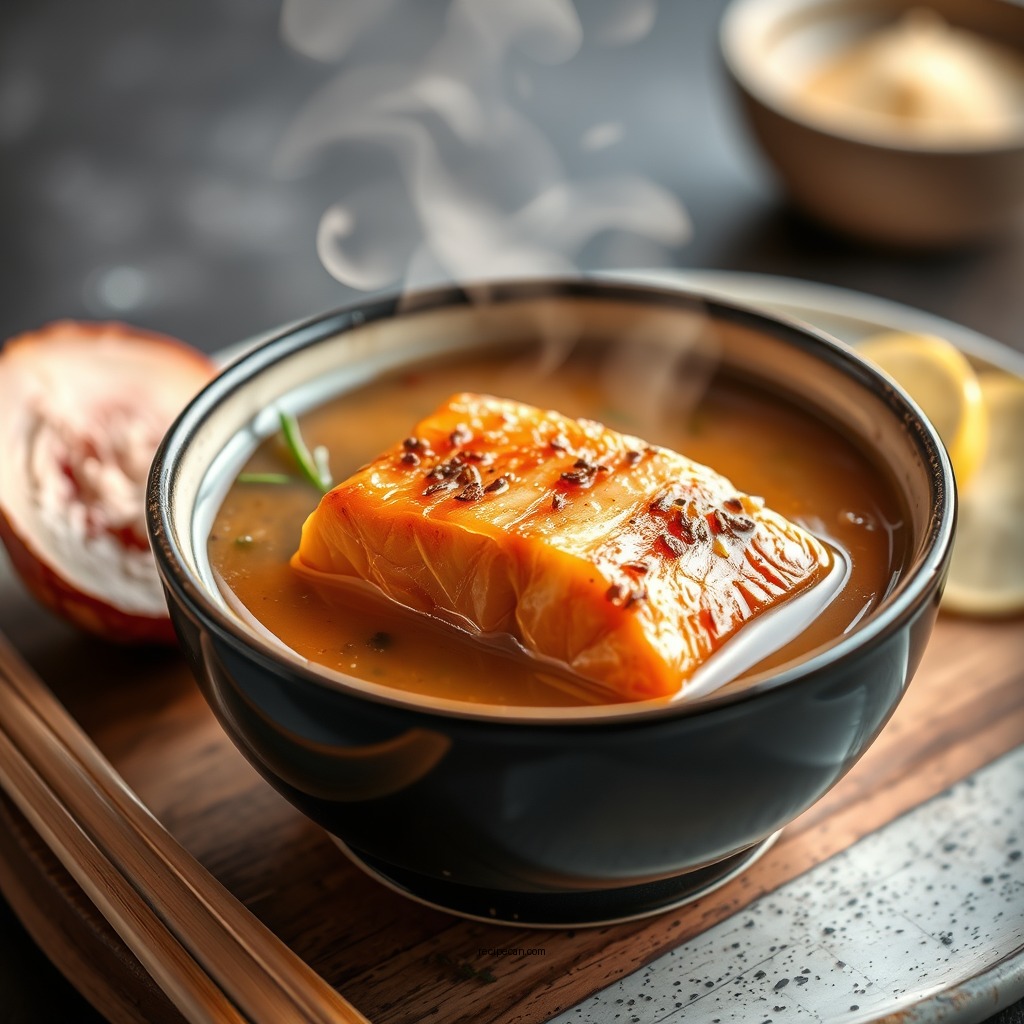
Miso salmon soup is a delightful and nutritious dish that combines tender salmon with the rich umami taste of miso broth. This comforting soup is not only easy to prepare but also packed with health benefits, making it a perfect choice for a weeknight dinner or a cozy weekend meal. In this article, you’ll learn how to create a comforting bowl of miso salmon soup at home, complete with tips on ingredients, preparation, and variations to suit your taste.
Ingredients for Miso Salmon Soup
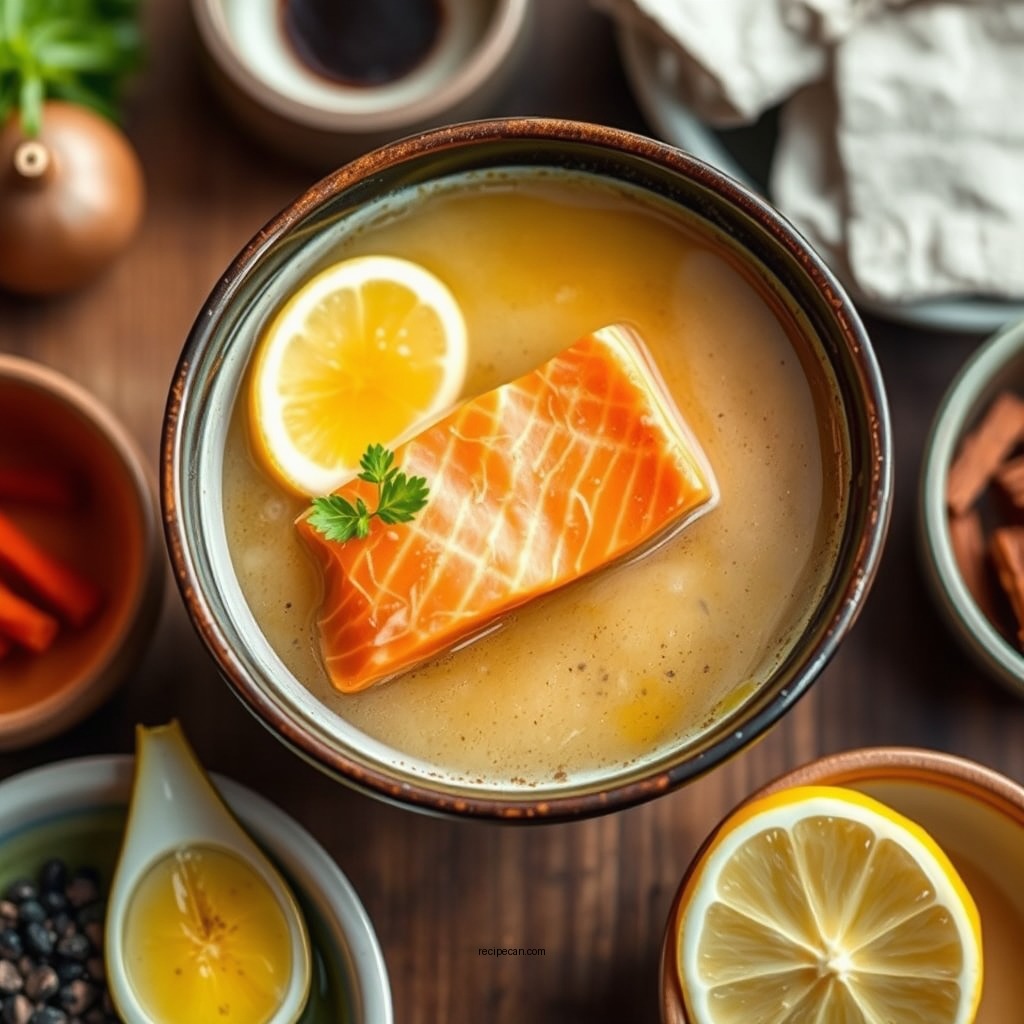
To create a delicious miso salmon soup, you’ll need a few key ingredients that work harmoniously together. Here’s what you’ll need:
– Fresh salmon fillets or cubed salmon: Look for high-quality, sustainable salmon, as this will enhance the flavor and nutritional value of your soup.
– Miso paste (white or red): Miso is the heart of this soup, providing a rich, savory flavor. White miso is milder and sweeter, while red miso is bolder and saltier.
– Broth (vegetable or chicken): Choose a broth that complements the soup’s flavors. Vegetable broth offers a lighter taste, while chicken broth adds depth.
Additional Ingredients
For a more complex flavor profile and nutritional boost, consider adding:
– Aromatics: Garlic and ginger will elevate the taste of your broth.
– Vegetables: Bok choy, mushrooms, and green onions are excellent additions.
– Toppings: Sesame seeds, sliced green onions, and a drizzle of sesame oil enhance the overall experience.
Preparing the Miso Broth
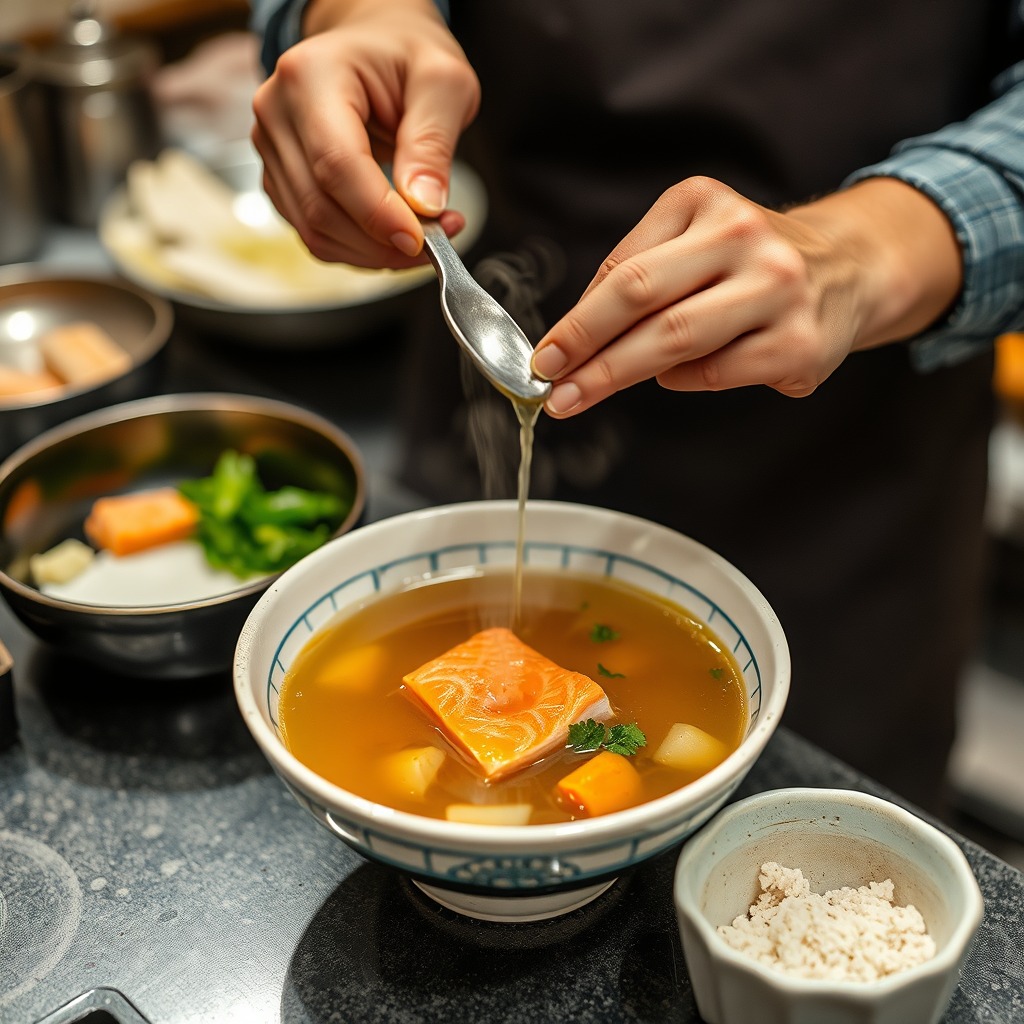
Creating the perfect miso broth is a crucial step in making your miso salmon soup. Follow these steps for a flavorful base:
1. Dissolve the Miso Paste: Begin by taking a few tablespoons of miso paste and dissolving it in warm broth. This helps to avoid clumps and ensures a smooth consistency. Stir until fully incorporated.
2. Add Aromatics: Introduce minced garlic and ginger to the broth. These aromatics not only enhance the flavor but also provide health benefits, such as anti-inflammatory properties. Adding chopped green onions at this stage infuses the broth with a fresh, vibrant flavor.
3. Simmer for Depth: Allow the broth to simmer gently for a few minutes. This step melds the flavors and enriches the overall taste of the soup.
Cooking the Salmon
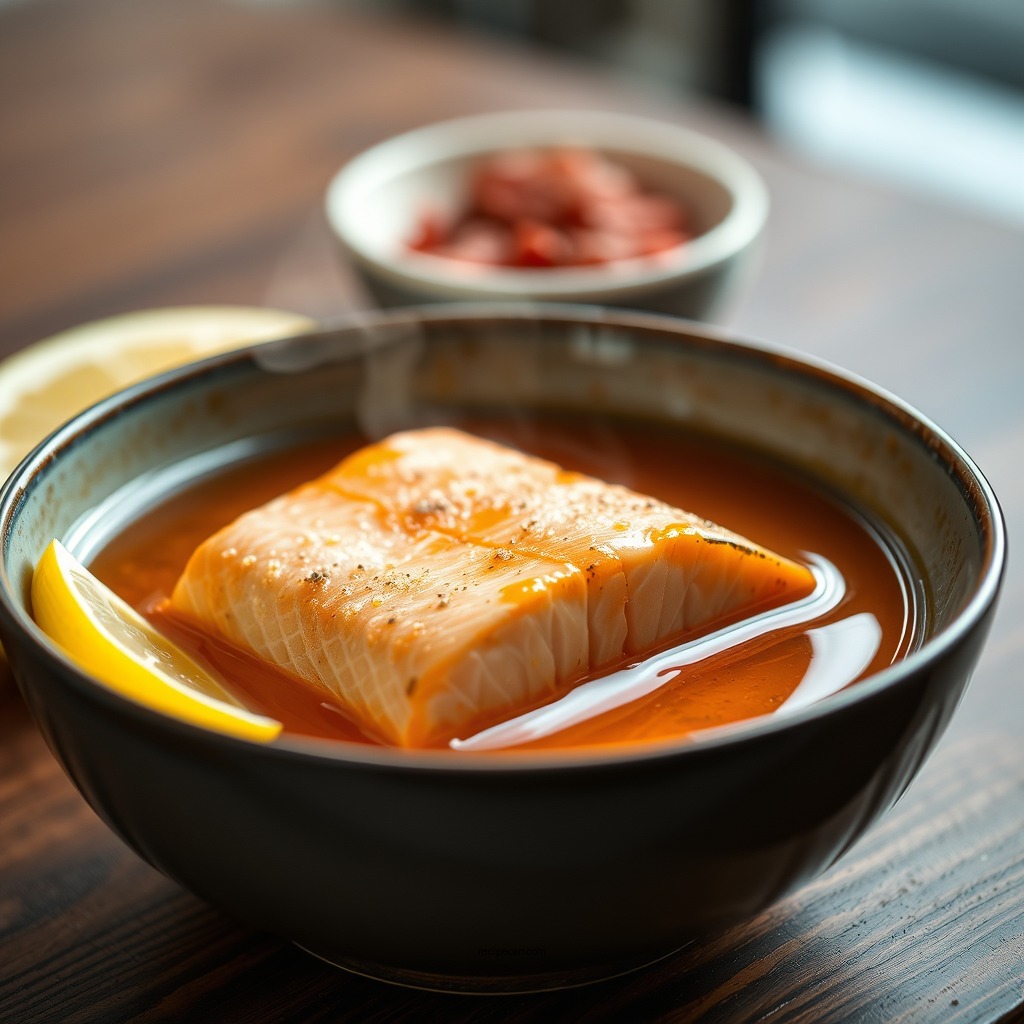
Cooking the salmon properly is essential to maintain its moisture and delicate flavor. Here’s how to do it:
– Gently Poach the Salmon: Once the broth is ready, reduce the heat to low and add the salmon fillets or cubes. Poaching allows the salmon to cook evenly without drying out. Keep the heat low to avoid boiling, which can make the salmon tough.
– Check for Doneness: Cook the salmon until it turns opaque, typically about 5-7 minutes, depending on the thickness of the pieces. The fish should be tender and flaky, making it easy to break apart with a fork.
Adding Vegetables and Toppings
Enhance your miso salmon soup by incorporating a variety of vegetables and toppings that add texture and nutrition.
– Include Vegetables: Add bok choy, shiitake mushrooms, or even spinach to the broth during the last few minutes of cooking. These vegetables not only boost the nutritional profile but also add color and flavor.
– Top with Flavor: Once you serve the soup, consider garnishing it with sesame seeds, sliced green onions, or a drizzle of sesame oil. A sprinkle of chili flakes can provide a pleasant kick for those who prefer a bit of spice.
Serving Suggestions
Miso salmon soup is versatile and can be served in various ways to suit your preferences:
– Serve Hot: Ladle the soup into bowls and serve while hot. The warmth enhances the flavors, making it a comforting dish on chilly days.
– Pair with Starch: This soup pairs beautifully with steamed rice or noodles, providing a filling meal. Consider adding soba noodles for a delightful texture or serving it with a side of rice to soak up the broth.
– Garnish Creatively: Fresh herbs like cilantro or shiso can add a refreshing touch, while a squeeze of lime can brighten the flavors.
Variations of Miso Salmon Soup
The beauty of miso salmon soup is its adaptability. Here are some variations to consider:
– Different Miso Types: Experiment with white, red, or even mixed miso to discover new flavor profiles. Each type of miso brings its unique characteristics to the dish.
– Add Tofu or Other Seafood: For a heartier soup, include cubed tofu for a protein boost, or mix in shrimp or scallops for a different seafood experience. These additions can create a diverse texture and flavor palette.
Nutritional Comparison of Miso Types
Nutritional Comparison of Miso Types (per 100g)
| # | Miso Type | Calories | Protein (g) | Fat (g) | Carbohydrates (g) |
|---|---|---|---|---|---|
| 1 | White Miso | 200 | 11.0 | 5.0 | 35.0 |
| 2 | Red Miso | 200 | 10.0 | 6.0 | 32.0 |
| 3 | Mixed Miso | 190 | 10.5 | 5.5 | 33.0 |
Flavor Profile of Miso Types
Flavor Profile of Miso Types
Tips for Perfect Miso Salmon Soup
Creating the perfect miso salmon soup requires attention to detail and a passion for cooking. Here are some expert tips:
– Use High-Quality Ingredients: The quality of your salmon and miso paste significantly impacts the final dish. Opt for fresh, wild-caught salmon and authentic miso paste for the best flavor.
– Adjust Miso Amount: Miso can vary in saltiness and intensity. Start with a smaller amount and gradually add more to reach your desired taste. Remember, you can always add more, but you can’t take it out once added.
– Experiment with Cooking Times: Depending on the thickness of your salmon pieces, cooking times may vary. To avoid overcooking, monitor the salmon closely, especially if you are using larger fillets.
– Make it Ahead: Miso salmon soup can be made in larger batches and stored in the refrigerator for up to three days. The flavors deepen over time, making it an excellent option for meal prep.
Summarizing the steps to create a delightful miso salmon soup, this dish is not only simple to prepare but also versatile to accommodate personal preferences. Gather your ingredients, follow the steps outlined, and enjoy a nourishing bowl of miso salmon soup tonight! Whether you’re enjoying it solo or sharing it with loved ones, this soup promises to warm both your heart and your palate.
Frequently Asked Questions
What are the essential ingredients for a miso salmon soup recipe?
A traditional miso salmon soup recipe typically includes fresh salmon, miso paste, dashi broth, tofu, green onions, and seaweed. You can enhance the flavor with additional vegetables like mushrooms or bok choy. Using high-quality miso paste is crucial for achieving the rich umami flavor characteristic of this comforting soup.
How do I make miso salmon soup from scratch?
To make miso salmon soup from scratch, start by preparing the dashi broth using kombu and bonito flakes. Once the broth is ready, add diced salmon and tofu, cooking until the salmon is just opaque. Finally, dissolve miso paste in a small amount of the broth and stir it in, then garnish with green onions and seaweed before serving.
Why is miso used in salmon soup?
Miso is used in salmon soup for its unique umami flavor that complements the richness of the salmon. It also adds depth to the broth while providing beneficial probiotics and nutrients. The fermentation process of miso enhances the soup’s overall health benefits, making it a nutritious choice.
What is the best type of miso to use for salmon soup?
The best type of miso for salmon soup is typically white miso (shiro miso) or yellow miso (shinshu miso), as they are milder and slightly sweet, allowing the flavors of the salmon to shine. However, if you prefer a stronger taste, you can opt for red miso (aka miso) for a bolder flavor profile. Choose high-quality, organic miso for the best results.
Which vegetables pair well with miso salmon soup?
Vegetables that pair well with miso salmon soup include bok choy, spinach, mushrooms, and carrots, as they absorb the broth’s flavors while adding nutritional value. You can also experiment with daikon radish or snap peas for added texture and taste. Adding a variety of vegetables can elevate your soup and make it a more satisfying meal.
References
- Miso
https://en.wikipedia.org/wiki/Miso - https://www.ncbi.nlm.nih.gov/pmc/articles/PMC6164821/
https://www.ncbi.nlm.nih.gov/pmc/articles/PMC6164821/ - https://www.ncbi.nlm.nih.gov/pmc/articles/PMC4944218/
https://www.ncbi.nlm.nih.gov/pmc/articles/PMC4944218/ - https://www.ncbi.nlm.nih.gov/pmc/articles/PMC6215206/
https://www.ncbi.nlm.nih.gov/pmc/articles/PMC6215206/ - https://www.sciencedirect.com/topics/food-science/miso
https://www.sciencedirect.com/topics/food-science/miso - https://www.mayoclinic.org/healthy-lifestyle/nutrition-and-healthy-eating/expert-answers/miso/faq-20057848
https://www.mayoclinic.org/healthy-lifestyle/nutrition-and-healthy-eating/expert-answers/miso/faq-20057848 - Google Scholar Google Scholar
https://scholar.google.com/scholar?q=miso+salmon+soup+recipe - Google Scholar Google Scholar
https://scholar.google.com/scholar?q=miso+salmon+health+benefits - Google Scholar Google Scholar
https://scholar.google.com/scholar?q=miso+salmon+recipe+nutrition - miso salmon soup recipe – Search results
https://en.wikipedia.org/wiki/Special:Search?search=miso+salmon+soup+recipe