This lactose-free vanilla ice cream uses a dairy-free base fortified with stabilizers to guarantee smooth texture and stable overrun. Start with precise measurements of fat, sugar, and lecithin or guar gum, then heat the mixture with disciplined control to prevent curdling. Chill thoroughly, churn steadily, and rest the batch to relax structure. Plate with measured scoops on chilled dishes, and vary toppings for balance. If you keep exploring, you’ll uncover more exacting steps and tips.
Ingredients and Quantity
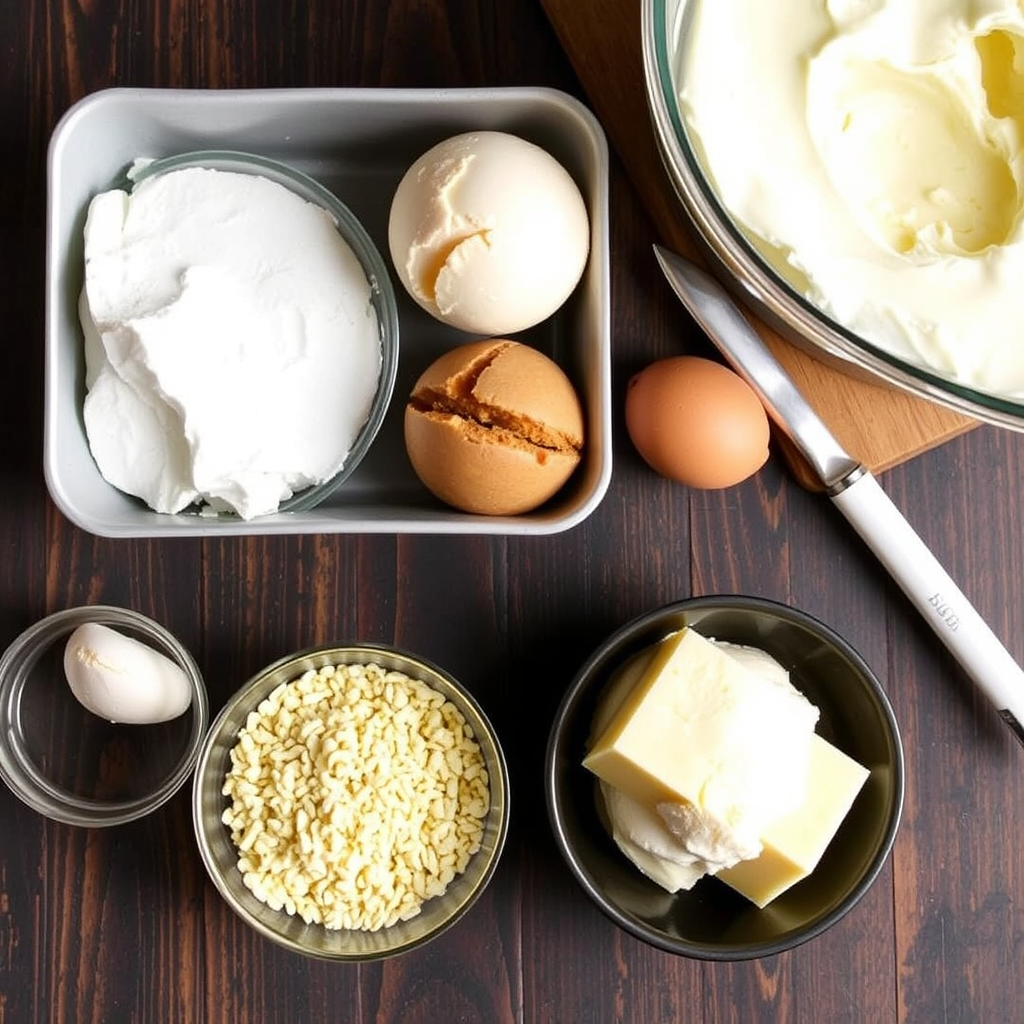
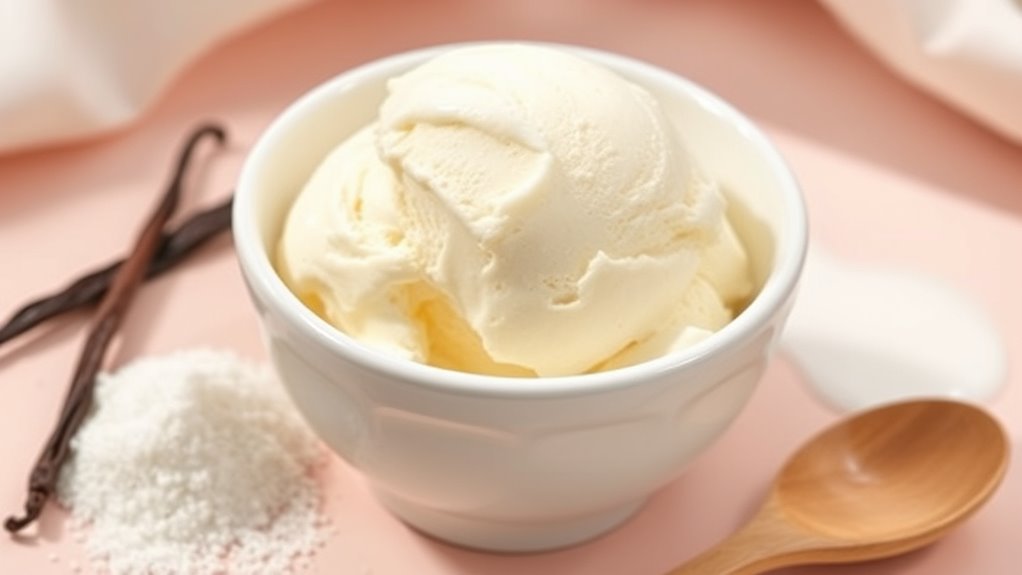
The ingredients for lactose-free vanilla ice cream are precisely measured to guarantee texture and flavor without dairy. You select accurate lactose alternatives and ice cream bases, aligning each component with defined function. You will balance sweetness, fat, and stabilizers to optimize mouthfeel and scoopability. Precision governs measurements, not guesswork, ensuring reproducible results across batches. You confirm that the base provides body, while additives control ice crystal formation. Lactose alternatives should harmonize with the base, avoiding off-notes. Ice cream bases must contribute structure without chunkiness. The following table conveys a deeper meaning about control and freedom in proportioning.
| Role | Purpose | Outcome |
|---|---|---|
| Base | Structure | Smooth texture |
| Sweetener | Flavor | Clean finish |
| Stabilizer | Consistency | Stable freezing |
Preparations
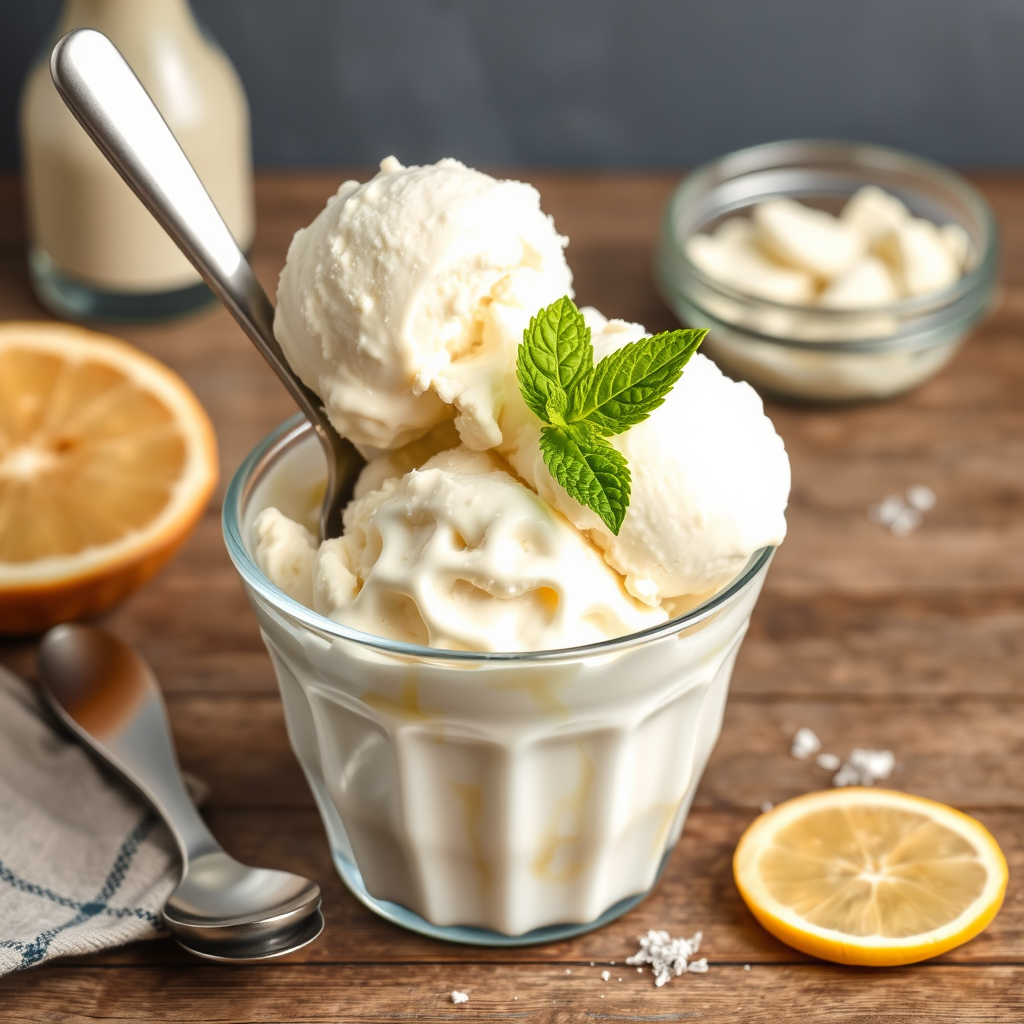
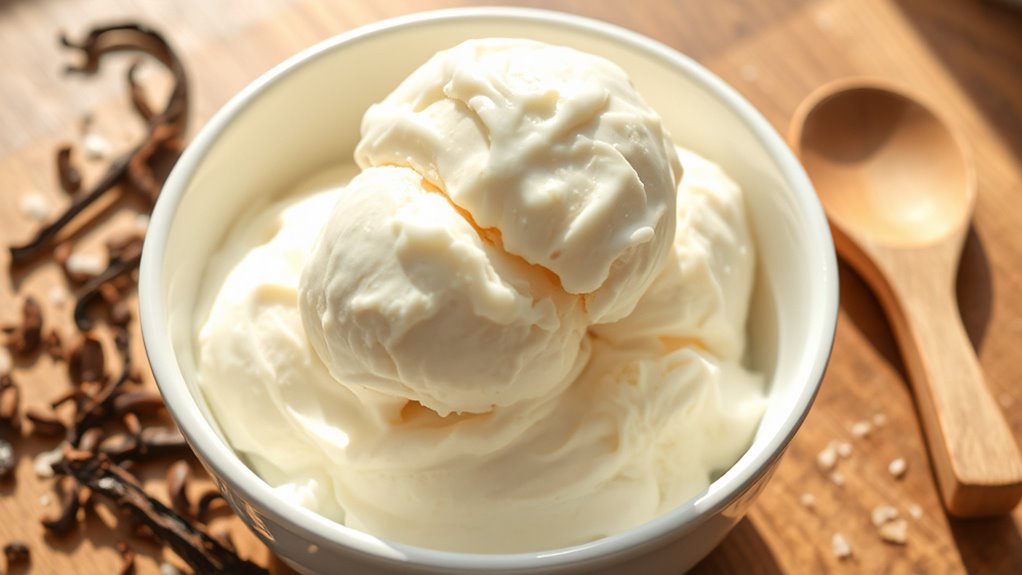
Preparations involve assembling and conditioning every component to guarantee reproducible texture and flavor. You approach this stage with methodical discipline, documenting each step to enable repeatability. Begin by verifying the lactose-free base components, ensuring they meet desired fat, sugar, and stabilizer targets. Maintain strict cleanliness and temperature control during handling to prevent contamination or phase separation. Employ precise agitation and chilling cycles to promote homogenization and cold stability. Apply defined resting periods to allow emulsifiers to equilibrate, then assess viscosity and mouthfeel against a standard benchmark. For preparation techniques, adjust minor parameters only within established tolerances to preserve consistency. When efficiency dictates substitutions, implement ingredient substitutions with a parallel evaluation, recording any sensory or rheological shifts. Your freedom emerges through disciplined, transparent, and reproducible processes.
How to Cook
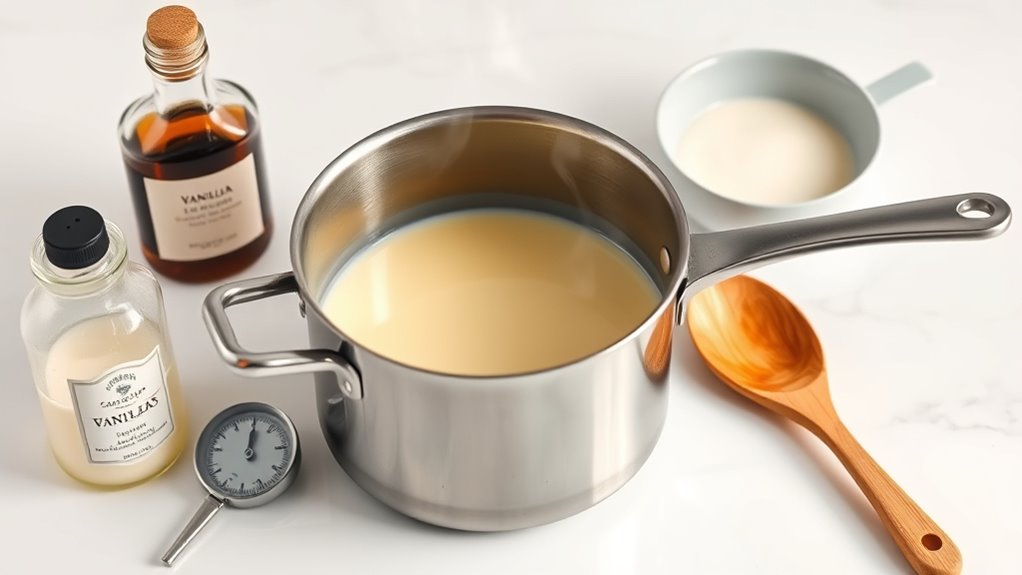
- Prepare the base components for lactose-free vanilla ice cream.
- Heat the mixture while maintaining disciplined control over the process.
- Temper the mixture carefully to avoid curdling.
- Emulsify the base until the texture integrity is achieved through consistent stirring.
- Maintain a clean mise en place throughout the process.
- Verify temperatures using a calibrated thermometer.
- Monitor viscosity to reduce the risk of overrun.
- Stir continuously to prevent scorching until the custard coats a spoon and forms a smooth sheet.
- Chill the custard thoroughly.
- Churn the mixture with precise timing to incorporate stable air.
- Freeze the ice cream promptly to prevent ice crystal formation.
- Standardize servings for consistent and repeatable results.
- Follow this workflow to treat ice cream making as a disciplined craft and elevate homemade desserts to an artful practice.
How to Serve
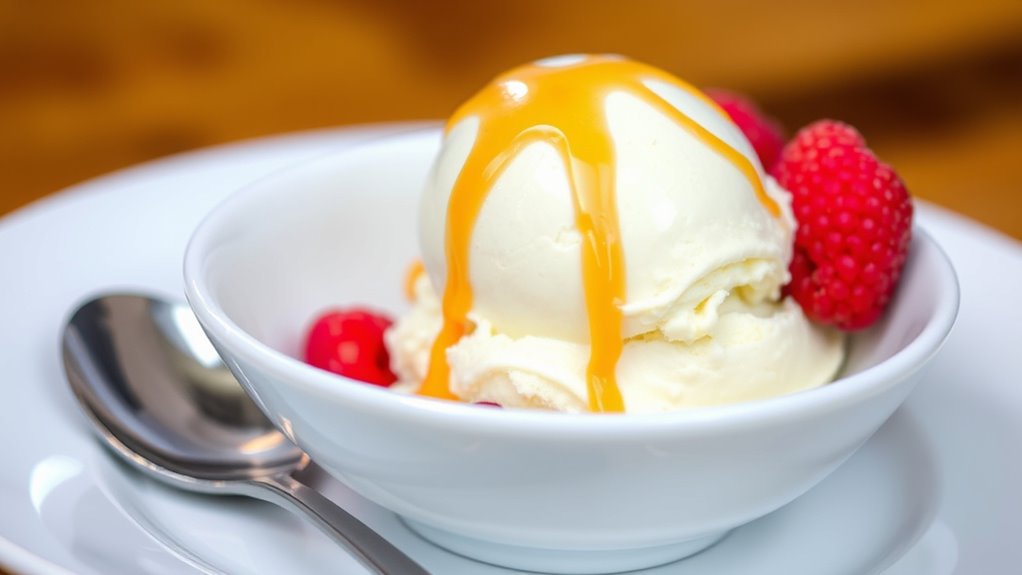
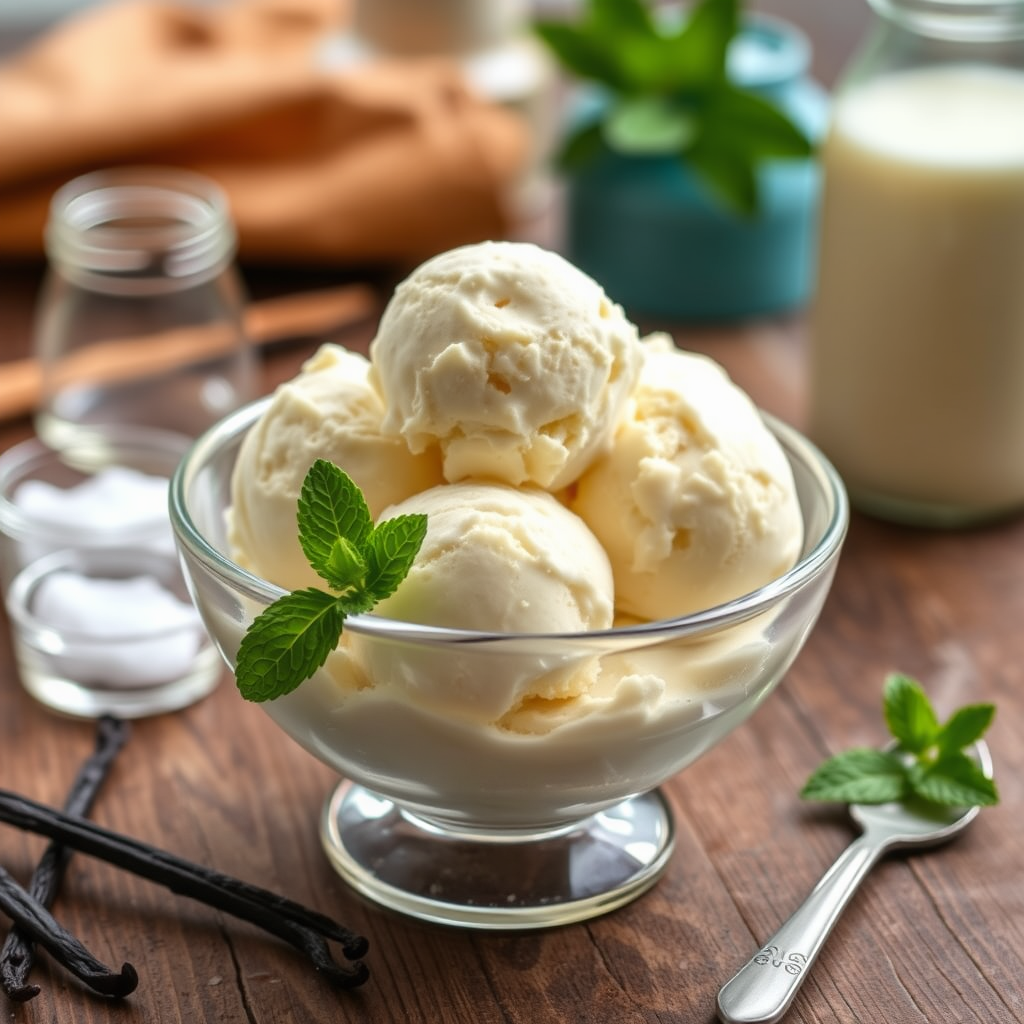
Serve lactose-free vanilla ice cream with deliberate portioning and clean presentation. You’ll plate with measured scoops, aligning edges for symmetry and a neat, cold surface. Target a consistent scoop size to guarantee uniform tasting portions and efficient service. Present toppings and accompaniments as deliberate choices, not afterthoughts; balance sweetness, texture, and color. For serving suggestions, consider single-serve cups or a shared bowl with a small spoon, depending on context. Use chilled dishes to maintain temperature integrity, and wipe rims for a pristine appearance. Regarding presentation ideas, rotate garnish options—caramel drizzle, fresh berries, or toasted nuts—keeping portions modest to avoid crowding. This approach supports flavor clarity, accessibility, and a refined dining experience.
Tips

Move from plating notes to practical tips by focusing on technique and consistency. You’ll optimize texture by controlling churning speed, temp, and suspension of fat. Keep mixture well chilled, then temper air incorporation with a steady, even pace to avoid ice crystals. Use a calibrated freezer thermometer and monitor overrun to maintain smoothness. For dairy alternatives, choose a stabilized base with lecithin or guar gum to improve body and scoopability; avoid over-thinning by balancing solids and sugars. Flavor enhancements come from balanced vanilla, minimal extract, and a touch of salt to sharpen sweetness. Freeze in shallow, uniform layers and rest the churned batch briefly to relax structure. Store airtight, away from moisture, and note that clean equipment yields consistent results.
Food Value and Benefit
Lactose-free vanilla ice cream offers a dairy-free dessert option with a nutritional profile influenced by its base ingredients and stabilizers. The food value of this prepared dish depends on the ratios of protein, fat, and carbohydrates, as well as the presence of added vitamins and minerals through fortification.
Food Value:
- Protein content varies depending on the base ingredient (rice, almond, soy, or coconut).
- Contains fats primarily from plant-based sources.
- Carbohydrates come from sweeteners and base ingredients.
- May include added vitamins such as Vitamin D, Vitamin B12, and minerals like calcium and iron, depending on the brand and formulation.
Benefits of Eating Lactose-Free Vanilla Ice Cream:
- Suitable for individuals with lactose intolerance, allowing enjoyment of creamy desserts without digestive discomfort.
- Provides essential vitamins and minerals such as:
- Vitamin D: Supports bone health and immune function.
- Vitamin B12: Important for nerve function and red blood cell formation.
- Calcium: Essential for strong bones and teeth.
- Iron: Vital for oxygen transport in the blood.
- Contains plant-based fats that may support heart health.
- Stabilizers used can improve digestibility and help regulate glycemic response, promoting better energy balance.
- Offers a satisfying treat that aligns with dietary restrictions and personal nutrition goals when consumed in controlled portions.
Frequently Asked Questions
Can I Use Dairy-Free Milk Instead of Almond Milk?
Yes, you can. You’ll need dairy free alternatives with similar fat content; swap almond milk for another option. Use caution with flavor and texture, ensuring your choice provides creaminess comparable to almond milk for best results.
Is Lactose-Free Vanilla Extract Necessary for Flavor?
Vanilla extract isn’t strictly necessary; you can achieve lactose-free flavor with other vanilla sources, though extract provides precise aroma. You’ll decide based on intensity preferences, balancing lactose-free flavor clarity with your freedom to tailor sweetness and texture.
How Long Does Lactose-Free Ice Cream Churn Freeze?
Churning time for lactose-free ice cream typically ranges 20 to 30 minutes, depending on your churning device and desired texture. Use freezing methods like pre-chilled bowls or a blast-frozen base to guarantee consistent hardness and scoopability.
Can I Freeze Leftovers in a Regular Freezer?
Yes, you can freeze leftovers in a regular freezer. For best results, use airtight containers, layer with parchment, and label. Freezing tips: maintain consistent temps; Ice cream storage: store 1–2 months for ideal texture.
Are There Substitutions for Heavy Cream in This Recipe?
Your answer: Yes—you can swap heavy cream with alternative cream options like coconut cream, cashew cream, or fortified almond milk for a richer texture; this supports vegan ice cream viability and preserves flavor while you pursue freedom.
Frequently Asked Questions
What are the main ingredients in a lactose-free vanilla ice cream recipe?
The main ingredients for a lactose-free vanilla ice cream recipe typically include lactose-free milk or cream, sugar, vanilla extract, and a stabilizer such as cornstarch or guar gum. Some recipes may also include eggs for a custard-style ice cream, but you can omit them for a simpler version.
Can I use regular vanilla extract in a lactose-free ice cream recipe?
Yes, you can use regular vanilla extract in a lactose-free ice cream recipe. Vanilla extract is naturally lactose-free, as it is made from vanilla beans and alcohol. However, always check the label to ensure there are no added ingredients that may contain lactose.
How can I achieve a creamy texture in lactose-free vanilla ice cream?
To achieve a creamy texture in lactose-free vanilla ice cream, use high-fat lactose-free cream or a combination of lactose-free milk and cream. Incorporating a stabilizer, such as cornstarch or xanthan gum, can help prevent ice crystals from forming. Additionally, churning the mixture in an ice cream maker will incorporate air, resulting in a smooth, creamy consistency.
How long can I store homemade lactose-free vanilla ice cream?
Homemade lactose-free vanilla ice cream can be stored in the freezer for up to 2 to 3 weeks. To maintain the best texture and flavor, ensure it is stored in an airtight container. For optimal freshness, consume it within the first week. When storing, allow the ice cream to soften slightly at room temperature before scooping to avoid hard, icy portions.
Is it necessary to use an ice cream maker for this recipe?
While using an ice cream maker is the easiest way to achieve a smooth texture, it is not strictly necessary. If you don’t have an ice cream maker, you can pour the mixture into a shallow dish and freeze it. Stir the mixture every 30 minutes for the first 2-3 hours to break up ice crystals and ensure a creamier consistency. This method requires a bit more effort but can still yield delicious results.
References
- https://www.ncbi.nlm.nih.gov/pmc/articles/PMC5531111/
- https://www.healthline.com/nutrition/lactose-intolerance#lactose-free-foods
- https://www.cdc.gov/nutrition/micronutrients/lactose-intolerance.html
- https://www.journalofethics.ama-assn.org/article/lactose-intolerance-and-lactose-free-diet/2021-03
- https://www.eatright.org/health/diseases-and-conditions/lactose-intolerance/lactose-intolerance-and-your-diet
- https://www.mayoclinic.org/diseases-conditions/lactose-intolerance/symptoms-causes/syc-20338443
Frequently Asked Questions
1. What ingredients do I need for a lactose-free vanilla ice cream recipe?
To make lactose-free vanilla ice cream, you will need the following ingredients: lactose-free milk, heavy cream, granulated sugar, pure vanilla extract, and a pinch of salt. You can also use a lactose-free sweetened condensed milk for added creaminess if desired.
2. Can I use non-dairy milk for this recipe?
Yes, you can use non-dairy milk such as almond, coconut, or oat milk to make a lactose-free vanilla ice cream. However, be aware that the texture and flavor may vary depending on the type of non-dairy milk you choose. For a creamier texture, consider using a non-dairy cream or a blend of non-dairy milk with coconut cream.
3. How do I make lactose-free vanilla ice cream without an ice cream maker?
If you don’t have an ice cream maker, you can make lactose-free vanilla ice cream using a simple method. Mix all your ingredients in a bowl until well combined, pour the mixture into a shallow dish, and freeze it. Every 30 minutes, stir the mixture with a fork for the first 2-3 hours to break up ice crystals and create a smoother texture. After that, let it freeze completely before serving.
4. How long can I store lactose-free vanilla ice cream?
Lactose-free vanilla ice cream can be stored in an airtight container in the freezer for up to 2-3 weeks. For best results, make sure to keep it tightly sealed to prevent freezer burn and maintain its flavor and texture. If the ice cream hardens too much, let it sit at room temperature for a few minutes before serving to soften it up.
5. Can I add mix-ins to my lactose-free vanilla ice cream?
Absolutely! You can personalize your lactose-free vanilla ice cream by adding mix-ins such as chocolate chips, crushed cookies, fruit, or nuts. Just be sure to fold in the mix-ins after the ice cream has thickened but before it has fully frozen. This will help distribute them evenly throughout the ice cream.
References
- https://www.ncbi.nlm.nih.gov/pmc/articles/PMC5020794/
- https://www.cdc.gov/nutrition/micronutrient-deficiencies/lactose-intolerance.html
- https://www.hsph.harvard.edu/nutritionsource/what-is-lactose-intolerance/
- https://www.niaid.nih.gov/diseases-conditions/lactose-intolerance
- https://www.journalofnutrition.org/content/131/3/792S.full
- https://www.mayoclinic.org/diseases-conditions/lactose-intolerance/symptoms-causes/syc-20348731
- https://www.foodallergy.org/resources/lactose-intolerance
- https://www.eatright.org/health/allergies-and-intolerances/lactose-intolerance/what-is-lactose-intolerance