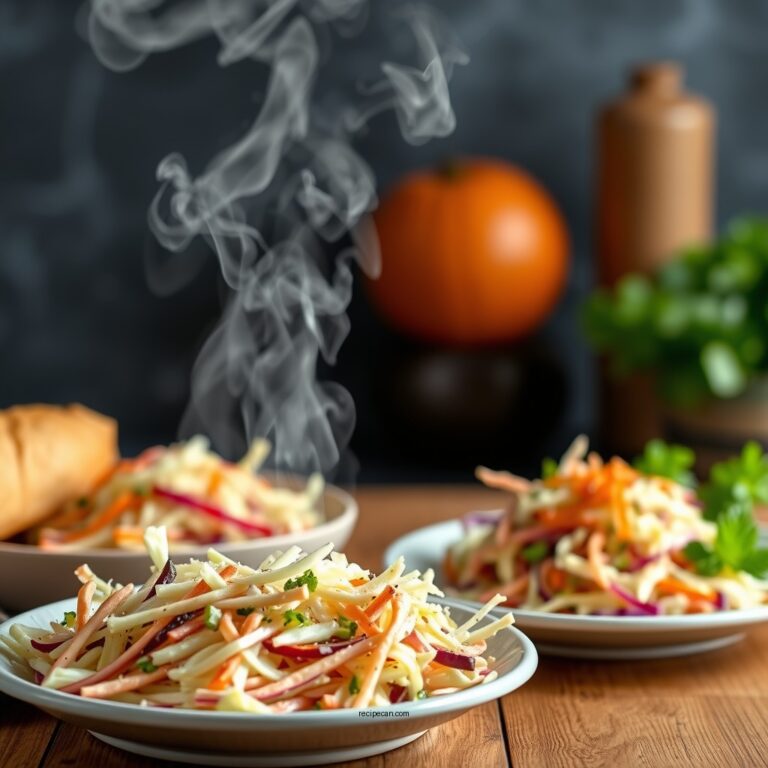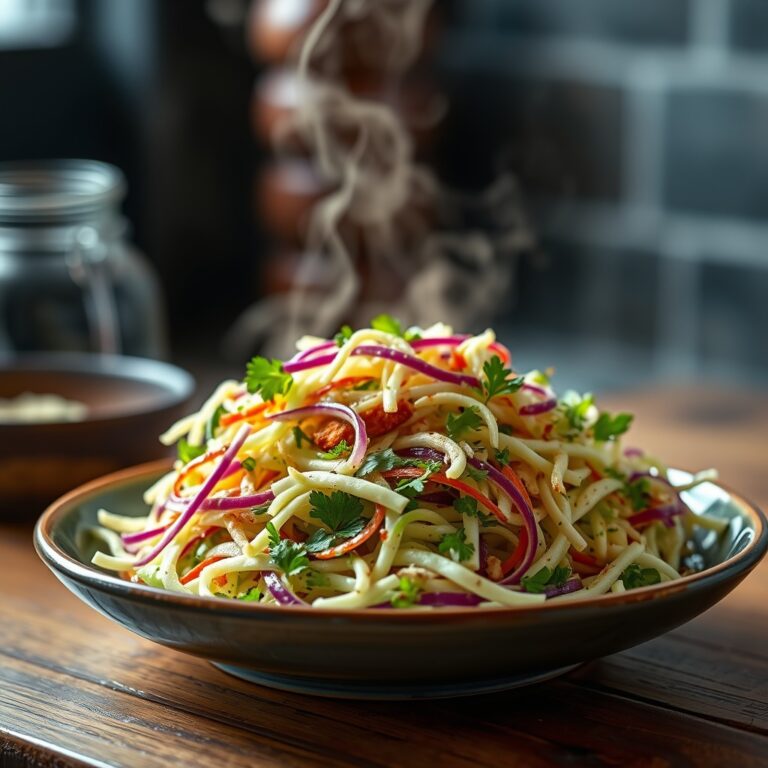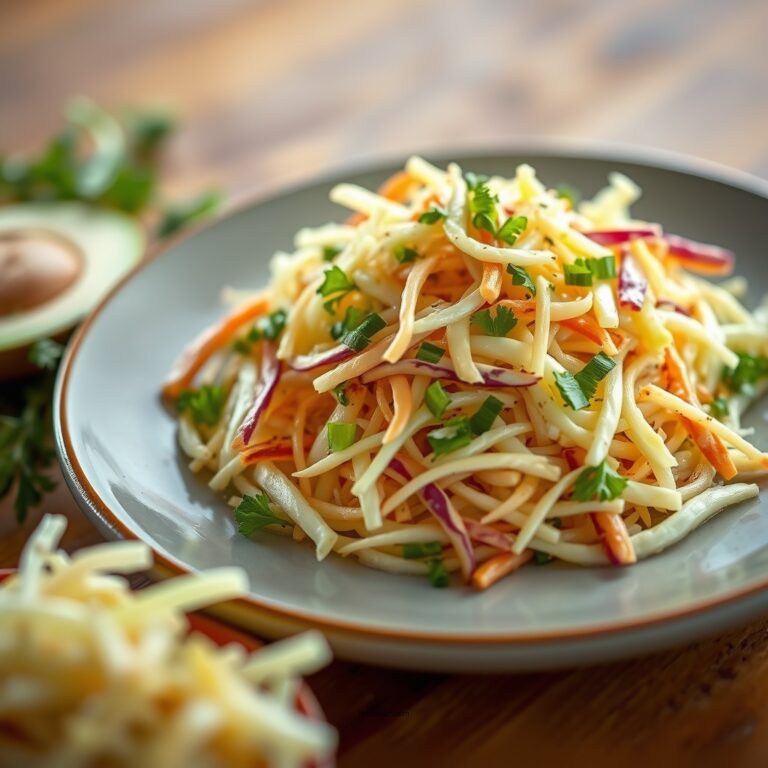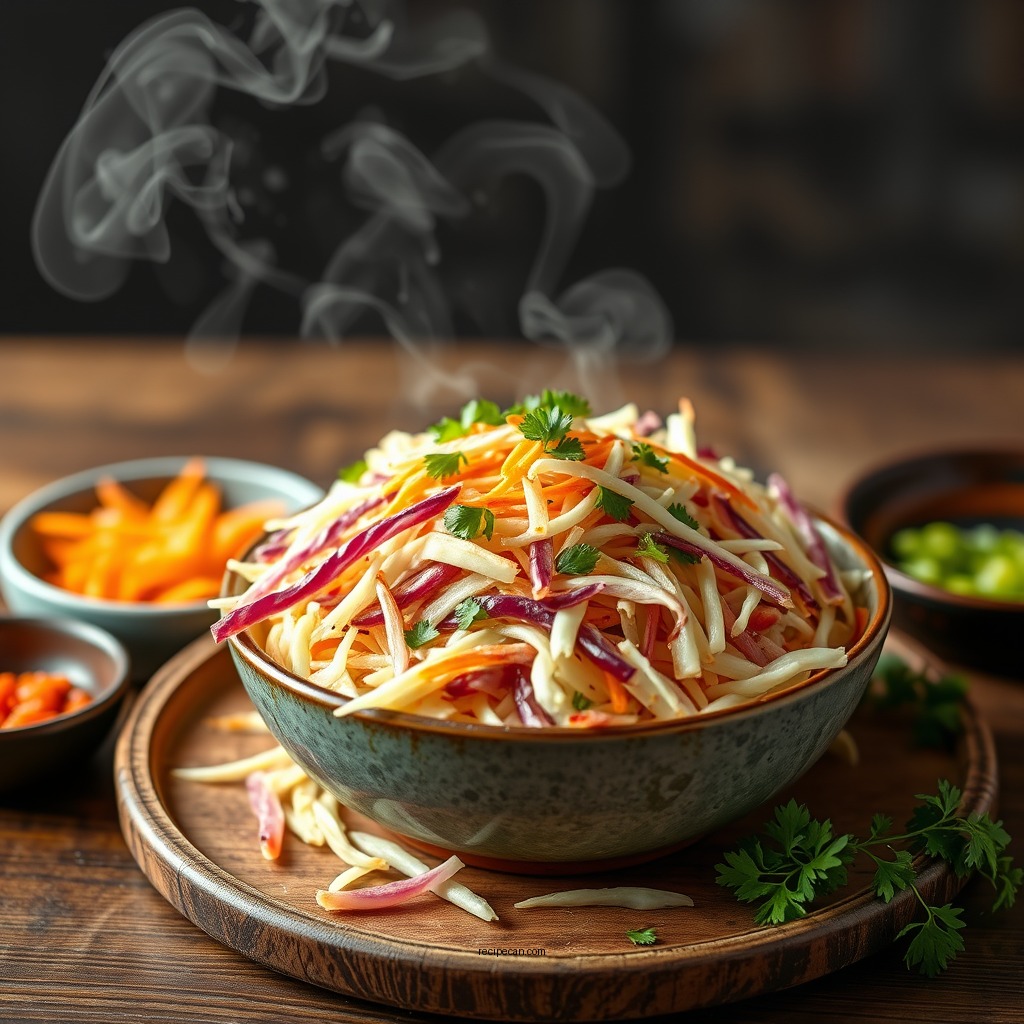
Creating a Korean coleslaw is a simple yet flavorful way to elevate your meals. This recipe combines crisp vegetables with a tangy, spicy dressing, making it a perfect side dish or topping for various dishes. With its vibrant colors and robust flavors, this coleslaw not only enhances your culinary experience but also adds a nutritious element to your meals. In this article, you’ll learn how to prepare this vibrant salad, the key ingredients involved, and tips for customizing it to suit your taste.
Key Ingredients for Korean Coleslaw
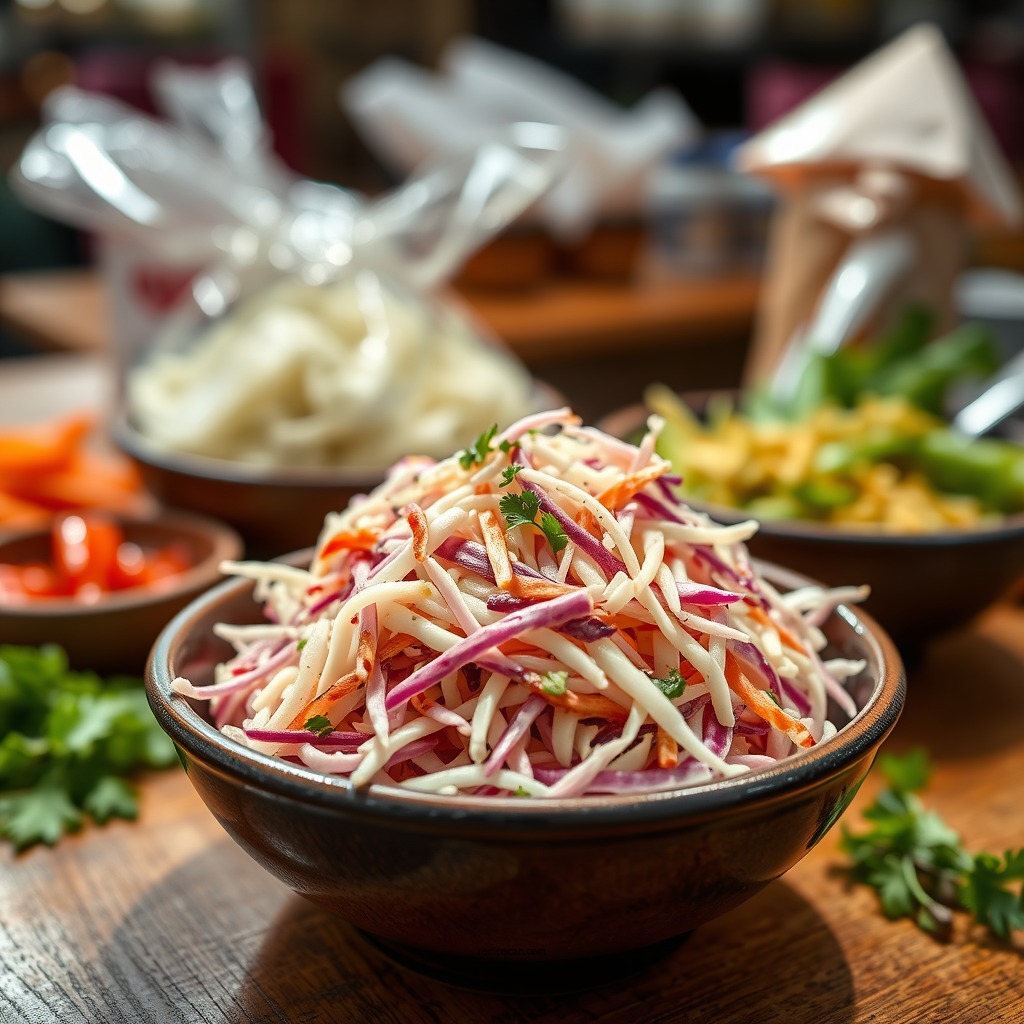
To make a delicious Korean coleslaw, selecting the right ingredients is crucial. Each component contributes to the overall flavor and texture of the dish.
– Cabbage: The base of your coleslaw can be either green cabbage or napa cabbage. Green cabbage is more common and offers a crisp texture, while napa cabbage has a softer, sweeter flavor that pairs well with the dressing. Both types provide a delightful crunch that is essential for a good coleslaw.
– Vegetables: Adding a variety of vegetables not only enhances the texture but also boosts the nutritional profile. Carrots add a hint of sweetness and vibrant color, while radishes contribute a peppery crunch. Green onions bring a mild onion flavor, complementing the other ingredients beautifully. Feel free to experiment with other vegetables like bell peppers or cucumbers for added variety.
– Dressing: The dressing is where the magic happens. A blend of sesame oil, soy sauce, rice vinegar, and gochugaru (Korean red pepper flakes) creates a tangy, spicy flavor profile that elevates the salad. Sesame oil provides a rich, nutty flavor, while rice vinegar adds acidity to balance the sweetness of the vegetables. Gochugaru introduces heat, so you can adjust the amount to suit your taste.
Step-by-Step Preparation
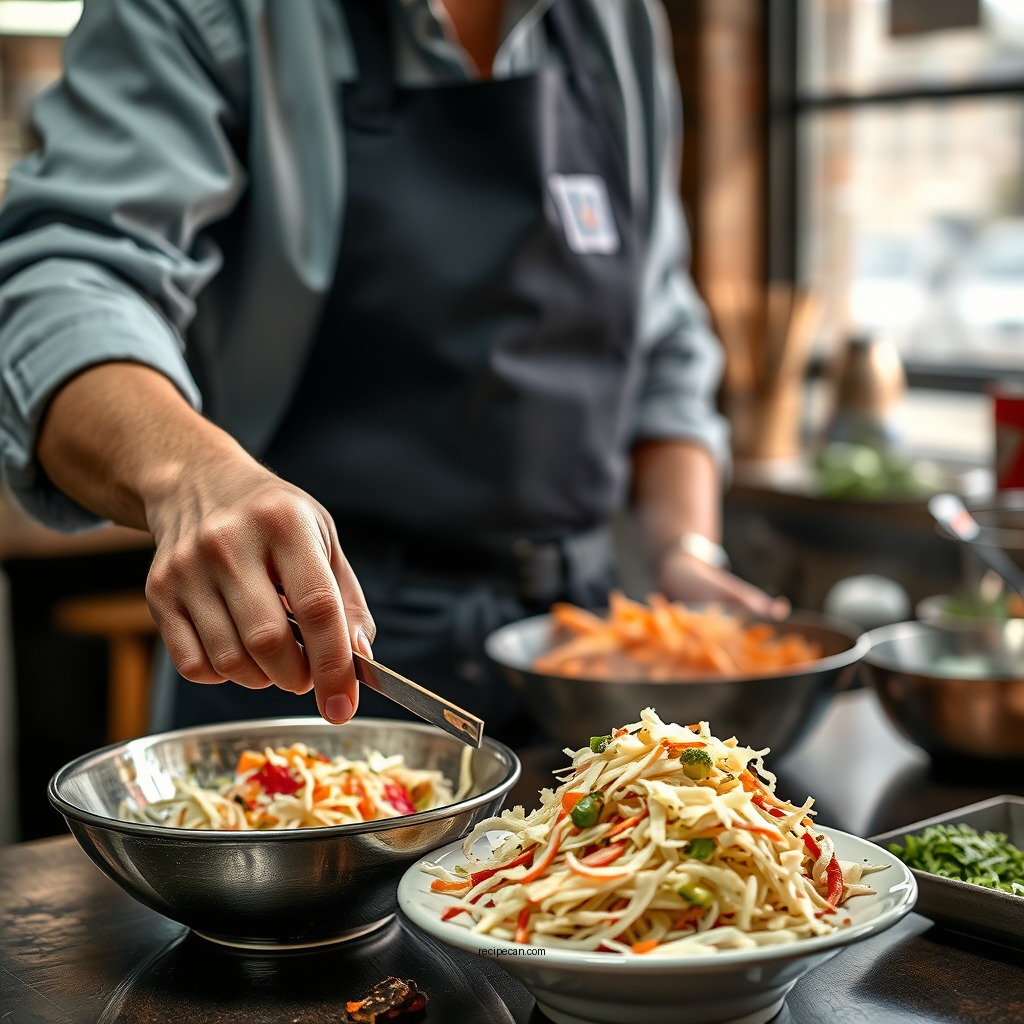
Making Korean coleslaw is straightforward. Here’s a step-by-step guide to ensure your coleslaw turns out perfectly every time:
– Chop the cabbage and vegetables: Start by finely shredding the cabbage and julienning the carrots and radishes. Aim for uniform pieces to ensure even flavor distribution throughout the coleslaw.
– Make the dressing: In a mixing bowl, whisk together the sesame oil, soy sauce, rice vinegar, and gochugaru. Taste the dressing and adjust the ingredients as necessary, adding more soy sauce for saltiness, vinegar for tang, or gochugaru for heat.
– Toss it all together: In a large bowl, combine the chopped vegetables and pour the dressing over them. Use tongs or your hands to toss everything together until the vegetables are evenly coated with the dressing.
Nutritional Breakdown of Key Ingredients in Korean Coleslaw
| # | Ingredient | Calories (per 100g) | Fiber (g) | Vitamin C (mg) |
|---|---|---|---|---|
| 1 | Green Cabbage | 25 | 2.5 | 36 |
| 2 | Carrots | 41 | 2.8 | 7 |
| 3 | Radishes | 16 | 1.6 | 14.8 |
| 4 | Green Onions | 32 | 2.6 | 18 |
| 5 | Soy Sauce | 50 | 0 | 0 |
| 6 | Sesame Oil | 884 | 0 | 0 |
| 7 | Gochugaru | 286 | 0 | 0 |
Tips for Perfecting Your Coleslaw
Here are some actionable tips to ensure your Korean coleslaw reaches its full potential:
– Adjust the spice level: If you prefer a milder flavor, start with a smaller amount of gochugaru and gradually increase it to find your ideal heat level. Conversely, for a spicier kick, feel free to add more.
– Let it marinate: Allowing the coleslaw to sit for at least 30 minutes after preparation will enhance the flavors as the vegetables absorb the dressing. The resting time also helps soften the cabbage slightly, making it more palatable.
– Experiment with add-ins: Personalize your coleslaw by adding nuts, such as toasted almonds or peanuts, for added crunch. Sesame seeds can also provide a delightful texture and flavor. For a touch of sweetness, consider incorporating fruits like diced apples or pears.
Serving Suggestions
Korean coleslaw is versatile and pairs beautifully with various dishes. Here are some serving suggestions to elevate your meals:
– Pair with grilled meats: The tangy and spicy flavors of coleslaw make it an excellent accompaniment to grilled meats, such as BBQ chicken, pork ribs, or beef brisket. The freshness of the salad cuts through the richness of the meat.
– Use as a topping: This coleslaw works wonderfully as a topping for tacos, sandwiches, or burgers. Its vibrant colors and crunchy texture add a visually appealing and flavorful element to your dish.
– Serve at gatherings: With its colorful presentation and unique flavor profile, Korean coleslaw is sure to impress guests at gatherings, picnics, or potlucks. Its unique twist on traditional coleslaw will intrigue and delight your visitors.
Popularity of Korean Coleslaw Variations
Storage and Shelf Life
Proper storage is essential to maintain the freshness of your Korean coleslaw:
– Refrigerate leftovers: Store any leftover coleslaw in an airtight container in the refrigerator. It can last for up to three days. However, note that the vegetables may become softer over time, so it is best enjoyed fresh.
– Keep dressing separate: To maintain the crunch of the vegetables, add the dressing just before serving, especially if you plan to have leftovers. This will help prevent the vegetables from wilting and losing their texture.
Variations to Try
Korean coleslaw is highly adaptable, allowing you to explore different variations that cater to your preferences:
– Vegan option: For a plant-based alternative, substitute honey or any other sweetener with maple syrup. This keeps the dish vegan without sacrificing flavor.
– Add fruit: For a sweet twist, consider incorporating slices of apples or pears. The sweetness of the fruit contrasts beautifully with the savory and spicy elements of the coleslaw.
– Change up the greens: If you want to experiment further, try using kale or spinach as a base instead of cabbage. These greens offer different textures and flavors, making for a unique take on the classic recipe.
Summarizing the steps to create a delicious Korean coleslaw, you can enjoy this vibrant dish with various meals. The combination of crunchy vegetables and a tangy, spicy dressing makes it a delightful addition to your culinary repertoire. Whether you stick with the classic recipe or try out variations, Korean coleslaw is sure to impress. Don’t forget to share your creations or variations with friends and explore the endless possibilities this dish has to offer!
Frequently Asked Questions
What ingredients do I need for a traditional Korean coleslaw recipe?
To make a traditional Korean coleslaw, you will need finely shredded cabbage, carrots, and scallions. The dressing usually consists of gochujang (Korean chili paste), rice vinegar, sesame oil, honey, and soy sauce, which create a perfect balance of sweet and spicy flavors.
How do I prepare the vegetables for Korean coleslaw?
To prepare the vegetables for Korean coleslaw, start by shredding the cabbage and carrots into thin strips. You can use a mandoline or a sharp knife for precision. Rinse the vegetables under cold water to remove any dirt, then pat them dry before mixing.
Why is gochujang important in a Korean coleslaw recipe?
Gochujang is essential in a Korean coleslaw recipe as it adds a unique depth of flavor and a spicy kick that distinguishes this dish from traditional coleslaw. Its fermented taste enhances the overall profile, making the coleslaw not only delicious but also a reflection of Korean culinary traditions.
What is the best way to serve Korean coleslaw?
The best way to serve Korean coleslaw is chilled as a refreshing side dish or topping for grilled meats, tacos, or rice bowls. For added texture and flavor, consider garnishing with sesame seeds or chopped peanuts right before serving.
Which variations can I try for a Korean coleslaw recipe?
You can experiment with various ingredients in your Korean coleslaw recipe by adding ingredients like sliced radishes, cucumbers, or even apples for a fruity twist. You can also adjust the level of spice by increasing or decreasing the amount of gochujang or adding fresh chili peppers for an extra kick.
References
- Coleslaw
https://en.wikipedia.org/wiki/Coleslaw - https://www.ncbi.nlm.nih.gov/pmc/articles/PMC6761980/
https://www.ncbi.nlm.nih.gov/pmc/articles/PMC6761980/ - https://www.ncbi.nlm.nih.gov/pmc/articles/PMC7071560/
https://www.ncbi.nlm.nih.gov/pmc/articles/PMC7071560/ - Google Scholar Google Scholar
https://scholar.google.com/scholar?q=korean+coleslaw+recipe - Google Scholar Google Scholar
https://scholar.google.com/scholar?q=korean+cabbage+salad - https://www.sciencedirect.com/topics/agricultural-and-biological-sciences/coleslaw
https://www.sciencedirect.com/topics/agricultural-and-biological-sciences/coleslaw - Pink eye: How long is it contagious? – Mayo Clinic
https://www.mayoclinic.org/healthy-lifestyle/nutrition-and-healthy-eating/expert-answers/coleslaw/faq-20057932 - https://www.theguardian.com/food/2021/apr/25/korean-style-slaw-recipe
https://www.theguardian.com/food/2021/apr/25/korean-style-slaw-recipe - https://www.healthline.com/nutrition/cabbage-benefits#2.-May-help-reduce-inflammation
https://www.healthline.com/nutrition/cabbage-benefits#2.-May-help-reduce-inflammation - korean coleslaw recipe – Search results
https://en.wikipedia.org/wiki/Special:Search?search=korean+coleslaw+recipe