To evoke ice cream nostalgia, start with a precise, archival routine: 2 cups whole milk, 1 cup heavy cream, 3/4 cup sugar, 4 egg yolks, 1 teaspoon vanilla. Warm the dairy, temper the yolks, then return until thickened into a smooth custard. Chill, churn, and serve at the right time to achieve a creamy bite. Keep a calm, measured pace and note temperatures for accuracy. If you keep going, you’ll uncover more timeless details.
Ingredients and Quantity
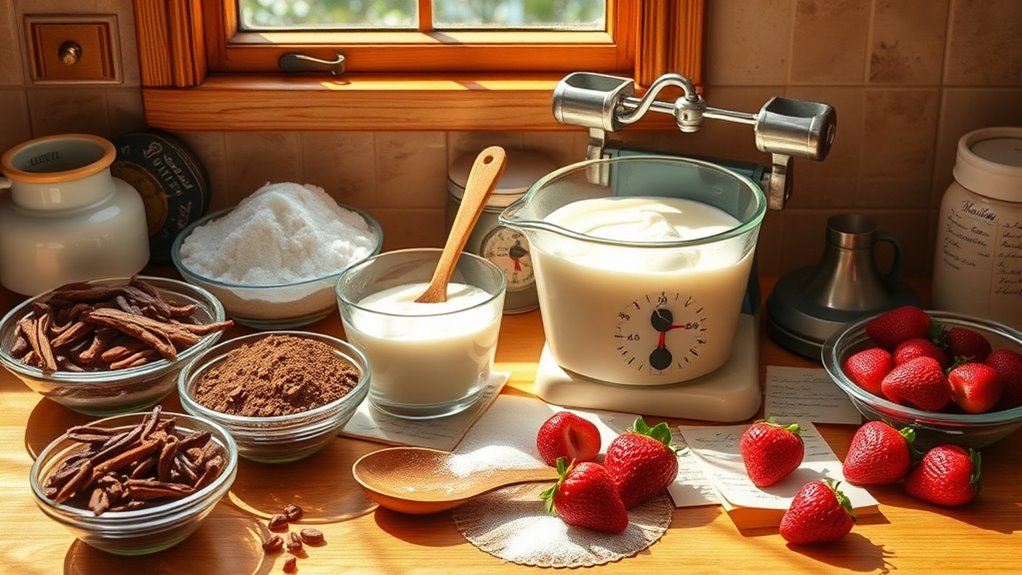
The ingredients for this ice cream are simple and precise: whole milk, heavy cream, sugar, and egg yolks form the classic base, with vanilla as the essential flavor note.
You approach the quantities with clarity, knowing precision guides flavor. You select measured portions and log them with archival exactness, ensuring reproducibility across decades of experimentation.
| Component | Amount |
|---|---|
| Whole milk | 2 cups |
| Heavy cream | 1 cup |
| Sugar | 3/4 cup |
| Egg yolks | 4 |
| Vanilla | 1 teaspoon |
This section foregrounds ice cream as a field of flavor combinations, inviting you to chart, document, and revisit every blend with disciplined freedom. Your measurements anchor the exploration, preserving the lineage while inviting future tweaks and discoveries.
Preparations
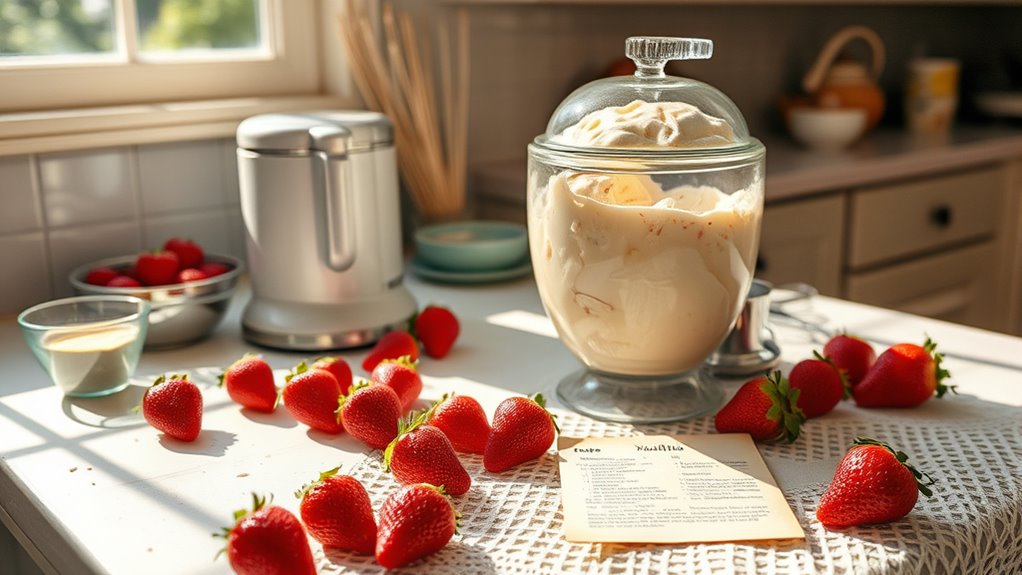
Preparations begin with assembling a clean, cold mise en place: gather the milk, cream, yolks, sugar, and vanilla, along with a vessel suitable for a gentle heat. You measure and align ingredients with discipline, then verify equipment—indicator thermometers, a sturdy whisk, a clean spatula. You select ice cream makers that suit your process, calibrating capacity to your batch size. You temper yolks slowly, whispering steady motions to avoid curdling, then fold in warmed dairy, watching for a smooth, custardy consistency. You taste for balance, adjusting sweetness and vanilla with measured restraint. You maintain control over timing, cooling promptly to chill, then rest before churning. Nostalgic flavors emerge through careful technique, preserving memory while honoring modern precision.
How to Cook
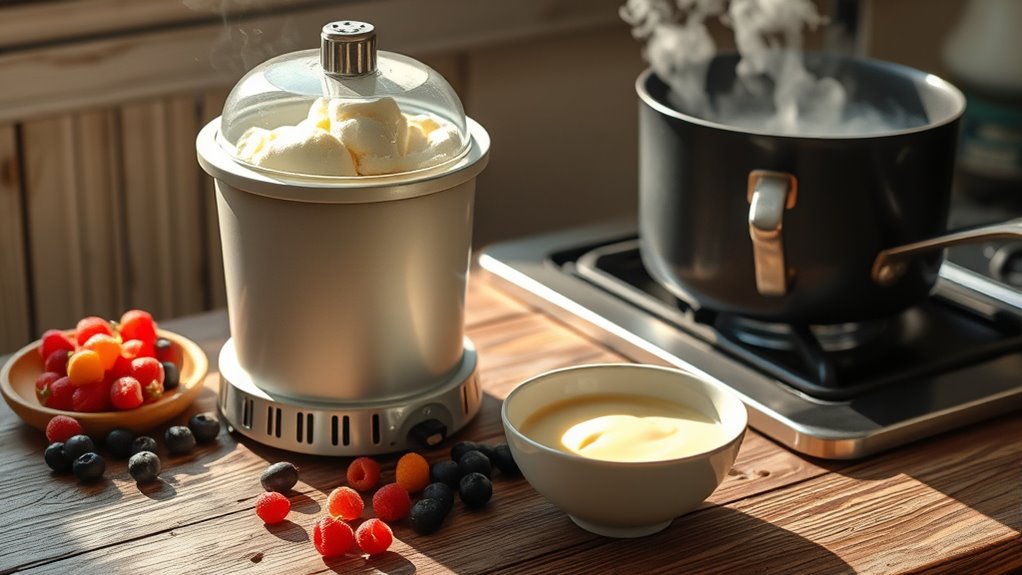
- Begin with a calm, orderly workflow.
- Heat your dairy to a gentle simmer.
- Temper yolks by slowly drizzling the hot dairy mixture into them while whisking steadily.
- Return the combined mixture to a clean, even simmer.
- Cook until the custard thickens to the nappe stage (coats the back of a spoon).
- Structure the process with measured timing, noting temperatures and textures throughout.
- Prioritize cooking techniques over haste to ensure stability and repeatability.
- Use kitchen essentials: an accurate thermometer, heavy-bottom pan, whisk, and clean strainer.
- Balance dairy, eggs, and sugar to achieve smooth creaminess.
- Avoid scorching and lumps by adjusting heat precisely and stirring continuously.
- Maintain disciplined adaptability by adjusting heat carefully and documenting outcomes for future reference.
How to Serve
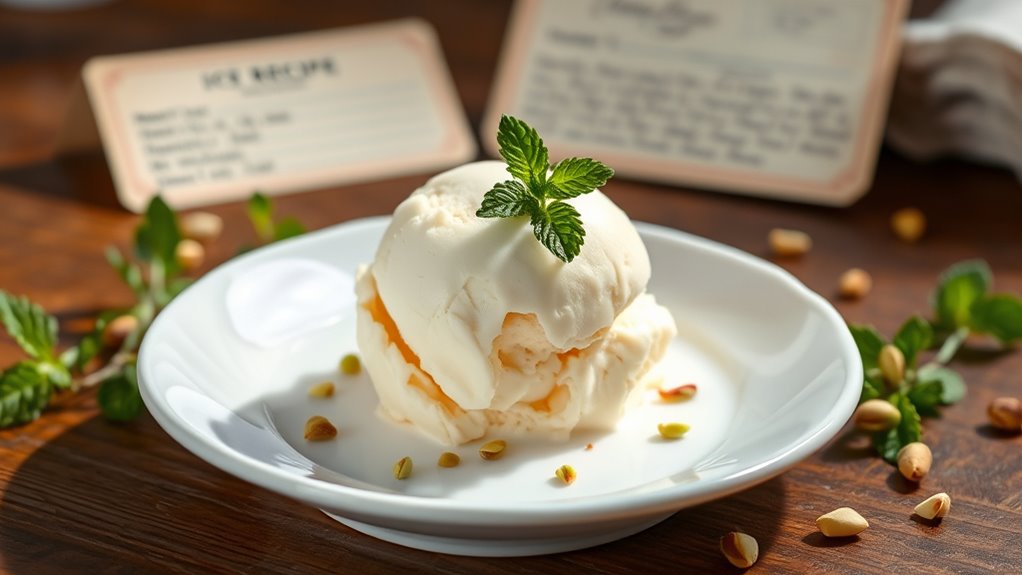
When serving ice cream, consider temperature, texture, and presentation as separate, sequential steps. You’ll maintain consistency by thawing or firming to the intended state, then evaluating mouthfeel as you plate. Temperature governs perception: colder for structure, warmer for creaminess, and you adjust briefly if needed. Texture emerges through scoop discipline, gentleness, and adherence to portion size, ensuring even dispersion across vessels. Presentation matters: choose a clean, neutral base to showcase color, with deliberate spacing and a single focal point. Serving suggestions guide choice without overwhelming it, balancing tradition and appetite. Ice cream toppings should complement rather than dominate, selected with restraint. Offer small, curated options—fruits, nuts, or syrups—that invite experimentation while preserving archival clarity. Your serving approach honors nostalgia and personal freedom.
Tips
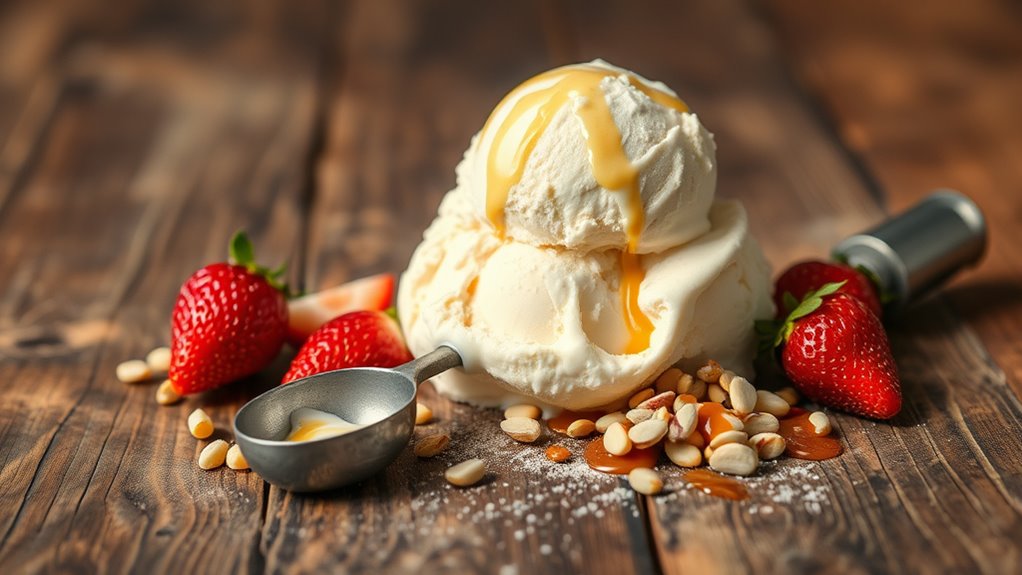
Small, deliberate steps save time and protect texture: keep your ice cream at the right temperature during handling, thawing briefly if needed and firming back to its intended state before serving. You’ll chart a disciplined routine: pre-chill scoops, monitor consistency, and minimize air exposure to prevent ice crystallization. Tips emphasize control over timing and transport, so flavor integrity remains intact. Choose methods that preserve nostalgic flavors without masking them, aligning texture with expectation. Use steady, reproducible steps to reproduce childhood memories in each bite, yet adapt for modern environments where equipment varies. Record observations concisely, noting how temperature shifts affect mouthfeel. Maintain cleanliness and organization to reduce variability, ensuring a reliable product every time that supports personal freedom in dessert choice and honest culinary memory.
Food Value and Benefit
Ice cream is more than just a nostalgic treat; when enjoyed in appropriate portions, it can provide nourishment and a quick source of energy. This recipe offers a balanced contribution to your diet by delivering essential calories and nutrients.
Food Value of This Ice Cream Recipe:
- Provides a moderate amount of calories to fuel your body
- Contains macronutrients including carbohydrates, fats, and proteins for energy and muscle maintenance
- Supplies micronutrients such as calcium, vitamin A, and phosphorus from dairy ingredients
Benefits of Eating This Ice Cream Recipe:
- Calcium: Supports bone health and dental strength
- Vitamin A: Promotes good vision and immune function
- Phosphorus: Assists in energy metabolism and bone formation
- Protein: Helps in muscle repair and growth
- Quick Energy: Carbohydrates provide an immediate energy source
- Mood Enhancement: Enjoyment of a sweet treat can boost emotional well-being when consumed mindfully
This recipe’s nutritional value may vary based on ingredient choices and portion size, emphasizing the importance of mindful consumption and ingredient transparency to maintain a healthy relationship with food.
Frequently Asked Questions
What Childhood Memory Does This Recipe Evoke for You?
You’re reminded of ice cream whispers and summer memories, a gentle euphemism for joy you shared during childhood flavors and family gatherings, where every scoop felt like freedom, a precise archival note of sweeter days you cling to.
Can I Substitute Dairy With Non-Dairy Milk?
Yes, you can substitute dairy with non-dairy milk. You’ll want to evaluate dairy alternatives and flavor profiles, choosing options like almond, oat, or coconut based on texture, sweetness, and creaminess to maintain archival precision and freedom in taste.
How Long Can the Ice Cream Stay in the Freezer?
Ice cream stays in the freezer for about 1 to 2 months for best texture and flavor. Ice cream storage matters; monitor freezer lifespan, keep airtight, and label dates so you, not the freezer, control the archival quality.
What Equipment Is Essential Beyond a Mixer?
You’ll spare yourself the obvious; beyond a mixer, you’ll want ice cream makers and flavor infusers. You relish precision, yet irony greets you: archival exactness, freedom-minded clarity, you insist, while modern equipment quietly stamps your creamy, deliberate history.
Can I Tint Flavors for Nostalgic Effects?
Yes, you can tint flavors for nostalgic effects, using natural or safe food colors to achieve subtle or bold cues while preserving balance with your colorful toppings and creative flavor combinations. This approach honors precision and personal freedom.
Frequently Asked Questions
What ingredients are commonly used in nostalgic ice cream recipes?
Nostalgic ice cream recipes often feature simple, wholesome ingredients that evoke memories of childhood. Common ingredients include heavy cream, whole milk, sugar, and vanilla extract. Many recipes also incorporate nostalgic flavors such as chocolate, strawberry, and mint chocolate chip. Some may even include unique add-ins like crushed cookies, fruit pieces, or nostalgic candies to enhance the flavor and texture.
How can I make ice cream without an ice cream maker?
Making ice cream without an ice cream maker is quite simple! One popular method is to use a freezer-safe bowl. First, prepare your ice cream mixture and pour it into the bowl. Place it in the freezer, and every 30 minutes, stir the mixture vigorously with a fork to break up ice crystals. Repeat this process for about 3-4 hours until the ice cream reaches a creamy consistency. This hands-on approach not only allows you to enjoy the process but also creates a delightful texture reminiscent of homemade ice cream from the past.
What are some nostalgic ice cream flavors I can try making at home?
When it comes to nostalgic ice cream flavors, there are several classic options to consider. Vanilla bean is a perennial favorite, while chocolate fudge ripple brings back memories of ice cream parlors. Other beloved flavors include mint chocolate chip, strawberry shortcake, and butter pecan. For a twist on nostalgia, you might also try making flavors inspired by childhood treats, such as cookies and cream, s’mores, or even birthday cake ice cream. Each flavor can be easily crafted at home with basic ingredients, creating a delightful throwback to simpler times.
How can I customize my ice cream recipe for dietary restrictions?
Customizing ice cream recipes for dietary restrictions is quite feasible! For dairy-free options, you can substitute traditional milk and cream with coconut milk, almond milk, or cashew cream. To reduce sugar, consider using natural sweeteners like honey or maple syrup, or sugar alternatives like stevia. For those avoiding gluten, make sure to check that any add-ins, such as cookies or candies, are gluten-free. With a little creativity, you can create delicious ice cream that caters to various dietary needs while still delivering on nostalgia.
What are some tips for achieving the perfect ice cream texture?
To achieve the perfect ice cream texture, start by ensuring all your ingredients are properly chilled before mixing them together. This helps to create a smoother mixture. Incorporating air into the mixture during the churning process is crucial, as it prevents ice crystals from forming. If you’re using a machine, follow the manufacturer’s instructions for churning times. If you’re making ice cream by hand, remember to stir it frequently as it freezes. Additionally, adding a little bit of alcohol, like vodka or rum, can help improve the texture by lowering the freezing point and making the ice cream softer and creamier.
References
- https://en.wikipedia.org/wiki/Ice_cream
- https://www.npr.org/sections/thesalt/2018/07/18/628727734/a-history-of-ice-cream-and-the-joy-of-making-it-at-home
- https://www.sciencedirect.com/science/article/pii/S2212670817302013
- https://www.foodhistory.com/food-history-ice-cream
- https://www.icecreamscience.com/
- https://www.history.com/topics/food/ice-cream
- https://www.nationalgeographic.com/science/article/ice-cream-history-food-culture
- https://www.culinarylore.com/food-history:the-history-of-ice-cream