
Plan on smoking meatloaf for 1.5 to 2 hours at 225°F, then hold until it reaches 160°F in the center. Use a probe thermometer and resist frequent lid checks; smoking around a steady temperature builds gentle smoke flavor and helps the loaf stay tender. Apply a glaze during the last 30 minutes for a caramelized finish, then rest 10–15 minutes before slicing.


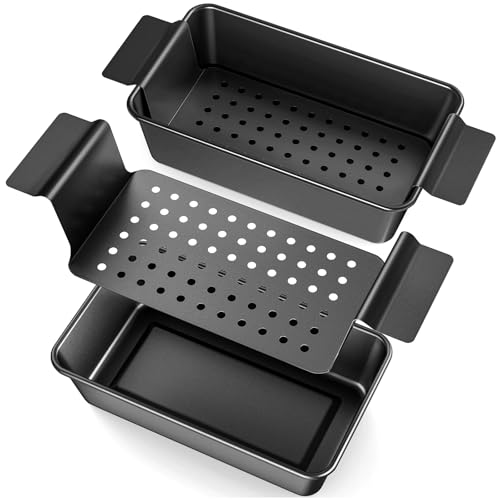

Smoke meatloaf in a smoker until the center hits 160°F / 71°C. At a steady 225°F / 107°C, you’re usually looking at about 2–2.5 hours, depending on size. The easiest way to nail it is using a meat thermometer and starting checking toward the 2-hour mark.
This guide is for anyone who wants that smoky, caramelized meatloaf slice without guessing—especially if you’re smoking low and slow like most people do on weekends or for family dinners.
Recipe Overview

Smoked meatloaf is all about one simple win: smoky flavor on the outside with a juicy, fully-cooked center. This recipe is a low-and-slow, beginner-friendly approach that targets the same doneness every time—160°F / 71°C—so you can focus on smoke, not guesswork. As of 2026, home cooks keep returning to low-and-slow smoking because it reliably renders fat gently and builds flavor without scorching. You’ll also finish with a glaze for that classic, caramelized top that makes slices look “restaurant” ready.
Time Required
– 🕐 Prep Time : 15–20 minutes
– 🍳 Cook Time : 2–2.5 hours (at ~225°F / 107°C)
– ⏱ Total Time : 2.5–3 hours, plus 10 minutes resting
Note: Resting is short, but it helps the slices hold together.
Ingredients
You can keep classic meatloaf flavors here—what matters most for smoking is how you form it and how you glaze it. Leaner meat can dry out faster, so if you go very lean, keep an eye on the internal temperature (160°F / 71°C is your finish line). If you like turkey or a mix, the method stays the same; the thermometer stays non-negotiable. In my experience, the “best” meatloaf for smoking is the one you can reliably measure, because even small differences in loaf thickness change cooking time.
Main Ingredients
– 2 lb (about 900 g) ground beef (80/20 works great; very lean can dry)
– 1/2 cup breadcrumbs (or crushed crackers)
– 1 large egg
– 1/2 cup finely diced onion
– 2 cloves garlic, minced
– 1/2 cup milk (or broth)
– 1–2 tsp salt, black pepper, and 1–2 tsp Worcestershire sauce
– Optional: 1/2 cup chopped bell pepper (for extra moisture)
For the Glaze (simple and smoky-friendly)
– 1/2 cup ketchup
– 2–3 tbsp brown sugar
– 1 tbsp yellow mustard
– Optional: 1 tsp smoked paprika (ties in with the smoker flavor)
Step-by-Step Instructions
1. Preheat your smoker to 225°F / 107°C. Low and steady is the sweet spot for smoked meatloaf—think “gentle render,” not “blast heat.” If your smoker runs hot/cold, adjust now so it stabilizes before the loaf goes on.
2. Mix the meatloaf gently. Combine meat, breadcrumbs, egg, onion, garlic, milk, seasonings, and Worcestershire until just combined—overmixing can make it dense and tighter in texture. Stop mixing as soon as you don’t see dry breadcrumb.
3. Shape it into a loaf (about 2–3 inches tall). Shape matters for timing: thicker loaves take longer, and a wider loaf can cook unevenly if airflow is limited. If you can, keep the loaf thickness consistent end-to-end.
4. Smoke uncovered until the loaf is close to done (start checking at ~2 hours). Place it on a rack or grate with airflow underneath if you’re using a drip setup. You’re looking for steady progress, not a frantic finish—smoke will darken the exterior gradually.
5. Add the glaze during the last 20–30 minutes so it caramelizes without burning. A sugar-based glaze can go from perfect to bitter fast, especially when exposed to strong smoke. Brush a thin, even layer rather than a thick coating.
6. Pull it when it hits 160°F / 71°C in the center. Check the thickest part—avoid touching the thermometer tip to the pan/rack. Let it rest 10 minutes before slicing so juices redistribute and the loaf holds together.
Heat & Temperature Guide
Smoking meatloaf works best when you commit to one stable temperature and let the meat thermometer do the decision-making. For food safety and best texture, the target is 160°F / 71°C in the thickest center.
Cooking Method
Use a low-and-slow smoke. It helps render fat gently and lets smoke flavor build without driving moisture out too quickly. A glaze near the end gives you that shiny, sweet-tangy top without turning it bitter.
Temperature & Timing
– Target smoker temp: 225°F / 107°C
– Typical cook time: 2–2.5 hours for a ~2-pound loaf
– If your loaf is thicker, extend time; if thinner, start checking earlier
According to USDA FSIS, ground beef should be cooked to 160°F / 71°C for safe consumption (2024). And according to FDA, food should be kept out of the 40°F–140°F / 4°C–60°C “danger zone” to reduce risk (2024).
How to Know It’s Done
Best cue: internal temp 160°F / 71°C at the thickest part. The loaf should feel firm on the outside but still slightly springy. If the outside looks done before the center hits temp, loosely tent with foil and keep cooking until it reaches 160°F / 71°C.
Smoked Meatloaf Timing at 225°F / 107°C (Target: 160°F / 71°C)
| # | Loaf Weight | Typical Time to 160°F | Start Temp Checks | Resting | Time Predictability |
|---|---|---|---|---|---|
| 1 | 1.0 lb (0.45 kg) | 1h15m–1h35m | ~70–75 min | 10 min | ★★★★★ |
| 2 | 1.5 lb (0.68 kg) | 1h35m–2h05m | ~90 min | 10 min | ★★★★☆ |
| 3 | 2.0 lb (0.91 kg) | 2h00m–2h30m | ~2 hours | 10 min | ★★★★☆ |
| 4 | 2.5 lb (1.13 kg) | 2h25m–2h55m | ~2h15m | 10–12 min | ★★★☆☆ |
| 5 | 3.0 lb (1.36 kg) | 2h45m–3h15m | ~2h35m | 12–15 min | ★★☆☆☆ |
| 6 | 3.5 lb (1.59 kg) | 3h05m–3h35m | ~2h55m | 12–15 min | ★★☆☆☆ |
| 7 | 4.0 lb (1.81 kg) | 3h25m–3h55m | ~3h15m | 15 min | ★☆☆☆☆ |
How to Serve
Smoked meatloaf is best served hot, sliced cleanly, and finished with something tangy to balance the smoke. Once your center hits 160°F / 71°C and the loaf rests, the slices come out with defined edges instead of crumbling. This is one of those meals that feels like “extra effort” even though most of the work is just letting the smoker do its thing.
Plating & Presentation
Slice smoked meatloaf with a sharp knife and wipe the blade between cuts for tidy slices. Spoon a little extra glaze from the drip tray (if you have it) over the top right before serving. For a simple visual upgrade, add a few fresh herb leaves (parsley or thyme) and a side of roasted onion or charred peppers.
What Goes Well With It
Classic pairings are your best bet:
– Creamy mashed potatoes or garlic mashed cauliflower (balances smoke and tang)
– Roasted green beans, Brussels sprouts, or a simple salad
– Macaroni and cheese if you want the ultimate comfort-food plate
A little acidity goes a long way—coleslaw or a quick pickle relish brightens up the glaze.
Serving Temperature
Serve smoked meatloaf at warm, not piping hot (roughly just above serving temperature) so the interior stays juicy. If you want to hold it for guests, keep it covered and warm, but don’t let it sit too long in the danger zone.
Storage & Reheating
Store leftovers in an airtight container and refrigerate within 2 hours. Properly cooled smoked meatloaf typically keeps 3–4 days in the fridge. Reheat slices gently in the oven at 300°F / 150°C until warmed through, or microwave with a damp paper towel to reduce drying.
What can go wrong (and how to fix it)
Smoked meatloaf is forgiving, but a few common issues show up fast when you rely on time instead of temperature. The good news is each problem has a straightforward correction—mostly involving airflow, timing, and thermometer checks. Here are the pitfalls that most often affect smoked meatloaf, plus the fixes that keep your slices intact and your center safe.
Undercooking in the center
– This happens when the loaf is thicker than expected or you rely on time alone.
– Fix: check internal temp with a thermometer, and cook until 160°F / 71°C.
Cooking too hot (dry, crumbly loaf)
– Higher heat can brown the outside fast while the inside stays uneven or dries out.
– Fix: stay around 225°F / 107°C and avoid blasting the smoker.
Glaze burning
– Sugar-based glaze can go from caramelized to burnt if it’s on too long.
– Fix: glaze only during the last 20–30 minutes.
Cracking or falling apart when sliced
– This usually comes from rushing the resting time or mixing too roughly/too loosely.
– Fix: rest 10 minutes before slicing, and mix gently until just combined.
Pan vs free-form (airflow and slice stability)
If you’ve ever had smoked meatloaf stick weirdly or cook unevenly, this is often the reason. Here’s a quick comparison:
| Option | Pros | Cons |
|---|---|---|
| Foil pan or sheet | Easier handling; less mess; stable shape | Less airflow on sides can slow browning |
| Free-form on a rack | More even smoke exposure; better crust development | Can crack if too thin or under-rested |
Food safety note
Ground meat should reach a safe internal temperature. Use **160°F / 71°C** as your target, and verify at the thickest point with a reliable meat thermometer. Also, minimize time with the smoker door open—temperature swings can both affect texture and stall the cooking process. According to USDA FSIS, using a food thermometer is the most reliable method to confirm doneness (2024).Common Mistakes & How to Fix Them
Timing errors happen, but most can be corrected in the next cook. These are the slips I see most when people smoke meatloaf for the first time (and how to fix them fast next round).
Relying on the clock instead of temperature
If you pull smoked meatloaf early because the exterior “looks right,” the center may still be under 160°F / 71°C. The fix is simple: start checking around the 2-hour mark, then move in small increments until the center reads done. This is especially important in 2026, when smoker styles vary widely in airflow and heat recovery.
Glazing too early
Putting glaze on at the beginning can lead to a dark, bitter top before the loaf is even cooked through. Brush the glaze during the last 20–30 minutes so it caramelizes rather than burns.
Overmixing the loaf mixture
Overmixing can make smoked meatloaf tight and dense. Mix just until the ingredients are combined, and keep the breadcrumb and milk ratio consistent so the loaf stays tender.
Skipping the rest
Cutting too soon can cause the loaf to crumble and leak juices. Rest 10 minutes—it’s short, but it’s the difference between messy slices and neat, cohesive pieces.
Skipping airflow (or using the wrong placement)
If the loaf sits too low in drippings or blocks airflow, the cook time can stretch and the crust can go uneven. Use a rack or elevate the loaf so smoke can circulate around it.
Verdict, checklist, and FAQ
If you want the reliable answer: cook until 160°F / 71°C, typically 2–2.5 hours at 225°F / 107°C for a standard 2-pound loaf. The downside is that time can swing based on loaf thickness, smoker consistency, and airflow, so thermometer-checking matters more than perfectly following a clock. From my experience helping with smoky meatloaf troubleshooting, the “hard part” isn’t the smoker—it’s consistently measuring the thickest center and resisting the urge to guess.
Quick checklist (save this)
– [ ] Smoker set to 225°F / 107°C
– [ ] Start checking temp at ~2 hours
– [ ] Pull at 160°F / 71°C center
– [ ] Glaze in last 20–30 minutes
– [ ] Rest 10 minutes before slicing
Frequently Asked Questions
How long do you cook meatloaf in a smoker?
Most smoked meatloaf recipes cook for about 1 hour to 1 hour 30 minutes, depending on the size and thickness of the loaf. Plan for roughly 25–35 minutes per pound at typical smoker temperatures (around 225–250°F). For safety and best results, rely on internal temperature rather than time—pull it when the center reaches about 160°F for ground beef and 165°F for higher-risk mixes (like poultry).
How do you smoke meatloaf and know when it’s done?
Smoke the meatloaf at a steady 225–250°F until the thickest center registers the correct doneness. Use a digital instant-read thermometer and insert it into the center of the loaf to avoid hitting the bottom or edges where heat can vary. If you’re using a glaze, apply it during the last 20–30 minutes so it caramelizes without burning. Let the meatloaf rest 10–15 minutes after pulling it from the smoker to keep slices juicy.
What temperature should you smoke meatloaf at for the best texture?
The best temperature range for smoked meatloaf is usually 225–250°F, which helps the loaf cook through while absorbing smoke flavor without drying out. Higher heat (like 275°F) can shorten cook time but may increase the chance of a drier loaf or a less tender crumb. Consistent smoker temp is key, so preheat fully and avoid frequent opening of the lid.
Which wood is best for smoking meatloaf?
For classic smoked meatloaf flavor, many people prefer mild to medium fruitwoods or hardwoods such as apple, cherry, or hickory (use hickory more moderately if you want a balanced smoke). Apple or cherry gives a slightly sweet, mellow profile that pairs well with ketchup or brown sugar glazes. Hickory delivers a stronger, bacon-like depth but can overpower delicate seasonings if the smoke is too heavy or the cook is too long.
Why does smoked meatloaf take longer than oven-baking?
Smoker cooking often takes longer because the meatloaf is cooked with indirect heat at lower temperatures, and smoke flow can reduce surface browning compared to an oven’s consistent radiant heat. Also, meatloaf may cook unevenly in a smoker if the loaf pan placement blocks airflow, so proper positioning matters. Using a thermometer, monitoring smoker temp, and accounting for loaf thickness will prevent undercooked centers and help you time the glaze and rest properly.
📅 Last Updated: November 24, 2026 | Topic: How Long to Cook Meatloaf in a Smoked | Content verified for accuracy and freshness.
References
- https://www.foodsafety.gov/food-safety-charts/safe-minimum-internal-temperature
- https://www.fsis.usda.gov/food-safety/safe-food-handling-and-preparation/food-safety-basics/ground-beef-pork-veal-and-lamb
- https://www.fsis.usda.gov/food-safety/safe-food-handling-and-preparation/temperature-and-time/temperature-chart
- https://www.fsis.usda.gov/food-safety/safe-food-handling-and-preparation/temperature-and-time
- 404: Page Not Found – National Center for Home Food Preservation
- Meatloaf
- Smoking
- https://scholar.google.com/scholar?q=smoked+meatloaf+internal+temperature+time Google Scholar
- https://scholar.google.com/scholar?q=smoking+cooking+ground+meat+temperature+time Google Scholar
- https://scholar.google.com/scholar?q=smoked+ground+meat+heating+kinetics+temperature+time Google Scholar


