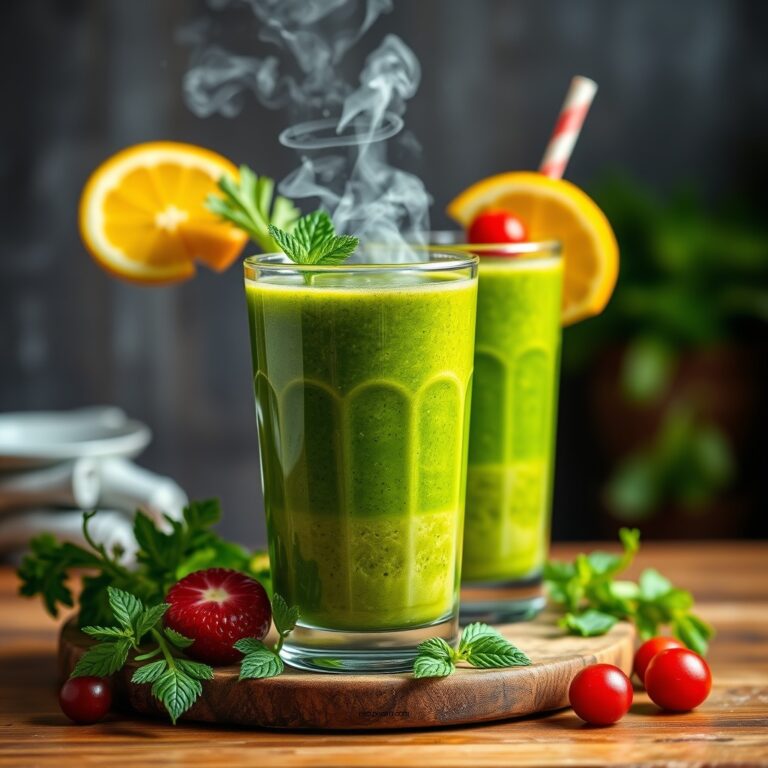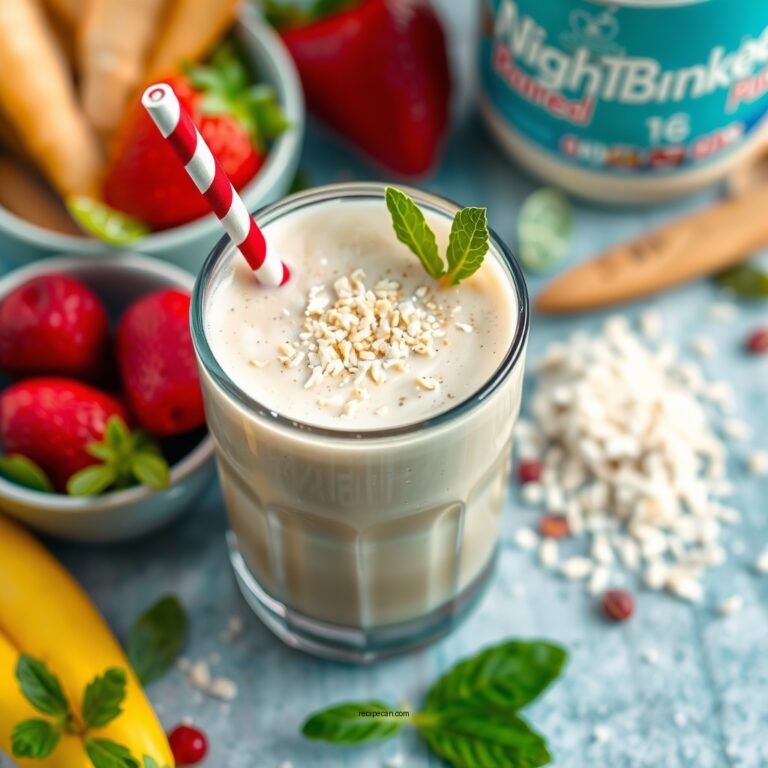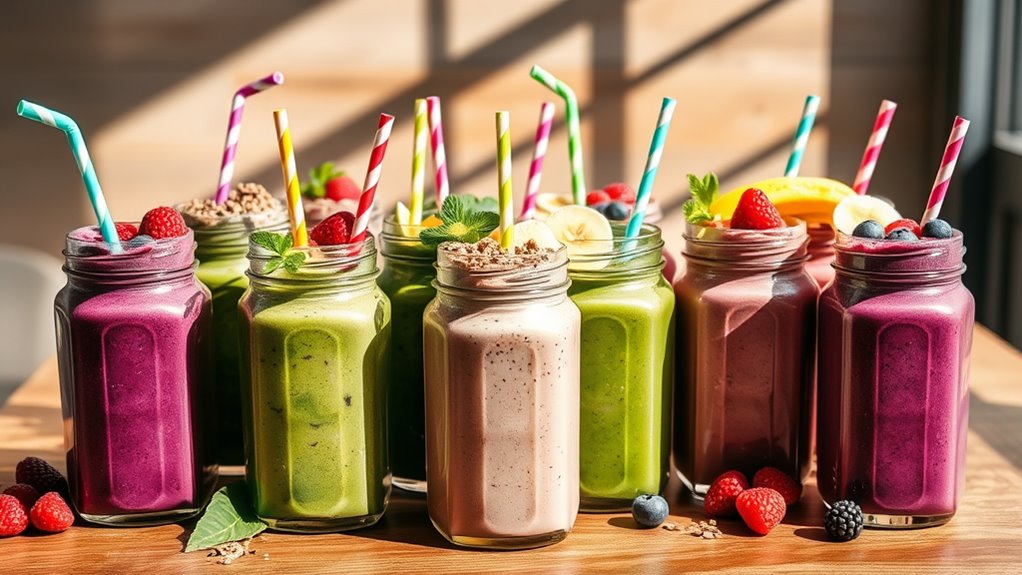
You can easily make high protein smoothies by blending 20-30 grams of your preferred protein source like whey, casein, or pea protein with fruits such as berries or banana and veggies like spinach. Use 1 to 1½ cups of liquid like almond milk for smooth texture. Blend briefly to keep nutrients intact, and garnish for a fresh finish. Incorporating seeds or nut butter boosts healthy fats. Want to optimize flavor and nutrition? There’s more to discover.
Ingredients and Quantity
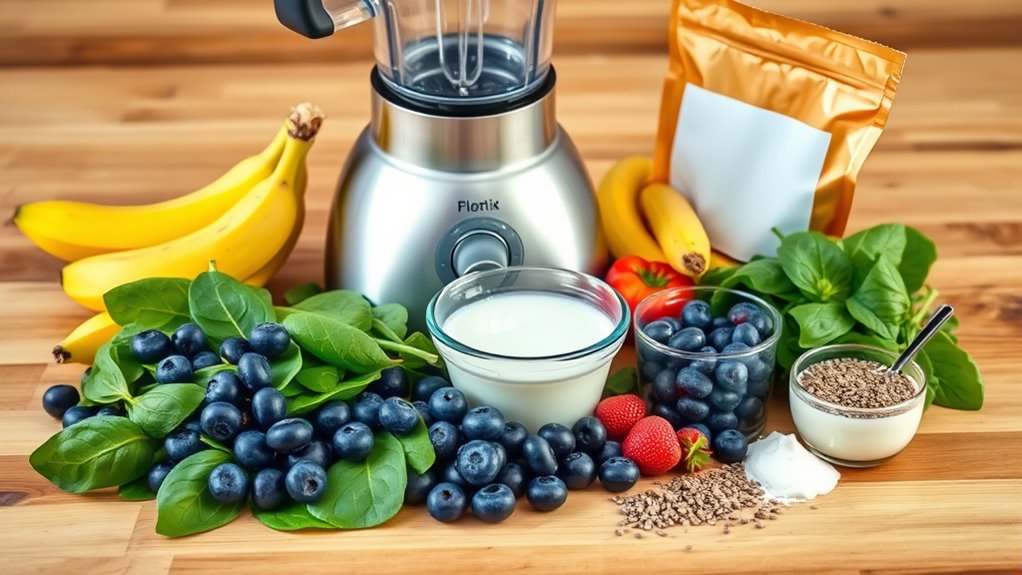
Although the exact ingredients can vary depending on your nutritional goals, a high protein smoothie typically includes a protein source such as whey, casein, or plant-based protein powder, combined with fruits, vegetables, and a liquid base like water, milk, or a milk alternative. You’ll find ingredient variations allow you to tailor your smoothie to your taste and dietary needs, ensuring both satisfaction and ideal nutrition. Here’s a quick guide to common ingredients and their typical quantities:Ingredient TypeCommon OptionsTypical Quantity
Choose wisely to enjoy freedom in your nutrition.
Preparations
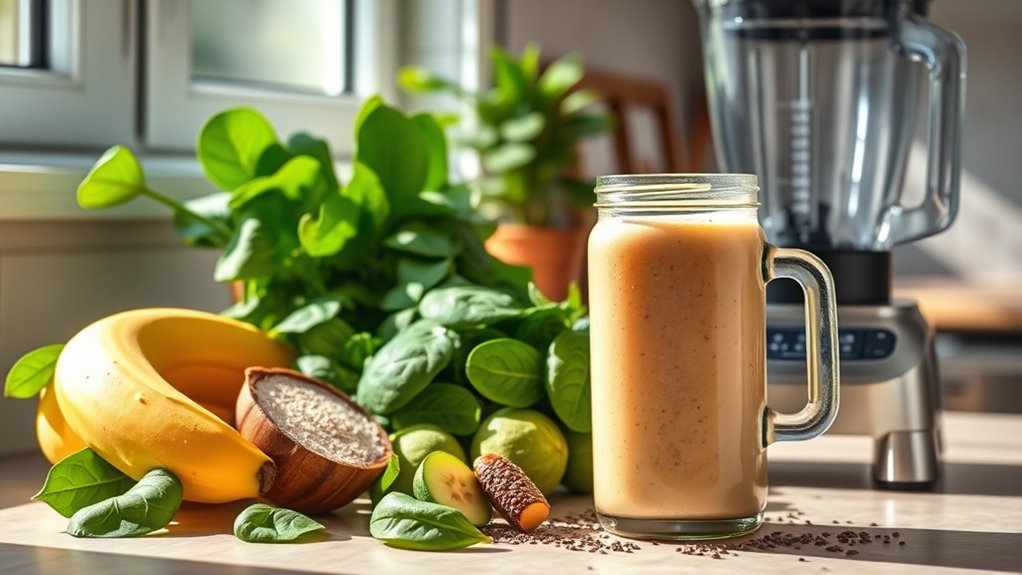
Once you’ve gathered your ingredients, preparing your high protein smoothie becomes a straightforward process. Start by selecting diverse protein sources—such as whey, pea, or Greek yogurt—to meet your nutritional goals. Make certain to measure portions accurately to maintain the intended protein content. Next, pay attention to blending techniques: add liquids first to facilitate smooth blending, followed by softer ingredients, then denser or frozen items last. This sequence helps achieve a consistent texture without overworking your blender. Use short pulses initially, then blend continuously until smooth, avoiding overheating which can degrade protein quality. By following these evidence-based preparation steps, you guarantee your smoothie delivers ideal nutrition, taste, and texture, empowering you to enjoy a convenient, high-protein option that supports your active lifestyle.
How to Prepare
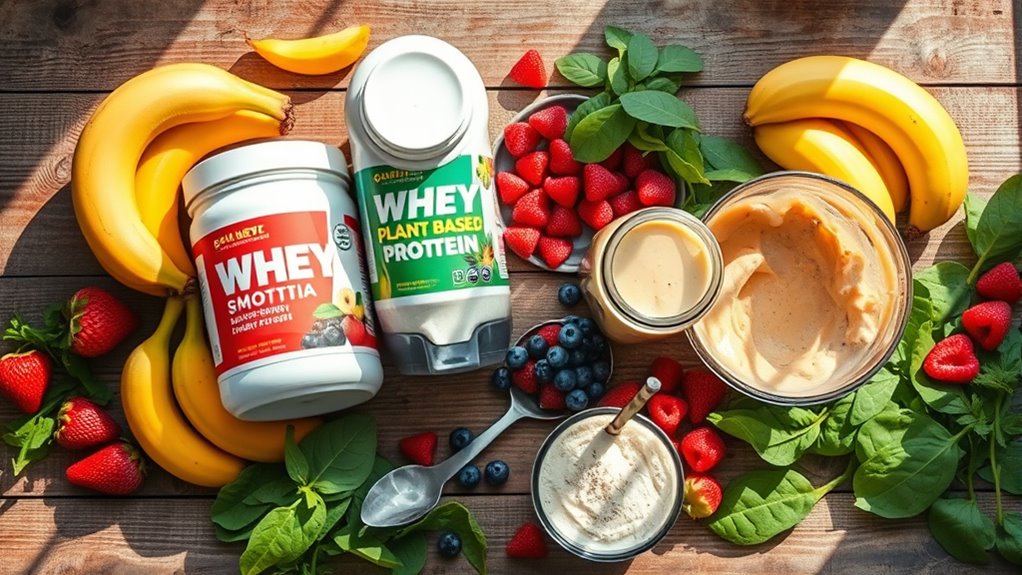
- Assemble all your ingredients and equipment in one place to streamline the preparation process.
- Choose your preferred protein sources such as whey, plant-based powders, or Greek yogurt.
- Add complementary ingredients like fruits, vegetables, and healthy fats.
- Explore smoothie variations by adjusting ingredient ratios to suit your nutritional goals and taste preferences.
- Start blending by adding liquids first to create a vortex.
- Add powders and softer ingredients next, followed by ice or frozen items for a smooth consistency.
- Blend on high speed for 30–60 seconds, checking texture midway to avoid over-blending.
- Avoid over-blending to prevent nutrient degradation.
- Use proper blending techniques to ensure ideal nutrient retention and a creamy texture.
- Enjoy versatile high-protein smoothies tailored to your lifestyle with the freedom to experiment.
How to Serve
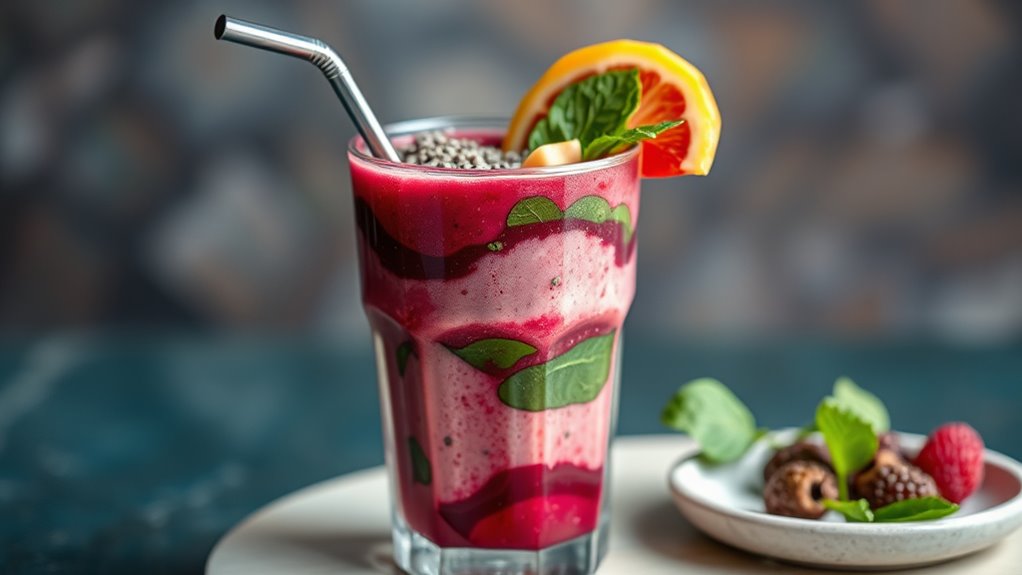
When serving your high-protein smoothie, consider the best way to preserve its texture and nutritional value while enhancing your overall experience. Opt for chilled glasses to maintain coolness and prevent dilution. Presentation styles like layering ingredients or garnishing with seeds and fresh fruit not only boost visual appeal but also add texture and nutrients. Serving suggestions include pairing your smoothie with light snacks or enjoying it as a post-workout refuel. Use straws or spoons depending on thickness, ensuring ease of consumption. Avoid letting your smoothie sit too long, as separation can occur, diminishing quality. By paying attention to these details, you’ll enjoy both the health benefits and the freedom to personalize your smoothie experience according to your lifestyle and preferences.
Tips
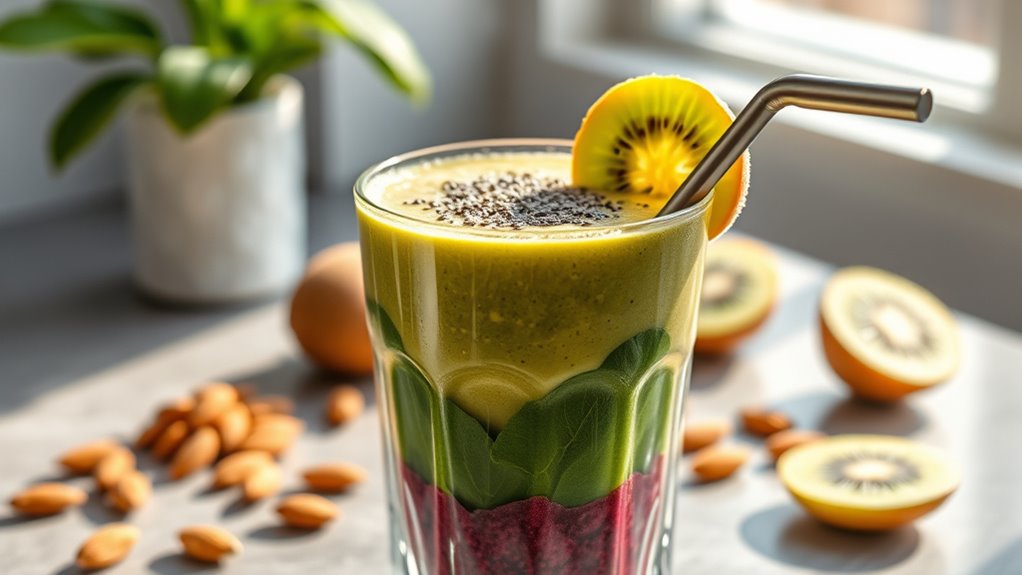
Although high-protein smoothies are versatile and easy to make, following a few practical tips can considerably enhance their nutritional value and taste. Start by experimenting with different protein sources—whey, plant-based powders, Greek yogurt, or nut butters—to find what suits your preferences and dietary needs. Don’t hesitate to try smoothie variations by adding greens, fruits, or seeds, which boost micronutrients without overpowering flavor. Balance your ingredients to avoid excessive sweetness or thickness; adding liquid gradually helps control texture. Use fresh or frozen components to achieve a rejuvenating consistency. Finally, blend just enough to combine ingredients, preserving texture and nutrients. These strategies empower you to enjoy nutrient-dense, flavorful smoothies tailored to your lifestyle while maintaining variety and convenience.
Food Value and Benefit
The high-protein smoothie offers a rich nutritional profile that supports muscle repair, satiety, and overall wellness. This recipe contains diverse protein sources such as whey, plant-based powders, Greek yogurt, and nut butters, providing a complete amino acid profile essential for tissue recovery and growth. Additionally, it delivers important vitamins and minerals, making it a nutrient-dense option.
Food Value per serving:
- Protein: High-quality complete proteins for muscle building
- Vitamins: Vitamin B12, Vitamin D, Vitamin A, and B-complex vitamins
- Minerals: Calcium, Magnesium, Potassium, and Iron
- Antioxidants: From plant-based ingredients and nut butters
- Healthy fats: From nut butters and yogurt
Benefits of eating this high-protein smoothie:
- Supports muscle repair and growth
- Enhances satiety and helps control appetite
- Boosts immune function through vitamin and mineral support
- Promotes sustained energy and improves metabolism
- Provides essential nutrients for overall health and tissue recovery
- Convenient and customizable to fit specific dietary needs without sacrificing flavor
This smoothie is an excellent choice for anyone looking to enjoy a balanced, nutrient-rich meal that aligns with fitness and wellness goals.
Frequently Asked Questions
1. What are the benefits of adding protein to my smoothie?
Adding protein to your smoothie can help with muscle repair and growth, making it an excellent post-workout option. Protein also promotes satiety, which can help control hunger and reduce cravings throughout the day. Additionally, incorporating protein can aid in weight management and support healthy metabolism.
2. What are some high-protein ingredients I can use in my smoothies?
Some great high-protein ingredients for smoothies include Greek yogurt, cottage cheese, protein powder (whey, casein, or plant-based), nut butters (like almond or peanut butter), chia seeds, hemp seeds, and silken tofu. You can also add ingredients like oats or quinoa for additional protein and fiber.
3. How can I make my smoothie more filling?
To make your smoothie more filling, incorporate a mix of high-protein ingredients, healthy fats, and fiber. Use ingredients like avocado or nut butter for healthy fats, and add fruits and vegetables rich in fiber like spinach, kale, or berries. Additionally, using a base like unsweetened almond milk or coconut milk can enhance the creamy texture while keeping it nutritious.
4. Can I prepare high-protein smoothies in advance?
Yes, you can prepare high-protein smoothies in advance! You can batch-prep your smoothie ingredients (excluding liquids) in freezer bags and store them in the freezer. When you’re ready to blend, simply add your liquid base and any additional ingredients. If you’ve already blended your smoothie, it’s best to store it in an airtight container in the fridge for up to 24 hours. Just give it a good shake or stir before drinking.
5. Are there any specific diets that benefit from high-protein smoothies?
Yes, high-protein smoothies can be particularly beneficial for several diets. For those following a fitness or bodybuilding regimen, increased protein intake supports muscle recovery and growth. They are also helpful for those on weight-loss diets, as they help keep you full longer. Additionally, individuals on vegetarian or vegan diets can use plant-based protein sources in their smoothies to ensure they meet their protein needs while maintaining their dietary preferences.
References
- https://www.ncbi.nlm.nih.gov/pmc/articles/PMC6403192/
- https://www.health.harvard.edu/staying-healthy/the-importance-of-protein
- https://www.eatright.org/health/wellness/nutrition/the-benefits-of-protein
- https://www.webmd.com/diet/features/protein-shakes-what-to-know
- https://www.verywellfit.com/high-protein-smoothie-recipes-4688716
- https://www.nutrition.gov/topics/nutrition-101/nutritional-needs
- https://www.sciencedirect.com/science/article/pii/S2351978917300725