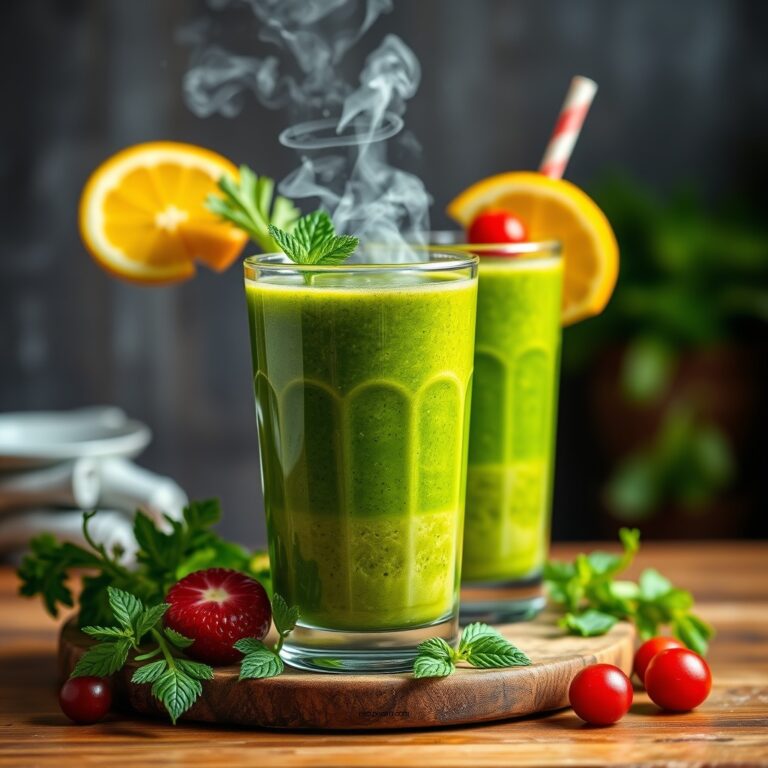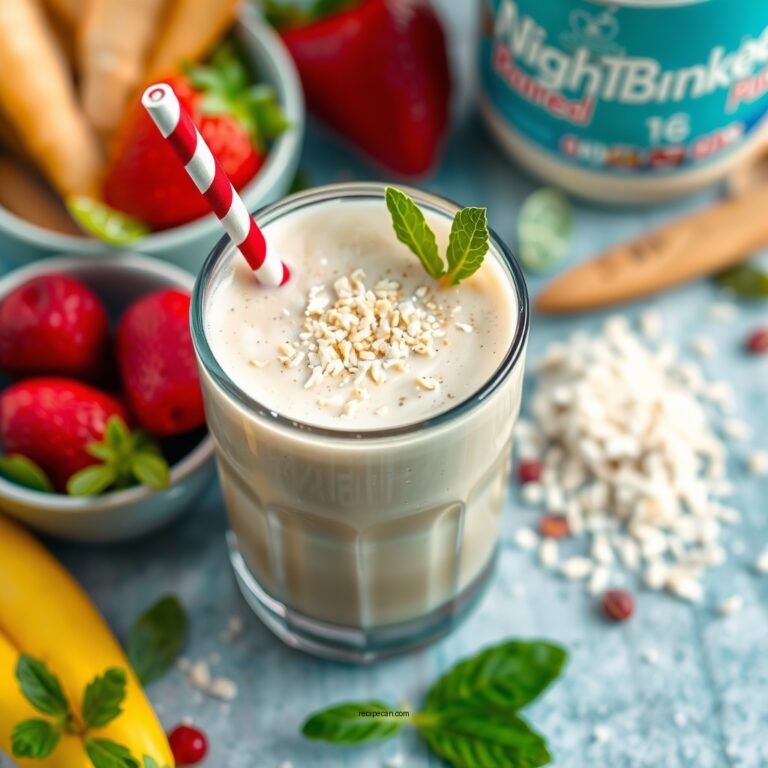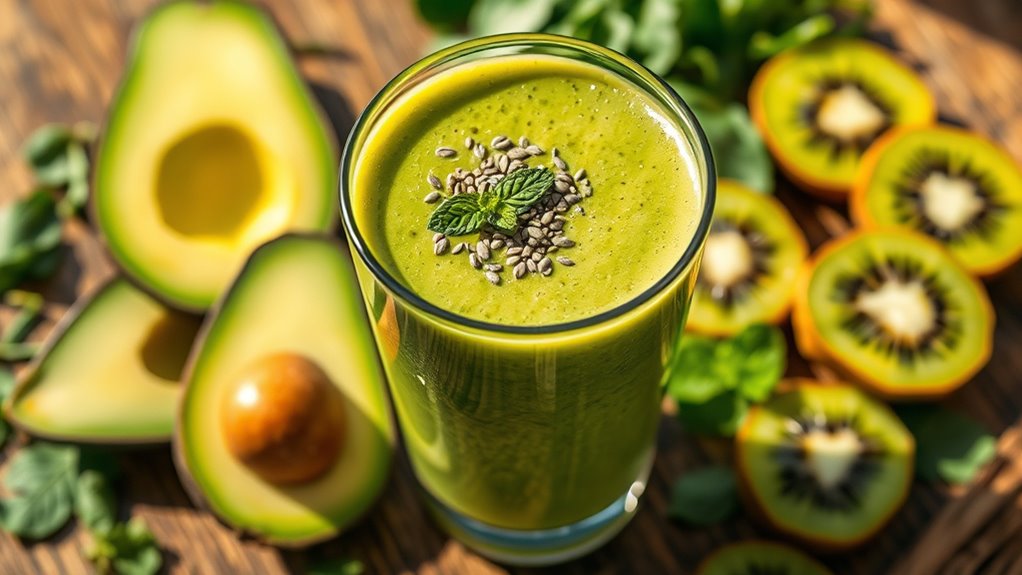
You can make a healthy smoothie by blending one medium banana, half a cup of blueberries, one cup of spinach, half a cup of Greek yogurt, and a cup of unsweetened almond milk. Wash and chop ingredients for a smooth texture, then blend on high for 30-60 seconds. Serve chilled and add toppings like chia seeds for extra fiber. Using fresh, ripe ingredients guarantees peak nutrition and flavor. Keep exploring to uncover tips and nutritional benefits that elevate your smoothie game.
Ingredients and Quantity
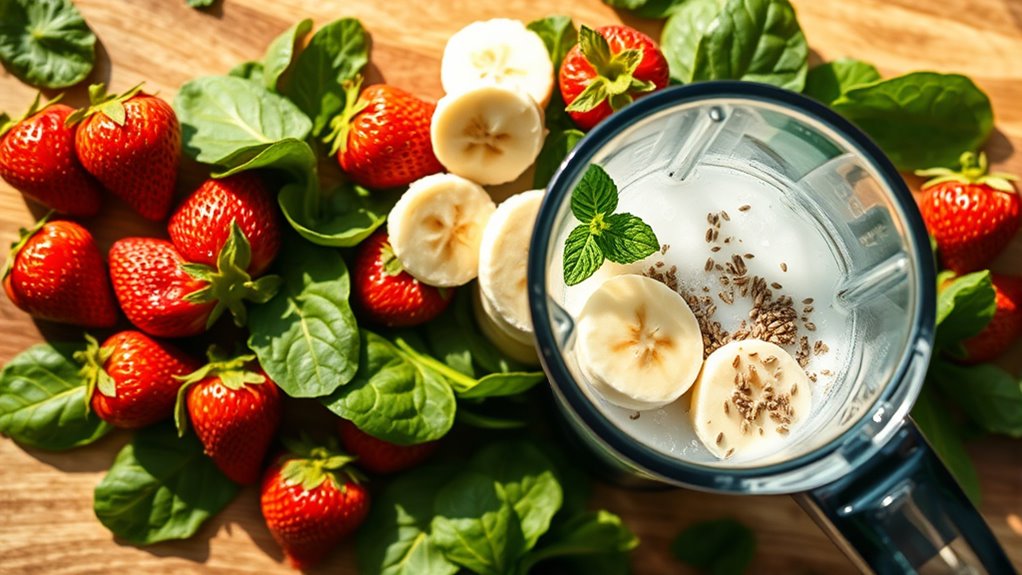
To make one serving of this healthy smoothie, you’ll need a precise combination of ingredients to guarantee excellent nutrition and taste. Selecting the right fruit combinations guarantees superior nutritional balance, providing essential vitamins, minerals, and fiber without excess sugars. Here’s a breakdown of the key ingredients and their quantities:
| Ingredient | Quantity | Nutritional Benefit |
|---|---|---|
| Banana | 1 medium (120g) | Potassium, fiber |
| Blueberries | 1/2 cup (75g) | Antioxidants, vitamin C |
| Spinach | 1 cup (30g) | Iron, vitamin K |
| Greek Yogurt | 1/2 cup (125g) | Protein, probiotics |
| Almond Milk | 1 cup (240ml) | Calcium, vitamin D |
This blend balances macronutrients and micronutrients, supporting your health and freedom to enjoy flavorful, wholesome smoothies.
Preparations
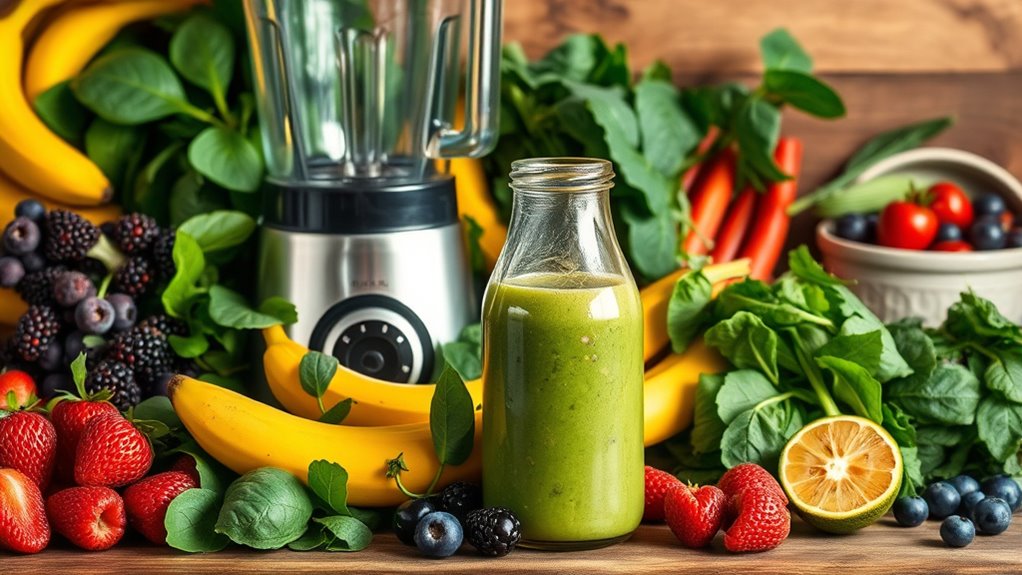
Before blending, make certain all your ingredients are fresh and properly measured to maintain the smoothie’s nutritional integrity. Effective smoothie preparation starts with thoughtful ingredient selection, as freshness directly impacts nutrient availability and flavor. Wash fruits and vegetables thoroughly to remove contaminants and reduce pesticide residues. Peel or chop larger items into uniform pieces to guarantee even blending and a smooth texture. Weigh or measure each component precisely according to the recipe to balance macronutrients and micronutrients accurately, avoiding excess sugars or fats. By adhering to evidence-based practices in ingredient selection and preparation, you preserve vitamins, minerals, and antioxidants essential for health benefits. Taking these steps allows you to enjoy a nutrient-dense smoothie while maintaining control over what you consume, empowering your freedom to nourish your body effectively.
How to Prepare
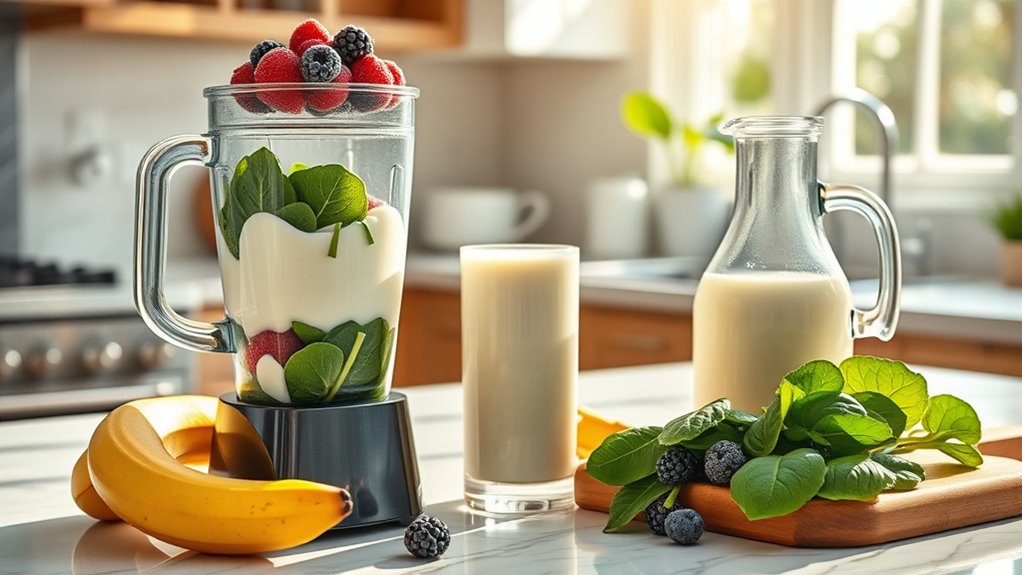
- Prepare and measure all your ingredients before starting.
- Begin by adding your liquid base (water, almond milk, or juice) to the blender.
- Layer softer ingredients next, such as yogurt or banana.
- Add leafy greens and frozen fruits on top to promote even blending and prevent clumping.
- Blend on high speed for 30-60 seconds, checking the texture midway to ensure the desired consistency.
- Experiment with ingredient substitutions like swapping spinach for kale or coconut water for almond milk to vary flavor and nutrient profiles.
- Use fresh, whole ingredients and avoid over-blending to preserve vitamins and antioxidants.
- Enjoy a nutrient-rich, satisfying smoothie every time.
How to Serve
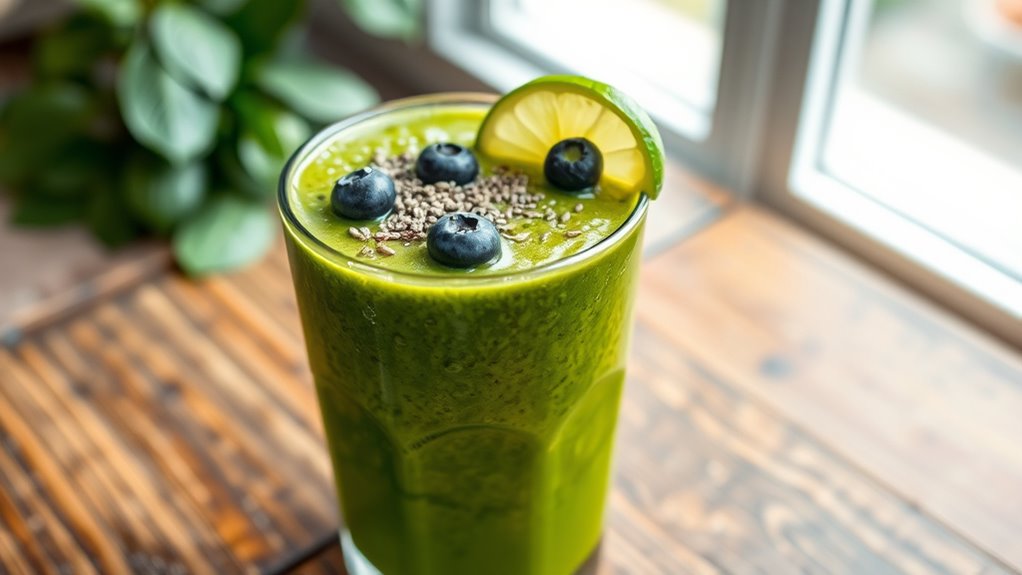
Although blending is essential for texture, how you serve your smoothie can greatly impact its enjoyment and nutritional benefits. Serving temperature plays a significant role; smoothies are best consumed chilled to preserve nutrients and enhance freshness. Avoid letting your smoothie sit at room temperature for too long, as heat can degrade vitamin content. Using proper garnishing techniques not only boosts visual appeal but can also add complementary nutrients and textures. Consider topping with chia seeds, fresh berries, or a sprinkle of nuts to increase fiber and antioxidants. Serving your smoothie immediately after preparation guarantees peak taste and nutrient retention. By paying attention to serving temperature and thoughtful garnishing techniques, you maximize both health benefits and sensory pleasure in your smoothie experience.
Tips
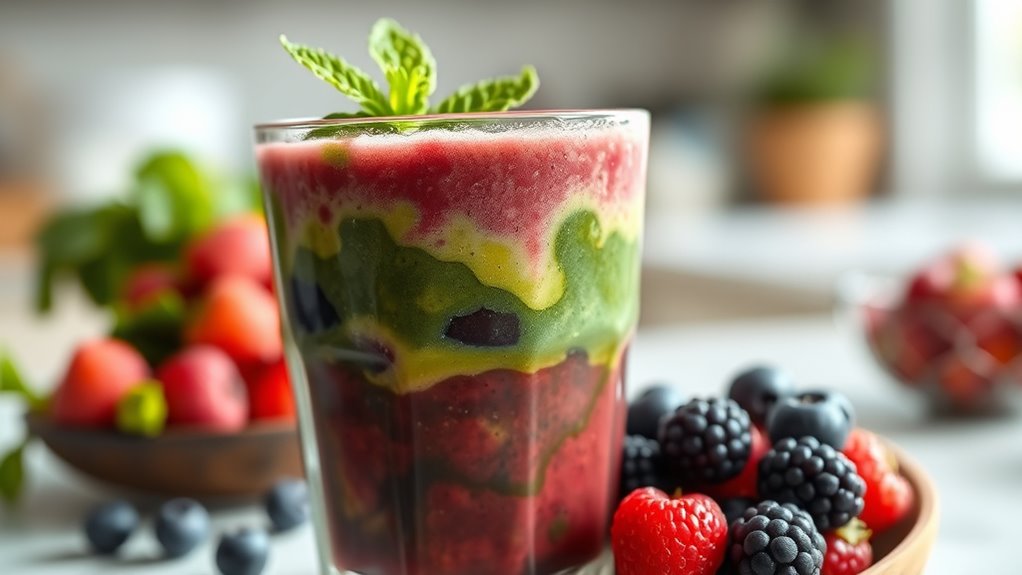
Since the quality of your ingredients directly influences the nutritional value and taste, you should always choose fresh, ripe fruits and vegetables for your smoothie. To keep things flexible, experiment with smoothie variations by swapping ingredients based on availability or preference. For instance, if you lack spinach, kale is an excellent substitute that maintains nutrient density. Use unsweetened plant-based milks instead of dairy to reduce calories while preserving creaminess. When selecting sweeteners, natural options like honey or dates work well, but you can omit them entirely for a lower sugar content. Also, balance textures by adding ingredients like chia seeds or oats for fiber without compromising flavor. By mastering ingredient substitutions, you gain freedom to tailor smoothies to your nutritional goals and taste preferences without sacrificing quality.
Food Value and Benefit
The prepared smoothie is a nutrient-rich blend that combines whole fruits, leafy greens, protein sources, and healthy fats to provide a balanced and health-promoting beverage.
Food Value:
- High in essential vitamins such as Vitamin C (from berries), Vitamin A and K (from spinach)
- Rich in minerals including iron (from spinach), calcium (from Greek yogurt), magnesium, and potassium
- Contains antioxidants that help reduce oxidative stress
- Good source of dietary fiber, supporting digestive health
- Provides protein for muscle repair and satiety
- Includes healthy fats from avocado or seeds that enhance brain health and nutrient absorption
Benefits of Eating This Smoothie:
- Supports digestion and promotes a healthy gut due to its fiber content
- Boosts immune function with abundant vitamins and antioxidants
- Enhances sustained energy levels through balanced macronutrients
- Helps maintain healthy cellular function with iron and folate
- Supports brain health and improves nutrient absorption with healthy fats
- Aids in muscle recovery and growth thanks to protein content
Incorporating this nutrient-dense smoothie into your diet helps you thrive physically and mentally, supporting an active and healthful lifestyle.
Frequently Asked Questions
What are the basic ingredients for a healthy smoothie?
A healthy smoothie typically includes a base liquid, such as water, almond milk, or coconut water, along with fruits and/or vegetables. Common ingredients include bananas, berries, spinach, kale, and yogurt. You can also add extras like nut butter, seeds, or protein powder for added nutrition.
How can I make my smoothie healthier?
To make your smoothie healthier, focus on incorporating a variety of nutrient-dense ingredients. Use leafy greens like spinach or kale for added vitamins, opt for whole fruits instead of fruit juices to reduce sugar, and include sources of healthy fats like avocado or chia seeds. Additionally, avoid adding sweeteners and instead rely on the natural sweetness of the fruits.
Can smoothies replace meals?
Smoothies can be a convenient meal replacement if they are well-balanced and contain a good mix of macronutrients. To ensure your smoothie is filling enough to replace a meal, include a source of protein (like Greek yogurt or protein powder), healthy fats (such as nut butter or avocado), and fiber (like fruits or vegetables). However, it’s important to listen to your body and ensure you’re meeting your nutritional needs.
What are some good smoothie combinations?
There are countless delicious smoothie combinations! Some popular ones include:
1. Spinach, banana, almond milk, and peanut butter.
2. Mixed berries, Greek yogurt, and a splash of orange juice.
3. Kale, pineapple, coconut water, and chia seeds.
4. Mango, banana, and coconut milk for a tropical twist.
Experiment with different fruits, vegetables, and add-ins to find your perfect blend!
How long can I store a smoothie?
It is best to consume smoothies immediately after making them for optimal taste and nutrient retention. However, if you need to store a smoothie, it can be kept in the refrigerator for up to 24 hours in an airtight container. If you’re planning to store it for longer, consider freezing it in portions, which can last for up to 3 months. Just blend again after thawing for the best consistency.
References
- https://www.hsph.harvard.edu/nutritionsource/healthy-drinks/smoothies/
- https://www.eatright.org/health/wellness/healthy-eating/healthy-smoothies
- https://www.cdc.gov/nutrition/healthy-eating/what-is-a-healthy-diet.html
- https://www.ncbi.nlm.nih.gov/pmc/articles/PMC7011679/
- https://www.heart.org/en/healthy-living/healthy-eating/eat-smart/nutrition-basics/smoothies-101
- https://www.verywellfit.com/how-to-make-a-healthy-smoothie-5195500
- https://www.medicalnewstoday.com/articles/324135
- https://www.jandonline.org/article/S2212-2672(17)30719-7/fulltext