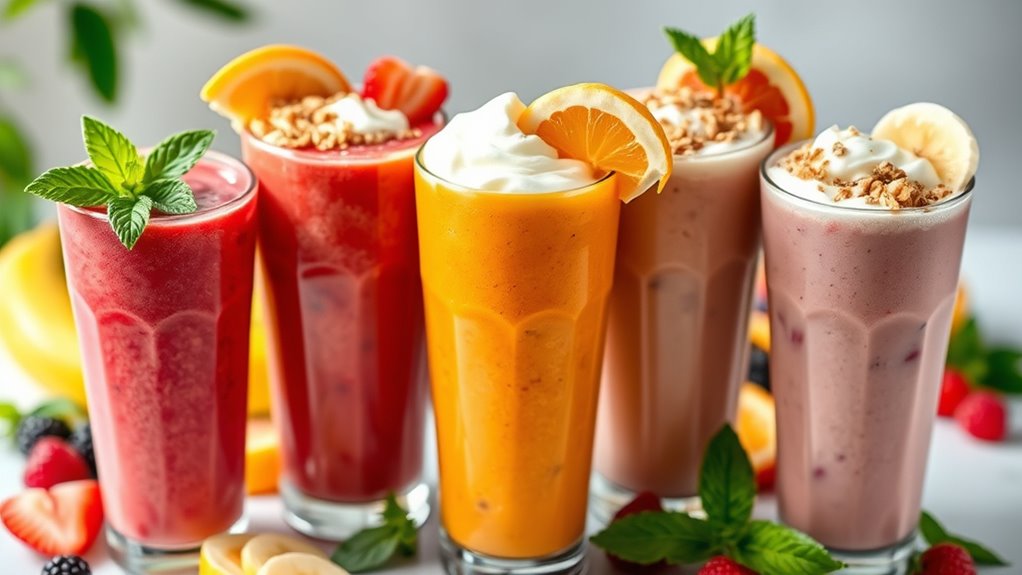
You’ll want to blend 1 to 1.5 cups of fresh or frozen fruits with ½ to 1 cup of yogurt—Greek yogurt works great for extra creaminess and protein. Add about 1 cup of your preferred liquid like milk or juice to reach your desired thickness. Peel, chop, and layer ingredients thoughtfully for smooth blending. Serve immediately in chilled glasses with fruit or mint garnish. Keep experimenting with combinations and textures to find your perfect smoothie recipe. More helpful tips and nutritional benefits await you.
Ingredients and Quantity
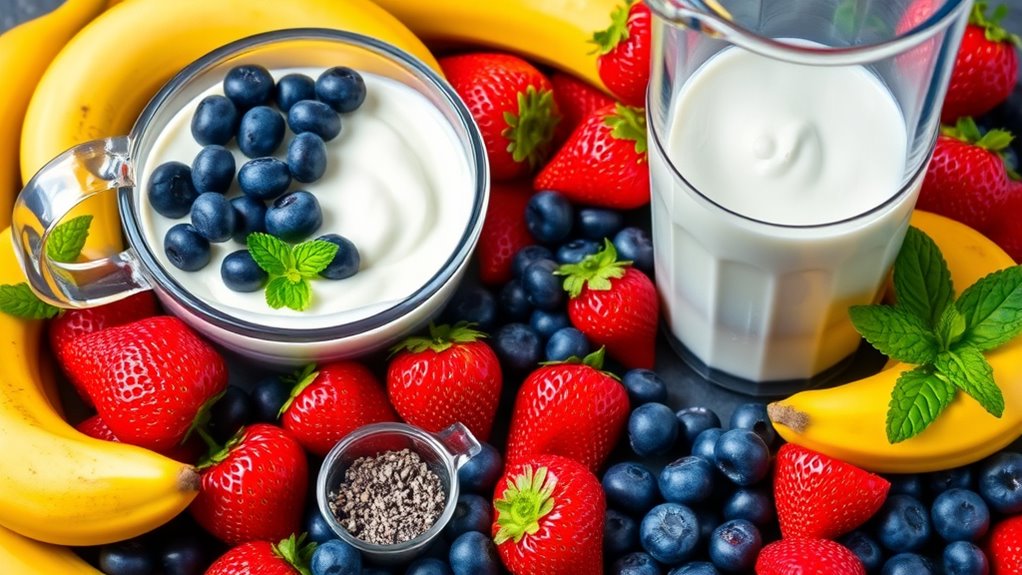
Although the ingredients for fruit smoothies can vary widely, you’ll typically need a balance of fresh or frozen fruits, a liquid base such as water, milk, or juice, and optional add-ins like yogurt or protein powder to achieve the desired texture and nutritional profile. Your fruit selection affects flavor and nutrients, while yogurt types influence creaminess and protein content.
| Ingredient | Quantity | Notes |
|---|---|---|
| Fresh/Frozen Fruit | 1 to 1.5 cups | Choose seasonal for freshness |
| Liquid Base | 1 cup | Milk, juice, or water |
| Yogurt Types | ½ to 1 cup | Greek for protein, regular for creaminess |
Adjust quantities based on desired thickness and nutritional goals, ensuring a balanced and satisfying smoothie.
Preparations

Once you’ve gathered your ingredients in the right amounts, the next step is to prepare them properly to guarantee your smoothie blends smoothly and tastes great. Start by washing and peeling fruits as needed to remove any residues and confirm a clean taste. Chop ingredients into uniform pieces to promote even blending. Consider freezing fruits beforehand for a thicker texture without added ice. When working with yogurt, choose plain or flavored varieties based on your desired smoothie variations. Adjust the yogurt’s thickness by thinning with milk or juice if necessary. Understanding blending techniques is essential: begin blending at low speed to break down solids, then increase speed for a creamy consistency. Proper preparation and blending optimize texture and flavor, giving you freedom to customize your smoothie exactly how you like it.
How to Prepare
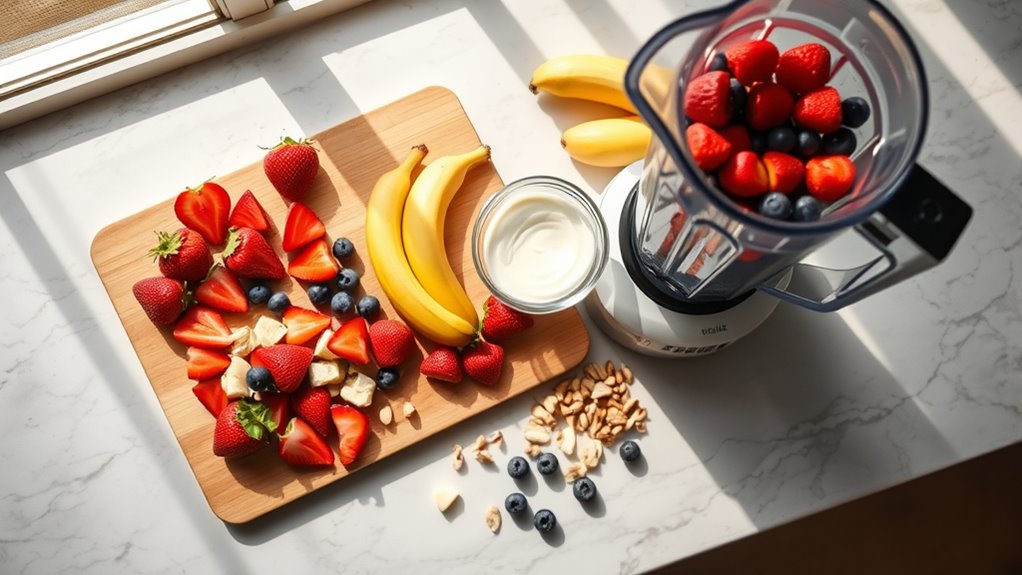
- Select quality ingredients, such as fresh or frozen fruits, yogurt, and optional add-ins like nuts or seeds for variety.
- Rinse fruits thoroughly and peel or chop them to ensure smooth blending.
- Experiment with different fruit combinations and yogurt types to find what suits your taste and nutritional goals.
- Layer ingredients thoughtfully in the blender: liquids at the bottom, followed by softer fruits, then frozen items to optimize blending and avoid clogs.
- Use the pulse setting initially, then increase speed to achieve a creamy, uniform texture.
- Master these steps to create a delicious, customizable smoothie every time.
How to Serve
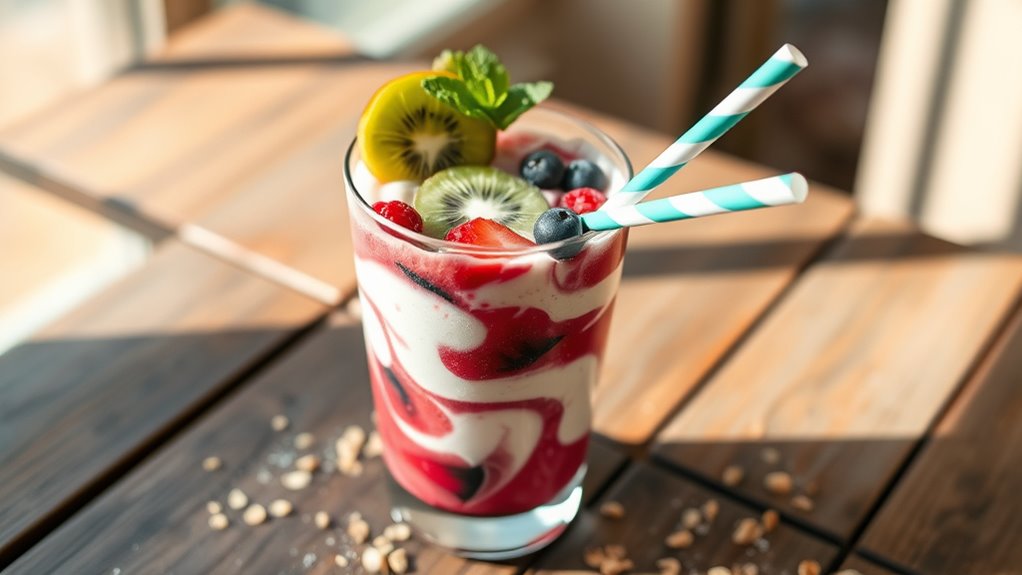
Serving your fruit smoothie properly can elevate both its taste and presentation. Start by choosing a clear glass to showcase the vibrant colors of your yogurt-based blend. Presentation ideas like garnishing with fresh fruit slices, a sprig of mint, or a sprinkle of granola add texture and visual appeal. When serving, consider chilled glasses to keep your smoothie invigorating longer. For a casual vibe, use fun straws or bamboo picks—these serving suggestions invite enjoyment while reducing plastic waste. If you’re sharing, portion smoothies into smaller glasses for easy handling. Finally, serve immediately after blending to preserve nutrients and the creamy texture. These thoughtful touches not only enhance flavor but also create an inviting experience, giving you freedom to enjoy your smoothie in style.
Tips

Enhancing your fruit smoothie experience goes beyond presentation and serving. To truly enjoy your blend, experiment with different yogurt types—Greek yogurt adds creaminess and protein, while plant-based yogurts offer dairy-free options without sacrificing texture. Don’t hesitate to explore smoothie variations by varying fruits, adding leafy greens, or incorporating seeds for extra nutrients. Use ripe, fresh ingredients for ideal flavor and blend in stages to achieve your preferred consistency. If you like your smoothie colder and thicker, freeze fruit chunks beforehand. Also, balancing the tartness of yogurt with sweeter fruits or a natural sweetener can elevate taste without overwhelming it. By mixing and matching these elements, you’ll create smoothies that suit your taste and lifestyle while keeping your routine fresh and enjoyable.
Food Value and Benefit
Prepared fruit smoothies are a nutrient-dense dish that combines whole fruits and yogurt, offering a wide range of vitamins, minerals, and other beneficial compounds. This recipe provides essential nutrients such as:
Prepared fruit smoothies blend whole fruits and yogurt to deliver essential vitamins, minerals, and health-promoting nutrients.
- Vitamins: Vitamin C, Vitamin A, B-complex vitamins (including folate)
- Minerals: Calcium, potassium, magnesium
- Additional nutrients: Protein from yogurt, dietary fiber, antioxidants, and probiotics
Benefits of eating fruit smoothies include:
- Enhances immune function due to high vitamin C content
- Supports bone health with calcium and magnesium
- Promotes digestive health through probiotics and natural fiber, aiding nutrient absorption and regularity
- Provides antioxidants that help reduce inflammation and oxidative stress
- Boosts energy levels by supplying natural sugars and essential nutrients
- Supports a balanced gut microbiome, improving overall digestive comfort
- Contributes to maintaining an active and vibrant lifestyle through comprehensive nutrient support
Frequently Asked Questions about Fruit Smoothie Recipes with Yogurt
1. What types of yogurt are best for fruit smoothies?
When making fruit smoothies, Greek yogurt is a popular choice due to its thick texture and high protein content. Regular yogurt can also be used, depending on your desired consistency. If you prefer a dairy-free option, consider almond, coconut, or soy yogurt. Look for unsweetened varieties to better control the sugar content in your smoothie.
2. Can I use frozen fruit in my smoothies?
Yes, frozen fruit is an excellent choice for smoothies! It adds a refreshing chill and thicker texture. You can use frozen berries, mango, bananas, or any other fruit you enjoy. Just be sure to check the ingredients to avoid added sugars. If using frozen fruit, you might want to reduce the amount of ice or liquid in your recipe to achieve your preferred thickness.
3. How can I make my smoothie healthier?
To enhance the health benefits of your smoothie, consider adding ingredients like spinach or kale for greens, flaxseeds or chia seeds for added fiber and omega-3 fatty acids, and nut butter for healthy fats. You can also use low-fat or unsweetened yogurt to cut down on calories and sugars. Additionally, opting for water or unsweetened almond milk instead of fruit juice can further reduce sugar content.
4. How long can I store a fruit smoothie?
Fruit smoothies are best consumed fresh, but if you need to store one, you can keep it in the refrigerator for up to 24 hours. To minimize nutrient loss and maintain flavor, store the smoothie in an airtight container. If you need to store it longer, consider freezing it in a freezer-safe container. When ready to consume, simply blend again to restore the texture.
5. What fruits work well in smoothies with yogurt?
Many fruits pair well with yogurt in smoothies! Popular choices include bananas, berries (strawberries, blueberries, raspberries), mango, pineapple, and peaches. You can mix and match based on your taste preferences. Adding citrus fruits like oranges or lemons can give your smoothie a refreshing zing. For a more tropical flavor, consider combining coconut with pineapple or mango.
References
- https://www.health.harvard.edu/staying-healthy/the-health-benefits-of-yogurt
- https://www.ncbi.nlm.nih.gov/pmc/articles/PMC5642014/
- https://www.cdc.gov/healthyweight/assessing/bmi/fruit_smoothies.html
- https://www.eatright.org/health/wellness/healthy-eating/the-benefits-of-yogurt
- https://www.fda.gov/food/food-labeling-nutrition/nutrition-facts-label
- https://www.choosemyplate.gov/fruit
- https://www.hsph.harvard.edu/nutritionsource/what-should-you-eat/vegetables-and-fruits/
