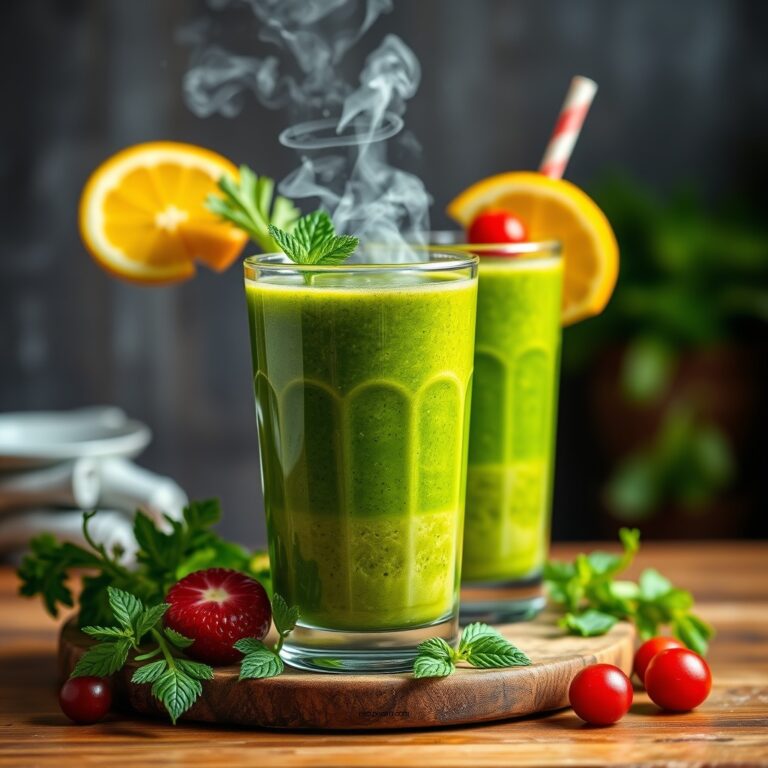
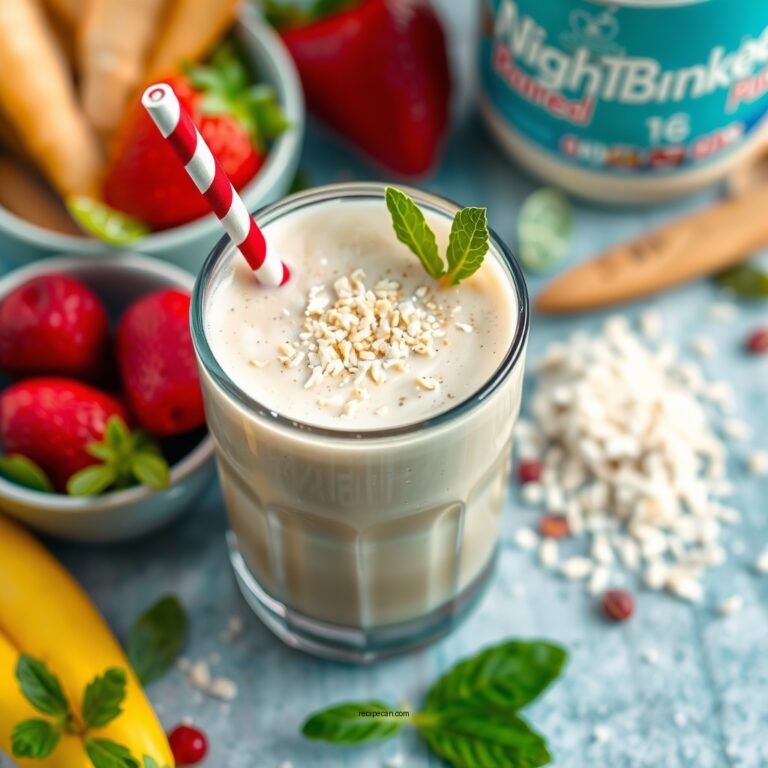
You can whip up a tasty fruit smoothie by blending one medium banana, a cup of strawberries, half a cup of Greek yogurt, and a cup of almond milk. Make sure to wash and slice your fruits evenly, then add liquids first for smooth blending. Serve your smoothie chilled and fresh for best taste. Using ripe fruit enhances sweetness, and freezing ingredients thickens texture. Keep going to discover more tips on perfecting your smoothie and maximizing its health benefits.
Ingredients and Quantity
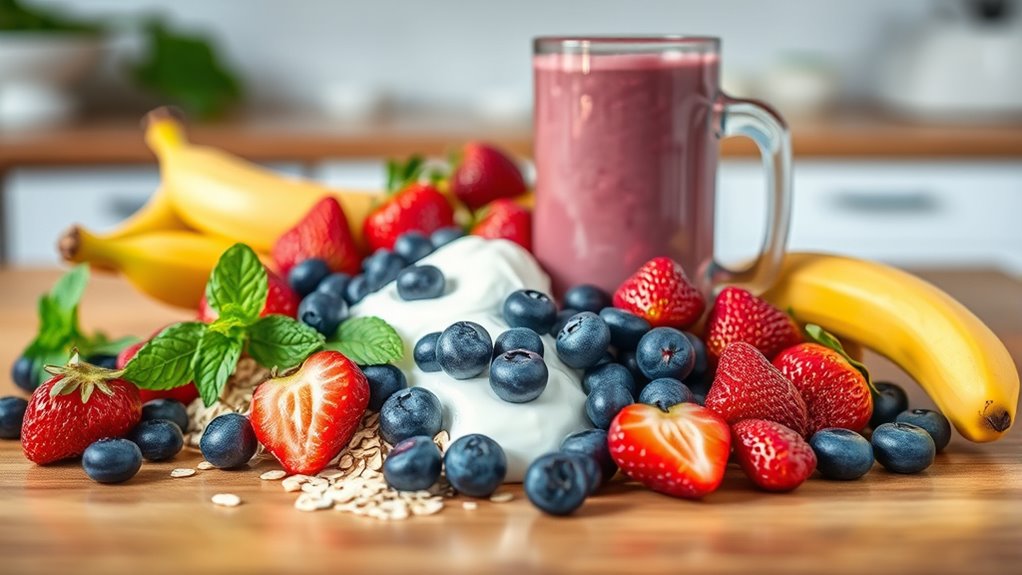
To make a delicious fruit smoothie, you’ll need a precise combination of ingredients measured accurately. This guarantees consistent texture and maximizes nutritional benefits. While classic recipes call for specific fruits, you can embrace freedom through ingredient variations, adjusting based on availability or preference without compromising health value.
| Ingredient | Quantity | Nutritional Benefit |
|---|---|---|
| Banana | 1 medium (120g) | Potassium, energy |
| Strawberries | 1 cup (150g) | Vitamin C, antioxidants |
| Greek Yogurt | ½ cup (125g) | Protein, probiotics |
| Almond Milk | 1 cup (240ml) | Calcium, vitamin D |
These measured ingredients work synergistically for flavor balance and nutrient density, supporting your active lifestyle while allowing flexibility.
Preparations
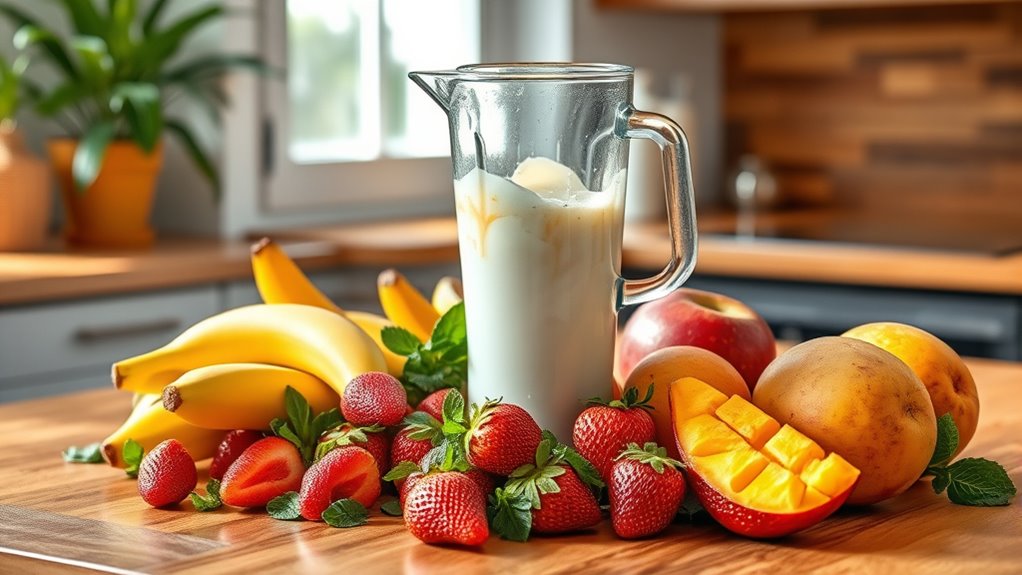
Start by thoroughly washing the strawberries to remove any dirt or pesticides, ensuring a clean base for your smoothie. Proper preparation techniques greatly impact the final texture and flavor. After washing, hull and slice the strawberries to facilitate even blending. If you’re using other fruits, peel and chop them uniformly. Prepping ingredients in similar sizes helps create smooth, consistent blends. For smoothie variations, consider freezing fruits ahead of time; this not only chills your drink but also enhances creaminess without added ice. Additionally, prepping your ingredients in advance and storing them in portioned bags or containers can save time, letting you enjoy your smoothie without hassle. By mastering these preparation techniques, you maintain control over ingredient quality and customize your smoothie variations freely and efficiently.
How to Prepare

- Gather your prepared ingredients and assemble your blender or food processor for efficient processing.
- Add liquid base first (water, juice, or milk) to facilitate smooth blending.
- Incorporate your chosen fruits and vegetables, considering flavor combinations that balance sweetness and acidity.
- Include any supplements or thickeners like yogurt, protein powder, or oats to enhance texture and nutrition.
- Blend on high until the mixture is uniform and creamy, adjusting consistency with extra liquid if needed.
- Experiment with smoothie variations to explore diverse tastes and nutritional profiles.
- Control each step to guarantee a consistent, fresh result every time and enjoy freedom in your dietary choices.
How to Serve

Once your smoothie reaches the ideal texture and flavor, serving it properly guarantees you get the best experience. Always serve your fruit smoothie chilled; a serving temperature between 35°F and 45°F preserves freshness and enhances taste. Avoid letting it sit out too long, as warmer temperatures can alter flavor and consistency. Consider garnishing options like fresh mint, a slice of fruit, or a sprinkle of chia seeds to add visual appeal and subtle texture contrasts. Use clear glasses to showcase your smoothie’s vibrant color, inviting you to enjoy it fully. Serving immediately after blending ensures maximum freshness and nutritional value, giving you freedom to savor every sip as intended.
Tips

Although blending a fruit smoothie may seem straightforward, paying attention to ingredient quality and preparation techniques can greatly improve the final result. To maximize your experience, consider these tips:
- Use ripe, fresh fruits to enhance natural sweetness and texture, avoiding artificial additives.
- Experiment with smoothie variations by combining fruits with herbs or spices, like mint or cinnamon, to discover unique flavor combinations.
- Balance liquid and solid ingredients carefully; too much liquid dilutes flavor, while too little strains your blender.
- Pre-freeze fruits or add ice cubes for a thicker consistency without watering down taste.
Food Value and Benefit
The prepared fruit smoothie is a nutrient-dense dish packed with essential vitamins, minerals, antioxidants, and dietary fiber. This recipe typically contains:
- Vitamin C (from citrus fruits): boosts immune system function
- Potassium (from bananas): helps regulate blood pressure
- Dietary fiber: supports healthy digestion
- Natural antioxidants: protect cells from oxidative stress
- Natural sugars: provide a healthier energy boost compared to processed sugars
Benefits of eating this fruit smoothie recipe include:
- Improved digestion and gut health
- Enhanced immune response and disease prevention
- Increased and sustained energy levels
- Support for cardiovascular health through blood pressure regulation
- Convenient and tasty way to consume multiple servings of fruit
Frequently Asked Questions
What ingredients do I need for a basic fruit smoothie?
A basic fruit smoothie typically requires three main ingredients: fresh or frozen fruit (such as bananas, berries, or mango), a liquid base (like yogurt, milk, or juice), and optional add-ins (like honey, protein powder, or spinach). The proportions can vary depending on your taste preferences and the consistency you desire.
Can I use frozen fruit in my smoothie?
Yes, frozen fruit is an excellent choice for smoothies! It can add a refreshing chill and creaminess to your drink without the need for ice. Additionally, frozen fruits often retain their nutrients well since they are typically frozen shortly after harvest. Just be sure to adjust the liquid amount as frozen fruit may require slightly more liquid to achieve your desired consistency.
How can I make my smoothie thicker?
To make your smoothie thicker, you can add ingredients like frozen bananas, avocados, or Greek yogurt. Another option is to reduce the amount of liquid you use or include ingredients like oats or nut butters, which can contribute to a creamier texture without watering down the flavor.
Are fruit smoothies healthy?
Fruit smoothies can be a healthy option, especially when made with whole ingredients and without added sugars. They provide essential vitamins, minerals, and fiber, making them a nutritious choice for breakfast or a snack. However, it’s important to monitor portion sizes and ingredients, as some smoothies can become high in calories or sugar if too many sweeteners or calorie-dense ingredients are added.
Can I meal prep smoothies in advance?
Absolutely! You can prepare smoothie bags by portioning out your fruits and veggies into freezer bags. When you’re ready to make a smoothie, just add the contents of the bag to your blender with your liquid base. This method makes it convenient to enjoy a quick, nutritious smoothie on busy mornings. Just be mindful that some ingredients, like bananas, may brown slightly if stored for too long, but they will still be safe to consume.
References
- https://en.wikipedia.org/wiki/Smoothie
- https://www.cdc.gov/nutrition/downloads/fruit-smoothie.pdf
- https://www.fda.gov/food/food-labeling-nutrition/food-safety-and-smoothies
- https://www.hsph.harvard.edu/nutritionsource/healthy-drinks/smoothies/
- https://www.eatright.org/health/wellness/preventing-illness/smoothie-safety-tips
- https://www.nutrition.gov/topics/nutrition-101/healthy-drinks