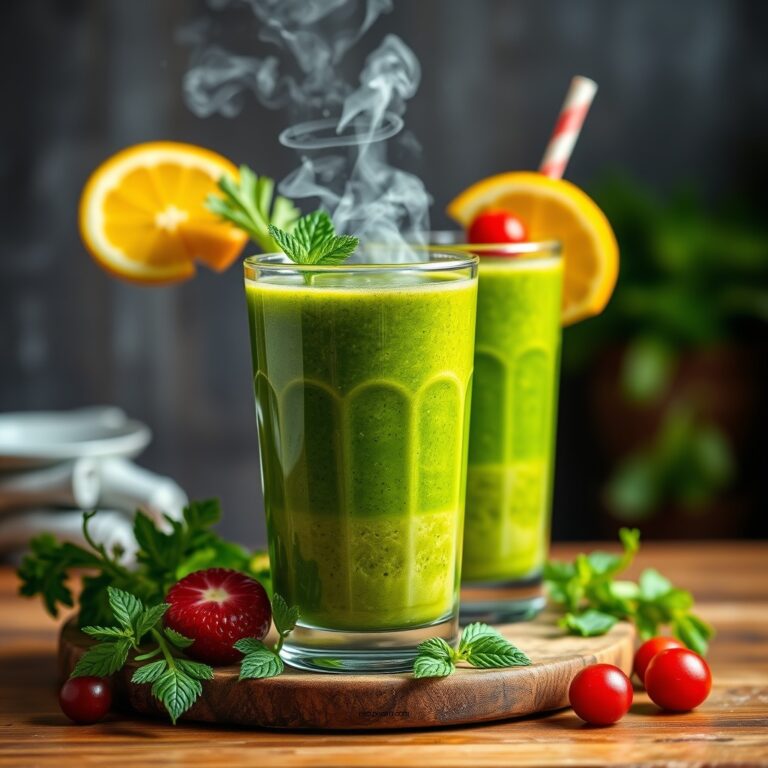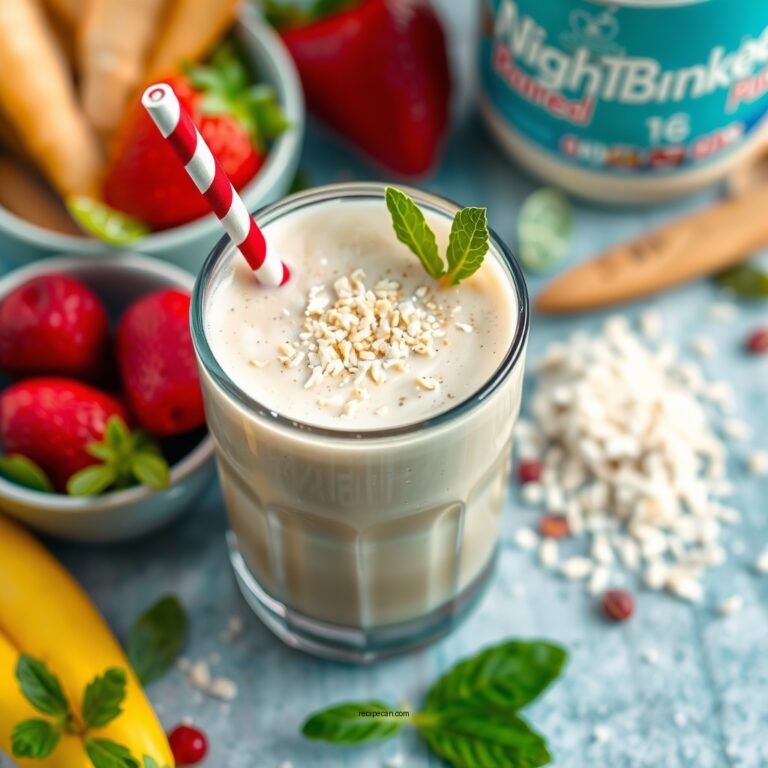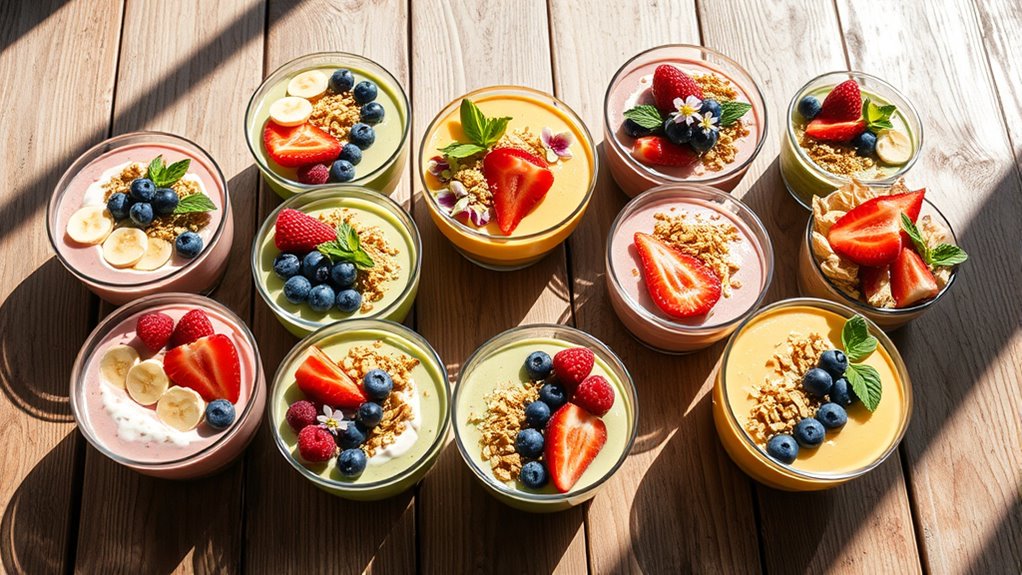
You can make nutrient-rich fruit smoothie bowls using frozen berries, banana, Greek yogurt, and spinach for a creamy, antioxidant-packed meal. Use frozen berries for thickness without ice, blend with fresh fruit for brightness, and add spinach for extra vitamins. Layer and blend gradually for ideal texture. Top with varied, colorful toppings for contrast. Serve immediately in chilled bowls for freshness. If you want to enhance flavor, texture, and presentation, there’s more to explore about balancing ingredients and serving tips.
Ingredients and Quantity
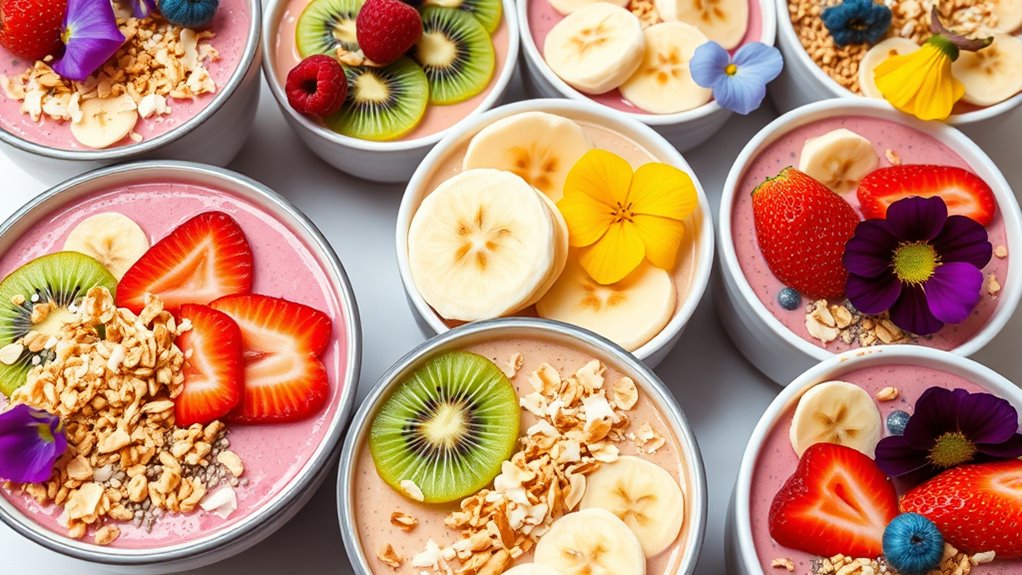
When preparing fruit smoothie bowls, selecting the right ingredients and quantities is essential to achieve the desired texture and flavor. You want to balance fruit varieties to maximize nutritional benefits while keeping the consistency thick enough to hold toppings. Typically, frozen fruits provide creaminess and chill, while fresh fruits add brightness.
| Ingredient | Quantity | Nutritional Benefits |
|---|---|---|
| Frozen berries | 1 cup | Rich in antioxidants and fiber |
| Banana | 1 medium | Provides potassium and creaminess |
| Greek yogurt | 1/2 cup | Adds protein and probiotics |
| Spinach | 1/2 cup | High in vitamins A and K |
Preparations
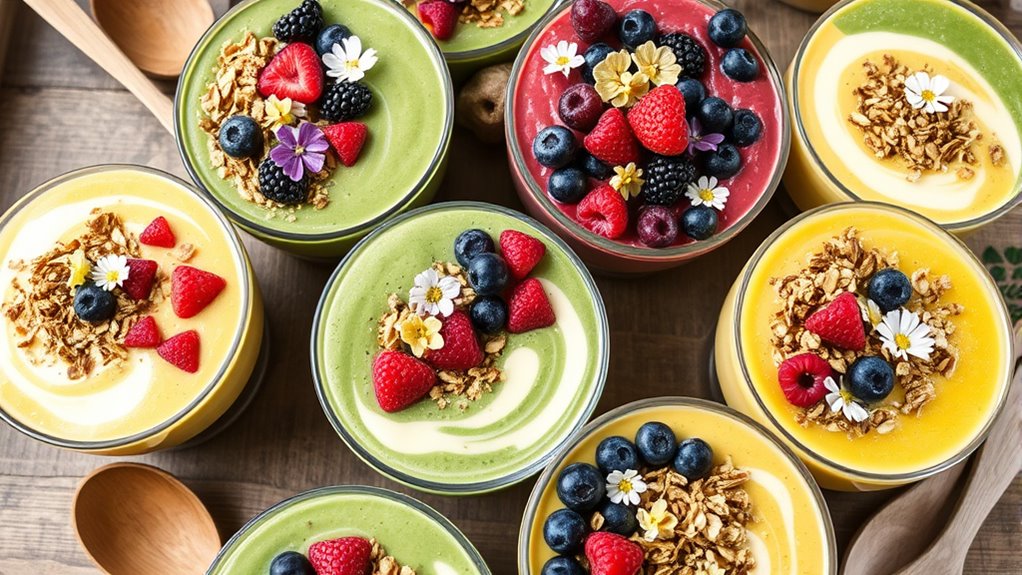
Achieving the perfect texture and flavor in your fruit smoothie bowl starts with proper preparation. To master smoothie textures, you need to balance the firmness of frozen fruits with the creaminess of fresh ingredients or plant-based milks. This balance guarantees a thick yet smooth consistency that holds toppings without sinking. Pay close attention to ingredient size and temperature; smaller pieces blend more evenly, enhancing texture stability. For bowl presentation, prepare toppings like granola, seeds, and sliced fruits beforehand to arrange them artistically. Prepping your ingredients thoughtfully allows you to create visually appealing layers and patterns, elevating the eating experience. By prioritizing these elements, you gain freedom to customize your bowl while maintaining both aesthetic and textural quality that’s satisfying and nutritious.
How to Prepare
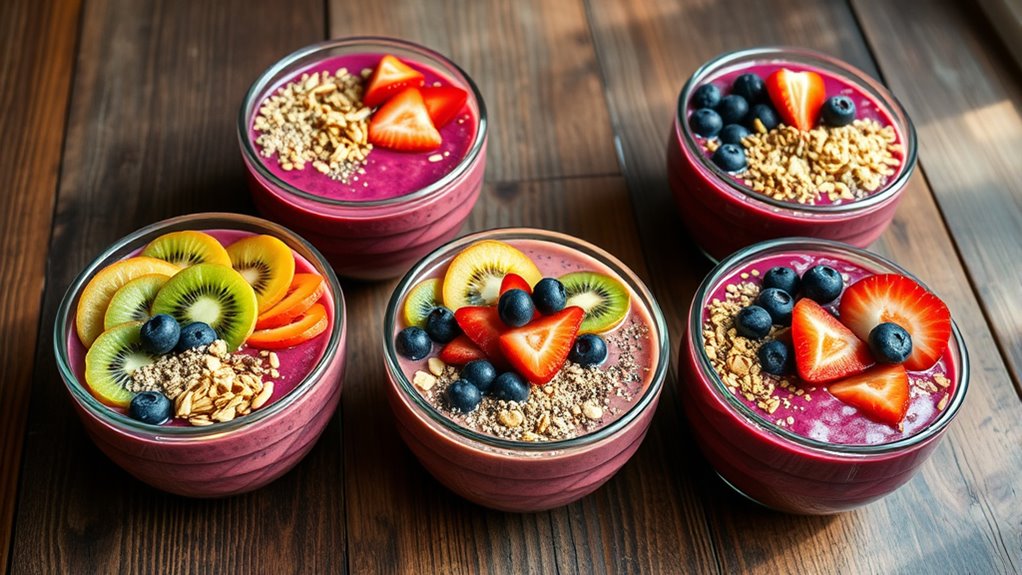
- Gather all ingredients needed for your smoothie bowl.
- Select ripe fruits and wash them thoroughly.
- Use frozen fruits to achieve a thicker consistency without adding ice, preserving flavor and nutrients.
- Layer frozen and fresh produce to facilitate smooth blending.
- Add liquid gradually (water, juice, or plant-based milk) to control thickness precisely.
- Blend until you achieve a creamy texture.
- Transfer the smoothie to a bowl for better presentation and spoonable consistency.
- Choose diverse toppings such as nuts, seeds, granola, or fresh fruit slices to add crunch, flavor contrast, and nutritional benefits.
- Follow these steps to ensure your smoothie bowl is both creative and enjoyable.
How to Serve
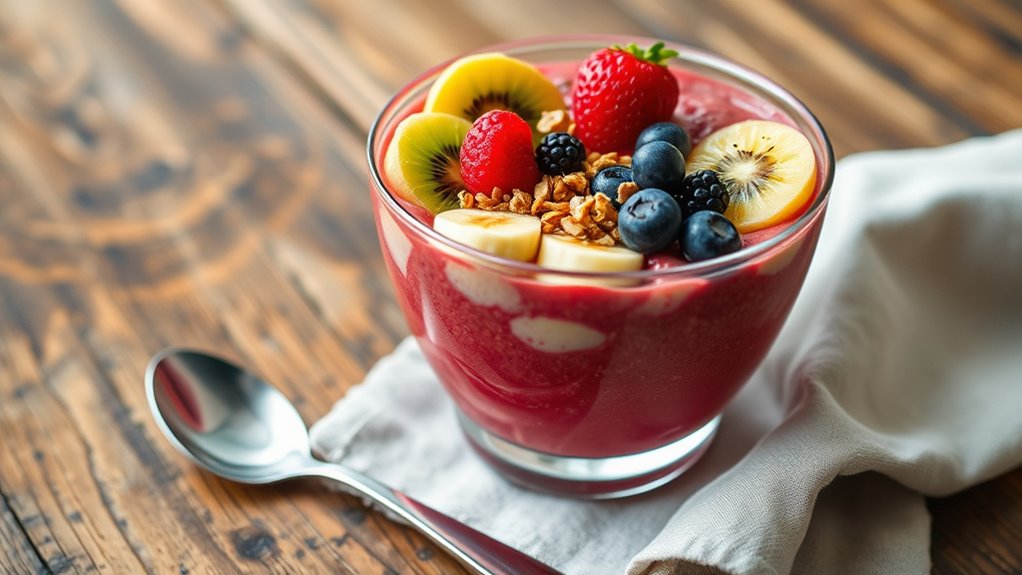
Once your smoothie bowl is blended and beautifully topped, presenting it thoughtfully enhances both the eating experience and visual appeal. Consider various presentation styles such as serving in clear glass bowls to showcase vibrant layers or rustic wooden bowls for a natural touch. Use contrasting colors in your toppings—like bright berries against creamy bases—to create visual interest. For serving suggestions, pair your bowl with a sturdy spoon and a napkin to keep things tidy. You can also add a side of whole-grain toast or nuts for added texture and satiety. Serving chilled bowls immediately after preparation preserves texture and freshness, ensuring ideal taste. These approaches combine aesthetics and functionality, allowing you to enjoy your smoothie bowl freely without compromising on style or practicality.
Tips
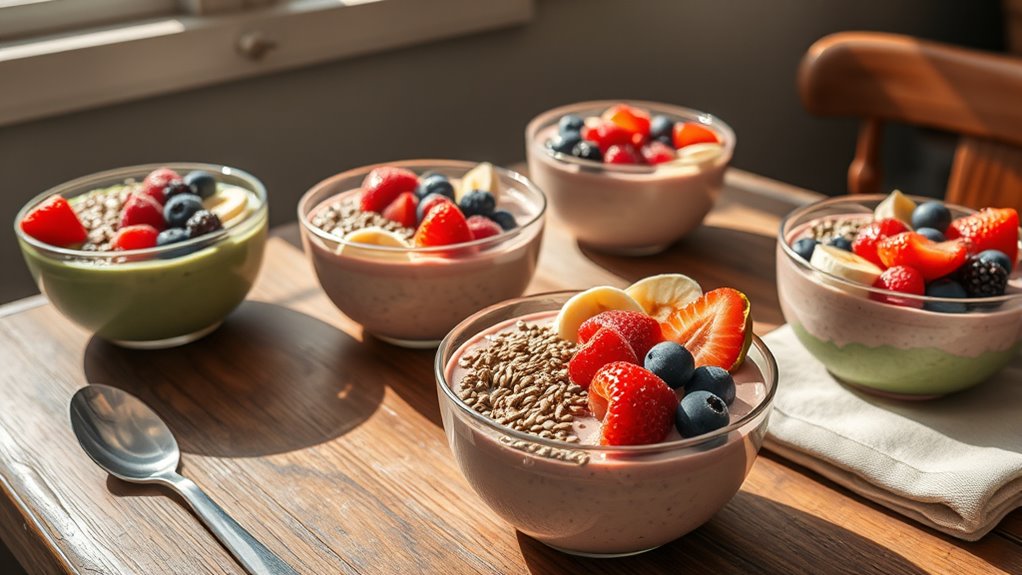
While creating smoothie bowls might seem straightforward, employing a few key tips can enhance both texture and flavor considerably. Start by balancing frozen and fresh fruits; frozen fruit thickens the base, while fresh fruit adds brightness. Use a high-powered blender to achieve a creamy consistency without excess liquid. When it comes to smoothie toppings, choose a variety of textures—crunchy nuts, seeds, and granola contrast nicely with soft fruits. For bowl presentation, arrange toppings thoughtfully in sections or patterns; this not only looks appealing but lets you customize each bite. Finally, chill your bowl before serving to keep the smoothie cold longer. These practical steps will elevate your smoothie bowl experience, giving you freedom to experiment while ensuring a satisfying, visually pleasing result every time.
Food Value and Benefit
Smoothie bowls combine a variety of fruits, nuts, seeds, and sometimes dairy or plant-based proteins, making them a nutrient-dense meal option. This dish is rich in essential vitamins, minerals, fiber, and antioxidants, providing numerous health benefits.
Food Value:
- High in dietary fiber for digestive health
- Rich in antioxidants such as vitamins C and E
- Contains healthy fats from nuts and seeds
- Provides protein for muscle repair and satiety
- Includes minerals like potassium, magnesium, and calcium
Benefits of Eating This Recipe:
- Supports improved digestion due to high fiber content
- Enhances immune function with vitamins C and E
- Promotes cardiovascular health through healthy fats
- Combats oxidative stress and reduces inflammation via antioxidants
- Supports muscle repair and sustained energy from protein
- Helps maintain electrolyte balance with potassium and magnesium
What are fruit smoothie bowls?
Fruit smoothie bowls are a thicker version of traditional smoothies, served in a bowl and topped with various ingredients like fresh fruits, nuts, seeds, and granola. The base is typically made from blended fruits, yogurt, or plant-based milk, and is designed to be eaten with a spoon, making it a nutritious and visually appealing breakfast or snack option.
How do I make a basic fruit smoothie bowl?
To make a basic fruit smoothie bowl, blend together 1 cup of frozen fruits (like bananas, berries, or mango), 1/2 cup of yogurt or plant-based milk, and a tablespoon of honey or maple syrup for sweetness until smooth. Pour the mixture into a bowl and top with your favorite toppings such as sliced fruits, granola, nuts, and seeds. Adjust the thickness by adding more or less liquid to achieve your desired consistency.
What toppings should I use for my smoothie bowl?
You can get creative with toppings for your smoothie bowl! Some popular options include sliced fresh fruits (such as bananas, strawberries, and kiwis), granola for crunch, chia seeds or flaxseeds for added nutrition, shredded coconut, nut butters, and even edible flowers for a decorative touch. The key is to balance flavors and textures while incorporating healthy ingredients.
Can I make smoothie bowls in advance?
Yes, you can prepare smoothie bowls in advance! Blend your smoothie base and store it in an airtight container in the refrigerator for up to 24 hours. However, for best taste and texture, it’s recommended to prepare the toppings fresh just before serving. Alternatively, you can freeze the smoothie base in individual portions and thaw them overnight in the refrigerator for a quick meal the next day.
Are fruit smoothie bowls healthy?
Fruit smoothie bowls can be a healthy option, especially when made with whole, nutritious ingredients. They are typically rich in vitamins, minerals, and antioxidants due to the fruits and toppings. To keep them healthy, use unsweetened yogurt or milk alternatives, limit added sugars, and focus on whole food toppings like fruits, nuts, and seeds. As with any meal, moderation and balance are key to a healthy diet.
References
- https://www.health.harvard.edu/staying-healthy/what-is-a-smoothie
- https://www.ncbi.nlm.nih.gov/pmc/articles/PMC6823960/
- https://www.eatright.org/food/nutrition/dietary-guidelines-and-myplate/smoothies-and-smoothie-bowls
- https://www.cdc.gov/healthyweight/healthy_eating/fruits.html
- https://www.jstor.org/stable/10.5325/jhbsocbehavscienc.6.1.0053
- https://www.verywellfit.com/what-is-a-smoothie-bowl-7695769
- https://extension.usu.edu/foodnutrition/recipes/smoothie-bowl-recipes
- https://www.treesearch.fs.fed.us/pubs/53368