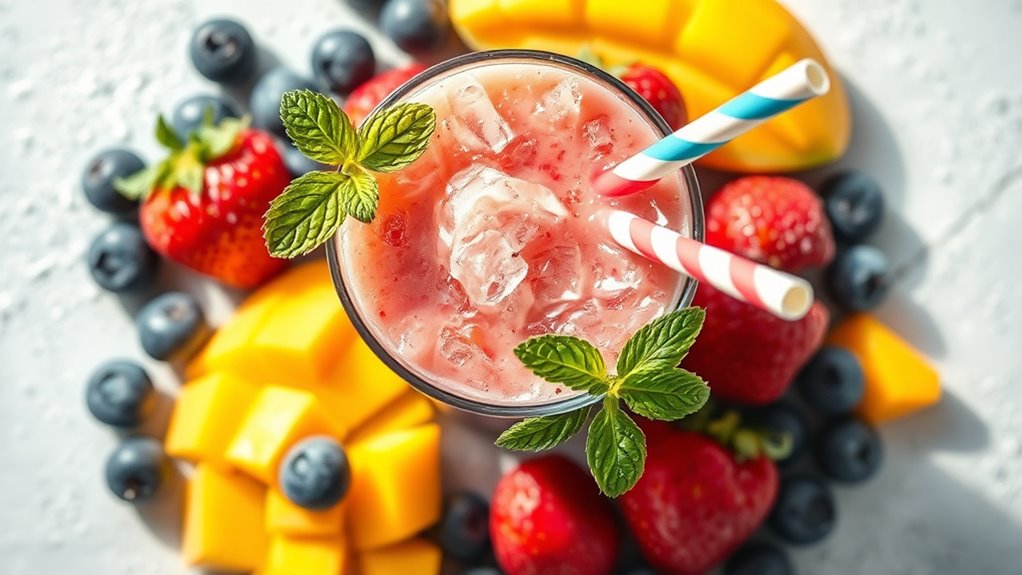
You can make a tasty frozen fruit smoothie by blending 1 cup of frozen berries, a banana, a handful of spinach, and 1 cup of almond milk for a nutritious boost. Adding ½ cup Greek yogurt enhances protein and probiotics. Start with liquids, add soft fruits, then frozen items on top for smoother blending. Serve chilled with fresh fruit garnish. There are simple prep tips and ingredient combinations that can elevate your smoothie experience even further.
Ingredients and Quantity
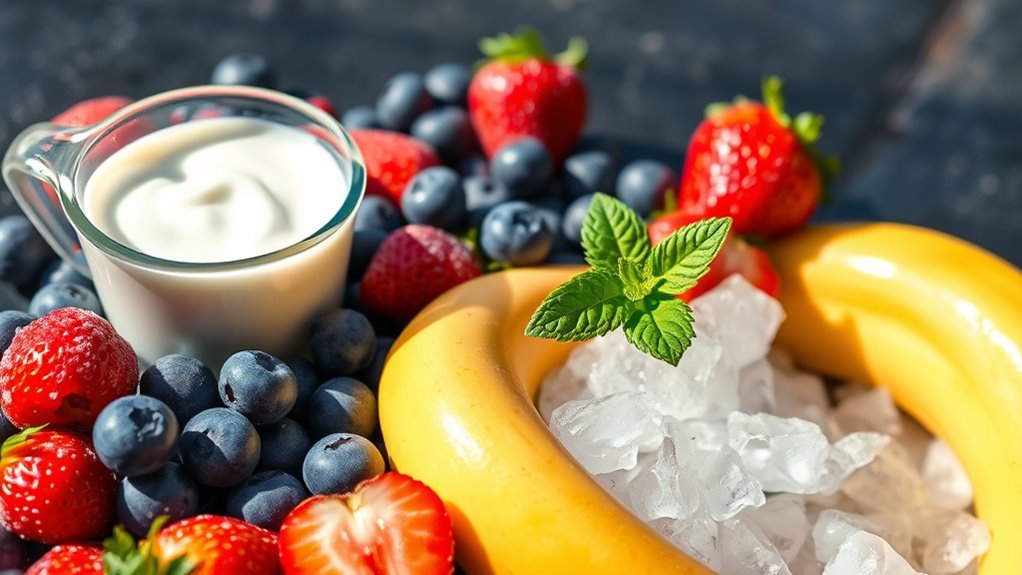
To make a delicious frozen fruit smoothie, you’ll typically need three to five key ingredients, including a mix of frozen fruits, a liquid base, and optional add-ins like yogurt or sweeteners. Choosing the right fruit combinations guarantees vibrant flavors and nutritional balance, empowering you to enjoy both taste and health. Here’s a guide to ingredient quantities that offer freedom to customize:
| Ingredient | Quantity | Benefit |
|---|---|---|
| Frozen berries | 1 cup | Antioxidants |
| Banana | 1 medium | Potassium, creaminess |
| Spinach | 1 handful | Iron, vitamins |
| Almond milk | 1 cup | Dairy-free, hydration |
| Greek yogurt | ½ cup (optional) | Protein, probiotics |
Mix these thoughtfully for a revitalizing smoothie that fuels your independence.
Preparations
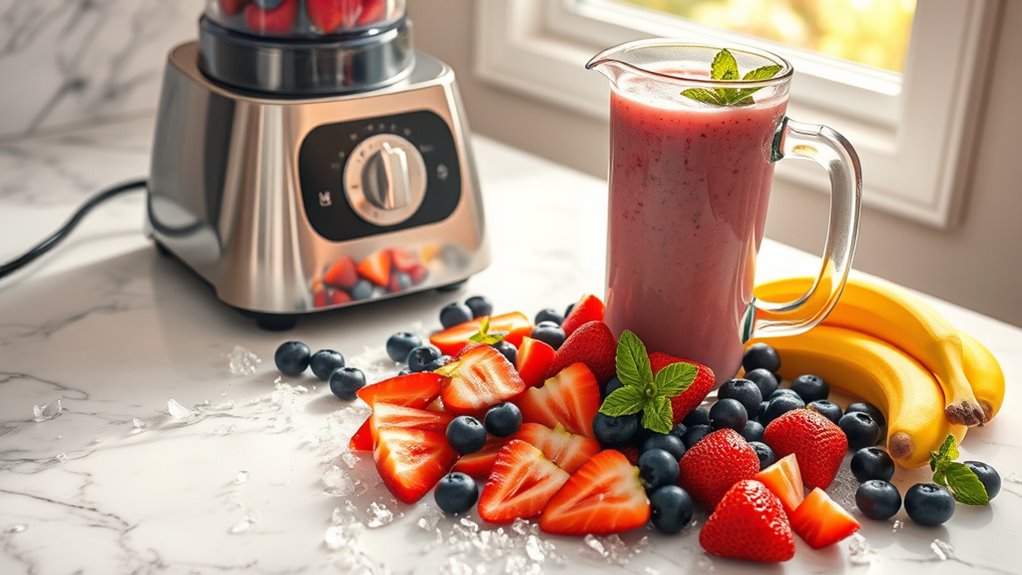
Preparing your ingredients properly is essential for a smooth blending process and ideal flavor. Start with thoughtful fruit selection—choose ripe, fresh fruits or high-quality frozen ones to guarantee natural sweetness and nutrients. Wash fresh fruits thoroughly to remove any residues. Cut them into uniform pieces to promote even blending and prevent overworking your blender. When using frozen fruit, avoid thawing completely; this helps maintain the smoothie’s texture and temperature. Employ blending techniques like pulsing initially to break down tougher pieces, then blending continuously for a creamy consistency. Adding liquids gradually can improve blending efficiency and prevent motor strain. By mastering these preparation steps, you’ll release freedom in crafting smoothies that are both delicious and nutritious, tailored to your taste and lifestyle.
How to Prepare
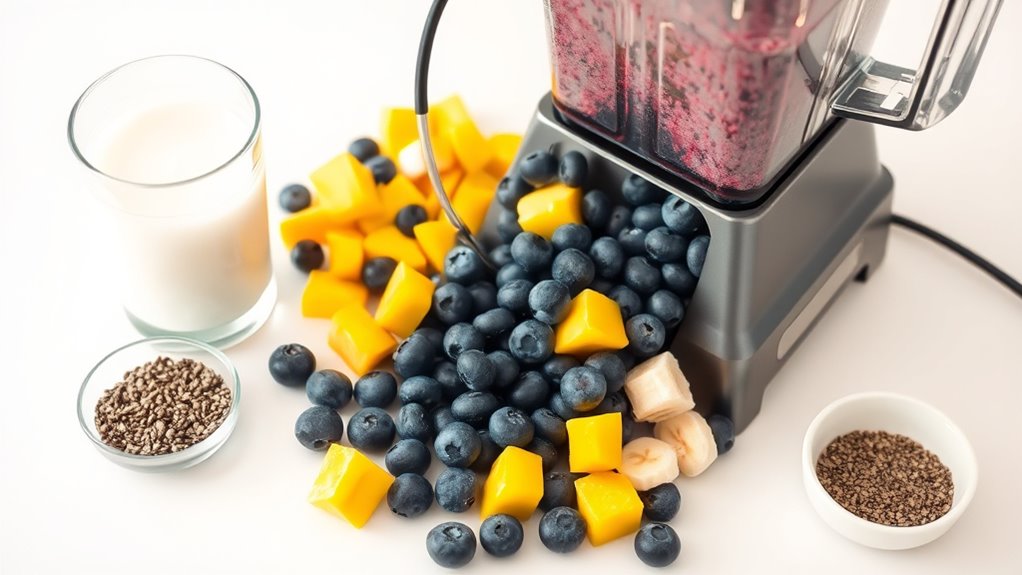
- Gather all your ingredients and tools before you begin blending.
- Choose frozen fruits that suit your taste, such as berries, mangoes, or bananas.
- Prepare your liquid base, like almond milk or yogurt.
- Consider adding greens, protein powder, or seeds for extra nutrition and texture.
- Layer your ingredients properly: start with liquids, then softer items, and place frozen fruits on top.
- Use high-speed blending techniques: pulse initially to break down large chunks.
- Blend continuously until smooth, but avoid over-blending to preserve texture and nutrients.
- Customize flavors and ingredients to create consistent, delicious smoothies.
How to Serve
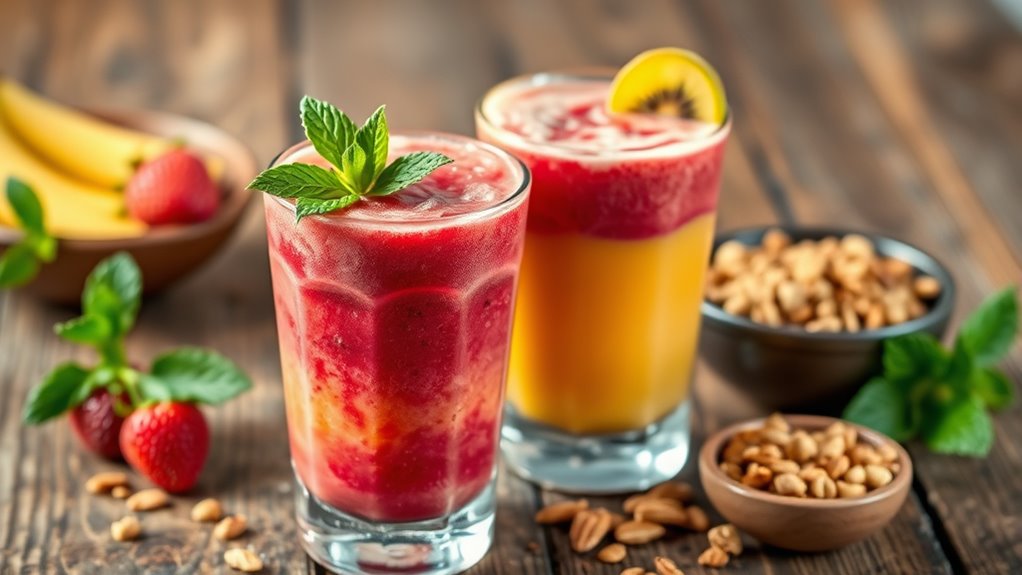
A well-served frozen fruit smoothie not only tastes better but also enhances your overall experience. To elevate your smoothie, consider presentation ideas like serving it in clear glasses to showcase vibrant colors. Adding a garnish—such as a fresh fruit slice or a sprig of mint—provides visual appeal and hints at the flavors inside. For serving suggestions, use chilled glasses to keep the smoothie cold longer, and offer reusable straws for an eco-friendly touch. You can also serve your smoothie alongside complementary snacks, like nuts or granola, to balance texture and nutrition. These thoughtful touches make your smoothie inviting, enjoyable, and aligned with your desire for freedom in how you savor your creations.
Tips
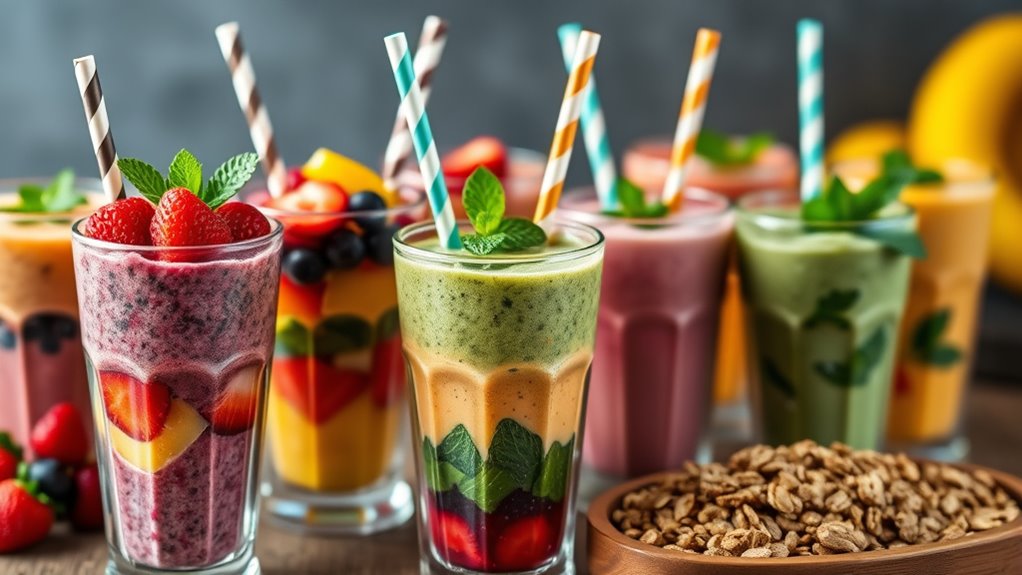
While blending frozen fruit smoothies may seem straightforward, paying attention to a few key tips can greatly improve texture and flavor. First, start with liquid at the bottom to protect your blender and guarantee smoother blending. Use pulse blending techniques to break down frozen chunks gradually, preventing overheating or uneven texture. Experiment with smoothie variations by mixing different fruits, liquids, and add-ins like yogurt or greens to tailor nutrition and taste to your preference. Avoid overfilling the blender to promote even circulation. If a smoothie is too thick, add liquid incrementally rather than all at once for better control. Finally, chill your serving glasses beforehand to keep smoothies cold longer, enhancing your enjoyment. These strategies give you freedom to craft delicious, customized frozen fruit smoothies every time.
Food Value and Benefit
Food Value of Smoothies with Frozen Fruit:
This smoothie recipe made with frozen fruit is rich in essential vitamins and minerals, including vitamin C, vitamin A, potassium, and dietary fiber. It also contains antioxidants that help protect the body from oxidative stress.
Benefits of Eating This Recipe:
- Supports immune system health due to high vitamin C content.
- Promotes healthy digestion through dietary fiber.
- Provides consistent nutrient intake year-round with high-quality frozen fruit.
- Helps maintain energy levels and controls cravings by enhancing satiety.
- Reduces inflammation with antioxidants that combat oxidative stress.
- Supplies vitamin A and potassium, which support vision, skin health, and heart function.
Incorporating this frozen fruit smoothie into your diet is a convenient and nutritious way to support overall wellness while accommodating an active lifestyle.
Frequently Asked Questions
1. What are the best fruits to use in frozen fruit smoothies?
The best fruits for frozen fruit smoothies include bananas, berries (like strawberries, blueberries, and raspberries), mangoes, and pineapples. These fruits not only freeze well but also blend smoothly to create a creamy texture. Using a combination of these fruits can add depth and variety to your smoothies, enhancing both the flavor and nutritional profile.
2. Can I use fresh fruit instead of frozen fruit in smoothies?
Yes, you can use fresh fruit in smoothies, but the texture and temperature will differ. Frozen fruit helps create a thicker, creamier consistency and keeps your smoothie cold without needing ice, which can dilute flavor. If using fresh fruit, consider adding ice or frozen yogurt to achieve a similar texture and chill factor.
3. How can I make my smoothie more nutritious?
To make your smoothie more nutritious, consider adding ingredients such as spinach or kale for extra vitamins, chia seeds or flaxseeds for healthy fats and fiber, Greek yogurt for protein, and nut butter for a creamy texture and added nutrients. Additionally, using unsweetened almond milk or coconut water as a base can enhance the nutritional value without adding excessive sugars.
4. How long can I store a frozen fruit smoothie?
Frozen fruit smoothies can be stored in the freezer for up to 3 months. To store, pour the smoothie into an airtight container, leaving some space at the top to allow for expansion as it freezes. When you’re ready to consume it, simply thaw it in the refrigerator or blend it again to restore its original consistency. However, for the best taste and texture, it’s recommended to consume the smoothie within a month.
5. What are some easy frozen fruit smoothie recipes?
Here are a few easy frozen fruit smoothie recipes:
- Berry Banana Smoothie: Blend 1 cup of mixed berries, 1 banana, 1 cup of almond milk, and a tablespoon of honey.
- Mango Pineapple Delight: Blend 1 cup of frozen mango, 1 cup of frozen pineapple, 1 cup of coconut water, and a squeeze of lime juice.
- Green Smoothie: Blend 1 banana, 1 cup of spinach, 1/2 cup of frozen blueberries, and 1 cup of yogurt.
These recipes are simple, delicious, and can be customized to suit your taste preferences!
References
- https://www.nutrition.gov/topics/whats-in-food/fruits
- https://www.cdc.gov/nutrition/infantandtoddlernutrition/foods/fruits.html
- https://www.heart.org/en/healthy-living/healthy-eating/eat-smart/nutrition-basics/fruit-and-vegetable-nutrition
- https://www.fda.gov/food/food-labeling-nutrition/nutrition-facts-label
- https://www.hsph.harvard.edu/nutritionsource/what-should-you-eat/fruit/
- https://www.cps.ca/en/documents/position/smoothies
- https://www.ncbi.nlm.nih.gov/pmc/articles/PMC6618781/
